Key Takeaways & Executive Findings
- •• Curved capillary microreactors generate Dean vortices that significantly enhance liquid–liquid micromixing, especially at low Reynolds numbers (Re < 30). • The minimum segregation index XS achieved was 0.008 under optimal conditions, indicating near-perfect micromixing. • Changing the curved shape reduced XS by 37.5% at low Re, demonstrating a simple and cost-effective intensification strategy. • New correlations between XS and Reynolds/Dean numbers were developed, enabling prediction of micromixing performance in capillary microreactors.
Abstract
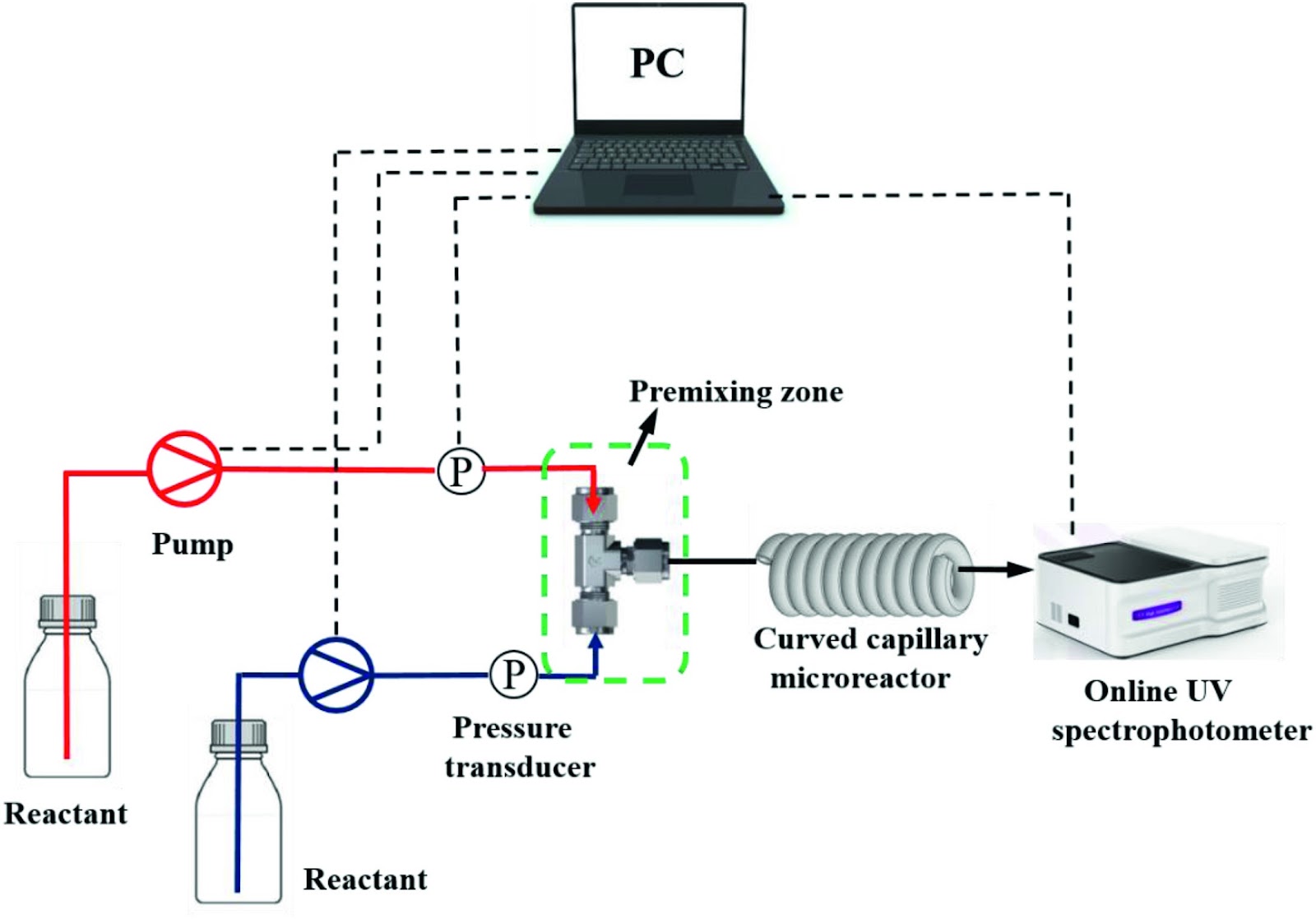
Micromixing efficiency is an important parameter for evaluating the multiphase mass transfer performance and reaction efficiency of microreactors. In this work, the novel curved capillary reactor with different shapes was designed to generate Dean flow, which was used to enhance the liquid–liquid micromixing performance. The Villermaux–Dushman probe reaction was employed to characterize the micromixing performance in different curved capillary microreactors. The effects of experiment parameters such as liquid flow rate, inner diameter, tube length, and curve diameter on micromixing performance were systematically investigated. Under the optimal conditions, the minimum value of the segmentation factor XS was 0.008. It was worth noting that at the low Reynolds number (Re < 30), the change of curved shape on the capillary microreactor can significantly improve the micromixing performance with XS reduced by 37.5%. Further, the correlations of segment index XS with dimensionless factor such as Reynolds number or Dean number were developed, which can be used to predict the liquid–liquid micromixing performance in capillary microreactors.
1. Introduction
The common microreactor system in the laboratory, including a premixer and a straight capillary tube, is used to improve micromixing and liquid–liquid mass transfer efficiency [1–3]. The premixer is employed to enhance the premixing degree of different reactants, which determines the initial mixing performance between reactants [4]. However, when the reactants flow into the straight tube, the micromixing performance of premixed reactants decreases due to molecular diffusion, especially at low Reynolds numbers [5]. Strengthening the micromixing process of reactants in a capillary reactor is crucial for improving reaction efficiency.
In the past two decades, effectively enhancing the micromixing process between fluids in a microreactor system has been regarded as a great challenge and has attracted widespread attention. At present, there are several methods to improve micromixing performance, including changes in fluid flow patterns [6,7], injection of an immiscible fluid to enhance disturbance, and the static mixing process [8,9]. For example, introducing a gas phase or an immiscible fluid into liquid streams to form a segmented flow can significantly reduce the mixing length, but it requires the subsequent separation process and would reduce the liquid residence time [10]. Another effective strategy is creating different patterns on the walls of fluoropolymer tubes to improve the cross-streamwise mixing process [11,12]. However, the patterns created with complex structures are dependent on expensive processing equipment, leading to an increase in construction costs and time. Therefore, it is very important to develop an efficient and easy strategy to enhance liquid–liquid micromixing performance.
At present, the curved tube reactor, due to its advantages of simple process and low manufacturing cost, has been widely applied to intensify multiphase mixing, heat transfer and mass transfer processes [13,14]. Due to its advantages in fast mass and heat transfer processes, the curved tube reactor is ubiquitous in various fields such as gas absorption [15], polymerization [16], and the synthesis of nanomaterials [17]. In the curved tube, for the effects of centrifugal force and pressure on the fluid, the Dean vortices are generated in the flowing fluid, greatly improving the multiphase mixing process [18,19]. Zhu et al. [20] have demonstrated that the introduction of Dean vortices in curved tubes can significantly enhance the mixing process through experiments and computational fluid dynamics simulation methods. In the curved tube, as the curved diameter decreased, the radial mixing intensity was greater than that of the straight tube. In the same way, Vanka et al. [21] have implemented a numerical study to determine the mixing process rate in a curved square channel at low Reynolds numbers. The research results also indicated that fluid mixing efficiency in a curved channel was far more efficient than in a straight channel. Furthermore, Mandal et al. [22] investigated the mixing performances of different reactors by numerical simulation, including a novel coiled flow inverter.
Loading authentic research manuscript (Pages 1–5)...
Shaoyun Wu, Zhuang Ma, Zichi Yang, Suying Zhao, Caijin Zhou, Huidong Zheng (2024). Enhancement of liquid–liquid micromixing performance in curved capillary microreactor by generation of Dean vortices. Chinese Journal of Chemical Engineering. https://doi.org/10.1016/j_cjche_1448
Research & Educational Purpose Only:The translations, structured abstracts, analytical annotations, and data reports provided by SinoTechIntel are intended exclusively for academic research, internal corporate R&D, and educational benchmarking. They do not constitute formal engineering, chemical safety, legal, or professional advice.
Copyright & Intellectual Property Notice: Original copyright of the underlying source articles and experimental data remains with the respective authors, institutions, and original publishing journals. SinoTechIntel claims intellectual property only over its proprietary translations, analytical syntheses, and AEO structured enhancements in accordance with international fair use and academic citation principles.
Frequently Asked Questions
What is the main objective of this study?
The main objective is to enhance liquid–liquid micromixing performance in capillary microreactors by designing curved shapes that generate Dean vortices, and to systematically investigate the effects of various parameters on micromixing efficiency.
How was micromixing performance characterized?
Micromixing performance was characterized using the Villermaux–Dushman probe reaction, which yields a segregation index (XS) that quantifies the degree of mixing.
What were the key findings regarding low Reynolds numbers?
At low Reynolds numbers (Re < 30), changing the curved shape of the capillary microreactor significantly improved micromixing, reducing the segregation index XS by 37.5% compared to straight tubes.
What is the significance of the developed correlations?
The correlations between the segregation index XS and dimensionless numbers (Reynolds and Dean numbers) allow prediction of micromixing performance in curved capillary microreactors, aiding in reactor design and optimization.
What are the practical implications of this research?
The curved capillary microreactor offers a simple, cost-effective method to intensify micromixing, which can improve reaction efficiency and product quality in fine chemical synthesis and other multiphase processes.
Related Technical Papers & Translations
Design and optimization of a high-efficiency distillation process for cellulosic fuel ethanol integrated with thermal coupling and molecular sieve adsorption
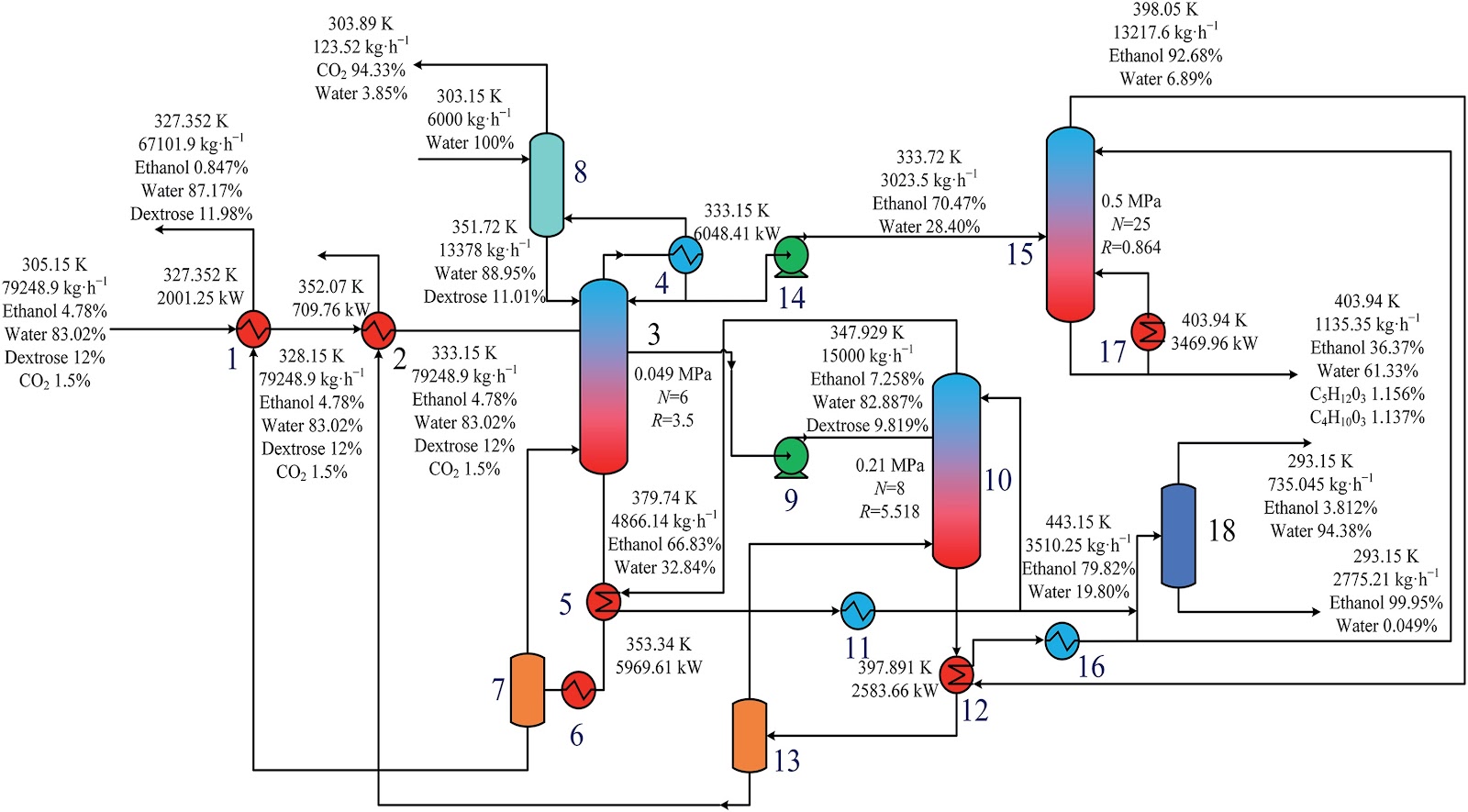
To address the challenges of high energy consumption and prominent costs in the traditional three-columns distillation process for cellulosic fuel ethanol, a distillation—molecular sieve coupling separation process is proposed. This process integrates a three-column (crude distillation column, first distillation column, second distillation column) system with a 3A molecular sieve adsorption deep dehydration unit. A thermal coupling network is constructed via differential pressure design (steam from medium/high-pressure columns as mutual heat sources, reboiler liquid waste heat for feed preheating), and molecular sieve adsorption conditions are optimized. The study first performs a thermodynamic consistency test on the ethanol—water system, determines optimal non-random two-liquid (NRTL) model binary interaction parameters via experimental data regression for Aspen Plus simulation. Aiming at minimum total annual cost (TAC), Aspen Plus is used to optimize process parameters (theoretical tray number, feed location, reflux ratio, side-draw position, etc.). Economic analysis shows this process reduces CO2 emission costs by 27.56%, TAC by 15.58% (to 5.123 × 10⁶ USD·a-1), and increases ethanol purity to >99.6%, providing an effective solution for green, efficient separation.
A cohesion loss model for determining residual strength of deep bedded sandstone
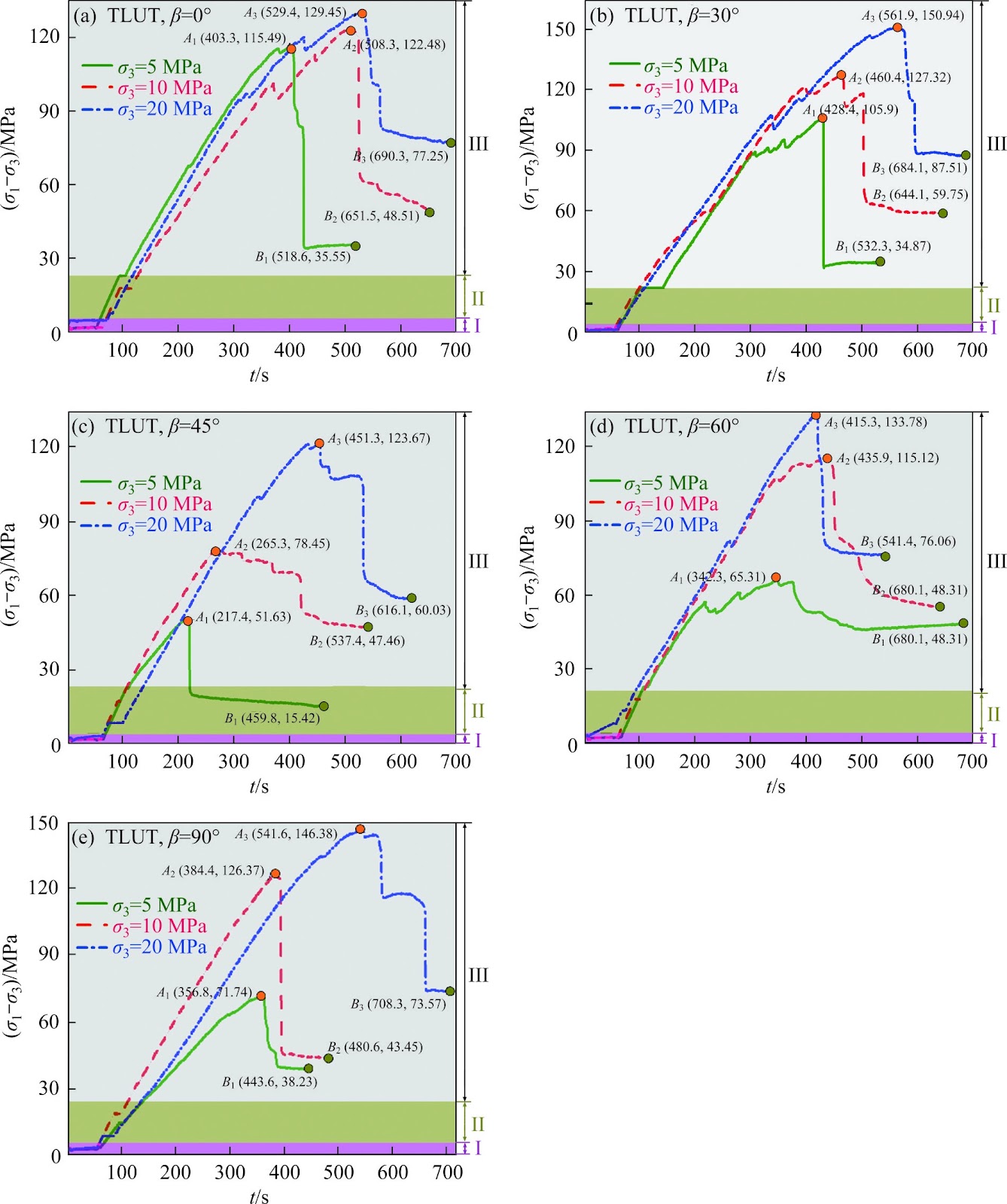
Rock residual strength, as an important input parameter, plays an indispensable role in proposing the reasonable and scientific scheme about stope design, underground tunnel excavation and stability evaluation of deep chambers. Therefore, previous residual strength models of rocks established were reviewed. And corresponding related problems were stated. Subsequently, starting from the effects of bedding and whole life-cycle evolution process, series of triaxial mechanical tests of deep bedded s
Federated model with contrastive learning and adaptive control variates for human activity recognition
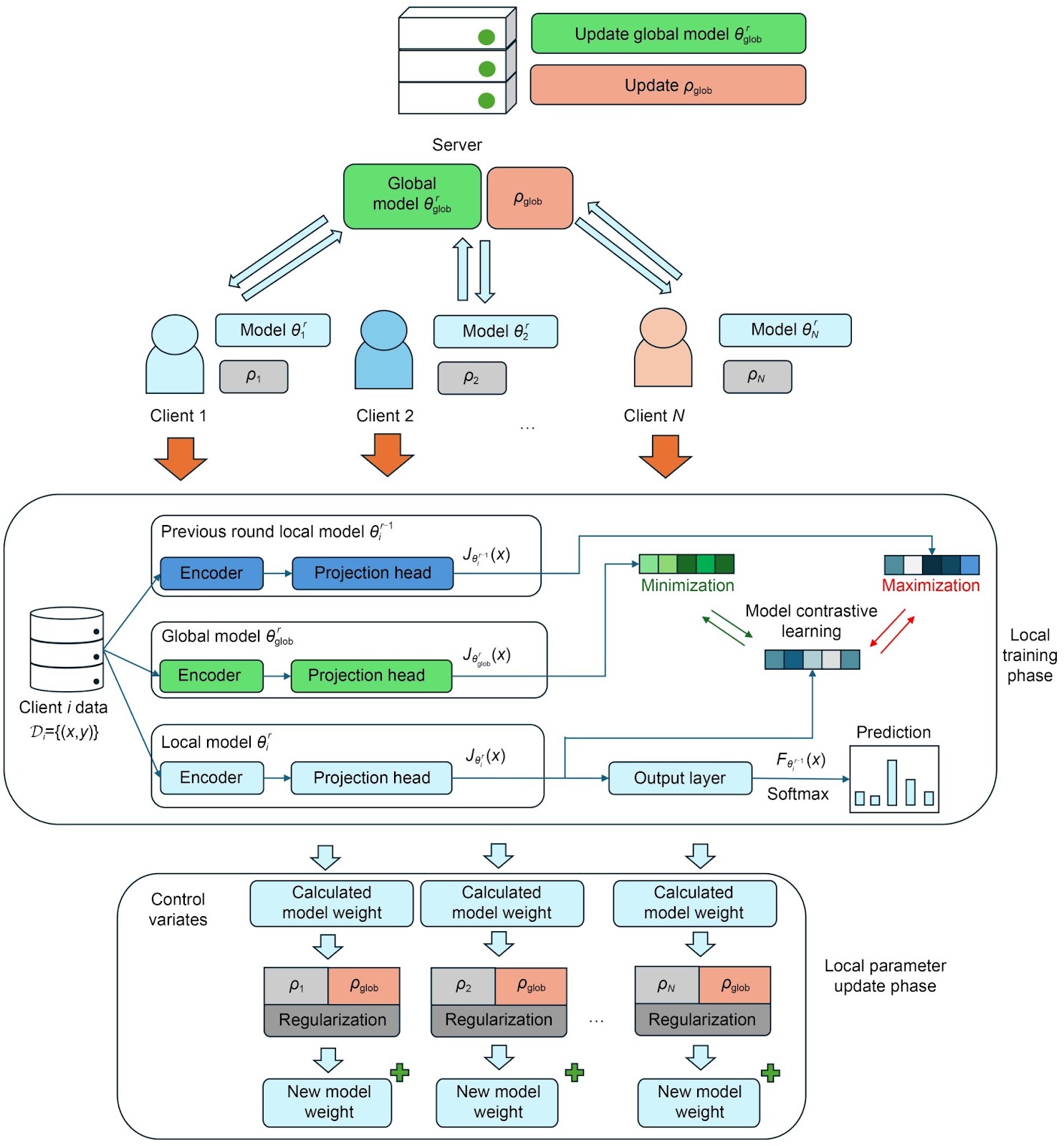
Recent attention to privacy issues demands a communication-safe method for training human activity recognition (HAR) models on client activity data. Federated learning (FL) has become a compelling technique to facilitate model training between the server and clients while preserving data privacy. However, classical FL methods often assume independent and identically distributed (IID) data among clients. This assumption does not hold true in practical scenarios. Human activity in real-world scena