SinoTechIntel Academic Portal
🏛️ Indexed Academic Journal

Journal of Inorganic Materials

Access authentic peer-reviewed engineering methodologies, experimental datasets, and scientific literature published in this journal on SinoTechIntel.

Total Research Papers: 5
Access: 100% Free Open Access
Browse by Publication Year & VolumeReset All Filters ✕
Select Specific Issue:

Published Research PapersFiltered: Year 2026 • Vol 41 • 7

Showing 3 of 5 peer-reviewed papers with full Graphical Abstracts.

Original ResearchVol 41, Issue 7 • pp. 100-112DOI: 10.15541/jim20260018Jan 15, 2026

Influence of Preparation Processes on the Structure and Properties of the Ductile Thermoelectric Material Ag2S0.4Te0.6

Authors: LIU Jinxiao, LIU Zhenhan, CHEN Xingyu, ZHOU Zhengyang, QIU Pengfei, ZHANG Jiawei, SHI Xun

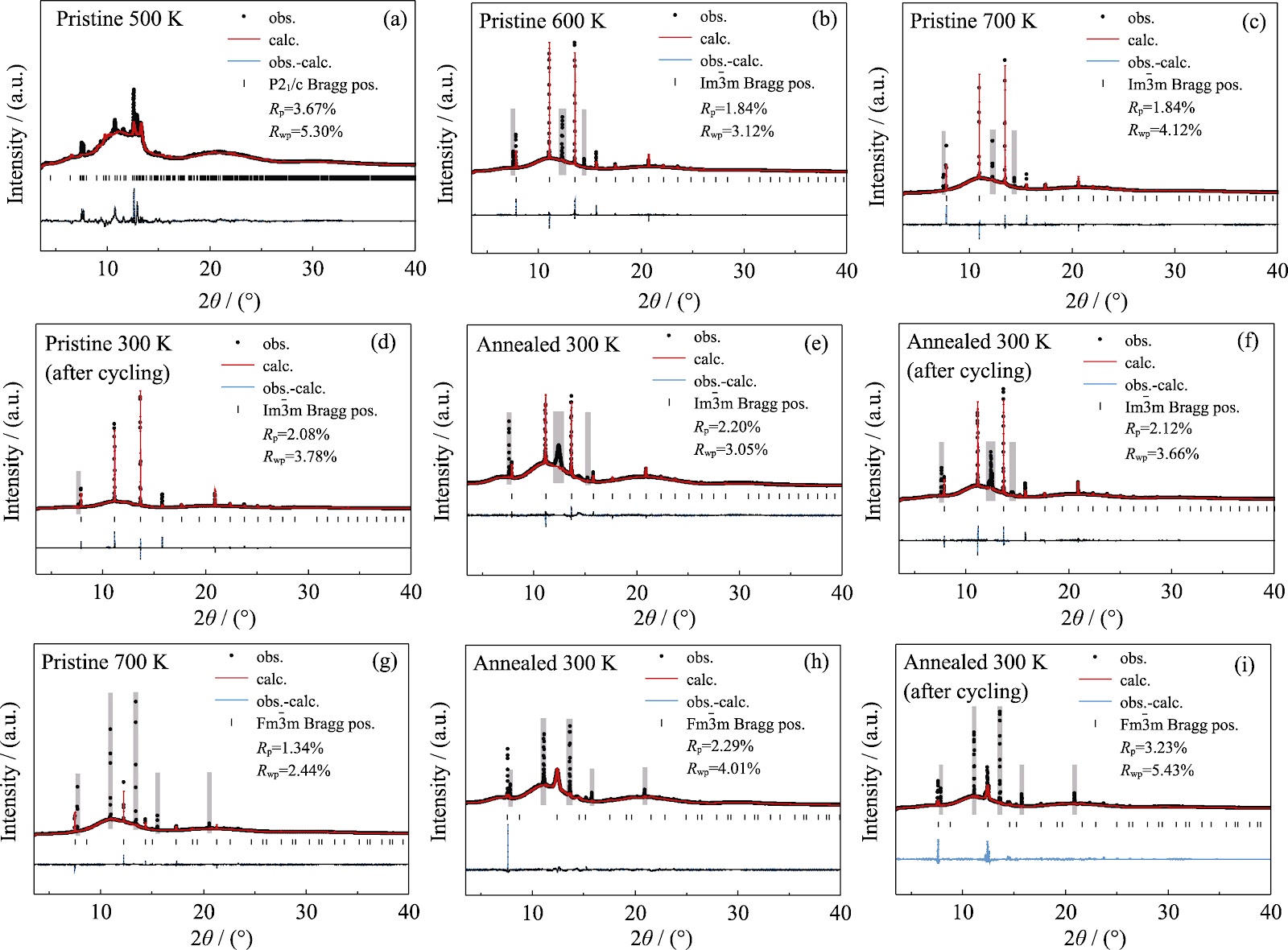
Ag2S0.4Te0.6 is an inorganic semiconductor with favorable ductility and thermoelectric performance, showing potential for applications in wearable electronics. Recent studies have indicated that optimization of preparation processes, such as annealing, can significantly enhance the ductility of the material, which is closely related to its phase composition and crystal structure. In this work, high-resolution synchrotron radiation powder X-ray diffraction data of the Ag2S0.4Te0.6 powder sample before and after annealing were collected over a temperature range of 110–700 K. By combining Rietveld structural refinement, high-resolution transmission electron microscopy, and atomic pair distribution function analysis, the influence of the annealing process on the phase composition and structural evolution behavior of the powder samples was investigated in detail. The results show that the pristine Ag2S0.4Te0.6 powder is predominantly amorphous, containing only a small amount of poorly crystalline monoclinic phase. During heating, the material gradually crystallizes, first forming a monoclinic phase, which subsequently transforms into mixed body-centered cubic (bcc) and face-centered cubic (fcc) phases. After cooling back to room temperature, the sample remains in a mixed state of bcc-dominated cubic crystallinity and amorphous phase. In contrast, the annealed powder sample already exhibits a mixed cubic crystalline/amorphous state at room temperature, and no obvious phase transition behavior is observed during heating. Moreover, the thermoelectric properties of Ag2S0.4Te0.6 bulk sample remain largely unaffected by the annealing process. This study provides structural insights for further understanding the annealing-induced improvement in ductility.
Influence of Preparation Processes on the Structure and Properties of the Ductile Thermoelectric Material Ag2S0.4Te0.6
Graphical Abstract
Original ResearchVol 41, Issue 7 • pp. 100-112DOI: 10.15541/jim20260115Jan 15, 2026

Research Progress on Controllable Synthesis of Blue-emitting ZnSeTe Quantum Dots and Quantum-dot Light-emitting Diode Devices

Authors: FEI Wenlong, WANG Yakun, LIAO Liangsheng

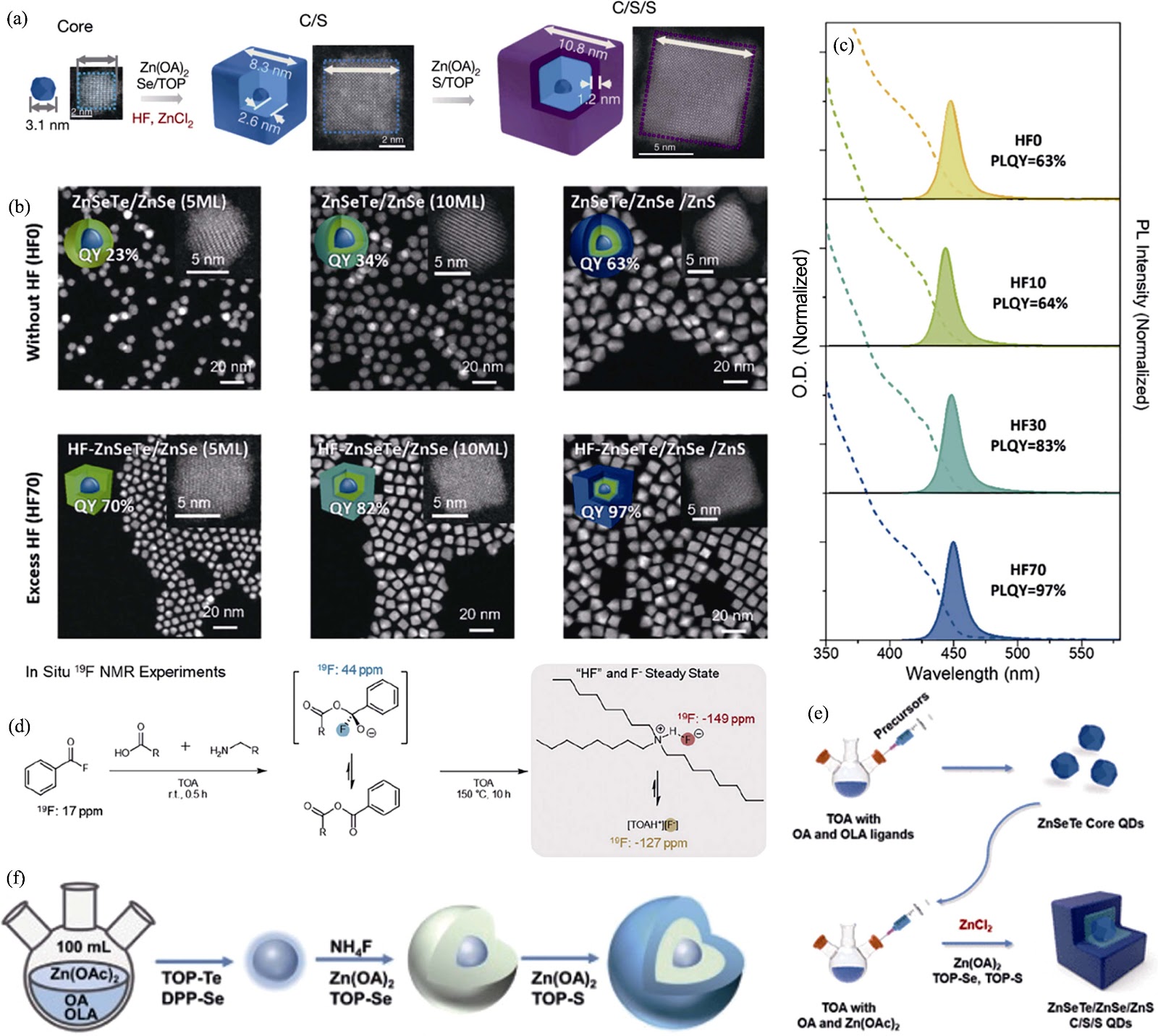
Colloidal quantum dots (QDs) are promising emissive materials for optoelectronic devices owing to their tunable emission wavelength, high color purity, and solution processability. Quantum-dot light-emitting diodes (QLEDs), an important complementary technology to organic light-emitting diodes, have demonstrated considerable potential in display applications. However, the inherent toxicity of conventional Cd- and Pb-based QDs has driven the development of heavy-metal-free QDs systems. Currently, heavy-metal-free blue QLEDs still lag significantly behind their red and green counterparts in device efficiency and operational stability, representing a critical bottleneck to their practical application. To address this issue, ZnSeTe QDs have attracted significant research interest due to their tunable bandgap and excellent blue emission properties. In this work, a comprehensive review of ZnSeTe QDs is provided. Firstly, their nucleation and growth mechanisms, as well as typical synthesis methods are introduced, and the key factors affecting their optical properties are discussed. On this basis, various performance optimization strategies, including band engineering, surface etching, shell passivation, and ligand regulation, are systematically summarized. Furthermore, electroluminescence mechanisms of QLEDs and recent progress on the application of ZnSeTe QDs in blue-emitting devices are reviewed. Finally, the current challenges, such as low emission efficiency, limited device lifetime, and charge injection imbalance, are discussed, and potential future development directions are proposed.

Research Progress on Controllable Synthesis of Blue-emitting ZnSeTe Quantum Dots and Quantum-dot Light-emitting Diode Devices
Graphical Abstract
Original ResearchVol 41, Issue 7 • pp. 100-112DOI: 10.15541/jim20260017Jan 15, 2026

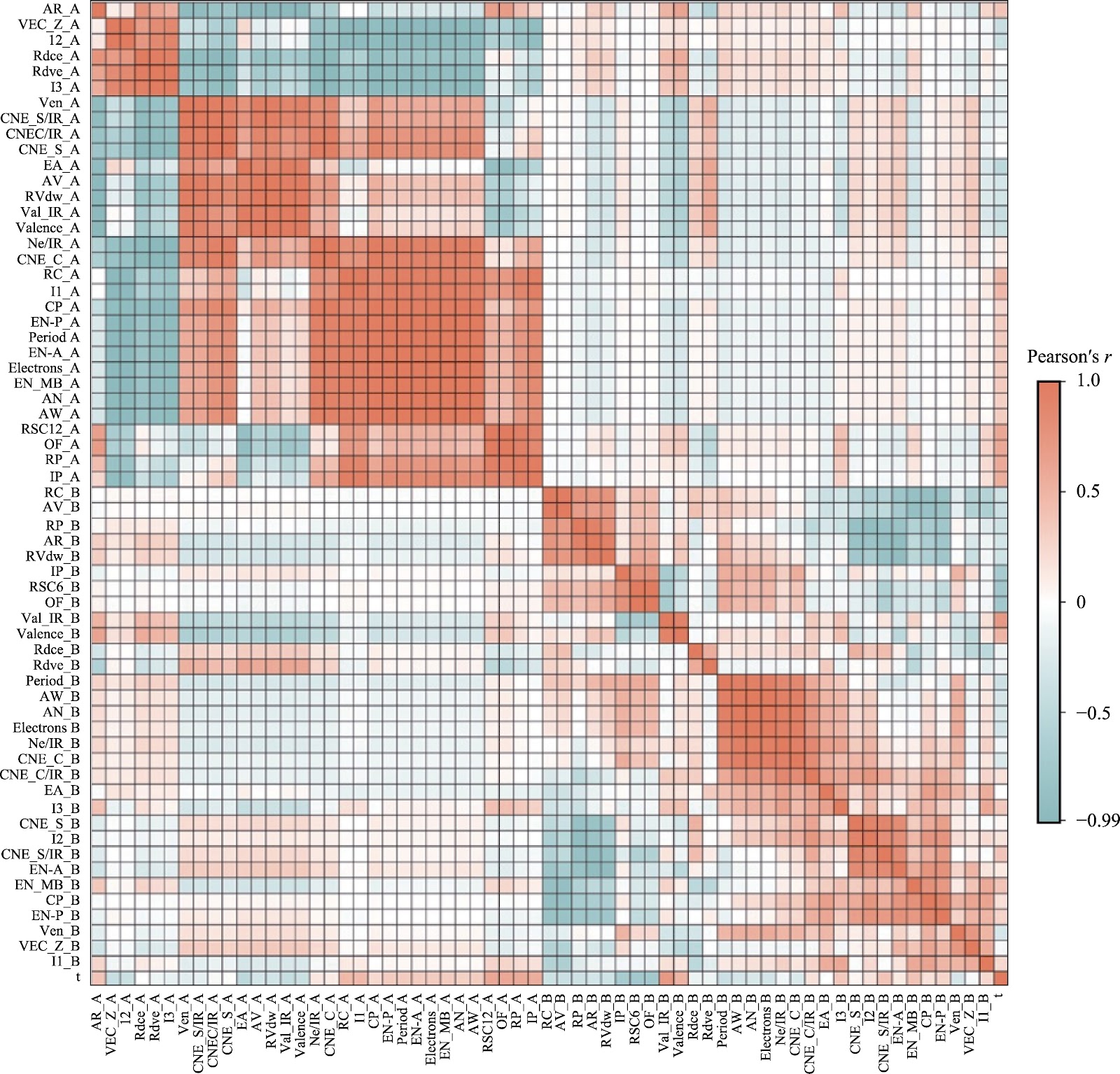
Machine Learning-Assisted Design of High-Temperature BSPT-Based Piezoelectric Ceramics with Enhanced Dual Properties

Authors: ZUO Zhiping, GUO Chun, ZHOU Zhiyong

BiScO3-PbTiO3 (BSPT)-based piezoelectric ceramics are promising for high-temperature applications above 350 °C due to their high Curie temperature (TC) and large piezoelectric coefficient (d33). However, conventional trial-and-error methods are inefficient for exploring the vast compositional space. Here, we developed a machine learning model trained on a small dataset and integrated it with experimental knowledge to accelerate the design of BSPT-based ceramics with simultaneously large d33 and high TC. Guided by the model, we designed Ga-W ion-pair co-doped 0.36BiScO3-0.64PbTi1–x(Ga2/3W1/3)xO3 (BSPTGW1000x) ceramics. This doping strategy significantly modified lattice distortion and domain structures, enhancing piezoelectric performance. Among compositions, BSPTGW10 (x=0.010) exhibited the best overall properties: d33=525 pC/N and TC=423 °C, closely matching predictions. Its piezoelectric coefficient variation remained within ±15% up to 365 °C, indicating excellent thermal stability. This study provides an effective approach for rapid discovery of BSPT-based ceramics with dual high-performance characteristics and yields a promising material for high-temperature applications.

Machine Learning-Assisted Design of High-Temperature BSPT-Based Piezoelectric Ceramics with Enhanced Dual Properties
Graphical Abstract