SinoTechIntel Academic Portal
🏛️ Indexed Academic JournalImpact Factor: 3.8

Int. Journal of Minerals, Metallurgy and Materials (矿物冶金与材料学报)

Authoritative peer-reviewed journal in materials science, metallurgy, chemistry and engineering technologies: Int. Journal of Minerals, Metallurgy and Materials (矿物冶金与材料学报)

Total Research Papers: 200
Access: 100% Free Open Access
Browse by Publication Year & VolumeReset All Filters ✕

Published Research PapersFiltered: Year 2025 • 32 • 6

Showing 2 of 200 peer-reviewed papers with full Graphical Abstracts.

Original ResearchVol. 32, Issue 6 • pp. 1451DOI: 10.1007/s12613-025-3170-2Jan 15, 2025

In-situ observation on bubble evolution during laser powder bed fusion of oxide ceramic

Authors: Zhun Su, Wenquan Lu, Zongye Ding, Liang Zhao, Fan Yang, Jianguo Li, Qiaodan Hu

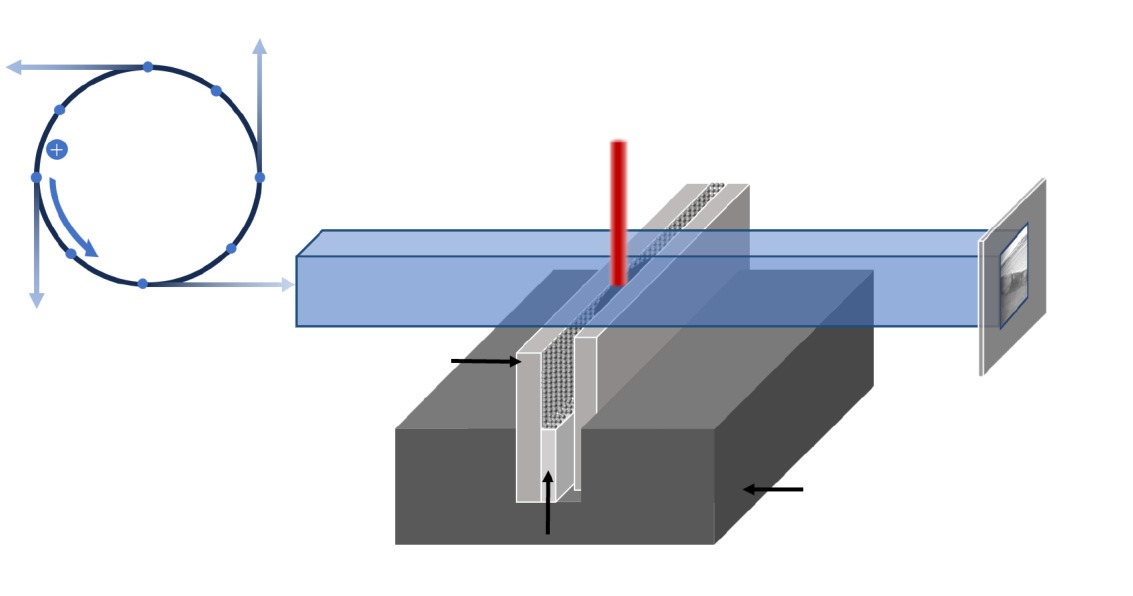
Laser powder bed fusion (LPBF) is used to fabricate complex-shaped, dense, and high-performance oxide ceramics. During LPBF, bubbles form and evolve in the melt pool and ultimately remain in the printed ceramics as pores, which significantly degrade the mechanical properties. Therefore, it is essential to understand the bubble behaviors during LPBF. Herein, we conducted an in-situ investigation of the bubble dynamics in the melt pool of homogeneously mixed Al2O3–Y2O3 powders using synchrotron high-speed X-ray imaging. The formation, growth, motion, and evolution of bubbles, as well as the relationship between the instability of melt flow and bubble rupture during LPBF, were elucidated. The findings reveal that bubbles from the interstices within the powder bed grow following three distinct modes, i.e., uplift growth, gas channel attachment, and bubble coalescence. Furthermore, melt flow oscillations caused by the bursting of large bubbles can lead to local instability of the melt pool. Results from this study enhance the understanding of bubble dynamics during LPBF and may provide valuable insights for pore elimination in LPBF-processed oxide ceramics.
In-situ observation on bubble evolution during laser powder bed fusion of oxide ceramic
Graphical Abstract
Original ResearchVol. 32, Issue 6 • pp. 1390DOI: 10.1007/s12613-024-2991-8Jan 15, 2025

Grain growth kinetics model of high-temperature ferrite and austenite in Ti microalloyed steel during continuous casting

Authors: Tianci Chen, Cheng Ji, Jianhua Yang, Yunguang Chi, Miaoyong Zhu

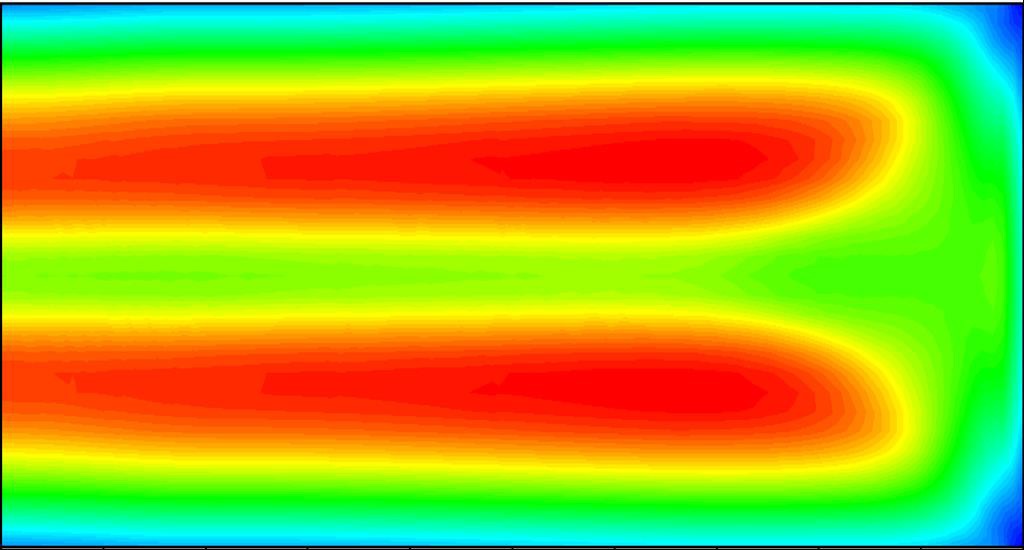
The microstructural characteristics of austenite in Ti microalloyed steel during continuous casting significantly influence the thermoplasticity, thereby affecting the quality of the slab. In this work, a prediction model for two-stage austenite growth under varying cooling rates was established by incorporating the effect of second-phase pinning and high-temperature ferrite–austenite phase transformation and growth theory. The results indicate that with 0.02wt% Ti, the high-temperature ferrite growth exhibits typical parabolic growth characteristics. When the Ti content increases to 0.04wt%, the high-temperature ferrite grain boundary migration rate significantly slows during the initial solidification stage. The predicted austenite grain sizes for 0.02wt% Ti microalloyed steel at the center, quarter, and surface of the slab are 5592, 3529, and 1524 μm, respectively. For 0.04wt% Ti microalloyed steel, the austenite grain sizes are 4074, 2942, and 1179 μm at the same positions. The average error is within 5%. As the Ti content increases from 0.02wt% to 0.04wt%, the austenite grain refinement at the center is most significant, with an average grain size reduction of 27.14%.

Grain growth kinetics model of high-temperature ferrite and austenite in Ti microalloyed steel during continuous casting
Graphical Abstract