Review on Ship Structural Damage and Protection Subjected to Underwater Contact Explosions
Authors: MING Furen, JIN Yuenan, ZHANG Bowen, ZHU Shipeng, JIANG Ruihan, ZHANG Nu, ZHANG Aman
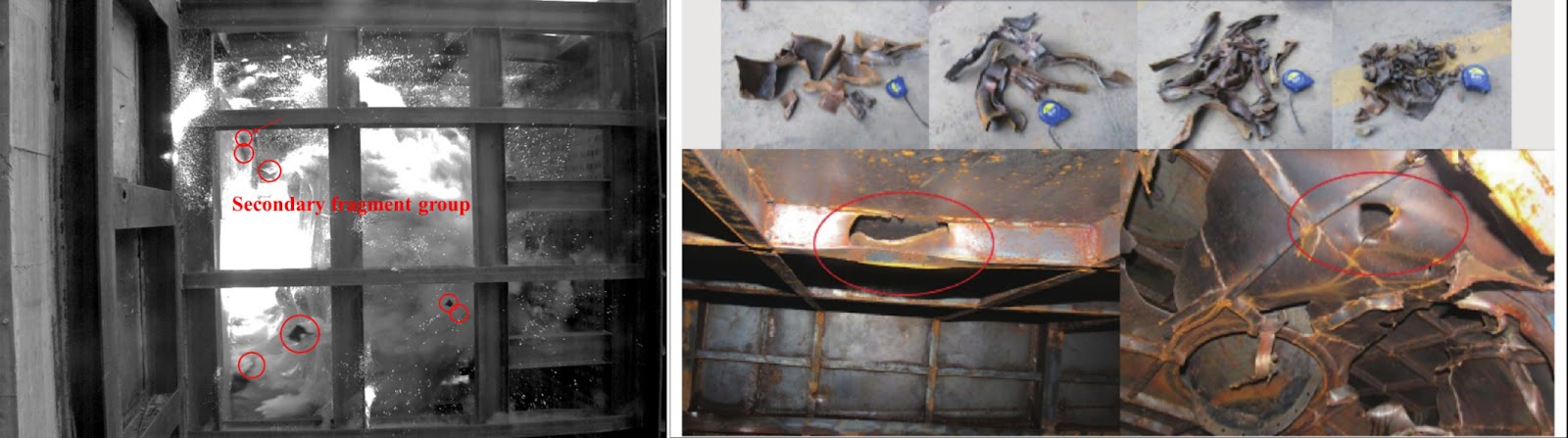
Underwater contact explosions from torpedoes and mines pose severe threats to ship survivability. The coupled effects of shock waves, bubbles, and secondary fragments induce complex structural damage. This review first analyzes the load characteristics of underwater contact explosions, detailing the spatial-temporal evolution of shock waves, bubbles, and secondary fragments. Subsequently, it examines protective mechanisms from two perspectives: multi-cabin structural protection and composite structure/material protection, focusing on damage suppression and energy dissipation. Finally, key technical challenges are summarized to guide future research. The review highlights that shock waves cause initial indentation and perforation of the outer plate, while bubble pulsation and collapse jets dominate subsequent large deformation and tearing of bulkheads. Experimental studies show that stiffened plates exhibit significant strain growth during bubble pulsation, potentially exceeding shock wave effects. Multi-cabin designs, such as liquid-filled compartments, effectively mitigate damage through energy absorption and impedance mismatch. Composite materials offer enhanced blast resistance but face scalability issues. The paper underscores the need for high-fidelity numerical methods and experimental validation to resolve controversies regarding dominant damage mechanisms. This work provides a comprehensive reference for advancing ship structural protection against underwater contact explosions.