SinoTechIntel Academic Portal
πŸ›οΈ Indexed Academic JournalImpact Factor: 3.8 (Q1 - Elsevier)Original: δΈ­ε›½εŒ–ε­¦ε·₯程学ζŠ₯ (θ‹±ζ–‡η‰ˆ)

Chinese Journal of Chemical Engineering

Access authentic peer-reviewed engineering methodologies, experimental datasets, and scientific literature published in this journal on SinoTechIntel.

Total Research Papers: 98
Access: 100% Free Open Access
Browse by Publication Year & VolumeReset All Filters βœ•

Published Research PapersFiltered: Year 2025 β€’ Vol. 32 β€’ Issue 10

Showing 3 of 98 peer-reviewed papers with full Graphical Abstracts.

Original ResearchVol. 32, Issue 10 β€’ pp. 591-603DOI: 10.1016/j_cjche_144878868β€’ Oct 19, 2025

Aggregation-regulated bioreduction process of graphene oxide by Shewanella bacteria

Authors: Kaixin Han, Yibo Zeng, Yinghua Lu, Ping Zeng, Liang Shen

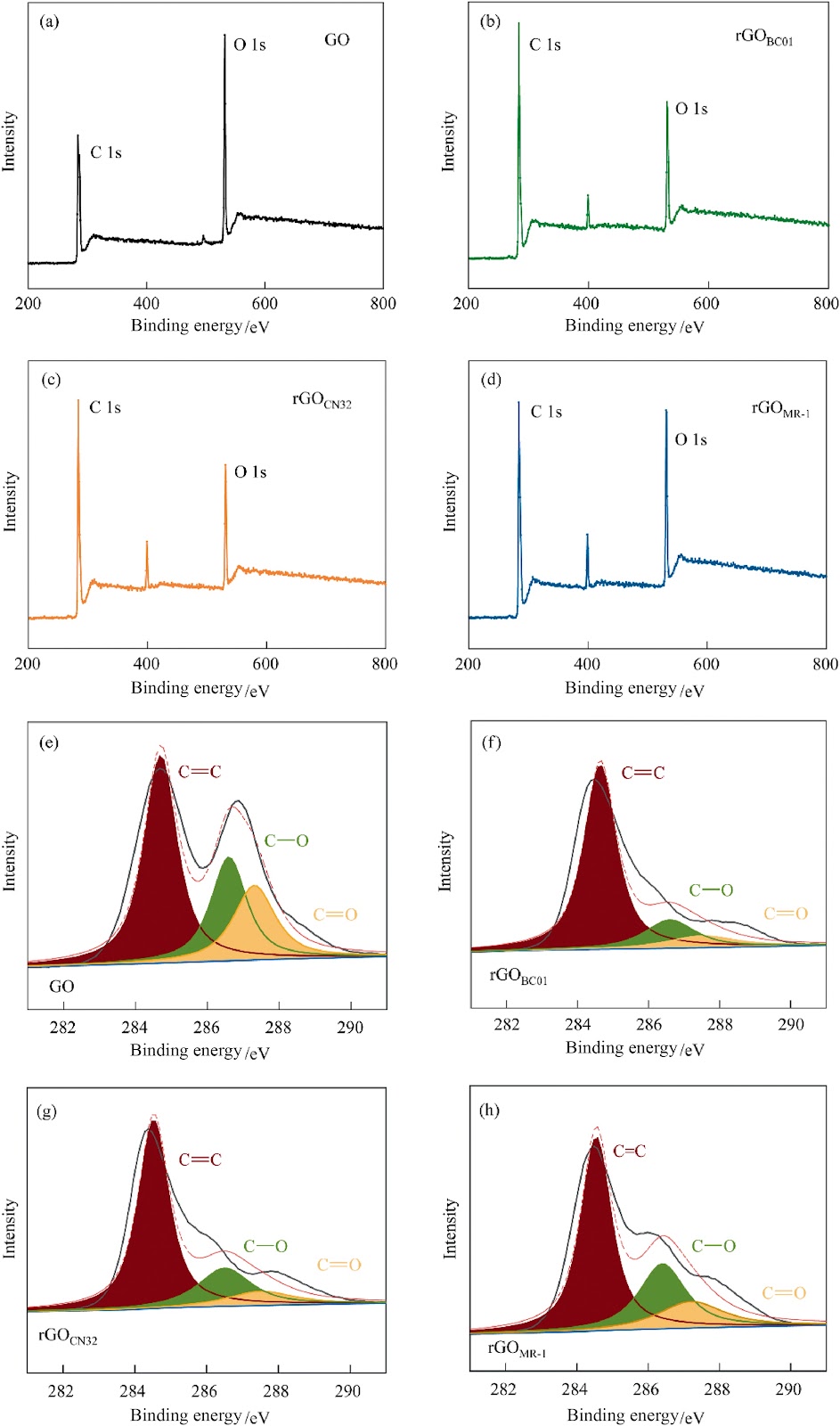
The bioreduction of graphene oxide (GO) using environmentally functional bacteria such as Shewanella represents a green approach to produce reduced graphene oxide (rGO). This process differs from the chemical reduction that involves instantaneous molecular reactions. In bioreduction, the contact of bacterial cells and GO is considered the rate-limiting step. To reveal how the bacteriaeGO integration regulates rGO production, the comparative experiments of GO and three Shewanella strains were carried out. Fourier-transform infrared spectroscopy, X-ray photoelectron spectroscopy, Raman spectroscopy, and atomic force microscopy were used to characterize the reduction degree and the aggregation degree. The results showed that a spontaneous aggregation of GO and Shewanella into the condensed entity occurred within 36 h. A positive linear correlation was established, linking three indexes of the aggregation potential, the bacterial reduction ability, and the reduction degree (ID/IG) comprehensively. Β© 2024 The Chemical Industry and Engineering Society of China, and Chemical Industry Press Co., Ltd. All rights reserved.
Aggregation-regulated bioreduction process of graphene oxide by Shewanella bacteria
Graphical Abstract
Original ResearchVol. 32, Issue 10 β€’ pp. 397-409DOI: 10.1016/j_cjche_144875618β€’ Oct 24, 2023

Enhanced activation of peroxymonosulfate by Fe/N co-doped ordered mesoporous carbon with dual active sites for efficient removal of m-cresol

Authors: Donghui Li, Wenzhe Wu, Xue Ren, Xixi Zhao, Hongbing Song, Meng Xiao, Quanhong Zhu, Hengjun Gai, Tingting Huang

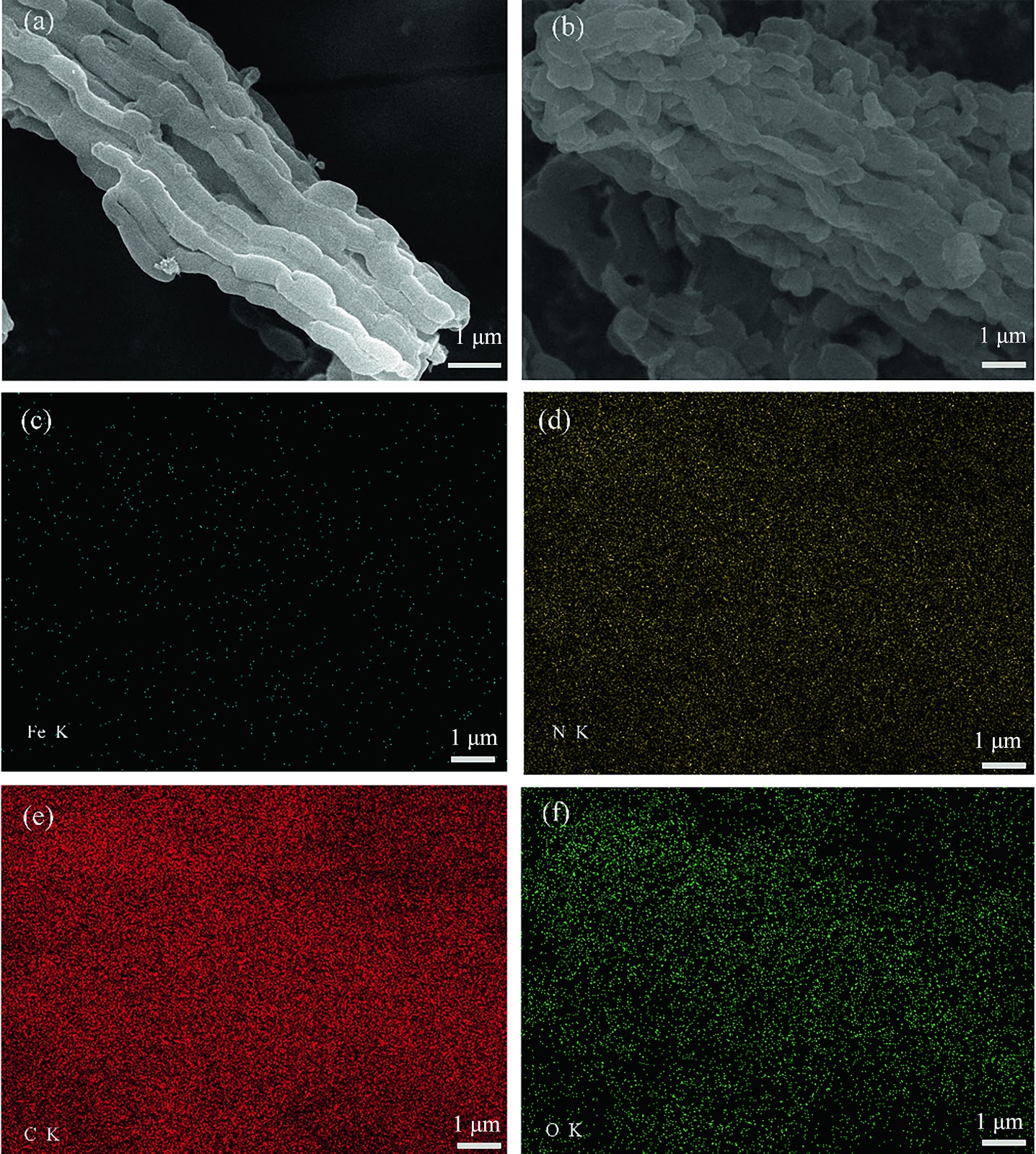
The novel Fe-N co-doped ordered mesoporous carbon with high catalytic activity in m-cresol removal was prepared by urea-assisted impregnation and simple pyrolysis method. During the preparation of the Fe-NC catalyst, the complexation of N elements in urea could anchor Fe, and the formation of C3N4 during urea pyrolysis could also prevent migration and aggregation of Fe species, which jointly improve the dispersion and stability of Fe. The FeN4 sites and highly dispersed Fe nanoparticles synergistically trigger the dual-site peroxymonosulfate (PMS) activation for highly efficient m-cresol degradation, while the ordered mesoporous structure of the catalyst could improve the mass transfer rate of the catalytic process, which together promote catalytic degradation of m-cresol by PMS activation. Reactive oxygen species (ROS) analytic experiments demonstrate that the system degrades m-cresol by free radical pathway mainly based on SO4β€’βˆ’ and β€’OH, and partially based on β€’OH as the active components, and a possible PMS activation mechanism by 5Fe-50 for m-cresol degradation was proposed. This study can provide theoretical guidance for the preparation of efficient and stable catalysts for the degradation of organic pollutants by activated PMS.

Enhanced activation of peroxymonosulfate by Fe/N co-doped ordered mesoporous carbon with dual active sites for efficient removal of m-cresol
Graphical Abstract
Original ResearchVol. 32, Issue 10 β€’ pp. 601-613DOI: 10.1016/j_cjche_144878040β€’ Oct 10, 2023

Metal-organic-framework-derived copper-based catalyst for multicomponent C–S coupling reaction

Authors: Lixin Chen, Hui Zhang, Linxi Hou, Xin Ge

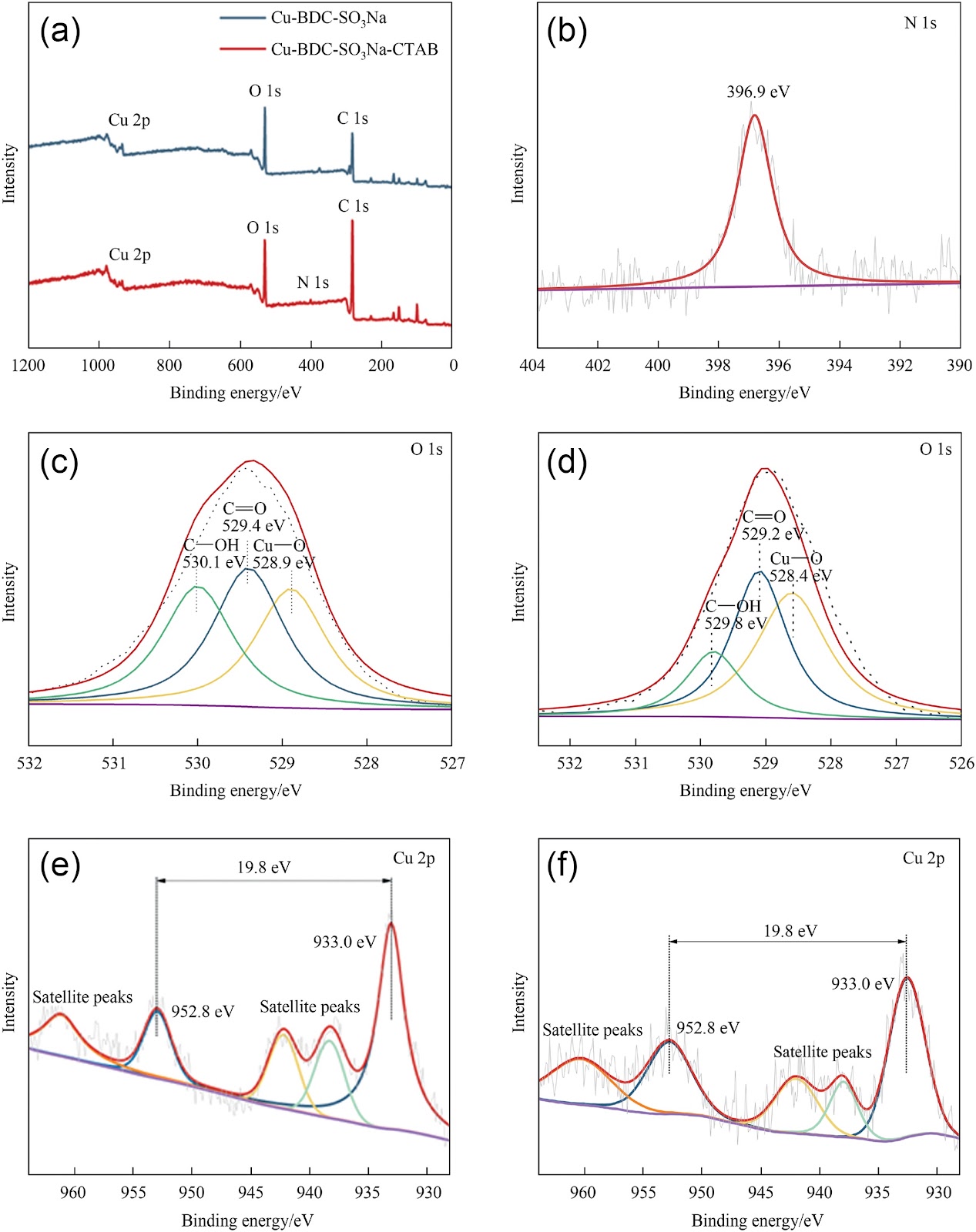
Copper-based metal-organic frameworks (Cu-MOFs) are a promising multiphase catalyst for catalyzing C–S coupling reactions by virtue of their diverse structures and functions. However, the unpleasant odor and instability of the organosulfur, as well as the mass-transfer resistance that exists in multiphase catalysis, have often limited the catalytic application of Cu-MOFs in C–S coupling reactions. In this paper, a Cu-MOFs catalyst modified by cetyltrimethylammonium bromide (CTAB) was designed to enhance mass transfer by increasing the adsorption of organic substrates using the long alkanes of CTAB. Concurrently, elemental sulfur was used to replace organosulfur to achieve a highly efficient and atom-economical multicomponent C–S coupling reaction.

Metal-organic-framework-derived copper-based catalyst for multicomponent C–S coupling reaction
Graphical Abstract