Key Takeaways & Executive Findings
- •• Spontaneous aggregation of GO and Shewanella cells into condensed entities occurs within 36 hours, influencing the bioreduction process. • A positive linear correlation exists among aggregation potential, bacterial reduction ability, and the reduction degree (ID/IG) of graphene oxide. • The study provides mechanistic insights into the rate-limiting contact step in microbial reduction of GO, advancing green nanomaterial synthesis. • Findings support the use of Shewanella for environmentally friendly production of reduced graphene oxide with competitive properties.
Abstract
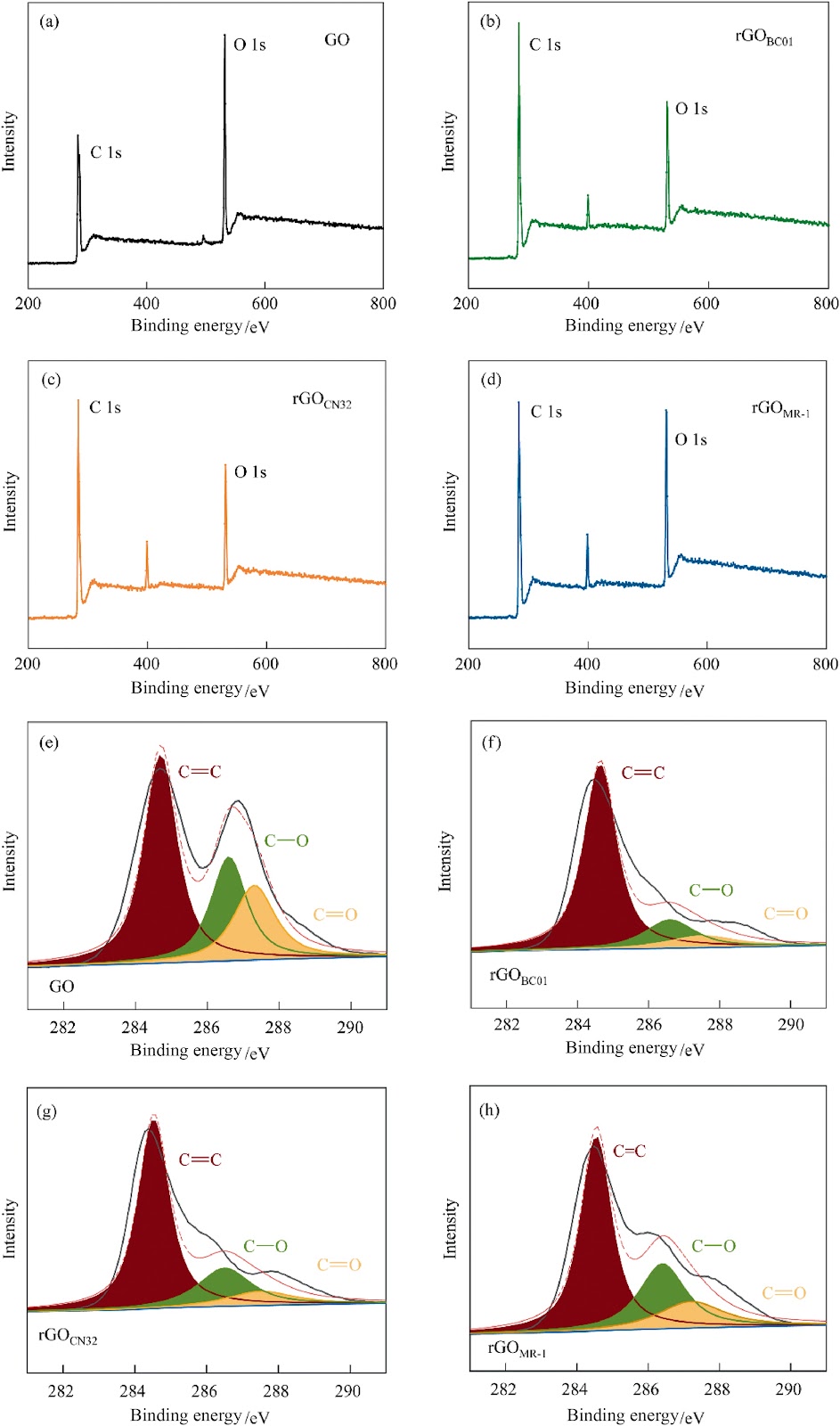
The bioreduction of graphene oxide (GO) using environmentally functional bacteria such as Shewanella represents a green approach to produce reduced graphene oxide (rGO). This process differs from the chemical reduction that involves instantaneous molecular reactions. In bioreduction, the contact of bacterial cells and GO is considered the rate-limiting step. To reveal how the bacteriaeGO integration regulates rGO production, the comparative experiments of GO and three Shewanella strains were carried out. Fourier-transform infrared spectroscopy, X-ray photoelectron spectroscopy, Raman spectroscopy, and atomic force microscopy were used to characterize the reduction degree and the aggregation degree. The results showed that a spontaneous aggregation of GO and Shewanella into the condensed entity occurred within 36 h. A positive linear correlation was established, linking three indexes of the aggregation potential, the bacterial reduction ability, and the reduction degree (ID/IG) comprehensively. © 2024 The Chemical Industry and Engineering Society of China, and Chemical Industry Press Co., Ltd. All rights reserved.
1. Introduction
As an important member of graphene-family materials, the reduced graphene oxide (rGO) is renowned for its exceptional properties and diverse applications in biological, environmental, catalytic optoelectronic, and storage domains. Typically, rGO is produced by reducing graphene oxide (GO) using chemical reductants such as NaBH4, N2H4, LiAlH4, etc., or through thermal treatment. However, these methods often lead to water pollution and elevated production cost. Seeking an environment-friendly, safe, and economical alternative, the microbial reduction has emerged as a viable solution, offering ease of handling and high yields. Various bacteria, including Shewanella spp., Escherichia coli, Bacillus sphaericus, Geobacter sulfurreducens, Pseudoalteromonas sp., and the mixotroph of activated sludge, have demonstrated their ability to reduce GO to rGO. Particularly, Shewanella, the model bacteria for studying extracellular electron transport (EET), was first used by Salas et al. in the reduction of GO, making a significant step toward green nanomaterials.
Shewanella spp. can reduce GO mildly and effectively at room temperature under both aerobic and anaerobic conditions, and the electrochemical properties of rGO produced by Shewanella spp. have been proven competitive to those prepared by chemical methods. Unlike chemical reduction, where the soluble reducing molecules are directly added in GO, in microbial reduction, electrons generated by Shewanella cells have been recognized as to have the reducing power to drive extracellular reduction reactions via EET. Thus, to ensure sufficient redox binding sites, the contact state of GO and bacteria at the mm scale could be the rate-limiting step in the overall GO bioreduction process. In previous studies, the bacterial reduction experiments were conducted by mixing GO with bacteria and then being cultured in the incubator. Apart from the appearance change of the solution from light color to dark, a spontaneous aggregation between the GO colloids and suspended cells can be observed, leading to a variety of terminologies (e.g., precipitates, complex, composite, hydrogels, aerogel) used to describe these insoluble aggregates containing rGO-semi-finished products and bacteria. Meanwhile, the correlation of GO-reduction degree and the aggregates formation has remained largely at the level of visual observation and empirical judgment. Although the surface and interfacial physiochemical properties of GO and bacteria have been known to be crucial for their attraction, how interaction forces drive GO bioreduction process is still unclear.
Loading authentic research manuscript (Pages 1–5)...
Kaixin Han, Yibo Zeng, Yinghua Lu, Ping Zeng, Liang Shen (2025). Aggregation-regulated bioreduction process of graphene oxide by Shewanella bacteria. Chinese Journal of Chemical Engineering. https://doi.org/10.1016/j_cjche_144878868
Research & Educational Purpose Only:The translations, structured abstracts, analytical annotations, and data reports provided by SinoTechIntel are intended exclusively for academic research, internal corporate R&D, and educational benchmarking. They do not constitute formal engineering, chemical safety, legal, or professional advice.
Copyright & Intellectual Property Notice: Original copyright of the underlying source articles and experimental data remains with the respective authors, institutions, and original publishing journals. SinoTechIntel claims intellectual property only over its proprietary translations, analytical syntheses, and AEO structured enhancements in accordance with international fair use and academic citation principles.
Frequently Asked Questions
What is the main focus of this study?
The study investigates how the aggregation between graphene oxide (GO) and Shewanella bacteria regulates the bioreduction process, establishing a correlation between aggregation potential, bacterial reduction ability, and the reduction degree of GO.
Which bacteria were used in the experiments?
Three Shewanella strains were used: BC01, CN32, and MR-1.
What techniques were used to characterize the reduction and aggregation degrees?
Fourier-transform infrared spectroscopy (FTIR), X-ray photoelectron spectroscopy (XPS), Raman spectroscopy, and atomic force microscopy (AFM) were employed.
What was the key finding regarding aggregation and reduction?
A spontaneous aggregation of GO and Shewanella into condensed entities occurred within 36 hours, and a positive linear correlation was found among aggregation potential, bacterial reduction ability, and the reduction degree (ID/IG).
Why is microbial reduction of GO considered environmentally friendly?
Microbial reduction using bacteria like Shewanella avoids hazardous chemical reductants and high-energy thermal treatments, offering a green, safe, and economical alternative for producing reduced graphene oxide.
Related Technical Papers & Translations
Design and optimization of a high-efficiency distillation process for cellulosic fuel ethanol integrated with thermal coupling and molecular sieve adsorption
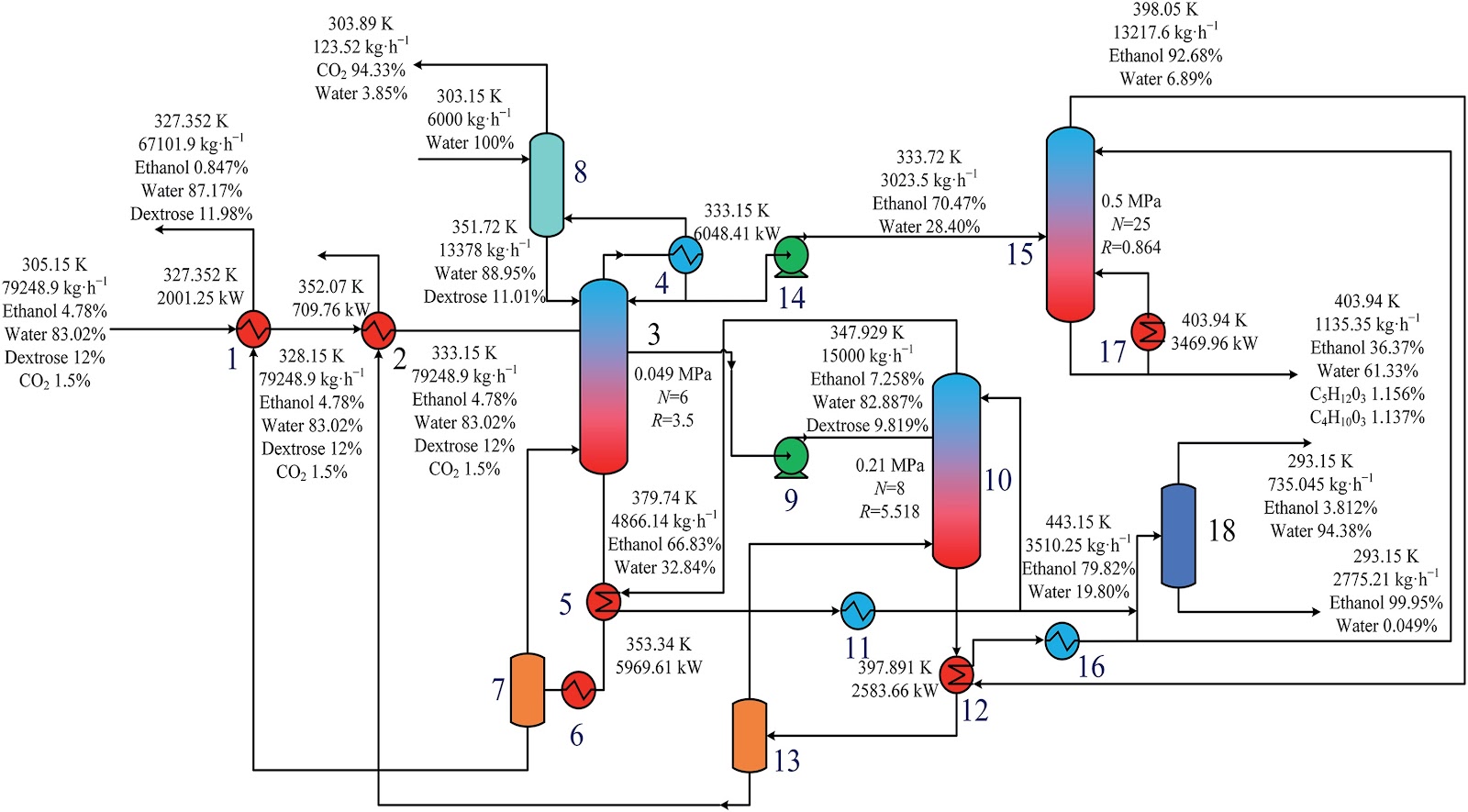
To address the challenges of high energy consumption and prominent costs in the traditional three-columns distillation process for cellulosic fuel ethanol, a distillation—molecular sieve coupling separation process is proposed. This process integrates a three-column (crude distillation column, first distillation column, second distillation column) system with a 3A molecular sieve adsorption deep dehydration unit. A thermal coupling network is constructed via differential pressure design (steam from medium/high-pressure columns as mutual heat sources, reboiler liquid waste heat for feed preheating), and molecular sieve adsorption conditions are optimized. The study first performs a thermodynamic consistency test on the ethanol—water system, determines optimal non-random two-liquid (NRTL) model binary interaction parameters via experimental data regression for Aspen Plus simulation. Aiming at minimum total annual cost (TAC), Aspen Plus is used to optimize process parameters (theoretical tray number, feed location, reflux ratio, side-draw position, etc.). Economic analysis shows this process reduces CO2 emission costs by 27.56%, TAC by 15.58% (to 5.123 × 10⁶ USD·a-1), and increases ethanol purity to >99.6%, providing an effective solution for green, efficient separation.
A cohesion loss model for determining residual strength of deep bedded sandstone
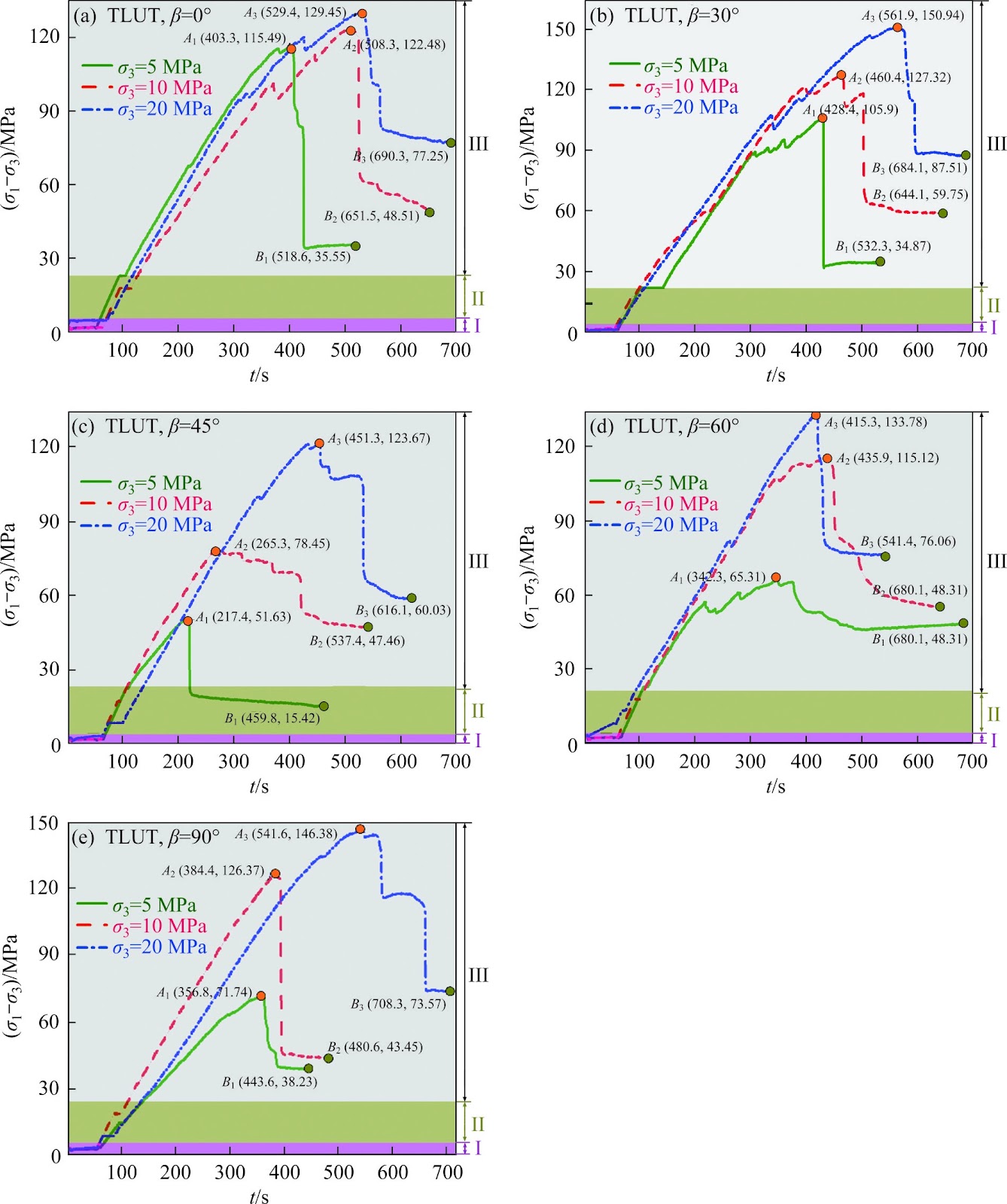
Rock residual strength, as an important input parameter, plays an indispensable role in proposing the reasonable and scientific scheme about stope design, underground tunnel excavation and stability evaluation of deep chambers. Therefore, previous residual strength models of rocks established were reviewed. And corresponding related problems were stated. Subsequently, starting from the effects of bedding and whole life-cycle evolution process, series of triaxial mechanical tests of deep bedded s
Federated model with contrastive learning and adaptive control variates for human activity recognition
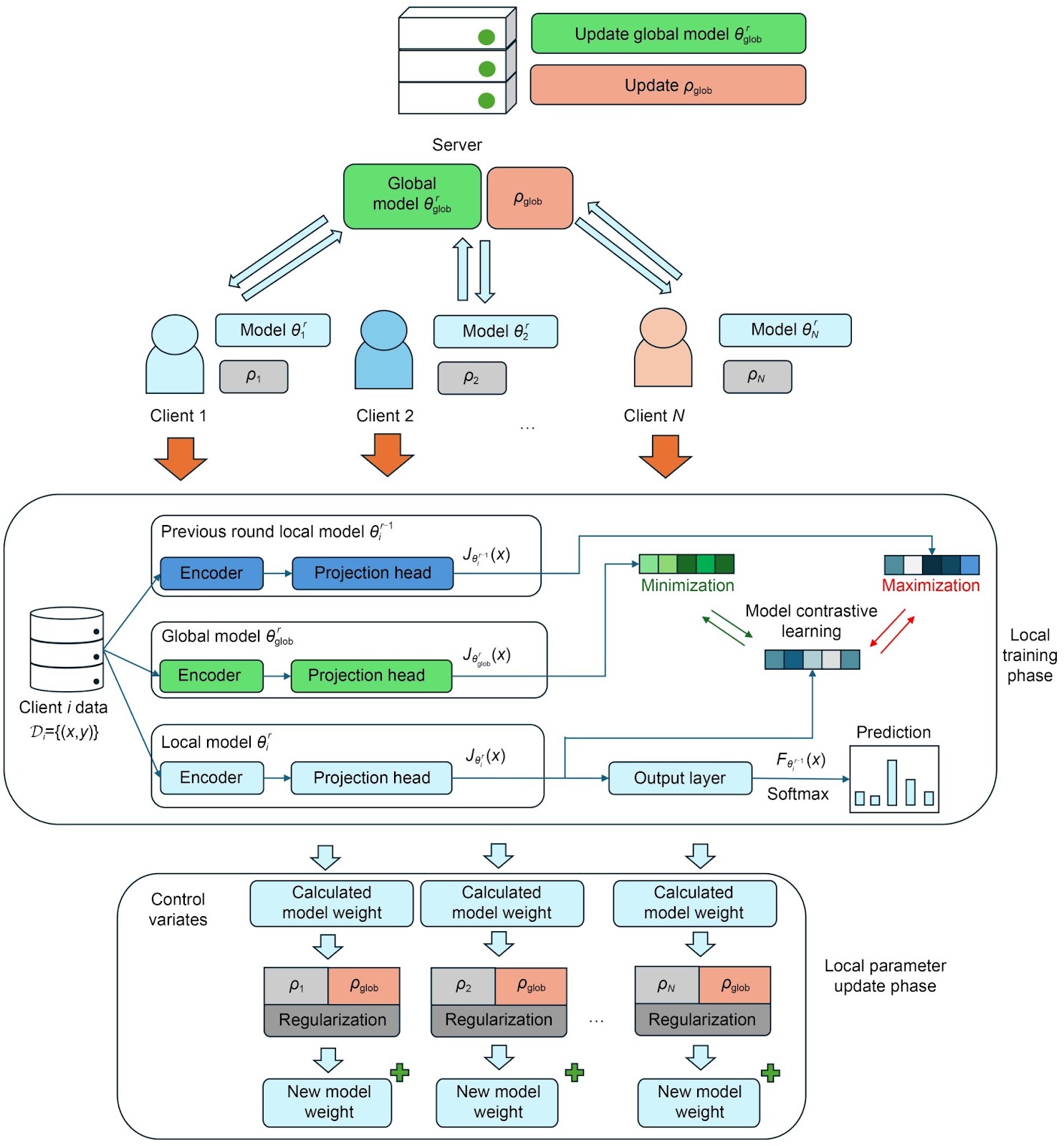
Recent attention to privacy issues demands a communication-safe method for training human activity recognition (HAR) models on client activity data. Federated learning (FL) has become a compelling technique to facilitate model training between the server and clients while preserving data privacy. However, classical FL methods often assume independent and identically distributed (IID) data among clients. This assumption does not hold true in practical scenarios. Human activity in real-world scena