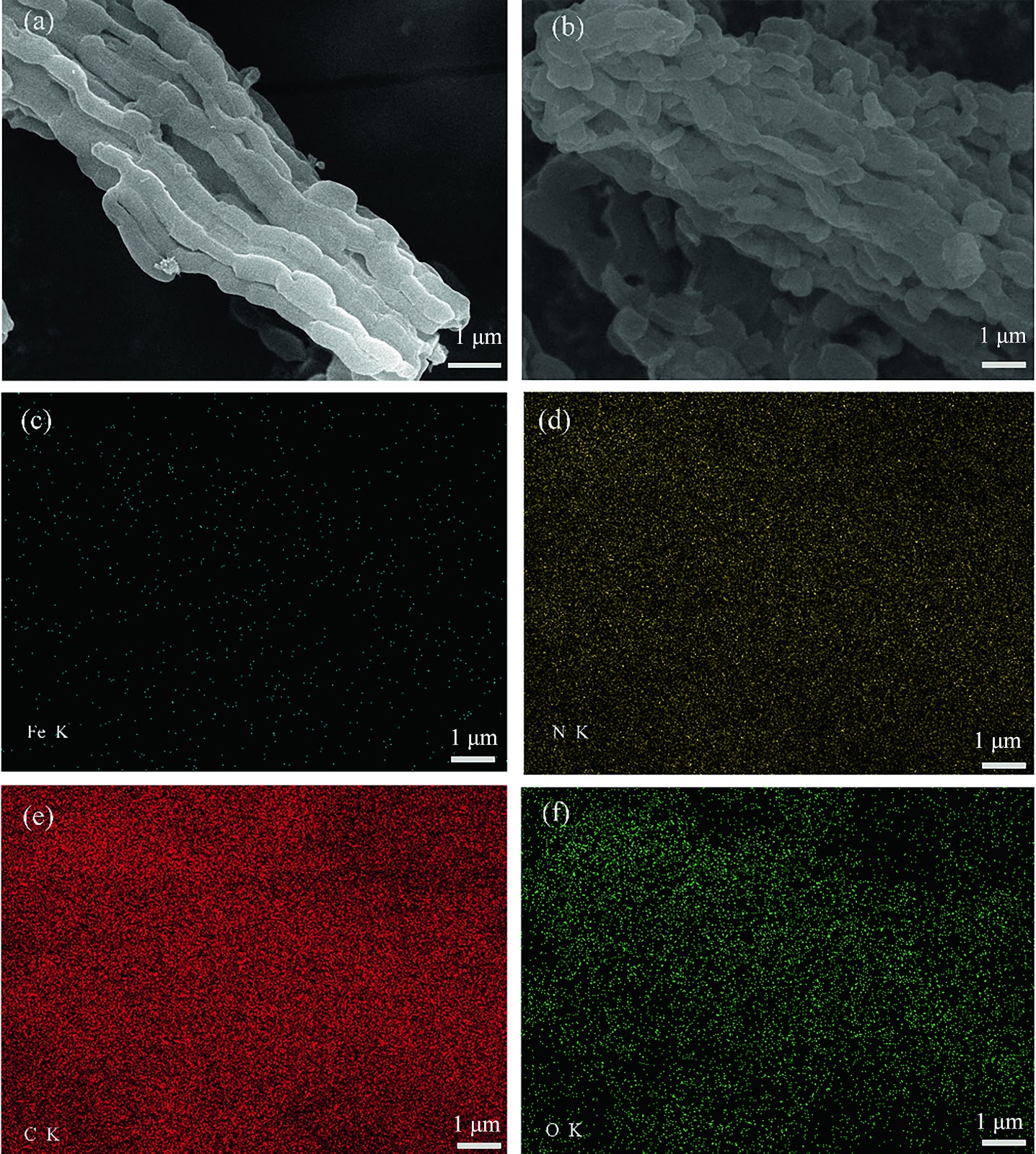
Key Takeaways & Executive Findings
- •• Fe/N co-doped ordered mesoporous carbon (Fe-NC) with dual active sites (FeN4 and Fe nanoparticles) exhibits high catalytic activity for m-cresol degradation via peroxymonosulfate (PMS) activation. • Urea-assisted impregnation and pyrolysis enhance Fe dispersion and stability, preventing aggregation and improving catalyst performance. • The ordered mesoporous structure facilitates mass transfer, contributing to efficient degradation. • The degradation mechanism involves sulfate and hydroxyl radicals, with a proposed PMS activation pathway for m-cresol removal.
Abstract
The novel Fe-N co-doped ordered mesoporous carbon with high catalytic activity in m-cresol removal was prepared by urea-assisted impregnation and simple pyrolysis method. During the preparation of the Fe-NC catalyst, the complexation of N elements in urea could anchor Fe, and the formation of C3N4 during urea pyrolysis could also prevent migration and aggregation of Fe species, which jointly improve the dispersion and stability of Fe. The FeN4 sites and highly dispersed Fe nanoparticles synergistically trigger the dual-site peroxymonosulfate (PMS) activation for highly efficient m-cresol degradation, while the ordered mesoporous structure of the catalyst could improve the mass transfer rate of the catalytic process, which together promote catalytic degradation of m-cresol by PMS activation. Reactive oxygen species (ROS) analytic experiments demonstrate that the system degrades m-cresol by free radical pathway mainly based on SO4•− and •OH, and partially based on •OH as the active components, and a possible PMS activation mechanism by 5Fe-50 for m-cresol degradation was proposed. This study can provide theoretical guidance for the preparation of efficient and stable catalysts for the degradation of organic pollutants by activated PMS.
1. Introduction
With the vigorous development of the coal chemical industry, the problem of water pollution continues to increase [1]. m-Cresol is one of the main pollutants in coal chemical wastewater, which has the characteristics of high toxicity and refractory degradation, the effective removal of m-cresol is of great significance to the ecological environment [2,3].
In recent years, many advanced oxidation methods have emerged in wastewater treatment, such as photocatalytic oxidation [4,5], Fenton oxidation [6–8], supercritical catalytic oxidation [9], catalytic wet oxidation [10,11] and sulfate radical (SO4•−) based advanced oxidation process (SR-AOP) [12–16]. Among them, although photocatalytic oxidation can effectively degrade phenol, the unstable activity of photocatalytic materials hinders their reuse. Moreover, as a homogeneous free radical reaction, Fenton oxidation has a significant effect on reducing the chemical oxygen demand (COD) in wastewater, however, due to the production of a large number of iron containing sludge or sewage, the promotion of this technology is greatly limited in the practical application [6]. And supercritical catalytic oxidation needs to be operated under high temperature and high pressure, and the reaction dynamics and mechanism of supercritical chemical have not been fully studied [9,17]. In addition, catalytic wet air oxidation technology has low mineralization ability for phenolic compounds and is prone to produce more toxic products [18]. Compared with the above-mentioned advanced oxidation technologies, the SR-AOP technology has become a research hotspot for the oxidative degradation of phenolic organics due to the advantages of high treatment efficiency, mild operating conditions and simple equipment [15,19,20]. Generally, SR-AOP can activate persulfate (peroxydisulfate (PDS) and peroxymonosulfate (PMS)) by means of additional energy, homogeneous catalysis, heterogeneous catalysis [21,22], etc., to produce strongly oxidizing SO4•−, so as to oxidatively degrade organic pollutants in water. Since the redox potential of SO4•− (E0 = 2.5–3.1 eV) is higher than that of •OH (2.8 eV), the degradation ability of former is stronger; and the half-life period of SO4•− (4 s) is longer than that of •OH (1 μs) [20], so it is easier to contact and react with organic pollutants and has outstanding treatment efficiency in the oxidative degradation of phenolic pollutants.
Loading authentic research manuscript (Pages 1–5)...
Donghui Li, Wenzhe Wu, Xue Ren, Xixi Zhao, Hongbing Song, Meng Xiao, Quanhong Zhu, Hengjun Gai, Tingting Huang (2023). Enhanced activation of peroxymonosulfate by Fe/N co-doped ordered mesoporous carbon with dual active sites for efficient removal of m-cresol. Chinese Journal of Chemical Engineering. https://doi.org/10.1016/j_cjche_144875618
Research & Educational Purpose Only:The translations, structured abstracts, analytical annotations, and data reports provided by SinoTechIntel are intended exclusively for academic research, internal corporate R&D, and educational benchmarking. They do not constitute formal engineering, chemical safety, legal, or professional advice.
Copyright & Intellectual Property Notice: Original copyright of the underlying source articles and experimental data remains with the respective authors, institutions, and original publishing journals. SinoTechIntel claims intellectual property only over its proprietary translations, analytical syntheses, and AEO structured enhancements in accordance with international fair use and academic citation principles.
Frequently Asked Questions
What is the main focus of this study?
The study focuses on the development of a novel Fe/N co-doped ordered mesoporous carbon catalyst for efficient activation of peroxymonosulfate (PMS) to degrade m-cresol, a toxic pollutant in coal chemical wastewater.
How was the Fe-NC catalyst prepared?
The catalyst was prepared via urea-assisted impregnation followed by simple pyrolysis. Urea helps anchor Fe and forms C3N4 during pyrolysis, which prevents Fe aggregation and enhances dispersion and stability.
What are the key active sites in the catalyst?
The catalyst features dual active sites: FeN4 sites and highly dispersed Fe nanoparticles, which synergistically activate PMS for m-cresol degradation.
What is the degradation mechanism?
The degradation proceeds via a free radical pathway, primarily involving sulfate radicals (SO4•−) and hydroxyl radicals (•OH), as confirmed by reactive oxygen species (ROS) analysis.
What is the significance of the ordered mesoporous structure?
The ordered mesoporous structure improves mass transfer of reactants, enhancing the catalytic efficiency and overall degradation performance.
Related Technical Papers & Translations
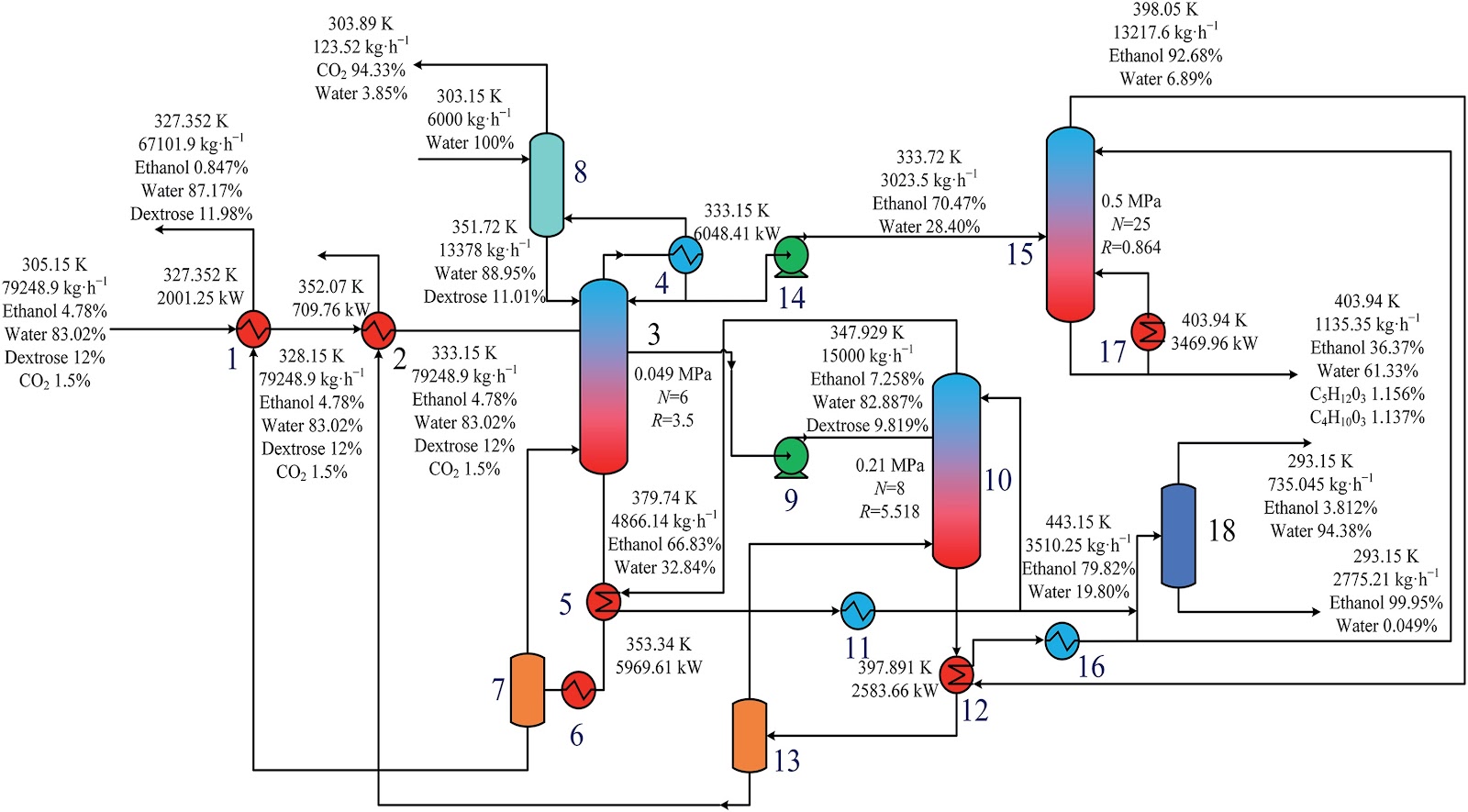
Design and optimization of a high-efficiency distillation process for cellulosic fuel ethanol integrated with thermal coupling and molecular sieve adsorption
To address the challenges of high energy consumption and prominent costs in the traditional three-columns distillation process for cellulosic fuel ethanol, a distillation—molecular sieve coupling separation process is proposed. This process integrates a three-column (crude distillation column, first distillation column, second distillation column) system with a 3A molecular sieve adsorption deep dehydration unit. A thermal coupling network is constructed via differential pressure design (steam from medium/high-pressure columns as mutual heat sources, reboiler liquid waste heat for feed preheating), and molecular sieve adsorption conditions are optimized. The study first performs a thermodynamic consistency test on the ethanol—water system, determines optimal non-random two-liquid (NRTL) model binary interaction parameters via experimental data regression for Aspen Plus simulation. Aiming at minimum total annual cost (TAC), Aspen Plus is used to optimize process parameters (theoretical tray number, feed location, reflux ratio, side-draw position, etc.). Economic analysis shows this process reduces CO2 emission costs by 27.56%, TAC by 15.58% (to 5.123 × 10⁶ USD·a-1), and increases ethanol purity to >99.6%, providing an effective solution for green, efficient separation.
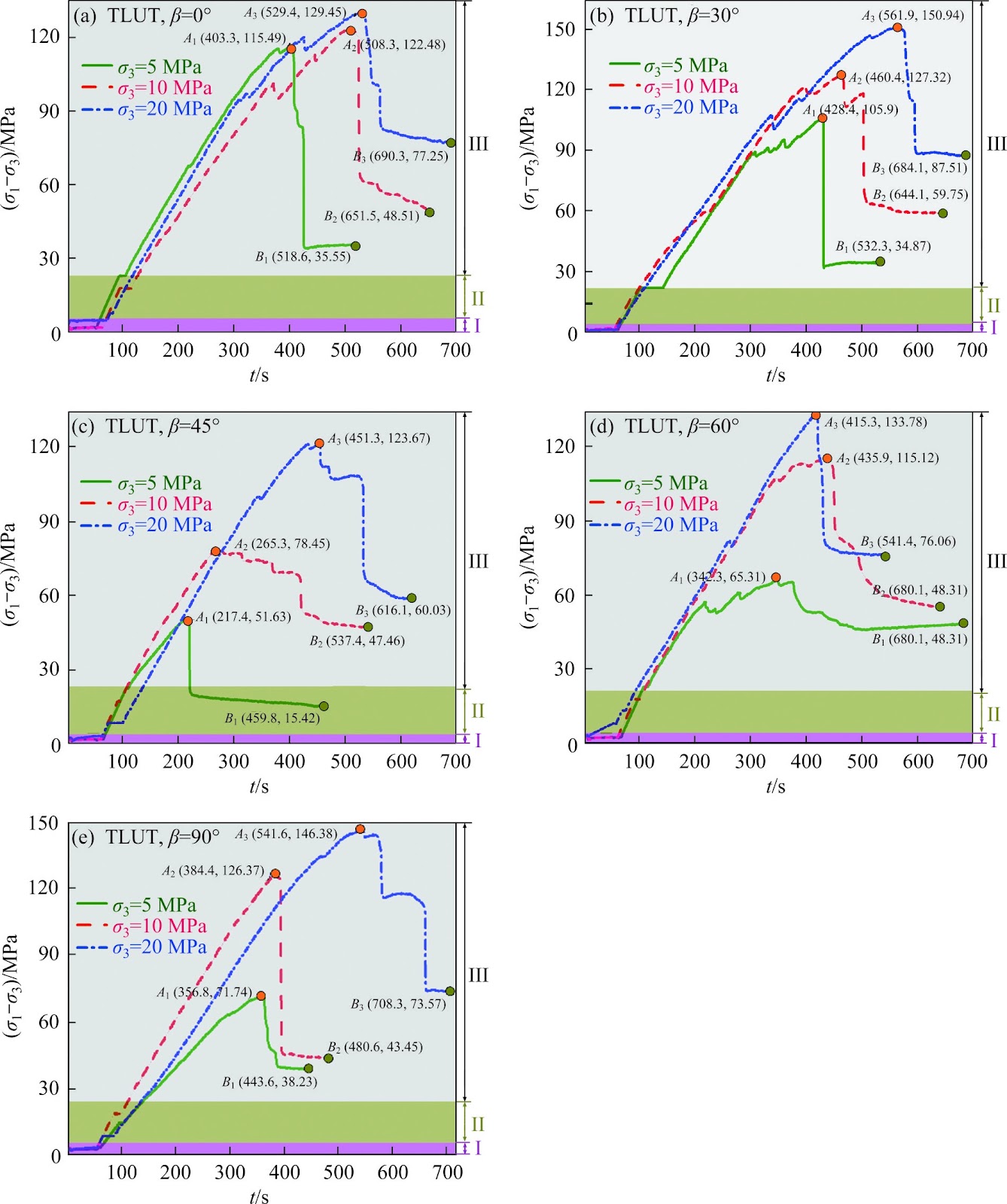
A cohesion loss model for determining residual strength of deep bedded sandstone
Rock residual strength, as an important input parameter, plays an indispensable role in proposing the reasonable and scientific scheme about stope design, underground tunnel excavation and stability evaluation of deep chambers. Therefore, previous residual strength models of rocks established were reviewed. And corresponding related problems were stated. Subsequently, starting from the effects of bedding and whole life-cycle evolution process, series of triaxial mechanical tests of deep bedded s
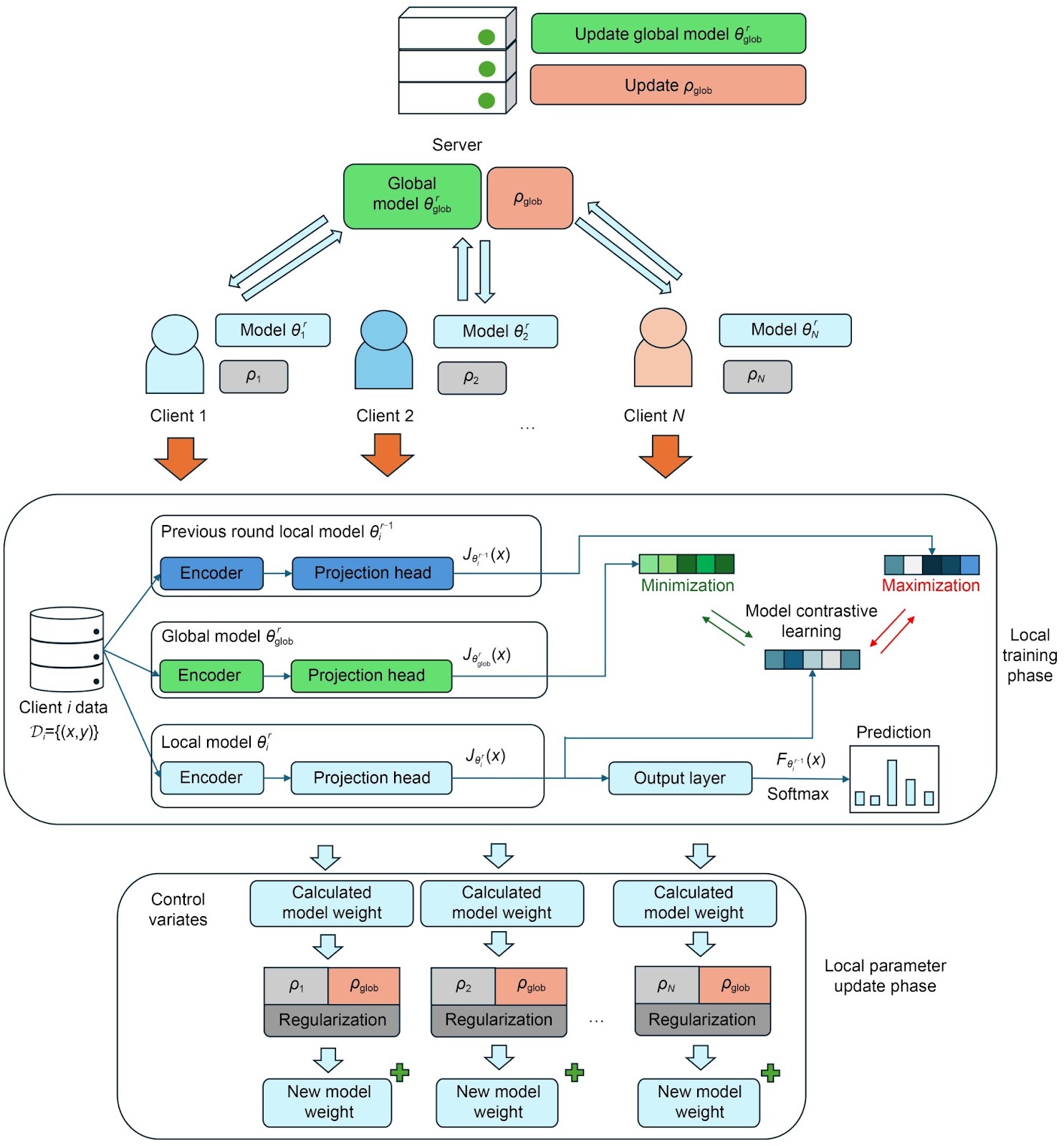
Federated model with contrastive learning and adaptive control variates for human activity recognition
Recent attention to privacy issues demands a communication-safe method for training human activity recognition (HAR) models on client activity data. Federated learning (FL) has become a compelling technique to facilitate model training between the server and clients while preserving data privacy. However, classical FL methods often assume independent and identically distributed (IID) data among clients. This assumption does not hold true in practical scenarios. Human activity in real-world scena