SinoTechIntel Academic Portal
🏛️ Indexed Academic JournalImpact Factor: 3.8 (Q1 - Elsevier)Original: 中国化学工程学报 (英文版)

Chinese Journal of Chemical Engineering

Access authentic peer-reviewed engineering methodologies, experimental datasets, and scientific literature published in this journal on SinoTechIntel.

Total Research Papers: 98
Access: 100% Free Open Access
Browse by Publication Year & VolumeReset All Filters ✕

Published Research PapersFiltered: Year 2023 • Vol. 32 • Issue 2

Showing 4 of 98 peer-reviewed papers with full Graphical Abstracts.

Original ResearchVol. 32, Issue 2 • pp. 261-273DOI: 10.1016/j_cjche_144874390Feb 25, 2023

The Al2O3 and Mn/Al2O3 sorbents highly utilized in destructive sorption of NF3

Authors: Yanfei Pan, Hejian Li, Li Zheng, Xiufeng Xu

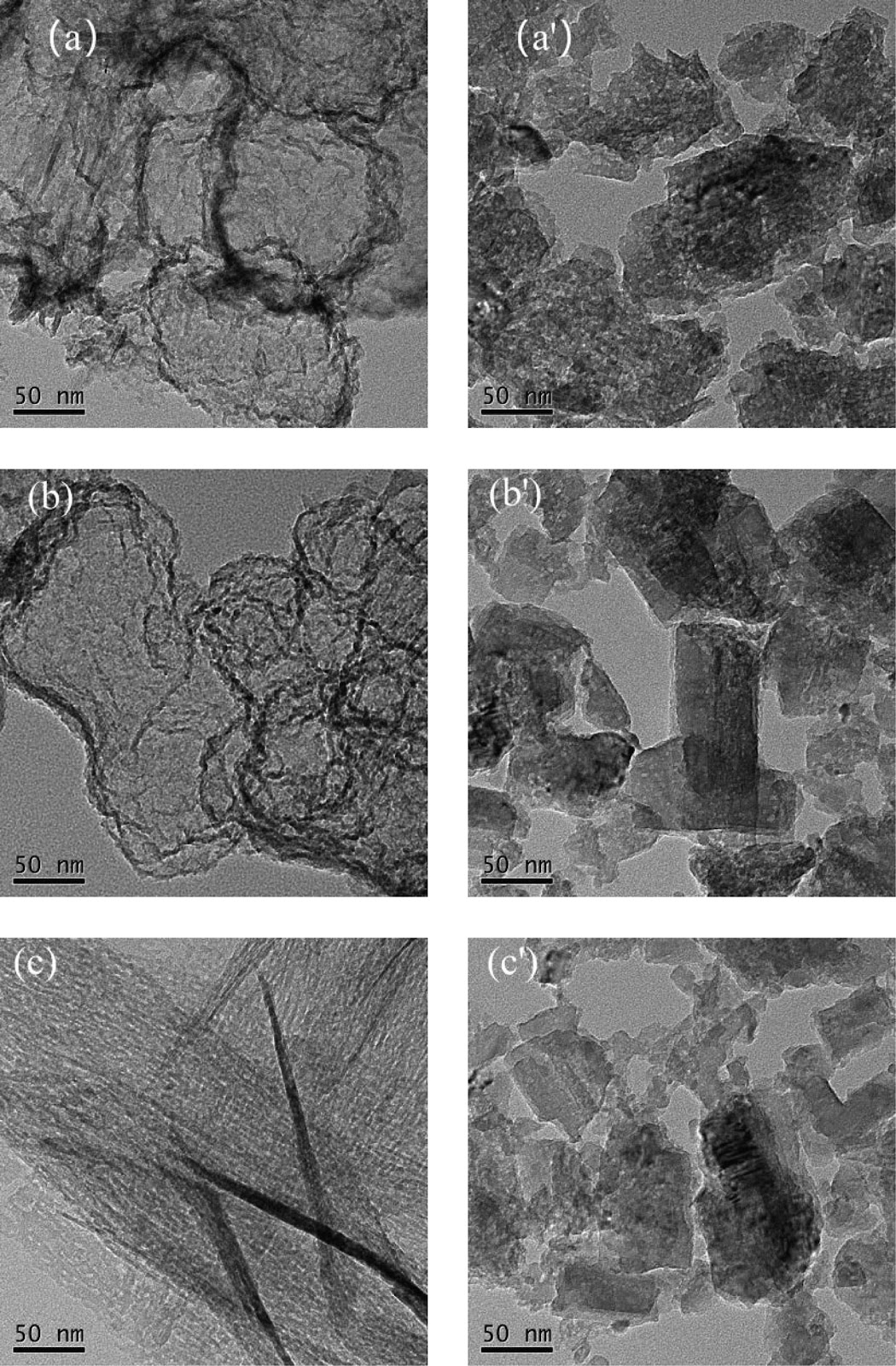
NF3 is commonly used as an etching and cleaning gas in semiconductor industry, however it is a strongly greenhouse gas. Therefore, the destruction of disposal NF3 is an urgent task to migrate the greenhouse effect. Among the technologies for NF3 abatement, the destructive sorption of NF3 over metal oxides sorbents is an effective way. Thus, the search for a highly reactive and utilized sorbent for NF3 destruction is in great demand. In this work, AlOOH supported on carbon-sphere (AlOOH/CS) as precursors were synthesized hydrothermally and heat-treated to prepare the Al2O3 sorbents. The influence of AlOOH/CS hydrothermal temperatures on the reactivity of derived Al2O3 sorbents for NF3 destruction was investigated, and it is shown that the Al2O3 from AlOOH/CS hydro-thermalized at 120 °C is superior to others. Subsequently, the optimized Al2O3 was covered by Mn(OH)x to prepare Mn/Al2O3 sorbents via changing hydrothermal temperatures and Mn loadings. The results show that the Mn/Al2O3 sorbents are more utilized than bare Al2O3 in NF3 destructive sorption due to the promotional effect of Mn2O3 as surface layer on the fluorination of Al2O3 as substrate, especially the optimal 5%Mn/Al2O3(160 °C) exhibits a utilization percentage as high as 90.4%, and remarkably exceeds all the sorbents reported so far. These findings are beneficial to develop more efficient sorbents for the destruction of NF3.
The Al2O3 and Mn/Al2O3 sorbents highly utilized in destructive sorption of NF3
Graphical Abstract
Original ResearchVol. 32, Issue 2 • pp. 669-681DOI: 10.1016/j_cjche_144878043Feb 22, 2023

Microscopic experimental study on the effects of NaCl concentration on the self-preservation effect of methane hydrates under 268.15 K

Authors: Yu-Jie Zhu, Yu-Zhou Chen, Yan Xie, Jin-Rong Zhong, Xiao-Hui Wang, Peng Xiao, Yi-Fei Sun, Chang-Yu Sun, Guang-Jin Chen

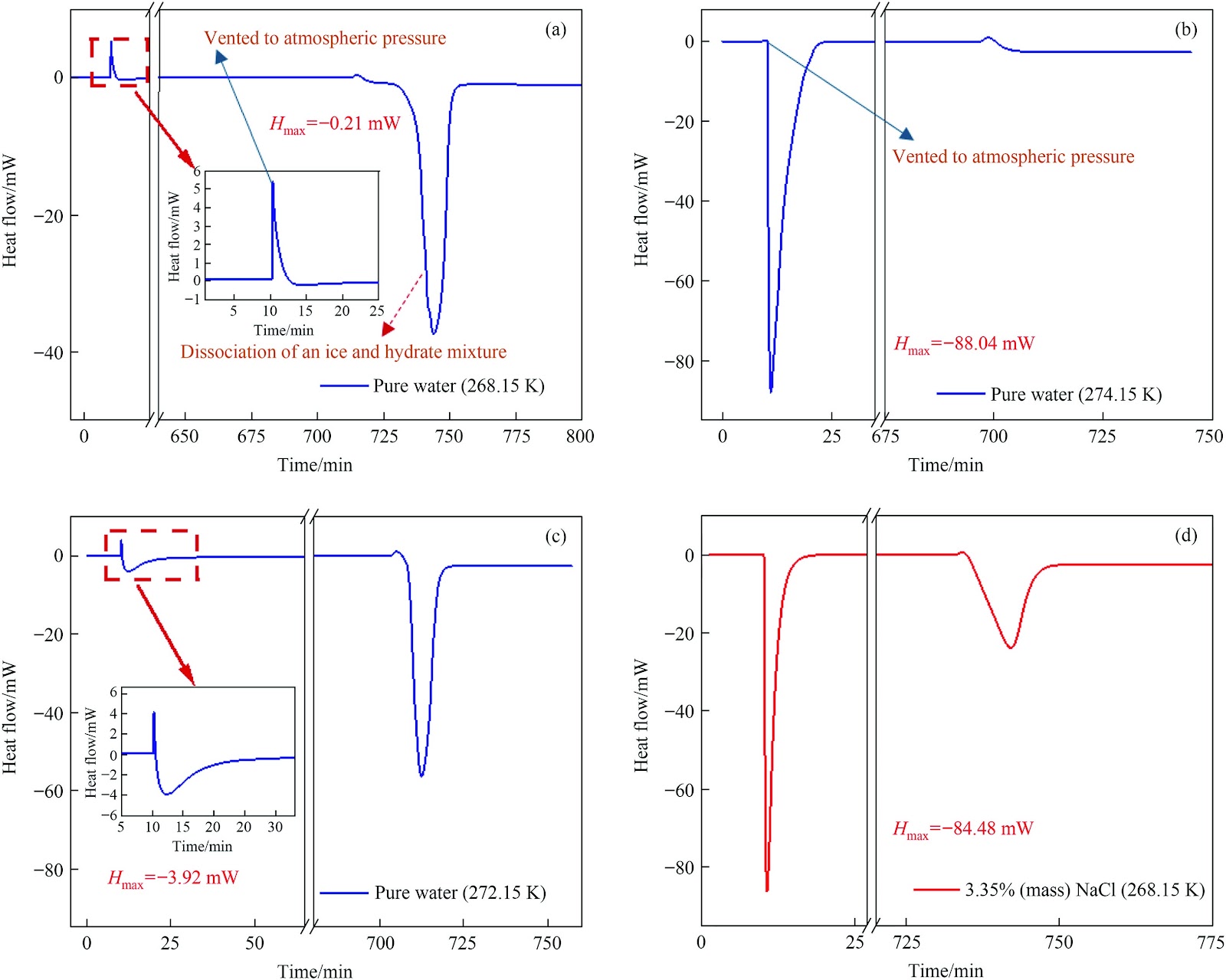
It is known that salt ions are abundant in the natural environment where natural gas hydrates are located; thus, it is essential to investigate the self-preservation effect of salt ions on methane hydrates. The dissociation behaviors of gas hydrates formed from various NaCl concentration solutions in a quartz sand system at 268.15 K were investigated to reveal the microscopic mechanism of the self-preservation effect under different salt concentrations. Results showed that as the salt concentration rises, the initial rate of hydrate decomposition quickens. Methane hydrate hardly shows self-preservation ability in the 3.35% (mass) NaCl and seawater systems at 268.15 K. Combined the morphology of hydrate observed by the confocal microscope with results obtained from in situ Raman spectroscopy, it was found that during the initial decomposition stage of gas hydrate below the ice point, gas hydrate firstly converts into liquid water and gas molecules, then turns from water to solid ice rather than directly transforming into solid ice and gas molecules. The presence of salt ions interferes with the ability of liquid water to condense into solid ice. The results of this study provide an important guide for the mechanism and application of the self-preservation effect on the storage and transport of gas and the exploitation of natural gas hydrates.

Microscopic experimental study on the effects of NaCl concentration on the self-preservation effect of methane hydrates under 268.15 K
Graphical Abstract
Original ResearchVol. 32, Issue 2 • pp. 465-477DOI: 10.1016/j_cjche_144876482Feb 11, 2023

Insight into the experiment and extraction mechanism for separating carbazole from anthracene oil with quaternary ammonium-based deep eutectic solvents

Authors: Xudong Zhang, Yanhua Liu, Jun Shen, Yugao Wang, Gang Liu, Yanxia Niu, Qingtao Sheng

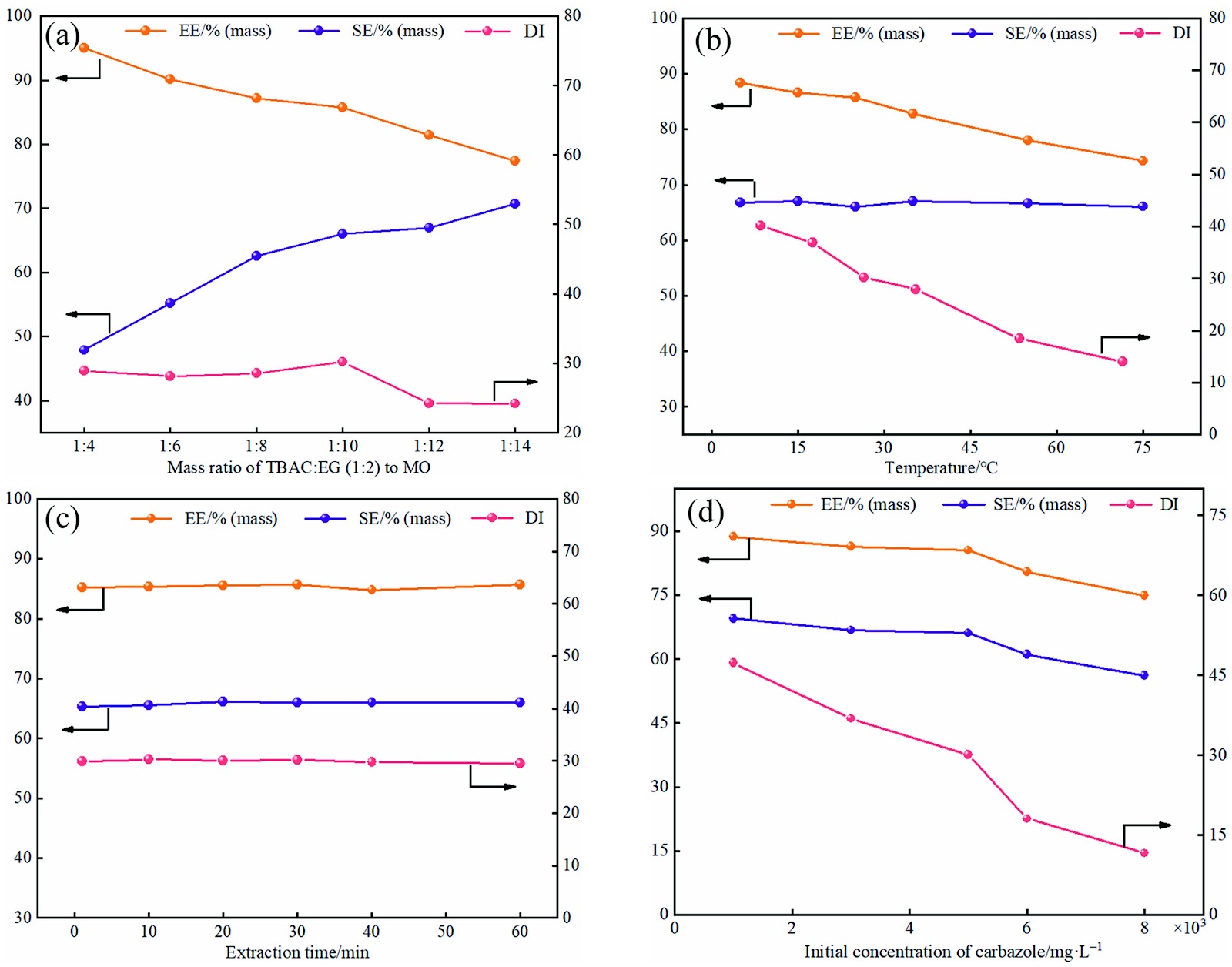
Carbazole is an irreplaceable basic organic chemical raw material and intermediate in industry. The separation of carbazole from anthracene oil by environmental benign solvents is important but still a challenge in chemical engineering. Deep eutectic solvents (DESs) as a sustainable green separation solvent have been proposed for the separation of carbazole from model anthracene oil. In this research, three quaternary ammonium-based DESs were prepared using ethylene glycol (EG) as hydrogen bond donor and tetrabutylammonium chloride (TBAC), tetrabutylammonium bromide or choline chloride as hydrogen bond acceptors. To explore their extraction performance of carbazole, the conductor-like screening model for real solvents (COSMO-RS) model was used to predict the activity coefficient at infinite dilution (γ∞) of carbazole in DESs, and the result indicated TBAC:EG (1:2) had the stronger extraction ability for carbazole due to the higher capacity at infinite dilution (C∞) value. Then, the separation performance of these three DESs was evaluated by experiments, and the experimental results were in good agreement with the COSMO-RS prediction results. The TBAC:EG (1:2) was determined as the most promising solvent. Additionally, the extraction conditions of TBAC:EG (1:2) were optimized, and the extraction efficiency, distribution coefficient and selectivity of carbazole could reach up to 85.74%, 30.18 and 66.10%, respectively. Moreover, the TBAC:EG (1:2) could be recycled by using environmentally friendly water as antisolvent. In addition, the separation performance of TBAC:EG (1:2) was also evaluated by real crude anthracene, the carbazole was obtained with purity and yield of 85.32%, 60.27%, respectively. Lastly, the extraction mechanism was elucidated by σ-profiles and interaction energy analysis. Theoretical calculation results showed that the main driving force for the extraction process was the hydrogen bonding ((N–H...Cl) and van der Waals interactions (C–H...O and C–H...π), which corresponding to the blue and green isosurfaces in IGMH analysis. This work presented a novel method for separating carbazole from crude anthracene oil, and will provide an important reference for the separation of other high value-added products from coal tar.

Insight into the experiment and extraction mechanism for separating carbazole from anthracene oil with quaternary ammonium-based deep eutectic solvents
Graphical Abstract
Original ResearchVol. 32, Issue 2 • pp. 873-885DOI: 10.1016/j_cjche_144878602Feb 8, 2023

Photoinduced transposed Paternò–Büchi reaction for effective synthesis of high-performance jet fuel

Authors: Jinxiu Hu, Xianlong Liu, Yi Liu, Kang Xue, Chengxiang Shi, Xiangwen Zhang, Li Wang, Ji-Jun Zou, Lun Pan

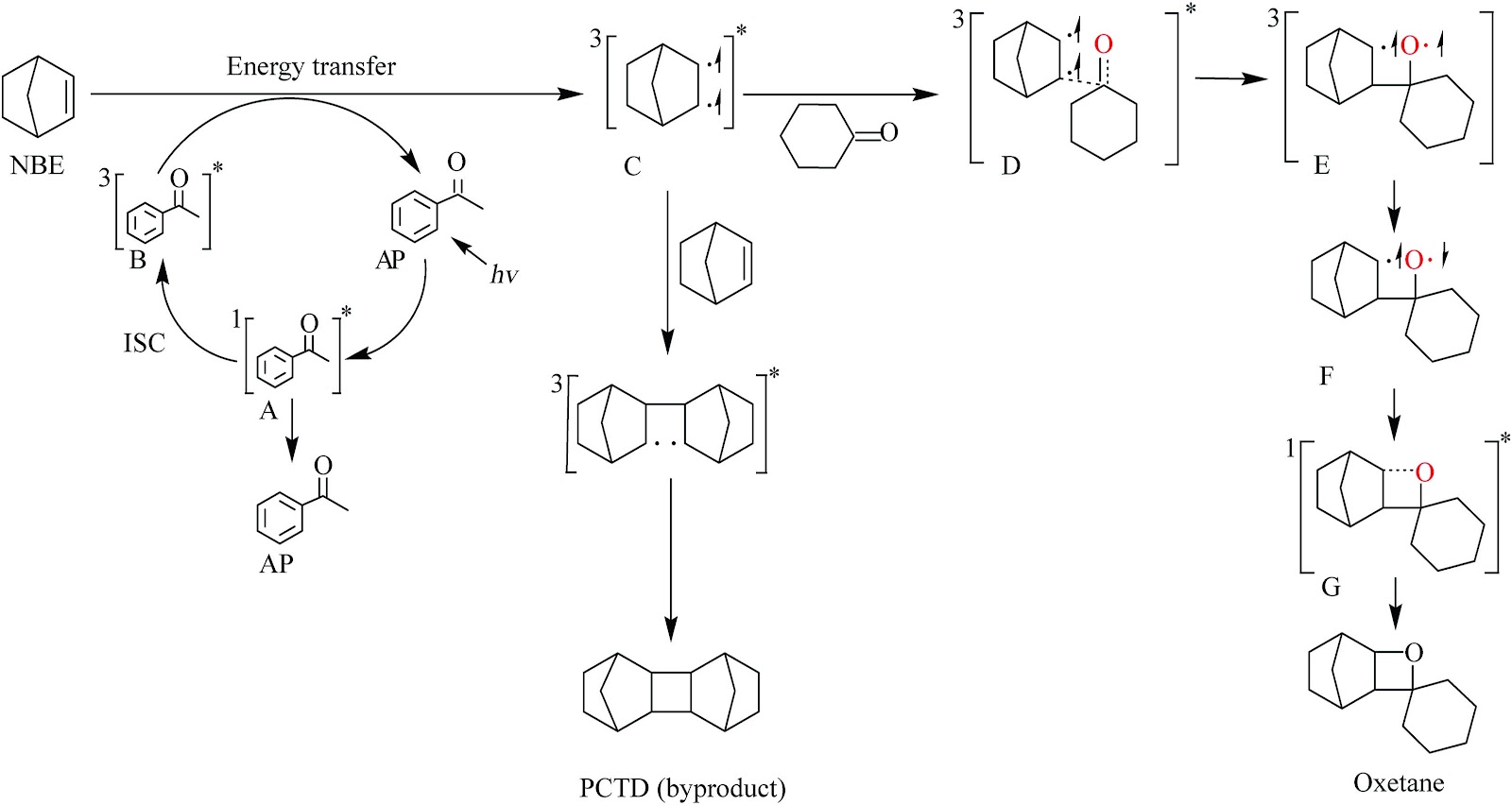
High-energy-density fuels are important for volume-limited aerospace vehicles, but the increase in fuel energy density always leads to poor cryogenic performance. Herein, we investigated the transposed Paternò–Büchi reaction of biomass cyclic ketone and cyclic alkene to synthesize a new kind of alkyl-substituted polycyclic hydrocarbon fuel with high energy density and good cryogenic performance. The triplet-energy-quenching results and phosphorescent emission spectra reveal the sensitization mechanism of the reaction, including photosensitizer excitation, triplet-triplet energy transfer, cyclization, and relaxation, and the possible reaction path was revealed by the density functional theory (DFT) calculations. The reaction conditions of photosensitizer type and addition, molar ratio of substrates, reaction temperature, and incident light intensity were optimized, with the target product yield achieving 65.5%. Moreover, the reaction dynamics of the reaction rate versus the light intensity are established. After the hydrogenation-deoxygenation reaction, three fuels with a high density of 0.864–0.938 g·ml⁻¹ and a low freezing point of < −55 °C are obtained. This work provides a benign and effective approach to synthesize high-performance fuels.

Photoinduced transposed Paternò–Büchi reaction for effective synthesis of high-performance jet fuel
Graphical Abstract
Chinese Journal of Chemical Engineering | SinoTechIntel Research Archive | SinoTechIntel