Key Takeaways & Executive Findings
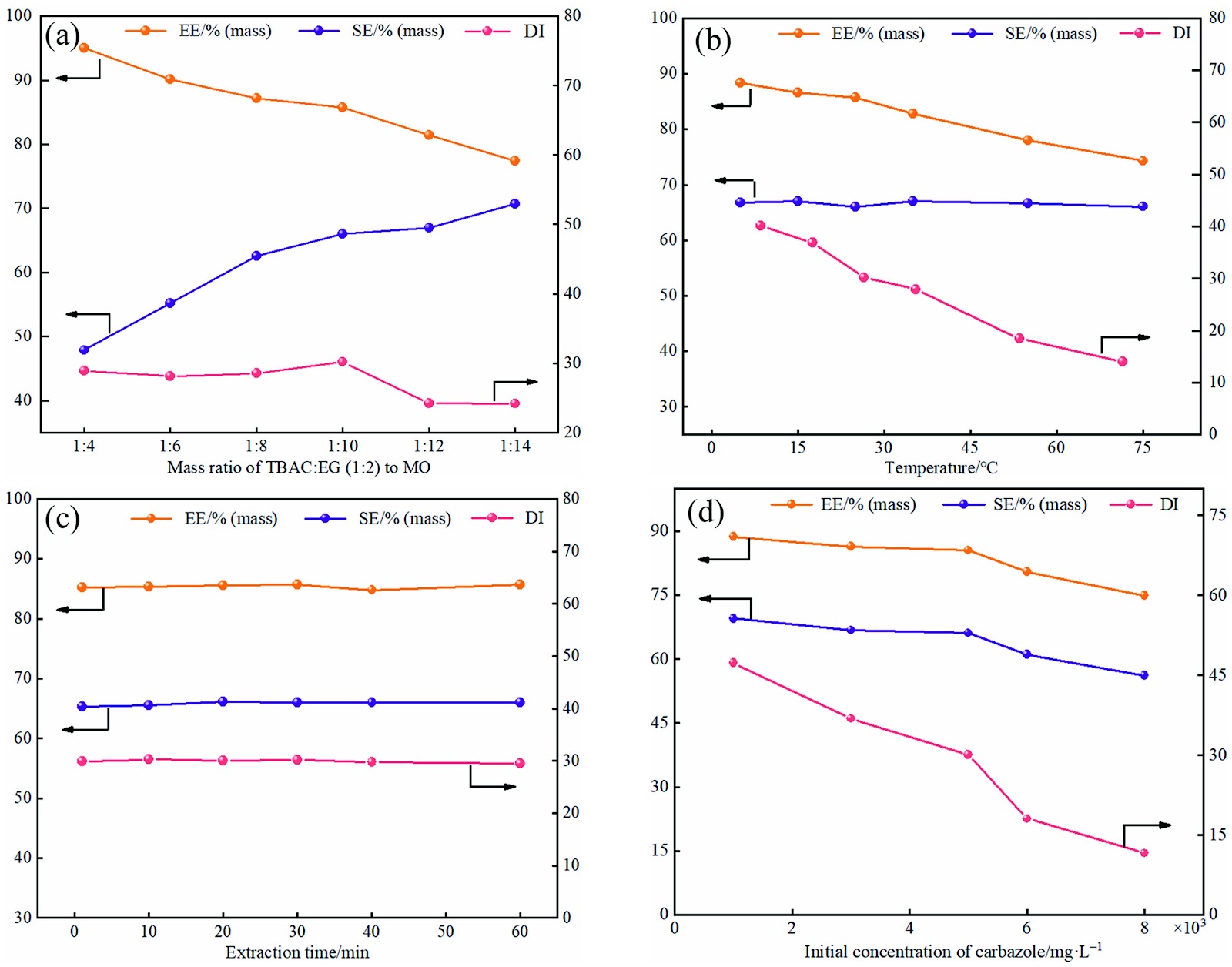
- •• Quaternary ammonium-based deep eutectic solvents (DESs) were synthesized and evaluated for carbazole extraction from anthracene oil, with TBAC:EG (1:2) showing the highest extraction efficiency (85.74%) and selectivity (66.10%). • COSMO-RS predictions of infinite dilution activity coefficients and capacities accurately guided solvent selection, demonstrating strong agreement with experimental results. • The DES TBAC:EG (1:2) was successfully recycled using water as an antisolvent, and its application to real crude anthracene yielded carbazole with 85.32% purity and 60.27% yield. • Mechanistic analysis via σ-profiles and IGMH revealed that hydrogen bonding (N–H...Cl) and van der Waals interactions (C–H...O and C–H...π) are the primary driving forces for carbazole extraction.
Abstract
Carbazole is an irreplaceable basic organic chemical raw material and intermediate in industry. The separation of carbazole from anthracene oil by environmental benign solvents is important but still a challenge in chemical engineering. Deep eutectic solvents (DESs) as a sustainable green separation solvent have been proposed for the separation of carbazole from model anthracene oil. In this research, three quaternary ammonium-based DESs were prepared using ethylene glycol (EG) as hydrogen bond donor and tetrabutylammonium chloride (TBAC), tetrabutylammonium bromide or choline chloride as hydrogen bond acceptors. To explore their extraction performance of carbazole, the conductor-like screening model for real solvents (COSMO-RS) model was used to predict the activity coefficient at infinite dilution (γ∞) of carbazole in DESs, and the result indicated TBAC:EG (1:2) had the stronger extraction ability for carbazole due to the higher capacity at infinite dilution (C∞) value. Then, the separation performance of these three DESs was evaluated by experiments, and the experimental results were in good agreement with the COSMO-RS prediction results. The TBAC:EG (1:2) was determined as the most promising solvent. Additionally, the extraction conditions of TBAC:EG (1:2) were optimized, and the extraction efficiency, distribution coefficient and selectivity of carbazole could reach up to 85.74%, 30.18 and 66.10%, respectively. Moreover, the TBAC:EG (1:2) could be recycled by using environmentally friendly water as antisolvent. In addition, the separation performance of TBAC:EG (1:2) was also evaluated by real crude anthracene, the carbazole was obtained with purity and yield of 85.32%, 60.27%, respectively. Lastly, the extraction mechanism was elucidated by σ-profiles and interaction energy analysis. Theoretical calculation results showed that the main driving force for the extraction process was the hydrogen bonding ((N–H...Cl) and van der Waals interactions (C–H...O and C–H...π), which corresponding to the blue and green isosurfaces in IGMH analysis. This work presented a novel method for separating carbazole from crude anthracene oil, and will provide an important reference for the separation of other high value-added products from coal tar.
1. Introduction
Carbazole is an indispensable organic chemical raw material and intermediate, mainly derived from crude anthracene oil [1]. Due to its special rigid molecular structure, carbazole exhibits numerous unique properties, making it highly valuable and extensively utilized in various industries, including dyes [2], pharmaceuticals [3], synthetic resins [4], pesticides [5], and photoelectric materials [6]. With the further expansion of its application, the demand for carbazole in the market has increased rapidly. Therefore, developing carbazole production technology with a low-cost and environmentally friendly has become a hot topic for many researchers.
Although carbazole can be chemically synthesized [7], more than 90% of carbazole is still obtained by separation and purification of crude anthracene oil due to its lower cost. The structure and many physicochemical properties of components in anthracene oil are very similar, which poses a major challenge to the separation of carbazole. The common methods for carbazole separation include sulfuric acid and potassium fusion methods, distillation, emulsion liquid membrane [8], zone melting [9], supercritical fluid extraction [10], and solvent crystallization [11,12]. Generally, sulfuric acid and potassium fusion methods have been abandoned due to the use of strong acids and alkalis, which result in the generation of significant amounts of industrial wastewater. Additionally, separating carbazole by distillation is time and energy-consuming due to the close boiling points of components in crude anthracene oil. The new supercritical fluid extraction technique requires rigorous conditions and specialized equipment. The zone melting technology demands strict temperature control to prevent crystal agglomeration. The emulsion liquid membrane method is limited by the poor stability of the membrane system. These methods mentioned above are immature and still in the laboratory research stage. In chemical industry, solvent crystallization is the most frequently used method for separating carbazole. However, the organic solvents employed in this process exhibit poor performance for isolating the target component, leading to significant problems in the current process. These problems include the need for multiple washing and crystallization, low product yield, high solvent usage, and environmental pollution, etc. Therefore, in order to address these challenges, the development of efficient and environmentally friendly separation methods is urgently needed.
Loading authentic research manuscript (Pages 1–5)...
Xudong Zhang, Yanhua Liu, Jun Shen, Yugao Wang, Gang Liu, Yanxia Niu, Qingtao Sheng (2023). Insight into the experiment and extraction mechanism for separating carbazole from anthracene oil with quaternary ammonium-based deep eutectic solvents. Chinese Journal of Chemical Engineering. https://doi.org/10.1016/j_cjche_144876482
Research & Educational Purpose Only:The translations, structured abstracts, analytical annotations, and data reports provided by SinoTechIntel are intended exclusively for academic research, internal corporate R&D, and educational benchmarking. They do not constitute formal engineering, chemical safety, legal, or professional advice.
Copyright & Intellectual Property Notice: Original copyright of the underlying source articles and experimental data remains with the respective authors, institutions, and original publishing journals. SinoTechIntel claims intellectual property only over its proprietary translations, analytical syntheses, and AEO structured enhancements in accordance with international fair use and academic citation principles.
Frequently Asked Questions
What are deep eutectic solvents (DESs) and why are they used for carbazole separation?
Deep eutectic solvents (DESs) are a class of green solvents formed by mixing a hydrogen bond acceptor (HBA) and a hydrogen bond donor (HBD) to form a eutectic mixture with a melting point lower than that of the individual components. They are used for carbazole separation because they are environmentally benign, biodegradable, and can be tailored to selectively extract target compounds from complex mixtures like anthracene oil, offering a sustainable alternative to traditional organic solvents.
How does the COSMO-RS model aid in selecting the best DES for carbazole extraction?
The COSMO-RS (Conductor-like Screening Model for Real Solvents) model predicts thermodynamic properties such as activity coefficients at infinite dilution (γ∞) and capacity (C∞) of solutes in solvents. By screening various DESs, the model can identify those with the highest affinity for carbazole, thereby guiding experimental selection and reducing trial-and-error. In this study, COSMO-RS predicted TBAC:EG (1:2) to have the highest capacity, which was experimentally confirmed.
What is the optimal DES composition and extraction efficiency achieved in this study?
The optimal DES was tetrabutylammonium chloride:ethylene glycol (TBAC:EG) in a 1:2 molar ratio. Under optimized conditions, the extraction efficiency of carbazole reached 85.74%, with a distribution coefficient of 30.18 and selectivity of 66.10%.
Can the DES be recycled and reused for carbazole extraction?
Yes, the TBAC:EG (1:2) DES can be recycled using water as an antisolvent. After extraction, water is added to precipitate carbazole, and the DES can be recovered and reused, making the process more sustainable and cost-effective.
What is the underlying extraction mechanism of carbazole by the DES?
The extraction mechanism is primarily driven by hydrogen bonding and van der Waals interactions. Specifically, the hydrogen bond between the N–H group of carbazole and the chloride anion of the DES (N–H...Cl) is a key interaction, along with weaker C–H...O and C–H...π interactions. These interactions were confirmed by σ-profile analysis and IGMH (Independent Gradient Model based on Hirshfeld partition) analysis, which showed blue and green isosurfaces corresponding to strong and weak interactions, respectively.
Related Technical Papers & Translations
Design and optimization of a high-efficiency distillation process for cellulosic fuel ethanol integrated with thermal coupling and molecular sieve adsorption
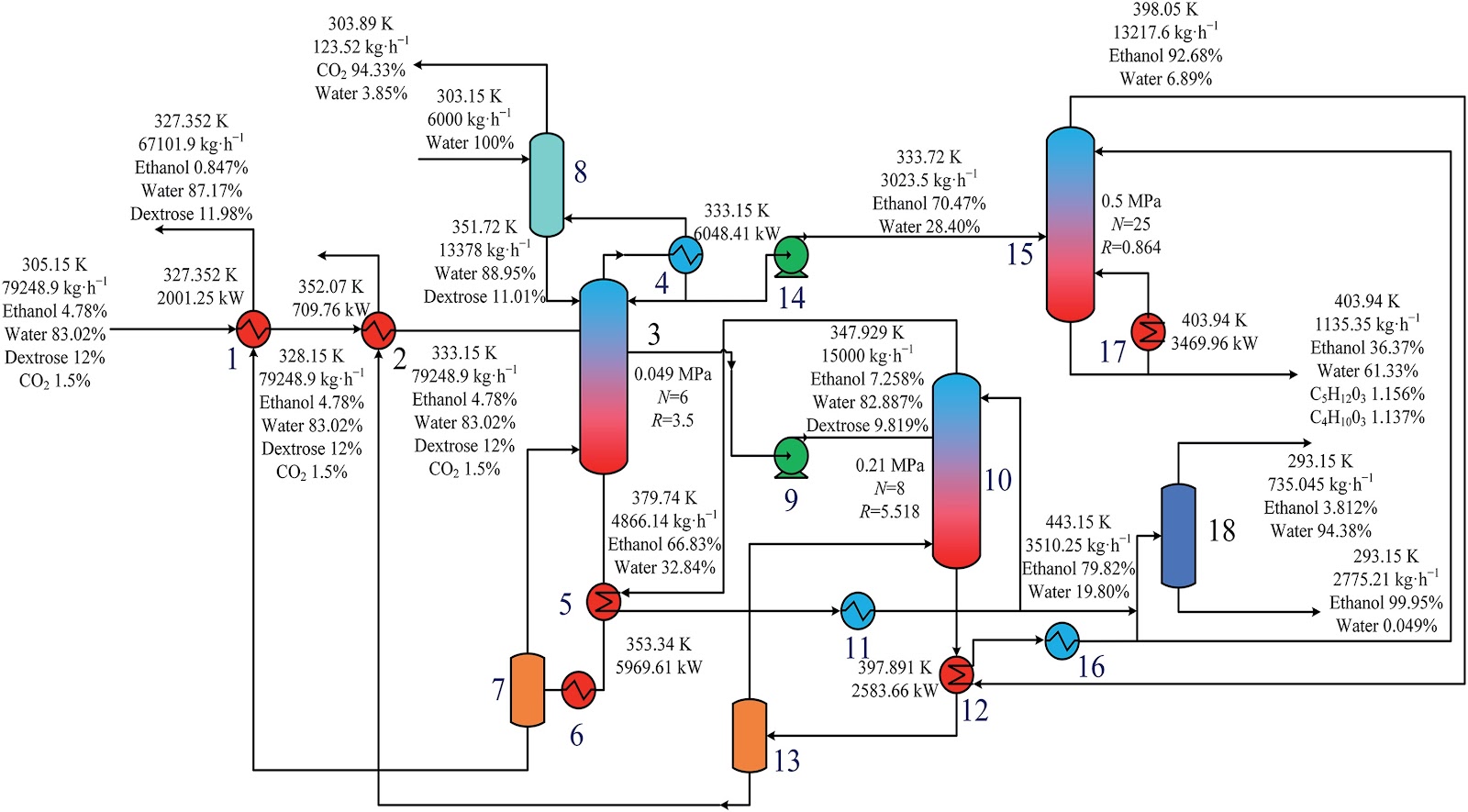
To address the challenges of high energy consumption and prominent costs in the traditional three-columns distillation process for cellulosic fuel ethanol, a distillation—molecular sieve coupling separation process is proposed. This process integrates a three-column (crude distillation column, first distillation column, second distillation column) system with a 3A molecular sieve adsorption deep dehydration unit. A thermal coupling network is constructed via differential pressure design (steam from medium/high-pressure columns as mutual heat sources, reboiler liquid waste heat for feed preheating), and molecular sieve adsorption conditions are optimized. The study first performs a thermodynamic consistency test on the ethanol—water system, determines optimal non-random two-liquid (NRTL) model binary interaction parameters via experimental data regression for Aspen Plus simulation. Aiming at minimum total annual cost (TAC), Aspen Plus is used to optimize process parameters (theoretical tray number, feed location, reflux ratio, side-draw position, etc.). Economic analysis shows this process reduces CO2 emission costs by 27.56%, TAC by 15.58% (to 5.123 × 10⁶ USD·a-1), and increases ethanol purity to >99.6%, providing an effective solution for green, efficient separation.
A cohesion loss model for determining residual strength of deep bedded sandstone
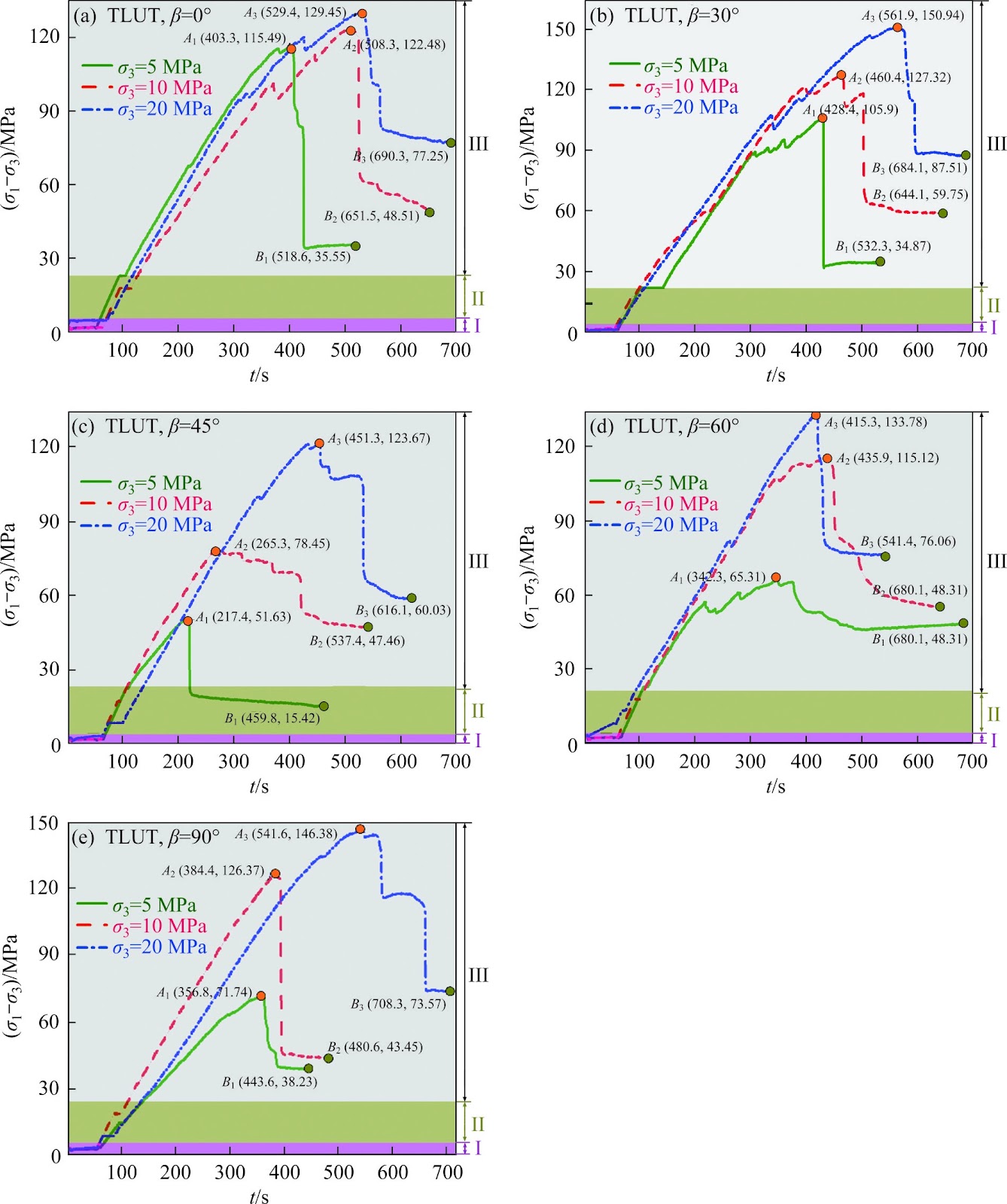
Rock residual strength, as an important input parameter, plays an indispensable role in proposing the reasonable and scientific scheme about stope design, underground tunnel excavation and stability evaluation of deep chambers. Therefore, previous residual strength models of rocks established were reviewed. And corresponding related problems were stated. Subsequently, starting from the effects of bedding and whole life-cycle evolution process, series of triaxial mechanical tests of deep bedded s
Federated model with contrastive learning and adaptive control variates for human activity recognition
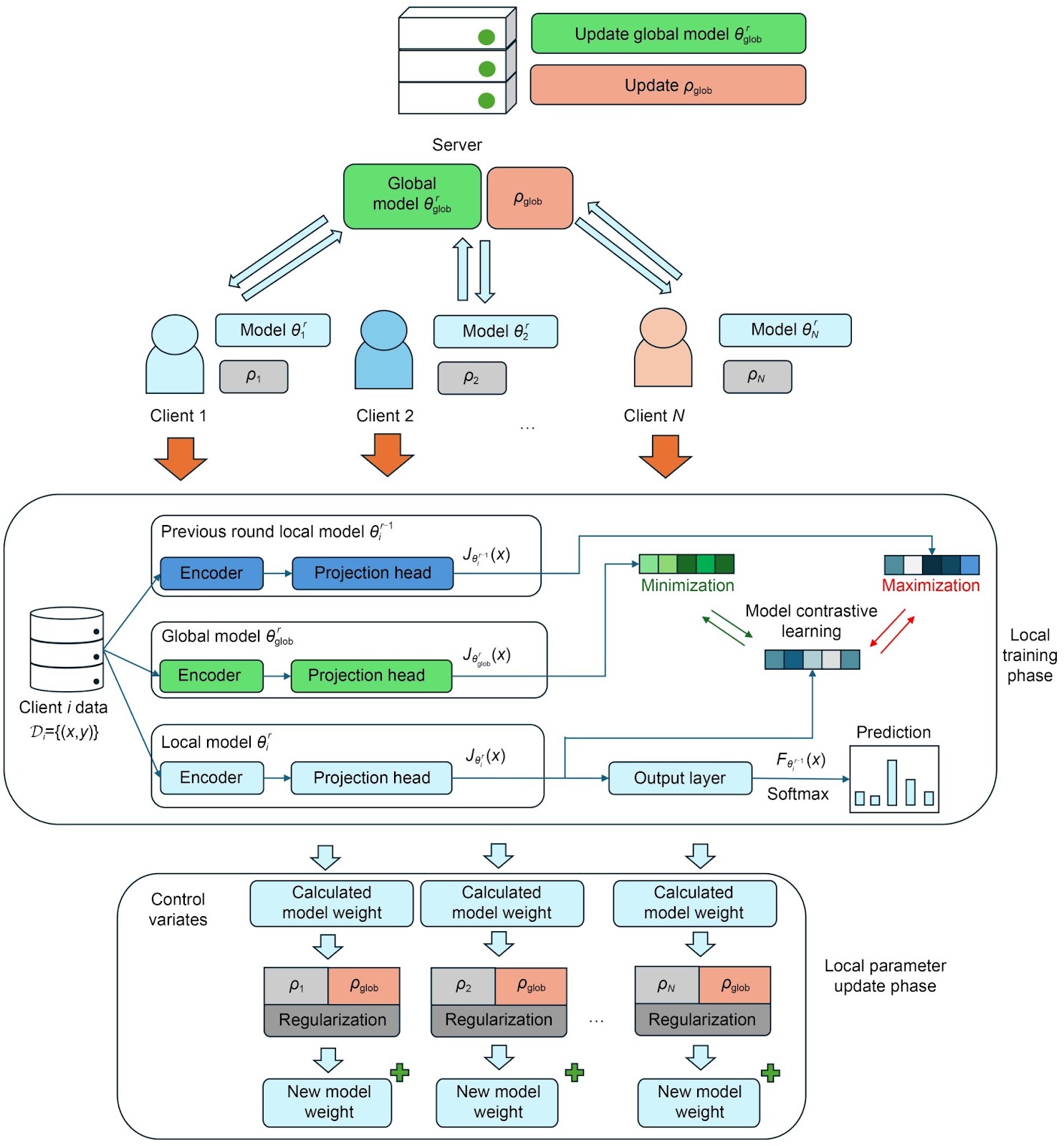
Recent attention to privacy issues demands a communication-safe method for training human activity recognition (HAR) models on client activity data. Federated learning (FL) has become a compelling technique to facilitate model training between the server and clients while preserving data privacy. However, classical FL methods often assume independent and identically distributed (IID) data among clients. This assumption does not hold true in practical scenarios. Human activity in real-world scena