Key Takeaways & Executive Findings
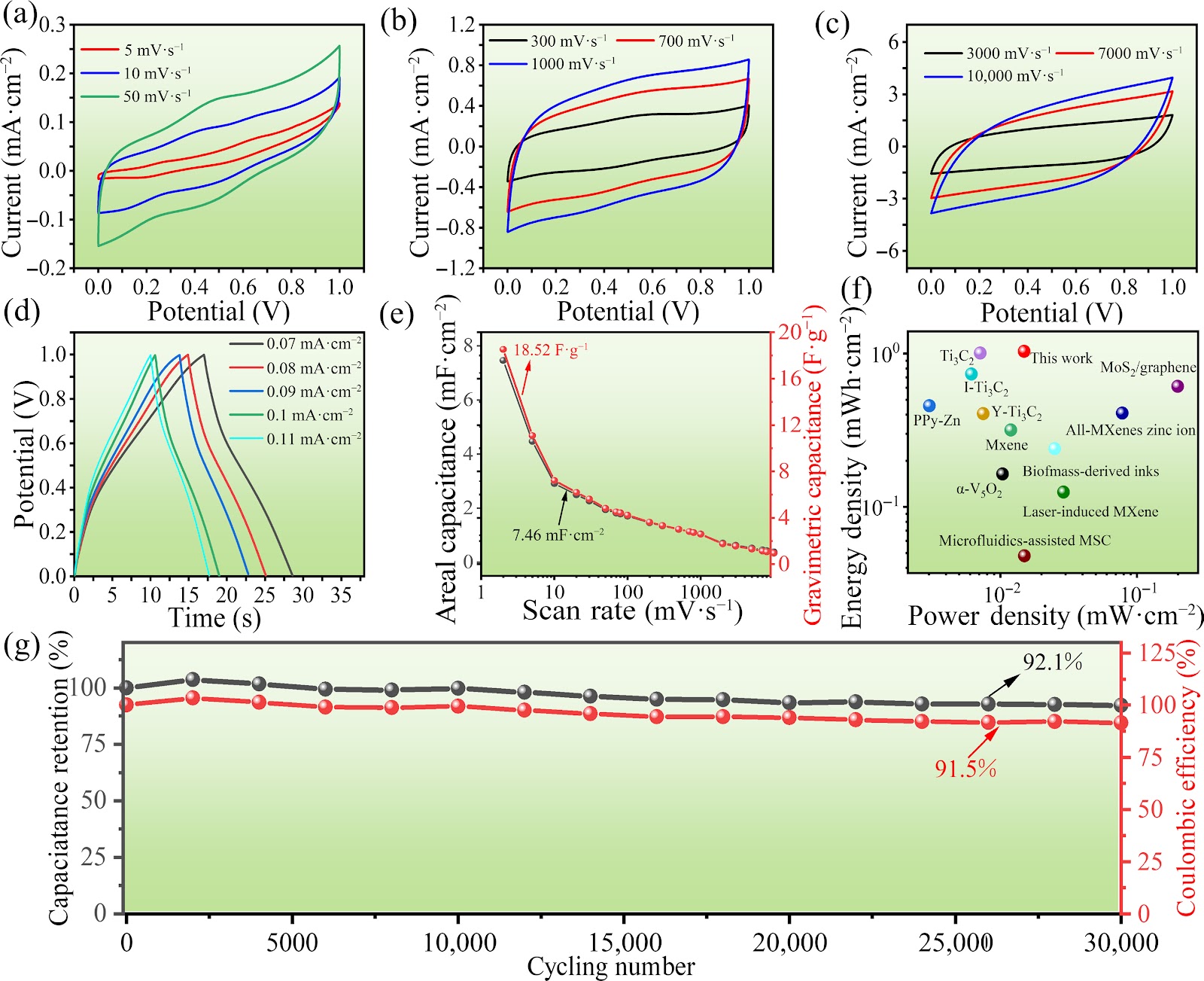
- •• • The optimized BP/Bi (3:1) heterojunction electrode delivers an areal capacitance of 7.6 mF·cm−2, a 1.6-fold enhancement over pure BP, directly addressing the low energy density bottleneck in BP-based micro-supercapacitors. • • The device retains 92.1% of its initial capacitance after 30,000 charge/discharge cycles, demonstrating exceptional long-term operational stability critical for reliable wearable electronics. • • With DMSO-modified gel electrolyte, the MSC maintains 70% of room-temperature capacitance at −35 °C, enabling freeze-tolerant operation for extreme-environment applications. • • The integrated system exhibits ultra-fast response time of ~48 ms and negligible signal attenuation over 900 cycles, validating its suitability for real-time physiological monitoring.
Abstract
Black phosphorus (BP)-based micro-supercapacitors (MSCs) are promising for wearable electronics but suffer from intrinsic instability and sluggish electron kinetics. Here, we report a two-dimensional phosphorene/bismuthene (2D BP/Bi) heterojunction fabricated via liquid nitrogen-assisted exfoliation and mask-assisted filtration, serving as a robust bifunctional electrode for integrated flexible energy-sensing systems. The heterostructure suppresses nanosheet restacking and enhances interfacial stability through strong P–O–Bi covalent bonding and interfacial synergy. Bismuthene incorporation constructs high-speed electron transport channels, facilitating ion diffusion and charge transfer. The optimized BP/Bi (3:1) electrode achieves a high areal capacitance of 7.6 mF·cm−2 (1.6-fold enhancement over pure BP) and ultra-long lifespan with 92.1% retention after 30,000 cycles. By tailoring the gel electrolyte with DMSO, the device exhibits remarkable freeze-tolerance, maintaining 70% capacitance at −35 °C. An all-flexible integrated system combining the MSC with a pressure sensor using graphene current collectors enables continuous, self-sustained physiological monitoring. This work offers critical insights into interface engineering for high-performance BP-based MSCs and paves the way for extreme-environment wearable applications.
1. Introduction
Conventional wearable systems rely on discrete power sources, sensors, and connectors, resulting in bulky configurations, poor mechanical conformability, and performance degradation under dynamic deformation. These limitations hinder their integration into complex human-centric scenarios, such as real-time health monitoring and human-machine interaction. Planar micro-supercapacitors (MSCs) offer a promising solution due to their mechanical flexibility, safety, and potential for miniaturization and system integration. However, the performance of BP-based MSCs is hampered by BP's intrinsic instability and low electrical conductivity, leading to rapid capacity decay and poor rate capability.
This work addresses these bottlenecks by constructing a 2D BP/Bi heterojunction via liquid nitrogen-assisted exfoliation and mask-assisted filtration. The strong P–O–Bi covalent bonding at the interface not only suppresses nanosheet restacking but also enhances interfacial stability, while bismuthene provides high-speed electron transport channels. This synergistic design significantly improves ion diffusion and charge transfer, resulting in high areal capacitance, ultra-long cycling stability, and freeze-tolerance. The integration of such MSCs with pressure sensors on graphene current collectors demonstrates a monolithic flexible system capable of continuous physiological monitoring, offering a generalizable paradigm for next-generation wearable electronics.
Loading authentic research manuscript (Pages 1–5)...
Yukai Chang, Chenfang Lou, Jin Jia, Huilan Zhao, Penghui Li, Yingjie Huo, Libo Wang, Qianku Hu, Yuanyuan Zhu, Aiguo Zhou (2026). Interface-stabilized phosphorene/bismuthene heterostructures for freeze-tolerant micro-supercapacitors and integrated sensing. SinoTechIntel Verified Research. https://doi.org/10.26599/NR.2026.94908756
Research & Educational Purpose Only:The translations, structured abstracts, analytical annotations, and data reports provided by SinoTechIntel are intended exclusively for academic research, internal corporate R&D, and educational benchmarking. They do not constitute formal engineering, chemical safety, legal, or professional advice.
Copyright & Intellectual Property Notice: Original copyright of the underlying source articles and experimental data remains with the respective authors, institutions, and original publishing journals. SinoTechIntel claims intellectual property only over its proprietary translations, analytical syntheses, and AEO structured enhancements in accordance with international fair use and academic citation principles.
Frequently Asked Questions
What is the specific role of P–O–Bi covalent bonding in enhancing the electrochemical stability of the BP/Bi heterostructure?
The P–O–Bi covalent bonds anchor bismuthene onto phosphorene, preventing restacking and passivating reactive phosphorus sites. This suppresses degradation and maintains structural integrity, contributing to the 92.1% capacitance retention after 30,000 cycles.
How does the DMSO-modified gel electrolyte enable freeze-tolerance down to -35 °C?
DMSO acts as a cryoprotectant, lowering the freezing point of the aqueous electrolyte and maintaining ionic conductivity at sub-zero temperatures. This allows the device to retain 70% of its room-temperature capacitance at -35 °C.
The methods are solution-based and potentially scalable, but achieving uniform heterojunction formation and precise electrode patterning at large scales remains challenging. The reported areal capacitance of 7.6 mF·cm−2 suggests feasibility for micro-devices, but roll-to-roll processing would require further optimization.
How does the integrated system maintain signal integrity during repeated mechanical deformation?
The use of graphene as a flexible current collector and the robust interfacial bonding within the electrode ensure mechanical conformability. The system shows negligible signal attenuation over 900 cycles, indicating stable electrical contact and structural resilience under bending.
What is the cost comparison of BP/Bi heterostructures versus conventional electrode materials for MSCs?
Bismuth is relatively inexpensive, but black phosphorus production is costly and requires careful handling. The enhanced performance and longevity may offset initial costs, but a detailed techno-economic analysis is not provided in the paper.
Related Chinese Research & Cross-Citations
Automotive-Grade 8-Inch Silicon Carbide (SiC) Wafers: Sanan Optoelectronics vs. Wolfspeed Defect Density and Yield Economics
For 800V EV traction inverters, Wolfspeed's 8-inch SiC wafers exhibit lower BPD density (0.1 vs 0.3 cm⁻²) and superior RDS(on) stability, but Sanan offers a 22% cost-per-good-die advantage due to higher throughput and lower substrate cost. Wolfspeed leads in high-voltage performance; Sanan wins on cost efficiency.
Localized Asymmetric Electron Distribution in Covalent Organic Frameworks Promotes Efficient Photocatalytic H2O2 Production
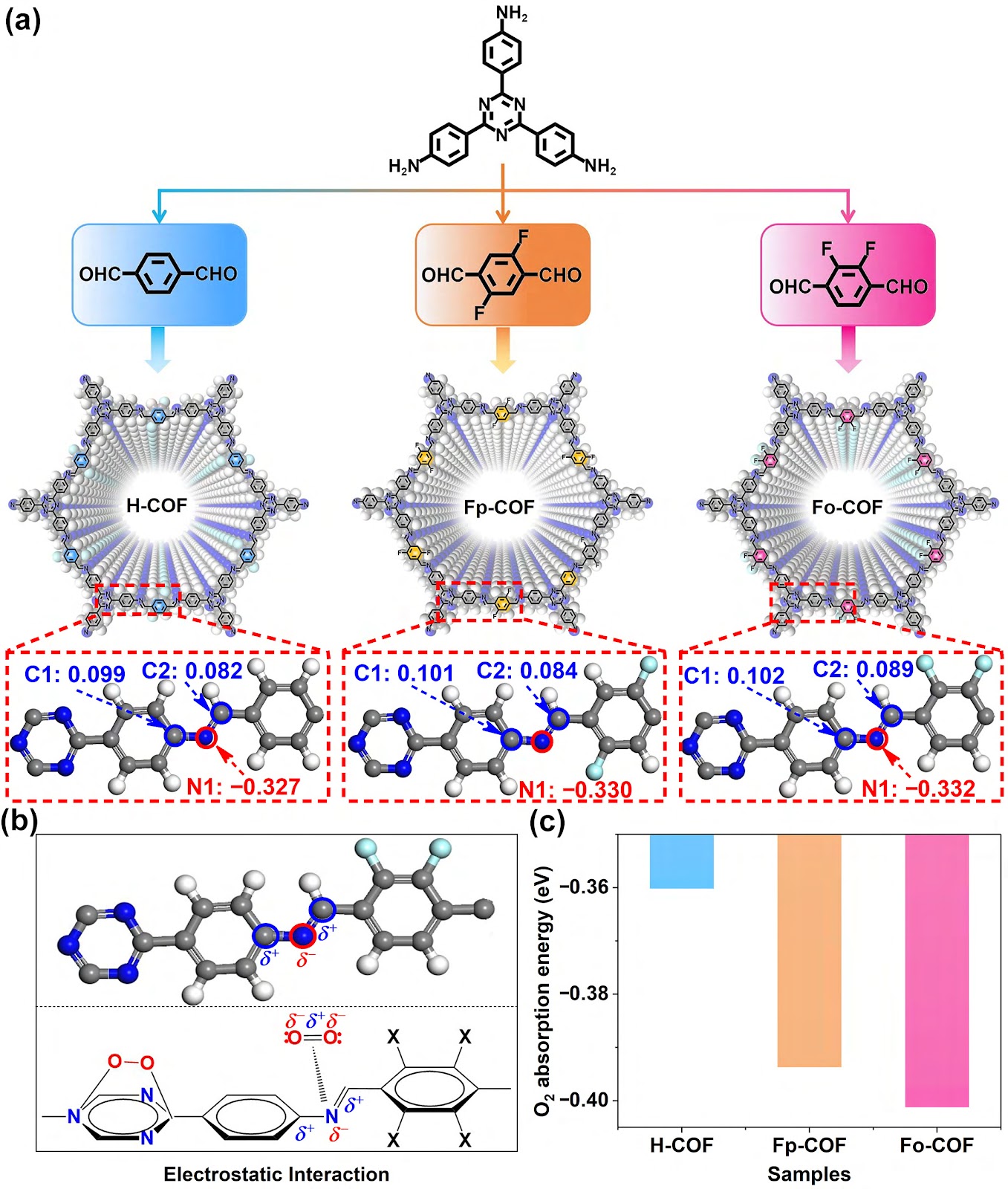
Covalent organic frameworks (COFs) with highly symmetric skeletons exhibit limited O2 adsorption and weak thermodynamic driving force for the two-electron oxygen reduction reaction (2e− ORR), constraining photocatalytic H2O2 production. Here, we modulate the local arrangement of fluorine atoms in COFs, creating para- and ortho-fluorinated variants (Fp-COFs and Fo-COFs) to induce an asymmetric electronic distribution. This asymmetry provides effective O2-adsorption sites and strengthens the driving force for 2e− ORR. Theoretical analysis reveals that asymmetric fluorination delocalizes lone-pair electrons of F atoms to adjacent carbons, producing a discretized electron distribution that enhances O2 adsorption at imine bonds. The increased electron density on these carbons facilitates electron transfer into the π* orbital of adsorbed O2, accelerating ·OOH* intermediate formation and lowering the Gibbs free energy barrier of the 2e− pathway. Consequently, Fo-COFs achieve a quantum yield of 8.8% for H2O2 photosynthesis in pure water. This work provides a new approach for tuning local electron distribution in COFs, offering guidance for rational design of efficient photocatalytic materials and broadening the application prospects of asymmetric electronic structures.
Superhydrophobic, Active Anti-Corrosion, and Solar Anti-Icing Coating with Fast Self-Healing Properties
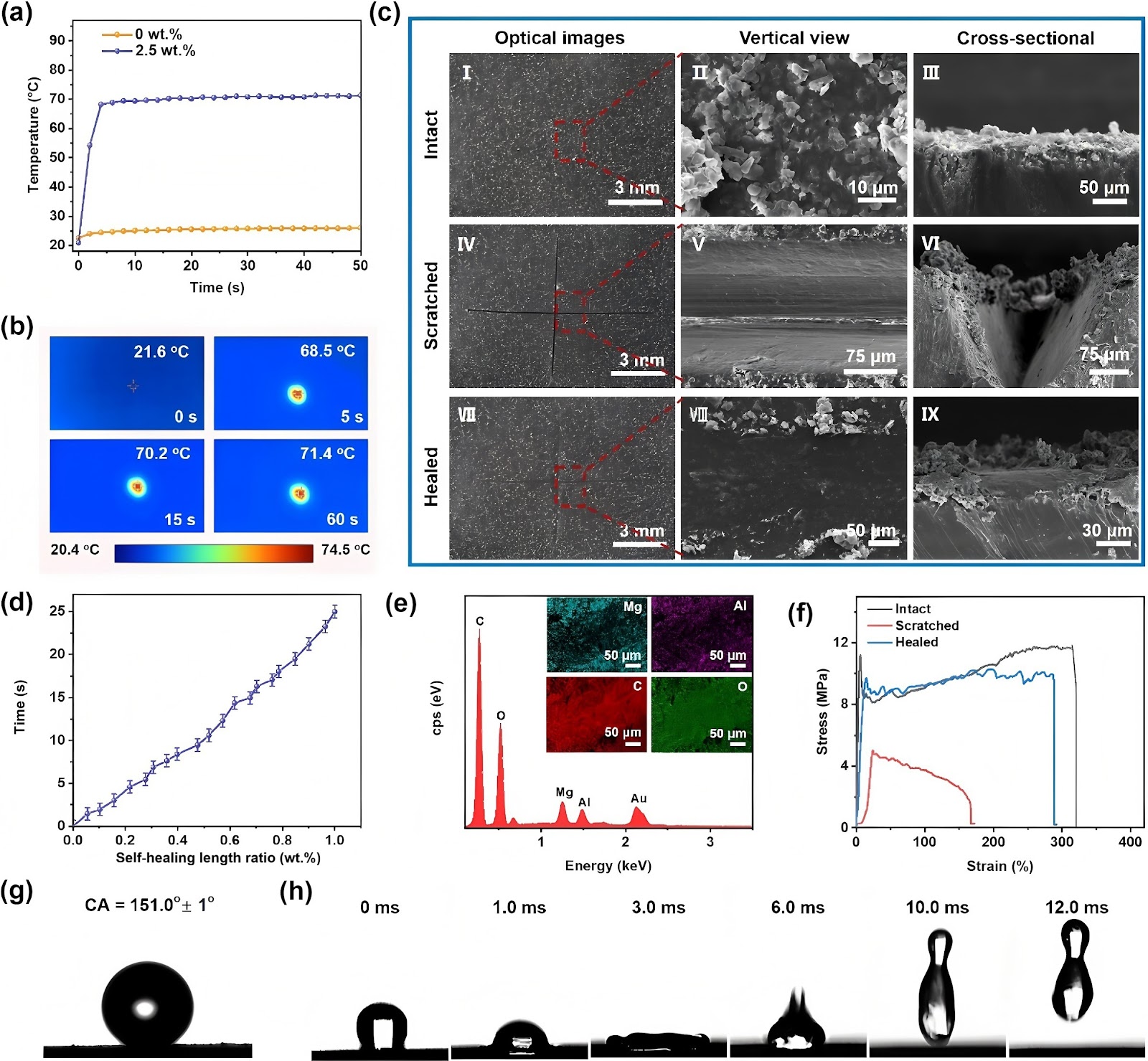
Corrosion and icing critically threaten the service safety of magnesium (Mg) alloys in aerospace and transportation industries. Although superhydrophobic coatings offer effective anti-corrosion and anti-icing functions, they are limited by susceptibility to failure due to physical damage or capillary condensation. Here, a multifunctional integrated coating (SAAS) is reported, which endows coated Mg alloys with excellent superhydrophobicity, active anti-corrosion performance, anti-icing properties, and fast self-healing capabilities. Layered double hydroxide (LDH) modified and intercalated with sodium laurate (La) acts as nanoreservoirs, releasing La corrosion inhibitors via an anion-exchange process to retard corrosion. Incorporation of MXene provides full-spectrum high absorption and efficient photothermal conversion, achieving a surface temperature of 61 °C under 1.0 sun illumination, which prevents adhesion and accumulation of supercooled droplets. Near-infrared (NIR) irradiation induces macromolecular chain migration and phase transition, enabling fast self-healing of coating damage. The SAAS coating exhibits a water contact angle of 153°, a corrosion current density of 1.294 × 10⁻⁹ A·cm⁻² (four orders of magnitude lower than bare Mg alloy), an icing delay time approximately 23 times longer than the substrate, and a healing rate of about 0.34 cm·s⁻¹ under NIR. This study provides a novel strategy for enhancing aircraft skin durability and offers insights into multifunctional coating design.
In-situ grown 1D Te/2D Bi2O2Se van der Waals heterostructure for high-performance self-powered polarization-sensitive photodetection
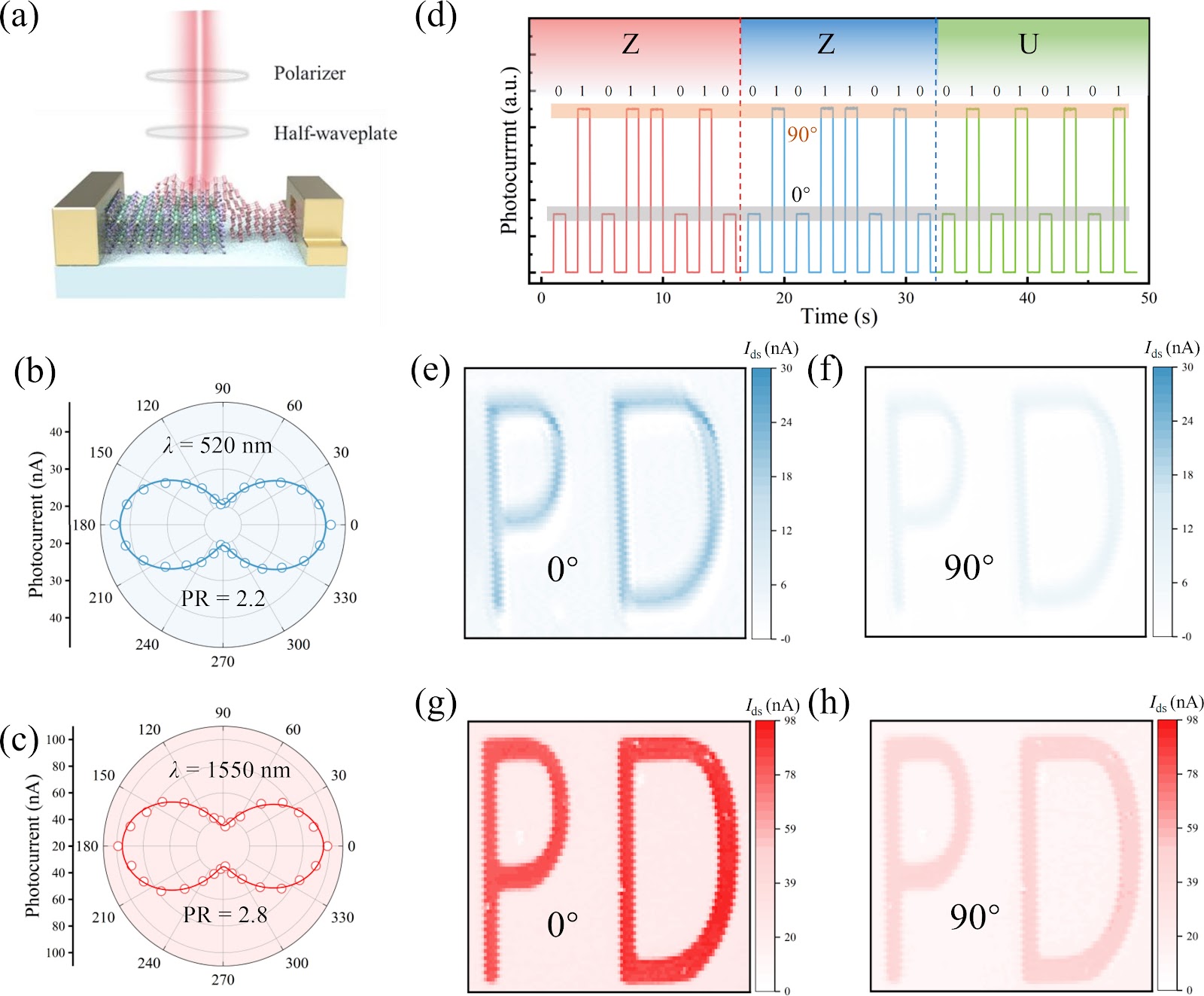
Low-dimensional semiconductors have attracted widespread attention in next-generation broadband infrared photodetectors due to their tunable band structures, strong light-matter interactions, and compatibility with mixed-dimensional integration. Among them, tellurium (Te) and bismuth selenide (Bi2O2Se) are ideal candidates for high-performance detection owing to their inherent anisotropy, high carrier mobility, and broad spectral response. Constructing heterojunction photodetectors based on these materials enables self-powered operation and suppresses dark current. Heterojunction interface engineering and band structure design are crucial for high-performance Te/Bi2O2Se heterojunction photodetectors. Here, we in-situ construct a one-dimensional (1D) Te/two-dimensional (2D) Bi2O2Se heterojunction via a two-step chemical vapor deposition method, achieving a clear interface and type-II band alignment. The photodetector based on the Te/Bi2O2Se heterojunction, operating in self-driven mode, exhibits high performance: a responsivity of ~0.89 A·W−1 and a fast response time of ~29/41 μs under 1550 nm light irradiation. Furthermore, owing to the optical absorption anisotropy of tellurium, the device demonstrates a high polarization ratio of 2.8 and successfully enables polarization optical communication and polarization imaging applications. This work provides new insights into the in-situ construction strategy for high-quality mixed-dimensional van der Waals heterojunctions and advances high-performance photodetectors and their applications.
Multifunctional modular electrospun fiber with heterogenous structure for multimodal sensing
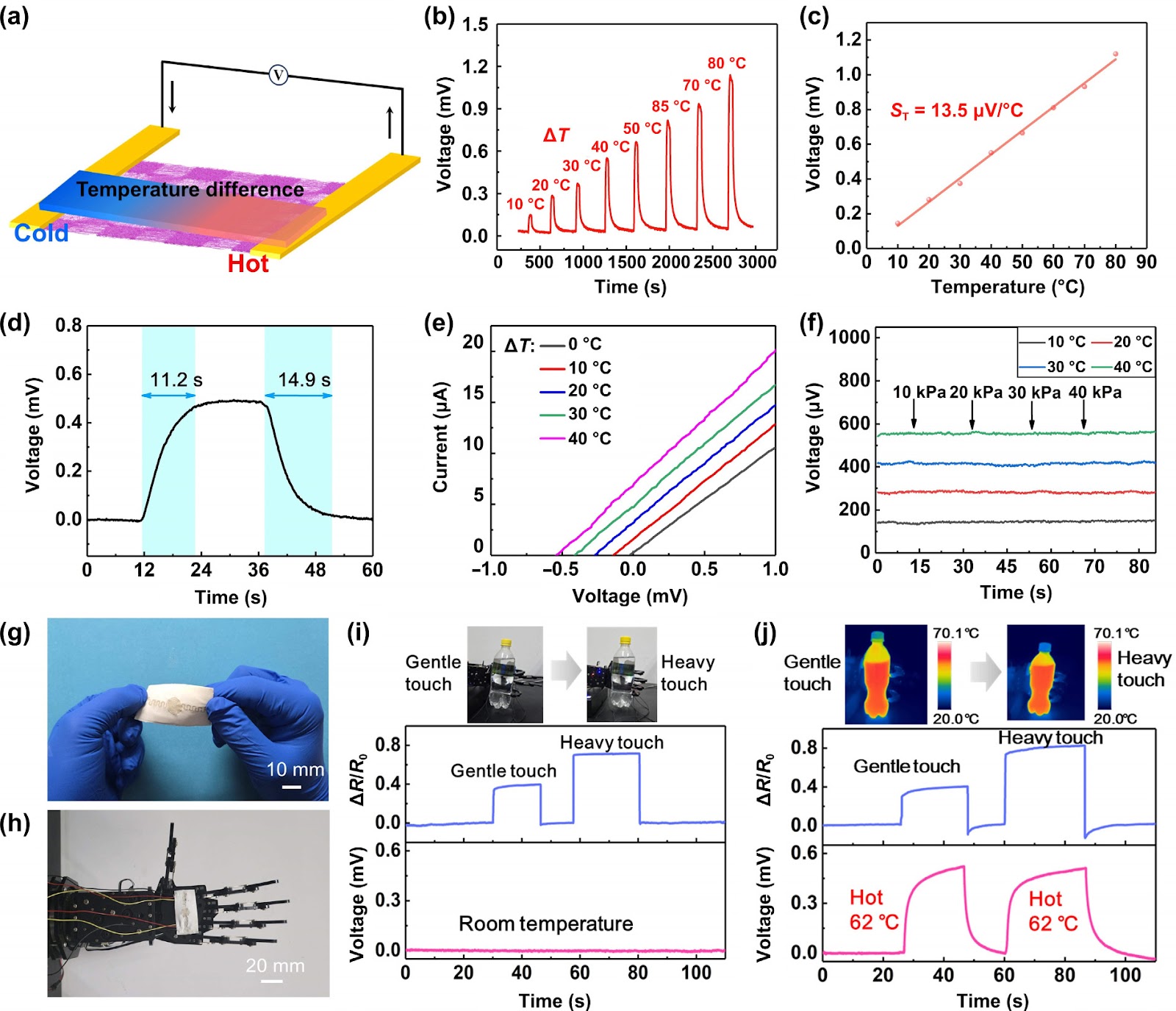
Flexible sensors have advanced rapidly to achieve skin-like multisensory capabilities, yet their performance is compromised by strain disturbances and multi-parameter interactions, impeding widespread deployment. Here, we report a flexible fibrous device with a patterned cellular structure enabling anti-strain interference, dual-parameter measurement, and static/dynamic detection. The patterned cellular fibrous structure achieves a heterogenous strain distribution that preserves sensing performance under 10% strain. The sensor integrates a piezoresistive component for low-frequency mechanical stimuli and a thermoelectric response to calibrate temperature-induced resistance changes. A hybrid piezoresistive/piezoelectric sensing platform was experimentally implemented for static pressure persistence and high-frequency acoustic excitation from 0 to 300 Hz. The hybrid tactile sensing achieved the highest material identification accuracy of 98.6%. This work provides valuable proposals to resolve practical constraints in flexible sensor applications, compelling advantages for broader wearable integration.
MXene-Based Hydrogel Disrupts Bacterial Biofilms and Reprograms Immune Cell Metabolism via Photothermal-Electron Transfer Effects to Reverse Bone Resorption in Periodontitis
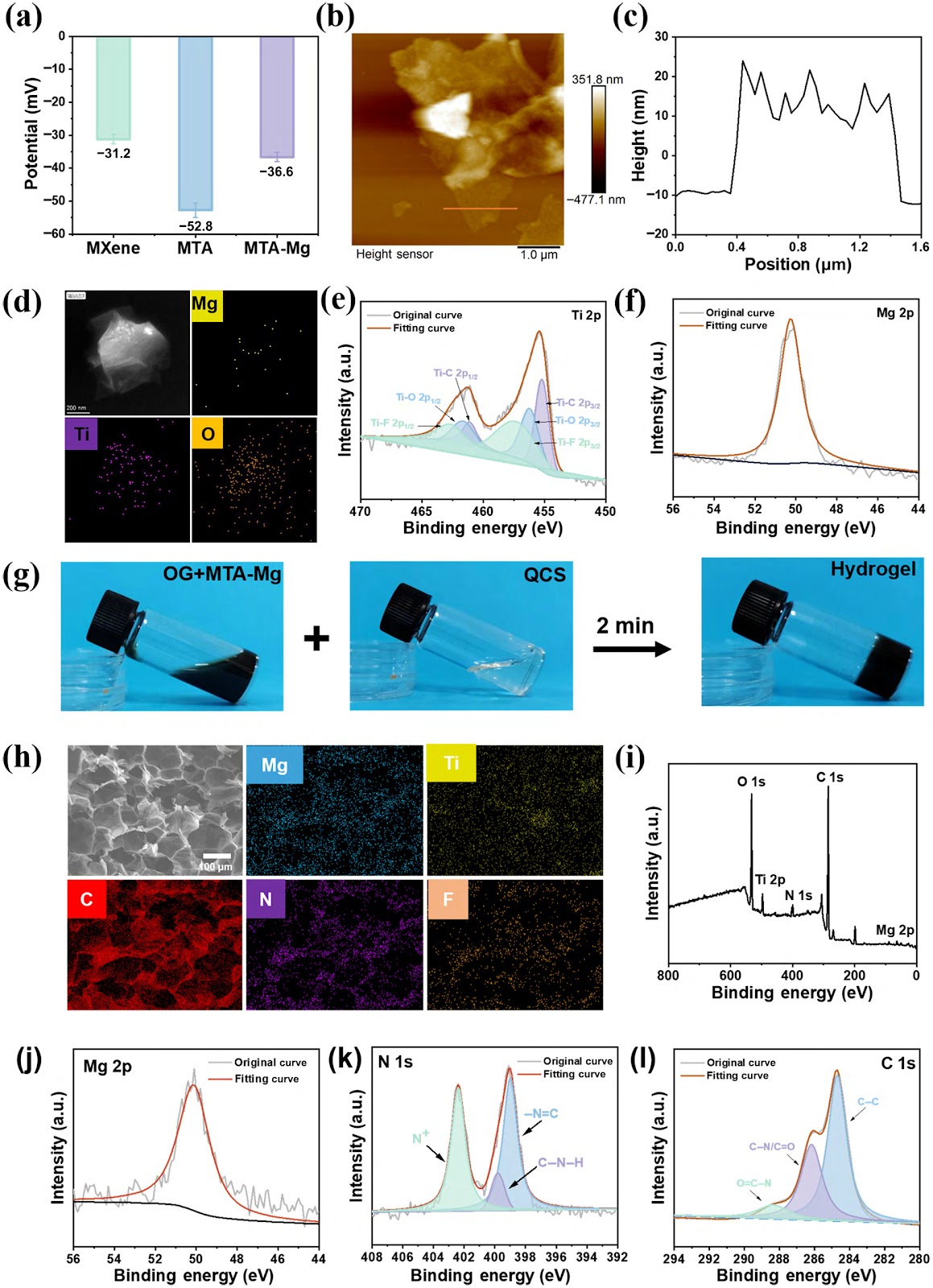
Periodontitis, a chronic inflammatory disease caused by bacterial biofilms, leads to alveolar bone resorption and tooth loss. Current treatments fail to eradicate biofilms and reverse inflammation-induced bone loss. Here, we developed an injectable hydrogel (GQM) composed of oxidized gellan gum, quaternized chitosan, and magnesium–tannic acid-modified MXene nanosheets (MTA-Mg). GQM is injectable into periodontal pockets and delivers MTA-Mg, which disrupts biofilms via photothermal effect under near-infrared (NIR) laser irradiation and kills bacteria through electrostatic interactions from quaternized chitosan. MTA-Mg also acts as an interfacial electron transfer agent to activate oxidative phosphorylation, while releasing magnesium and tannic acid to improve mitochondrial function, thereby reprogramming immune cell metabolism toward the M2 macrophage phenotype. In a rat periodontitis model, GQM hydrogel effectively eradicated biofilms, alleviated inflammation, and reversed alveolar bone resorption. This synergistic 'biofilm disruption–immune metabolic reprogramming' strategy offers a novel approach for treating inflammatory bone resorption in periodontitis.