Key Takeaways & Executive Findings
- •• • Zinc sulfidation rate of 90.39% achieved at 700 °C with 30% carbon powder, 10% Na2CO3, gypsum residue to secondary zinc oxide mass ratio of 1.4:1, and 2 h roasting time, enabling high-efficiency conversion of ZnO to ZnS for subsequent flotation recovery. • • Simultaneous removal of 76.32% F, 72.11% Cl, and 93.41% As under the same optimized conditions, mitigating impurity accumulation that typically degrades zinc electrowinning performance and reduces product quality. • • ZnS grain size increased from 5 to 10 μm via controlled cooling at 1 °C/min and sodium salt addition, which is critical for effective flotation separation, as fine grains are notoriously difficult to float and result in high losses. • • Thermodynamic enhancement of ZnO sulfidation by increasing CaSO4 and carbon dosage within 500−800 °C, with TG/DTG−DSC and 3D FTIR confirming conversion of CaSO4 to CaCO3 and suppression of CO2 and SO2 emissions, addressing environmental compliance and carbon footprint concerns.
China Advanced Materials & Deep-Tech Radar
Get verified English translations, SEM micrographs & open-access PDF alerts from China's leading state key laboratories delivered to your inbox every Monday at 08:00 EST.
Abstract
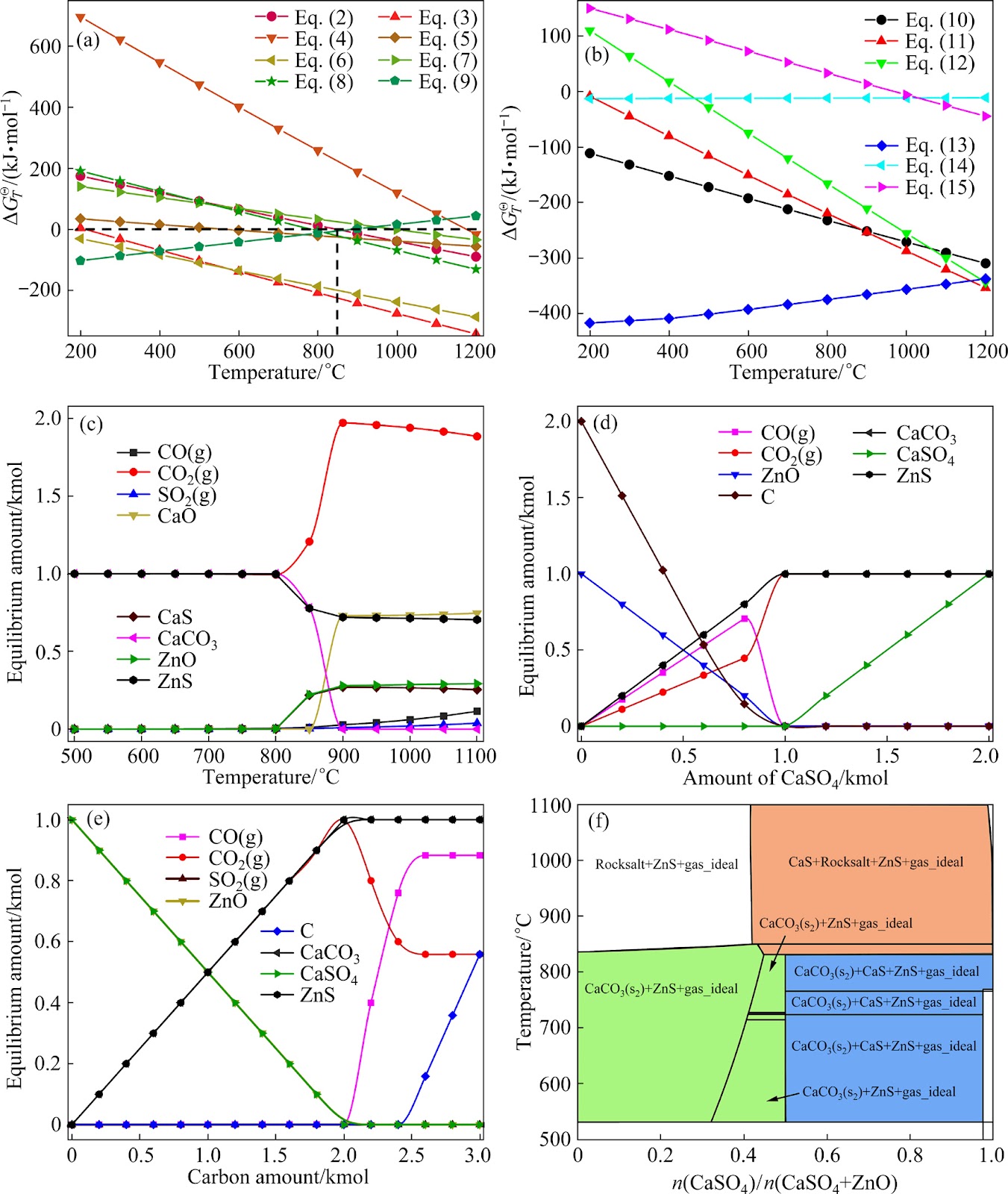
Synergistic sulfidation roasting of heavy metal gypsum residue and secondary zinc oxide fume was proposed by using the research idea of 'waste to treat waste'. Thermodynamic studies indicated that the sulfidation of zinc oxide could be effectively enhanced by increasing the dosage of calcium sulfate and carbon powder in the range of 500−800 °C. The synergistic sulfidation experiments of heavy metal gypsum residue with secondary zinc oxide showed that the sulfidation rate of zinc reached 90.39% and the grain size of ZnS increased from 5 to 10 μm under the conditions of temperature 700 °C, carbon powder 30%, Na2CO3 10%, mass ratio of gypsum residue to secondary zinc oxide 1.4:1, roasting time 2 h and cooling rate 1 °C/min. Meanwhile, 76.32% F, 72.11% Cl and 93.41% As were removed. TG/DTG−DSC, 3D FTIR spectra and SEM analysis showed that the conversion of CaSO4 to CaCO3 and the avoidance of CO2 and SO2 production were achieved under optimized conditions. This study achieves efficient sulfidation of zinc as well as growth of ZnS grains, laying the theoretical and technological foundation for subsequent recovery of ZnS by flotation.
1. Introduction
Existing commercial approaches for treating heavy metal gypsum residue and secondary zinc oxide fume—landfill, hydrometallurgical, and pyrometallurgical processes—face critical limitations. Landfilling prevents secondary fume accumulation but causes severe soil and groundwater contamination and wastes valuable zinc resources. Pyrometallurgical routes, such as rotary kiln and multi-hearth furnace roasting, are mature but suffer from high energy consumption, serious environmental pollution, and high costs, and they are unsuitable for materials with high impurity content. Hydrometallurgical processes often struggle with fluorine and chlorine removal, which are detrimental to zinc electrowinning. These bottlenecks have stalled the efficient recovery of zinc from secondary resources, leaving a significant gap in sustainable resource utilization.
This study introduces a synergistic sulfidation roasting protocol that leverages the 'waste to treat waste' principle, using heavy metal gypsum residue as a sulfidizing agent for secondary zinc oxide fume. By optimizing temperature, carbon dosage, sodium salt addition, and cooling rate, the method achieves a 90.39% zinc sulfidation rate and promotes ZnS grain growth to over 10 μm, while simultaneously removing 76.32% F, 72.11% Cl, and 93.41% As. The process avoids CO2 and SO2 production under optimized conditions, offering a cleaner, more efficient pathway for zinc recovery and hazardous waste mitigation.
Loading authentic research manuscript (Pages 1–5)...
Yong-wei WANG, Rui HUANG, Wen-qing QIN, Jun-wei HAN (2026). Efficient separation of heavy metals from gypsum residue and secondary zinc oxide fume based on synergistic sulfidation. Transactions of Nonferrous Metals Society of China (中国有色金属学报). https://doi.org/10.1016/S1003-6326(26)67068-9
Research & Educational Purpose Only: The translations, structured abstracts, analytical annotations, and data reports provided by SinoTechIntelare intended exclusively for academic research, internal corporate R&D, and educational benchmarking. They do not constitute formal engineering, chemical safety, legal, or professional advice.
Copyright & Intellectual Property Notice: Original copyright of the underlying source articles and experimental data remains with the respective authors, institutions, and original publishing journals. SinoTechIntel claims intellectual property only over its proprietary translations, analytical syntheses, and AEO structured enhancements in accordance with international fair use and academic citation principles.
Frequently Asked Questions
What is the sulfidation rate of zinc under the optimized conditions, and how does it compare to conventional roasting?
The sulfidation rate of zinc reaches 90.39% at 700 °C, 30% carbon powder, 10% Na2CO3, mass ratio of gypsum residue to secondary zinc oxide 1.4:1, and 2 h roasting time. Conventional pyrometallurgical processes often yield lower sulfidation efficiencies and suffer from high energy consumption; this synergistic approach significantly enhances zinc conversion while suppressing SO2 and CO2 emissions.
How does the process address fluorine and chlorine removal, which are critical impurities for zinc electrowinning?
Under the optimized conditions, 76.32% F and 72.11% Cl are removed, along with 93.41% As. This simultaneous removal mitigates the detrimental effects of these impurities on downstream electrowinning, reducing the need for additional purification steps and improving overall process economics.
What is the mechanism behind ZnS grain growth, and why is it important for flotation recovery?
ZnS grain size increases from 5 to 10 μm by increasing roasting temperature to 700 °C, adding 10% Na2CO3, and decreasing the cooling rate to 1 °C/min. Larger grains are essential for efficient flotation, as fine particles are difficult to float and lead to high losses. This grain regulation directly enhances the subsequent recovery of ZnS by flotation.
Does the process produce hazardous gases such as SO2 or CO2, and how are emissions controlled?
TG/DTG−DSC, 3D FTIR spectra, and SEM analysis confirm that under optimized conditions, the conversion of CaSO4 to CaCO3 is achieved and the production of CO2 and SO2 is avoided. This is a significant environmental advantage over conventional roasting, which often generates these gases and requires costly scrubbing systems.
What are the scalability and cost implications of using sodium carbonate and controlled cooling in an industrial setting?
The addition of 10% Na2CO3 and a cooling rate of 1 °C/min are moderate requirements that can be integrated into existing roasting circuits. While sodium carbonate adds a reagent cost, it enhances grain growth and sulfidation, potentially reducing downstream flotation costs. The avoidance of SO2 and CO2 emissions also lowers environmental compliance costs, improving overall economic viability.
Related Chinese Research & Cross-Citations
Assessment of zinc migration behavior and toxicity characteristics in redox smelting of zinc leaching residue
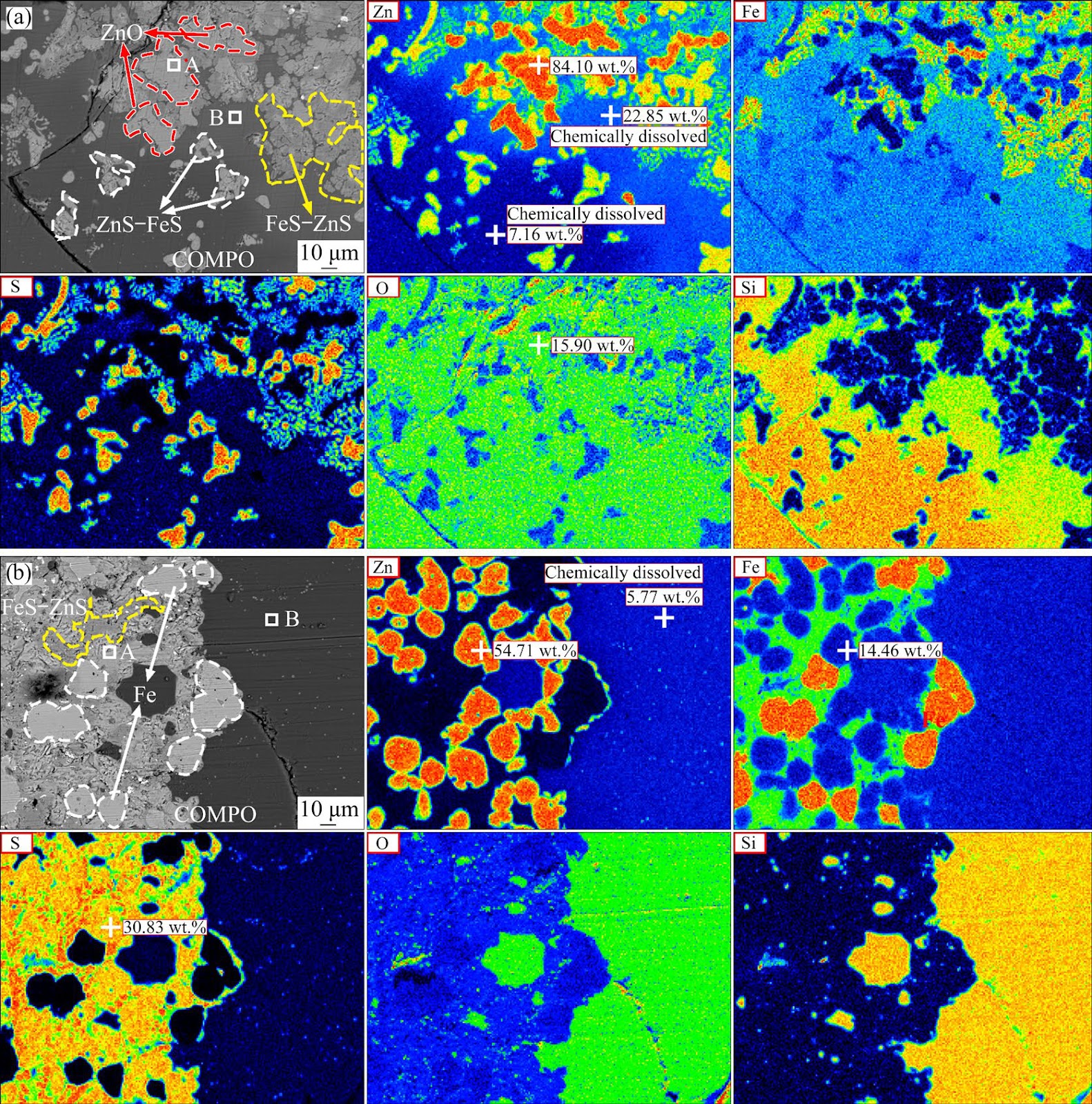
The redox smelting of zinc leaching residue (ZLR) was investigated to determine the migration behavior and toxicity characteristics of zinc under varying anthracite addition, temperature, and holding time. The ZLR, containing 10–20 wt.% Zn, 0.5–5 wt.% Pb, and 0.1–0.5 wt.% Cd, generates TCLP leachate concentrations of Zn up to 4589.0 mg/L, far exceeding regulatory limits. Experimental results reveal that CaSO4 in the residue promotes the transformation of ZnFe2O4 into a ZnS–FeS eutectic, which hinders zinc recovery and elevates environmental risk due to its lower thermodynamic stability relative to (Fe,Zn)2SiO4, ZnFe2O4, and (ZnO)slag. At temperatures above 1573 K, the ZnS–FeS eutectic is oxidized by O2/(O)slag to ZnO(s), subsequently dissolved into the slag as chemically dissolved Zn, and finally reduced to Zn(g) by CO. Pre-desulfurization or increased oxygen potential enhances zinc volatilization. Under optimized conditions, the zinc recovery ratio reached 99.13%, and the residual zinc content in the slag decreased to 0.22 wt.%, substantially below the industrial range of 1.0–3.0 wt.%. A novel strategy integrating desulfurization pretreatment with redox smelting is proposed, which lowers the required smelting temperature and improves zinc recovery efficiency, offering a more economical and environmentally sustainable solution for ZLR treatment.
Effects of oxidation roasting on surface characteristics and flotation behavior of bastnaesite
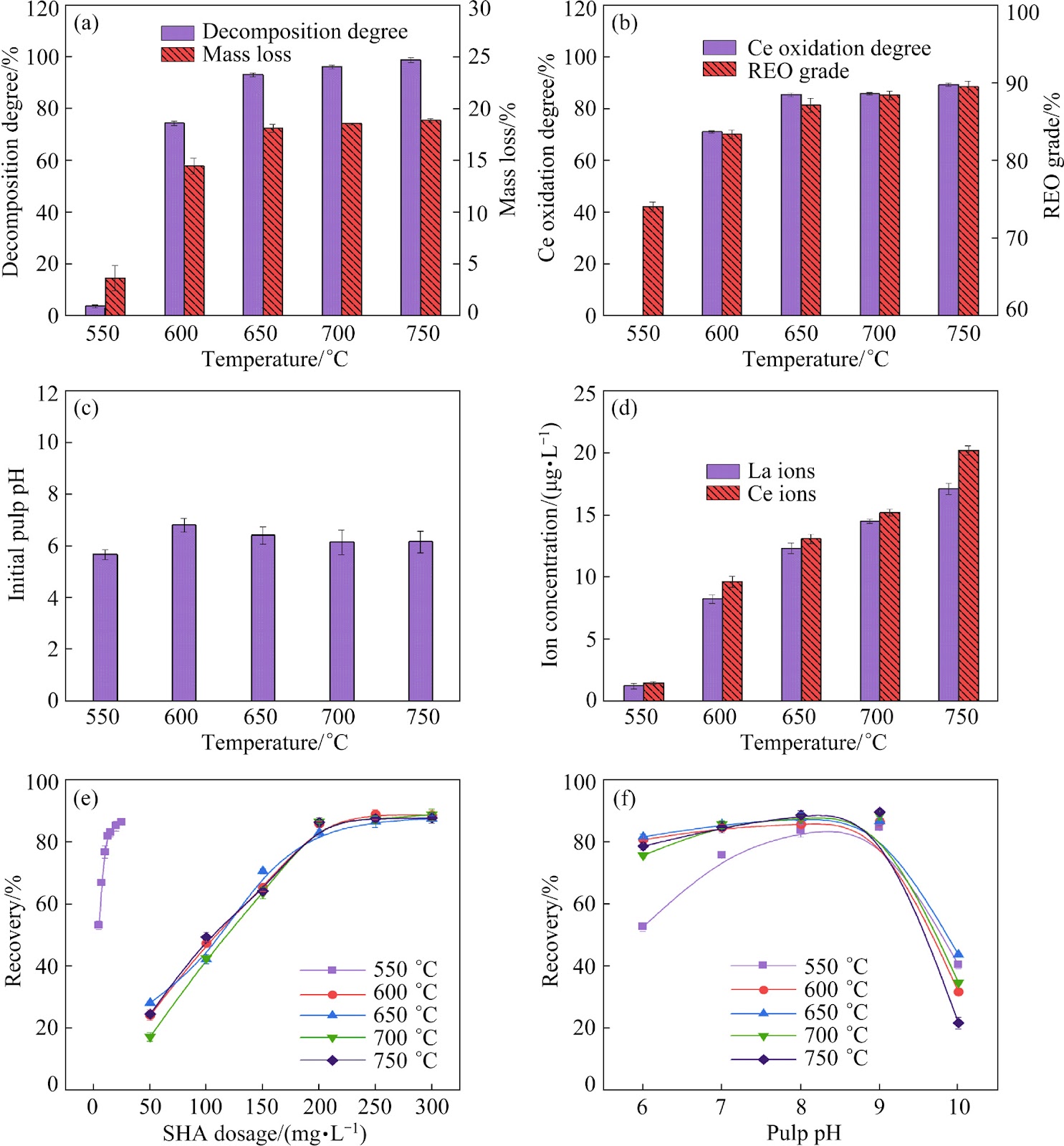
Oxidation roasting of bastnaesite was conducted to evaluate its impact on surface characteristics and flotation behavior. Experiments varied temperature, time, and O2 concentration. Increasing temperature promoted thermal decomposition, yielding Ce7O12, RE2O3, and REF3 as main phases. The Ce oxidation degree and REO grade of roasted products exceeded 85.00%. Roasting induced long, narrow, nearly parallel cracks within particles, increasing porosity and causing partial fragmentation. During flotation, dissolved rare earth ion concentration increased significantly, and surface hydrolysis formed rare earth hydroxyl compounds. Complete decomposition raised the required collector dosage to achieve recovery above 85.00%. This increase is attributed to enhanced particle wettability, altered collector adsorption, and deeper penetration into the porous structure. The findings provide a basis for optimizing flotation circuits treating roasted bastnaesite, particularly in iron-bearing rare earth deposits where pyrometallurgical pretreatment is employed.
Single Crystal NCM811 Cathode Material Prepared by Rapid Solvothermal Method
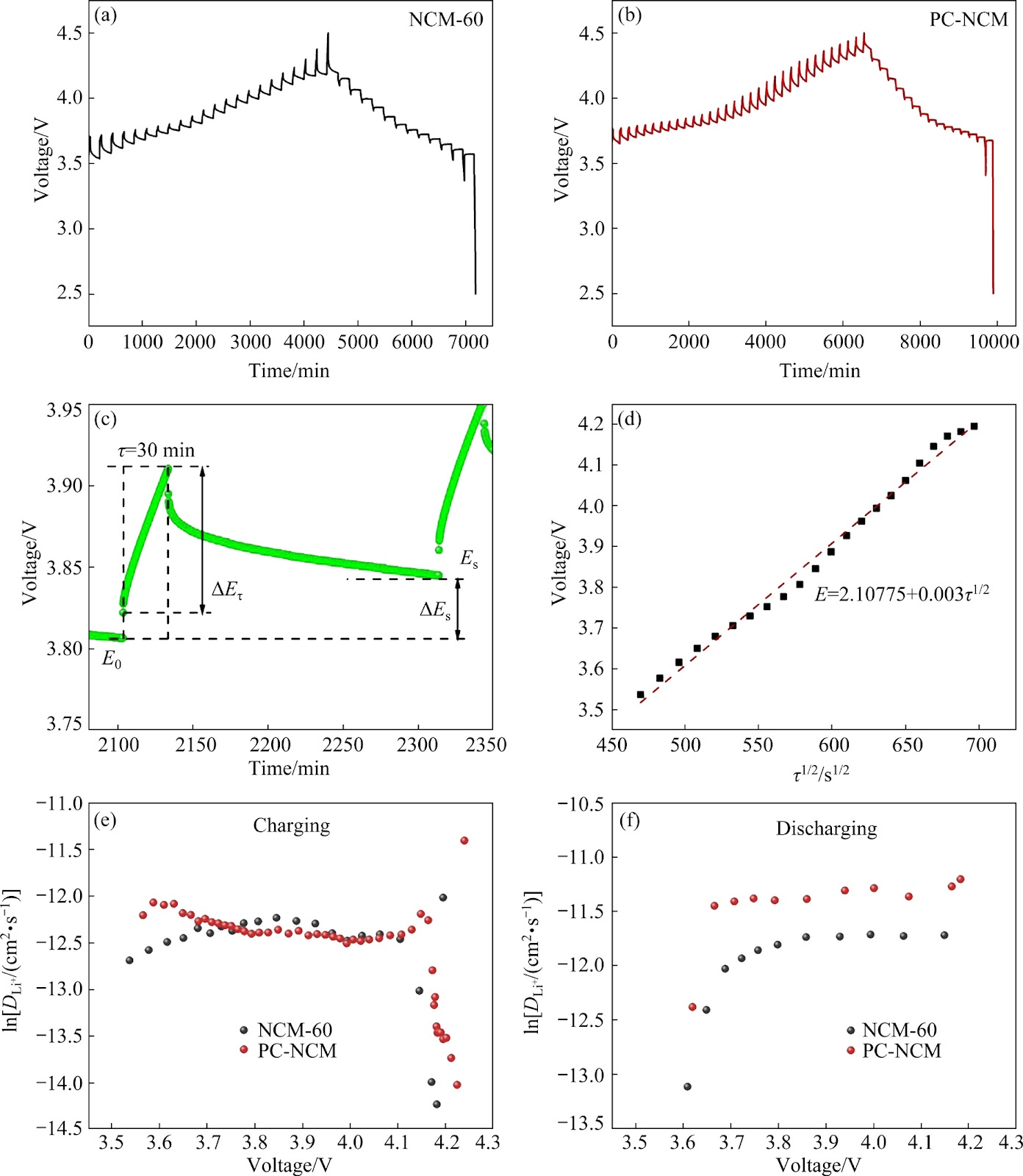
Polycrystalline LiNi0.8Co0.1Mn0.1O2 (NCM811) cathodes undergo intergranular cracking and structural collapse during extended cycling, limiting their commercial viability. This study reports single-crystalline NCM811 synthesized via a rapid ethanol–water solvothermal method. The solvothermal duration was varied, and the 60 min sample (NCM-60) exhibited optimal electrochemical performance. X-ray diffractometry confirmed an α-NaFeO2 structure with R-3m space group and high crystallinity. NCM-60 delivered a reversible capacity of 157.28 mA·h/g at 1C and a capacity retention of 55.06% after 200 cycles, significantly outperforming polycrystalline NCM (PC-NCM). Cross-sectional scanning electron microscopy revealed no apparent cracks in NCM-60 after 200 cycles, whereas PC-NCM exhibited severe intergranular fracture. The results demonstrate that shortening solvothermal time reduces precursor particle size and crystallinity, but 60 min yields the best balance. Pre-oxidation of the carbonate precursor before lithiation is recommended to mitigate CO2 evolution and lithium–nickel disorder during high-temperature sintering. This rapid solvothermal route offers a scalable pathway to single-crystal NCM811 with enhanced cycling stability and mechanical integrity.
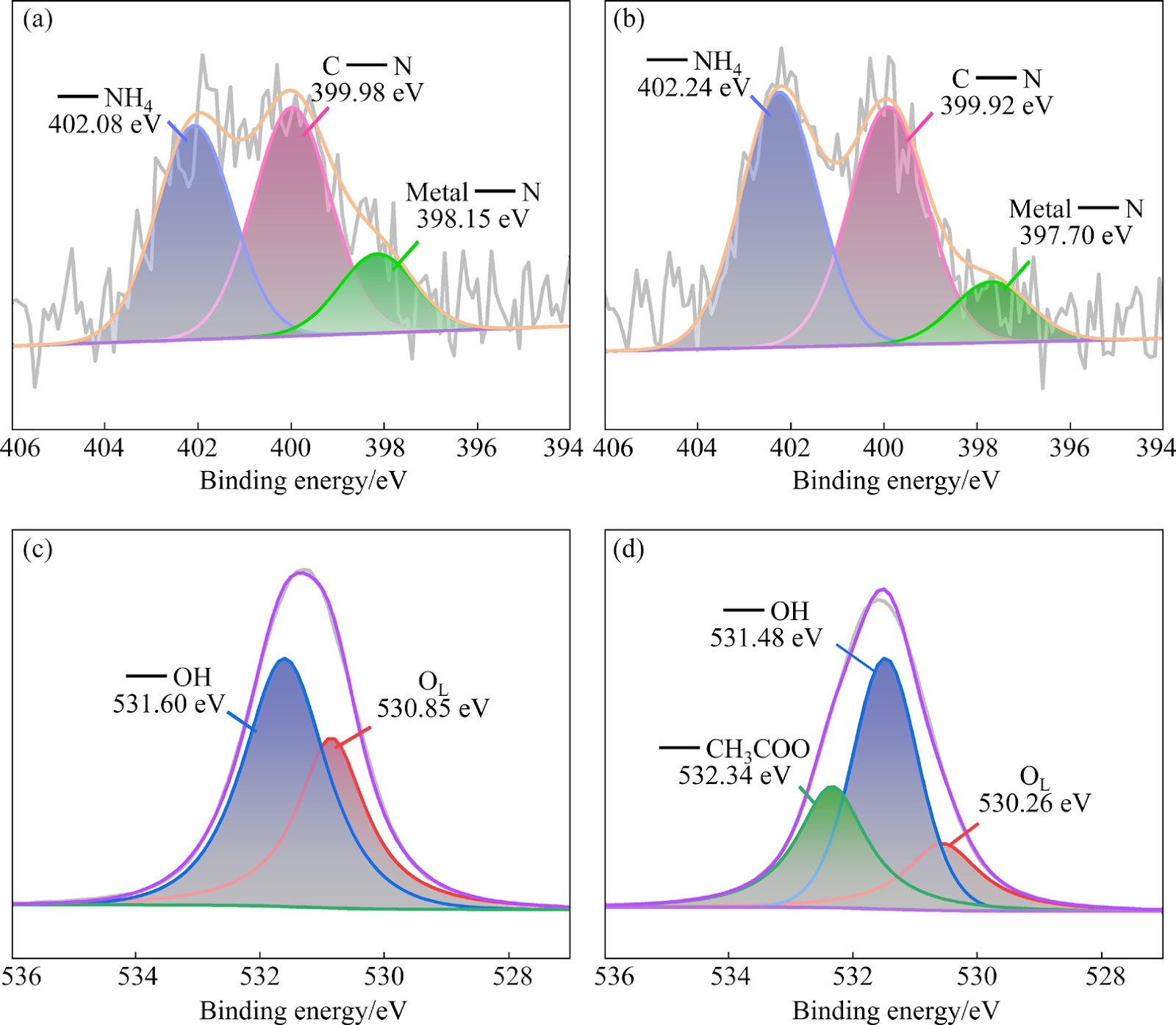
Low-Ammonium Synergistic Leaching of Ionic Rare Earth Ore with Acetic Acid–Ammonium Sulfate System
Conventional ammonium sulfate leaching of ionic rare earth ores generates 4–6 t of ammonia-nitrogen wastewater per ton of rare earth and drives mining-area soil pH to 3.5–4.0, creating an acute environmental compliance risk. This study evaluates a low-ammonium synergistic lixiviant comprising 0.020 mol/L (NH4)2SO4 and 0.010 mol/L acetic acid (HAc) at pH 4–5, 30 °C, and 1 h contact time. Comparative leaching experiments establish a rare earth element (REE) leaching efficiency of 88.92%, a 13.36% absolute increase over single 0.020 mol/L (NH4)2SO4 leaching. To achieve the same ~90% efficiency benchmark, the conventional single-salt system requires 0.030 mol/L (NH4)2SO4; the synergistic system therefore reduces ammonium consumption by 33.3%. Surface characterization indicates a dual mechanism: H+ attenuates electrostatic interactions between RE3+ and silicate surfaces, enhancing NH4+–RE3+ exchange, while CH3COO− forms soluble RE3+/Al3+ complexes that prevent Al(OH)3 passivation and sustain surface reactivity. The protocol offers a directly deployable route to cut reagent cost and ammonia-nitrogen load without sacrificing recovery, addressing the principal bottleneck restraining sustainable ionic rare earth ore exploitation under China's dual-carbon and rare earth total-amount control policies.
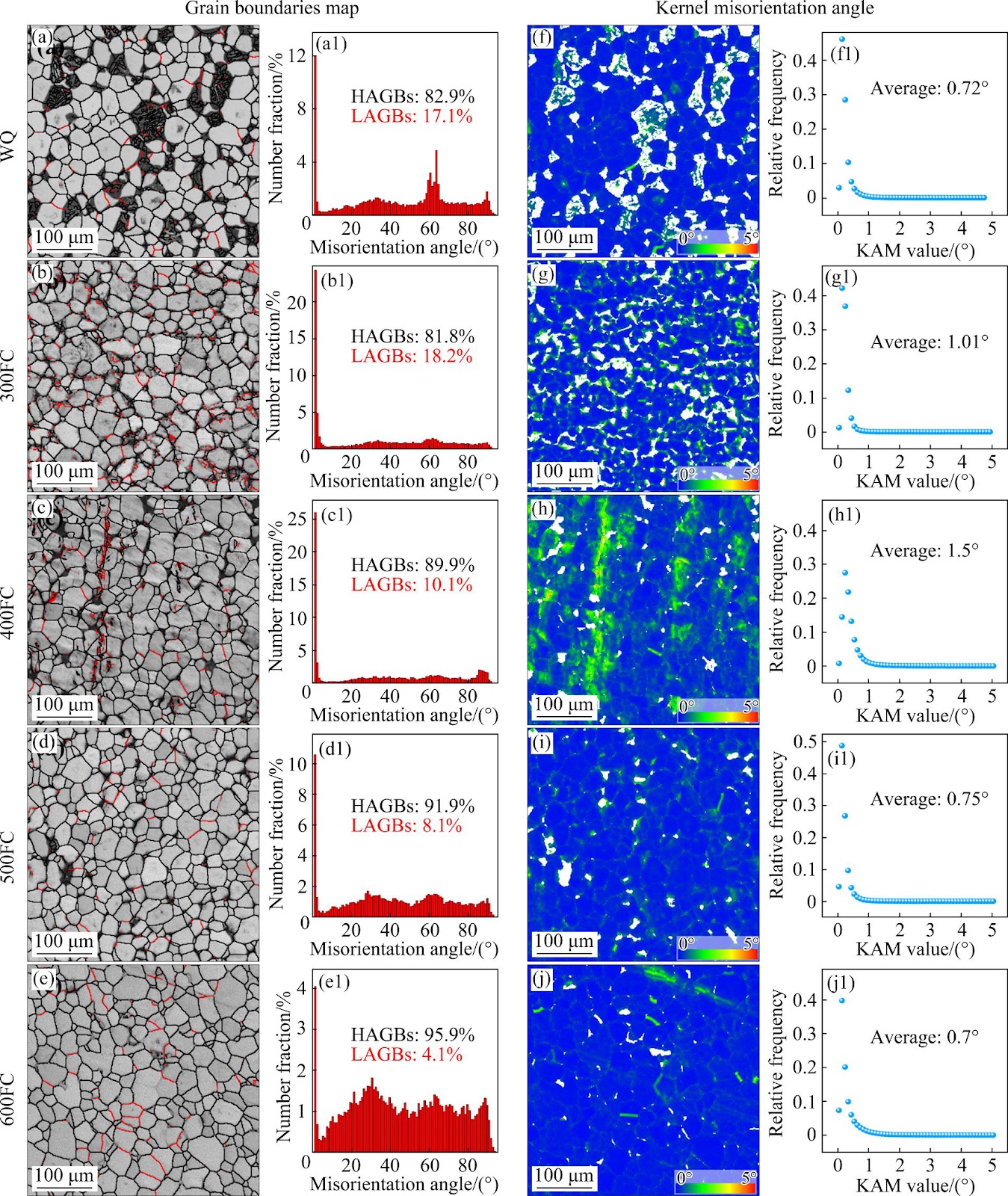
Achieving strength-ductility tradeoff in near alpha titanium alloy via multi-stage heat treatment-induced nano-martensite phase transformation
A multi-stage heat treatment (MSHT) strategy, comprising a high-temperature short-duration water quench (WQ) followed by low-temperature long-duration furnace cooling (FC), was applied to a near-alpha Ti-0.3Mo-0.8Ni-2Al-1.5Zr alloy to overcome the strength-ductility tradeoff. The WQ state produced lath nano-martensite alpha-prime, residual beta-prime, and equiaxed recrystallized alpha. Subsequent FC decomposition transformed alpha-prime/beta-prime into homogeneously dispersed nano-scale alpha+beta precipitates, while equiaxed alpha coarsened via grain boundary migration. The WQ condition exhibited an ultimate tensile strength (sigma_UTS) of 610 MPa and elongation to failure (epsilon_f) of 18.2%. The WQ+400FC condition achieved a peak sigma_UTS of 791.5 MPa with epsilon_f = 16.7%, yielding a strength-ductility product (sigma_UTS * epsilon_f) of 13.2 GPa*%, a 19% improvement over the WQ state. Texture analysis revealed a duplex texture in WQ: weak {0001}//Z0 and strong {0110}//Y0, inherited after FC. The 400FC sample showed the highest lattice strain inhomogeneity, with peak kernel average misorientation (KAM) of 1.5 degrees and grain orientation spread (GOS) of 0.96 degrees, correlating with the excellent sigma_UTS. Non-basal slip systems exhibited higher Schmid factor (SF) values after heat treatment, contributing to ductility. Burgers orientation relationship (BOR) reconstruction confirmed variant selection during beta to alpha-prime transformation, with only four predominant alpha-prime variants instead of the twelve theoretically possible.
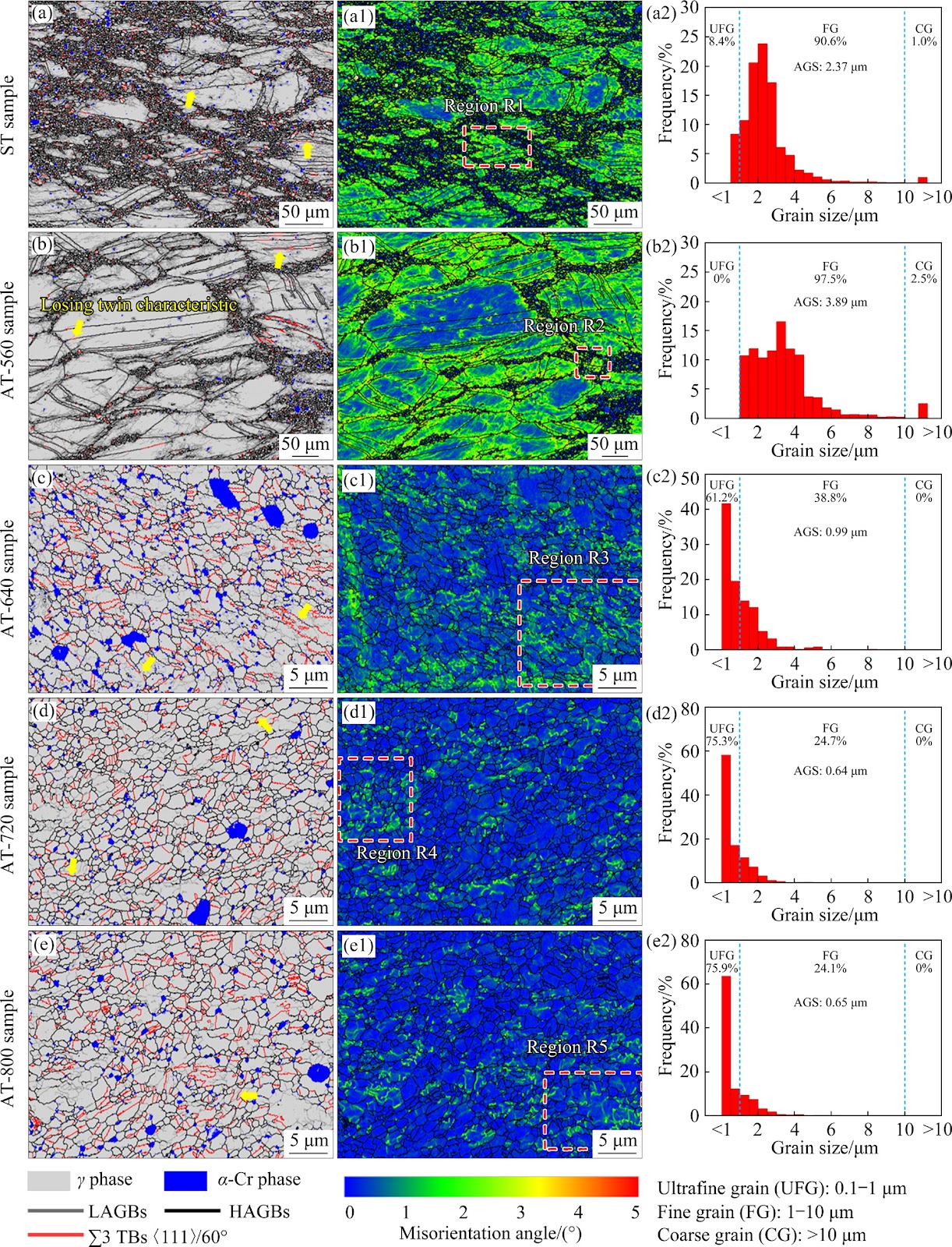
Adjusting mechanisms for ultrafine-grained microstructures during hot deformation of Ni−38Cr−3.8Al alloy via pre-ageing precipitation
The influence of pre-ageing temperature on dynamic recrystallization (DRX) and microstructure evolution during hot compression of Ni−38Cr−3.8Al alloy was investigated. Five samples with varying pre-precipitation states were fabricated. Pre-ageing treatment precipitates α-Cr phases in lamellar and particle forms. During subsequent hot deformation, pre-precipitated α-Cr lamellae undergo dissolution fragmentation and spheroidization, transforming into finer particles due to elevated temperature and high-density dislocations. At 560 °C, an incomplete discontinuous precipitation (DP) state restrains DRX, producing necklace-like microstructures. Above 640 °C, a complete DP state with fully lamellar structures promotes DRX, yielding ultrafine-grained (UFG) microstructures. Coarse α-Cr particles enhance DRX through particle-stimulated nucleation (PSN) and discontinuous DRX mechanisms, while dissolved α-Cr lamellae promote DRX via continuous DRX. DRX kinetics analysis indicates that increasing pre-ageing temperature accelerates DRX, evidenced by reduced critical strain and peak strain, and increased DRX volume fraction. To achieve UFG microstructures during hot deformation, fully lamellar structures should be precipitated during pre-ageing. These findings provide a processing pathway for tailoring microstructures in high-Cr nickel-based alloys.