Key Takeaways & Executive Findings
- •• • Theoretical material removal rates deviate from experimental values by ≤13% across all tested conditions, with maximum errors of 10.6% at 7.5 kPa and 12.5% at 30 kPa, validating the model's predictive capability for industrial process control. • • Material removal rate increases monotonically with polishing pressure (7.5–30 kPa) and pad rotational speed (40–80 r/min), enabling deterministic throughput scaling without sacrificing surface integrity. • • Mechanical action reduces the activation energy and elevates the contact-zone temperature, accelerating the solid-phase reaction rate; this coupling mechanism governs the chemical-mechanical equilibrium critical for high-quality KDP processing. • • The solid-phase reaction layer thickness, derived from the reaction rate model and single-abrasive scratching theory, directly determines abrasive penetration depth and material removal rate, providing a quantitative link between reaction kinetics and mechanical removal.
China Advanced Materials & Deep-Tech Radar
Get verified English translations, SEM micrographs & open-access PDF alerts from China's leading state key laboratories delivered to your inbox every Monday at 08:00 EST.
Abstract
Potassium dihydrogen phosphate (KH2PO4, KDP) crystals are indispensable optical components in high-power laser systems and inertial confinement fusion devices, yet their hygroscopicity, brittleness, and low hardness render them among the most difficult materials to machine. This study establishes a solid-phase chemical reaction rate model grounded in heterogeneous solid-phase reaction kinetics and the Arrhenius equation, quantifying the influence of mechanical action and temperature on reaction kinetics. The true contact area between the KDP crystal and the fixed abrasive pad is computed, and the reaction layer thickness is derived by coupling the reaction rate model with single-abrasive scratching theory. A material removal model is subsequently formulated, linking abrasive penetration depth to reaction layer thickness. Experiments were conducted at polishing pressures of 7.5, 15, 22.5, and 30 kPa and pad rotational speeds of 40, 50, 60, 70, and 80 r/min. Theoretical material removal rates were compared with empirical data, yielding discrepancies within 13% (maximum errors of 10.6% at 7.5 kPa and 12.5% at 30 kPa). Material removal rate increases monotonically with polishing pressure and pad rotational speed. The model elucidates the coupling mechanism between chemical and mechanical actions: solid-phase reactions generate a reaction layer on the workpiece surface, which is removed by abrasive mechanical action; equilibrium between chemical and mechanical actions enables high-quality KDP crystal processing.
1. Introduction
KDP crystals are strategic optical materials for high-power laser systems and inertial confinement fusion devices, yet their extreme hygroscopicity, brittleness, and low hardness cause conventional machining approaches to fail: abrasive processes induce subsurface damage and microcracks, while wet chemical etching lacks spatial selectivity and dimensional control. Existing chemical mechanical polishing (CMP) techniques for KDP rely on aqueous slurries that exacerbate deliquescence and introduce corrosive attack, stalling the achievement of both high removal rates and sub-nanometer surface roughness.
This work addresses the bottleneck by implementing a fixed solid-phase chemical mechanical polishing method that eliminates liquid-phase corrosion. By integrating heterogeneous solid-phase reaction kinetics with the Arrhenius equation and single-abrasive scratching theory, the study establishes a material removal model that quantifies the effects of pre-exponential factor, activation energy, reaction mechanism function, and pad characteristics (asperity distribution, abrasive grain size, concentration). The model is validated across polishing pressures of 7.5–30 kPa and pad rotational speeds of 40–80 r/min, yielding theoretical-experimental discrepancies within 13% and demonstrating that mechanical action lowers activation energy and raises contact-zone temperature, thereby accelerating solid-phase reaction and enabling balanced chemical-mechanical removal for high-quality KDP crystal processing.
Loading authentic research manuscript (Pages 1–5)...
SI Jialong, LU Xiao, LI Lan, YANG Liantong, CHEN Kai, YU Zhi, LI Jun (2026). A Material Removal Model for KDP Crystal in Chemical Mechanical Polishing Based on Solid-phase Chemical Reactions. Surface Technology (表面技术). https://doi.org/10.16490/j.cnki.issn.1001-3660.2026.09.004
Research & Educational Purpose Only: The translations, structured abstracts, analytical annotations, and data reports provided by SinoTechIntelare intended exclusively for academic research, internal corporate R&D, and educational benchmarking. They do not constitute formal engineering, chemical safety, legal, or professional advice.
Copyright & Intellectual Property Notice: Original copyright of the underlying source articles and experimental data remains with the respective authors, institutions, and original publishing journals. SinoTechIntel claims intellectual property only over its proprietary translations, analytical syntheses, and AEO structured enhancements in accordance with international fair use and academic citation principles.
Frequently Asked Questions
What is the maximum observed error between the theoretical model and experimental material removal rates, and under which conditions does it occur?
The maximum error is 12.5% at a polishing pressure of 30 kPa, with a secondary maximum of 10.6% at 7.5 kPa. Across all tested pressures (7.5–30 kPa) and pad rotational speeds (40–80 r/min), the overall discrepancy remains within 13%, confirming the model's validity for process window prediction.
How does mechanical action quantitatively influence the solid-phase reaction rate in this CMP process?
Mechanical action, primarily polishing pressure and pad rotational speed, reduces the activation energy and elevates the contact-zone temperature between the KDP crystal and the fixed abrasive pad. This dual effect accelerates the solid-phase reaction rate, which in turn increases the reaction layer thickness and material removal rate. The model explicitly incorporates these parameters through the Arrhenius equation and true contact area calculations.
What is the fundamental coupling mechanism between chemical and mechanical actions that enables high-quality KDP processing?
The solid-phase chemical reaction generates a reaction layer on the KDP surface, which is subsequently removed by the mechanical action of abrasive grains. When the chemical reaction rate and mechanical removal rate reach equilibrium, the reaction layer thickness stabilizes, preventing subsurface damage and achieving high-quality processing. This balance is quantified by correlating abrasive penetration depth with reaction layer thickness in the model.
Can this solid-phase CMP model be scaled to industrial production, and what are the key operational parameters?
The model is validated at polishing pressures up to 30 kPa and pad rotational speeds up to 80 r/min, with material removal rate increasing monotonically with both parameters. This scalability indicates that industrial throughput can be enhanced by increasing pressure and speed, provided the chemical-mechanical equilibrium is maintained. The model's predictive accuracy within 13% supports its use for process optimization and control in manufacturing.
What are the limitations of the current model, and what further experimental validation is required?
The model assumes a fixed abrasive pad with uniform asperity distribution and does not account for pad wear or abrasive degradation over prolonged polishing. Additionally, the error at 30 kPa (12.5%) suggests that at higher pressures, secondary mechanical effects such as abrasive embedding or reaction layer fracture may become significant. Future work should incorporate time-dependent pad topography and validate the model over extended polishing durations and varying abrasive concentrations.
Related Chinese Research & Cross-Citations
Effect of Microstructural Evolution on Wear and Cavitation Erosion Resistance of Laser-cladded CoCrNiNbx Medium-entropy Alloy Coatings
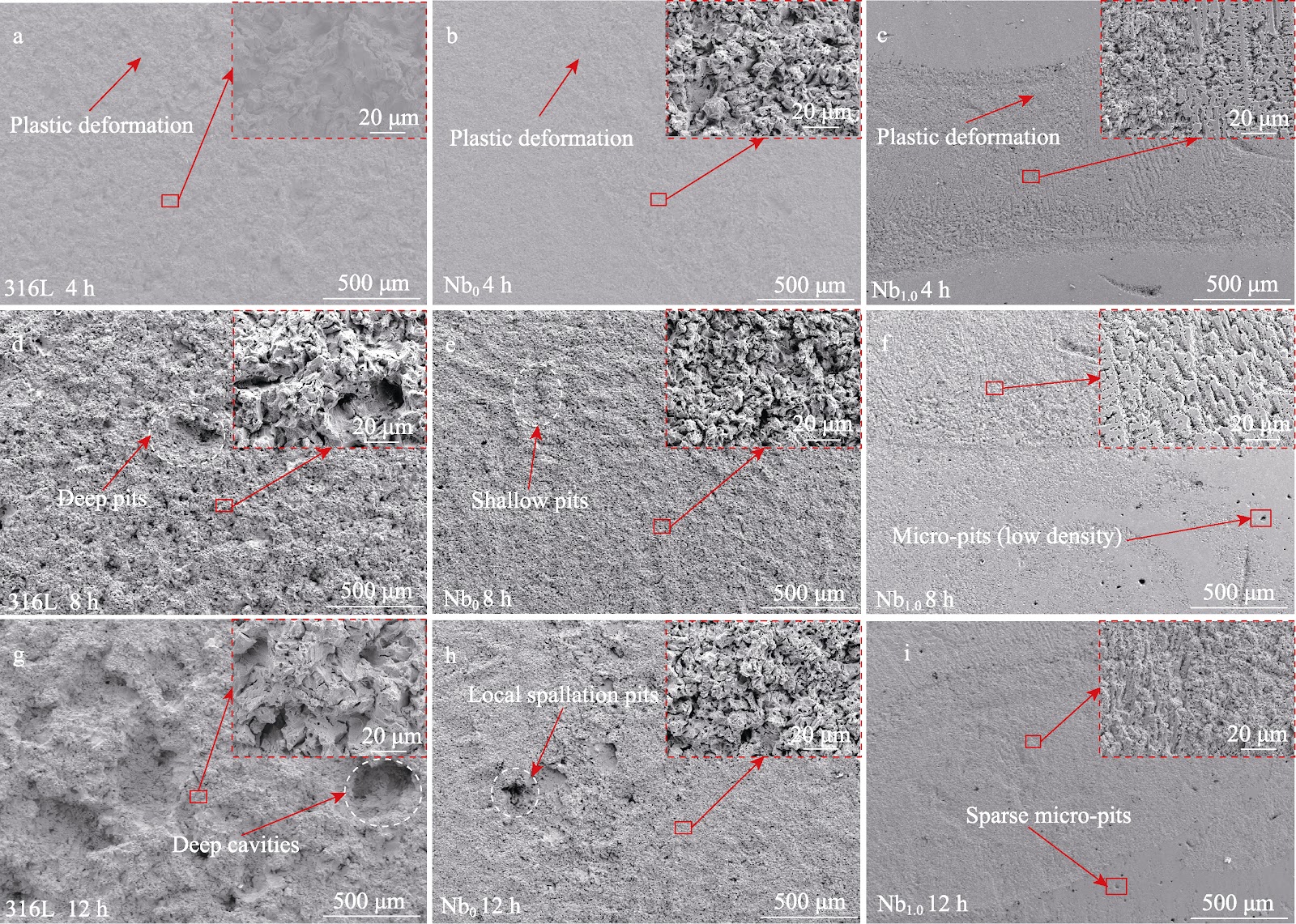
Cavitation erosion and wear failure critically limit the service life of flow-passing components such as pump impellers, turbine blades, and propeller systems subjected to high-speed liquid impact and cyclic flow-induced stresses. This work aims to design a high-performance surface coating with enhanced hardness, wear resistance, and cavitation erosion resistance by tailoring the Nb content in a CoCrNi medium-entropy alloy (MEA) system. CoCrNiNbx (x = 0, 0.2, 0.4, 0.6, 0.8, 1.0, and 1.2) coatings were fabricated on 316L stainless-steel substrates with an FL020 fiber laser under identical processing parameters. The effect of Nb addition on the phase constitution, microstructure, mechanical properties, tribological behavior, and cavitation performance of the coatings was comprehensively investigated to determine the optimal composition for balanced mechanical and anti-erosion properties. Phase analysis by X-ray diffraction (XRD) showed that increasing Nb content promoted a transition from a single face-centered cubic (FCC) solid solution to a dual FCC + hexagonal close-packed (HCP) phase structure. The emergence and growth of the Nb-rich HCP phase were accompanied by pronounced lattice distortion and precipitation strengthening. Microstructural characterization using field-emission scanning electron microscopy (SEM) combined with energy-dispersive spectroscopy (EDS) revealed that Nb preferentially segregated along interdendritic regions, where fine HCP-phase precipitates gradually formed a semi-continuous strengthening network. Electron backscatter diffraction (EBSD) analysis further quantified grain size and phase distribution. The average microhardness of the coatings initially increased and then decreased with increasing Nb molar ratio x, peaking at 689 HV0.1 for x = 0.6, approximately 3.7 times that of the substrate. Wear performance followed the same trend. Cavitation erosion tests demonstrated that the CoCrNiNb1.0 coating exhibited optimal cavitation erosion resistance, with mass loss significantly lower than that of the 316L substrate, achieving an order-of-magnitude improvement. The optimal Nb addition (x = 0.6–1.0) balances strength and toughness, significantly enhancing the wear and cavitation erosion resistance of CoCrNi-based MEA laser-cladded coatings. This study provides experimental evidence and process references for engineering applications of CoCrNi-based MEA coatings in high-flow-velocity liquid impact environments.
Laser Micro-additive Manufacturing with Copper Embedding and Its Effect on the Corrosion Resistance of Metal Surfaces
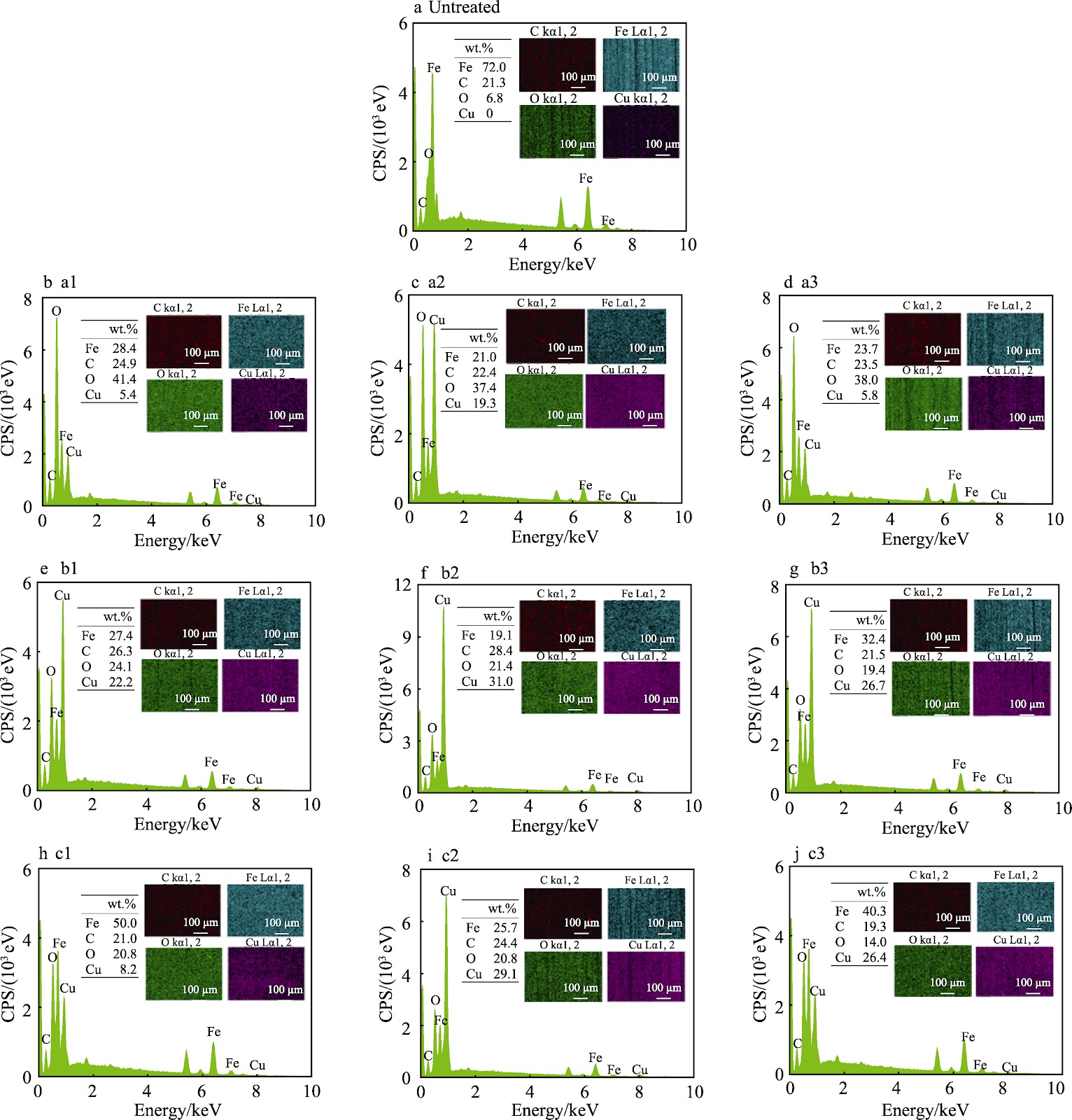
This study addresses the corrosion failure of SS304L stainless steel in breeding environments by developing a laser micro-additive copper-embedded surface functionalization process. A 355 nm nanosecond laser with 60 W average power, 40 kHz repetition rate, and 16 ns pulse width was used to embed a 0.12 µm Cu foil onto SS304L substrates under three coating strategies: single-layer, double-layer, and double-pass, each at scanning speeds of 400, 800, and 1200 mm/s. Surface characterization via 3D profilometry, SEM, EDS, and XPS revealed regular grooves and micro-concave structures with height differences increasing from 0.1 µm (untreated) to 1.6–3.8 µm, with the double-pass sample achieving the maximum 3.8 µm. Cu particles were successfully embedded, forming CuO and Cu2O oxide layers. Electrochemical tests in 3.5 wt.% NaCl solution showed that the optimal sample (double-layer coating at 800 mm/s, designated b2) exhibited the highest corrosion potential (increased by ~0.04 V), a one-order-of-magnitude reduction in corrosion current, and a maximum charge transfer resistance (Rct) of 6954 Ω·cm². These results demonstrate that laser micro-additive embedding of copper synergistically enhances the corrosion resistance of stainless steel through surface texturing, copper particle incorporation, and oxide film formation.
Prediction of Geometric Characteristics of Laser Cladding Process by the GWO-BPNN Algorithm
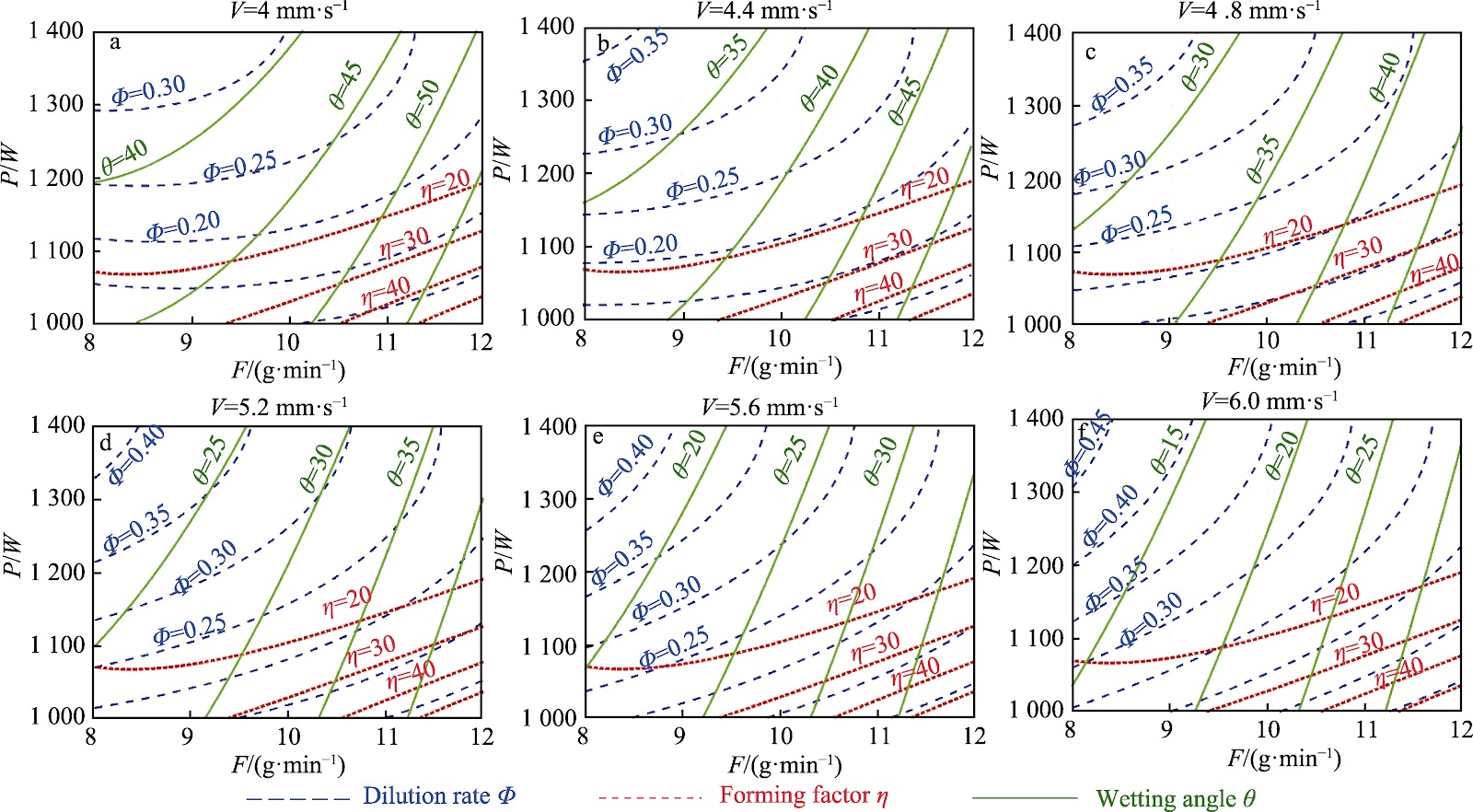
Laser cladding is a green surface modification technology widely used in aerospace and other high-end fields, but traditional process optimization methods such as single-variable analysis and orthogonal experiments suffer from low efficiency and high cost. The geometric characteristics of the cladding layer—dilution rate, forming coefficient, and wetting angle—directly determine service performance. Existing machine learning models often fail to achieve multi-objective optimization and comprehensive prediction. This study proposes a hybrid algorithm combining Grey Wolf Optimizer (GWO) with Backpropagation Neural Network (BPNN) to predict geometric quality indicators. Full-factorial single-track laser cladding experiments were conducted on 316L stainless steel with 316L alloy powder. A polynomial regression model predicted clad width and height with relative error below 4.2%. The GWO-BPNN model predicted dilution rate, forming coefficient, and wetting angle with an average coefficient of determination (R²) of 95.28%, a 12.4% improvement over traditional BPNN (82.93%). Experimental and inverse validation confirmed stable predictive performance across different parameter ranges, meeting engineering tolerance requirements. The method provides a quantitative basis for multi-dimensional optimization of cladding quality and demonstrates practical applicability in industrial scenarios.
Scuffing Resistance of Carburized Gear Steel with Laser-cladded Ni-based Composite Coatings
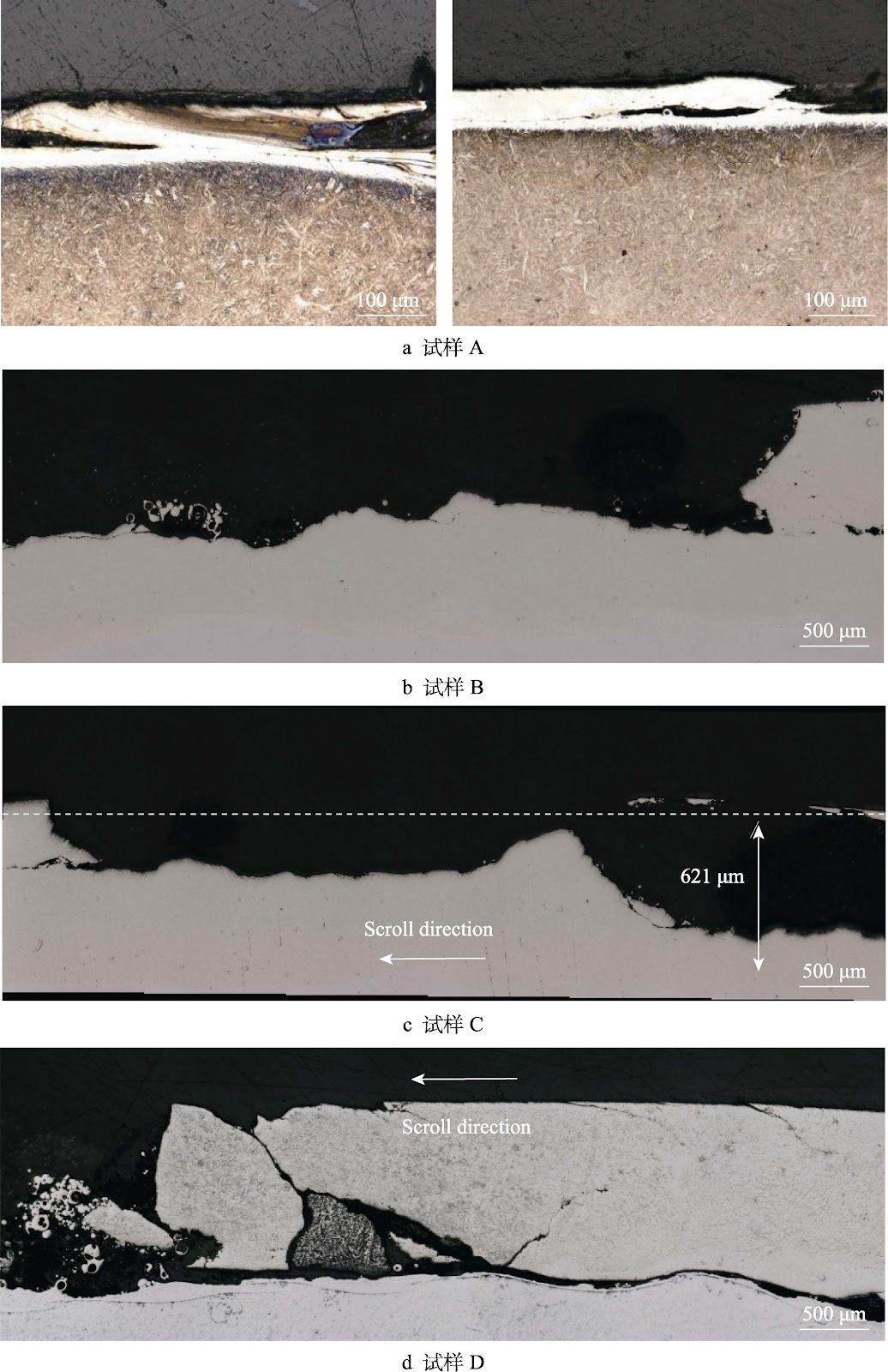
Scuffing constitutes a rapid, catastrophic failure mode in high-speed, heavy-duty gear transmissions, and enhancing scuffing load capacity remains a critical challenge for high-power-density systems. This study investigates the feasibility of laser cladding to improve scuffing resistance and repair scuffed tooth surfaces on 18CrNiMo7-6 gear steel. Three substrate conditions—tempered, carburized, and carburized with pre-induced scuffing damage—were coated with NiCr20-3%ZrO2-1%MoS2 (mass fraction) via a MobiMRO-2 laser cladding system with synchronous powder feeding. The cladded layer, approximately 1.2 mm thick, exhibited a dendritic, cellular, and irregular particulate microstructure with hardness of 690–730 HV0.1, comparable to the carburized case. Laser cladding induced significant heat-affected zone (HAZ) transformations: tempered steel formed lath martensite and lower bainite near the coating, with spheroidized structures in the lower HAZ; carburized steel developed coarse acicular martensite at the top, refined structures in the middle, and troostite at the bottom, with overall temper softening. Scuffing tests using a two-disc rolling contact rig under step-wise loading revealed that cladded tempered, cladded carburized, and repaired samples achieved 94.4%, 61.3%, and 50.7% increases in scuffing load capacity, respectively, relative to uncladded carburized baseline. This enhancement stems from increased hardness and the self-lubricating effect of the coating, which reduced interfacial friction coefficient and delayed critical failure. Failure analysis showed that the cladded layer altered crack initiation and propagation paths, significantly raising the critical failure load. The repaired samples, however, exhibited poor bonding at the original damage interface, leading to localized coating detachment. These findings confirm laser cladding as an effective method for enhancing gear scuffing resistance and repairing scuffed surfaces, providing experimental and theoretical support for surface strengthening and damage repair.
Numerical Simulation and Process Parameter Optimization of Laser Hardening for QT500-7 Ductile Cast Iron
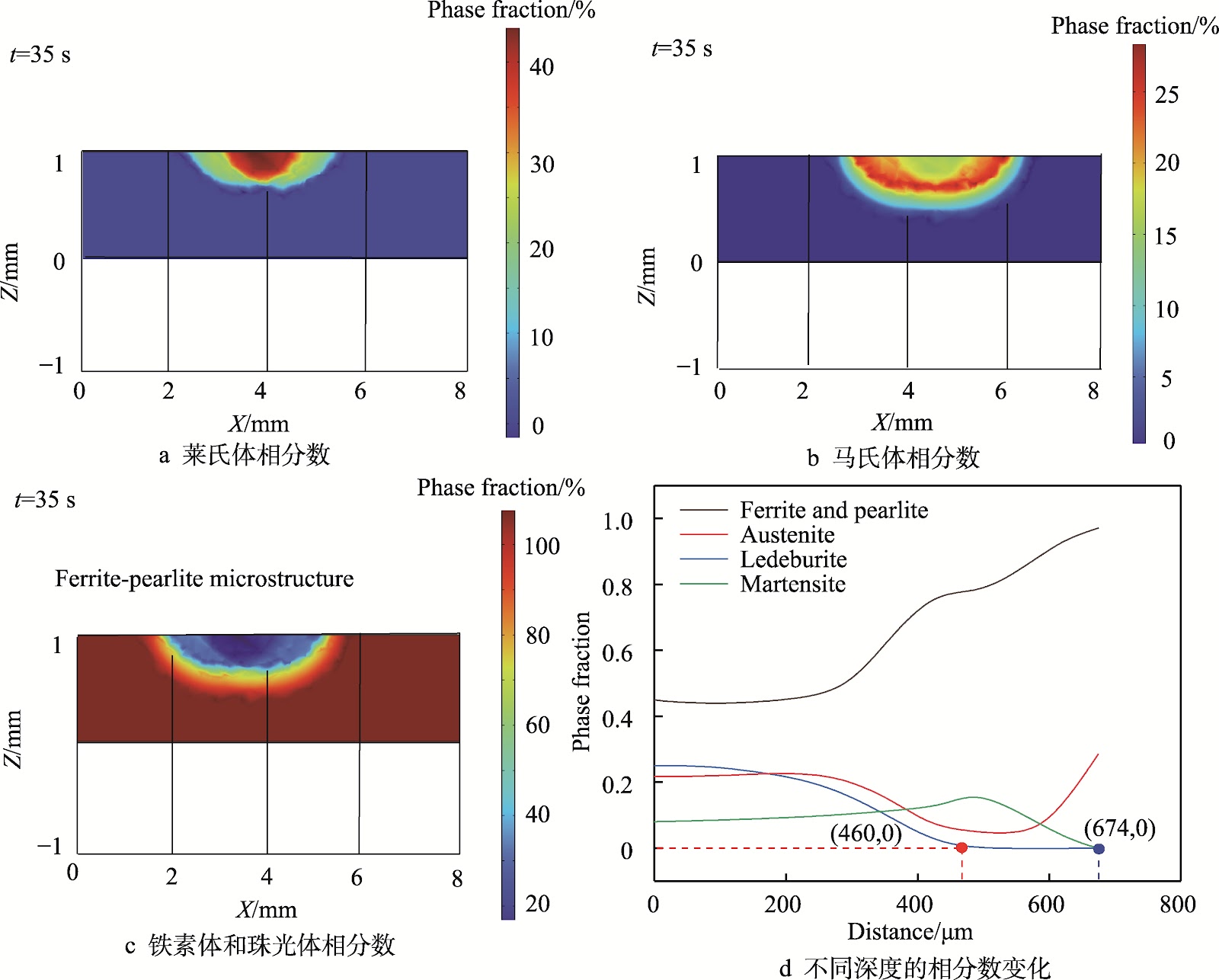
Laser surface hardening of QT500-7 ductile cast iron was investigated through a coupled finite element–machine learning–multi-objective optimization framework. A phase-transformation heat-transfer finite element model screened process windows for laser power (100–400 W), scanning speed (5–15 mm·s⁻¹), and overlap rate (60%–90%). A three-factor, three-level Box-Behnken design yielded hardened layer depth and fused layer depth as response variables. Four predictive architectures were benchmarked: Random Forest (RF), XGBoost, RF-XGBoost ensemble, and Bayesian-optimized RF-XGBoost (BO-RF-XGBoost). The BO-RF-XGBoost model achieved superior accuracy, with relative errors of 6.52% for hardened layer depth and 9.09% for fused layer depth. Multi-objective optimization compared Advantage Actor-Critic (A2C), Multi-Objective Particle Swarm Optimization (MOPSO), and Non-dominated Sorting Genetic Algorithm II (NSGA-II). A TOPSIS-entropy weight method ranked the Pareto front, identifying optimal parameters: laser power 230 W, scanning speed 14 mm·s⁻¹, overlap rate 75%. Experimental validation at these parameters produced a hardened layer depth of 230 μm and fused layer depth of 66 μm, with finite element model errors of 9.13% and 3.03%, respectively. Microhardness measurements showed the fused layer at 940 ± 40 HV0.5 and the hardened layer at 630 ± 30 HV0.5, both significantly exceeding the substrate hardness of 166 ± 15 HV0.5. The framework provides a reliable tool for parameter optimization in laser surface hardening of ductile cast iron.
Polishing of Glass-ceramics with Nano-silica Modified Magnetic Abrasives
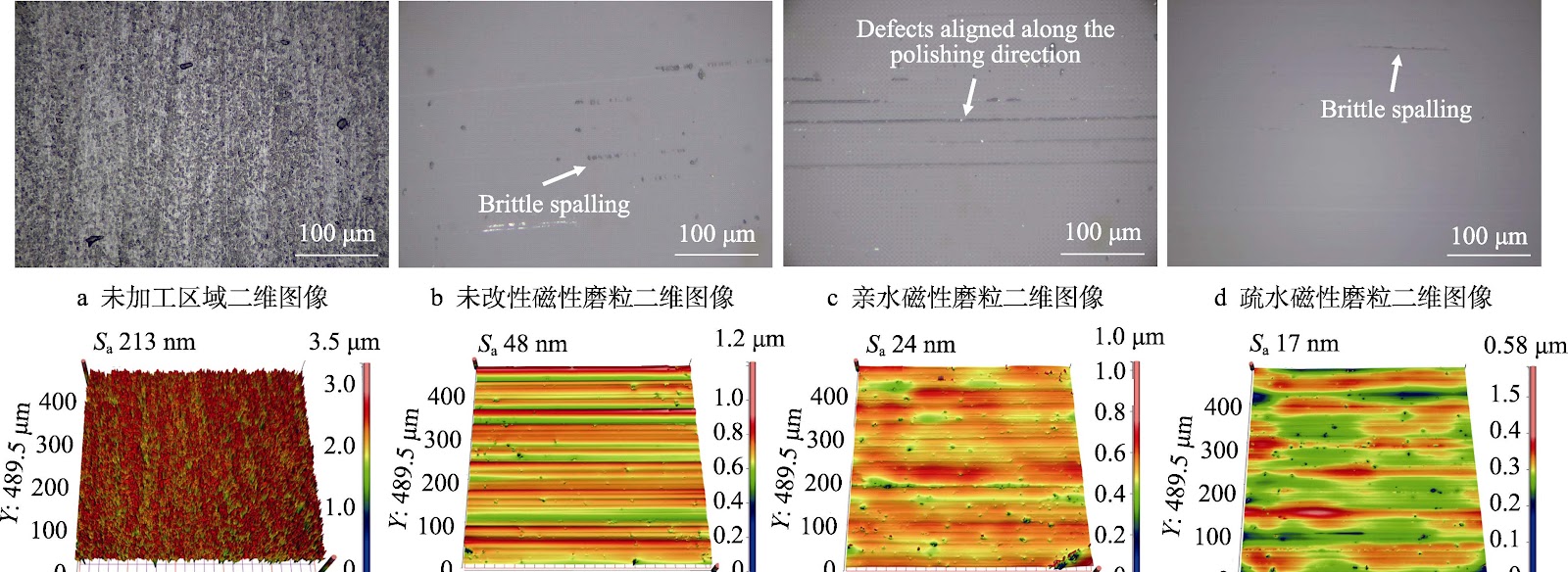
Glass-ceramics, multiphase composites combining amorphous and crystalline phases, exhibit disparate mechanical responses that induce subsurface damage and surface defects during conventional polishing. This study fabricates magnetic abrasive particles (MAPs) via a bonding process with three variants: unmodified, hydrophilic nano-silica (20 nm) modified, and hydrophobic nano-silica (20 nm) modified. Base composition comprises iron powder (75 μm) and CeO2 abrasives (15 μm) at a 12:3 mass ratio. Polishing tests on glass-ceramics using an N-S array tool reveal that hydrophobic modified MAPs achieve the lowest surface roughness (Sa = 17 nm) and highest material removal depth (2.5 μm), compared to hydrophilic (Sa = 24 nm) and unmodified (Sa = 48 nm) MAPs. Dynamic friction coefficients measured in situ are 0.31, 0.35, and 0.42 for hydrophobic, hydrophilic, and unmodified MAPs, respectively. Surface and subsurface damage analyses show hydrophobic MAPs minimize pits, micro-cracks, and brittle fractures, while hydrophilic MAPs exhibit brittle spalling and unmodified MAPs show point defects. Wear tests confirm that nano-silica addition enhances bond strength and extends abrasive lifespan. The hydrophobic modification promotes surface hydration and formation of a lubricating silicate gel layer, reducing mechanical plowing and friction, thereby enabling high-quality surface integrity. These findings demonstrate that nano-silica modification effectively tunes MAP hydrophobicity, offering a viable route for ultra-smooth, low-damage polishing of glass-ceramics.