SinoTechIntel Academic Portal
🏛️ Indexed Academic JournalImpact Factor: 3.7 (Q2 - Elsevier)Original: 新型炭材料

New Carbon Materials

3.7 (Q2 - Elsevier)

Total Research Papers: 47
Access: 100% Free Open Access
Browse by Publication Year & VolumeReset All Filters ✕

Published Research PapersFiltered: Year 2024 • 39 • 4

Showing 2 of 47 peer-reviewed papers with full Graphical Abstracts.

Original ResearchVol. 39, Issue 4 • pp. 668-680DOI: 10.1016/S1872-5805_NJan 15, 2024

Semi-quantitative analysis of the structural evolution of mesophase pitch-based carbon foams by Raman and FTIR spectroscopy

Authors: LIU Yue, CHANG Sheng-kai, SU Zhan-peng, HUANG Zu-jian, QIN Ji, YANG Jian-xiao

Graphitized carbon foams (GFms) were prepared using mesophase pitch (MP) as a raw material by foaming (450 °C), pre-oxidation (320 °C), carbonization (1 000 °C) and graphitization (2 800 °C). The differences in structure and properties of GFms prepared from different MP precursors pretreated by ball milling or liquid phase extraction were investigated and compared, and semi-quantitative calculations were conducted on the Raman and FTIR spectra of samples at each preparation stage. Semi-quantitative spectroscopic analysis provided detailed information on the structure and chemical composition changes of the MP and GFm derived from it. Combined with microscopic observations, the change from precursor to GFm was analyzed. The results showed that ball milling concentrated the distribution of aromatic molecules in the pitch, which contributed to uniform foaming to give a GFm with a uniform pore distribution and good properties. Liquid phase extraction helped remove light components while retaining large aromatics to form graphitic planes with the largest average size during post-treatment to produce a GFm with the highest degree of graphitization and the fewest open pores, giving the best compression resistance (2.47 MPa), the highest thermal conductivity (64.47 W/(m·K)) and the lowest electrical resistance (13.02 μΩ·m). Characterization combining semi-quantitative spectroscopic analysis with microscopic observations allowed us to control the preparation of the MP-derived GFms.
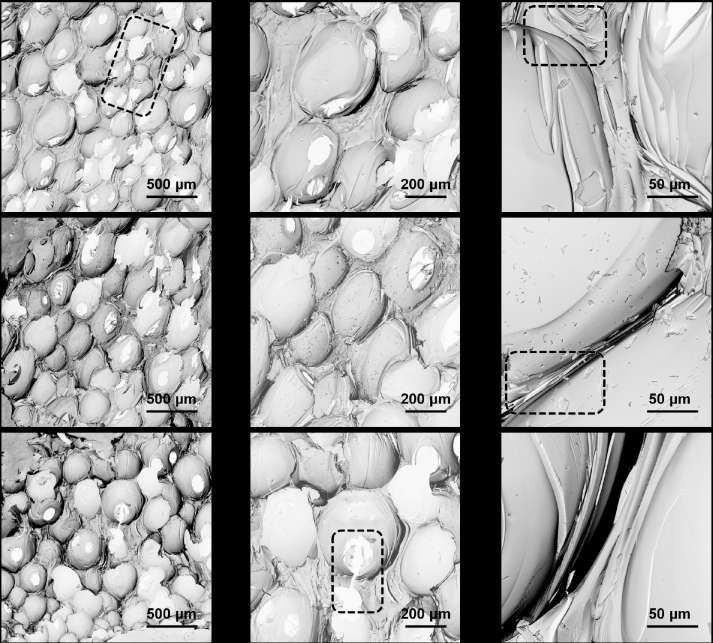
Semi-quantitative analysis of the structural evolution of mesophase pitch-based carbon foams by Raman and FTIR spectroscopy
Graphical Abstract
Original ResearchVol. 39, Issue 4 • pp. 611-632DOI: 10.1016/S1872-5805_NJan 15, 2024

Research progress on carbon materials derived from low-rank coal

Authors: Wenge Song, Hongjiu Zeng, Bin Wang, Xianhong Huang, Xiaoming Li, Guohua Sun

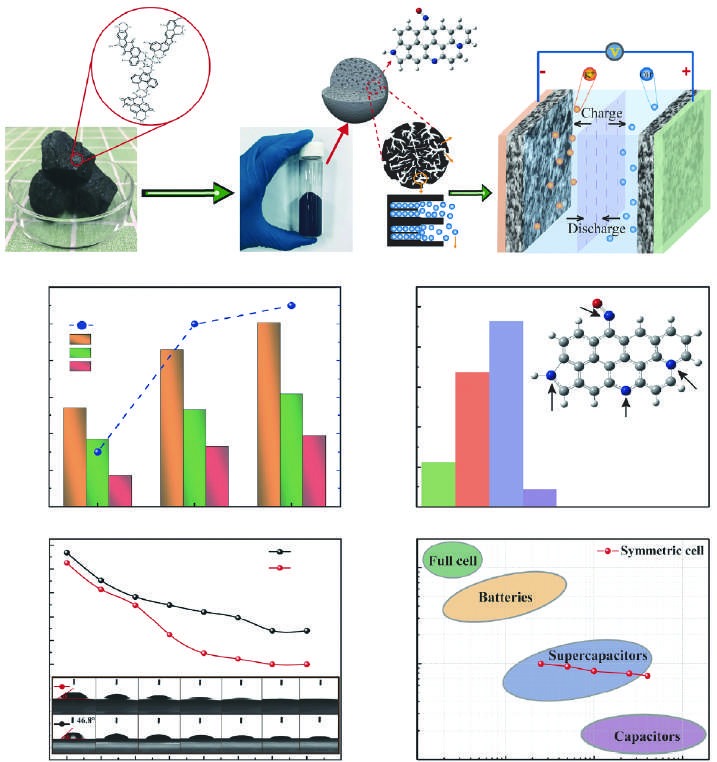
Low-rank coal is considered a high-quality precursor for carbon materials due to its abundant reserves, rich polycyclic aromatic hydrocarbons, high carbon content, and low cost. However, differences in ash content, microstructure, and interface among different low-rank coals lead to difficulties in effectively controlling the structure and performance of coal-based carbon materials. In recent years, researchers have proposed effective methods for regulating the microstructure and surface/interface of low-rank coal-based carbon materials. This review focuses on the differentiated strategies for preparing activated carbon, capacitive carbon, hard carbon, graphite, and nanocarbon materials from low-rank coal. It further discusses the effects of coal type and process on the microstructure, interface characteristics, and functional group types of coal-based carbon materials. Additionally, the applications of coal-based carbon materials in adsorption, supercapacitors, and alkali metal batteries are introduced. Finally, future research directions and challenges for low-rank coal-based carbon materials are prospected.

Research progress on carbon materials derived from low-rank coal
Graphical Abstract