SinoTechIntel Academic Portal
🏛️ Indexed Academic Journal

Nano-Micro Letters

Access authentic peer-reviewed engineering methodologies, experimental datasets, and scientific literature published in this journal on SinoTechIntel.

Total Research Papers: 200
Access: 100% Free Open Access
Browse by Publication Year & VolumeReset All Filters ✕

Published Research PapersFiltered: Year 2025 • 18

Showing 3 of 200 peer-reviewed papers with full Graphical Abstracts.

Original ResearchVol. 18, Issue 95 • pp. 1-55DOI: 10.1007/s40820-025-01933-8Jan 3, 2026

Surface/Interface Engineering for High-Resolution Micro-/Nano-Photodetectors

Authors: Jinlin Chang, Ting Liu, Xiao Geng, Genting Dai, Liangliang Yang, Mingjun Cheng, Linpan Jiang, Zhenyuan Sun, Jianshe Liu, Wei Chen

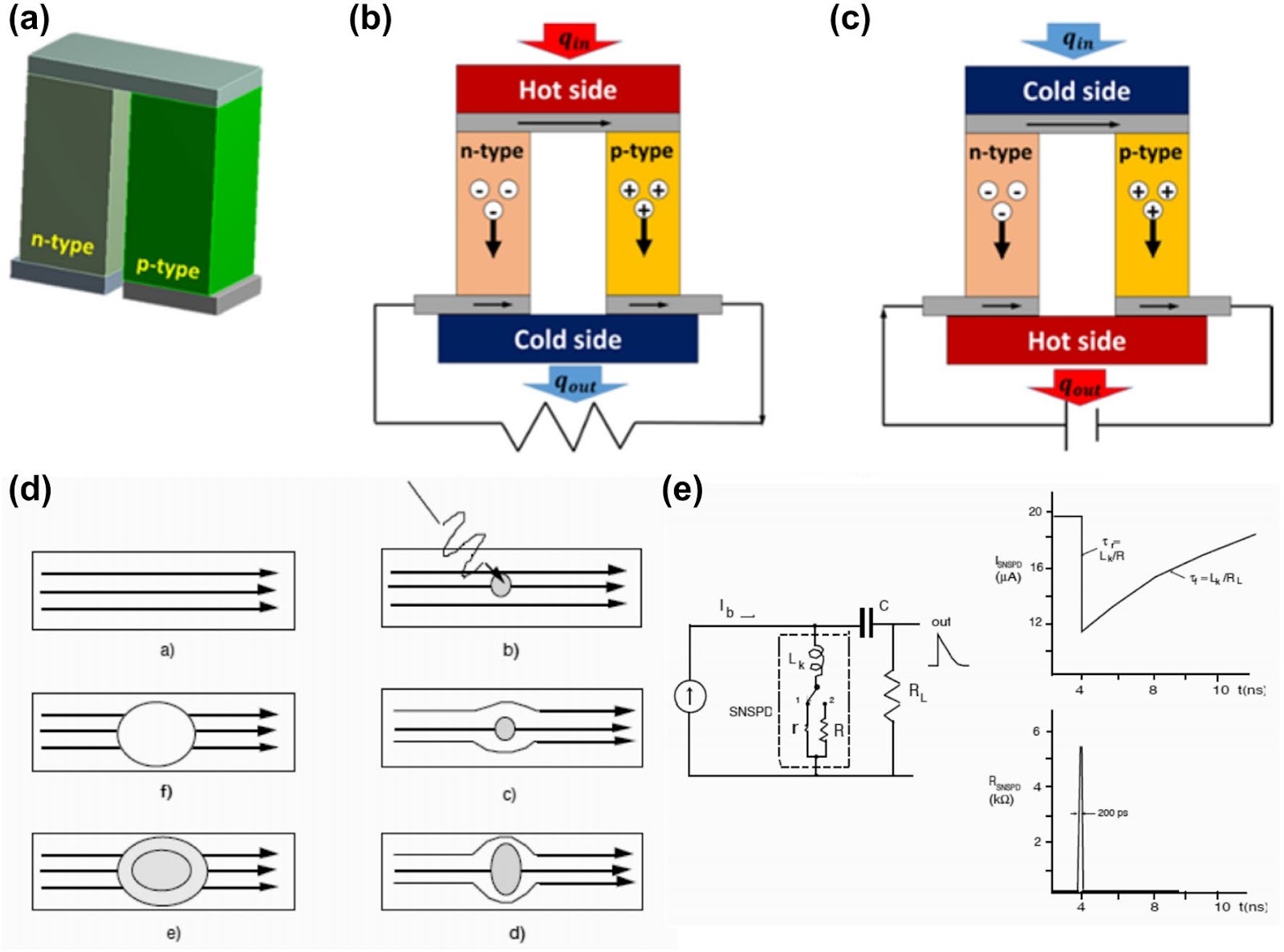
Photodetectors can convert light energy into electrical signals, so are widely used in photovoltaics, photon counting, monitoring, and imaging. Photodetectors are easy to prepare high-resolution photochips because of their small size unit integration. However, these photodetector units often exhibit poor photoelectric performance due to material defects and inadequate structures, which greatly limit the functions of devices. Designing modification strategies and micro-/nanostructures can compensate for defects, adjust the bandgap, and develop novel quantum structures, which consequently optimize photovoltaic units and revolutionize optoelectronic devices. Here, this paper aims to comprehensively elaborate on the surface/interface engineering scheme of micro-/nano-photodetectors. It starts from the fundamentals of photodetectors, such as principles, types, and parameters, and describes the influence of material selection, manufacturing techniques, and post-processing. Then, we analyse in detail the great influence of surface/interface engineering on the performance of photovoltaic devices, including surface/interface modification and micro-/nanostructural design. Finally, the applications and prospects of optoelectronic devices in various fields such as miniaturization of electronic devices, robotics, and human–computer interaction are shown.
Surface/Interface Engineering for High-Resolution Micro-/Nano-Photodetectors
Graphical Abstract
Original ResearchVol. 18, Issue 93 • pp. 1-16DOI: 10.1007/s40820-025-01951-6Jan 2, 2026

Ammonia Borane All-In-One Modification Strategy Enables High-Performance Perovskite Solar Cells

Authors: Jiaxin Ma, Cong Shao, Yirong Wang, Guosheng Niu, Kaiyi Yang, Yao Zhao, Fuyi Wang, Zongxiu Nie, Jizheng Wang

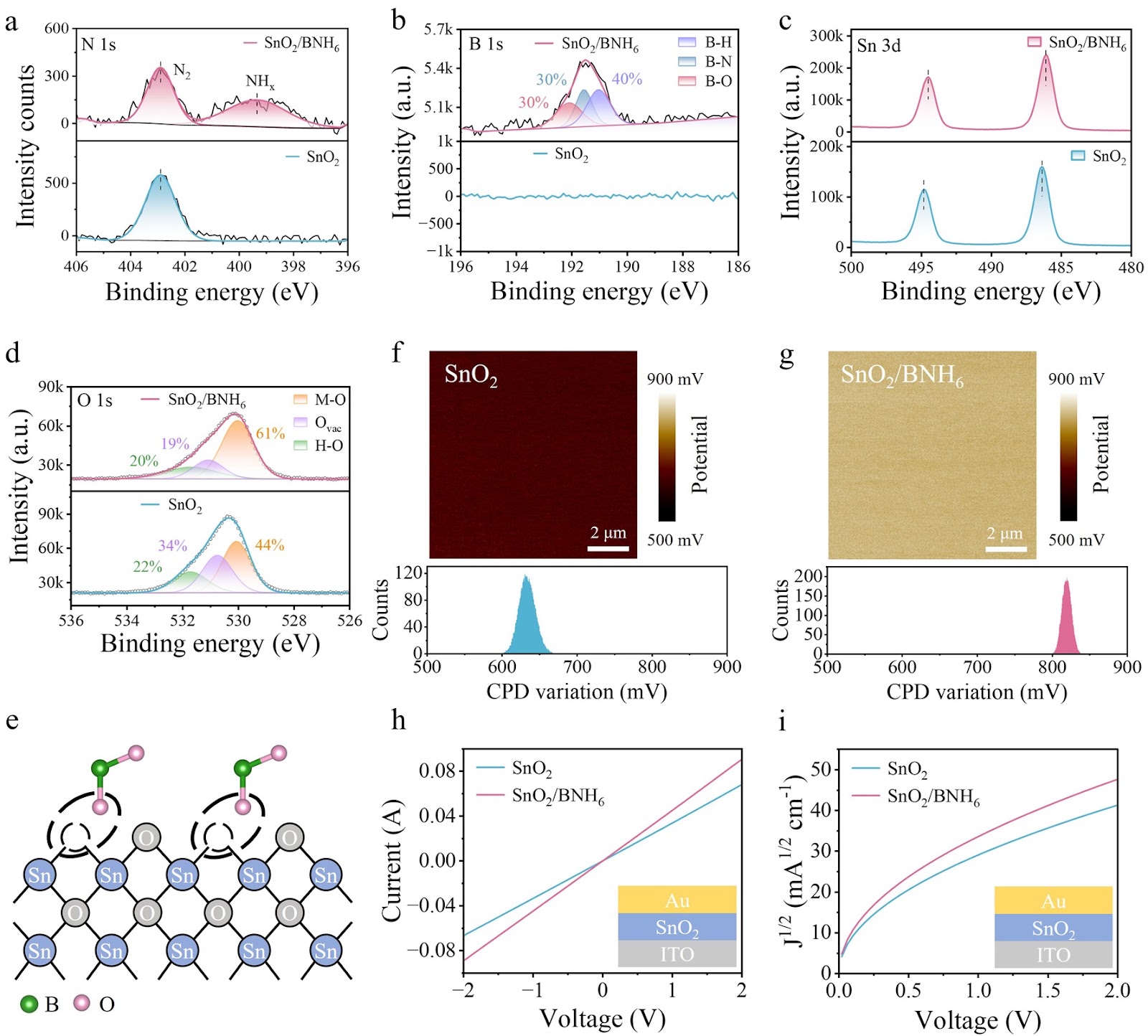
Perovskite solar cells have achieved remarkable progress in photovoltaic efficiency. However, interfacial defects at the buried and upper interfaces of perovskite layer remain a critical challenge, leading to charge recombination, ion migration, and iodine oxidation. To address this, we propose a novel all-in-one modification strategy employing ammonia borane (BNH6) as a multifunctional complex. By incorporating BNH6 at both buried and upper interfaces simultaneously, we achieve dual-interfacial defect passivation and iodide oxidation suppression through three key mechanisms: (1) hydrolysis-induced interaction with SnO2, (2) coordination with Pb2+, and (3) inhibition of I− oxidation. This approach significantly enhances device performance, yielding a champion power conversion efficiency (PCE) of 26.43% (certified 25.98%). Furthermore, the unencapsulated device demonstrates prominent enhanced operation stability, maintaining 90% of its initial PCE after 500 h under continuous illumination. Notably, our strategy eliminates the need for separate interface treatments, streamlining fabrication and offering a scalable route toward high-performance perovskite photovoltaics.

Ammonia Borane All-In-One Modification Strategy Enables High-Performance Perovskite Solar Cells
Graphical Abstract
Original ResearchVol. 18, Issue 1 • pp. 94DOI: 10.1007/s40820-025-01931-wJan 2, 2026

Achieving Wide-Temperature-Range Physical and Chemical Hydrogen Sorption in a Structural Optimized Mg/N-Doped Porous Carbon Nanocomposite

Authors: Yinghui Li, Li Ren, Zi Li, Yingying Yao, Xi Lin, Wenjiang Ding, Andrea C. Ferrari, Jianxin Zou

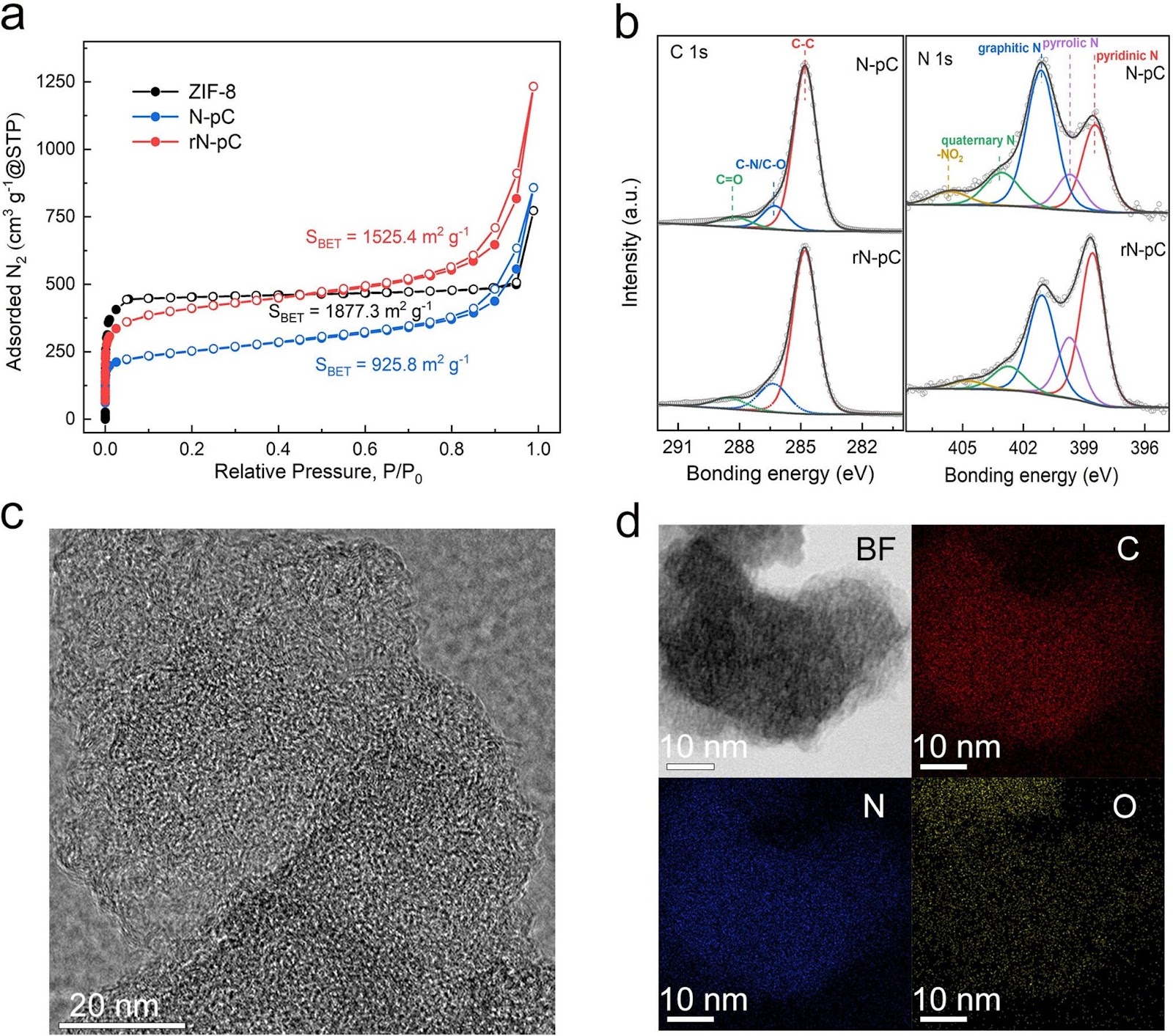
Nanoconfinement is a promising approach to simultaneously enhance the thermodynamics, kinetics, and cycling stability of hydrogen storage materials. The introduction of supporting scaffolds usually causes a reduction in the total hydrogen storage capacity due to “dead weight.” Here, we synthesize an optimized N-doped porous carbon (rN-pC) without heavy metal as supporting scaffold to confine Mg/MgH2 nanoparticles (Mg/MgH2@rN-pC). rN-pC with 60 wt% loading capacity of Mg (denoted as 60 Mg@rN-pC) can adsorb and desorb 0.62 wt% H2 on the rN-pC scaffold. The nanoconfined MgH2 can be chemically dehydrided at 175 °C, providing ~3.59 wt% H2 with fast kinetics (fully dehydrogenated at 300 °C within 15 min). This study presents the first realization of nanoconfined Mg-based system with adsorption-active scaffolds. Besides, the nanoconfined MgH2 formation enthalpy is reduced to ~68 kJ mol−1 H2 from ~75 kJ mol−1 H2 for pure MgH2. The composite can be also compressed to nanostructured pellets, with volumetric H2 density reaching 33.4 g L−1 after 500 MPa compression pressure, which surpasses the 24 g L−1 volumetric capacity of 350 bar compressed H2. Our approach can be implemented to the design of hybrid H2 storage materials with enhanced capacity and desorption rate.

Achieving Wide-Temperature-Range Physical and Chemical Hydrogen Sorption in a Structural Optimized Mg/N-Doped Porous Carbon Nanocomposite
Graphical Abstract