SinoTechIntel Academic Portal
πŸ›οΈ Indexed Academic JournalImpact Factor: 3.8 (Q1 - Elsevier)Original: δΈ­ε›½εŒ–ε­¦ε·₯程学ζŠ₯ (θ‹±ζ–‡η‰ˆ)

Chinese Journal of Chemical Engineering

Access authentic peer-reviewed engineering methodologies, experimental datasets, and scientific literature published in this journal on SinoTechIntel.

Total Research Papers: 98
Access: 100% Free Open Access
Browse by Publication Year & VolumeReset All Filters βœ•

Published Research PapersFiltered: Year 2024 β€’ 70 β€’ Issue 1

Showing 4 of 98 peer-reviewed papers with full Graphical Abstracts.

Original ResearchVol. 70, Issue 1 β€’ pp. 173-188DOI: 10.1016/j_cjche_1448β€’ Apr 23, 2024

CFD-PBM coupled modeling of the liquideliquid dispersion characteristics and structure optimization for Kenics static mixer

Authors: Junhai Deng, Shilin Lan, Juchang Wu, Shenghua Du, Weidong Liu, Luchang Han, Yefeng Zhou

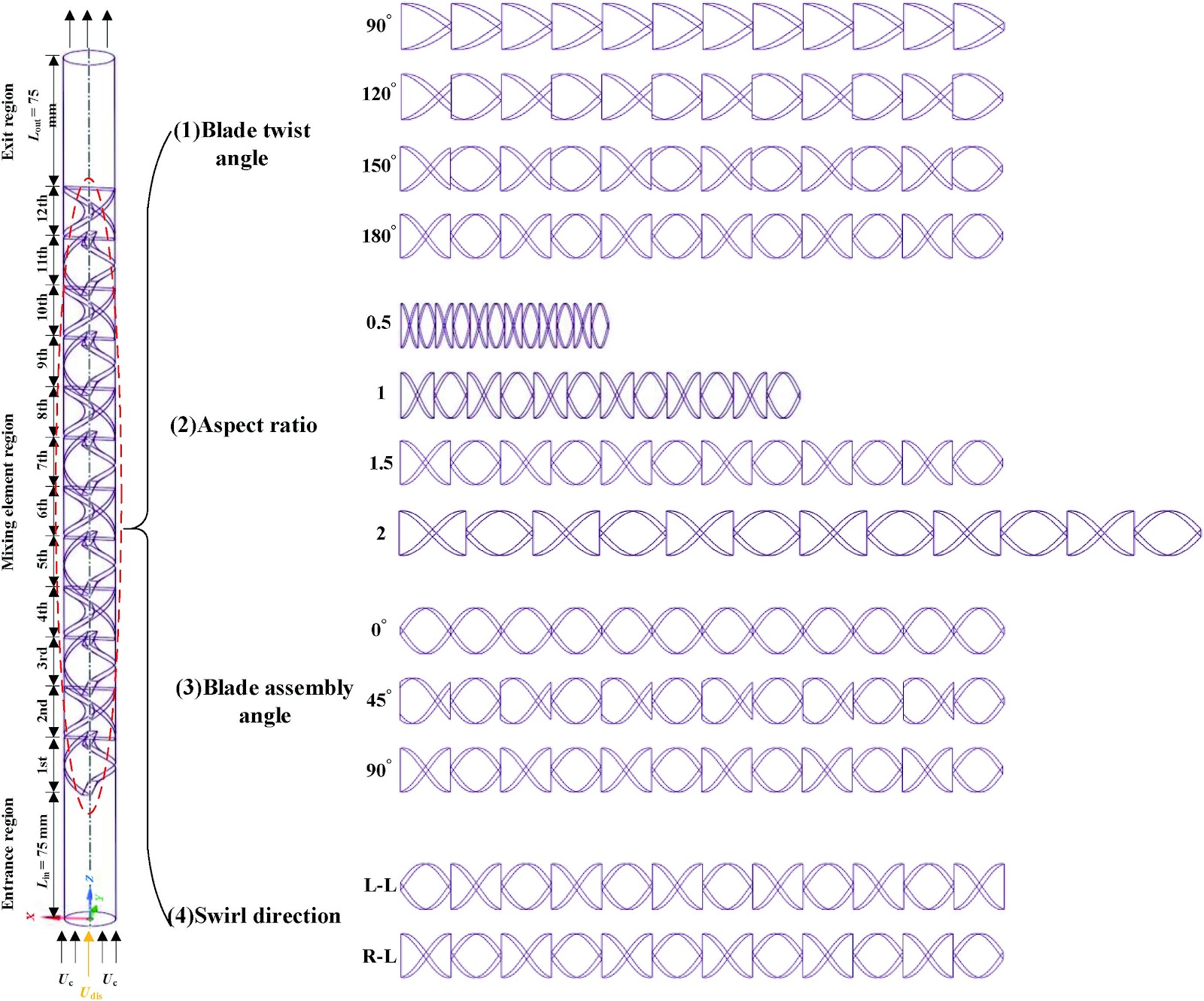
Kenics static mixers (KSM) are extensively used in industrial mixing-reaction processes by virtue of high mixing efficiency, low power homogenization and easy continuous production. Resolving liquid droplet size and its distribution and thus revealing the dispersion characteristics are of great significance for structural optimization and process intensification in the KSM. In this work, a computational fluid dynamics-population balance model (CFD-PBM) coupled method is employed to systematically investigate the effects of operating conditions and structural parameters of KSM on droplet size and its distribution, to further reveal the liquideliquid dispersion characteristics. Results indicate that higher Reynolds numbers or higher dispersed phase volume fractions increase energy dissipation, reducing Sauter mean diameter (SMD) of dispersed phase droplets and with a shift in droplet size distribution (DSD) towards smaller size. Smaller aspect ratios, greater blade twist and assembly angles amplify shear rate, leading to smaller droplet size and a narrower DSD in the smaller range. The degree of impact exerted by the aspect ratio is notably greater. Notably, mixing elements with different spin enhance shear and stretching efficiency. Compared to the same spin, SMD becomes 3.7e5.8 times smaller in the smaller size range with a significantly narrower distribution. Taking into account the pressure drop and efficiency in a comprehensive manner, optimized structural parameters for the mixing element encompass an aspect ratio of 1e1.5, a blade twist angle of 180Β°, an assembly angle of 90Β°, and interlaced assembly of adjacent elements with different spin. This work provides vital theoretical underpinning and future reference for enhancing KSM performance.
CFD-PBM coupled modeling of the liquideliquid dispersion characteristics and structure optimization for Kenics static mixer
Graphical Abstract
Original ResearchVol. 70, Issue 1 β€’ pp. 222-233DOI: 10.1016/j_cjche_1448β€’ Apr 12, 2024

Porous silica nano-flowers stabilized PtPd bimetallic nanoparticles as heterogeneous catalyst for efficiently synthesizing guaiacol from 2-methoxycyclohexanol

Authors: Junbo Feng, Junyan Wu, Dongdong Yan, Yadong Zhang

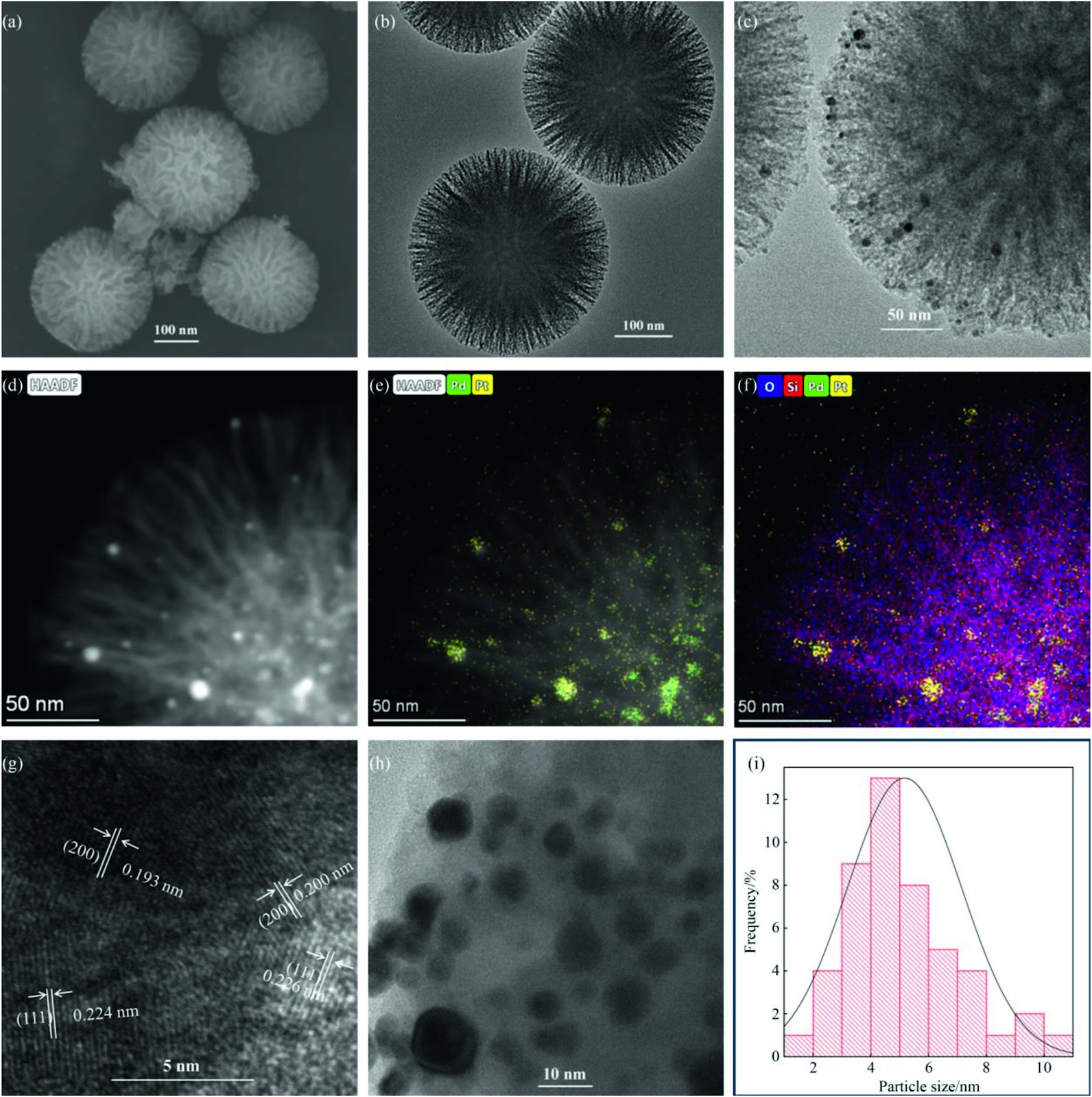
Porous silica nano-flowers (KCC-1) immobilized PtPd alloy NPs (PtPd/KCC-1) with different mass ratios of Pd and Pt were successfully prepared by a facile in situ one-step reduction, using hydrazinium hydroxide as a reducing agent. The as-synthesized silica nanospheres possess radial fibers with a distance of 15 nm, exhibiting a high specific surface area (443.56 m2Β·gβˆ’1). Meanwhile, the obtained PtPd alloy NPs are uniformly dispersed on the silica surface with a metallic particle size of 4–6 nm, which exist as metallic Pd and Pt on the surface of monodisperse KCC-1, showing the transfer of electrons from Pd to Pt. The as-synthesized 2.5%Pt-2.5%Pd/KCC-1 exhibited excellent catalytic activity and stability for the continuous dehydrogenation of 2-methoxycyclohexanol to prepare guaiacol. Compared with Pt or Pd single metal supported catalysts, the obtained 2.5%Pt-2.5%Pd/KCC-1 shows 97.2% conversion rate of 2-methoxycyclohexanol and 76.8% selectivity for guaiacol, which attributed to the significant synergistic effect of bimetallic PtPd alloy NPs. Furthermore, turn over frequency value of the obtained 2.5%Pt-2.5%Pd/KCC-1 NPs achieved 4.36 sβˆ’1, showing higher catalytic efficiency than other two monometallic catalysts. Reaction pathways of dehydro-aromatization of 2-methoxycyclohexanol over the obtained catalyst are proposed. Consequently, the obtained 2.5%Pt-2.5%Pd/KCC-1 NPs prove their potential in the dehydrogenation of 2-methoxycyclohexanol, while the kinetics and mechanistic study of the dehydrogenation reaction over the catalyst in a continuous fixed-bed reactor may provide valuable information for the development of green, outstanding and powerful synthetic pathway of guaiacol.

Porous silica nano-flowers stabilized PtPd bimetallic nanoparticles as heterogeneous catalyst for efficiently synthesizing guaiacol from 2-methoxycyclohexanol
Graphical Abstract
Original ResearchVol. 70, Issue 1 β€’ pp. 189-198DOI: 10.1016/j_cjche_1448β€’ Apr 9, 2024

Silica-modified Pt/TiO2 catalysts with tunable suppression of strong metal-support interaction for cinnamaldehyde hydrogenation

Authors: Zhengjian Hou, Yuanyuan Zhu, Hua Chi, Li Zhao, Huijie Wei, Yanyan Xi, Lishuang Ma, Xiang Feng, Xufeng Lin

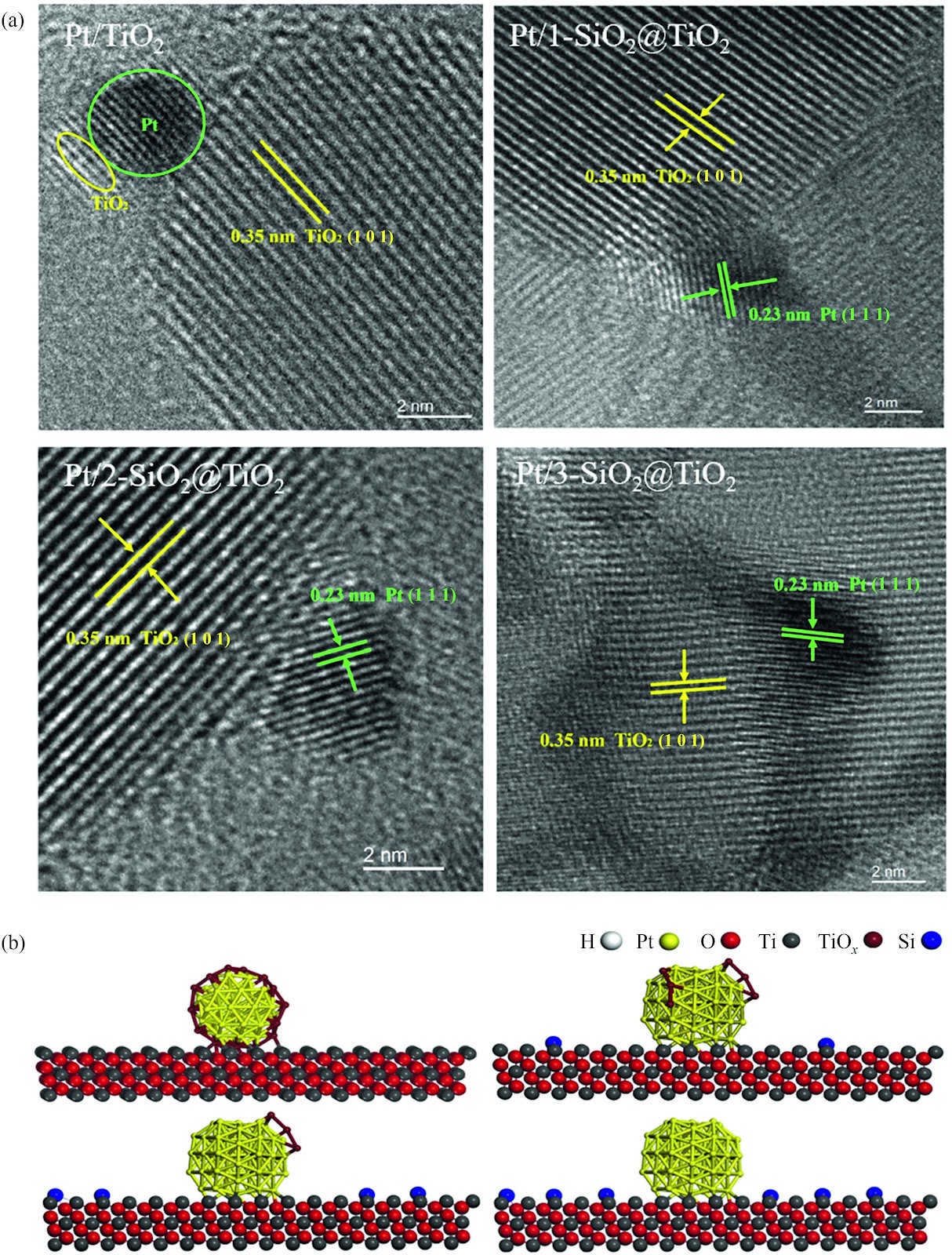
Tuning Strong Metal-support Interactions (SMSI) is a key strategy to obtain highly active catalysts, but conventional methods usually enable TiOx encapsulation of noble metal components to minimize the exposure of noble metals. This study demonstrates a catalyst preparation method to modulate a weak encapsulation of Pt metal nanoparticles (NPs) with the supported TiO2, achieving the moderate suppression of SMSI effects. The introduction of silica inhibits this encapsulation, as reflected in the characterization results such as XPS and HRTEM, while the Ti4+ to Ti3+ conversion due to SMSI can still be found on the support surface. Furthermore, the hydrogenation of cinnamaldehyde (CAL) as a probe reaction revealed that once this encapsulation behavior was suppressed, the adsorption capacity of the catalyst for small molecules like H2 and CO was enhanced, which thereby improved the catalytic activity and facilitated the hydrogenation of CAL. Meanwhile, the introduction of SiO2 also changed the surface structure of the catalyst, which inhibited the occurrence of the acetal reaction and improved the conversion efficiency of C=O and C=C hydrogenation. Systematic manipulation of SMSI formation and its consequence on the performance in catalytic hydrogenation reactions are discussed.

Silica-modified Pt/TiO2 catalysts with tunable suppression of strong metal-support interaction for cinnamaldehyde hydrogenation
Graphical Abstract
Original ResearchVol. 70, Issue 1 β€’ pp. 199-210DOI: 10.1016/j_cjche_1448β€’ Apr 8, 2024

Phosphotungstic acid immobilized on amino-functionalized TS-1 zeolite as a solid acid catalyst for the synthesis of tributyl citrate

Authors: Pei Li, Bianfang Shi, Junyao Shen, Ran Cui, Wenze Guo, Ling Zhao, Zhenhao Xi

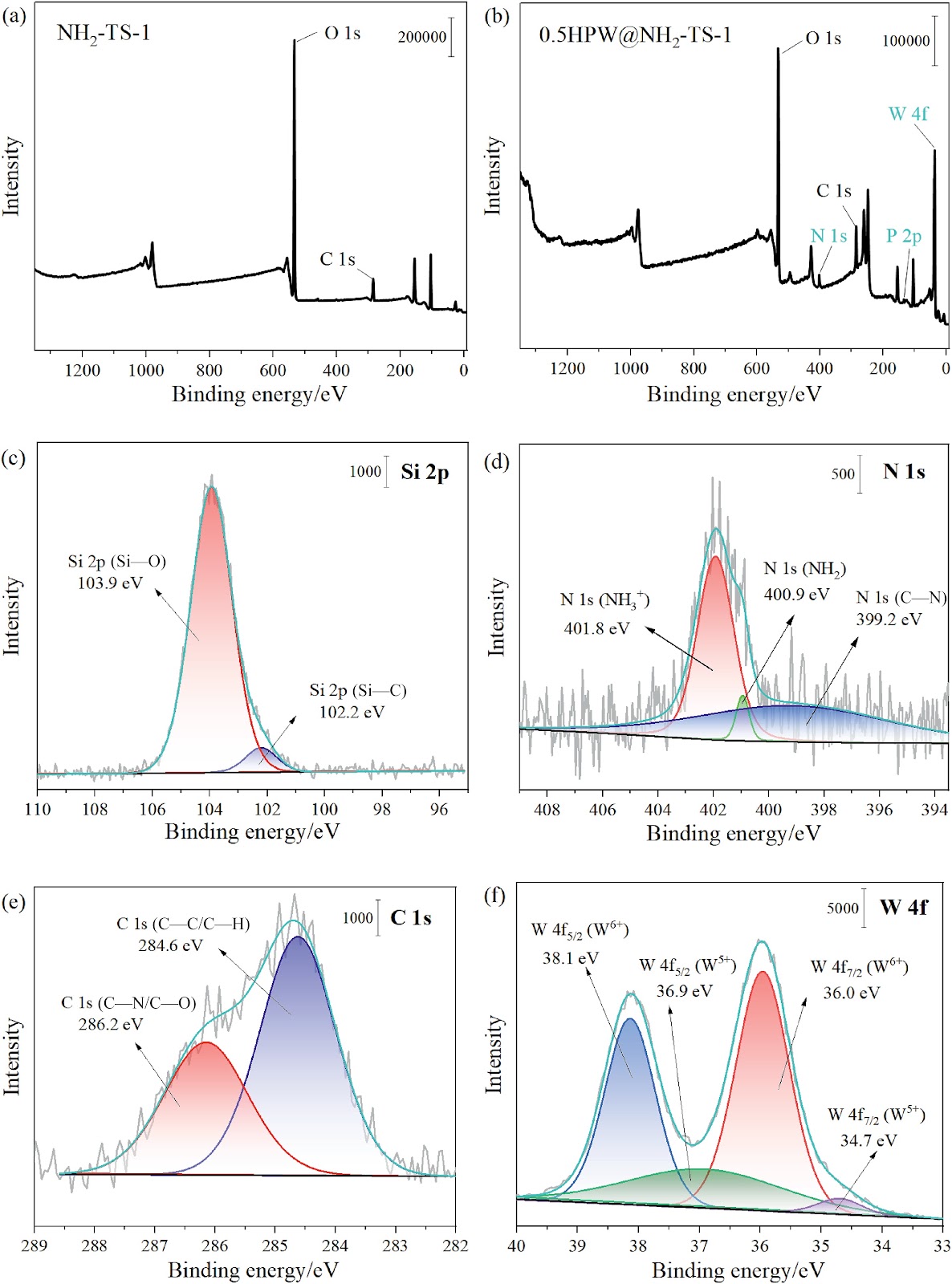
The amino-functionalization of TS-1 zeolite followed by immobilization of phosphotungstic acid (HPW) was presented to prepare a strong solid acid catalyst for the synthesis of bio-based tributyl citrate from the esterification of citric acid and n-butanol. g-Aminopropyltriethoxysilane (APTES) was first grafted on the TS-1 zeolite via the condensation reactions with surface hydroxyl groups, and subsequently the HPW was immobilized via the reaction between the amino groups and the protons from HPW-forming strong ionic bonding. The Keggin structure of HPW and MFI topology of TS-1 zeolite were well maintained after the modifications. The amino-functionalization generated abundant uniformly distributed active sites on TS-1 for HPW immobilization, which promoted the dispersity, abundance, as well as the stability of the acid sites. The tetrahedrally coordinated framework titanium and non-framework titania behaved as weak Lewis acid sites, and the protons from the immobilized HPW acted as the moderate or strong BrΓΈnsted acid sites. An optimized TBC yield of 96.2% (mol) with a conversion of eCOOH of 98.1% (mol) was achieved at 150 Β°C for 6 h over the HPW immobilized on amino-functionalized TS-1. The catalyst exhibited good stability after four consecutive reaction runs, where the activity leveled off at still a relatively high level after somewhat deactivation possibly caused by the leaching of a small portion of weakly anchored APTES or HPW.

Phosphotungstic acid immobilized on amino-functionalized TS-1 zeolite as a solid acid catalyst for the synthesis of tributyl citrate
Graphical Abstract