Key Takeaways & Executive Findings
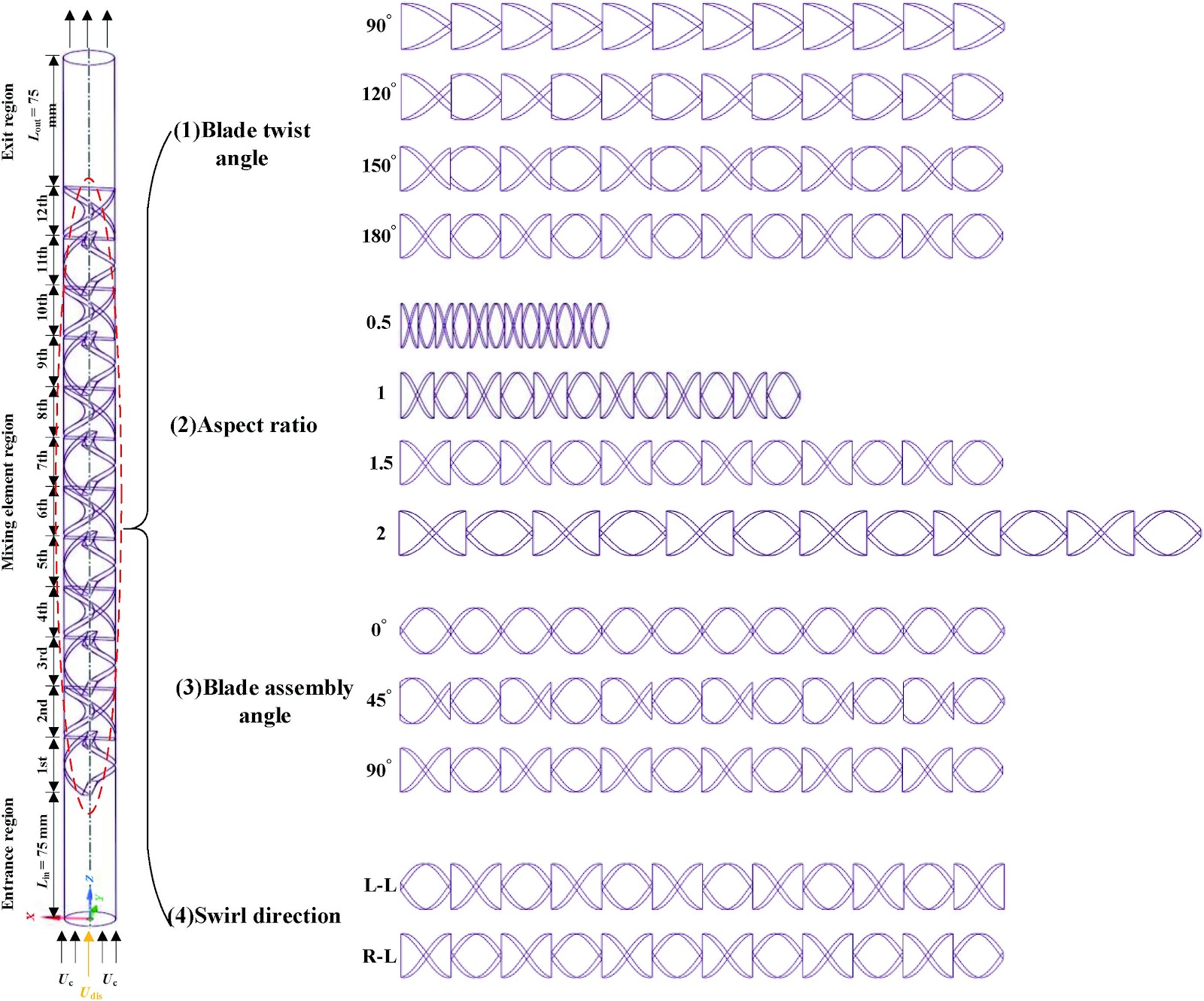
- •• Higher Reynolds numbers and dispersed phase volume fractions increase energy dissipation, reducing Sauter mean diameter (SMD) and shifting droplet size distribution (DSD) toward smaller sizes. • Smaller aspect ratios, greater blade twist and assembly angles amplify shear rate, leading to smaller droplet sizes and narrower DSDs, with aspect ratio having the most significant impact. • Mixing elements with different spin enhance shear and stretching efficiency, reducing SMD by 3.7–5.8 times in the smaller size range with a significantly narrower distribution compared to same spin. • Optimized structural parameters for Kenics static mixers include an aspect ratio of 1–1.5, blade twist angle of 180°, assembly angle of 90°, and interlaced assembly of adjacent elements with different spin, balancing pressure drop and efficiency.
Abstract
Kenics static mixers (KSM) are extensively used in industrial mixing-reaction processes by virtue of high mixing efficiency, low power homogenization and easy continuous production. Resolving liquid droplet size and its distribution and thus revealing the dispersion characteristics are of great significance for structural optimization and process intensification in the KSM. In this work, a computational fluid dynamics-population balance model (CFD-PBM) coupled method is employed to systematically investigate the effects of operating conditions and structural parameters of KSM on droplet size and its distribution, to further reveal the liquideliquid dispersion characteristics. Results indicate that higher Reynolds numbers or higher dispersed phase volume fractions increase energy dissipation, reducing Sauter mean diameter (SMD) of dispersed phase droplets and with a shift in droplet size distribution (DSD) towards smaller size. Smaller aspect ratios, greater blade twist and assembly angles amplify shear rate, leading to smaller droplet size and a narrower DSD in the smaller range. The degree of impact exerted by the aspect ratio is notably greater. Notably, mixing elements with different spin enhance shear and stretching efficiency. Compared to the same spin, SMD becomes 3.7e5.8 times smaller in the smaller size range with a significantly narrower distribution. Taking into account the pressure drop and efficiency in a comprehensive manner, optimized structural parameters for the mixing element encompass an aspect ratio of 1e1.5, a blade twist angle of 180°, an assembly angle of 90°, and interlaced assembly of adjacent elements with different spin. This work provides vital theoretical underpinning and future reference for enhancing KSM performance.
1. Introduction
Liquideliquid dispersion systems find extensive application within the chemical industry for chemical unit operations such as extraction, polymerization and emulsification, which play a significant role across sectors such as food, cosmetics, minerals and petrochemicals. Notable dispersion equipment includes stirred tanks, high-pressure homogenizers, and static mixers. In contrast to traditional stirred tanks, static mixers are widely used in fine chemical, pharmaceutical, polymerization, and biochemical sectors due to their brilliant mixing performance, rapid and consistent mixing, adjustable residence time, and energy-efficient power homogenization [1e5]. Owing to the intricate interplay of various external and internal factors, including mixing elements, radial secondary flows, fluid turbulence, droplet aggregation and breakage, interphase mass transfer and dynamic interphase coupling, the liquideliquid flow and mixing behavior within static mixers manifest remarkable complexity. Consequently, studying the effects of different operating conditions and internal structural parameters of static mixers is crucial for achieving efficient mixing.
The initial exploration of dispersion performance in static mixers is conducted through experimental methods. Middleman [6] investigated six low-viscosity (md < 0.03 Pa·s) organic fluids as dispersed phases in Kenics static mixers (KSM) under turbulent conditions. He formulated an expression grounded in Weber and Reynolds numbers in relation to the Sauter mean diameter (SMD): d32/D = c1We^c2Re^c3. Grace [7] delved into the liquideliquid dispersive kinetics in static mixers and examined droplet deformation principles under various conditions and the creeping flow of a wide range of viscosity ratios (10^-6 < rvis < 950) and of high continuous phase viscosities (0.5 < mc < 300 Pa·s). The research systematically investigated the effects of SMD on wall shear rate and hydraulic power under different inlet conditions, mixer geometries, viscosity ratios, interfacial tension and dispersed phase volume fractions. Berkman and Calabrese [8] studied the impact of dispersed phase viscosity on turbulent dispersion of viscous oil in KSM. Drawing from experimental findings, a semi-empirical theory that related average droplet size to Weber number and normalized SMD of d32 was established, yielding a correlation between droplet size distribution (DSD) and cumulative.
Loading authentic research manuscript (Pages 1–5)...
Junhai Deng, Shilin Lan, Juchang Wu, Shenghua Du, Weidong Liu, Luchang Han, Yefeng Zhou (2024). CFD-PBM coupled modeling of the liquideliquid dispersion characteristics and structure optimization for Kenics static mixer. Chinese Journal of Chemical Engineering. https://doi.org/10.1016/j_cjche_1448
Research & Educational Purpose Only:The translations, structured abstracts, analytical annotations, and data reports provided by SinoTechIntel are intended exclusively for academic research, internal corporate R&D, and educational benchmarking. They do not constitute formal engineering, chemical safety, legal, or professional advice.
Copyright & Intellectual Property Notice: Original copyright of the underlying source articles and experimental data remains with the respective authors, institutions, and original publishing journals. SinoTechIntel claims intellectual property only over its proprietary translations, analytical syntheses, and AEO structured enhancements in accordance with international fair use and academic citation principles.
Frequently Asked Questions
What is the CFD-PBM coupled method used in this study?
The CFD-PBM coupled method combines computational fluid dynamics (CFD) with population balance modeling (PBM) to simulate the liquid-liquid dispersion process in a Kenics static mixer. It accounts for droplet breakage and coalescence, allowing prediction of droplet size distribution and Sauter mean diameter under various operating conditions and structural parameters.
How do operating conditions affect droplet size in Kenics static mixers?
Higher Reynolds numbers and higher dispersed phase volume fractions increase energy dissipation, which reduces the Sauter mean diameter (SMD) of dispersed phase droplets and shifts the droplet size distribution (DSD) towards smaller sizes.
What structural parameters were optimized in this study?
The optimized structural parameters for the mixing element include an aspect ratio of 1–1.5, a blade twist angle of 180°, an assembly angle of 90°, and interlaced assembly of adjacent elements with different spin. These parameters were found to balance pressure drop and mixing efficiency.
Why is the Kenics static mixer widely used in industry?
Kenics static mixers are widely used due to their high mixing efficiency, low power consumption, easy continuous production, and ability to provide consistent mixing with adjustable residence time, making them suitable for applications in fine chemicals, pharmaceuticals, polymerization, and biochemical processes.
What is the significance of using different spin in adjacent mixing elements?
Using mixing elements with different spin enhances shear and stretching efficiency compared to same spin. This results in a significantly smaller Sauter mean diameter (3.7–5.8 times smaller) and a narrower droplet size distribution, improving overall dispersion quality.
Related Technical Papers & Translations
Design and optimization of a high-efficiency distillation process for cellulosic fuel ethanol integrated with thermal coupling and molecular sieve adsorption
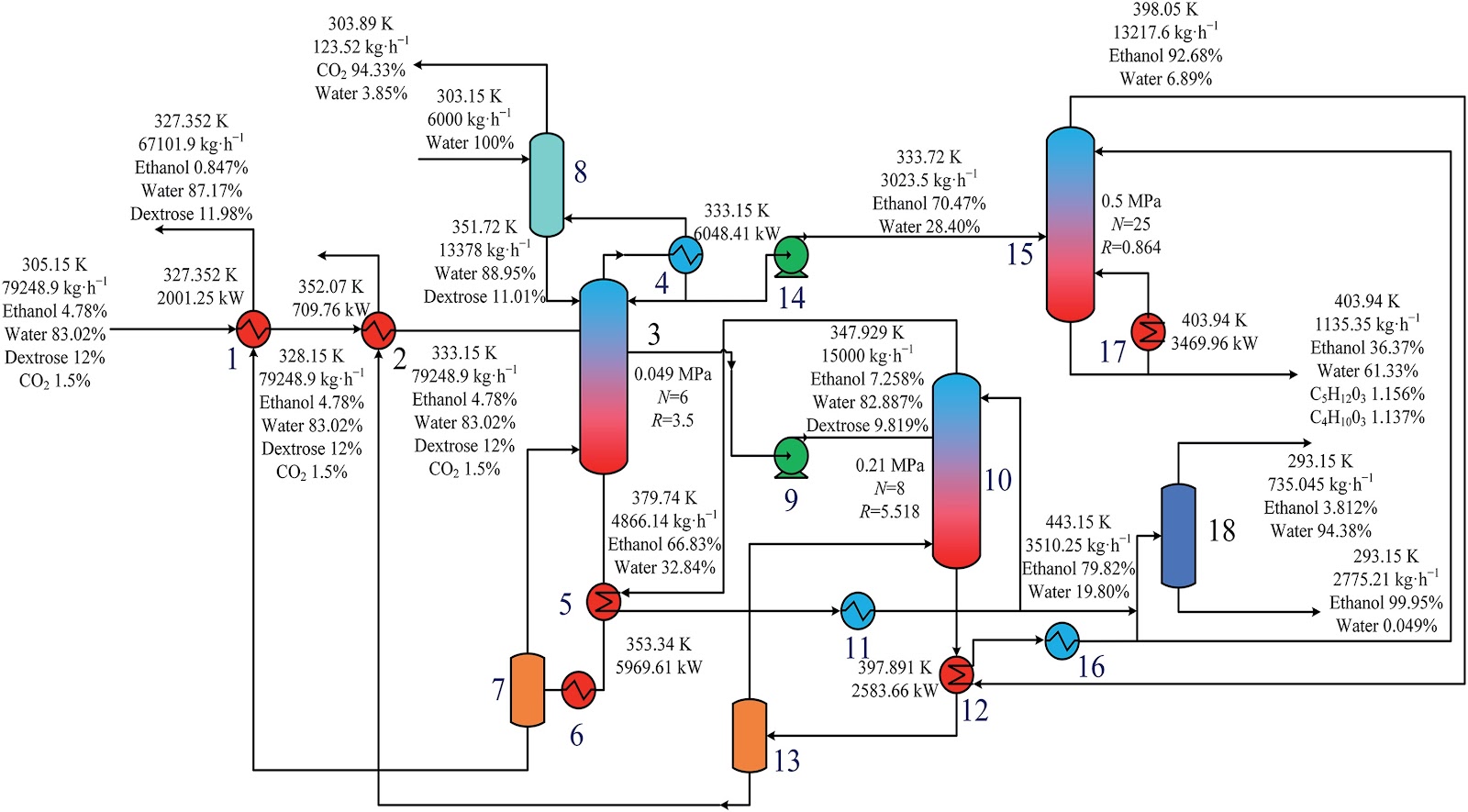
To address the challenges of high energy consumption and prominent costs in the traditional three-columns distillation process for cellulosic fuel ethanol, a distillation—molecular sieve coupling separation process is proposed. This process integrates a three-column (crude distillation column, first distillation column, second distillation column) system with a 3A molecular sieve adsorption deep dehydration unit. A thermal coupling network is constructed via differential pressure design (steam from medium/high-pressure columns as mutual heat sources, reboiler liquid waste heat for feed preheating), and molecular sieve adsorption conditions are optimized. The study first performs a thermodynamic consistency test on the ethanol—water system, determines optimal non-random two-liquid (NRTL) model binary interaction parameters via experimental data regression for Aspen Plus simulation. Aiming at minimum total annual cost (TAC), Aspen Plus is used to optimize process parameters (theoretical tray number, feed location, reflux ratio, side-draw position, etc.). Economic analysis shows this process reduces CO2 emission costs by 27.56%, TAC by 15.58% (to 5.123 × 10⁶ USD·a-1), and increases ethanol purity to >99.6%, providing an effective solution for green, efficient separation.
A cohesion loss model for determining residual strength of deep bedded sandstone
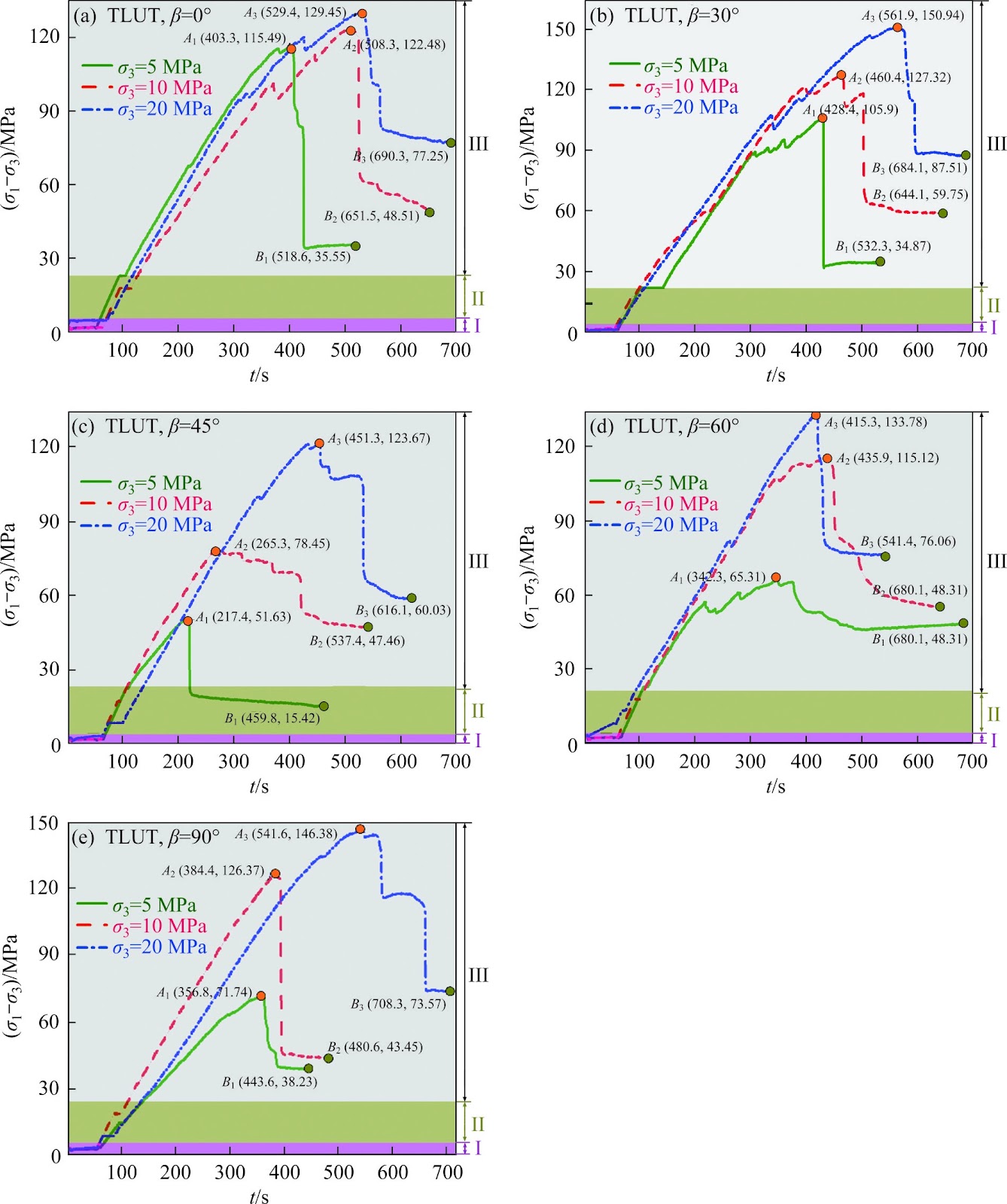
Rock residual strength, as an important input parameter, plays an indispensable role in proposing the reasonable and scientific scheme about stope design, underground tunnel excavation and stability evaluation of deep chambers. Therefore, previous residual strength models of rocks established were reviewed. And corresponding related problems were stated. Subsequently, starting from the effects of bedding and whole life-cycle evolution process, series of triaxial mechanical tests of deep bedded s
Federated model with contrastive learning and adaptive control variates for human activity recognition
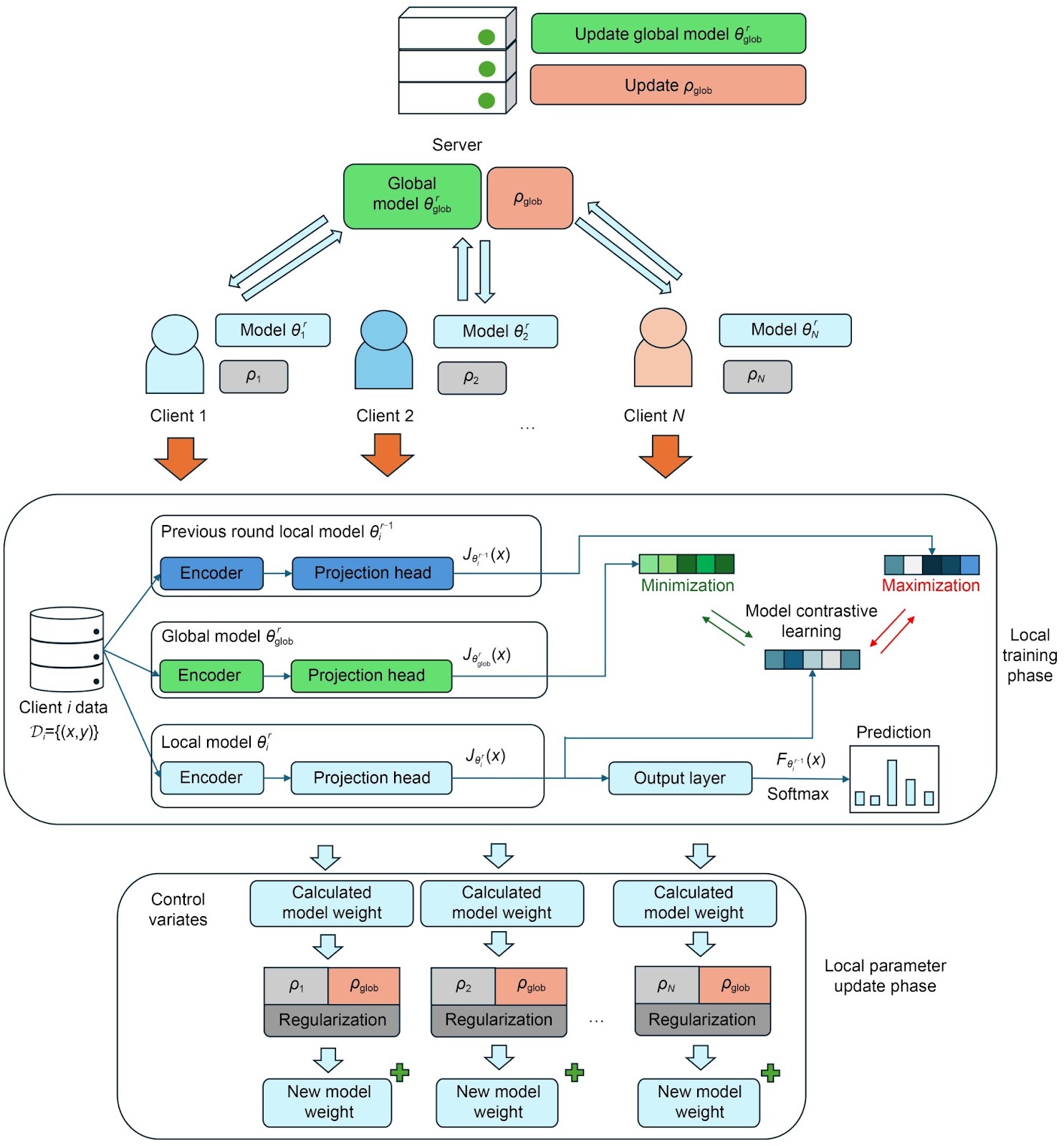
Recent attention to privacy issues demands a communication-safe method for training human activity recognition (HAR) models on client activity data. Federated learning (FL) has become a compelling technique to facilitate model training between the server and clients while preserving data privacy. However, classical FL methods often assume independent and identically distributed (IID) data among clients. This assumption does not hold true in practical scenarios. Human activity in real-world scena