Key Takeaways & Executive Findings
- •• Silica modification of Pt/TiO2 catalysts effectively suppresses the strong metal-support interaction (SMSI) encapsulation, enhancing the exposure of active Pt sites. • The introduction of SiO2 preserves the Ti4+ to Ti3+ conversion characteristic of SMSI while preventing TiO2 overcoating, leading to improved adsorption of H2 and CO. • The modified catalysts exhibit significantly enhanced catalytic activity and selectivity in cinnamaldehyde hydrogenation, with suppressed acetal side reactions. • This work provides a systematic strategy for tuning SMSI to balance catalyst stability and activity, with implications for designing efficient noble metal catalysts.
Abstract
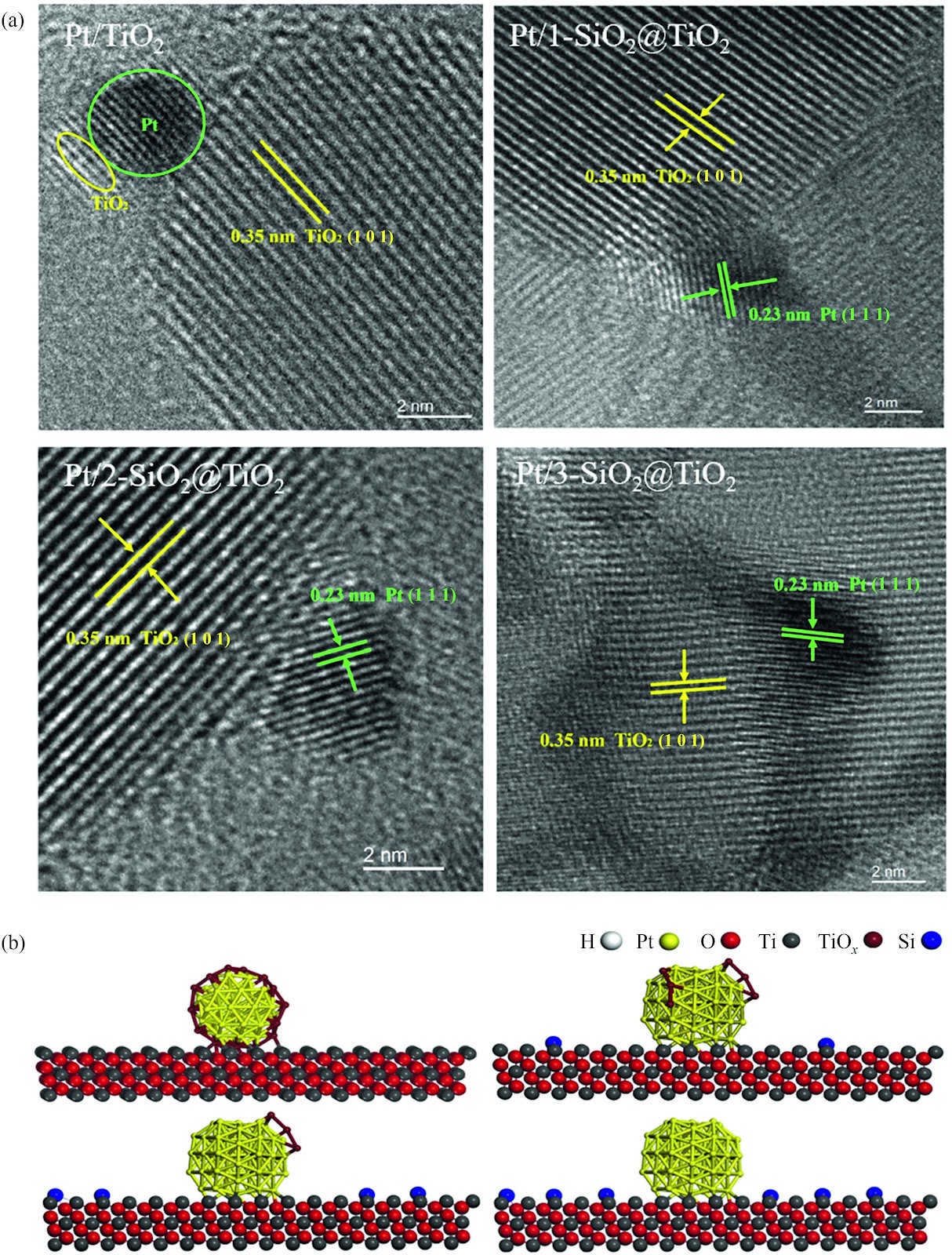
Tuning Strong Metal-support Interactions (SMSI) is a key strategy to obtain highly active catalysts, but conventional methods usually enable TiOx encapsulation of noble metal components to minimize the exposure of noble metals. This study demonstrates a catalyst preparation method to modulate a weak encapsulation of Pt metal nanoparticles (NPs) with the supported TiO2, achieving the moderate suppression of SMSI effects. The introduction of silica inhibits this encapsulation, as reflected in the characterization results such as XPS and HRTEM, while the Ti4+ to Ti3+ conversion due to SMSI can still be found on the support surface. Furthermore, the hydrogenation of cinnamaldehyde (CAL) as a probe reaction revealed that once this encapsulation behavior was suppressed, the adsorption capacity of the catalyst for small molecules like H2 and CO was enhanced, which thereby improved the catalytic activity and facilitated the hydrogenation of CAL. Meanwhile, the introduction of SiO2 also changed the surface structure of the catalyst, which inhibited the occurrence of the acetal reaction and improved the conversion efficiency of C=O and C=C hydrogenation. Systematic manipulation of SMSI formation and its consequence on the performance in catalytic hydrogenation reactions are discussed.
1. Introduction
Supported nano-sized metal catalyst plays an important role in the catalytic processes in the chemical industry, including the production of fine chemicals and fuels from renewable and sustainable raw materials [1,2]. The supports of inorganic oxides like TiO2 and Al2O3 were usually considered as inert materials for loading, fixing and dispersing active metal components [3]. However, the researchers have discovered that electron transfer between support and metal can be triggered during the high-temperature reduction by hydrogen treating, leading to the wrapped Pt group metal nanoparticles (NPs). This wrapping thus alters the catalytic activity and stability, as well as the product selectivity during catalytic reactions. This effect is known as strong metal-support interaction (SMSI) [3e5].
Studies on the formation mechanism of SMSI effect have been of interest in recent years. One prevailing view is that the removal of lattice oxygen during high-temperature reduction can afford a substructure on support surface that migrates to the low-electron metal region due to defects in the arrangement of its electronic layers, forming a stable encapsulation layer [6,7]. On the one hand, it is important for heterogeneous catalysis to develop the preparation method for improving the anti-sintering stability and better adsorption of reactant on metal NPs [7]. For example, Li et al. [8] investigated the stability of metal NPs against sintering and proposed Sabatier's principle that very strong metal-support interactions trigger Ostwald ripening, while very weak interactions lead to particle migration and agglomeration. Jong et al. [6] showed a 15-fold increase in the productivity of CO catalysis can be achieved by modulating the SMSI between the metal oxide support and Pt group NPs. However, SMSI also leads to the suppression of the adsorption of small molecules and the coverage of active metal components during the wrapping process. It can explain the phenomenon reported first by Tauster [9] in 1978 that the chemisorption capacity of metals for small gas (H2, CO2) molecules was substantially reduced. In this case, a part of TiO2 is also encapsulated on the surface of the active metal NPs during the generation of the SMSI effect, which blocks the active catalytic sites and thus reduces the catalyst activity.
In recent years, considerable attention has been paid to the SMSI effect on the catalytic reactions of organic compounds [10e14]. One typical example is the hydrogenation of cinnamaldehyde (CAL), whose products are important intermediates or raw materials for the productions of fragrances, cosmetics, pharmaceuticals and fungicides [13,14]. As is known, CAL can generate hydrocinnamic aldehyde (HCAL) by a C=C bond hydrogenation, cinnamic alcohol (COL) by a C=O bond hydrogenation, and hydrocinnamyl alcohol (HCOL) by both of the C=C and C=O hydrogenation.
Loading authentic research manuscript (Pages 1–5)...
Zhengjian Hou, Yuanyuan Zhu, Hua Chi, Li Zhao, Huijie Wei, Yanyan Xi, Lishuang Ma, Xiang Feng, Xufeng Lin (2024). Silica-modified Pt/TiO2 catalysts with tunable suppression of strong metal-support interaction for cinnamaldehyde hydrogenation. Chinese Journal of Chemical Engineering. https://doi.org/10.1016/j_cjche_1448
Research & Educational Purpose Only:The translations, structured abstracts, analytical annotations, and data reports provided by SinoTechIntel are intended exclusively for academic research, internal corporate R&D, and educational benchmarking. They do not constitute formal engineering, chemical safety, legal, or professional advice.
Copyright & Intellectual Property Notice: Original copyright of the underlying source articles and experimental data remains with the respective authors, institutions, and original publishing journals. SinoTechIntel claims intellectual property only over its proprietary translations, analytical syntheses, and AEO structured enhancements in accordance with international fair use and academic citation principles.
Frequently Asked Questions
What is the main finding of this study?
The study demonstrates that silica modification of Pt/TiO2 catalysts can moderately suppress the strong metal-support interaction (SMSI), preventing excessive TiO2 encapsulation of Pt nanoparticles while retaining beneficial SMSI effects, leading to enhanced catalytic activity and selectivity in cinnamaldehyde hydrogenation.
How does silica modification affect the SMSI effect?
Silica modification inhibits the encapsulation of Pt nanoparticles by TiO2, as evidenced by XPS and HRTEM, while still allowing Ti4+ to Ti3+ conversion. This results in enhanced adsorption of small molecules like H2 and CO, improving catalytic performance.
What is the significance of this research for catalyst design?
This work provides a systematic strategy to tune SMSI effects, balancing catalyst stability and activity. It offers insights for designing efficient noble metal catalysts for hydrogenation reactions and other applications where SMSI plays a role.
What are the implications for cinnamaldehyde hydrogenation?
The silica-modified catalysts show improved conversion efficiency for C=O and C=C hydrogenation, while suppressing acetal side reactions, leading to higher yields of desired products like cinnamic alcohol and hydrocinnamyl alcohol.
What methods were used to characterize the catalysts?
The catalysts were characterized using X-ray photoelectron spectroscopy (XPS) and high-resolution transmission electron microscopy (HRTEM) to analyze surface composition and morphology, along with catalytic testing for cinnamaldehyde hydrogenation.
Related Technical Papers & Translations
Design and optimization of a high-efficiency distillation process for cellulosic fuel ethanol integrated with thermal coupling and molecular sieve adsorption
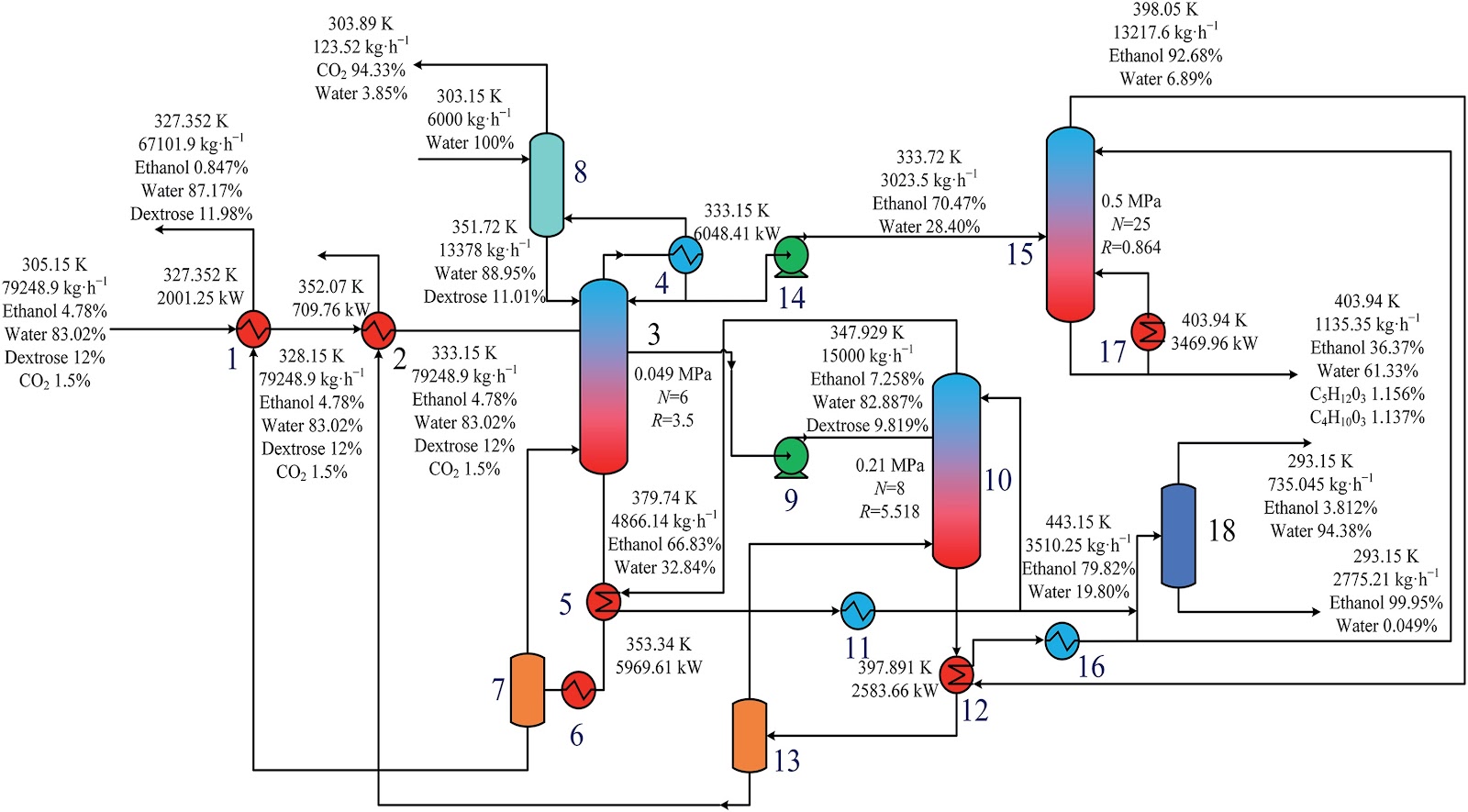
To address the challenges of high energy consumption and prominent costs in the traditional three-columns distillation process for cellulosic fuel ethanol, a distillation—molecular sieve coupling separation process is proposed. This process integrates a three-column (crude distillation column, first distillation column, second distillation column) system with a 3A molecular sieve adsorption deep dehydration unit. A thermal coupling network is constructed via differential pressure design (steam from medium/high-pressure columns as mutual heat sources, reboiler liquid waste heat for feed preheating), and molecular sieve adsorption conditions are optimized. The study first performs a thermodynamic consistency test on the ethanol—water system, determines optimal non-random two-liquid (NRTL) model binary interaction parameters via experimental data regression for Aspen Plus simulation. Aiming at minimum total annual cost (TAC), Aspen Plus is used to optimize process parameters (theoretical tray number, feed location, reflux ratio, side-draw position, etc.). Economic analysis shows this process reduces CO2 emission costs by 27.56%, TAC by 15.58% (to 5.123 × 10⁶ USD·a-1), and increases ethanol purity to >99.6%, providing an effective solution for green, efficient separation.
A cohesion loss model for determining residual strength of deep bedded sandstone
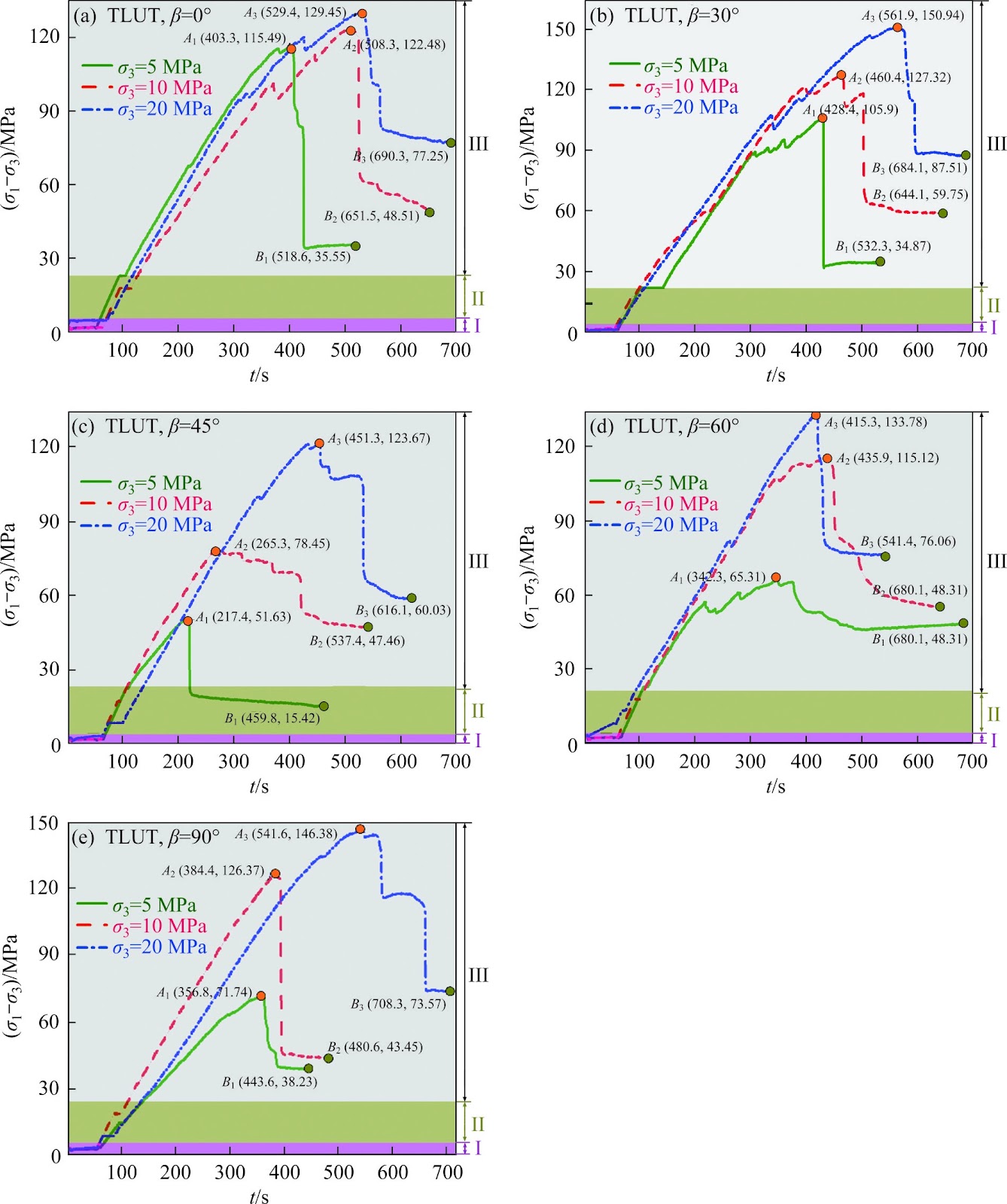
Rock residual strength, as an important input parameter, plays an indispensable role in proposing the reasonable and scientific scheme about stope design, underground tunnel excavation and stability evaluation of deep chambers. Therefore, previous residual strength models of rocks established were reviewed. And corresponding related problems were stated. Subsequently, starting from the effects of bedding and whole life-cycle evolution process, series of triaxial mechanical tests of deep bedded s
Federated model with contrastive learning and adaptive control variates for human activity recognition
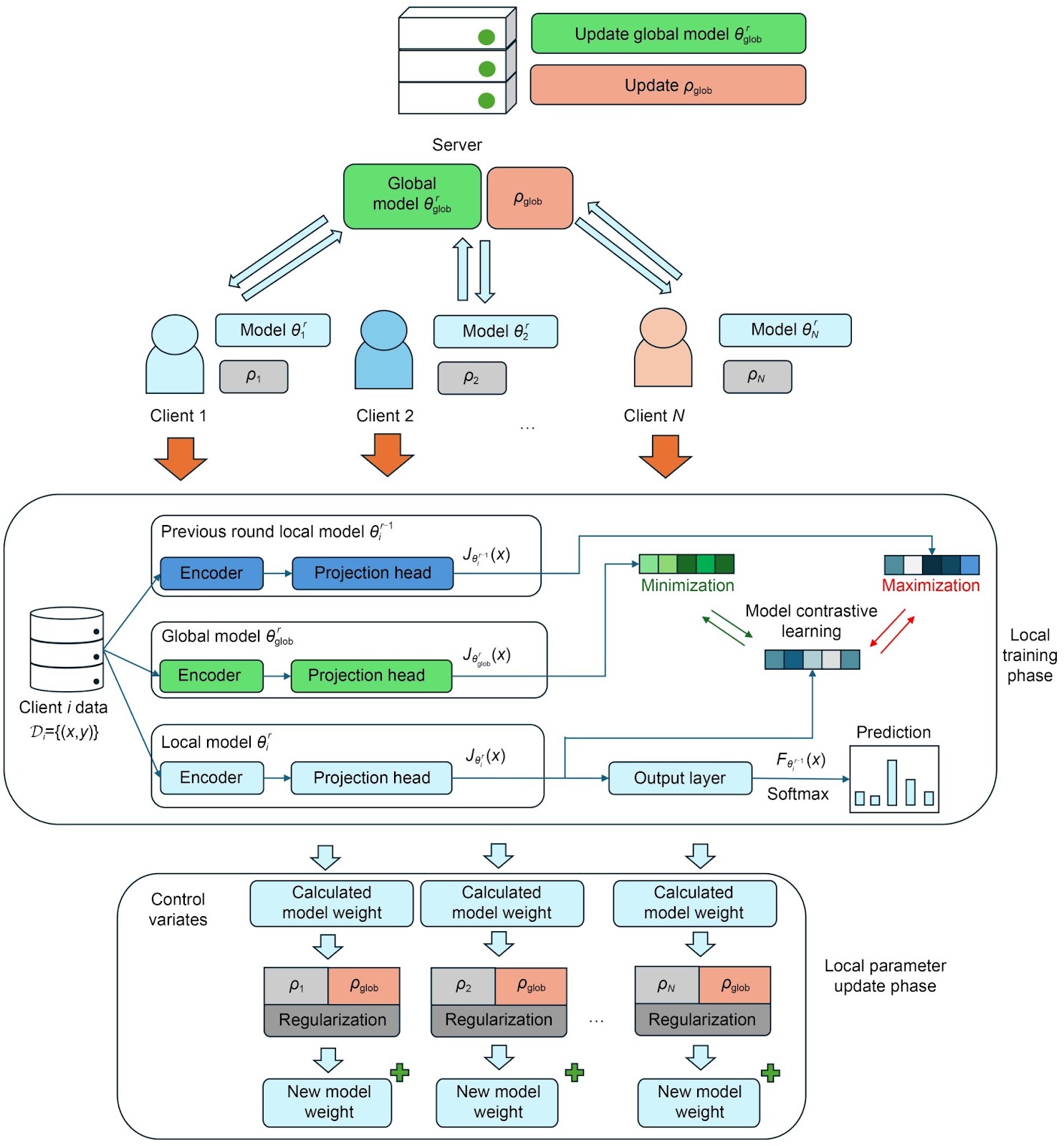
Recent attention to privacy issues demands a communication-safe method for training human activity recognition (HAR) models on client activity data. Federated learning (FL) has become a compelling technique to facilitate model training between the server and clients while preserving data privacy. However, classical FL methods often assume independent and identically distributed (IID) data among clients. This assumption does not hold true in practical scenarios. Human activity in real-world scena