SinoTechIntel Academic Portal
🏛️ Indexed Academic Journal

Journal of Central South University

Access authentic peer-reviewed engineering methodologies, experimental datasets, and scientific literature published in this journal on SinoTechIntel.

Total Research Papers: 152
Access: 100% Free Open Access
Browse by Publication Year & VolumeReset All Filters ✕

Published Research PapersFiltered: Year 2025 • 32 • 12

Showing 4 of 152 peer-reviewed papers with full Graphical Abstracts.

Original ResearchVol. 32, Issue 12 • pp. 4955-4967DOI: 10.1007/s11771-025-6142-9Jan 15, 2025

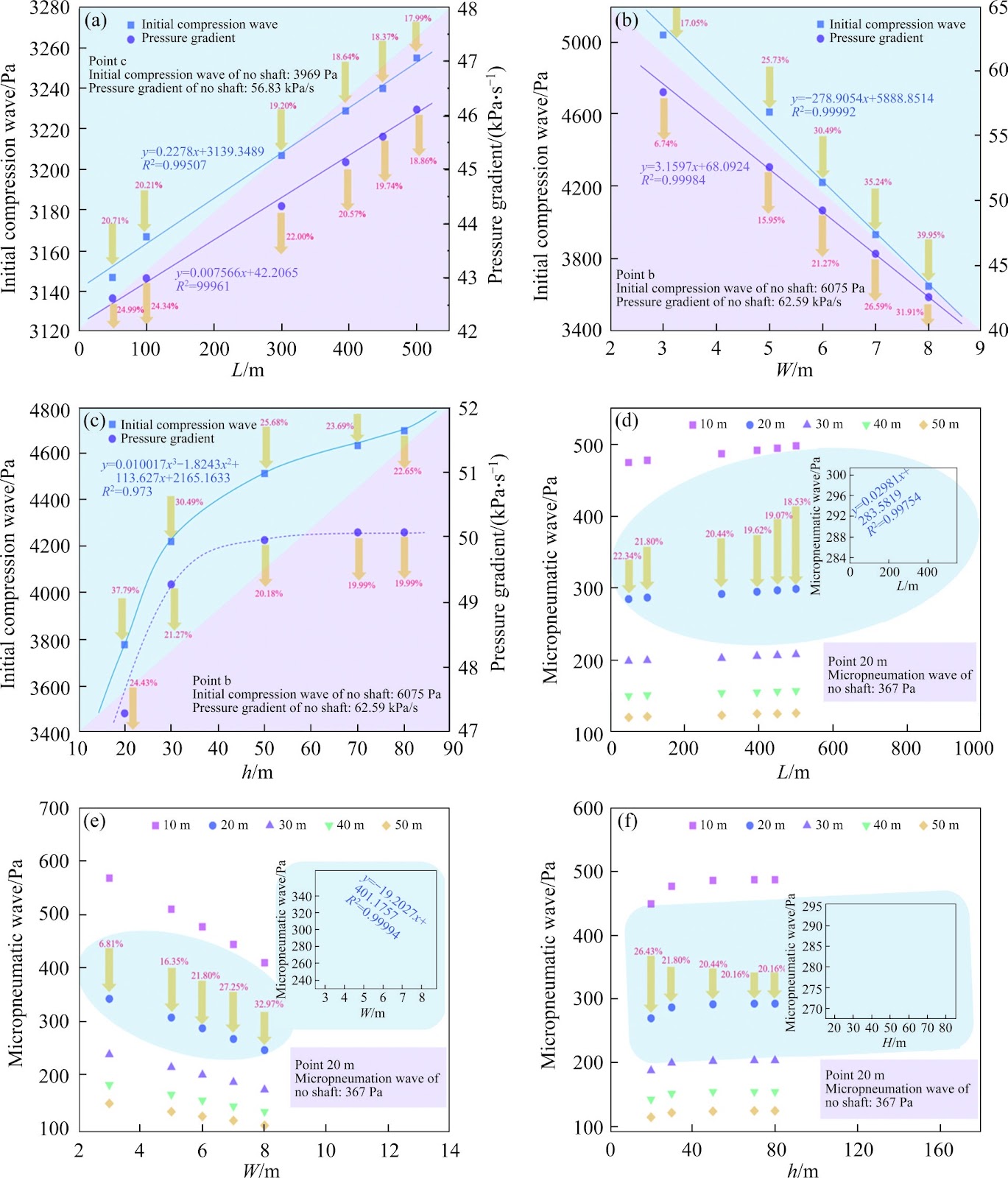
Effects of shaft and tunnel portal on coupled aerodynamic characteristics of 600 km/h superconducting maglev train

Authors: PAN Shen-gong, ZHANG Lei, WANG Tian-tian, YU Qing-song, LIN Tong-tong, XU Shu

To address the severe aerodynamic effects caused by a 600 km/h superconducting maglev train passing through a tunnel at full speed, this study systematically investigates the coupled influence of auxiliary facility parameters including the shaft (location L, cross sectional dimension W, height h), tunnel portal (cross sectional area S), and openings (spacing D, side length F) on the evolution of tunnel aerodynamic effects. By integrating three dimensional unsteady flow field numerical simulations with a dynamic model testing system, the research notably reveals the regulatory mechanisms of these parameters on the evolution characteristics of the initial compression wave pressure gradient and the multi peak structure of micro-pressure waves. The results show that shaft parameters significantly affect the initial compression wave. Both the wave amplitude and gradient exhibit a linear negative correlation with cross sectional dimension W and a linear positive correlation with location L, while demonstrating a nonlinear relationship with height h, the amplitude follows a cubic polynomial trend, and the gradient initially increases before plateauing. Under the configuration W=8 m, L=50 m, and h=20 m, substantial reductions in both compression wave amplitude and gradient were achieved. The portal cross sectional area S shows a "U-shaped" relationship with the compression wave gradient, with the maximum gradient reduction of 53.24% occurring at S=210 m2, a result comparable to that achieved with optimized opening parameters (D=15 m, F=3.5 m, 53.96%). Regarding micro-pressure waves, the amplitude measured 20 m from the tunnel exit shows a linear positive correlation with shaft parameters L and W, while the influence of h saturates beyond 50 m. Reductions exceeding 54% were achieved with portal parameters, either at S=210 m2 or using the optimized opening configuration. Furthermore, micro-pressure waves near the portal exhibit a consistent dual peak structure: the first peak originates from the train entry compression wave, and the second results from further wave compression after tunnel exit. The opening location governs selective peak regulation openings near the portal entrance primarily suppress the first peak with minimal impact on the second, whereas centrally located openings reduce the first peak but can amplify the second by up to 3%. Based on these insights, an optimized parameter configuration is proposed: a shaft with a cross-sectional dimension ≥8 m located 50 m from the portal, a portal cross sectional area of 210 m2, and openings spaced at 15 m intervals. This configuration can reduce the initial compression wave gradient by over 50%. The results provide a theoretical foundation for controlling aerodynamic effects of superconducting maglev train.
Effects of shaft and tunnel portal on coupled aerodynamic characteristics of 600 km/h superconducting maglev train
Graphical Abstract
Original ResearchVol. 32, Issue 12 • pp. 5105-5123DOI: 10.1007/s11771-025-6152-7Jan 15, 2025

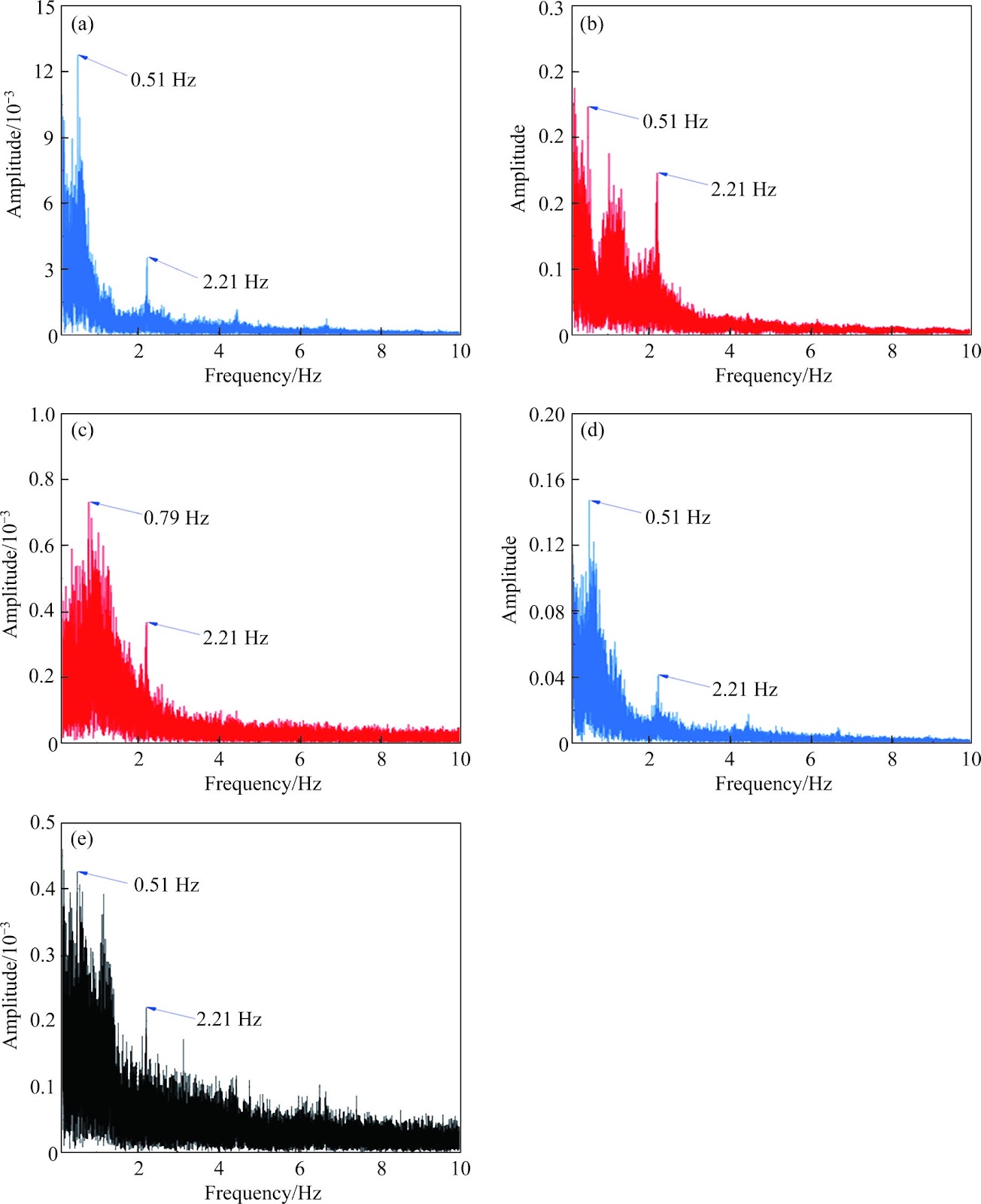
Full-scale test of the effects of crosswinds on the operating posture of passenger trains

Authors: PANG Jia-hong, ZHOU Wei, SHI Chong, LI Tian, LIU Dong-run

Considering passenger trains' key role in remote regions, this study employed machine vision technology to monitor five posture parameters of the second car of a conventional passenger train, aiming to investigate the influence of windbreaks and crosswinds along railways on the operating postures of conventional passenger trains. The study found that when passing through the anti-wind tunnel with holes, the amplitudes of posture parameters were smaller than those of other windbreaks, demonstrating the superior performance of this windbreak in maintaining posture stability compared to others. In tunnel sections, larger amplitudes of these parameters were observed for the tail car than the head car, while the opposite occurred in non-tunnel sections. Notably, during tunnel transit, their amplitudes did not increase monotonically with speed but peaked at a specific speed that most adversely affected the operating posture. These conclusions have a great significance for improving operating safety under crosswinds.

Full-scale test of the effects of crosswinds on the operating posture of passenger trains
Graphical Abstract
Original ResearchVol. 32, Issue 12 • pp. 4940-4954DOI: 10.1007/s11771-025-6064-6Jan 15, 2025

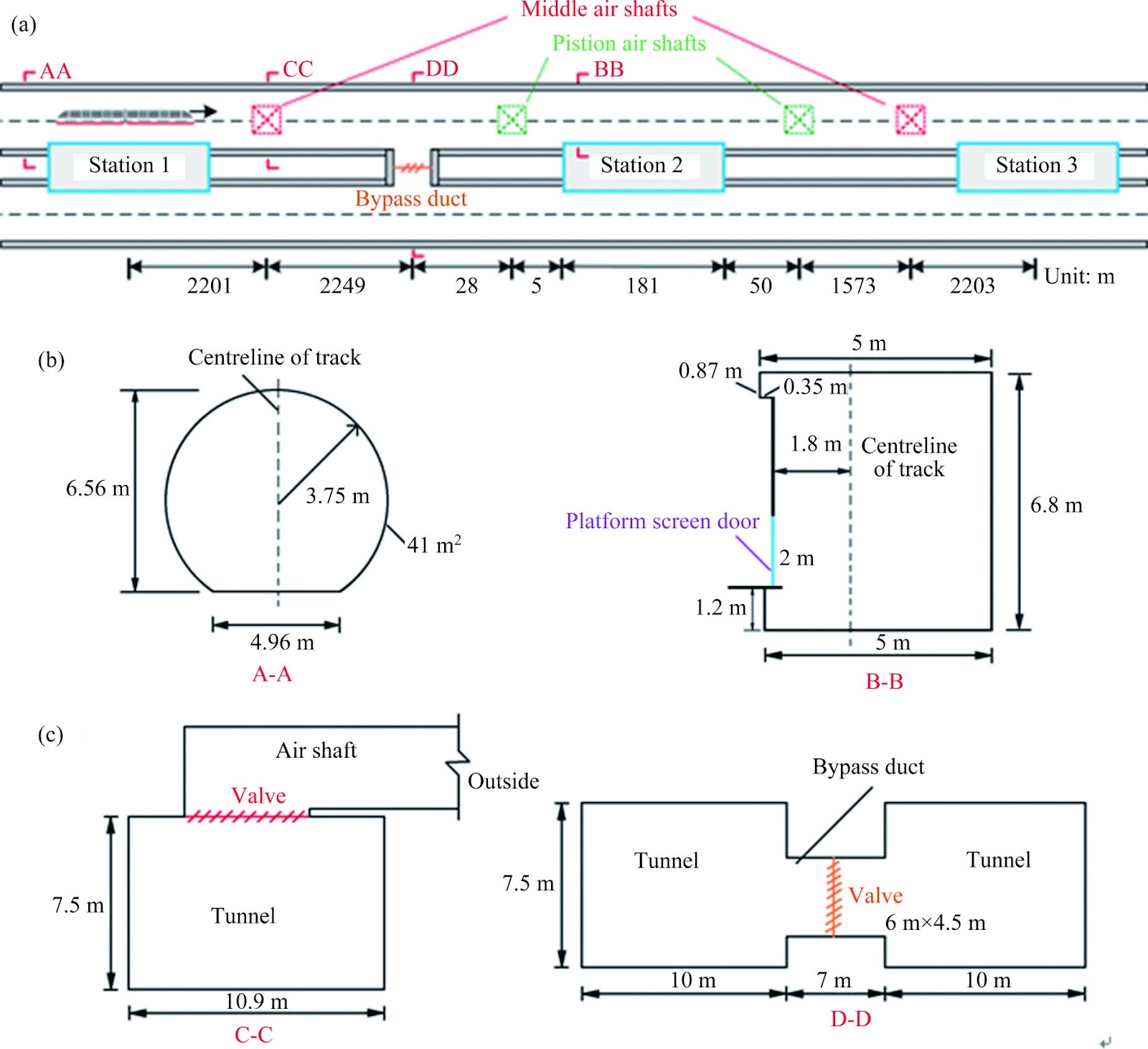
Effects of middle air shaft and bypass duct on aerodynamic pressure of platform screen doors in high-speed subway stations

Authors: ZHANG Xu, ZHOU Yuan-long, BI Hai-quan, WANG Hong-lin, YU Nan-yang

The aerodynamic pressure disturbances induced by middle air shafts and bypass ducts in subway tunnels pose significant challenges to enhancing train operational speeds. A comprehensive series of full-scale experiments are employed to examine the impact of these structural elements on the aerodynamic pressure characteristics of platform screen doors (PSDs) in high-speed subway stations. The experimental results reveal that peak pressures manifest on PSDs surfaces during two distinct scenarios in high-speed subway systems equipped with middle air shafts. One is compression pressure waves propagated from trains traversing the air shaft, and the other is train nearby flow when trains pass the PSDs directly. The peak positive pressures caused by train passing PSDs are much greater than compression pressure waves. Closing middle air shaft can reduce the passing pressure waves. The installation of bypass ducts at overtaking station entrances effectively mitigates peak negative pressures during train-PSD interactions, achieving a maximum reduction efficiency of 8%. These findings provide valuable insights for optimizing the structural design of high-speed subway tunnel systems.

Effects of middle air shaft and bypass duct on aerodynamic pressure of platform screen doors in high-speed subway stations
Graphical Abstract
Original ResearchVol. 32, Issue 12 • pp. 4702-4719DOI: 10.1007/s11771-025-6137-6Jan 15, 2025

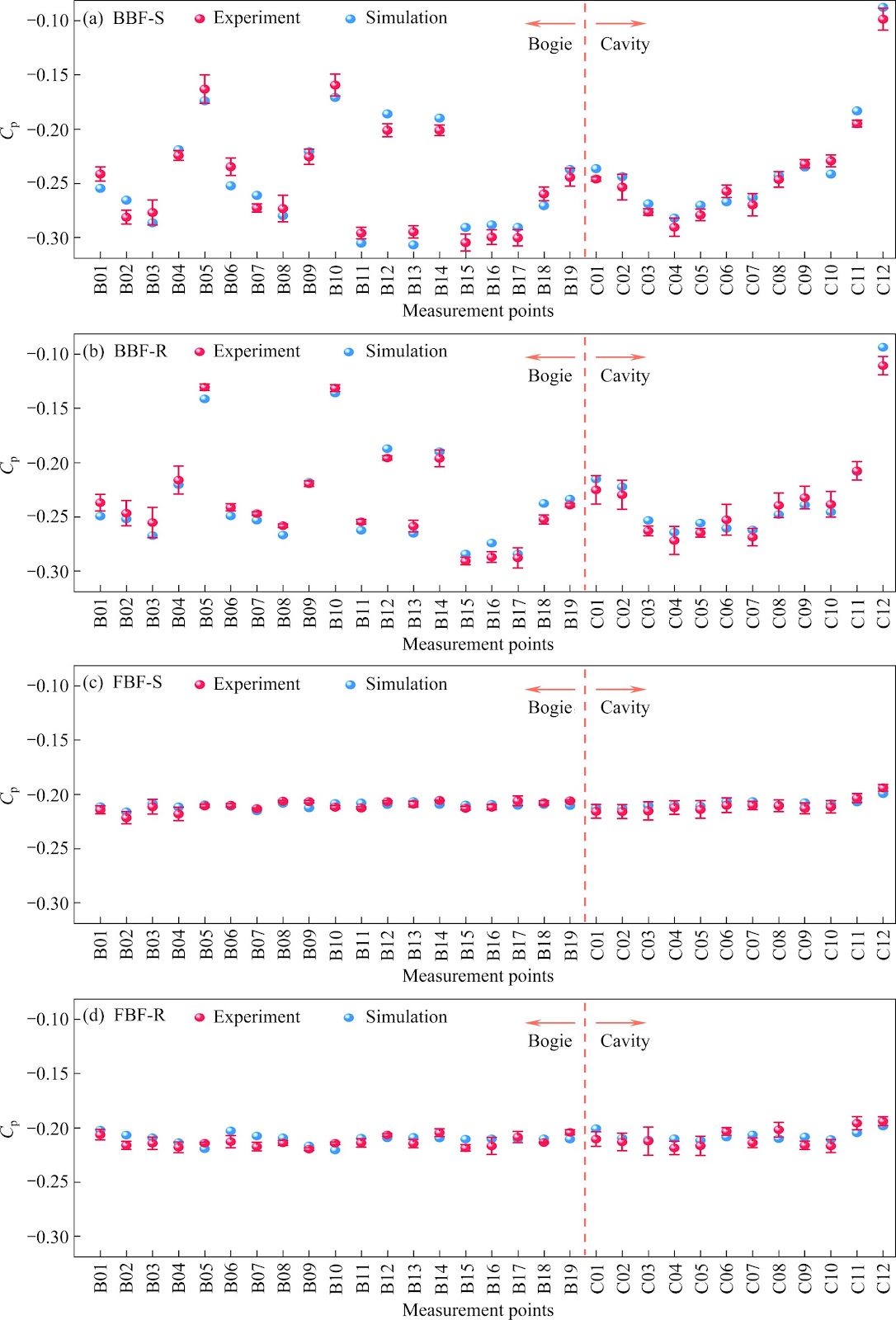
Aerodynamic characteristics on a full-scale high-speed train bogie with rotating wheelsets

Authors: ZHENG Ze-yuan, WANG Tian-tian, WANG Yu, SHI Fang-cheng, FENG Yong-hua, LIU Hong-kang, ZHAO Chang-long, JIANG Chen

Aerodynamic drag is the dominant factor contributing to energy consumption as the operational speed of high-speed trains increases, necessitating effective aerodynamic optimization strategies. This study investigates the aerodynamic characteristics of the bogie region under two bogie fairing configurations: baseline bogie fairing (BBF) and full bogie fairing (FBF). Both stationary and rotating wheelset conditions are considered. Wind tunnel experiments were conducted on a full-scale bogie model equipped with a wheelset drive system to simulate wheelset rotation. Additionally, numerical simulations were employed to analyze flow structures. Results indicate that the FBF configuration promotes a more uniform front-to-rear pressure distribution in the bogie region. The rotation of the wheelset notably affects the airflow near the wheels and extends its influence throughout the entire bogie region. Specifically, wheelset rotation reduces drag by 6.38% in the BBF configuration but increases drag by 3.5% in the FBF configuration. Further analysis reveals that, in the FBF configuration, aerodynamic drag primarily originates from the wheelsets. The rotating wheelset increases the aerodynamic drag by 18.8% for the rear wheelset, which is attributed to the shift in the pressure curve on the wheelset in the rotating direction. Therefore, the impact of wheelset rotation on aerodynamic characteristics should not be overlooked.

Aerodynamic characteristics on a full-scale high-speed train bogie with rotating wheelsets
Graphical Abstract