Key Takeaways & Executive Findings
- •• Full-scale experiments reveal two distinct peak pressure scenarios on PSDs in high-speed subway stations with middle air shafts: compression waves from trains traversing air shafts and direct train-induced flow when passing PSDs. • Peak positive pressures from direct train passage significantly exceed those from compression waves, highlighting the dominant aerodynamic load mechanism. • Closing the middle air shaft reduces passing pressure waves, while installing bypass ducts at overtaking station entrances mitigates peak negative pressures by up to 8%. • These findings offer actionable insights for optimizing tunnel structural design to enhance safety and comfort in high-speed subway systems.
Abstract
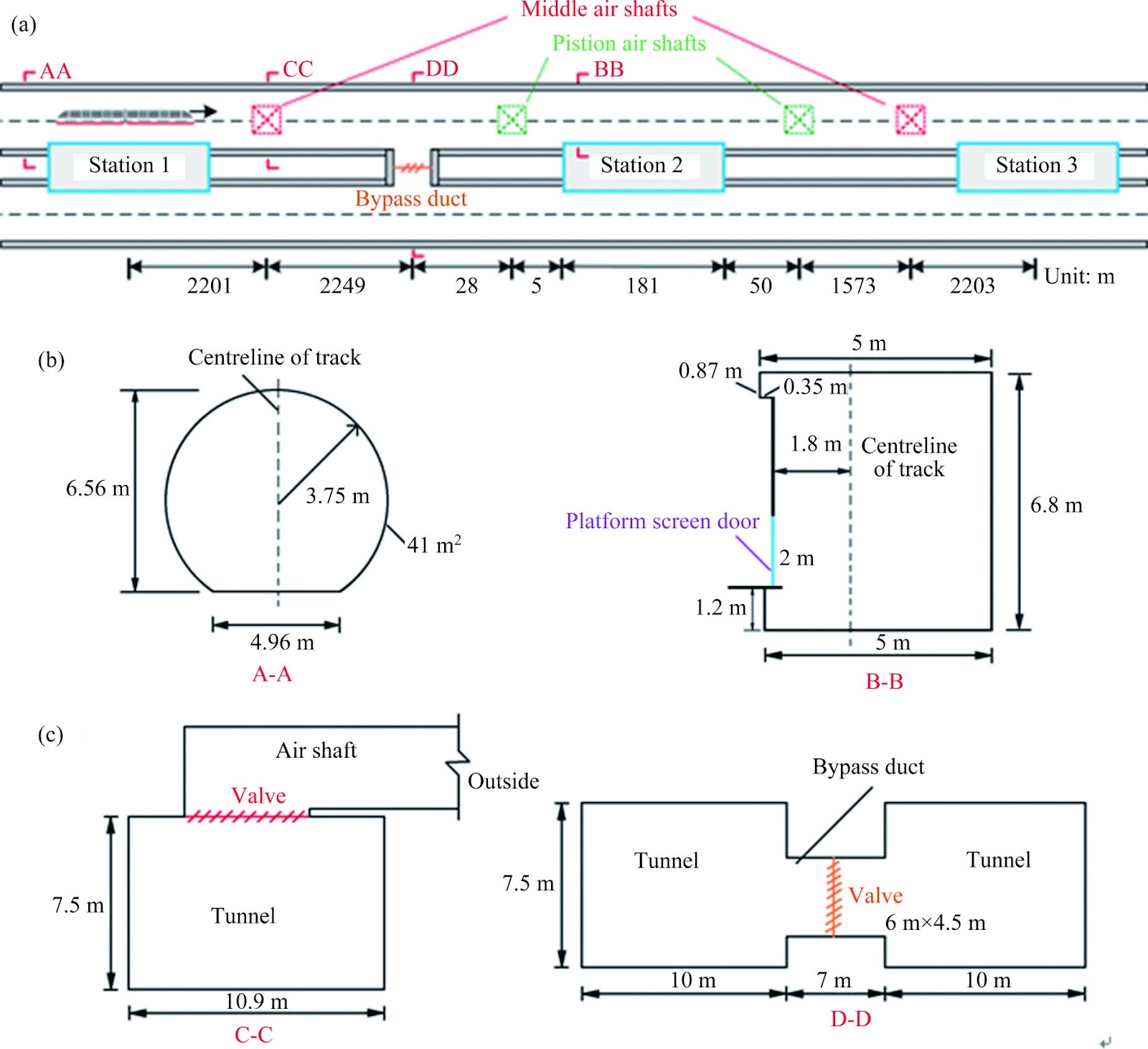
The aerodynamic pressure disturbances induced by middle air shafts and bypass ducts in subway tunnels pose significant challenges to enhancing train operational speeds. A comprehensive series of full-scale experiments are employed to examine the impact of these structural elements on the aerodynamic pressure characteristics of platform screen doors (PSDs) in high-speed subway stations. The experimental results reveal that peak pressures manifest on PSDs surfaces during two distinct scenarios in high-speed subway systems equipped with middle air shafts. One is compression pressure waves propagated from trains traversing the air shaft, and the other is train nearby flow when trains pass the PSDs directly. The peak positive pressures caused by train passing PSDs are much greater than compression pressure waves. Closing middle air shaft can reduce the passing pressure waves. The installation of bypass ducts at overtaking station entrances effectively mitigates peak negative pressures during train-PSD interactions, achieving a maximum reduction efficiency of 8%. These findings provide valuable insights for optimizing the structural design of high-speed subway tunnel systems.
1. Introduction
Urban rail transit serves as a critical component of modern transportation systems, facilitating rapid interregional connectivity and significantly alleviating urban traffic congestion [1, 2]. By the end of 2024, China's urban rail transit network had expanded to 12160 km, with subways accounting for 9306 km of the total mileage. As modern lifestyles accelerate and economic development progresses, increasing train speeds has become an inevitable trend in urban rail transit evolution [3−5]. For instance, operational lines such as Chengdu Subway Line 18 and the Beijing New Airport Line already support the maximum speeds of 140 km/h and 160 km/h, respectively. Similarly, Chengdu Subway Line 19 has achieved a maximum operating speed of 160 km/h. With the continued development of large transportation hubs, further increases in subway train speeds are anticipated [6, 7], so it brings the challenge of aerodynamic problems [8, 9].
To accommodate increasing passenger demand, subway systems have adopted overtaking operation modes [10, 11], allowing trains to bypass stations at high speeds while maintaining efficient long-distance travel [12, 13]. For instance, Chengdu Subway Line 18, which connects South Railway Station to Tianfu International Airport Station, spans 69.39 km with a fastest travel time of approximately 37 min, significantly reducing journey durations for passengers. This operational strategy enhances network efficiency by balancing high-speed transit with passenger accessibility.
When a high-speed train passes through the platform screen door (PSD) equipped on station, it induces significant airflow disturbances around the train, generating train-induced wind [14, 15]. This aerodynamic phenomenon exhibits strong pulsation characteristics. Simultaneously, the PSD surface is subjected to dynamic pressure waves caused by the train's high-speed movement [16]. These pressure waves continuously propagate, reflect, and superimpose within the confined tunnel space [17−19]. These aerodynamic effects pose significant risks to tunnel structural integrity [20], passenger comfort [21], and train operational safety [22]. Excessive aerodynamic pressure can compromise the structural integrity of PSD, as evidenced by failures of acoustic barriers along German high-speed railways due to train-induced aerodynamic loads. Additionally, when subway trains traverse stations at high speeds, the resulting train-induced airflow generates localized high-velocity wind zones on platforms [23, 24], adversely impacting passenger comfort and disrupting station ventilation systems [25, 26].
Loading authentic research manuscript (Pages 1–5)...
ZHANG Xu, ZHOU Yuan-long, BI Hai-quan, WANG Hong-lin, YU Nan-yang (2025). Effects of middle air shaft and bypass duct on aerodynamic pressure of platform screen doors in high-speed subway stations. Journal of Central South University. https://doi.org/10.1007/s11771-025-6064-6
Research & Educational Purpose Only:The translations, structured abstracts, analytical annotations, and data reports provided by SinoTechIntel are intended exclusively for academic research, internal corporate R&D, and educational benchmarking. They do not constitute formal engineering, chemical safety, legal, or professional advice.
Copyright & Intellectual Property Notice: Original copyright of the underlying source articles and experimental data remains with the respective authors, institutions, and original publishing journals. SinoTechIntel claims intellectual property only over its proprietary translations, analytical syntheses, and AEO structured enhancements in accordance with international fair use and academic citation principles.
Frequently Asked Questions
What are the main sources of aerodynamic pressure on platform screen doors in high-speed subway stations?
The main sources are compression pressure waves generated when trains traverse middle air shafts, and train-induced flow when trains pass directly by the platform screen doors. The latter produces significantly higher peak positive pressures.
How does closing the middle air shaft affect aerodynamic pressure on platform screen doors?
Closing the middle air shaft reduces the passing pressure waves, thereby lowering the aerodynamic pressure fluctuations on the platform screen doors.
What is the effect of installing bypass ducts at overtaking station entrances?
Installing bypass ducts at overtaking station entrances effectively mitigates peak negative pressures during train-platform screen door interactions, achieving a maximum reduction efficiency of 8%.
Why is it important to study aerodynamic pressure on platform screen doors in high-speed subway stations?
Excessive aerodynamic pressure can compromise the structural integrity of platform screen doors, affect passenger comfort, and disrupt station ventilation systems. Understanding these effects is crucial for optimizing tunnel design and ensuring safety and comfort.
What experimental methods were used in this study?
The study employed a comprehensive series of full-scale experiments to examine the impact of middle air shafts and bypass ducts on the aerodynamic pressure characteristics of platform screen doors in high-speed subway stations.
Related Technical Papers & Translations
Direct Repair of the Crystal Structure and Coating Surface of Spent LiFePO4 Materials Enables Superfast Li-Ion Migration
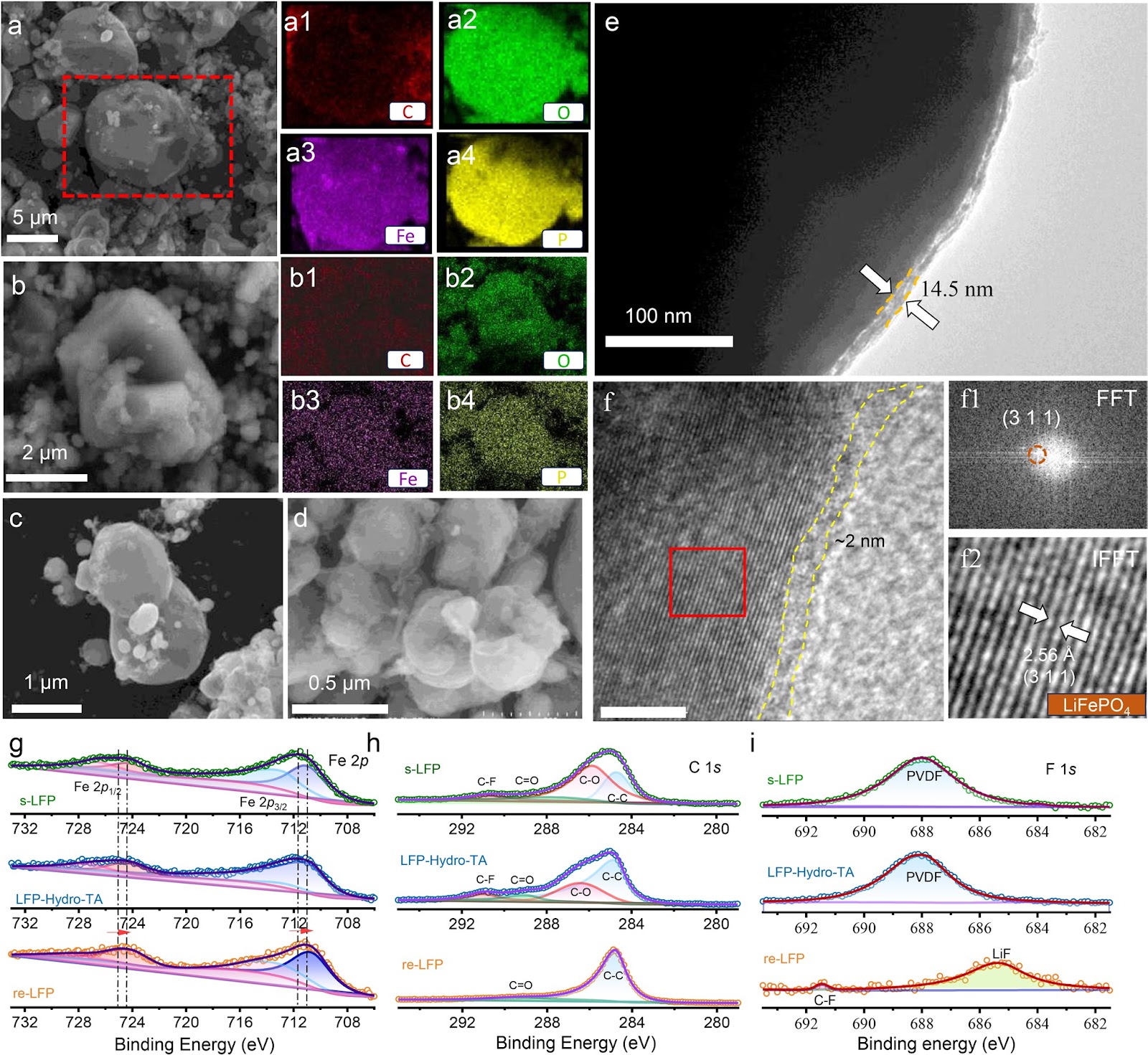
The rapid accumulation of spent LiFePO4 (LFP) cathodes from retired lithium-ion batteries necessitates the development of effective and environmental-friendly recycling strategies. In this context, direct regeneration has emerged as a promising approach for reclaiming LFP cathode materials, offering a streamlined pathway to restore their electrochemical functionality. We report an integrated regeneration protocol that simultaneously repairs the degraded crystal structure and reconstructs the damaged carbon coating in spent LFP. The regenerated cathode material had superfast lithium-ion diffusion kinetics and a stable cathode–electrolyte interface, giving a remarkable rate capability with specific capacities of 122 mAh g−1 at 5C and 106 mAh g−1 at 10C (1C = 170 mA g−1). It also maintained capacities of 110.7 mAh g−1 (5C) and 84.1 mAh g−1 (10C) after 400 cycles. It could be used in harsh environments and could be stably cycled at subzero temperatures (−10 and −20 °C) and in solid-state electrolyte batteries. Life cycle assessment combined with economic evaluation using the EverBatt model reveals that this direct regeneration approach has high economic and environmental benefits.
Oxide Semiconductor for Advanced Memory Architectures: Atomic Layer Deposition, Key Requirement and Challenges
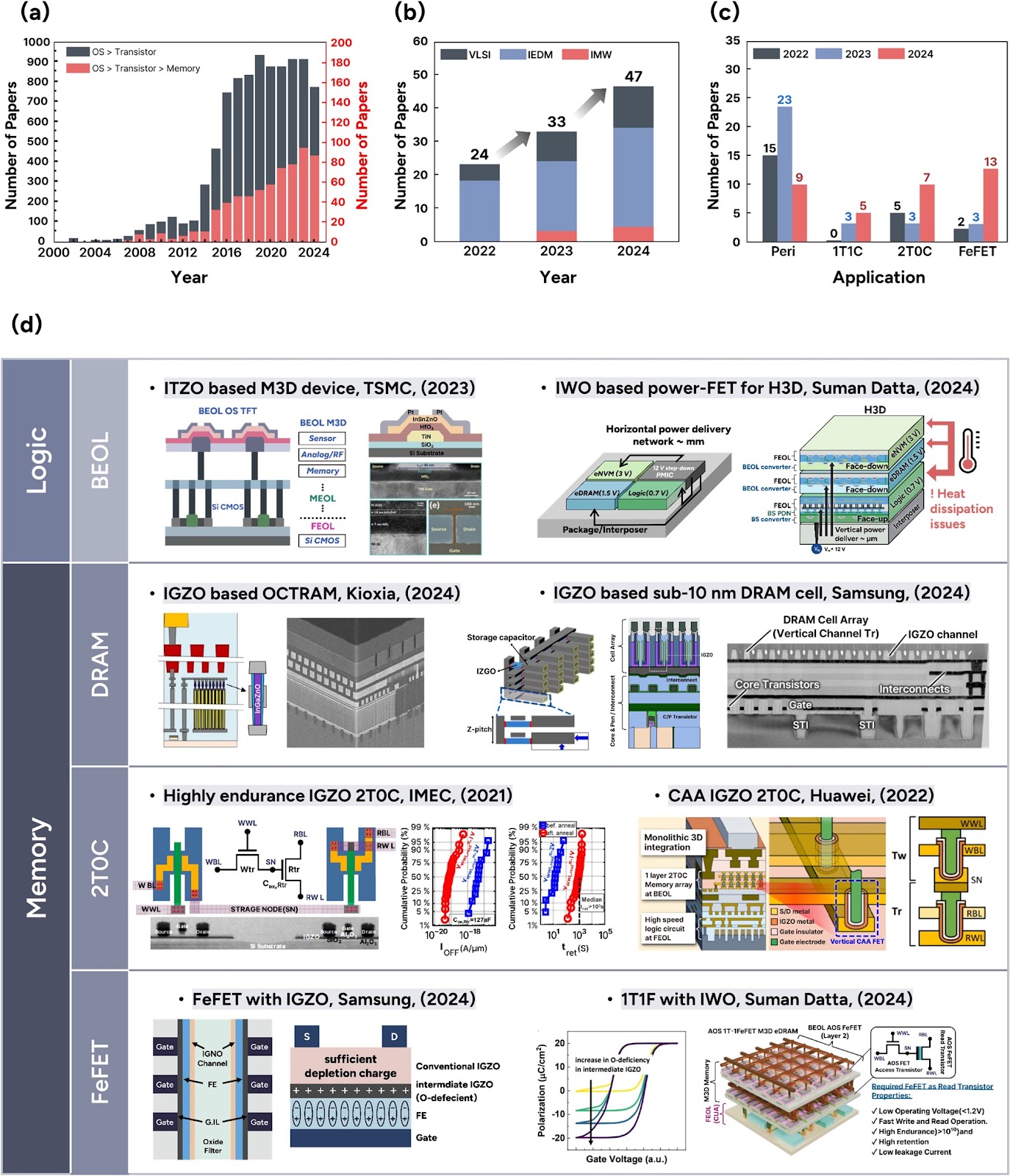
Oxide semiconductors (OSs), introduced by the Hosono group in the early 2000s, have evolved from display backplane materials to promising candidates for advanced memory and logic devices. The exceptionally low leakage current of OSs and compatibility with three-dimensional (3D) architectures have recently sparked renewed interest in their use in semiconductor applications. This review begins by exploring the unique material properties of OSs, which fundamentally originate from their distinct electronic band structure. Subsequently, we focus on atomic layer deposition (ALD), a core technique for growing excellent OS films, covering both basic and advanced processes compatible with 3D scaling. The basic surface reaction mechanisms—adsorption and reaction—and their roles in film growth are introduced. Furthermore, material design strategies, such as cation selection, crystallinity control, anion doping, and heterostructure engineering, are discussed. We also highlight challenges in memory applications, including contact resistance, hydrogen instability, and lack of p-type materials, and discuss the feasibility of ALD-grown OSs as potential solutions. Lastly, we provide an outlook on the role of ALD-grown OSs in memory technologies. This review bridges material fundamentals and device-level requirements, offering a comprehensive perspective on the potential of ALD-driven OSs for next-generation semiconductor memory devices.
Laser powder bed fusion of biodegradable Zn-4Cu alloy: Processing, microstructure and properties
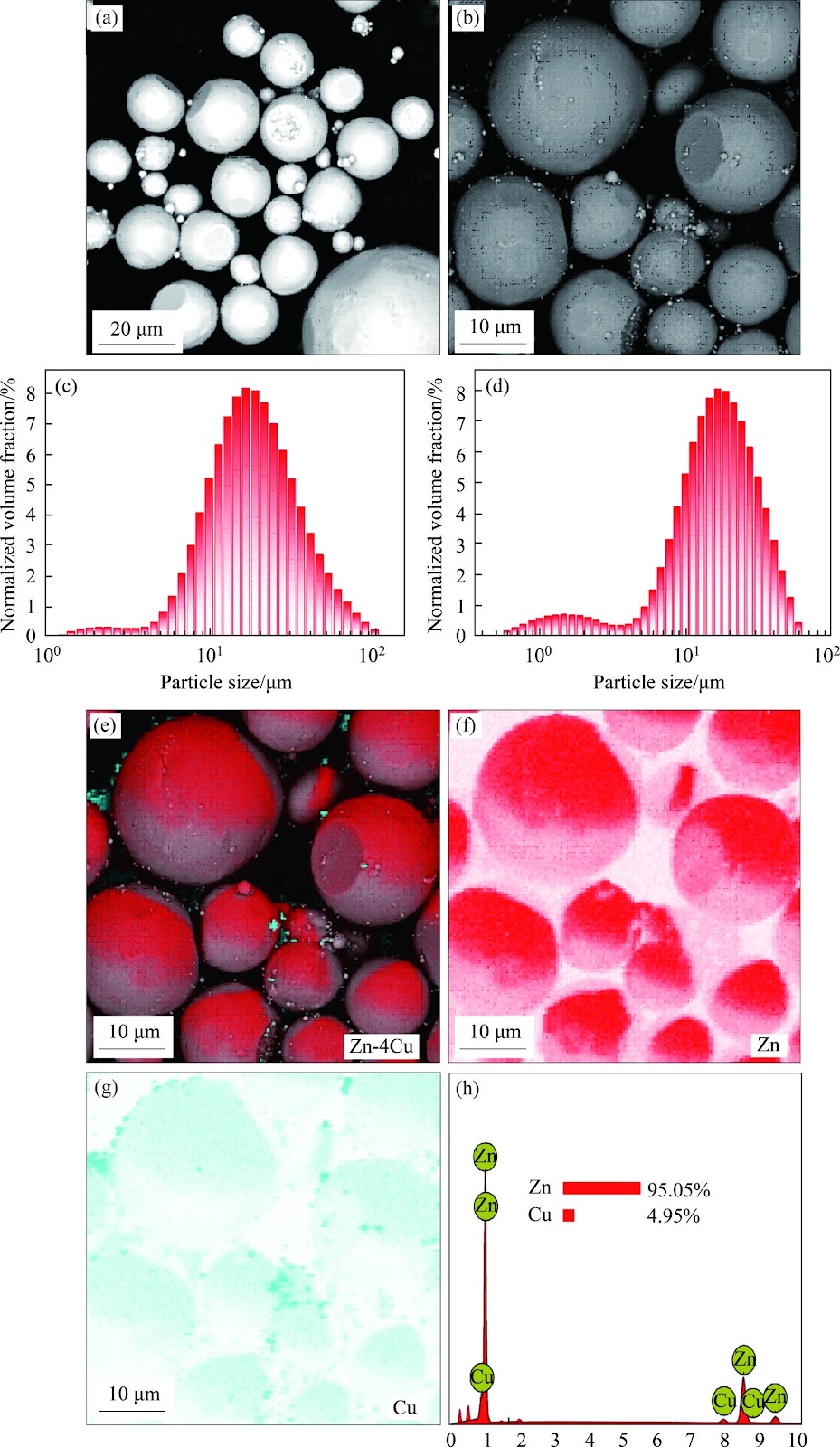
Zn's natural degradability and biocompatibility make it a promising candidate for implants, however, its mechanical properties remain insufficient for bone applications. In this study, the performance of Zn was enhanced by developing Zn-Cu alloys via laser powder bed fusion (LPBF). Optimal LPBF parameters for forming stable tracks were achieved by adjusting laser power and scanning speed. Under optimized conditions of 100 W and 100 mm/s, high-density (99.58%) Zn-Cu alloys with improved hardness (68.2HV) and yield strength (160 MPa) were achieved. These improvements are attributed to solid solution strengthening, segregation strengthening, and grain refinement. The Zn-Cu alloys also demonstrated favorable degradation behavior, with a rate of 0.16 mm/year. This degradation is primarily driven by micro-galvanic corrosion between the CuZn5 phase and Zn matrix, along with refined grains and increased grain boundary density. This work demonstrates a viable strategy for fabricating Zn-based implants with enhanced structural integrity and mechanical performance via LPBF.