SinoTechIntel Academic Portal
🏛️ Indexed Academic Journal

Journal of Central South University

Access authentic peer-reviewed engineering methodologies, experimental datasets, and scientific literature published in this journal on SinoTechIntel.

Total Research Papers: 152
Access: 100% Free Open Access
Browse by Publication Year & VolumeReset All Filters ✕

Published Research PapersFiltered: Year 2025 • 32 • 10

Showing 6 of 152 peer-reviewed papers with full Graphical Abstracts.

Original ResearchVol. 32, Issue 10 • pp. 4012-4034DOI: 10.1007/s11771-025-6085-1Jan 15, 2025

Mechanical response and failure mechanism of inclined rough jointed rock under true triaxial compression loading

Authors: LIU Han-xiang, JING Hong-wen, YUAN Yong, YIN Qian, WEN Fan, LI Bo

Rock-like specimens containing a joint with different inclination angles and roughness were prepared using 3D printing technology. Then, true triaxial compression loading experiments were conducted on those jointed specimens. The increase in roughness leads to an increase in the axial strength and peak strain. With the increasing inclination angle, the axial strength initially decreases from 30° to 60° and then increases from 60° to 90°. While the peak strain first rises from 30° to 45° and then declines from 45° to 90°. The variation in failure mode results from differences in lateral stress on the joints under different strike directions. Specimens with joint strike parallel to the intermediate principal stress predominantly showed matrix or matrix-joint mixed shear failure, whereas those parallel to the minimum principal stress exhibited matrix shear failure. The analysis results of acoustic emission signals indicate the crack number and shear crack percentage increase with the increasing roughness and first decrease (30° to 60°), then increase (60° to 90°) with the increasing inclination angle. The research results can provide some guidance for the design and support of underground engineering with jointed surrounding rock.
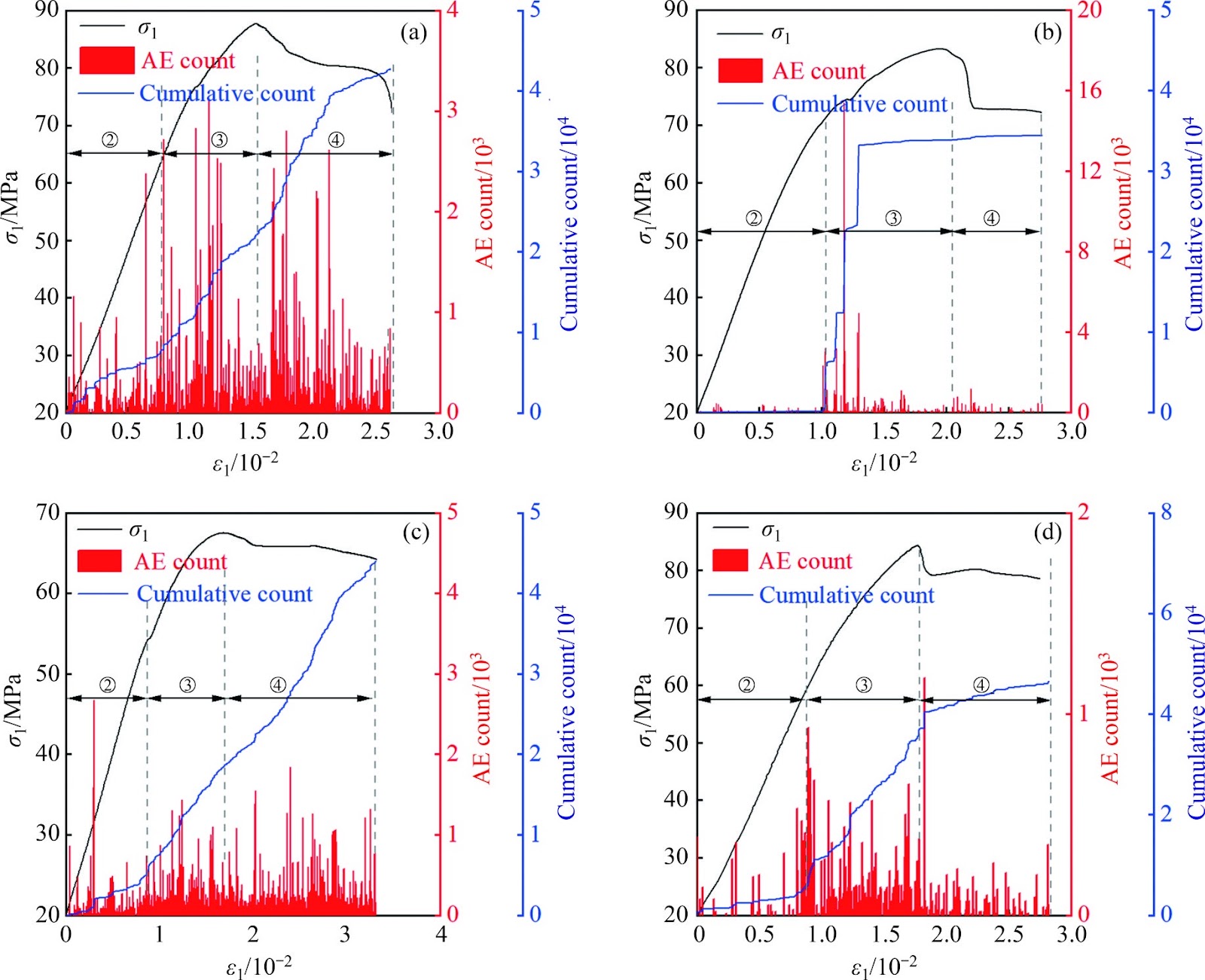
Mechanical response and failure mechanism of inclined rough jointed rock under true triaxial compression loading
Graphical Abstract
Original ResearchVol. 32, Issue 10 • pp. 3876-3894DOI: 10.1007/s11771-025-6093-1Jan 15, 2025

FeVO4 nanorods decorated natural sepiolite as highly efficient peroxymonosulfate catalyst for tetracycline degradation

Authors: WANG Yu-bo, HU Xiao-long, LI Rui, ZHANG Long, SONG Jun-ying, WANG Li, GUO Qing-bin, GAO Deng-zheng, HUANG Peng, LU Qing, ZHANG Wen-bing

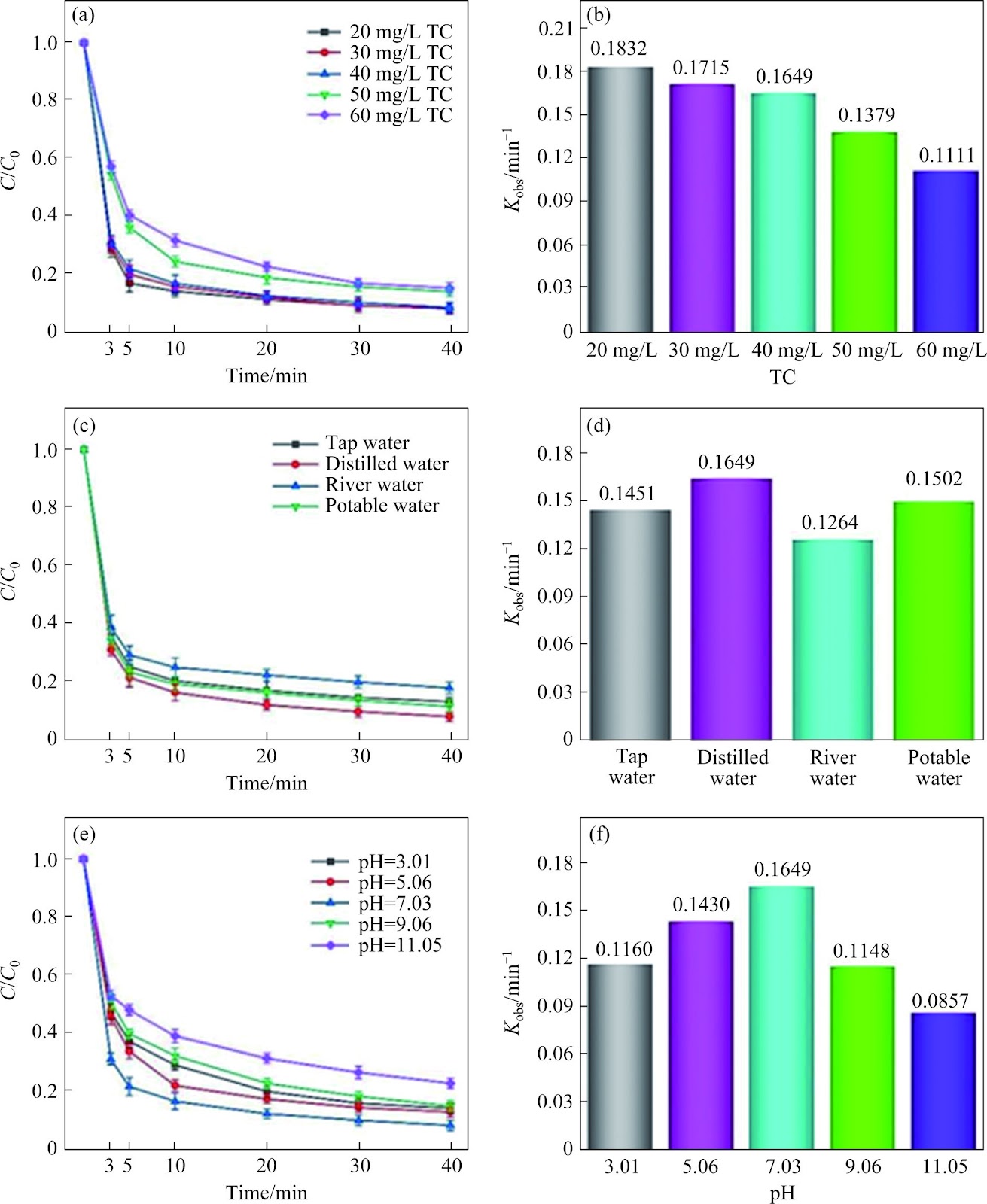
Developing a low-cost stable and high-performance peroxymonosulfate (PMS) catalyst to degrade refractory organic pollutants is still an urgent problem. Herein, this study reported FeVO4 nanorods decorated sepiolite (FeVO4/sepiolite) through simple hydrothermal method as an adsorptive-catalyst for PMS activation to degrade tetracycline (TC). Benefiting from the introduction of sepiolite support, FeVO4 nanorods could be uniformly immobilized onto fibrous sepiolite surface. As a result, FeVO4/sepiolite composite was endowed with excellent adsorption properties, rich surface hydroxyl groups, more reaction active sites, and the stable redox cycle of Fe3+/Fe2+ and V5+/V4+. Therefore, higher TC degradation efficiency (91.19% within 40 min) and larger reaction rate constant (0.1649 min−1) were obtained in FeVO4/sepiolite/PMS system than in FeVO4/PMS system. Besides, the composite presented good stability and reusability, and the effects of application parameters on TC degradation were investigated in detail. Through quenching experiment and electron paramagnetic resonance (EPR) test, it was found that both radical and non-radical species participates in TC degradation, and 1O2 were the main active species. The PMS activation mechanism was proposed, and the possible degradation pathway was also analyzed according to the high performance liquid chromatography-mass spectrometry (HPLC-MS) results. Overall, this work provides meaningful insights for designing natural mineral based PMS activators to effectively remediate antibiotic wastewater.

FeVO4 nanorods decorated natural sepiolite as highly efficient peroxymonosulfate catalyst for tetracycline degradation
Graphical Abstract
Original ResearchVol. 32, Issue 10 • pp. 3834-3844DOI: 10.1007/s11771-025-6073-5Jan 15, 2025

Ablation enhancing on heterogeneous aluminum/titanium alloy films under femtosecond laser burst irradiation

Authors: FU Shun-wei, YIN Kai, LI Xun, YANG Peng-yu, HE Yu-chun, YU Hao-nan, HUANG Yin, ARNUSCH Christopher J.

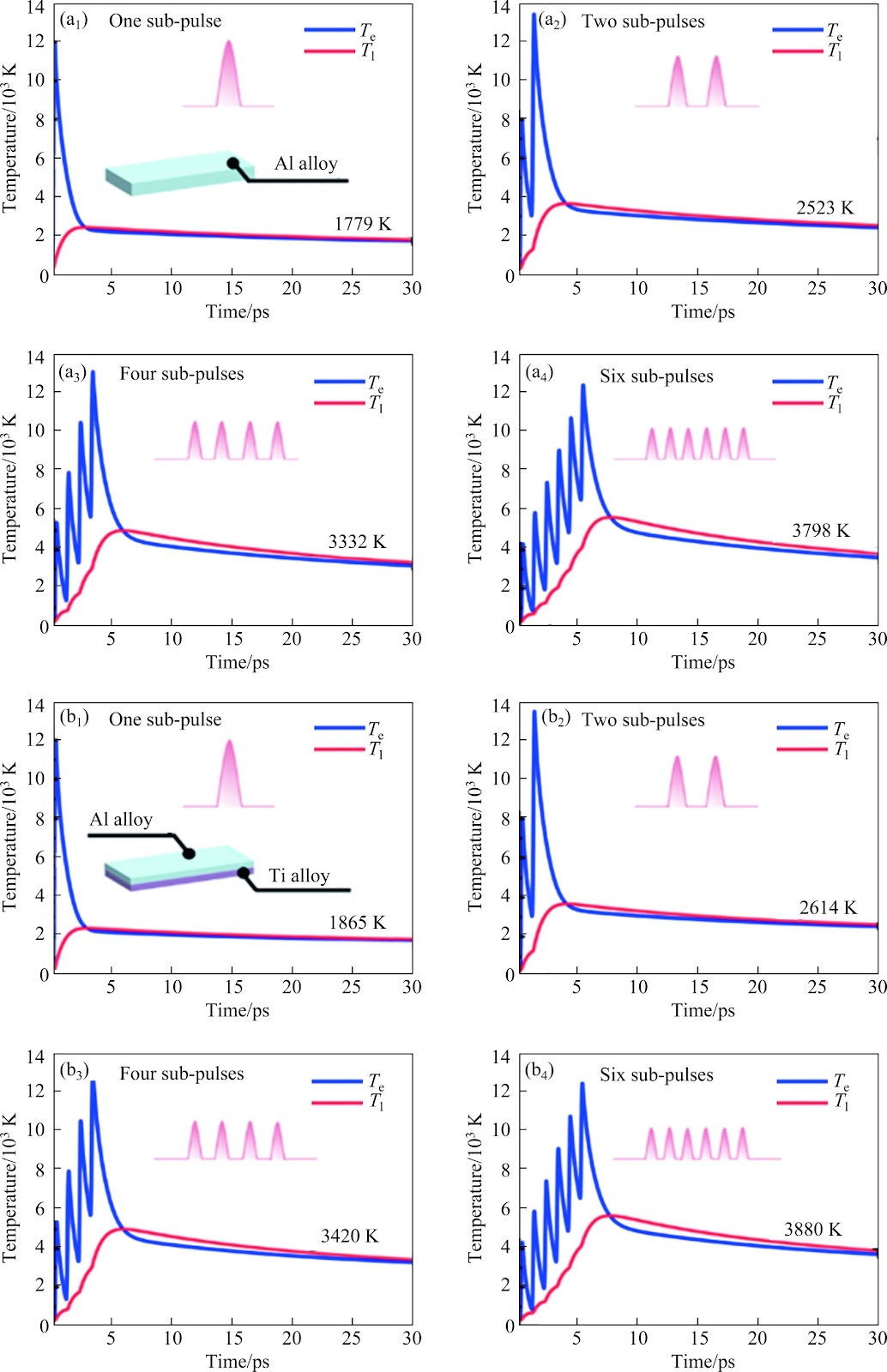
The femtosecond laser is commonly used for high-quality micromachining of materials. However, the interaction time between the femtosecond laser and the substrate material is extremely short, making it difficult for quantitative measurements and analysis through experiments. In this work, we use a two-temperature model for simulation to study the ablation process of aluminum alloy and aluminum/titanium alloy under femtosecond laser pulse mode. The temperature changes and ablation process of both alloys under femtosecond laser burst irradiation were studied. The study found that when the separation time of sub-pulses was 1 ps, the surface temperature and ablation depth rised with the increase of sub-pulse numbers. A comparison was made between these two alloy types, and enhanced ablation was observed with the heterogeneous aluminum/titanium alloy, up to 34.7% deeper compared to aluminum alloy. Moreover, the detailed theoretical explanation was also discussed. This work provided a basis for efficient ablation of materials with low laser fluence.

Ablation enhancing on heterogeneous aluminum/titanium alloy films under femtosecond laser burst irradiation
Graphical Abstract
Original ResearchVol. 32, Issue 10 • pp. 3781-3792DOI: 10.1007/s11771-025-6087-zJan 15, 2025

Appropriate FeF2 enhancing interface stability of lithium battery with solid-liquid hybrid electrolyte

Authors: TONG Yi-ting, LI Zhuo-jie, PEI Quan, ZHANG Qing-feng, XIE Shu-hong, CHEN Jing

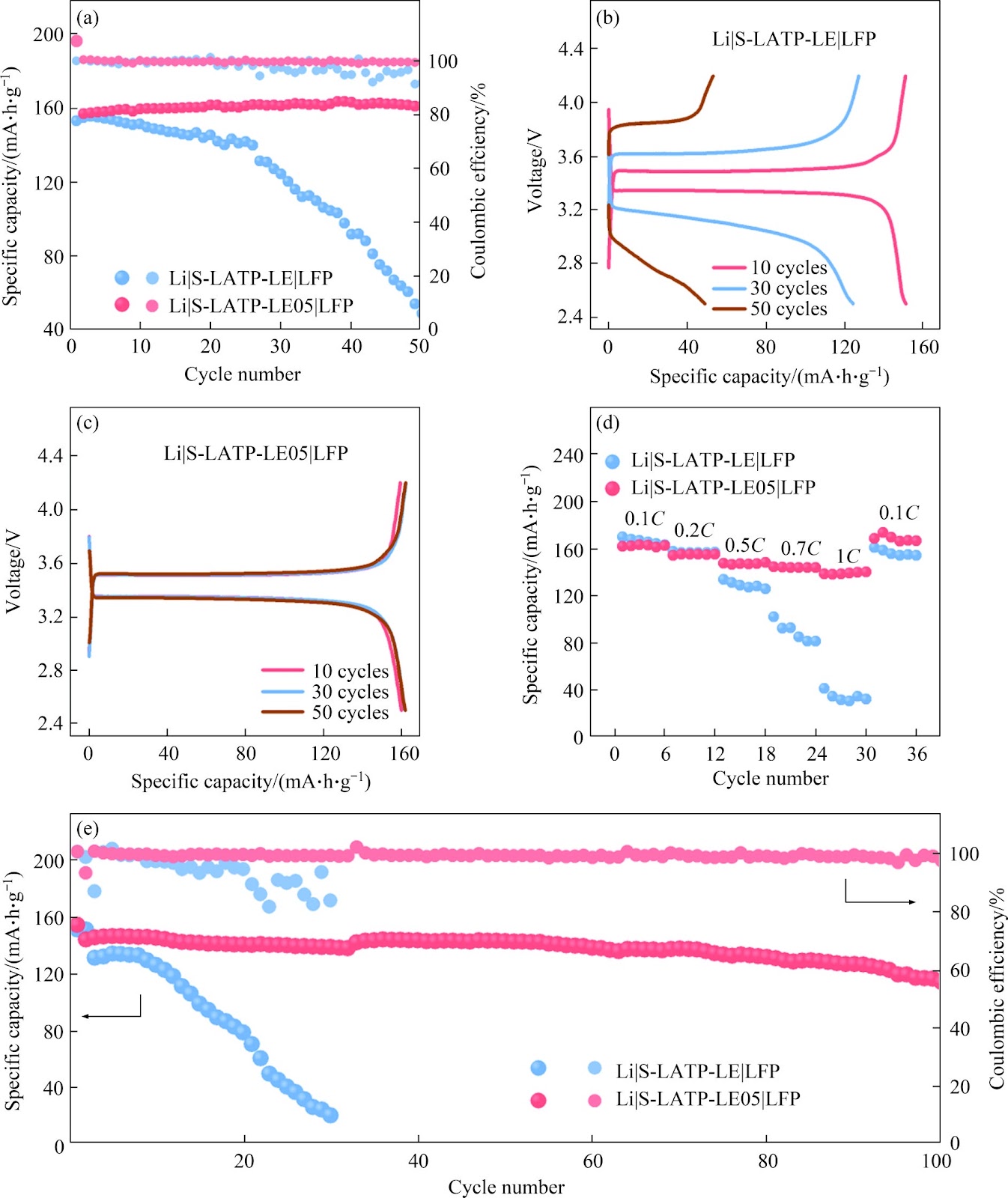
Solid-state electrolytes (SSEs) have attracted much attention due to their high safety and cycling stability for lithium-ion batteries. However, the high interface impedance between the electrode and the solid-state electrolyte hinders their practical application. In this work, the solid-liquid hybrid electrolyte S-Li1.3Al0.3Ti1.7(PO4)3-LE05(S-LATP-LE05) (LATP: Li1.5Al0.5Ti1.5 (PO4)3) sheet is prepared by dropping liquid electrolyte (LE) with appropriate FeF2 into spark plasma sintering S-LATP (solid-liquid hybrid electrolyte), which shows high-density and high-ionic-conductivity (5.78×10⁻⁴ S/cm). When the amount of FeF2 is 0.5 wt% , the interfacial properties between the anode and electrolyte are improved, and the S-LATP is well protected by LiF-rich (solid electrolyte interface) (SEI) interface in cycling process. The Li|S-LATP-LE05|Li symmetric battery and full battery show better electrochemical performance and stability relatively. The overpotential of the Li|S-LATP-LE05|Li symmetric battery is smaller and shows more stable electrochemical performance after cycling for 350 h, revealing good compatibility with a lithium metal anode and can inhibit the growth of lithium dendrites effectively. The Li|S-LATP-LE05|LiFePO4 full battery delivers a specific discharge capacity of 160 mA·h/g at 0.2C for 50 cycles. The corresponding coulombic efficiency is about 99.9% and displays better rate performance compared with the battery without FeF2 LE.

Appropriate FeF2 enhancing interface stability of lithium battery with solid-liquid hybrid electrolyte
Graphical Abstract
Original ResearchVol. 32, Issue 10 • pp. 3748-3766DOI: 10.1007/s11771-025-6098-9Jan 15, 2025

A novel and clean process for selective recovery of lithium from spent LiFePO4 cathode material by oxidative roasting-water leaching process

Authors: BI Xiao-long, MU Wen-ning, ZHANG Shi-xun, LI Meng, LEI Xue-fei, LUO Shao-hua

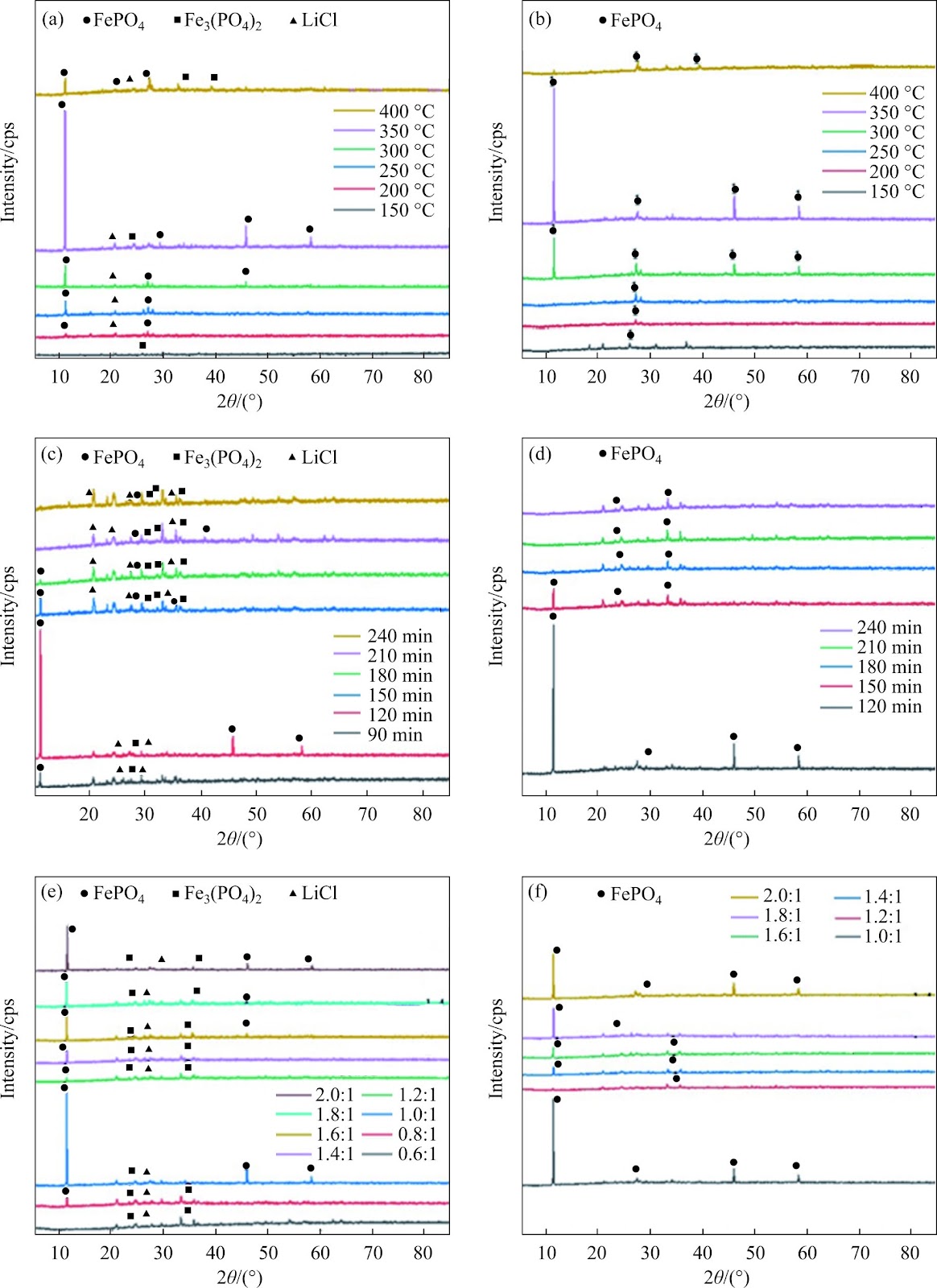
The recovery of lithium from spent lithium-ion batteries (LIBs) is of great importance in addressing lithium shortages and environmental issues. In this study, a novel and clean process for selective separation of lithium from spent LiFePO4 cathode material by low temperature oxidative roasting and water leaching was proposed. The effect of several important factors, such as roasting temperature, roasting time, and molar ratio of ferric chloride (FeCl3∙6H2O) to lithium iron phosphate (LFP), on the leaching efficiency of lithium and iron was systematically investigated by using single factor experimental method. The results show that approximately 97.1% lithium element was recovered by being converted to water-soluble LiCl at a roasting temperature 350 ℃, a roasting time 120 min and a FeCl3∙6H2O/LFP molar ratio of 1:1, and iron element was enriched in the leaching residue in the form of insoluble FePO4. High-purity lithium carbonate products could be prepared from the leching solution by adding Na2CO3 after removing iron. The establishment of new cleaning process can provide a scalable, environmentally friendly and simple way to recover valuable metals from spent LFP batteries.

A novel and clean process for selective recovery of lithium from spent LiFePO4 cathode material by oxidative roasting-water leaching process
Graphical Abstract
Original ResearchVol. 32, Issue 10 • pp. 3693-3707DOI: 10.1007/s11771-025-6095-zJan 15, 2025

Effect of rolling passes on AZ31 Mg alloy subjected to cross-rolling and cryogenic treatment

Authors: LU Li-wei, PANG Hao-ran, SHEN Tian-yuan, XI Yu-ze, WU Yu-juan, WANG Wen, JING Lei, LIU Gang

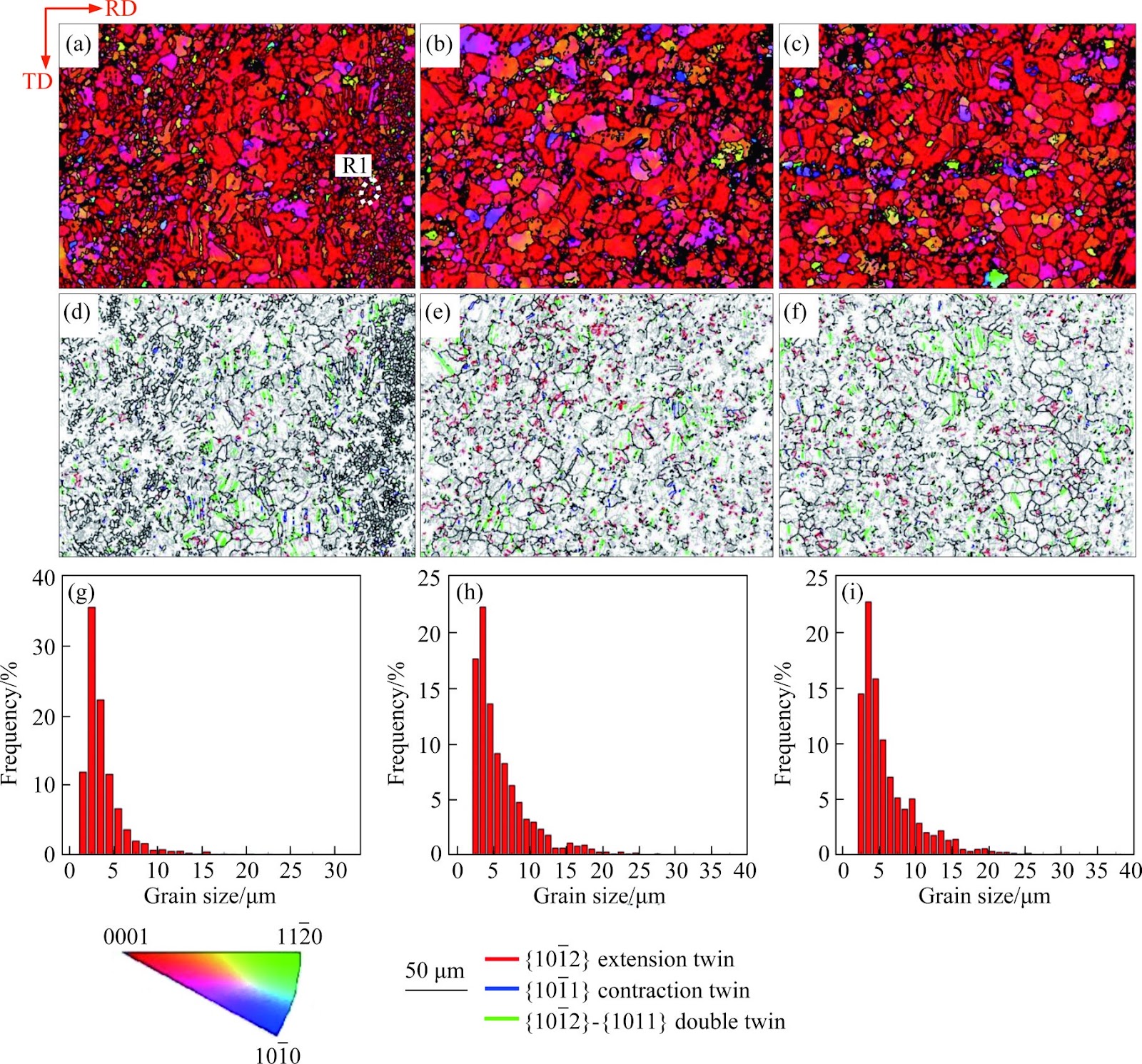
In this paper, the multi cross-rolling and cryogenic treatment were adopted to process the AZ31 Mg alloy to study the influence of passes and cryogenic treatment on cross-rolled AZ31 Mg alloy. The tensile properties and hardness were tested. The microstructure was characterized using electron backscatter diffraction (EBSD), transmission electron microscopy (TEM), and scanning electron microscopy (SEM) in order to elucidate the influencing mechanism. The results indicate that the treatment method can significantly improve the mechanical properties of AZ31 Mg alloy. The 3-pass sample processed by cryogenic treatment shows the highest strength (351 MPa) and has the highest hardness (76.1HV) and best hardness uniformity (standard deviation=0.9HV). The 2-pass sample has the highest ductility among all the samples but poor hardness evenness. The strengthening mechanism of 3-pass sample can be attributed to the fine grains, bimodal structure, high dislocation density, and precipitation strengthening. Due to repeated heat preservation of 4-pass and 5-pass, their comprehensive performances decrease.

Effect of rolling passes on AZ31 Mg alloy subjected to cross-rolling and cryogenic treatment
Graphical Abstract