Key Takeaways & Executive Findings
- •• Increasing joint roughness enhances axial strength and peak strain in true triaxial compression. • Axial strength shows a non-monotonic trend with inclination angle: decreases from 30° to 60° then increases to 90°. • Failure mode depends on joint strike relative to principal stresses: parallel to intermediate stress leads to matrix or mixed shear failure, while parallel to minimum stress leads to matrix shear failure. • Acoustic emission analysis reveals that crack number and shear crack percentage increase with roughness and vary non-monotonically with inclination angle.
Abstract
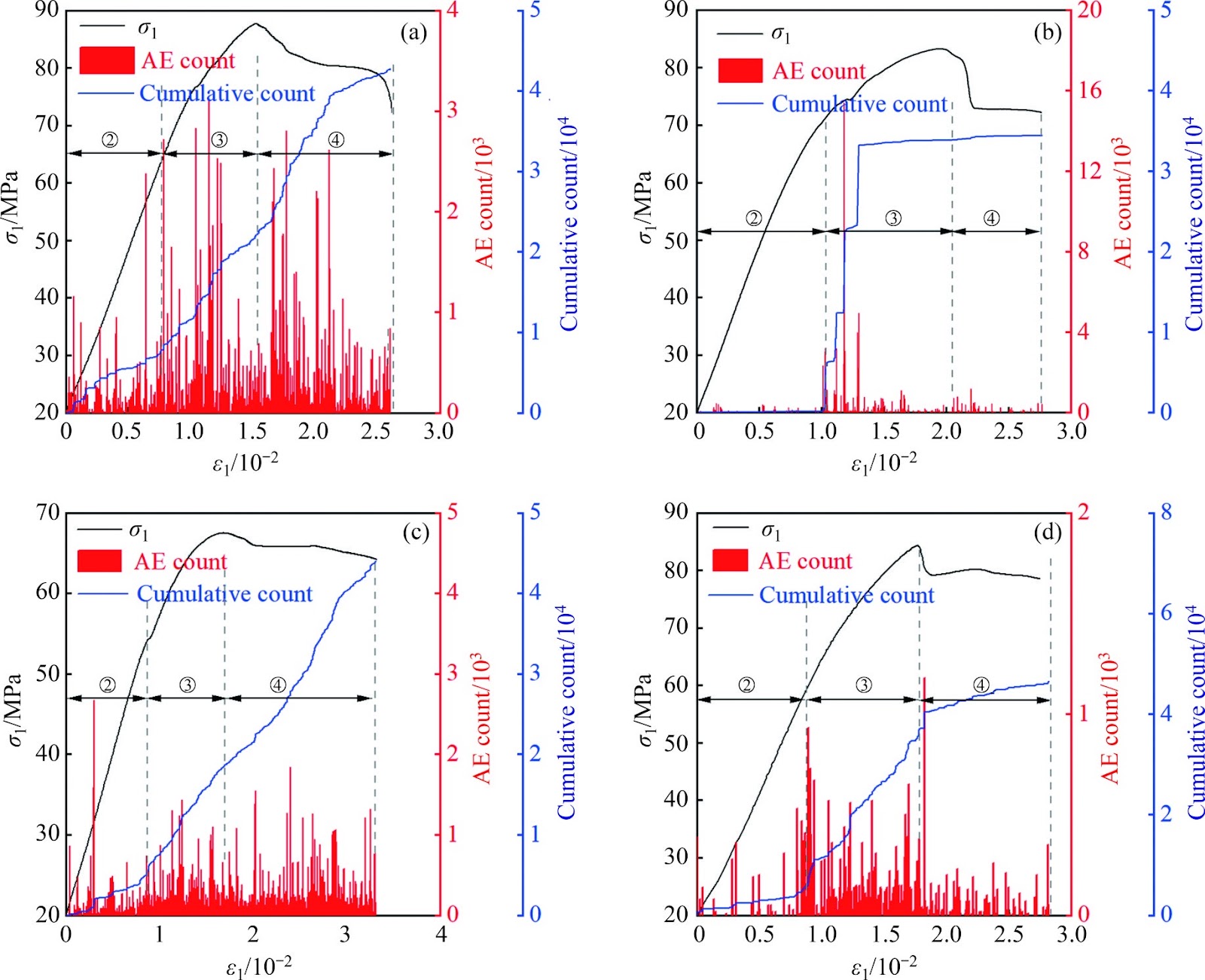
Rock-like specimens containing a joint with different inclination angles and roughness were prepared using 3D printing technology. Then, true triaxial compression loading experiments were conducted on those jointed specimens. The increase in roughness leads to an increase in the axial strength and peak strain. With the increasing inclination angle, the axial strength initially decreases from 30° to 60° and then increases from 60° to 90°. While the peak strain first rises from 30° to 45° and then declines from 45° to 90°. The variation in failure mode results from differences in lateral stress on the joints under different strike directions. Specimens with joint strike parallel to the intermediate principal stress predominantly showed matrix or matrix-joint mixed shear failure, whereas those parallel to the minimum principal stress exhibited matrix shear failure. The analysis results of acoustic emission signals indicate the crack number and shear crack percentage increase with the increasing roughness and first decrease (30° to 60°), then increase (60° to 90°) with the increasing inclination angle. The research results can provide some guidance for the design and support of underground engineering with jointed surrounding rock.
1. Introduction
Numerous discontinuities, such as beddings, faults and joints, are generated under various geological movements [1−3]. Those discontinuities will likely induce geological hazards when excavation works are carried out near the rock mass containing them [4, 5]. As widely existing discontinuities in rock mass, joints play a major role in controlling the deformation and failure of rock mass [6, 7]. Therefore, the effect of joints on the mechanical and failure characteristics of rock is always a focus in geotechnical engineering.
For slope engineering and shallow-buried rock mass engineering, the load on the joint upper wall is small, and the instability of the jointed rock is mainly manifested as a shear slip along the joint plane [8, 9]. The present research on rough jointed rock (RJR) specimens mainly focuses on the shear behavior of rough joints under different loading methods [10, 11], boundary conditions [12, 13] and filling conditions [14 −17]. For deep-buried rock mass engineering, the higher ground stress environment of the jointed rock makes the mechanical deformation and fracture characteristics of jointed rock mass more complex [18, 19]. However, the normal stress applied on the joint in the direct shear test is usually small (<20 MPa); besides, the influence of joint dip angle (α) is not considered, which cannot reflect the stress state and occurrence condition of deep buried jointed rock mass [20, 21].
Therefore, many experimental and numerical studies on the jointed rock under a high-stress state have been carried out, and some conclusions have been proposed. ASADIZADEH et al [21, 22] conducted uniaxial compression tests on rock-like specimens containing two rough closed joints. The results showed that mechanical properties were positively correlated with joint roughness coefficient (JRC). LIU et al [23] carried out uniaxial compression experiments on granite specimens with “Y” shaped cross joint specimens with fixed dip angle and different JRC, and the results showed that the variation of JRC greatly changed the fracture mode of the specimen. INDRARATNA et al [24] used gypsum specimens containing saw-tooth joints to study the effects of filling thickness and water content on the shear strength of filled joints under different confining pressure conditions. SAADAT et al [25] used the discrete element method to carry out a numerical simulation of the conventional triaxial compression (CTC) of jointed rock with different JRC and found that the rock matrix would produce tension cracks into
Loading authentic research manuscript (Pages 1–5)...
LIU Han-xiang, JING Hong-wen, YUAN Yong, YIN Qian, WEN Fan, LI Bo (2025). Mechanical response and failure mechanism of inclined rough jointed rock under true triaxial compression loading. Journal of Central South University. https://doi.org/10.1007/s11771-025-6085-1
Research & Educational Purpose Only:The translations, structured abstracts, analytical annotations, and data reports provided by SinoTechIntel are intended exclusively for academic research, internal corporate R&D, and educational benchmarking. They do not constitute formal engineering, chemical safety, legal, or professional advice.
Copyright & Intellectual Property Notice: Original copyright of the underlying source articles and experimental data remains with the respective authors, institutions, and original publishing journals. SinoTechIntel claims intellectual property only over its proprietary translations, analytical syntheses, and AEO structured enhancements in accordance with international fair use and academic citation principles.
Frequently Asked Questions
What is the effect of joint roughness on the mechanical properties of jointed rock under true triaxial compression?
Increasing joint roughness leads to an increase in both axial strength and peak strain, as observed in the study.
How does the inclination angle affect the axial strength of jointed rock?
The axial strength initially decreases from 30° to 60° and then increases from 60° to 90° with increasing inclination angle.
What are the typical failure modes observed in the jointed rock specimens?
Failure modes vary with joint strike: specimens with joint strike parallel to the intermediate principal stress predominantly showed matrix or matrix-joint mixed shear failure, while those parallel to the minimum principal stress exhibited matrix shear failure.
How does acoustic emission analysis contribute to understanding the failure mechanism?
Acoustic emission analysis indicates that the crack number and shear crack percentage increase with increasing roughness and vary non-monotonically with inclination angle, providing insights into the failure process.
What is the practical significance of this research?
The research results provide guidance for the design and support of underground engineering structures in jointed surrounding rock, particularly under high-stress conditions.
Related Technical Papers & Translations
Direct Repair of the Crystal Structure and Coating Surface of Spent LiFePO4 Materials Enables Superfast Li-Ion Migration
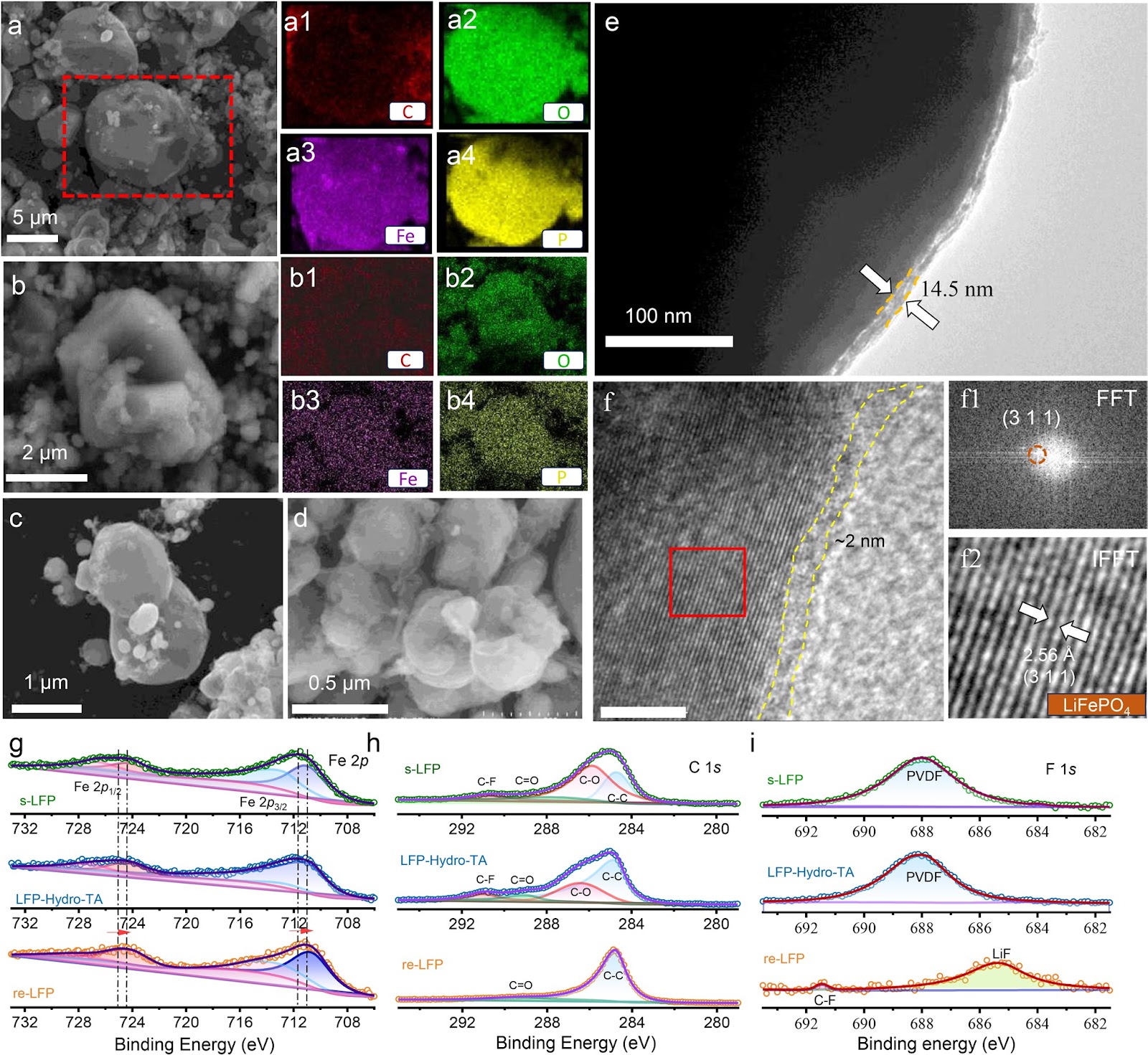
The rapid accumulation of spent LiFePO4 (LFP) cathodes from retired lithium-ion batteries necessitates the development of effective and environmental-friendly recycling strategies. In this context, direct regeneration has emerged as a promising approach for reclaiming LFP cathode materials, offering a streamlined pathway to restore their electrochemical functionality. We report an integrated regeneration protocol that simultaneously repairs the degraded crystal structure and reconstructs the damaged carbon coating in spent LFP. The regenerated cathode material had superfast lithium-ion diffusion kinetics and a stable cathode–electrolyte interface, giving a remarkable rate capability with specific capacities of 122 mAh g−1 at 5C and 106 mAh g−1 at 10C (1C = 170 mA g−1). It also maintained capacities of 110.7 mAh g−1 (5C) and 84.1 mAh g−1 (10C) after 400 cycles. It could be used in harsh environments and could be stably cycled at subzero temperatures (−10 and −20 °C) and in solid-state electrolyte batteries. Life cycle assessment combined with economic evaluation using the EverBatt model reveals that this direct regeneration approach has high economic and environmental benefits.
Oxide Semiconductor for Advanced Memory Architectures: Atomic Layer Deposition, Key Requirement and Challenges
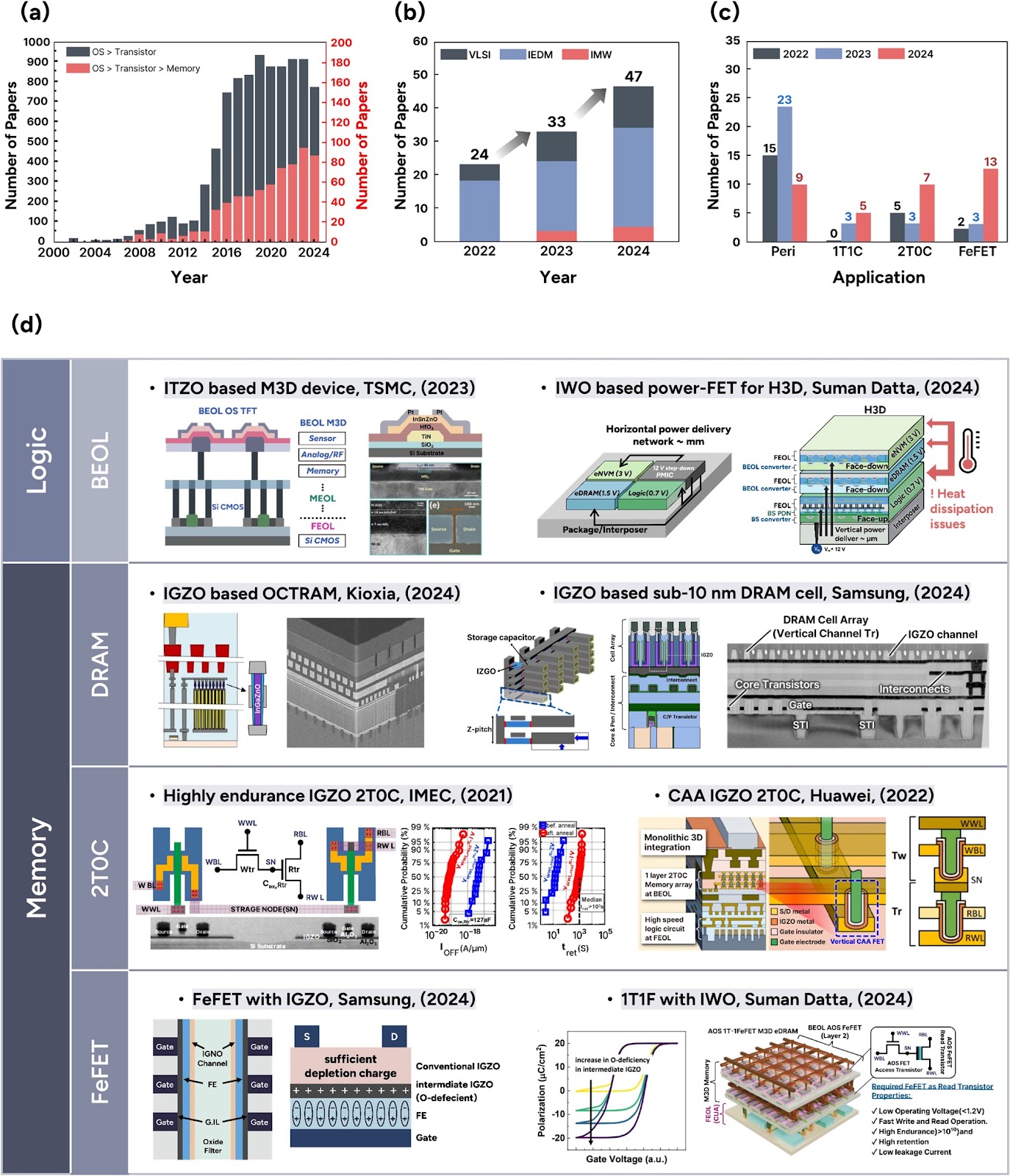
Oxide semiconductors (OSs), introduced by the Hosono group in the early 2000s, have evolved from display backplane materials to promising candidates for advanced memory and logic devices. The exceptionally low leakage current of OSs and compatibility with three-dimensional (3D) architectures have recently sparked renewed interest in their use in semiconductor applications. This review begins by exploring the unique material properties of OSs, which fundamentally originate from their distinct electronic band structure. Subsequently, we focus on atomic layer deposition (ALD), a core technique for growing excellent OS films, covering both basic and advanced processes compatible with 3D scaling. The basic surface reaction mechanisms—adsorption and reaction—and their roles in film growth are introduced. Furthermore, material design strategies, such as cation selection, crystallinity control, anion doping, and heterostructure engineering, are discussed. We also highlight challenges in memory applications, including contact resistance, hydrogen instability, and lack of p-type materials, and discuss the feasibility of ALD-grown OSs as potential solutions. Lastly, we provide an outlook on the role of ALD-grown OSs in memory technologies. This review bridges material fundamentals and device-level requirements, offering a comprehensive perspective on the potential of ALD-driven OSs for next-generation semiconductor memory devices.
Laser powder bed fusion of biodegradable Zn-4Cu alloy: Processing, microstructure and properties
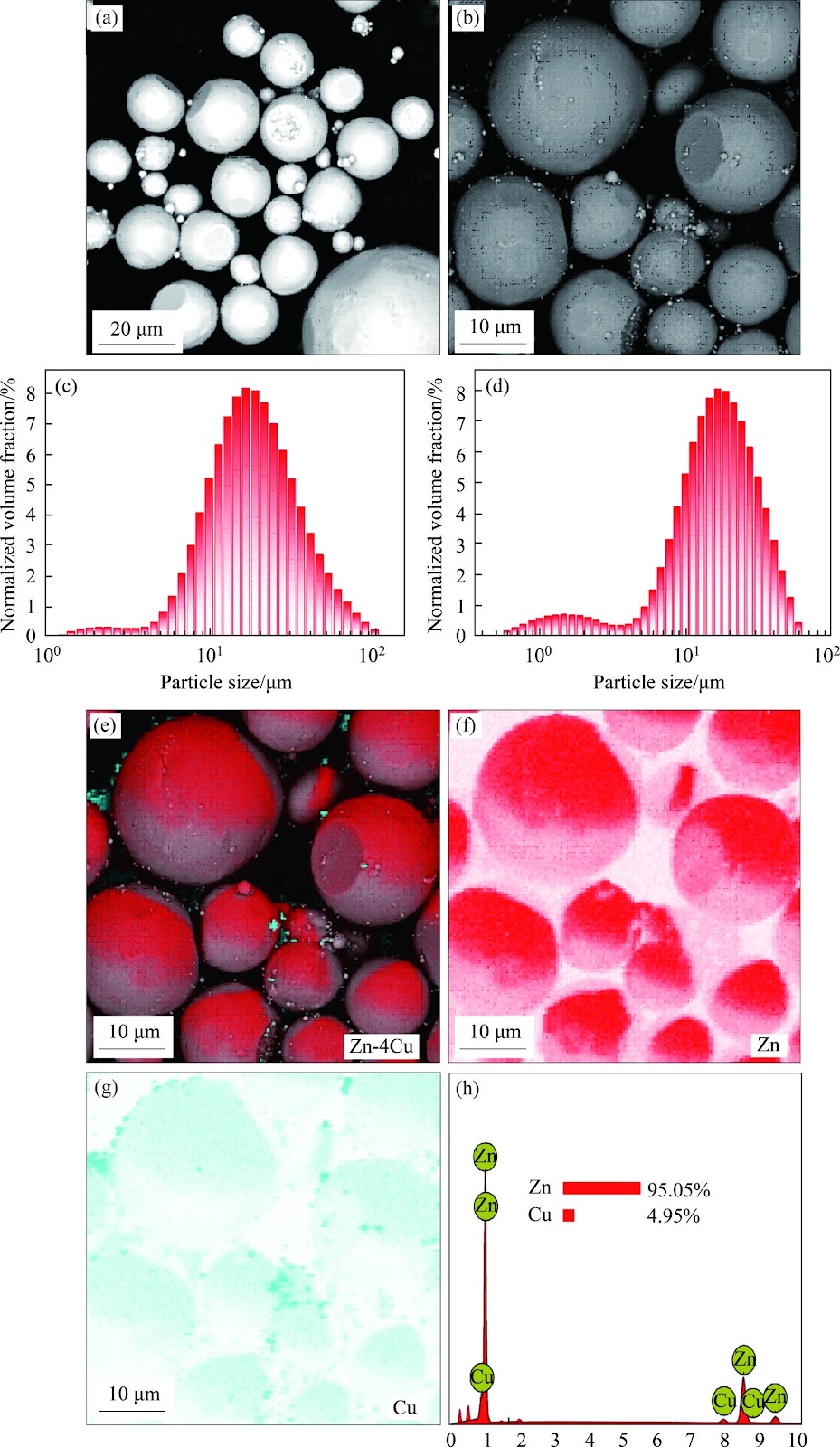
Zn's natural degradability and biocompatibility make it a promising candidate for implants, however, its mechanical properties remain insufficient for bone applications. In this study, the performance of Zn was enhanced by developing Zn-Cu alloys via laser powder bed fusion (LPBF). Optimal LPBF parameters for forming stable tracks were achieved by adjusting laser power and scanning speed. Under optimized conditions of 100 W and 100 mm/s, high-density (99.58%) Zn-Cu alloys with improved hardness (68.2HV) and yield strength (160 MPa) were achieved. These improvements are attributed to solid solution strengthening, segregation strengthening, and grain refinement. The Zn-Cu alloys also demonstrated favorable degradation behavior, with a rate of 0.16 mm/year. This degradation is primarily driven by micro-galvanic corrosion between the CuZn5 phase and Zn matrix, along with refined grains and increased grain boundary density. This work demonstrates a viable strategy for fabricating Zn-based implants with enhanced structural integrity and mechanical performance via LPBF.