SinoTechIntel Academic Portal
🏛️ Indexed Academic JournalImpact Factor: 3.8

Int. Journal of Mining Science and Technology (采矿与安全工程)

Authoritative peer-reviewed journal in materials science, metallurgy, chemistry and engineering technologies: Int. Journal of Mining Science and Technology (采矿与安全工程)

Total Research Papers: 147
Access: 100% Free Open Access
Browse by Publication Year & VolumeReset All Filters ✕

Published Research PapersFiltered: Year 2025 • Vol. 32 • 11

Showing 6 of 147 peer-reviewed papers with full Graphical Abstracts.

Original ResearchVol. 32, Issue 11 • pp. 100-112DOI: 10.1016/j.ijmst.2025.11.001Jan 15, 2025

Mechanical mechanism of unconventional asymmetric failure in mining roadways: A joint research on crack propagation and engineering fracture

Authors: Zongyu Ma, Jianping Zuo, Chengyi Xu, Yiming Jiang

It is of great significance to study the failure mode of mining roadways for safe coal mining. The unconventional asymmetric failure (UAF) phenomenon was discovered in the 9106 ventilation roadway of Wangzhuang coal mine in Shanxi Province. The main manifestation is that the deformation of the roadway on the coal side is much greater than that on the coal pillar side. A comprehensive study was conducted on on-site detection, theoretical analysis, laboratory tests and numerical simulation of the UAF phenomenon. On-site detection shows that the deformation of the coal sidewall can reach 50–80 cm, and the failure zone depth can reach 3 m. The deformation and fracture depth on the coal pillar side are much smaller than those on the coal side. A calculation model for the principal stress of surrounding rock when the axial direction of the roadway is inconsistent with the in-situ stress field was established. The distribution of the failure zone on both sides of the roadway has been defined by the combined mining induced stress. The true triaxial test studied the mechanical mechanism of rock mass fracture and crack propagation on both sides of the roadway. The research results indicate that the axial direction, stress field distribution, and mining induced stress field distribution of the roadway jointly affect the asymmetric failure mode of the roadway. The angle between the axis direction of the roadway and the maximum horizontal stress field leads to uneven distribution of the principal stress field on both sides. The differential distribution of mining induced stress exacerbates the asymmetric distribution of principal stress in the surrounding rock. The uneven stress distribution on both sides of the roadway is the main cause of UAF formation. The research results can provide mechanical explanations and theoretical support for the control of surrounding rock in roadways with similar failure characteristics.
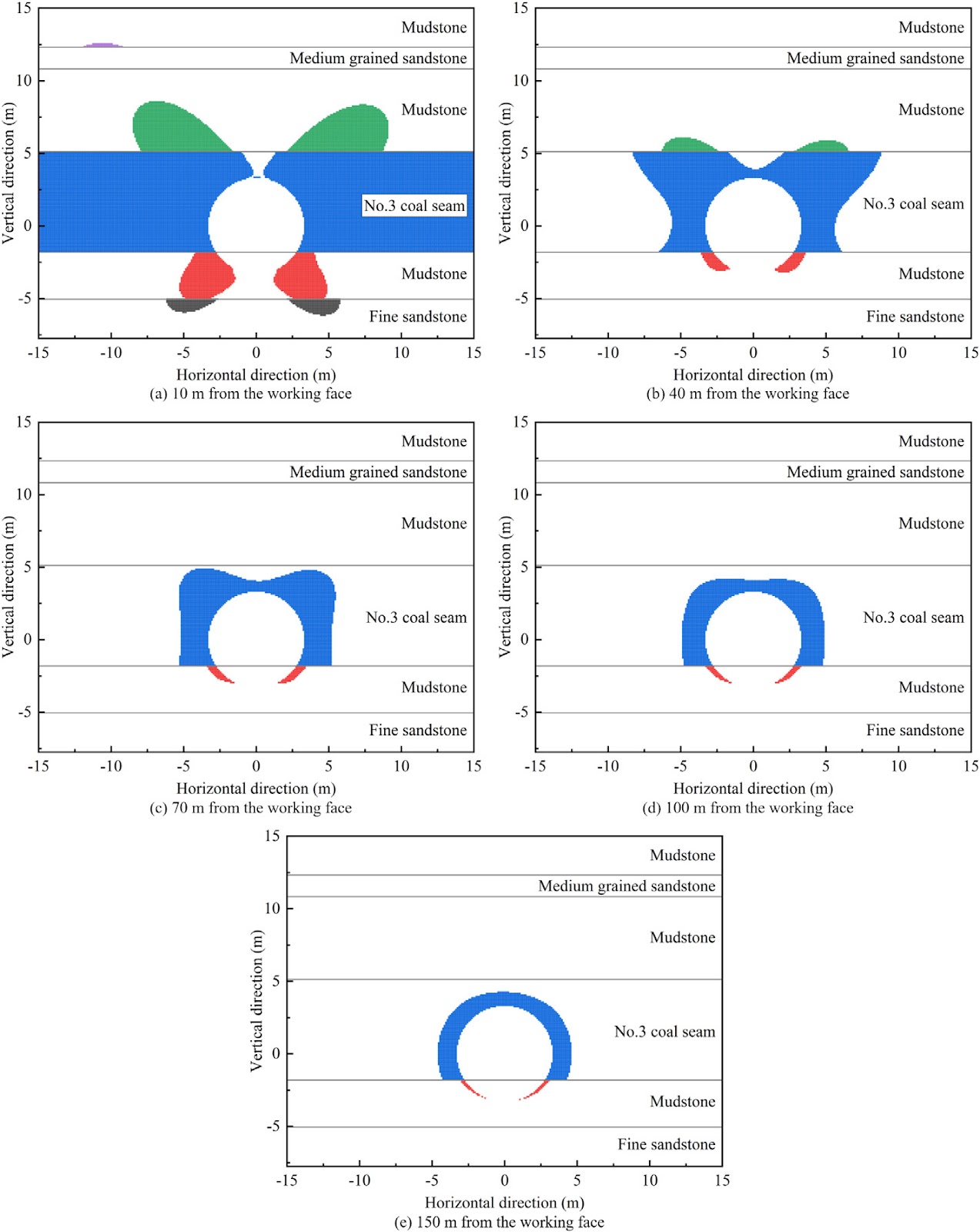
Mechanical mechanism of unconventional asymmetric failure in mining roadways: A joint research on crack propagation and engineering fracture
Graphical Abstract
Original ResearchVol. 32, Issue 11 • pp. 100-112DOI: 10.1016/j.ijmst.2025.11.002Jan 15, 2025

Theoretical investigation on the initiation and propagation behavior of dominant cracks in valley slopes

Authors: Xianlun Leng, Chuan Wang, Chengtang Wang, Zhanrong Zhang, Haibin Wang, Lan Cui, Kun Fang

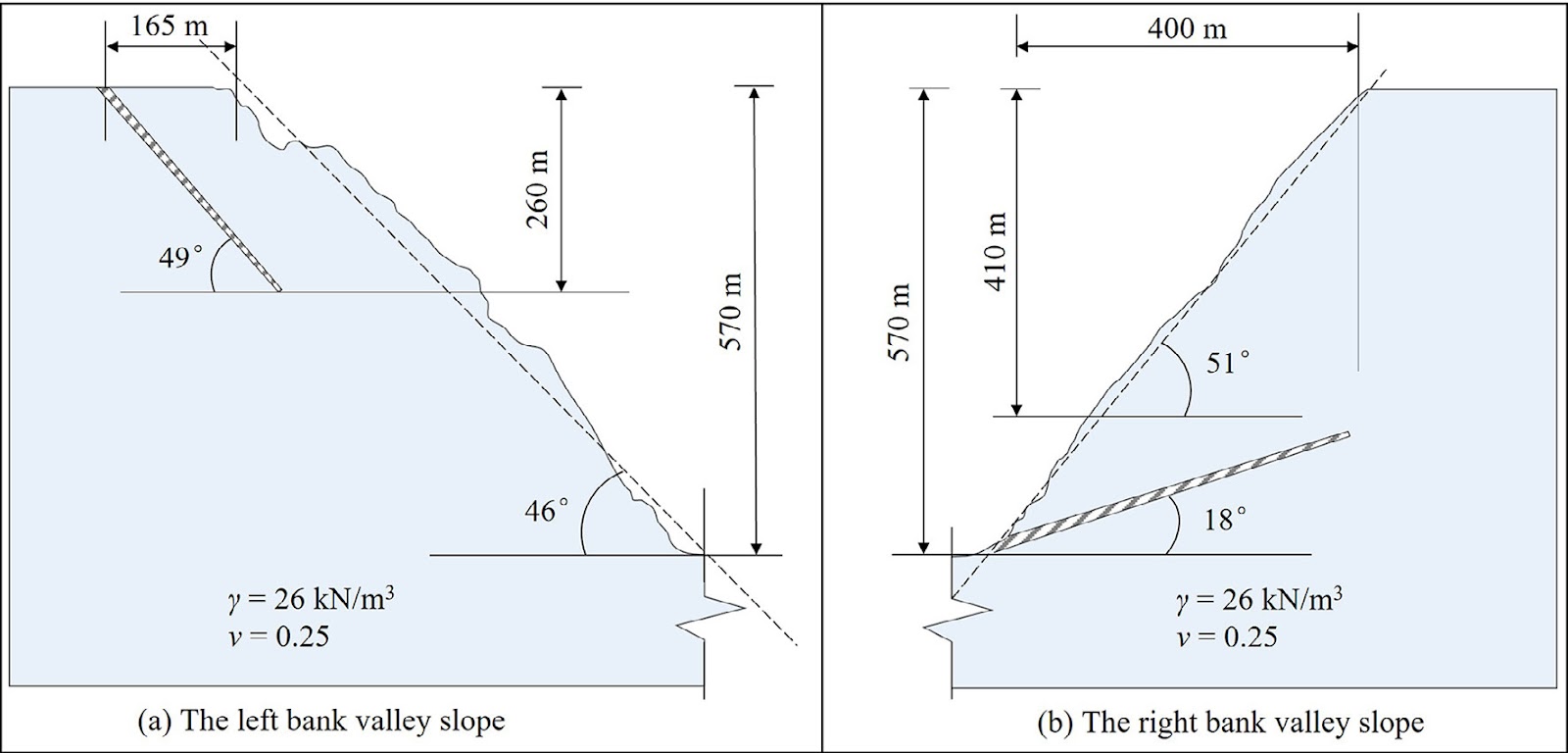
The stability of rock slopes is frequently controlled by the initiation and propagation of inherent dominant cracks. This study systematically investigated these processes in valley slopes by combining fracture-mechanics analysis with transparent soil model tests. An analytical expression for the stress field at the dominant crack tip was derived from the slope stress distribution by superposing the corresponding stress intensity factors (SIFs). The theoretical predictions were then validated against observations from transparent soil model tests. The influences of slope angle (β), crack inclination angle (α), crack position parameter (b), and crack length parameter (l) on crack initiation and propagation were quantified. The results indicated that: (1) cracks at the slope crest tended to propagate in shear mode, and the shear crack initiation angle (θs) was approximately 8°. Cracks at the slope toe might propagate in either tensile or shear mode. (2) θs at the slope crest increased with β, b, and l, and decreased with α. The maximum change in θs induced by the considered parameters was approximately 30°. (3) The tensile crack initiation angle (θt) at the slope toe decreased with β, α, and l, while the influence of b was comparatively minor. The maximum change in θt caused by individual parameters ranged approximately from 25° to 60°. Predicted crack propagation modes and directions showed good agreement with experimental results. These findings provide theoretical guidance for stability assessments of valley slopes controlled by dominant crack propagation.

Theoretical investigation on the initiation and propagation behavior of dominant cracks in valley slopes
Graphical Abstract
Original ResearchVol. 32, Issue 11 • pp. 100-112DOI: 10.1016/j.ijmst.2025.11.006Jan 15, 2025

Experimental study on damage evolution and failure precursor characteristics of granite under thermal shock cycles

Authors: Zhenjiang Huang, Mingxuan Shen, Yu Zhao, Chaolin Wang, Jing Bi, Yongfa Zhang, Shuang Dang, Yuhang Zhao

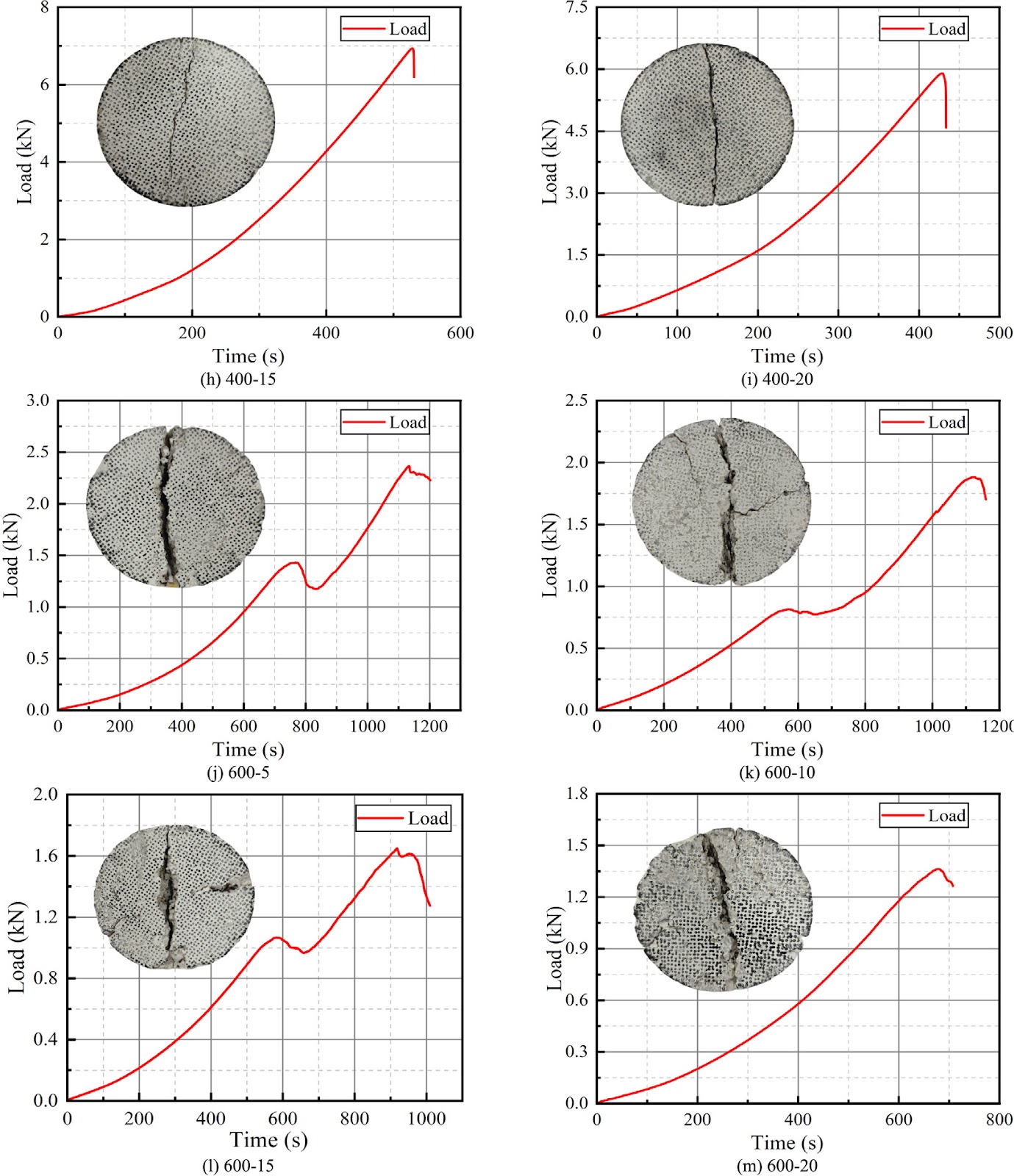
Investigating the damage evolution of surrounding rock under thermal shock cycles is crucial for ensuring the stability of engineering rock masses. This study performed Brazilian splitting tests on granite specimens under varying temperature and cycle conditions, employing acoustic emission monitoring, digital image correlation, and three-dimensional scanning technology. A systematic analysis was conducted on the patterns of damage evolution, failure precursor, and response mechanisms under combined thermal and cyclic loading. Experimental results show that both P-wave velocity and tensile strength degrade significantly with increasing temperature and cycle count, with temperature having a more pronounced effect than cycle count. Notably, damage evolution exhibits a dual-threshold behavior in which degradation accelerates markedly above 400 °C and stabilizes after 5 thermal cycles. Fracture surfaces evolve from initially planar to rugged morphologies, with peak-valley height differences at 600 °C being approximately three times greater than those at 200 °C. Furthermore, based on acoustic emission energy entropy analysis, we introduce a novel failure precursor indicator where the sustained increase and critical surge in average entropy serve as reliable early-warning signals for impending rock failure. These findings establish a solid theoretical basis and practical methodology for damage assessment and instability early-warning systems in high-temperature rock engineering.

Experimental study on damage evolution and failure precursor characteristics of granite under thermal shock cycles
Graphical Abstract
Original ResearchVol. 32, Issue 11 • pp. 100-112DOI: 10.1016/j.ijmst.2025.11.009Jan 15, 2025

Spatial Response and Prediction Model for Blasting-Induced Vibration in a Deep Double-Line Tunnel

Authors: Chong Yu, Yongan Ma, Haibo Li, Changjian Wang, Haibin Wang, Linghao Meng

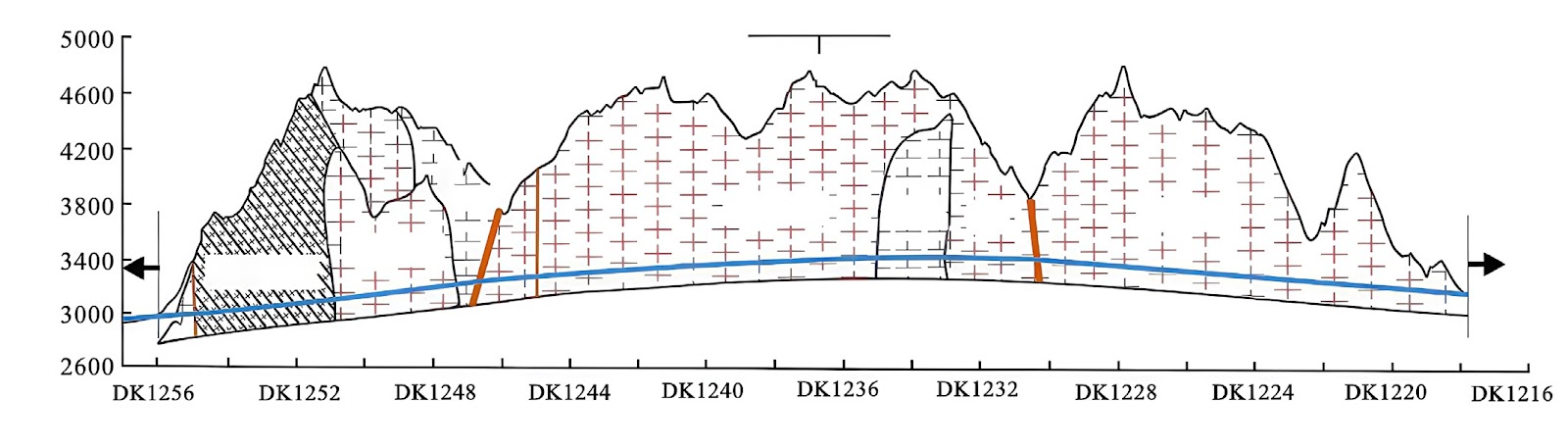
Excessive blasting-induced vibration during drilling-and-blasting excavation of deep tunnels can trigger geological hazards and compromise the stability of both the rock mass and support structures. This study focused on the deep double-line Sejila Mountain tunnel to systematically analyze the spatial response of blasting-induced vibration and to develop a prediction model through field tests and numerical simulations. The results revealed that the presence of a cross passage significantly altered propagation paths and the spatial distribution of blasting-induced vibration velocity. The peak particle velocity (PPV) at the cross-passage corner was amplified by approximately 1.92 times due to wave reflection and geometric focusing. Blasting-induced vibration waves attenuated non-uniformly across the tunnel cross-section, where PPV on the blast-face side was 1.54–6.56 times higher than that on the opposite side. We propose an improved PPV attenuation model that accounts for the propagation path effect. This model significantly improved fitting accuracy and resolved anomalous parameter (k and a) estimates in traditional equations, thereby improving prediction reliability. Furthermore, based on the observed spatial distribution of blasting-induced vibration, optimal monitoring point placement and targeted vibration control measures for tunnel blasting were discussed. These findings provide a scientific basis for designing blasting schemes and vibration mitigation strategies in deep tunnels.

Spatial Response and Prediction Model for Blasting-Induced Vibration in a Deep Double-Line Tunnel
Graphical Abstract
Original ResearchVol. 32, Issue 11 • pp. 100-112DOI: 10.1016/j.ijmst.2025.11.005Jan 15, 2025

Guest Editorial to the Special Issue Deep-Sea Mining and Environmental Protection

Authors: Xingsen Guo, Xiaolei Liu, Yonggang Jia, Rita Leal Sousa, Dongfang Liang, Thorsten Stoesser, Eckart Meiburg

The global transition to green energy has created an unprecedented demand for critical metals and energy resources such as cobalt, nickel, copper, manganese, rare earth elements, and gas hydrates. Deep-sea mineral and energy resources are increasingly viewed as essential supplements to terrestrial supply bottlenecks and as strategic safeguards for the future low-carbon economy. However, deep-sea mining, as a frontier industry characterized by high technology, high investment, and high risk, faces multiple challenges, including technological complexity, substantial capital requirements, and potentially irreversible environmental impacts on unique and fragile deep-sea ecosystems. This Special Issue of the International Journal of Mining Science and Technology, titled Deep-Sea Mining and Environmental Protection, presents research on high-fidelity sediment sampling and sediment dynamics; technological innovations in deep-sea mining and equipment development; and environmental monitoring systems and geo-hazard assessment. Contributions from China, Canada, the UAE, Thailand, the UK, Vietnam, Germany, India, and Indonesia highlight the global, interdisciplinary nature of deep-sea resource and environmental studies. The issue provides engineers, geoscientists, and policy-makers with theoretical insights and practical tools to promote sustainable ocean resource development while protecting marine environments.

Guest Editorial to the Special Issue Deep-Sea Mining and Environmental Protection
Graphical Abstract
Original ResearchVol. 32, Issue 11 • pp. 100-112DOI: 10.1016/j.ijmst.2025.11.004Jan 15, 2025

Characterization of the Susceptibility of Ore Particles to Breakdown in High Voltage Pulse Breakage and the Influencing Factors

Authors: Rui Sun, Yang Hong, Daqian Wang, Liang Si, Jianguo Yang, Wei Huang, Liefeng Huang, Weiran Zuo

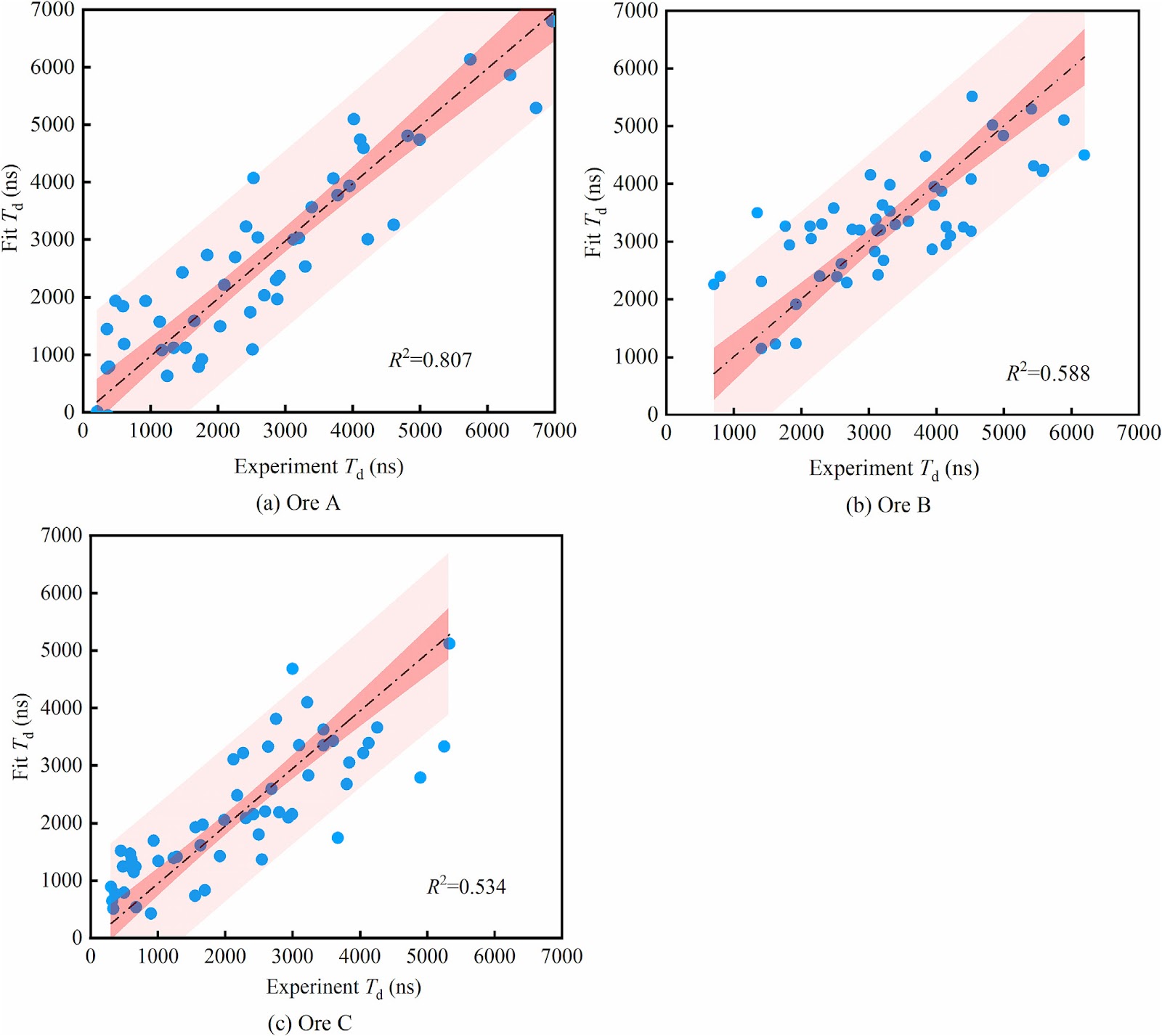
The susceptibility of ore particles to electrical breakdown plays a critical role for high voltage pulse (HVP) breakage, yet its quantitative characterization still lacks deep understanding. Two indicators, namely breakdown delay time (Td) and breakdown strength (Eb) were compared, based on analysis on the two breakdown modes namely wavefront mode and post-wave mode. It was found that Td is more suitable to characterize the susceptibility of ore particles to electrical breakdown in HVP breakage than Eb. A probabilistic model based on the Weibull distribution is developed to describe the relation of breakdown probability to Td. Regression analyses were conducted to investigate how operating parameters and particle properties influence Td and size reduction degree of ore particles in HVP breakage. The regressed models demonstrate potential capability to predict metallic minerals content and HVP breakage degree based on operating parameters and particle properties.

Characterization of the Susceptibility of Ore Particles to Breakdown in High Voltage Pulse Breakage and the Influencing Factors
Graphical Abstract