SinoTechIntel Academic Portal
🏛️ Indexed Academic JournalImpact Factor: 3.8

Int. Journal of Minerals, Metallurgy and Materials (矿物冶金与材料学报)

Authoritative peer-reviewed journal in materials science, metallurgy, chemistry and engineering technologies: Int. Journal of Minerals, Metallurgy and Materials (矿物冶金与材料学报)

Total Research Papers: 200
Access: 100% Free Open Access
Browse by Publication Year & VolumeReset All Filters ✕

Published Research PapersFiltered: Year 2025 • 32 • 12

Showing 3 of 200 peer-reviewed papers with full Graphical Abstracts.

Original ResearchVol. 32, Issue 12 • pp. 2958DOI: 10.1007/s12613-025-3216-5Jan 15, 2025

Chelating extraction of critical metals from cathode of end-of-life lithium titanium oxide batteries: Experiments, machine learning and validation

Authors: Heewon Kang, Muhammad Farhan, Sohwi Park, Li Cai, Allan Gomez-Flores, Hyunjung Kim

Lithium-ion batteries (LIBs) that reached their end-of-life (EoL) require recycling, rather than disposal, to recirculate valuable metals and protect the environment. This led us to investigate the extraction of metals from the cathodes of EoL lithium-titanate batteries using ethylenediaminetetraacetic acid disodium (EDTA-2Na). In this work, an orthogonal array was used to design experiments and signal-to-noise calculations were used to define the optimal conditions, which were 0.50 mol/L EDTA-2Na, pH = 6, 75°C, 180 min, 2% pulp density, and 300 r/min, resulting in 97.96%, 94.79%, 96.45%, and 98.89% leaching efficiencies for Li, Ni, Co, and Mn, respectively. Statistically significant interactions between variables were then identified using Pearson’s correlation at the 95% confidence interval, and the pH and temperature were found to be significant. The extraction efficiency decreased as the pH increased, but increased as the temperature increased. Machine learning fitting using linear regression for multi-output prediction was unsatisfactory, whereas random forest regression (RFR) produced satisfactory results. Permutation importance was computed on the fitted RFR to determine feature importance, and confirmed that the pH and temperature were influential variables; however, the time and pulp density were also noted. As the fitted RFR failed to satisfactorily predict leaching efficiencies in additional validation experiments, we recommend increasing the number of experiments and using additional fitting models. An additional analysis that included the initial oxidation–reduction potential (optimal 33.3 mV) revealed this to be the most important variable, the effect of which largely overshadows those of all the other variables. Finally, an environmental assessment highlighted the benefits of the chelating extraction; however, the economic assessment indicated room for improvement.
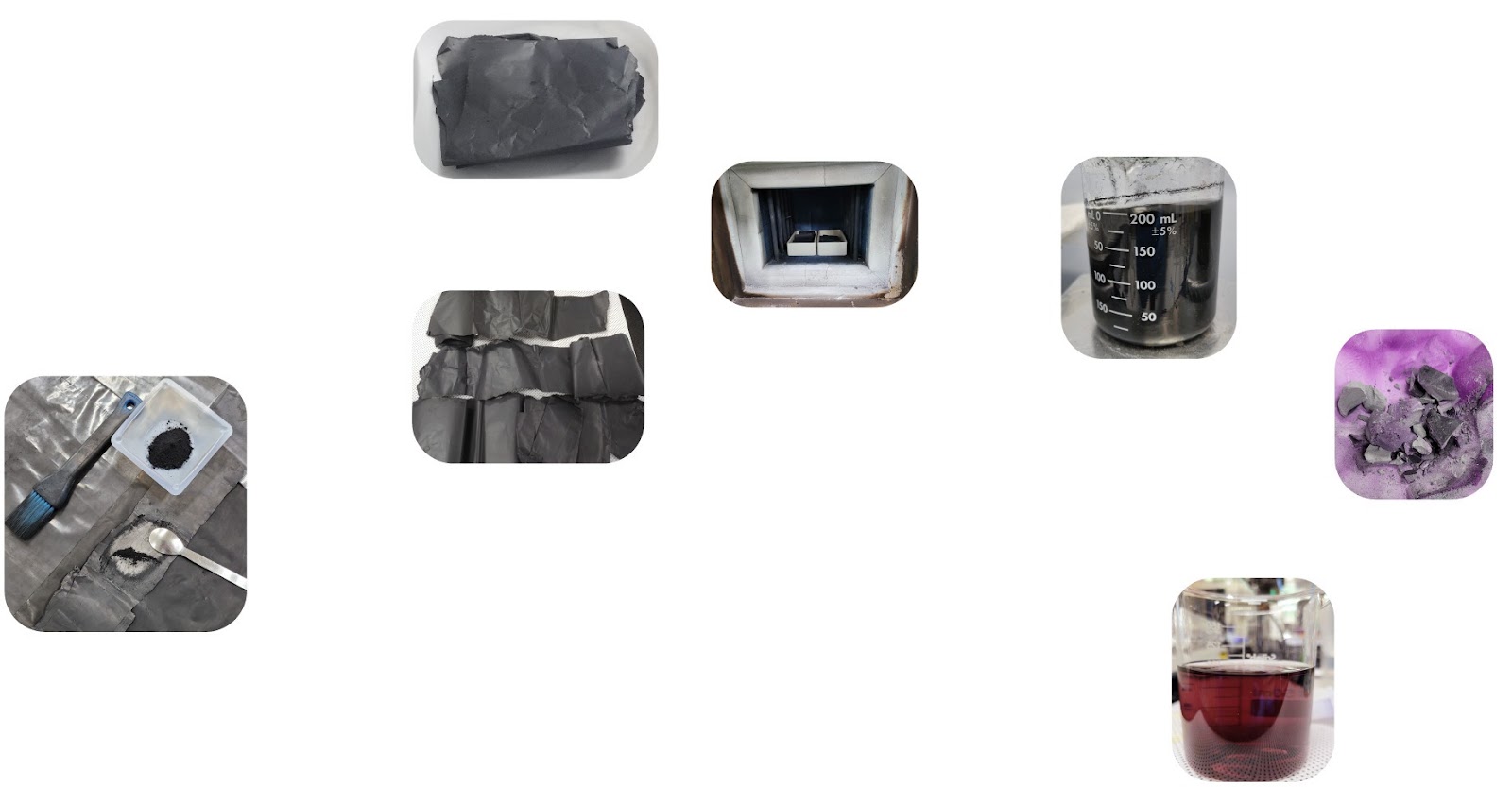

Chelating extraction of critical metals from cathode of end-of-life lithium titanium oxide batteries: Experiments, machine learning and validation
Graphical Abstract
Original ResearchVol. 32, Issue 12 • pp. 2896DOI: 10.1007/s12613-025-3096-8Jan 15, 2025

An in-depth exploration of the performance and influence of rapid dewatering filter aid for red mud slurry

Authors: Le Tao, Yanxiu Wang, Wei Sun, Chengwen Wang, Li Wang, Zhiyong Gao, Tingan Zhang

Red mud is a kind of industrial waste residue produced in the process of alumina production, which has strong suspension and is difficult to precipitate and filter. This study compared the effects of 4 kinds of filter aids, including CaCl2, polymerized ferrous sulfate (PFS), steel slag (SS), and Portland cement (PC), on the filtration rate, filter cake moisture content, and Na2O content of red mud slurry. At a dosage of 10 g·L‒1, the filtration effects were in the following order: PFS > CaCl2 > SS > PC. Under the combination of 5 g·L‒1 SS and 5 g·L‒1 PC, the better filtration effect was achieved with a filtration time of 205.17 s, which was reduced by 58.52% compared to the original red mud. The combined use of SS and PC exhibits better advantages in terms of cost and filtration effect. This study provides a data foundation for the rapid filtration of red mud slurry. The use of SS and PC as filter aids for red mud holds broad application prospects.

An in-depth exploration of the performance and influence of rapid dewatering filter aid for red mud slurry
Graphical Abstract
Original ResearchVol. 32, Issue 12 • pp. 2880DOI: 10.1007/s12613-025-3131-9Jan 15, 2025

Dynamic compressive strength optimization and stemming performance of self-swelling cartridge for rock blasting

Authors: Runran Li, Shuai Xu, Kai Liu

During rock drilling and blasting activities, stemming blast holes is to prevent high-pressure explosive gases from the holes, thereby enhancing the overall blasting effectiveness. Hence, it is imperative to investigate the dynamic mechanical properties of the stemming materials. In this study, impact compression tests were conducted on self-swelling cartridges (SSCs) using a split Hopkinson pressure bar (SHPB), aiming to evaluate dynamic performances across strain rate range of 20 to 65 s−1. Test results indicate that the dynamic compressive strength of SSCs exhibits the following trends: it increases with increasing density of SSC, decreases with an increase in insertion gap, and follows an initial rise and subsequent fall trend with an increase in water absorption. The order of significance among these factors is density > water absorption > insertion gaps. SSCs exhibit a pronounced strain-rate strengthening dependence in dynamic compressive strength. Furthermore, both the compressive peak stress and peak strain of SSCs follow a well-defined quadratic upward trend with increasing strain rates. As the strain rate increases, the degree of fragmentation, absorbed energy, and dynamic increase factor exhibit an upward trend. Model experimental results indicate that, compared to cementitious stemming materials, SSCs can prolong the duration of gas explosion action. Therefore, SSCs are more suitable for high strain-rate applications such as blasting stemming and rock burst control.

Dynamic compressive strength optimization and stemming performance of self-swelling cartridge for rock blasting
Graphical Abstract