SinoTechIntel Academic Portal
🏛️ Indexed Academic JournalImpact Factor: 2.7 (Q2 - Springer)

ENGINEERING Information Technology & Electronic Engineering

2.7 (Q2 - Springer)

Total Research Papers: 153
Access: 100% Free Open Access
Browse by Publication Year & VolumeReset All Filters ✕

Published Research PapersFiltered: Year 2025 • Vol. 32 • Issue 7

Showing 11 of 153 peer-reviewed papers with full Graphical Abstracts.

Original ResearchVol. 32, Issue 7 • pp. 422-434DOI: 10.1631/FITEE_2400453Jul 24, 2025

Minimizing transformer inference overhead using controlling element on Shenwei AI accelerator

Authors: Yulong ZHAO, Chunzhi WU, Yizhuo WANG, Lufei ZHANG, Yaguang ZHANG, Wenyuan SHEN, Hao FAN, Hankang FANG, Yi QIN, Xin LIU

Transformer models have become a cornerstone of various natural language processing (NLP) tasks. However, the substantial computational overhead during the inference remains a significant challenge, limiting their deployment in practical applications. In this study, we address this challenge by minimizing the inference overhead in transformer models using the controlling element on artificial intelligence (AI) accelerators. Our work is anchored by four key contributions. First, we conduct a comp
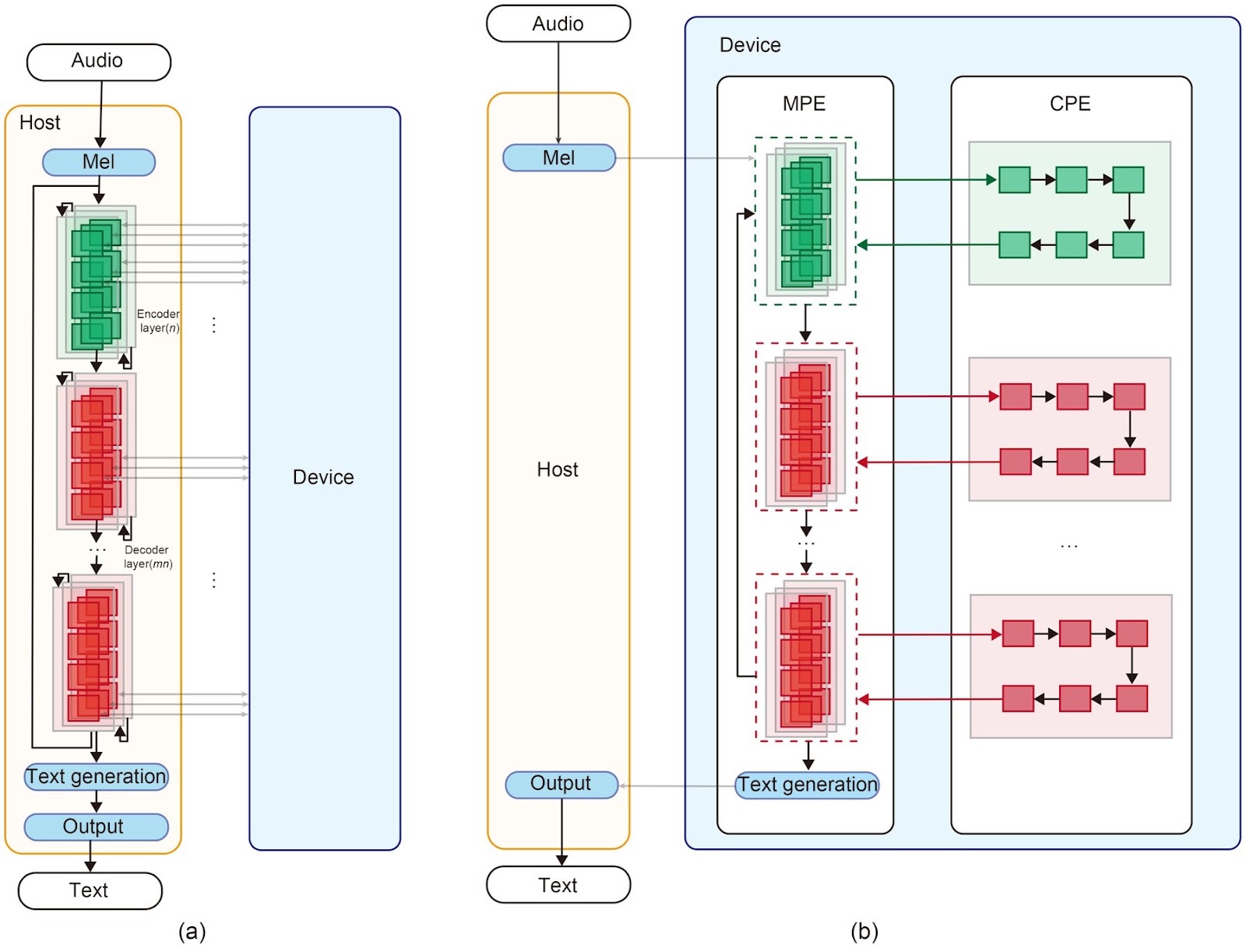
Minimizing transformer inference overhead using controlling element on Shenwei AI accelerator
Graphical Abstract
Original ResearchVol. 32, Issue 7 • pp. 830-842DOI: 10.1631/FITEE_2400449Jul 21, 2025

An Efficient Multi-Bernoulli Filter for Tracking Multiple Maritime Dim Targets

Authors: Liwei Shi, Yunfei Guo, Wenxiong Cui, Yanbo Xue, Yun Chen

For the problem of tracking maritime dim targets, the sequential Monte–Carlo multi-Bernoulli track-before-detect (SMC-MB-TBD) method is popular. However, this method may face low tracking accuracy and tracking loss due to particle impoverishment and velocity uncertainty. In this study, a novel filter called position scaling and velocity correction multi-Bernoulli (PSVC-MB) is proposed to deal with this problem. First, particle position scaling is used to replace resampling in the SMC-MB-TBD meth

An Efficient Multi-Bernoulli Filter for Tracking Multiple Maritime Dim Targets
Graphical Abstract
Original ResearchVol. 32, Issue 7 • pp. 438-450DOI: 10.1631/FITEE_2400700Jul 18, 2025

Design of omnidirectional Rydberg atomic sensors loaded with electric field enhancement structure using characteristic mode analysis

Authors: Zhenke DING, Yi LIU, Bo WU, Kai YANG, Ruibing RAN, Yi LIN, Yunqi FU

The integration of electric field enhancement structures (EFESs) with Rydberg atomic sensors (RASs) has garnered considerable interest due to their potential to enhance detection sensitivity in quantum measurement systems. Despite this, there is a dearth of research on the directional response of EFES, and the analysis of the three-dimensional (3D) patterns of RAS remains a formidable challenge. RASs are employed in non-destructive measurement techniques, and are responsive to electric fields, p

Design of omnidirectional Rydberg atomic sensors loaded with electric field enhancement structure using characteristic mode analysis
Graphical Abstract
Original ResearchVol. 32, Issue 7 • pp. 610-622DOI: 10.1631/ENG_ITEE_2025_0080Jul 16, 2025

Hierarchical algorithm for large-scale irregular packing problems

Authors: Xiao LIU

To address the challenge of large-scale packing problems, this paper proposes a novel hierarchical algorithm based on the geometrical classification of parts. The algorithm begins by classifying parts into three levels based on their area and fullness and then applies distinct packing strategies to each category. An innovative “shape matching” method is introduced, which, together with the “box stacking” (for rectangular parts) and “gravity packing,” forms a comprehensive hierarchical packing sy

Hierarchical algorithm for large-scale irregular packing problems
Graphical Abstract
Original ResearchVol. 32, Issue 7 • pp. 846-858DOI: 10.1631/FITEE_2400994Jul 15, 2025

An adaptive outlier correction quantization method for vision Transformers

Authors: Zheyang LI, Chaoxiang LAN, Kai ZHANG, Wenming TAN, Ye REN, Jun XIAO

Transformers have demonstrated considerable success across various domains but are constrained by their significant computational and memory requirements. This poses challenges for deployment on resource-constrained devices. Quantization, as an effective model compression method, can significantly reduce the operational time of Transformers on edge devices. Notably, Transformers display more substantial outliers than convolutional neural networks, leading to uneven feature distribution among dif

An adaptive outlier correction quantization method for vision Transformers
Graphical Abstract
Original ResearchVol. 32, Issue 7 • pp. 218-230DOI: 10.1631/FITEE_2400406Jul 13, 2025

Significance extraction based on data augmentation for reinforcement learning

Authors: Yuxi HAN, Dequan LI, Yang YANG

Deep reinforcement learning has shown remarkable capabilities in visual tasks, but it does not have a good generalization ability in the context of interference signals in the input images; this approach is therefore hard to be applied to trained agents in a new environment. To enable agents to distinguish between noise signals and important pixels in images, data augmentation techniques and the establishment of auxiliary networks are proven effective solutions. We introduce a novel algorithm, n

Significance extraction based on data augmentation for reinforcement learning
Graphical Abstract
Original ResearchVol. 32, Issue 7 • pp. 626-638DOI: 10.1631/FITEE_2400448Jul 10, 2025

Federated deep reinforcement learning based computation offloading in a low Earth orbit satellite edge computing system

Authors: Min JIA, Jian WU, Xinyu WANG, Qing GUO

Recent studies have shown that system capacity is very important for cellular networks. In this paper, we consider maximizing the weighted sum-rate of the cellular network downlink and uplink, where each cell consists of a full-duplex (FD) base station (BS) and half-duplex (HD) users. Federated learning (FL) can train models in the absence of centralized data, which can achieve privacy protection of user data. A low Earth orbit (LEO) satellite edge computing system (LSECS) can be formed by placi

Federated deep reinforcement learning based computation offloading in a low Earth orbit satellite edge computing system
Graphical Abstract
Original ResearchVol. 32, Issue 7 • pp. 234-246DOI: 10.1631/FITEE_2400530Jul 7, 2025

FedMcon: an adaptive aggregation method for federated learning via meta controller

Authors: Tao SHEN, Zexi LI, Ziyu ZHAO, Didi ZHU, Zheqi LV, Kun KUANG, Shengyu ZHANG, Chao WU, Fei WU

Federated learning (FL) emerged as a novel machine learning setting that enables collaboratively training deep models on decentralized clients with privacy constraints. In the vanilla federated averaging algorithm (FedAvg), the global model is generated by the weighted linear combination of local models, and the weights are proportional to the local data sizes. This methodology, however, encounters challenges when facing heterogeneous and unknown client data distributions, often leading to discr

FedMcon: an adaptive aggregation method for federated learning via meta controller
Graphical Abstract
Original ResearchVol. 32, Issue 7 • pp. 406-418DOI: 10.1631/ENG_ITEE_2025_0110Jul 5, 2025

Design and optimization of a high-efficiency current-biased reverse load modulated power amplifier with impedance and performance constraints

Authors: Zhongpeng NI, Heng ZHANG, Jing XIA, Wence ZHANG, Wa KONG, Chao YU, Xiaowei ZHU

We propose an optimization method based on evolutionary computation for the design of broadband high-efficiency current-biased reverse load-modulation power amplifiers (CB-RLM PAs). First, given the reverse load-modulation characteristics of CB-RLM PAs, a comprehensive objective function is proposed that combines multi-state impedance trajectory constraints with in-band performance deviations. For the saturation and 6 dB power back-off (PBO) states, approximately optimal impedance regions on the

Design and optimization of a high-efficiency current-biased reverse load modulated power amplifier with impedance and performance constraints
Graphical Abstract
Original ResearchVol. 32, Issue 7 • pp. 642-654DOI: 10.1631/FITEE_2500030Jul 4, 2025

A height estimation method based on a beamspace joint alternating iterative algorithm in MIMO radar

Authors: Derui TANG, Yongbo ZHAO, Shuaijie ZHANG

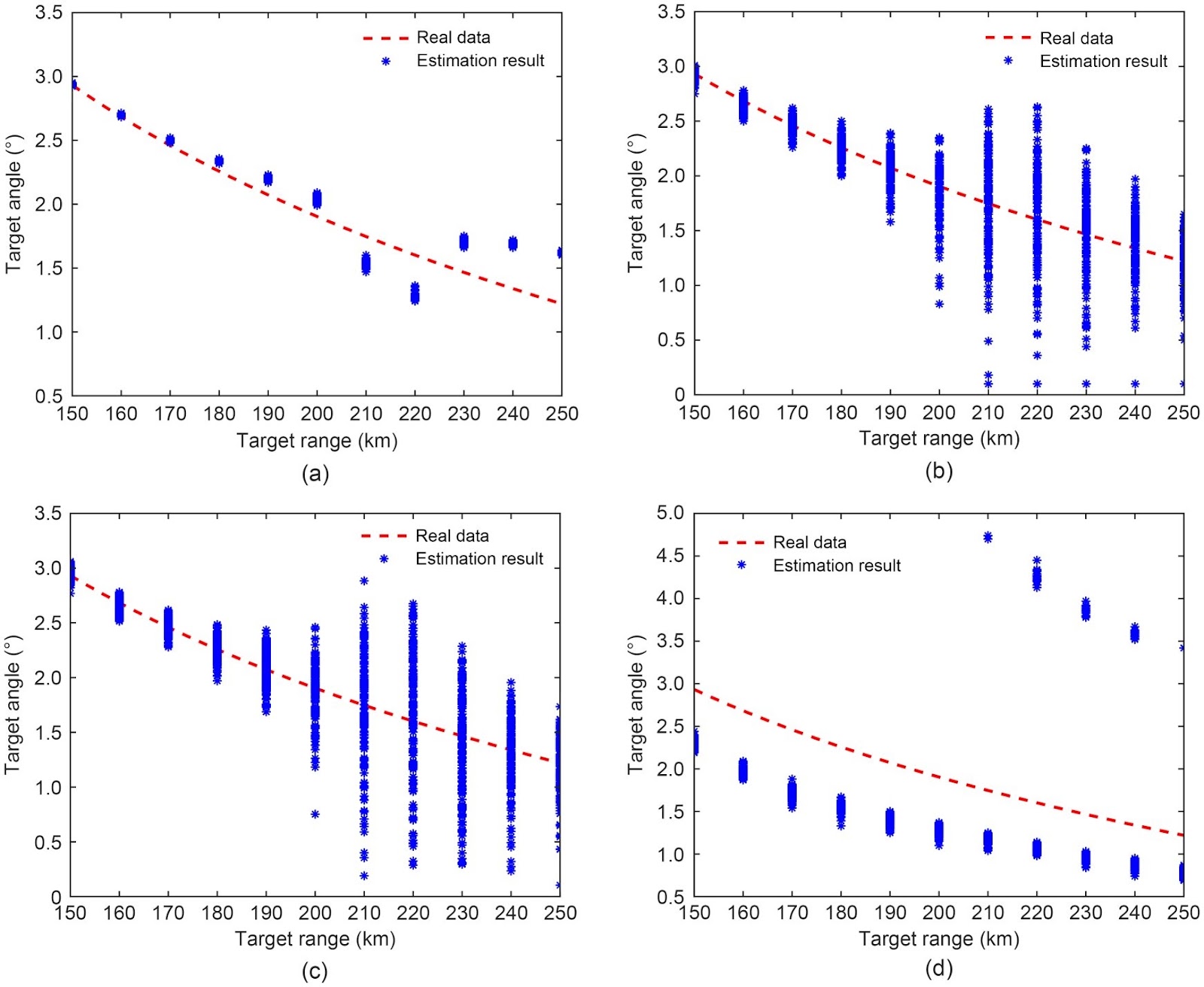
This paper discusses the problem of low-elevation target height estimation for multiple-input multiple-output (MIMO) radar in multipath environments. The beamspace compresses the data and is ideal for reducing the computational burden of elevation estimation. To obtain the height parameter of the target accurately, we propose a height estimation method based on a beamspace joint alternating iterative (BJAI) algorithm in MIMO radar. This method mainly converts the reduced-dimensional MIMO radar e

A height estimation method based on a beamspace joint alternating iterative algorithm in MIMO radar
Graphical Abstract
Original ResearchVol. 32, Issue 7 • pp. 250-262DOI: 10.1631/FITEE_2500286Jul 1, 2025

Bidirectional-pump-controlled reconfigurable nonlinear spoof plasmonic waveguide

Authors: Wenyi Cui, Xinxin Gao, Jingjing Zhang

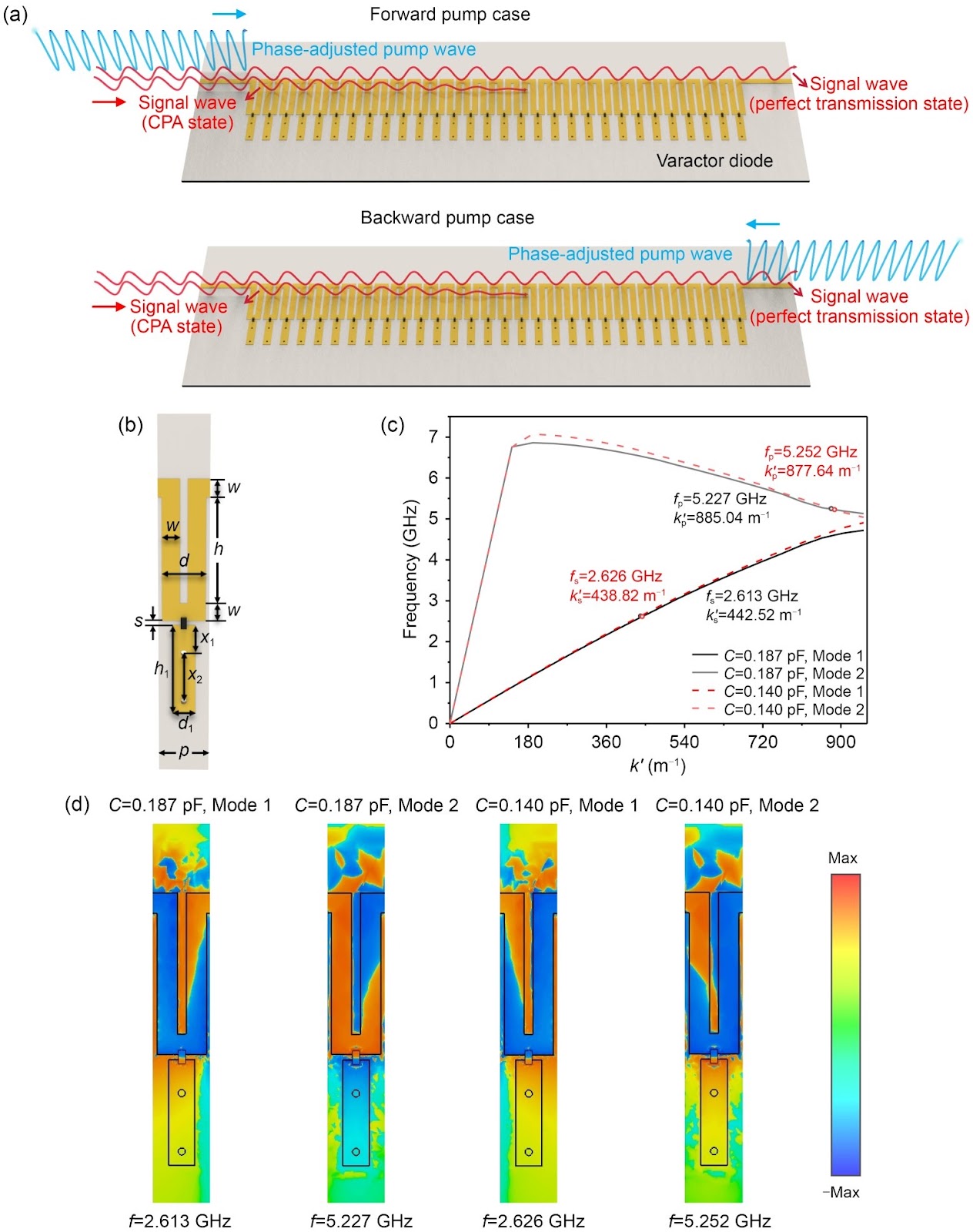
We present a dynamically reconfigurable spoof surface plasmon polariton (SSPP) waveguide capable of bidirectional switching between perfect absorption and perfect transmission through active control. Nonlinear varactor diodes are integrated into the waveguide, enabling degenerate phase matching between pump and signal waves via voltage-tuned dispersion engineering. Three-wave mixing processes are established, allowing bidirectional phase-controlled transitions from destructive to constructive in

Bidirectional-pump-controlled reconfigurable nonlinear spoof plasmonic waveguide
Graphical Abstract