SinoTechIntel Academic Portal
πŸ›οΈ Indexed Academic JournalImpact Factor: 3.8 (Q1 - Elsevier)Original: δΈ­ε›½εŒ–ε­¦ε·₯程学ζŠ₯ (θ‹±ζ–‡η‰ˆ)

Chinese Journal of Chemical Engineering

Access authentic peer-reviewed engineering methodologies, experimental datasets, and scientific literature published in this journal on SinoTechIntel.

Total Research Papers: 98
Access: 100% Free Open Access
Browse by Publication Year & VolumeReset All Filters βœ•

Published Research PapersFiltered: Year 2024 β€’ 69 β€’ Issue 1

Showing 3 of 98 peer-reviewed papers with full Graphical Abstracts.

Original ResearchVol. 69, Issue 1 β€’ pp. 192-198DOI: 10.1016/j_cjche_1448β€’ Mar 7, 2024

Efficient adsorption separation of methane from C2-C3 hydrocarbons in a Co(II)-nodes metal-organic framework

Authors: Jie Zhang, Xingzhe Guo, Bing Lin, Guangzu Xiong, Hanshuang Wang, Min Zhang, Liwen Fan, Bingwen Li, Shuisheng Chen

Methane (CH4) as a substitute for other mineral fuels plays a crucial role in reducing energy consumption and preventing environmental pollution. The present study employs a solvothermal method to fabricate a porous framework Co-metal-organic framework (Co-MOF) containing two distinct secondary building units (SBUs): an anionic [Co2(ΞΌ2-OH)(COO)4(H2O)] and a neutral [CoN2(COO)2]. Notably, within the anionic SBUs, the coordinated water molecules induce the generation of divergent unsaturated Co(II) centers in the unidirectional porous channels, thereby creating open metal sites. The adsorption performance of Co-MOF towards pure component gases was systematically investigated. The results demonstrated that Co-MOF exhibits superior adsorption capacity for C2-C3 hydrocarbons compared to CH4, which offers the potential for efficient adsorption and separation of CH4 from C2-C3 hydrocarbons. The gas selectivity separation ratios of Co-MOF for C2H6/CH4 and C3H8/CH4 were calculated using the ideal adsorbed solution theory method at 273/298 K and 0.1 MPa. The results revealed that Co-MOF achieved remarkable equilibrium separation selectivity for CH4 and C2-C3 hydrocarbon gases among non-modified MOFs, signifying the potential of the synthesized Co-MOF for efficient recovery and purification of CH4 from C2-C3 hydrocarbons. Breakthrough experiments further demonstrate the ability of Co-MOF to purify methane from C2-C3 hydrocarbons in practical gas separation scenarios. Additionally, molecular simulation calculations further substantiate the propensity of anionic SBUs to interact with C2-C3 hydrocarbon compounds. This study provides a novel paradigm for the development of porous MOF materials in the application of gas mixture separation.
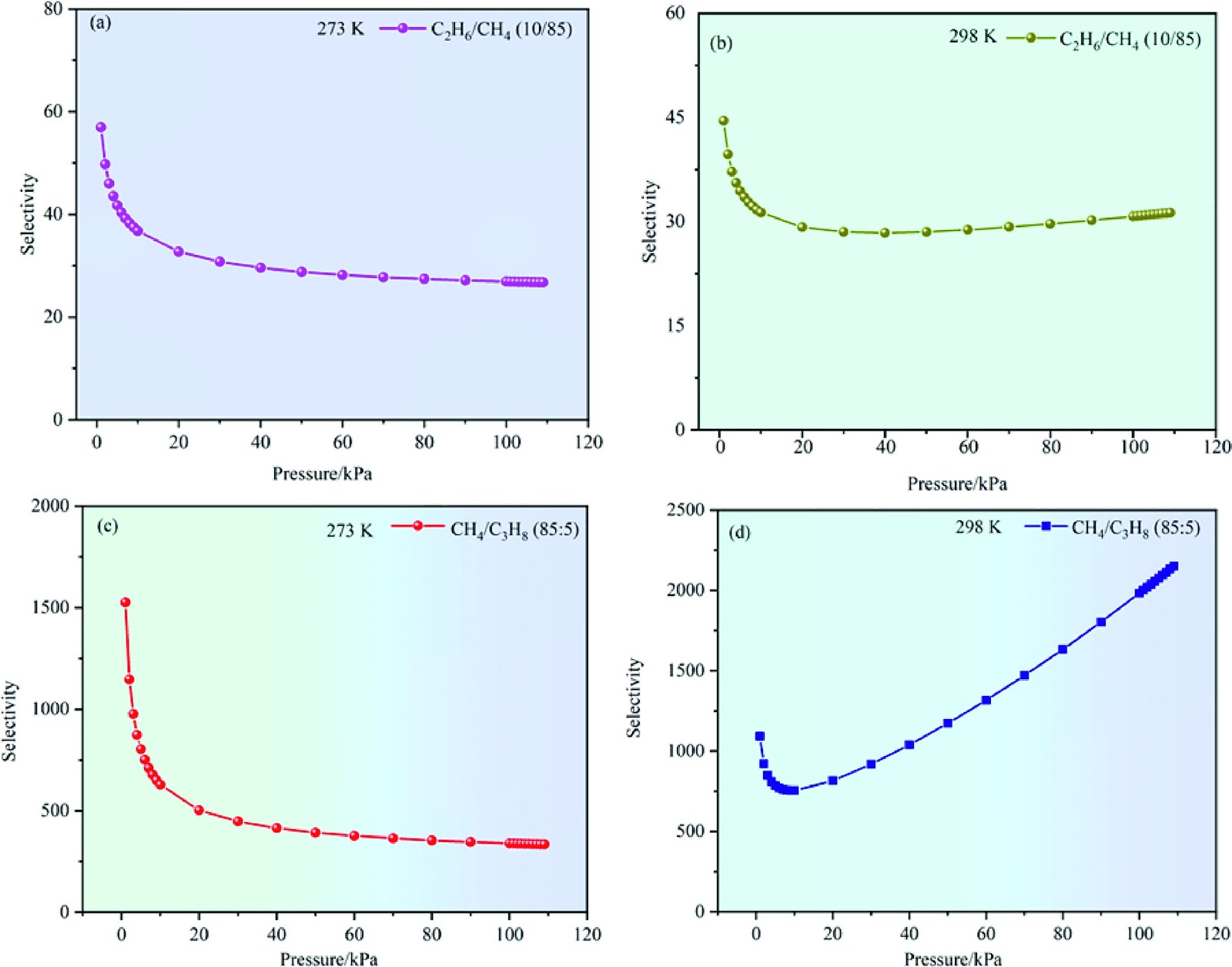
Efficient adsorption separation of methane from C2-C3 hydrocarbons in a Co(II)-nodes metal-organic framework
Graphical Abstract
Original ResearchVol. 69, Issue 1 β€’ pp. 92-100DOI: 10.1016/j_cjche_1448β€’ Mar 6, 2024

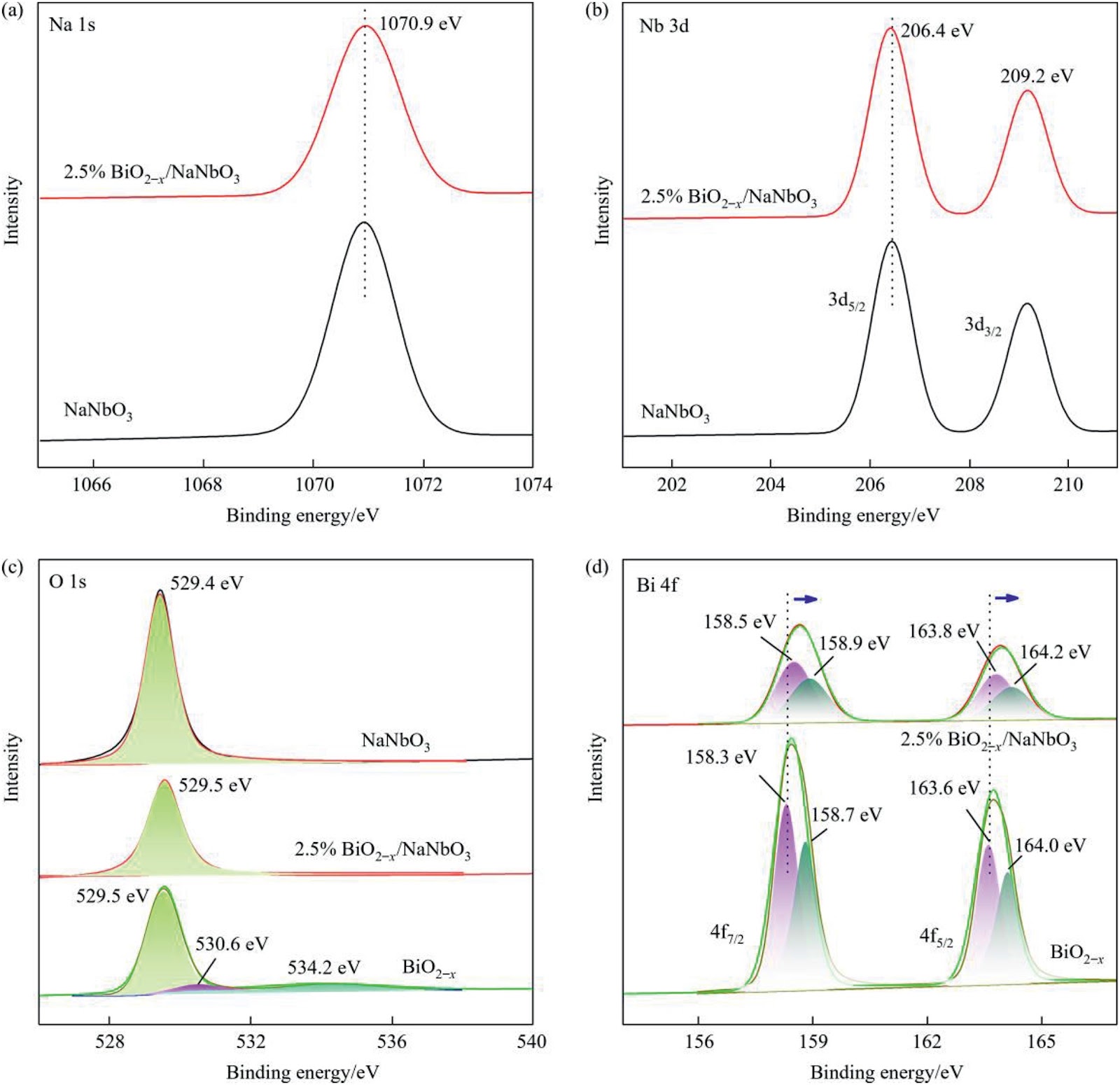
Enhanced photocatalytic nitrogen fixation performance via in situ constructing BiO2ex/NaNbO3 heterojunction

Authors: Jiayu Zhang, Zhihao Zeng, Lin Yue, Chunran Zhao, Xin Hu, Leihong Zhao, Xiuwen Wang, Yiming He

The fabrication of heterojunction catalysts is an effective strategy to enhance charge separation efficiency, thereby boosting the performance of photocatalysts. In this study, BiO2ex nanosheets were synthesized through a hydrothermal process and loaded onto NaNbO3 microcube to construct a series of BiO2ex/NaNbO3 heterojunctions for photocatalytic N2 fixation. Results indicated that 2.5% BiO2ex/NaNbO3 had the highest photocatalytic performance. The NH3 production rate under simulated solar light reached 406.4 mmolΒ·Lβˆ’1Β·gβˆ’1Β·hβˆ’1, which reaches 2.6 and 3.8 times that of NaNbO3 and BiO2ex, respectively. BiO2ex nanosheets primarily act as electron trappers to enhance the separation efficiency of charge carriers. The strong interaction between BiO2ex and NaNbO3 facilitates the electron migration between them. Meanwhile, the abundant oxygen vacancies in BiO2ex nanosheets may facilitate the adsorption and activation of N2, which may be another possible reason of the high photocatalytic activity of the BiO2ex/NaNbO3. This study may offer new insights for the development of semiconductor materials in photocatalytic nitrogen fixation.

Enhanced photocatalytic nitrogen fixation performance via in situ constructing BiO2ex/NaNbO3 heterojunction
Graphical Abstract
Original ResearchVol. 69, Issue 1 β€’ pp. 199-211DOI: 10.1016/j_cjche_1448β€’ Mar 3, 2024

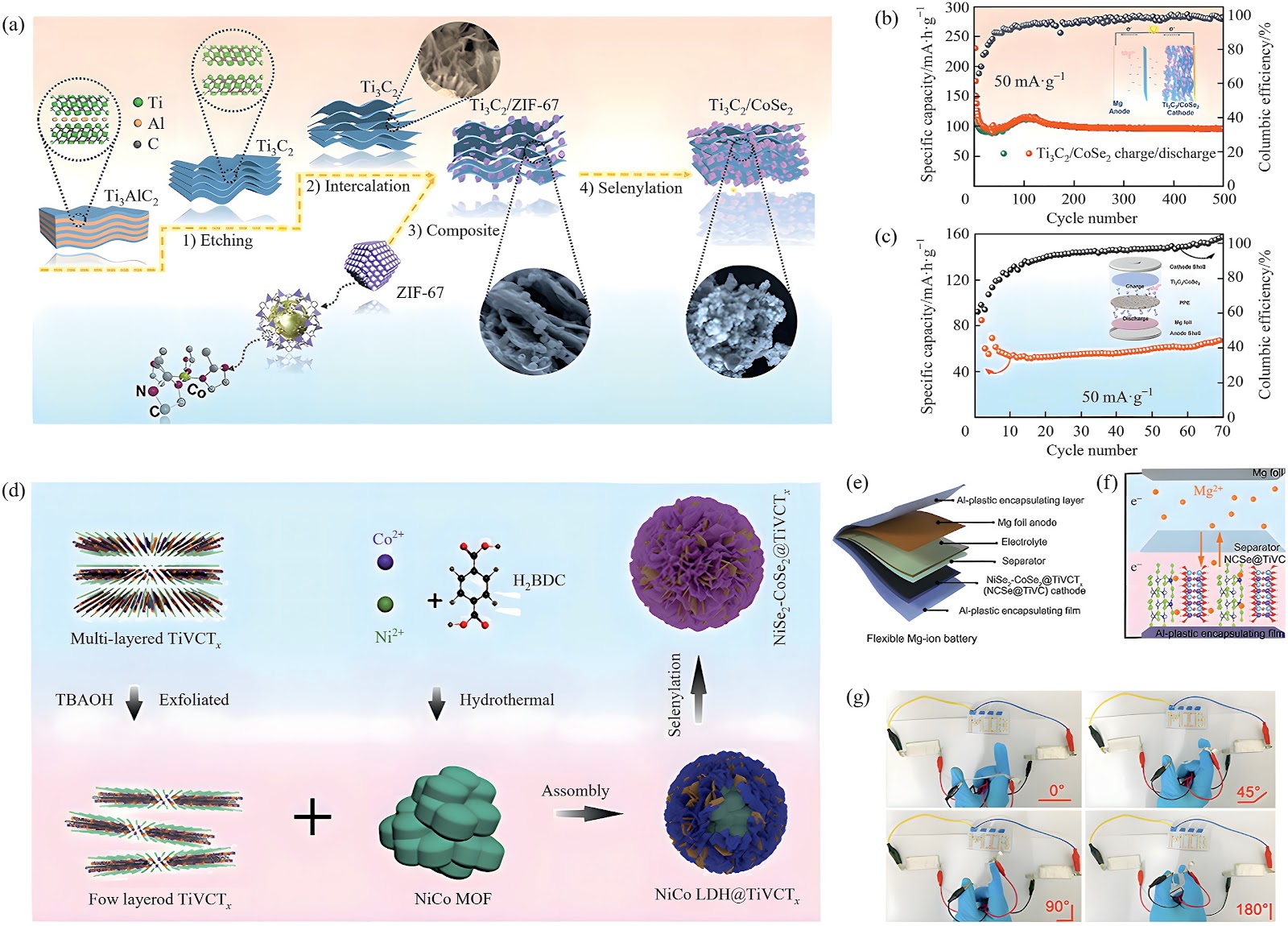
MXene: Promising materials for magnesium-ion batteries

Authors: Liuyu Song, Haibo Li, Pengkai Wang, Yu Shang, Yue Yang, Zhaoyu Wu

Magnesium-ion batteries (MIBs) have attracted extensive attention due to their high theoretical capacity, superior safety, and low cost. Nonetheless, the development of MIBs is hindered by the lack of cathode materials with long cycle life and rate capability. MXene stands out as a prime choice for MIB cathode or collector for anode-free magnesium batteries (AFMBs) because of its larger surface area, adjustable surface properties, and good electrical conductivity. In this paper, we summarized the preparation and layering methods of MXene and discussed the prospects of MXene as a cathode or collector for MIBs. This review will be immensely beneficial in critically analyzing the synthesis techniques and the applications of MXene material as MIB cathode or AFMB collector. In addition, the challenges of the preparation and layering were concluded, along with raising the research strategies of MXene for storing Mg ions.

MXene: Promising materials for magnesium-ion batteries
Graphical Abstract
Chinese Journal of Chemical Engineering | SinoTechIntel Research Archive | SinoTechIntel