SinoTechIntel Academic Portal
πŸ›οΈ Indexed Academic JournalImpact Factor: 3.8 (Q1 - Elsevier)Original: δΈ­ε›½εŒ–ε­¦ε·₯程学ζŠ₯ (θ‹±ζ–‡η‰ˆ)

Chinese Journal of Chemical Engineering

Access authentic peer-reviewed engineering methodologies, experimental datasets, and scientific literature published in this journal on SinoTechIntel.

Total Research Papers: 98
Access: 100% Free Open Access
Browse by Publication Year & VolumeReset All Filters βœ•

Published Research PapersFiltered: Year 2025 β€’ Vol. 32 β€’ Issue 5

Showing 3 of 98 peer-reviewed papers with full Graphical Abstracts.

Original ResearchVol. 32, Issue 5 β€’ pp. 516-528DOI: 10.1016/j_cjche_144877520β€’ May 20, 2023

Long-term operation optimization of circulating cooling water systems under fouling conditions

Authors: Jiarui Liang, Yong Tian, Shutong Yang, Yong Wang, Ruiqi Yin, Yufei Wang

Fouling caused by excess metal ions in hard water can negatively impact the performance of the circulating cooling water system (CCWS) by depositing ions on the heat exchanger's surface. Currently, the operation optimization of CCWS often prioritizes short-term flow velocity optimization for minimizing power consumption, without considering fouling. However, low flow velocity promotes fouling. Therefore, it's crucial to balance fouling and energy/water conservation for optimal CCWS long-term operation. This study proposes a mixed-integer nonlinear programming (MINLP) model to achieve this goal. The model considers fouling in the pipeline, dynamic concentration cycle, and variable frequency drive to optimize the synergy between heat transfer, pressure drop, and fouling. By optimizing the concentration cycle of the CCWS, water conservation and fouling control can be achieved. The model can obtain the optimal operating parameters for different operation intervals, including the number of pumps, frequency, and valve local resistance coefficient. Sensitivity experiments on cycle and environmental temperature reveal that as the cycle increases, the marginal benefits of energy/water conservation decrease. In periods with minimal impact on fouling rate, energy/water conservation can be achieved by increasing the cycle while maintaining a low fouling rate. Overall, the proposed model has significant energy/water saving effects and can comprehensively optimize the CCWS through its incorporation of fouling and cycle optimization.
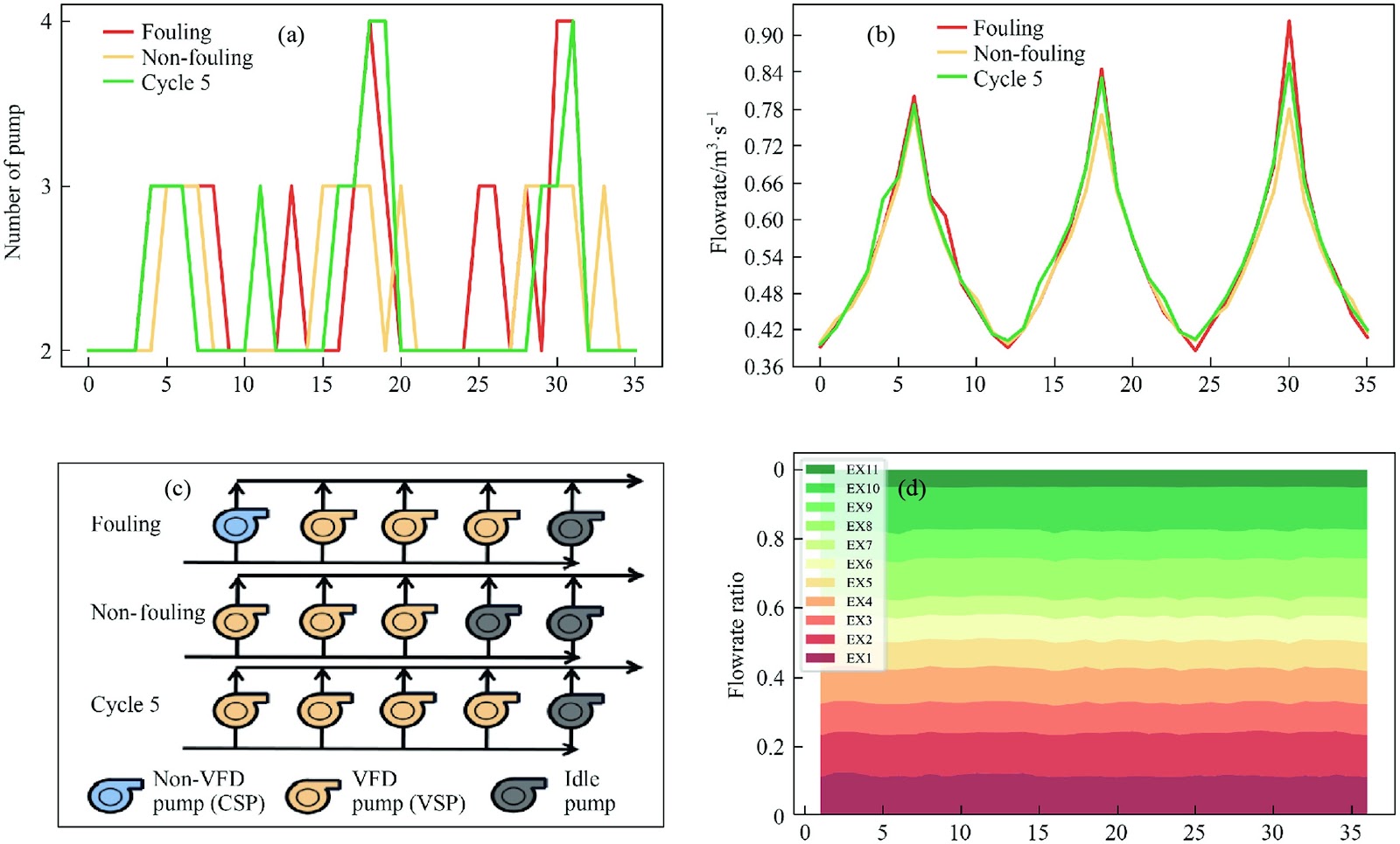
Long-term operation optimization of circulating cooling water systems under fouling conditions
Graphical Abstract
Original ResearchVol. 32, Issue 5 β€’ pp. 312-324DOI: 10.1016/j_cjche_144874495β€’ May 9, 2023

Effect of aspect ratio of elliptical stirred vessel on mixing time and flow field characteristics in the absence of baffles

Authors: Yuan Yao, Peiqiao Liu, Qian Zhang, Zequan Li, Benjun Xi, Changyuan Tao, Yundong Wang, Zuohua Liu

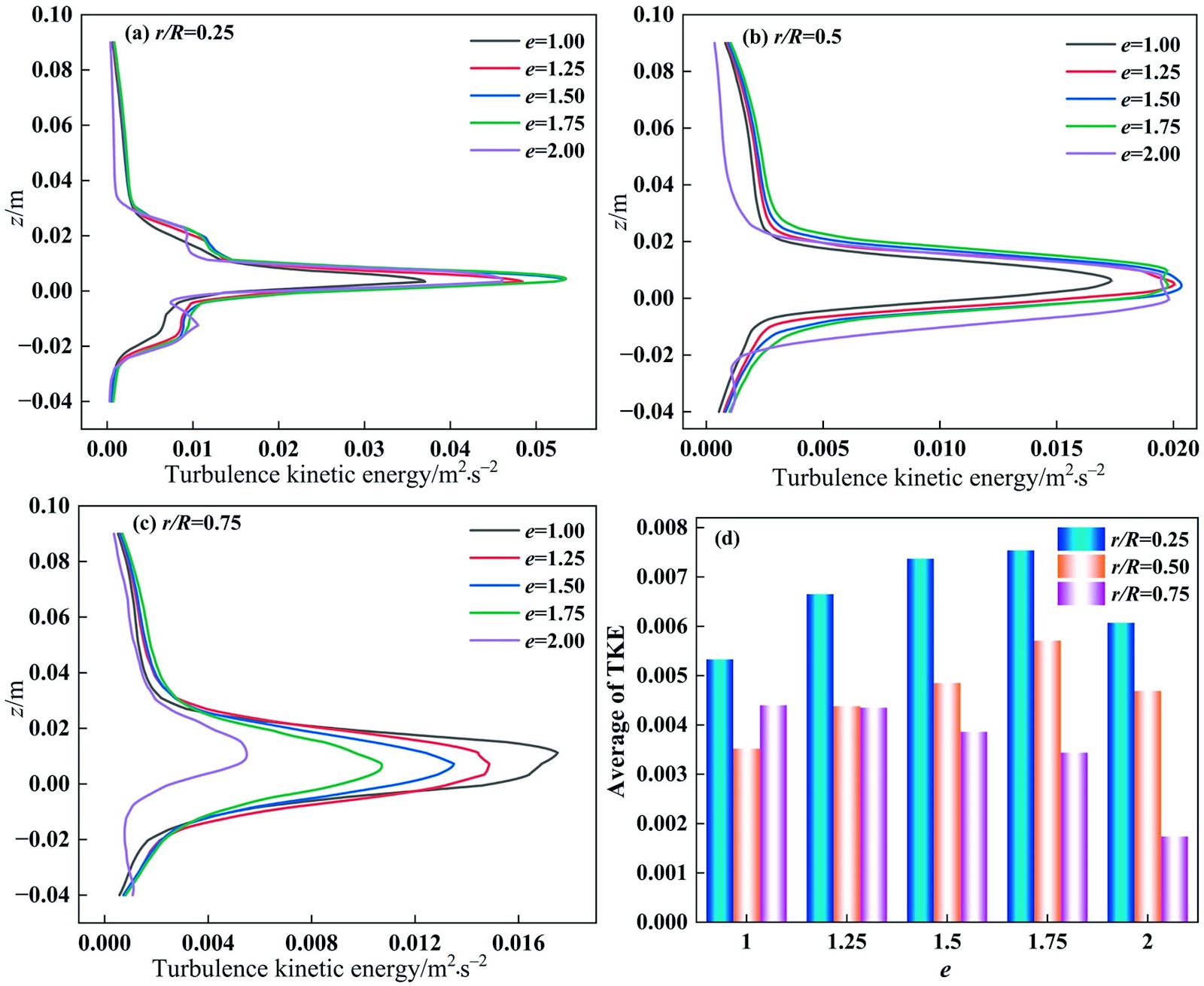
Elliptical tanks were used as an alternative to circular tanks in order to improve mixing efficiency and reduce mixing time in unbaffled stirred tanks (USTs). Five different aspect ratios of elliptical vessels were designed to compare their mixing time and flow field. Computational fluid dynamics (CFD) simulations were performed using the k–e model to calculate the mixing time and simulate turbulent flow field features, such as streamline shape, velocity distribution, vortex core region distribution, and turbulent kinetic energy (TKE) transfer. Visualization was also carried out to track the tinctorial evolution of the liquid phase. Results reveal that elliptical stirred tanks can significantly improve mixing performance in USTs. Specifically, the mixing time at an aspect ratio of 2.00 is only 45.3% of the one of a circular stirred tank. Furthermore, the secondary flow is strengthened and the vortex core region increases with the increase of aspect ratio. The axial velocity is more sensitive to the aspect ratio than the circumferential and radial velocity. Additionally, the TKE transfer in elliptical vessels is altered. These findings suggest that elliptical vessels offer a promising alternative to circular vessels for enhancing mixing performance in USTs.

Effect of aspect ratio of elliptical stirred vessel on mixing time and flow field characteristics in the absence of baffles
Graphical Abstract
Original ResearchVol. 32, Issue 5 β€’ pp. 720-732DOI: 10.1016/j_cjche_144878169β€’ May 6, 2023

Ionic liquid-assisted preparation of hydroxyapatite and its catalytic performance for decarboxylation of itaconic acid

Authors: Shutong Pang, Hualiang An, Xinqiang Zhao, Yanji Wang

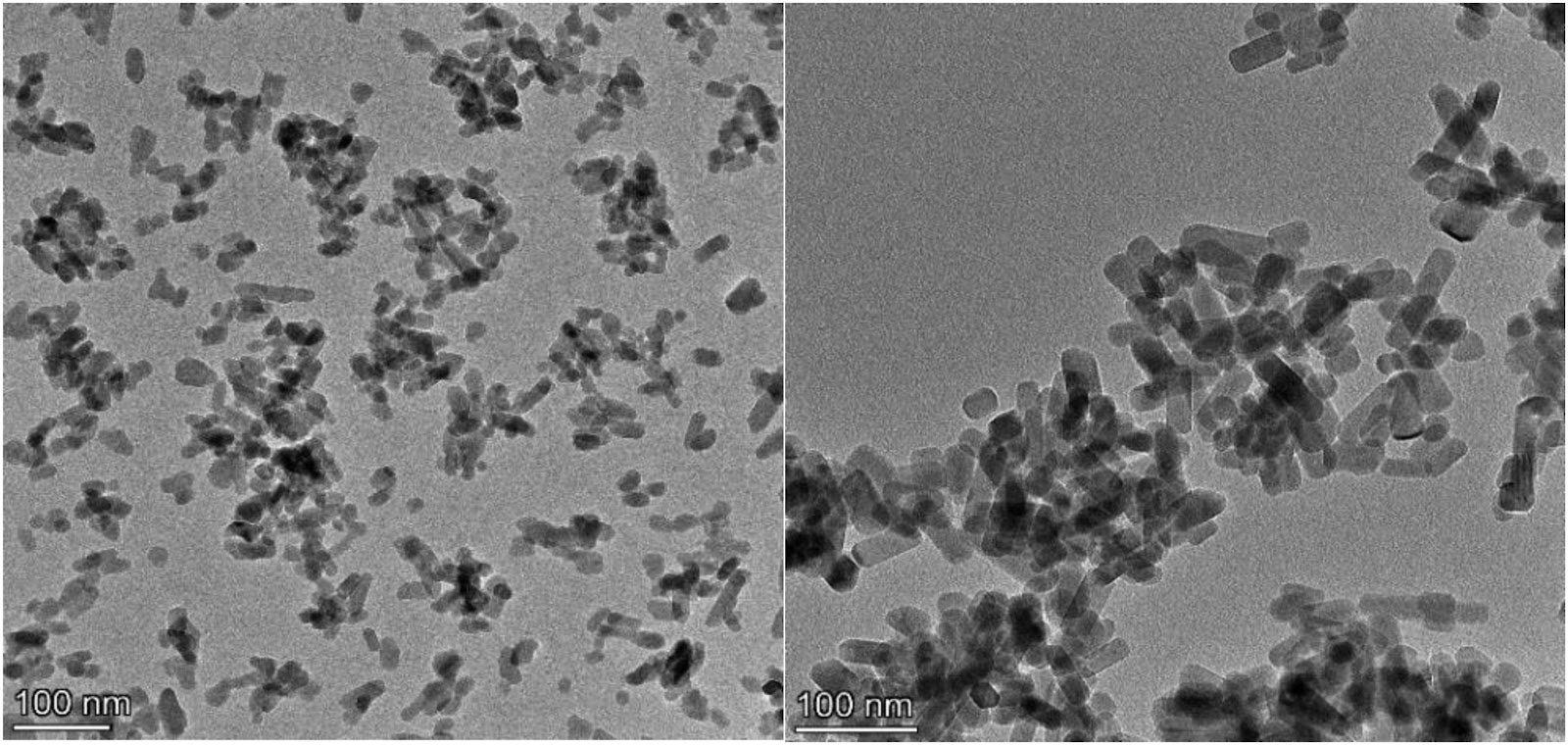
The synthesis of methacrylic acid from biomass-derived itaconic acid is a green route, for it can get rid of the dependence on fossil resource. In order to solve the problems on this route such as use of a precious-metal catalyst and a corrosive homogeneous alkali, we prepared a series of hydroxyapatite catalysts by an ionic liquid-assisted hydrothermal method and evaluated their catalytic performance. The results showed that the ionic liquid [Bmim]BF4 can affect the crystal growth of hydroxyapatite, provide fluoride ion for fluorination of hydroxyapatite, and adjust the surface acidity and basicity, morphology, textural properties, crystallinity, and composition of hydroxyapatite. The [Bmim]BF4 dosage and hydrothermal temperature can affect the fluoride ion concentration in the hydrothermal system, thus changing the degree of fluoridation of hydroxyapatite. High fluoride-ion concentration can lead to the formation of CaF2 and thus significantly decrease the catalytic performance of hydroxyapatite. The hydrothermal time mainly affects the growth of hydroxyapatite crystals on the c axis, leading to different catalytic performance. The suitable conditions for the preparation of this fluoridized hydroxyapatite are as follows: a mass ratio of [Bmim]BF4 to calcium salt = 0.2:1, a hydrothermal time of 12 h, and a hydrothermal temperature of 130 Β°C. A maximal methacrylic acid yield of 54.7% was obtained using the fluoridized hydroxyapatite under relatively mild reaction conditions (250 Β°C and 2 MPa of N2) in the absence of a precious-metal catalyst and a corrosive homogeneous alkali.

Ionic liquid-assisted preparation of hydroxyapatite and its catalytic performance for decarboxylation of itaconic acid
Graphical Abstract