Key Takeaways & Executive Findings
- •• Ionic liquid [Bmim]BF4 enables fluorination of hydroxyapatite, tuning its surface acidity/basicity and morphology for enhanced catalytic performance. • Fluoridized hydroxyapatite achieves 54.7% methacrylic acid yield from itaconic acid under mild conditions (250 °C, 2 MPa N2) without precious metals or corrosive alkalis. • Optimal synthesis parameters: [Bmim]BF4:calcium salt mass ratio 0.2:1, hydrothermal time 12 h, temperature 130 °C. • Excessive fluoride ion concentration leads to CaF2 formation, which significantly reduces catalytic activity.
Abstract
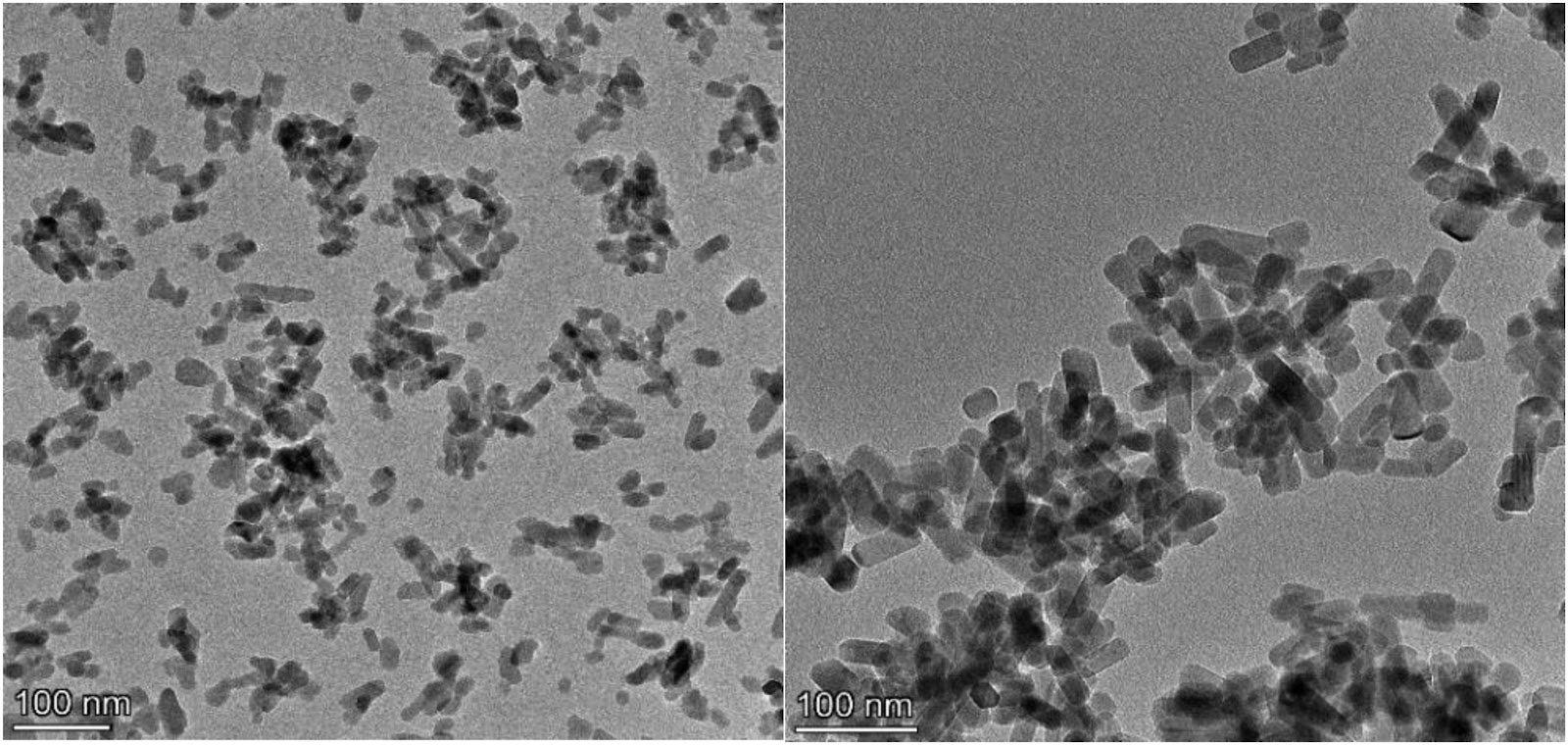
The synthesis of methacrylic acid from biomass-derived itaconic acid is a green route, for it can get rid of the dependence on fossil resource. In order to solve the problems on this route such as use of a precious-metal catalyst and a corrosive homogeneous alkali, we prepared a series of hydroxyapatite catalysts by an ionic liquid-assisted hydrothermal method and evaluated their catalytic performance. The results showed that the ionic liquid [Bmim]BF4 can affect the crystal growth of hydroxyapatite, provide fluoride ion for fluorination of hydroxyapatite, and adjust the surface acidity and basicity, morphology, textural properties, crystallinity, and composition of hydroxyapatite. The [Bmim]BF4 dosage and hydrothermal temperature can affect the fluoride ion concentration in the hydrothermal system, thus changing the degree of fluoridation of hydroxyapatite. High fluoride-ion concentration can lead to the formation of CaF2 and thus significantly decrease the catalytic performance of hydroxyapatite. The hydrothermal time mainly affects the growth of hydroxyapatite crystals on the c axis, leading to different catalytic performance. The suitable conditions for the preparation of this fluoridized hydroxyapatite are as follows: a mass ratio of [Bmim]BF4 to calcium salt = 0.2:1, a hydrothermal time of 12 h, and a hydrothermal temperature of 130 °C. A maximal methacrylic acid yield of 54.7% was obtained using the fluoridized hydroxyapatite under relatively mild reaction conditions (250 °C and 2 MPa of N2) in the absence of a precious-metal catalyst and a corrosive homogeneous alkali.
1. Introduction
Modern industrial production of polymers relies heavily on non-renewable resources; polymer production has consumed about 7% of the world's fossil resources up to date [1,2]. Methacrylic acid (MAA) and its derivative methyl methacrylate (MMA) are important monomers, and their price increases year by year due to the wide market demand [3]. At the present, the main commercial production of MAA relies on the acetone cyanohydrin process and the oxidation of isobutene, in which the acetone cyanohydrin process occupies the highest market share [4]. However, this process is not only based on fossil resources but also requires the use of highly toxic feedstocks and corrosive acids. At the same time, this process suffers from complex technology, expensive equipment, and generation of many low-value by-products. The gap between supply and demand of MAA and the serious defects in the production process drive the industry and academia to seek new and green synthesis processes continuously. Nowadays, developing a new process that is based on renewable resources is an effective way to achieve resource and environmental sustainability [5]. Thus the synthesis of MAA by decarboxylation of itaconic acid has aroused great interest [6].
Carlsson's group [7] achieved the decarboxylation of itaconic acid to MAA with a yield of 72%, using NaOH catalyst and water solvent at 360 °C and 34.5 MPa. However, severe reaction conditions and the use of homogeneous alkali restricted the development of this process. In order to lower the reaction conditions, Notre’ group [8] used 5% (mass) Pt/Al2O3 and NaOH as the catalyst, achieving an MAA yield of 68% at 250 °C. Although the reaction conditions were lowered, the use of precious metals significantly increased production cost, and additionally, the use of NaOH also made the post-treatment of the reaction mixture more difficult. Pirmoradi et al. [9] prepared MAA by the decarboxylation of itaconic acid, citric acid, and 2-hydroxy-isobutyric acid, using acid-base bifunctional hydrotalcite instead of homogeneous alkali without using precious metals. At the subcritical water temperature of 275 °C, the yield of MAA could reach 76% from the decarboxylation of 2-hydroxy-isobutyric acid. However, the MAA yield was only 23% under the optimum conditions as for the decarboxylation of itaconic acid. Compared to heterogeneous catalysis, homogeneous catalysis often shows higher reaction specificity and catalytic efficiency. Lansing et al. [10] used the homogeneous catalyst [Ru(CO)2(CH3CH2COO)]n to the synthesis of MAA by decarboxylation of itaconic acid with carbon tetrachloride as the cosolvent. The selectivity of MAA reached 84% at a reaction temperature of 225 °C, a reaction pressure of 2.8 MPa, and a reaction time of 1.5 h. However, the conversion of itaconic acid was only 42%, and the use of homogeneous catalyst made the separation of product difficult. Bohre et al. [11e13] reported several studies on the preparation of barium hexaaluminate catalysts.
Loading authentic research manuscript (Pages 1–5)...
Shutong Pang, Hualiang An, Xinqiang Zhao, Yanji Wang (2023). Ionic liquid-assisted preparation of hydroxyapatite and its catalytic performance for decarboxylation of itaconic acid. Chinese Journal of Chemical Engineering. https://doi.org/10.1016/j_cjche_144878169
Research & Educational Purpose Only:The translations, structured abstracts, analytical annotations, and data reports provided by SinoTechIntel are intended exclusively for academic research, internal corporate R&D, and educational benchmarking. They do not constitute formal engineering, chemical safety, legal, or professional advice.
Copyright & Intellectual Property Notice: Original copyright of the underlying source articles and experimental data remains with the respective authors, institutions, and original publishing journals. SinoTechIntel claims intellectual property only over its proprietary translations, analytical syntheses, and AEO structured enhancements in accordance with international fair use and academic citation principles.
Frequently Asked Questions
What is the main advantage of using ionic liquid in hydroxyapatite preparation?
The ionic liquid [Bmim]BF4 acts as a structure-directing agent and fluoride source, enabling fluorination of hydroxyapatite and tuning its surface properties, morphology, and catalytic activity for decarboxylation of itaconic acid.
What is the maximum yield of methacrylic acid achieved in this study?
A maximal methacrylic acid yield of 54.7% was obtained using fluoridized hydroxyapatite under relatively mild reaction conditions (250 °C and 2 MPa of N2) without precious-metal catalysts or corrosive homogeneous alkali.
What are the optimal preparation conditions for the fluoridized hydroxyapatite catalyst?
The suitable conditions are a mass ratio of [Bmim]BF4 to calcium salt of 0.2:1, a hydrothermal time of 12 h, and a hydrothermal temperature of 130 °C.
How does fluoride ion concentration affect the catalytic performance?
High fluoride-ion concentration can lead to the formation of CaF2, which significantly decreases the catalytic performance of hydroxyapatite. Therefore, controlling fluoride ion concentration is crucial for optimal activity.
Why is the decarboxylation of itaconic acid considered a green route?
It uses biomass-derived itaconic acid as a renewable feedstock, avoiding dependence on fossil resources, and the process can be conducted without precious metals or corrosive homogeneous alkalis, making it more environmentally friendly.
Related Technical Papers & Translations

Design and optimization of a high-efficiency distillation process for cellulosic fuel ethanol integrated with thermal coupling and molecular sieve adsorption
To address the challenges of high energy consumption and prominent costs in the traditional three-columns distillation process for cellulosic fuel ethanol, a distillation—molecular sieve coupling separation process is proposed. This process integrates a three-column (crude distillation column, first distillation column, second distillation column) system with a 3A molecular sieve adsorption deep dehydration unit. A thermal coupling network is constructed via differential pressure design (steam from medium/high-pressure columns as mutual heat sources, reboiler liquid waste heat for feed preheating), and molecular sieve adsorption conditions are optimized. The study first performs a thermodynamic consistency test on the ethanol—water system, determines optimal non-random two-liquid (NRTL) model binary interaction parameters via experimental data regression for Aspen Plus simulation. Aiming at minimum total annual cost (TAC), Aspen Plus is used to optimize process parameters (theoretical tray number, feed location, reflux ratio, side-draw position, etc.). Economic analysis shows this process reduces CO2 emission costs by 27.56%, TAC by 15.58% (to 5.123 × 10⁶ USD·a-1), and increases ethanol purity to >99.6%, providing an effective solution for green, efficient separation.

A cohesion loss model for determining residual strength of deep bedded sandstone
Rock residual strength, as an important input parameter, plays an indispensable role in proposing the reasonable and scientific scheme about stope design, underground tunnel excavation and stability evaluation of deep chambers. Therefore, previous residual strength models of rocks established were reviewed. And corresponding related problems were stated. Subsequently, starting from the effects of bedding and whole life-cycle evolution process, series of triaxial mechanical tests of deep bedded s

Federated model with contrastive learning and adaptive control variates for human activity recognition
Recent attention to privacy issues demands a communication-safe method for training human activity recognition (HAR) models on client activity data. Federated learning (FL) has become a compelling technique to facilitate model training between the server and clients while preserving data privacy. However, classical FL methods often assume independent and identically distributed (IID) data among clients. This assumption does not hold true in practical scenarios. Human activity in real-world scena