SinoTechIntel Academic Portal
πŸ›οΈ Indexed Academic JournalImpact Factor: 3.8 (Q1 - Elsevier)Original: δΈ­ε›½εŒ–ε­¦ε·₯程学ζŠ₯ (θ‹±ζ–‡η‰ˆ)

Chinese Journal of Chemical Engineering

Access authentic peer-reviewed engineering methodologies, experimental datasets, and scientific literature published in this journal on SinoTechIntel.

Total Research Papers: 98
Access: 100% Free Open Access
Browse by Publication Year & VolumeReset All Filters βœ•

Published Research PapersFiltered: Year 2023 β€’ Vol. 32 β€’ Issue 3

Showing 4 of 98 peer-reviewed papers with full Graphical Abstracts.

Original ResearchVol. 32, Issue 3 β€’ pp. 805-817DOI: 10.1016/j_cjche_144878383β€’ Oct 21, 2023

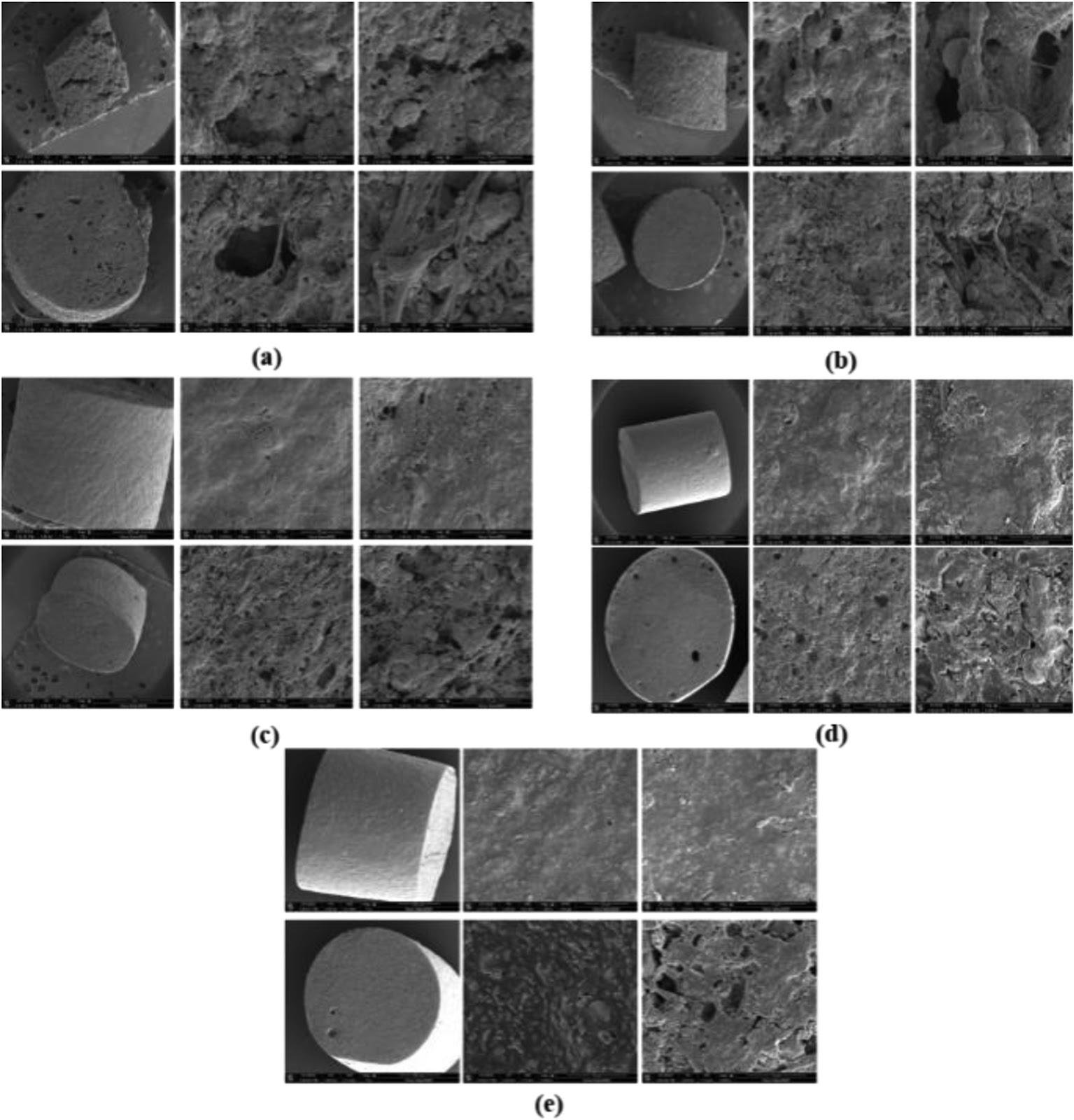
Pervaporation performance and characterization of hydrophilic ZSM-5 zeolite membranes for high inorganic acid and inorganic salts

Authors: Huanxu Teng, Ronghui You, Huanyi Li, Siqi Shao, Qi Zhou, Ying Yang, Ting Wu, Meihua Zhu, Xiangshu Chen, Hidetoshi Kita

The hydrophilic ZSM-5 zeolite membranes are applied to separate the inorganic acid solutions and inorganic acid/inorganic salt mixtures by pervaporation, and the membrane presents good stability, dehydration, and desalination performance. Influences of inorganic acid type (H2SO4, H3PO4, HNO3, and HCl), H2SO4 concentration (1e6 mol$Lβˆ’1), test temperature (60e90 Β°C) and inorganic acid/inorganic salt type (2 mol$Lβˆ’1 H2SO4 and sulfate, 2 mol$Lβˆ’1 H3PO4 and phosphate) on the pervaporation performance are investigated in this work. Either for concentrating 3% (mass) H2SO4 solution or consecutive dehydrating 20% (mass) H2SO4 solution, the hydrophilic ZSM-5 zeolite membrane has a good dehydration performance and stability. Even though the H2SO4 concentration and test temperature are increased to 6 M and 90 Β°C, only H2O molecules could pass through the membrane and pH value of the permeation is kept neutral. Besides, the membrane has good dehydration and desalination performance for H2SO4/sulfates and H3PO4/phosphate mixtures, and the rejection of natrium salt, molysite, and magnesium is almost 100%.
Pervaporation performance and characterization of hydrophilic ZSM-5 zeolite membranes for high inorganic acid and inorganic salts
Graphical Abstract
Original ResearchVol. 32, Issue 3 β€’ pp. 482-494DOI: 10.1016/j_cjche_144876660β€’ Mar 14, 2023

Importance of oxygen-containing functionalities and pore structures of biochar in catalyzing pyrolysis of homologous poplar

Authors: Li Qiu, Chao Li, Shu Zhang, Shuang Wang, Bin Li, Zhenhua Cui, Yonggui Tang, Obid Tursunov, Xun Hu

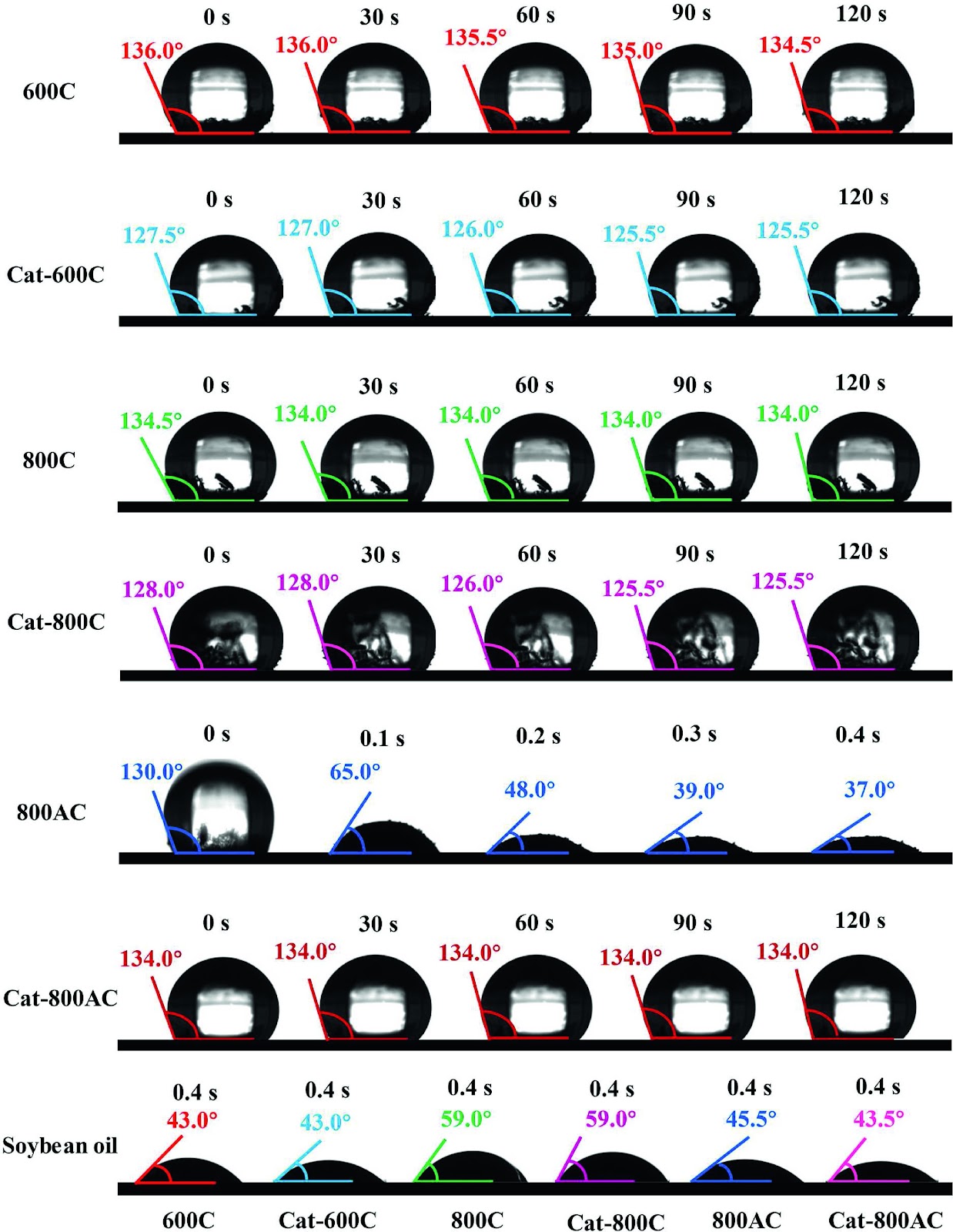
Biochar and bio-oil are produced simultaneously in one pyrolysis process, and they inevitably contact and may interact, influencing the composition of bio-oil and modifying the structure of biochar. In this sense, biochar is an inherent catalyst for pyrolysis. In this study, in order to investigate the influence of functionalities and pore structures of biochar on its capability for catalyzing the conversion of homologous volatiles in bio-oil, three char catalysts (600C, 800C, and 800AC) produced via pyrolysis of poplar wood at 600 or 800 Β°C or activated at 800 Β°C, were used for catalyzing pyrolysis of homologous poplar wood at 600 Β°C, respectively. The results indicated that the 600C catalyst was more active than 800C and 800AC for catalyzing cracking of volatiles to form more gas (yield increase by 40.2%) and aromatization of volatiles to form more light or heavy phenolics, due to its abundant oxygen-containing functionalities acting as active sites. The developed pores of the 800AC showed no such catalytic effect but could trap some volatiles and allow their further conversion via sufficient aromatization. Nevertheless, the interaction with the volatiles consumed oxygen on 600C (decrease by 50%), enhancing the aromatic degree and increasing thermal stability. The dominance of deposition of carbonaceous material of a very aromatic nature over 800C and 800AC resulted in net weight gain and blocked micropores but formed additional macropores. The in situ diffuse reflectance infrared Fourier transform spectroscopy characterization of the catalytic pyrolysis indicated superior activity of 600C for removal of –OH, while conversion of the intermediates bearing C=O was enhanced over all the char catalysts.

Importance of oxygen-containing functionalities and pore structures of biochar in catalyzing pyrolysis of homologous poplar
Graphical Abstract
Original ResearchVol. 32, Issue 3 β€’ pp. 890-902DOI: 10.1016/j_cjche_144878542β€’ Mar 11, 2023

Synthesis of granulated Li1.33Mn1.67O4 via two antisolvent methods for lithium adsorption from gas-produced water

Authors: Jun Qiu, Lu-Ri Bao, Wei Guo, Ying Yang, Shu-Ying Sun

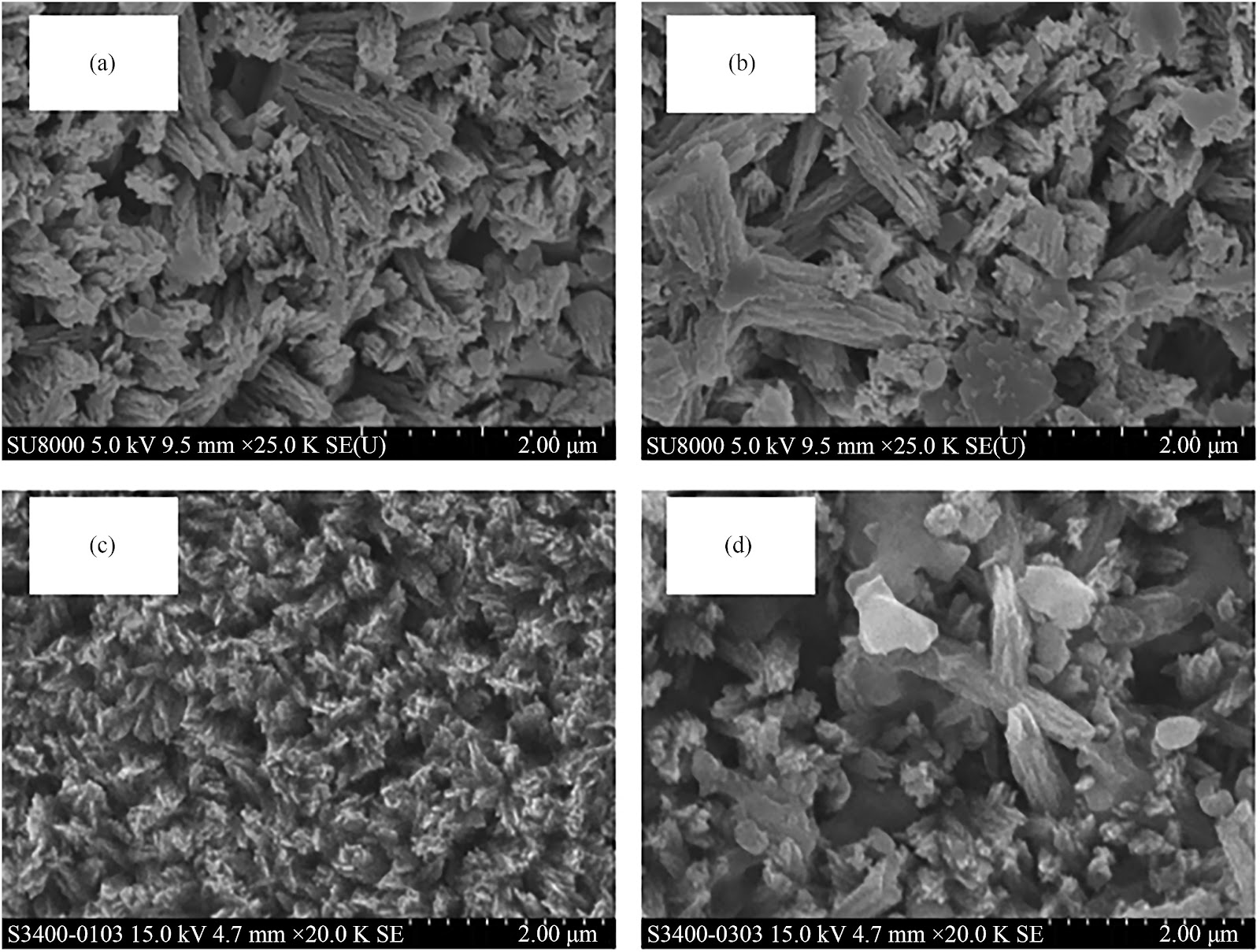
Gas-produced water is an accompanying wastewater in the natural gas extraction process, and it is a potential liquid lithium resource that contains a considerable amount of lithium. This study investigated the feasibility of using manganese-based ion sieves to adsorb and extract lithium from gas-produced water. And we focused on the applicability of two different granulation methods, extrusion and droplet, in gas-produced water systems. Two types of H1.33Mn1.67O4 particles were prepared by the extrusion method (EHMO) and the droplet method (DHMO). The porosity of DHMO was much higher than that of EHMO, and the adsorption performance of DHMO increased with the decrease of binder concentration. DHMO prepared with a binder concentration of 0.14 gΒ·mlβˆ’1 exhibited the best adsorption performance in gas-produced water, and the Li+ adsorption capacity could reach 25.14 mgΒ·gβˆ’1. In gas-produced water, the adsorption equilibrium of DHMO only took 9 h, and the adsorption process conformed to the Langmuir model and pseudo-second-order kinetic model. The pore diffusion model (PDM) could well describe its adsorption process. Besides, DHMO showed a great selectivity to Li+, and the selectivity order of DHMO in gas-produced water was Li+>Ba2+[Mg2+, Ca2+, Sr2+[Na+[K+. After 20 cycles, the Li+ adsorption capacity was still higher than 17.30 mgΒ·gβˆ’1, and the rate of manganese dissolution was less than 1%.

Synthesis of granulated Li1.33Mn1.67O4 via two antisolvent methods for lithium adsorption from gas-produced water
Graphical Abstract
Original ResearchVol. 32, Issue 3 β€’ pp. 278-290DOI: 10.1016/j_cjche_144874305β€’ Mar 3, 2023

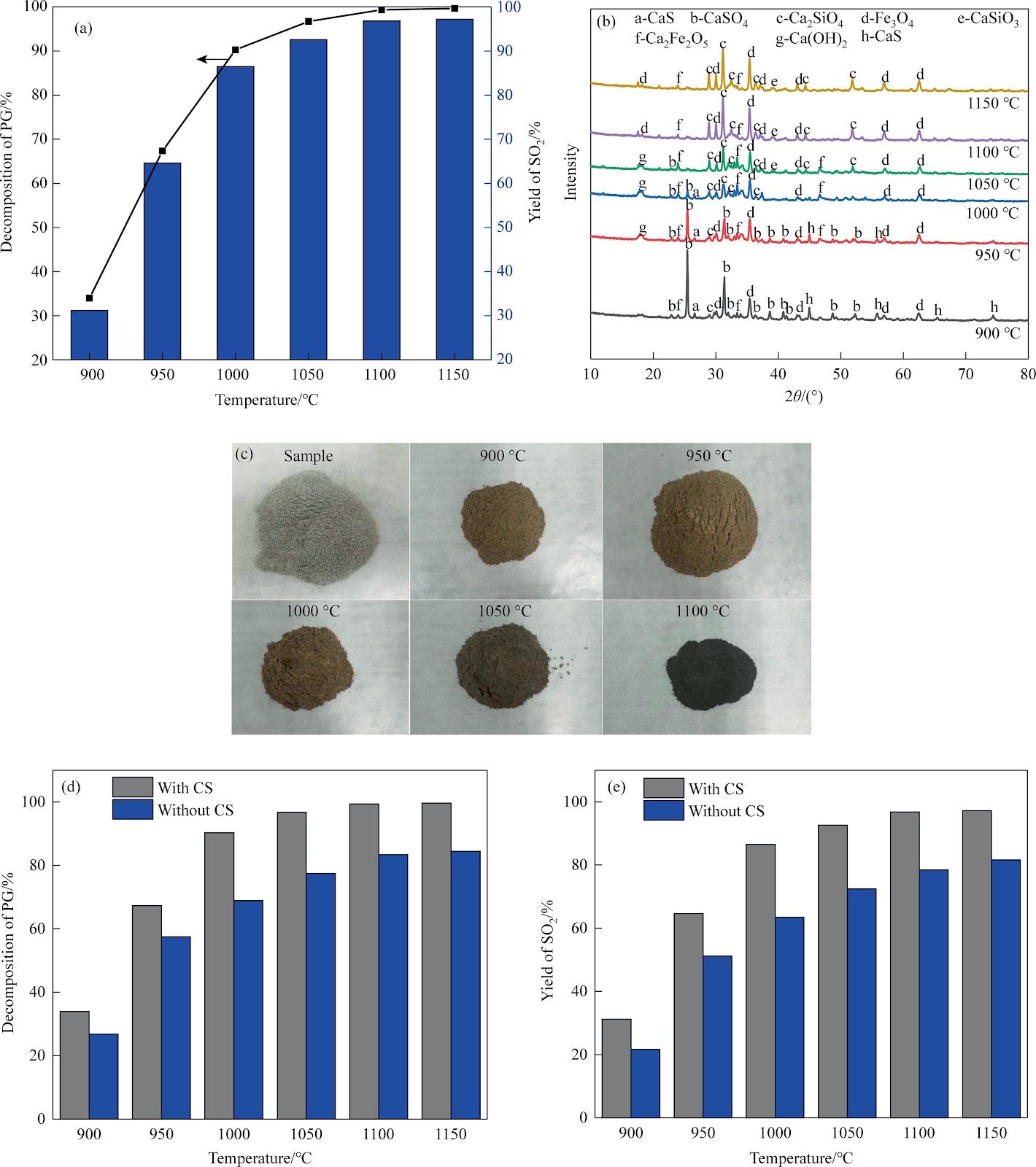
Copper slag assisted coke reduction of phosphogypsum for sulphur dioxide preparation

Authors: Dong Ma, Qinhui Wang

The reduction of phosphogypsum (PG) to lime slag and SO2 using coke can effectively alleviate the environmental problems caused by PG. However, the PG decomposition temperature remains high and the product yield remains poor. By adding additives, the decomposition temperature can be further reduced and PG decomposition rate and product yield can be improved. However, the use of current additives such as Fe2O3 and SiO2 brings the problem of increasing economic cost. Therefore, it is proposed to use solid waste copper slag (CS) as a new additive to reduce PG to prepare SO2, which can reduce the cost and meet the environmental benefits at the same time. The effects of proportion, temperature and thermostatic time on PG decomposition are investigated by experimental and kinetic analysis combined with FactSage thermodynamic calculations to optimize the roasting conditions. Finally, the reaction mechanism is proposed. It is found that adding CS to the coke and PG system can increase the rate of PG decomposition and SO2 yield while lowering the PG decomposition temperature. For example, when the CS/PG mass ratio increases from 0 to 1, PG decomposition rate increases from 83.38% to 99.35%, SO2 yield increases from 78.62% to 96.81%, and PG decomposition temperature decreases from 992.4 Β°C to 949.6 Β°C. The optimal reaction parameters are CS/PG mass ratio of 1, Coke/PG mass ratio of 0.06 at 1100 Β°C for 20 min with 99.35% PG decomposition rate and 96.81% SO2 yield. The process proceeds according to the following reactions: 2CaSO4 + 0.7C + 0.8Fe2SiO4 β†’ 0.8Ca2SiO4 + 0.2Ca2Fe2O5 + 0.4Fe3O4 + 2SO2 + 0.7CO2. Finally, a process for decomposing PG with coke and CS is proposed.

Copper slag assisted coke reduction of phosphogypsum for sulphur dioxide preparation
Graphical Abstract