Key Takeaways & Executive Findings
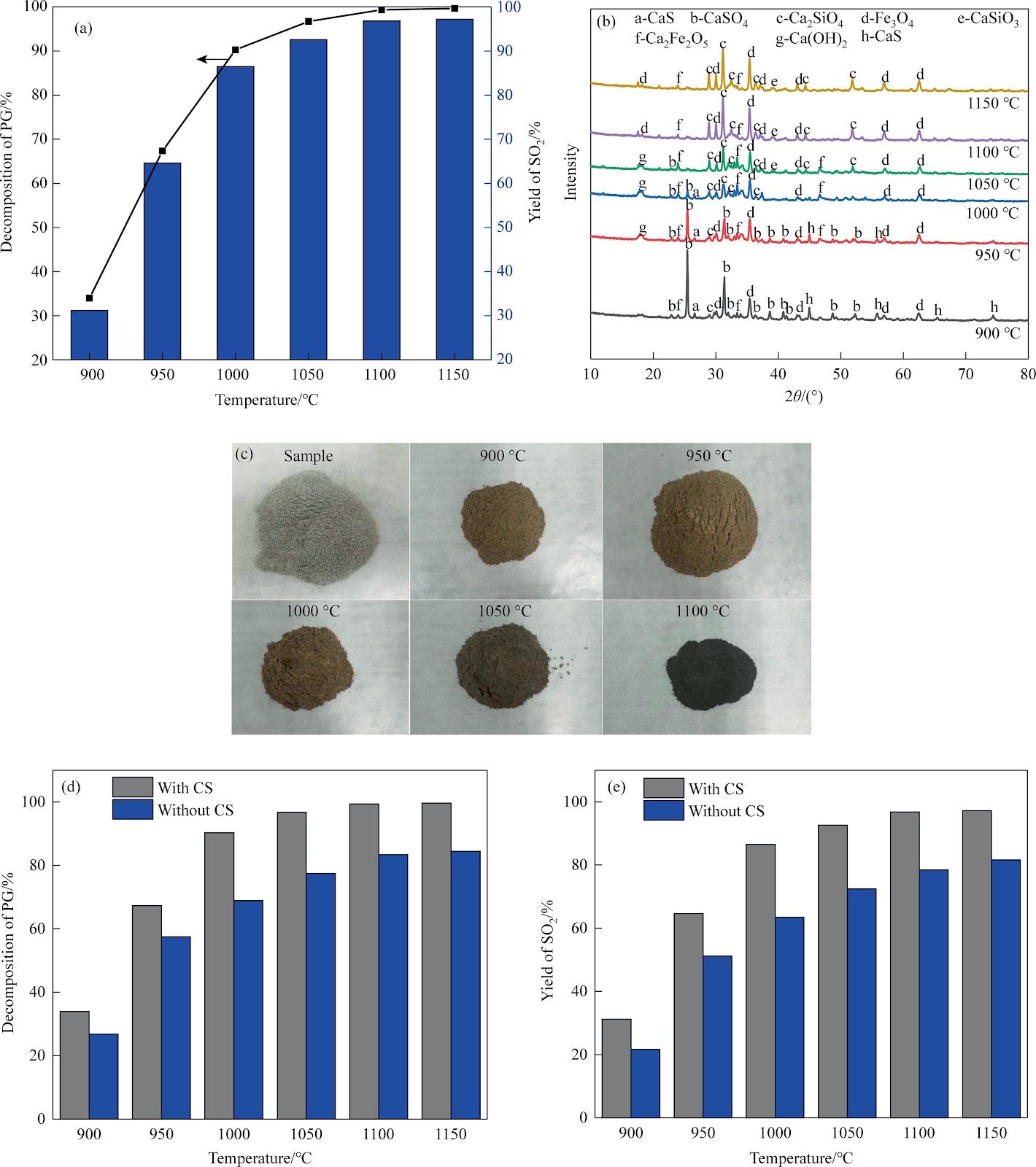
- •• Copper slag (CS) as a novel additive significantly enhances phosphogypsum (PG) decomposition, increasing PG decomposition rate from 83.38% to 99.35% and SO2 yield from 78.62% to 96.81% at a CS/PG mass ratio of 1. • The addition of CS lowers the PG decomposition temperature from 992.4 °C to 949.6 °C, improving energy efficiency and process economics. • Optimal reaction conditions are CS/PG mass ratio of 1, Coke/PG mass ratio of 0.06, at 1100 °C for 20 minutes, achieving near-complete PG conversion. • This approach utilizes solid waste copper slag, reducing costs and environmental impact, offering a sustainable pathway for PG valorization and SO2 production.
Abstract
The reduction of phosphogypsum (PG) to lime slag and SO2 using coke can effectively alleviate the environmental problems caused by PG. However, the PG decomposition temperature remains high and the product yield remains poor. By adding additives, the decomposition temperature can be further reduced and PG decomposition rate and product yield can be improved. However, the use of current additives such as Fe2O3 and SiO2 brings the problem of increasing economic cost. Therefore, it is proposed to use solid waste copper slag (CS) as a new additive to reduce PG to prepare SO2, which can reduce the cost and meet the environmental benefits at the same time. The effects of proportion, temperature and thermostatic time on PG decomposition are investigated by experimental and kinetic analysis combined with FactSage thermodynamic calculations to optimize the roasting conditions. Finally, the reaction mechanism is proposed. It is found that adding CS to the coke and PG system can increase the rate of PG decomposition and SO2 yield while lowering the PG decomposition temperature. For example, when the CS/PG mass ratio increases from 0 to 1, PG decomposition rate increases from 83.38% to 99.35%, SO2 yield increases from 78.62% to 96.81%, and PG decomposition temperature decreases from 992.4 °C to 949.6 °C. The optimal reaction parameters are CS/PG mass ratio of 1, Coke/PG mass ratio of 0.06 at 1100 °C for 20 min with 99.35% PG decomposition rate and 96.81% SO2 yield. The process proceeds according to the following reactions: 2CaSO4 + 0.7C + 0.8Fe2SiO4 → 0.8Ca2SiO4 + 0.2Ca2Fe2O5 + 0.4Fe3O4 + 2SO2 + 0.7CO2. Finally, a process for decomposing PG with coke and CS is proposed.
1. Introduction
Phosphogypsum (PG) is a byproduct of phosphorus chemical firms when producing phosphoric acid. The production of the PG industry in China is 75.1 million tons in 2022, and the total usage is 36 million tons. Only 47.9% of the capacity is being utilized. CaSO4·nH2O (n = 0, 0.5, 1.5, 2) is the primary constituent of PG [1]. Additionally, it contains a variety of impurities like Si, Fe, Mg, Al, P, and F, as well as organic debris and trace metals like Cr and Pb [2]. The large number of impurities and a certain degree of radiation severely limit the large-scale application of PG. Currently, PG is mainly treated by stacking. In addition to occupying a significant amount of area, piling of PG also readily results in the poisoning of the atmosphere and groundwater [3]. As a result, PG treatment is urgently required.
It is feasible to reduce PG to SO2 and lime slag with thermochemical methods. Lime slag can be used to make construction materials, while SO2 can be used to make sulfuric acid [4,5]. However, since direct decomposition temperature of PG is more than 1620 °C, direct heating is not used in industry to decompose PG, but the temperature of PG decomposition is reduced by adding reducing agents. Common reducing agents include carbon-based types, such as lignite [6], bituminous coal [7,8], anthracite [9], high-sulfur coal [10], coke [11], gangue [12], and petroleum coke [13]. Sulfur-based species, such as sulfur [14], FeS2 [15], thionite [16], and H2S [17,18]. In addition, CO, H2 [19,20] and other gases (CO·O2) [21] are also used as reducing agents. The inclusion of reducing chemicals reduces the decomposition temperature of PG considerably. Nonetheless, the temperature of PG decomposition remains high. Researchers have found that PG’s decomposition temperature may be further lowered by adding additives. Furthermore, the PG decomposition rate and product yield can be improved. The additives that have been studied include FeCl3 [22], Fe2O3 [23], iron phosphate slag [24], Al2O3 [25], SiO2 [26], potassium feldspar [27] and various transition group metal oxides, such as V2O5, MnO2, Cr2O3, CuO, CoCl3·7H2O, Co2O3/Co3O4, etc. [11]. Al2O3 and SiO2 can accelerate the reaction rate and reduce the initial decomposition temperature at the early stage of decomposition, but intermediate products such as calcium sulfosilicate and calcium sulfoaluminate are produced during the reaction, which inhibit the decomposition of PG [28]. Therefore Si-based and Al-based additives are not perfect as PG decomposition additives. Currently, Fe-based additives are the most widely used in PG decomposition. However, the use of the above mentioned Fe-based additives brings the problem of increased economic costs. Therefore, it is necessary to find new iron-based additives to further reduce production costs.
Copper slag (CS) is a waste slag containing iron, silicon, aluminum and calcium produced during the pyroprocess of copper refining. The Fe in CS is mainly in the form of ferrous vitrinite, iron olivine (Fe2SiO4) and magnetite [29]. The present yearly emissions of CS are more than 14 million ton
Loading authentic research manuscript (Pages 1–5)...
Dong Ma, Qinhui Wang (2023). Copper slag assisted coke reduction of phosphogypsum for sulphur dioxide preparation. Chinese Journal of Chemical Engineering. https://doi.org/10.1016/j_cjche_144874305
Research & Educational Purpose Only:The translations, structured abstracts, analytical annotations, and data reports provided by SinoTechIntel are intended exclusively for academic research, internal corporate R&D, and educational benchmarking. They do not constitute formal engineering, chemical safety, legal, or professional advice.
Copyright & Intellectual Property Notice: Original copyright of the underlying source articles and experimental data remains with the respective authors, institutions, and original publishing journals. SinoTechIntel claims intellectual property only over its proprietary translations, analytical syntheses, and AEO structured enhancements in accordance with international fair use and academic citation principles.
Frequently Asked Questions
What is the main purpose of using copper slag in phosphogypsum decomposition?
Copper slag is used as a low-cost additive to enhance the decomposition of phosphogypsum, increasing the decomposition rate and SO2 yield while lowering the required temperature, thus improving process efficiency and reducing environmental impact.
What are the optimal reaction conditions for phosphogypsum decomposition with copper slag?
The optimal conditions are a CS/PG mass ratio of 1, a Coke/PG mass ratio of 0.06, a temperature of 1100 °C, and a holding time of 20 minutes, achieving a PG decomposition rate of 99.35% and an SO2 yield of 96.81%.
How does copper slag addition affect the decomposition temperature of phosphogypsum?
Adding copper slag lowers the decomposition temperature of phosphogypsum from 992.4 °C to 949.6 °C, which reduces energy consumption and operational costs.
What is the environmental significance of this research?
This research provides a sustainable method to utilize phosphogypsum and copper slag, both industrial wastes, to produce valuable SO2 and construction materials, thereby reducing waste accumulation and environmental pollution.
What is the proposed reaction mechanism for phosphogypsum decomposition with coke and copper slag?
The reaction proceeds as: 2CaSO4 + 0.7C + 0.8Fe2SiO4 → 0.8Ca2SiO4 + 0.2Ca2Fe2O5 + 0.4Fe3O4 + 2SO2 + 0.7CO2, indicating that copper slag provides iron silicate that reacts with calcium sulfate to form stable silicates and release SO2.
Related Technical Papers & Translations
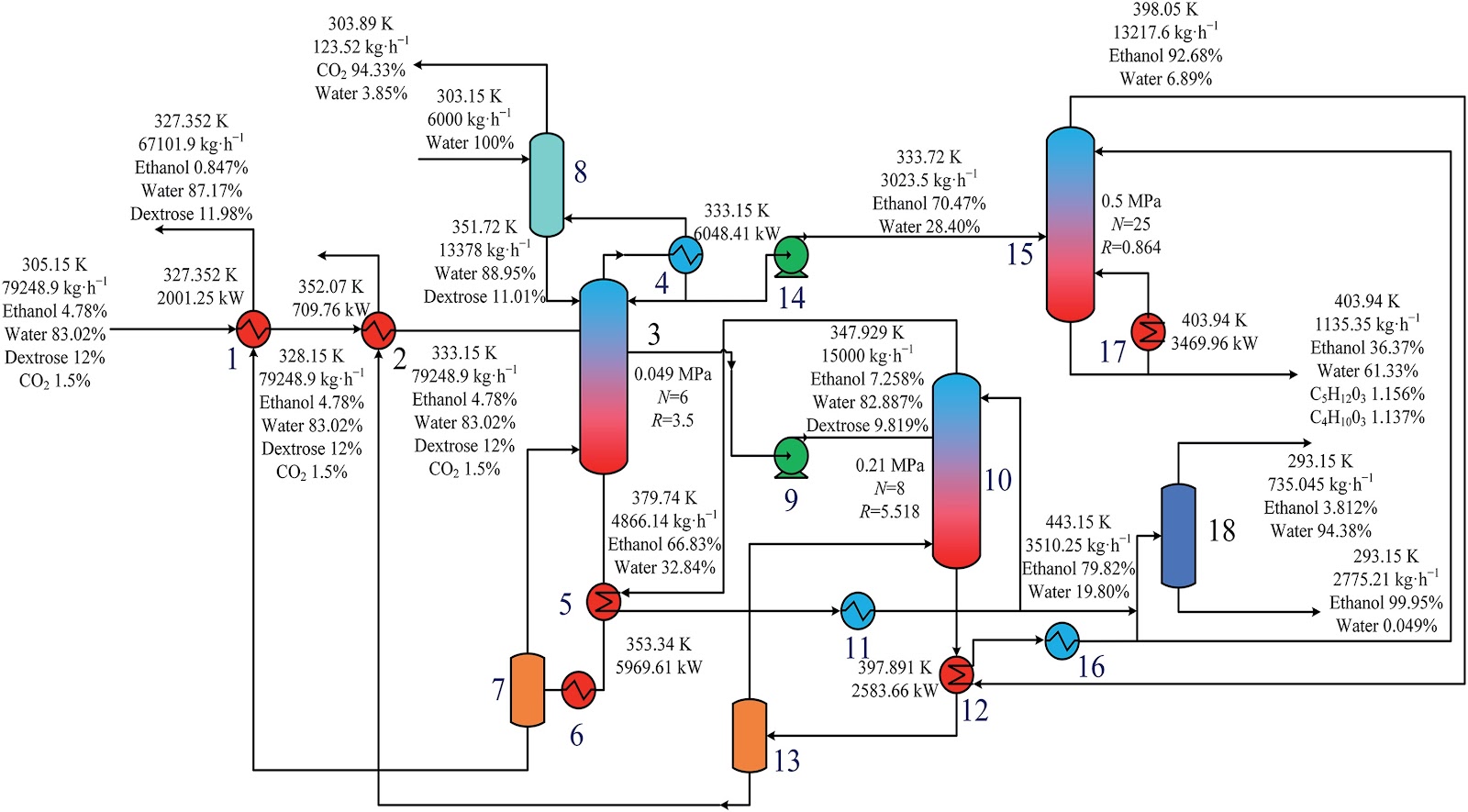
Design and optimization of a high-efficiency distillation process for cellulosic fuel ethanol integrated with thermal coupling and molecular sieve adsorption
To address the challenges of high energy consumption and prominent costs in the traditional three-columns distillation process for cellulosic fuel ethanol, a distillation—molecular sieve coupling separation process is proposed. This process integrates a three-column (crude distillation column, first distillation column, second distillation column) system with a 3A molecular sieve adsorption deep dehydration unit. A thermal coupling network is constructed via differential pressure design (steam from medium/high-pressure columns as mutual heat sources, reboiler liquid waste heat for feed preheating), and molecular sieve adsorption conditions are optimized. The study first performs a thermodynamic consistency test on the ethanol—water system, determines optimal non-random two-liquid (NRTL) model binary interaction parameters via experimental data regression for Aspen Plus simulation. Aiming at minimum total annual cost (TAC), Aspen Plus is used to optimize process parameters (theoretical tray number, feed location, reflux ratio, side-draw position, etc.). Economic analysis shows this process reduces CO2 emission costs by 27.56%, TAC by 15.58% (to 5.123 × 10⁶ USD·a-1), and increases ethanol purity to >99.6%, providing an effective solution for green, efficient separation.
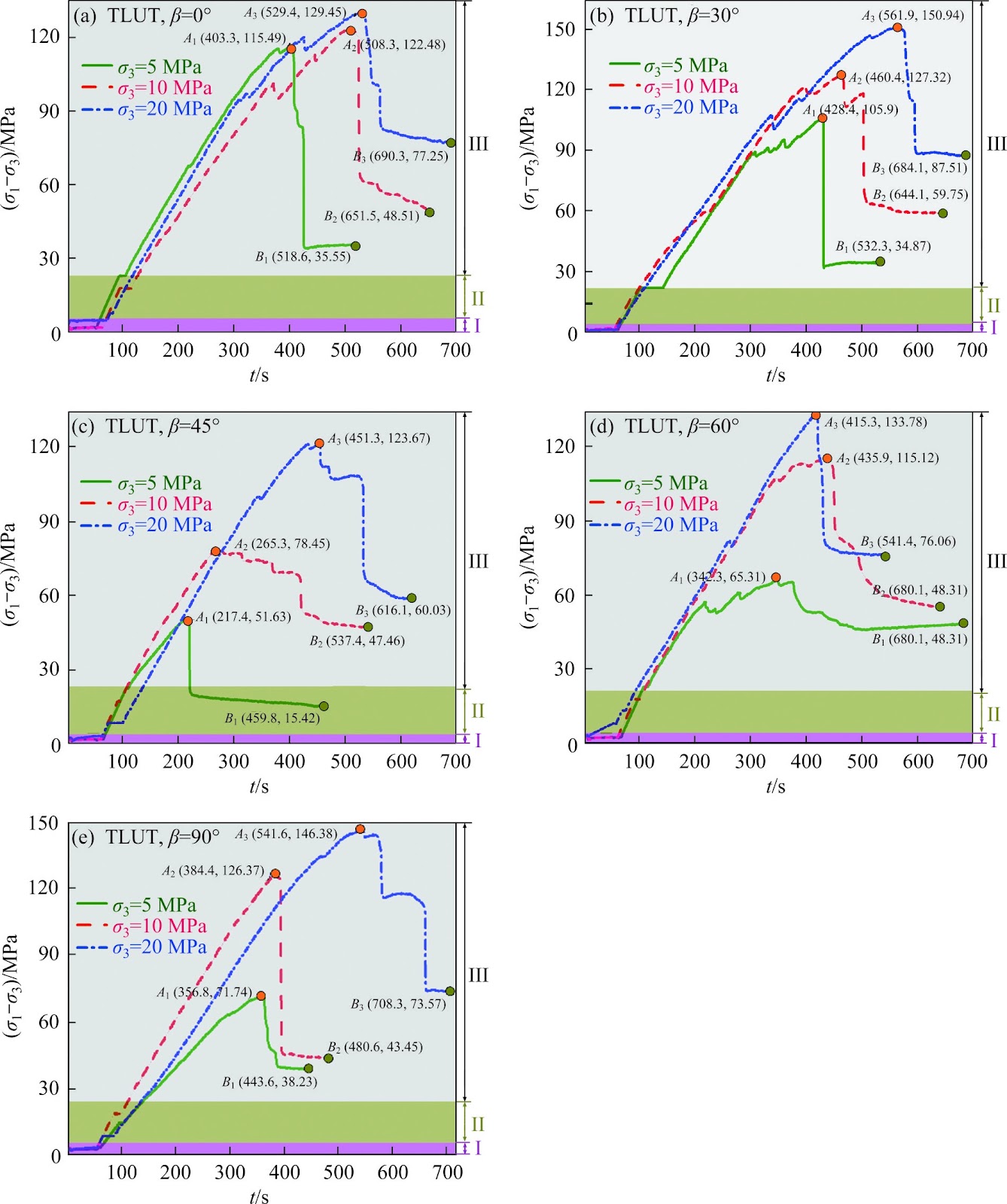
A cohesion loss model for determining residual strength of deep bedded sandstone
Rock residual strength, as an important input parameter, plays an indispensable role in proposing the reasonable and scientific scheme about stope design, underground tunnel excavation and stability evaluation of deep chambers. Therefore, previous residual strength models of rocks established were reviewed. And corresponding related problems were stated. Subsequently, starting from the effects of bedding and whole life-cycle evolution process, series of triaxial mechanical tests of deep bedded s
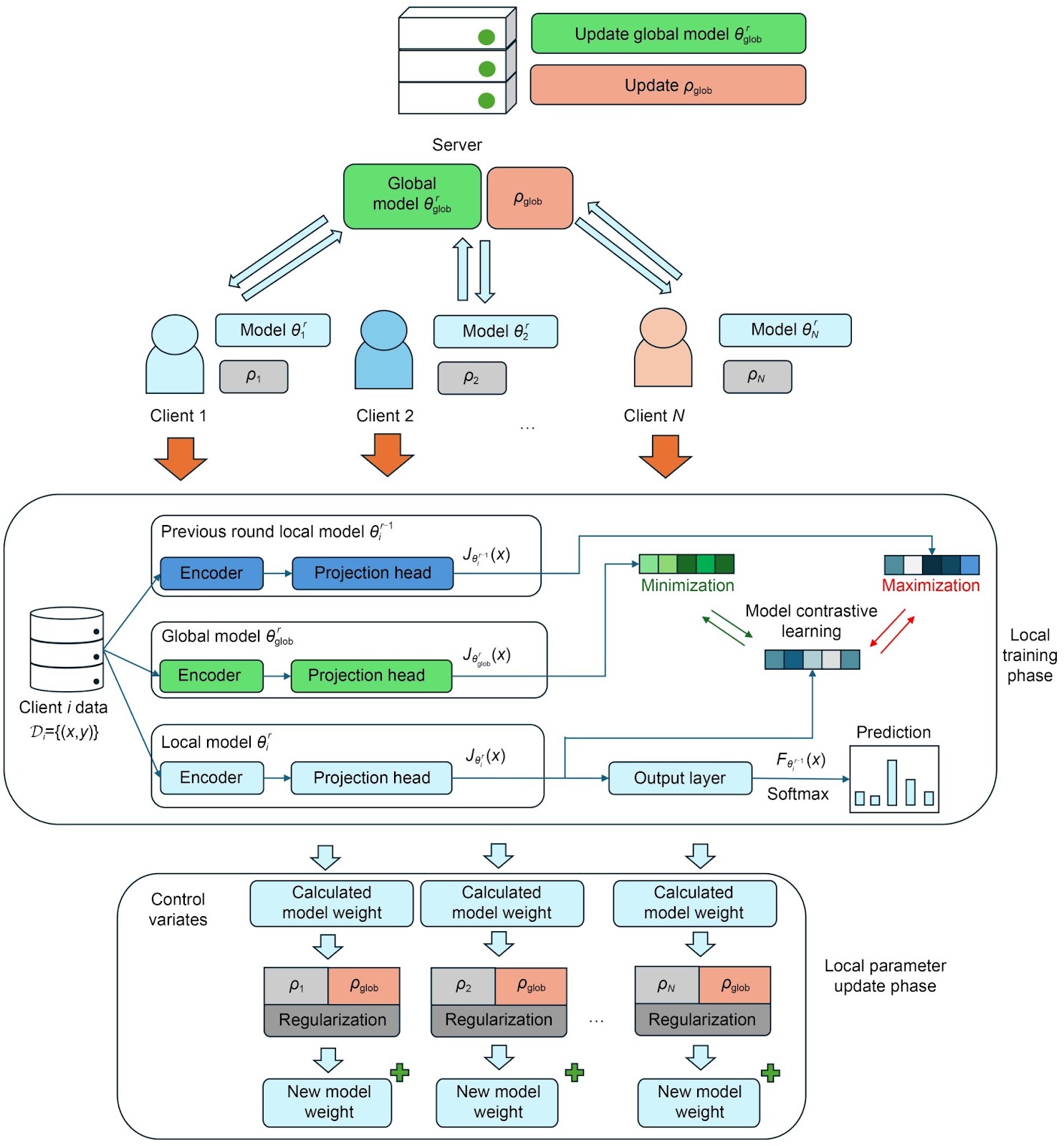
Federated model with contrastive learning and adaptive control variates for human activity recognition
Recent attention to privacy issues demands a communication-safe method for training human activity recognition (HAR) models on client activity data. Federated learning (FL) has become a compelling technique to facilitate model training between the server and clients while preserving data privacy. However, classical FL methods often assume independent and identically distributed (IID) data among clients. This assumption does not hold true in practical scenarios. Human activity in real-world scena