Key Takeaways & Executive Findings
- •• Two granulation methods (extrusion and droplet) were compared for producing H1.33Mn1.67O4 adsorbents; droplet method (DHMO) yielded higher porosity and superior lithium adsorption capacity in gas-produced water. • DHMO with optimal binder concentration (0.14 g·ml−1) achieved a lithium adsorption capacity of 25.14 mg·g−1, with fast equilibrium (9 h) and high selectivity for Li+ over competing ions. • The adsorption process followed Langmuir and pseudo-second-order models, and pore diffusion model accurately described the kinetics, indicating diffusion-controlled adsorption. • DHMO exhibited excellent cyclic stability: after 20 cycles, lithium adsorption capacity remained above 17.30 mg·g−1 with manganese dissolution below 1%, demonstrating practical applicability for lithium recovery from gas-produced water.
Abstract
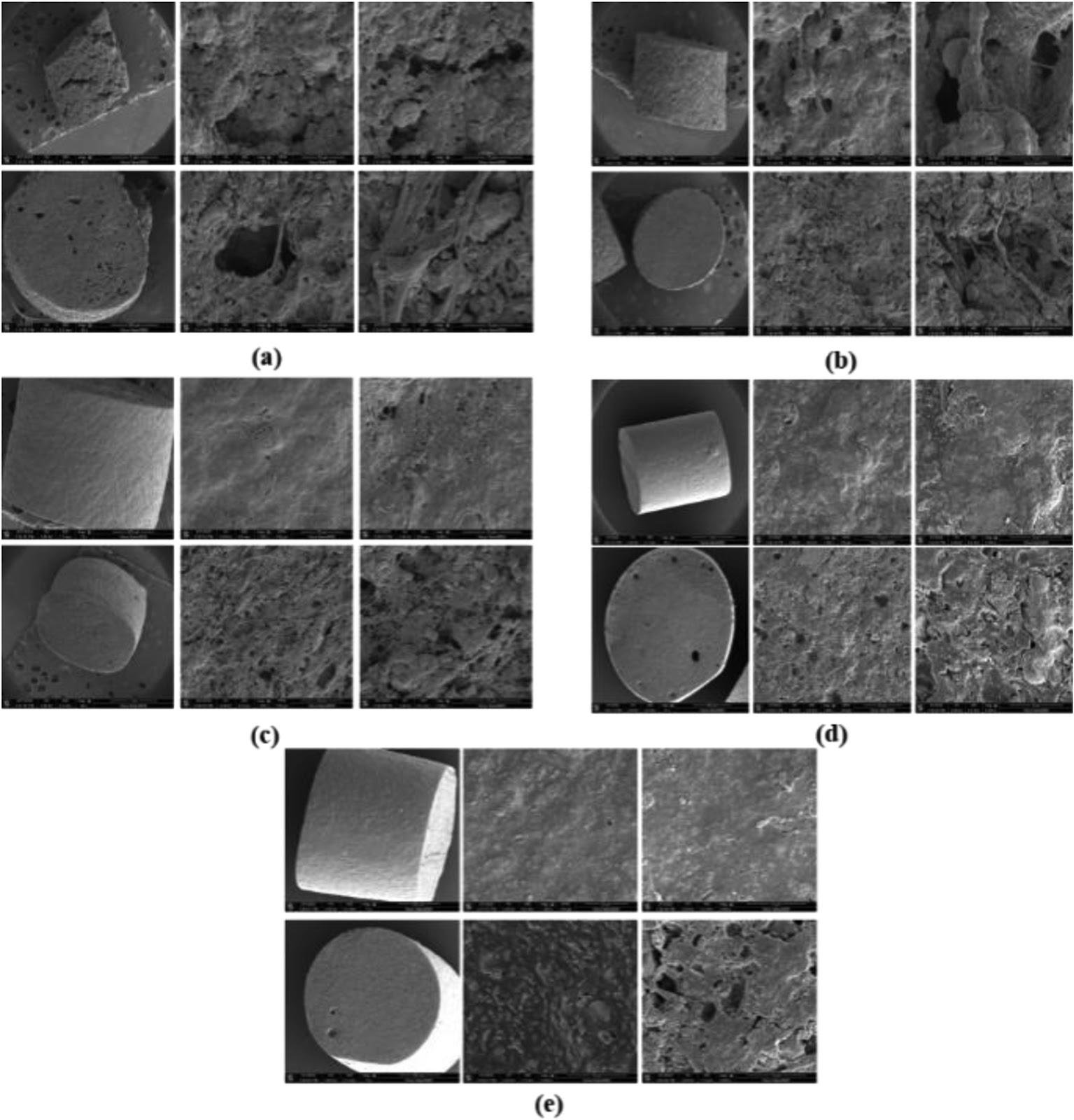
Gas-produced water is an accompanying wastewater in the natural gas extraction process, and it is a potential liquid lithium resource that contains a considerable amount of lithium. This study investigated the feasibility of using manganese-based ion sieves to adsorb and extract lithium from gas-produced water. And we focused on the applicability of two different granulation methods, extrusion and droplet, in gas-produced water systems. Two types of H1.33Mn1.67O4 particles were prepared by the extrusion method (EHMO) and the droplet method (DHMO). The porosity of DHMO was much higher than that of EHMO, and the adsorption performance of DHMO increased with the decrease of binder concentration. DHMO prepared with a binder concentration of 0.14 g·ml−1 exhibited the best adsorption performance in gas-produced water, and the Li+ adsorption capacity could reach 25.14 mg·g−1. In gas-produced water, the adsorption equilibrium of DHMO only took 9 h, and the adsorption process conformed to the Langmuir model and pseudo-second-order kinetic model. The pore diffusion model (PDM) could well describe its adsorption process. Besides, DHMO showed a great selectivity to Li+, and the selectivity order of DHMO in gas-produced water was Li+>Ba2+[Mg2+, Ca2+, Sr2+[Na+[K+. After 20 cycles, the Li+ adsorption capacity was still higher than 17.30 mg·g−1, and the rate of manganese dissolution was less than 1%.
1. Introduction
Lithium and its compounds are widely used in various industries, such as batteries, glass, ceramic, lubricating grease, optical materials, and functional materials [1e3]. With the rapid development of the electric vehicle industry and the widespread popularity of portable electronic devices, the consumption of lithium resources in rechargeable lithium batteries is increasing dramatically [4e6]. According to the statistics from the United States Geological Survey (USGS) in 2023, the proportion of lithium batteries is as high as 80% in the global lithium product end-use markets in 2022. With the rapid increase in demand for lithium, it is necessary to explore all available lithium resources.
Currently, two-thirds of global lithium production is provided by brines, and lithium in brines accounts for over 60% of lithium resource reserves [7]. The types of brines include salt lake brine [8e10], seawater [11,12], oil and gas-produced water [13,14], and geothermal water [15,16]. Various methods have been employed for extracting lithium from salt lake brines, including precipitation [17], adsorption [18e21], extraction [22,23], membrane separation [24e26], and electrochemical cells [27,28], which are relatively mature technologies. Although there is a large amount of lithium resources in seawater, it is difficult and costly to extract lithium from seawater because of its extremely low concentration [29,30]. Gas-produced water is groundwater produced during the natural gas extraction process. Typically, lithium concentrations of gas-produced water are below 100 mg·L−1 (Table 1), but many gas-produced waters have relatively high lithium concentrations [31]. For example, in the Sichuan Basin of China, there are multiple gas-produced waters with lithium concentration exceeding 50 mg·L−1 and some even exceeding 300 mg·L−1 [32], so it is a new type of resource with great exploration prospects [31,33,34]. However, extracting lithium from it still poses significant challenges due to the introduction of various additives during drilling or hydraulic fracturing production. There are many types of pollutants in the gas-produced water [35e37], coupled with its complex composition, high organic concentration [38,39], and high mineralization [34,40]. With the further exploitation of natural gas and shale gas, the amount of produced water also increases sharply [36,41], so its lithium resource potential is huge, which can be used as a new growth point for lithium resource extraction [31,42].
Compared to salt lake brines, there are fewer applicable methods on the extraction of lithium from gas-produced water. For example, membrane separation is usually used to separate different valence ions, such as Li+ and Mg2+, in salt lake brines with a high Mg/Li ratio, but there is a large amount of gas-produced water that belongs to monovalent systems with a high concentration of Na+, so the membrane separation method is not applicable. In addition, the electrochemical methods and various coupled series methods are mainly studied for salt lake brine, and there have been no reports on lithium extraction from gas-produced water [43,44]. At present, research on lithium extraction from gas-produced water mainly focuses on adsorption [14,37,
Loading authentic research manuscript (Pages 1–5)...
Jun Qiu, Lu-Ri Bao, Wei Guo, Ying Yang, Shu-Ying Sun (2023). Synthesis of granulated Li1.33Mn1.67O4 via two antisolvent methods for lithium adsorption from gas-produced water. Chinese Journal of Chemical Engineering. https://doi.org/10.1016/j_cjche_144878542
Research & Educational Purpose Only:The translations, structured abstracts, analytical annotations, and data reports provided by SinoTechIntel are intended exclusively for academic research, internal corporate R&D, and educational benchmarking. They do not constitute formal engineering, chemical safety, legal, or professional advice.
Copyright & Intellectual Property Notice: Original copyright of the underlying source articles and experimental data remains with the respective authors, institutions, and original publishing journals. SinoTechIntel claims intellectual property only over its proprietary translations, analytical syntheses, and AEO structured enhancements in accordance with international fair use and academic citation principles.
Frequently Asked Questions
What is the main objective of this study?
The study aims to investigate the feasibility of using manganese-based ion sieves (H1.33Mn1.67O4) to adsorb and extract lithium from gas-produced water, and to compare two granulation methods (extrusion and droplet) for preparing the adsorbent particles.
Which granulation method performed better for lithium adsorption?
The droplet method (DHMO) performed better than the extrusion method (EHMO) due to its higher porosity, which enhanced lithium adsorption capacity. DHMO with a binder concentration of 0.14 g·ml−1 achieved the best adsorption capacity of 25.14 mg·g−1 in gas-produced water.
What are the adsorption kinetics and isotherm models for DHMO?
The adsorption process of DHMO followed the Langmuir isotherm model and pseudo-second-order kinetic model. Additionally, the pore diffusion model (PDM) accurately described the adsorption process, indicating that intraparticle diffusion is a significant rate-controlling step.
How selective is DHMO towards lithium ions in gas-produced water?
DHMO exhibited high selectivity for Li+ over other cations present in gas-produced water. The selectivity order was Li+ > Ba2+ > Mg2+, Ca2+, Sr2+ > Na+ > K+, demonstrating its potential for selective lithium recovery from complex matrices.
What is the cyclic stability of DHMO for lithium adsorption?
DHMO showed excellent cyclic stability. After 20 adsorption-desorption cycles, the lithium adsorption capacity remained above 17.30 mg·g−1, and the manganese dissolution rate was less than 1%, indicating good reusability and structural stability.
Related Technical Papers & Translations

Design and optimization of a high-efficiency distillation process for cellulosic fuel ethanol integrated with thermal coupling and molecular sieve adsorption
To address the challenges of high energy consumption and prominent costs in the traditional three-columns distillation process for cellulosic fuel ethanol, a distillation—molecular sieve coupling separation process is proposed. This process integrates a three-column (crude distillation column, first distillation column, second distillation column) system with a 3A molecular sieve adsorption deep dehydration unit. A thermal coupling network is constructed via differential pressure design (steam from medium/high-pressure columns as mutual heat sources, reboiler liquid waste heat for feed preheating), and molecular sieve adsorption conditions are optimized. The study first performs a thermodynamic consistency test on the ethanol—water system, determines optimal non-random two-liquid (NRTL) model binary interaction parameters via experimental data regression for Aspen Plus simulation. Aiming at minimum total annual cost (TAC), Aspen Plus is used to optimize process parameters (theoretical tray number, feed location, reflux ratio, side-draw position, etc.). Economic analysis shows this process reduces CO2 emission costs by 27.56%, TAC by 15.58% (to 5.123 × 10⁶ USD·a-1), and increases ethanol purity to >99.6%, providing an effective solution for green, efficient separation.

A cohesion loss model for determining residual strength of deep bedded sandstone
Rock residual strength, as an important input parameter, plays an indispensable role in proposing the reasonable and scientific scheme about stope design, underground tunnel excavation and stability evaluation of deep chambers. Therefore, previous residual strength models of rocks established were reviewed. And corresponding related problems were stated. Subsequently, starting from the effects of bedding and whole life-cycle evolution process, series of triaxial mechanical tests of deep bedded s

Federated model with contrastive learning and adaptive control variates for human activity recognition
Recent attention to privacy issues demands a communication-safe method for training human activity recognition (HAR) models on client activity data. Federated learning (FL) has become a compelling technique to facilitate model training between the server and clients while preserving data privacy. However, classical FL methods often assume independent and identically distributed (IID) data among clients. This assumption does not hold true in practical scenarios. Human activity in real-world scena