Key Takeaways & Executive Findings
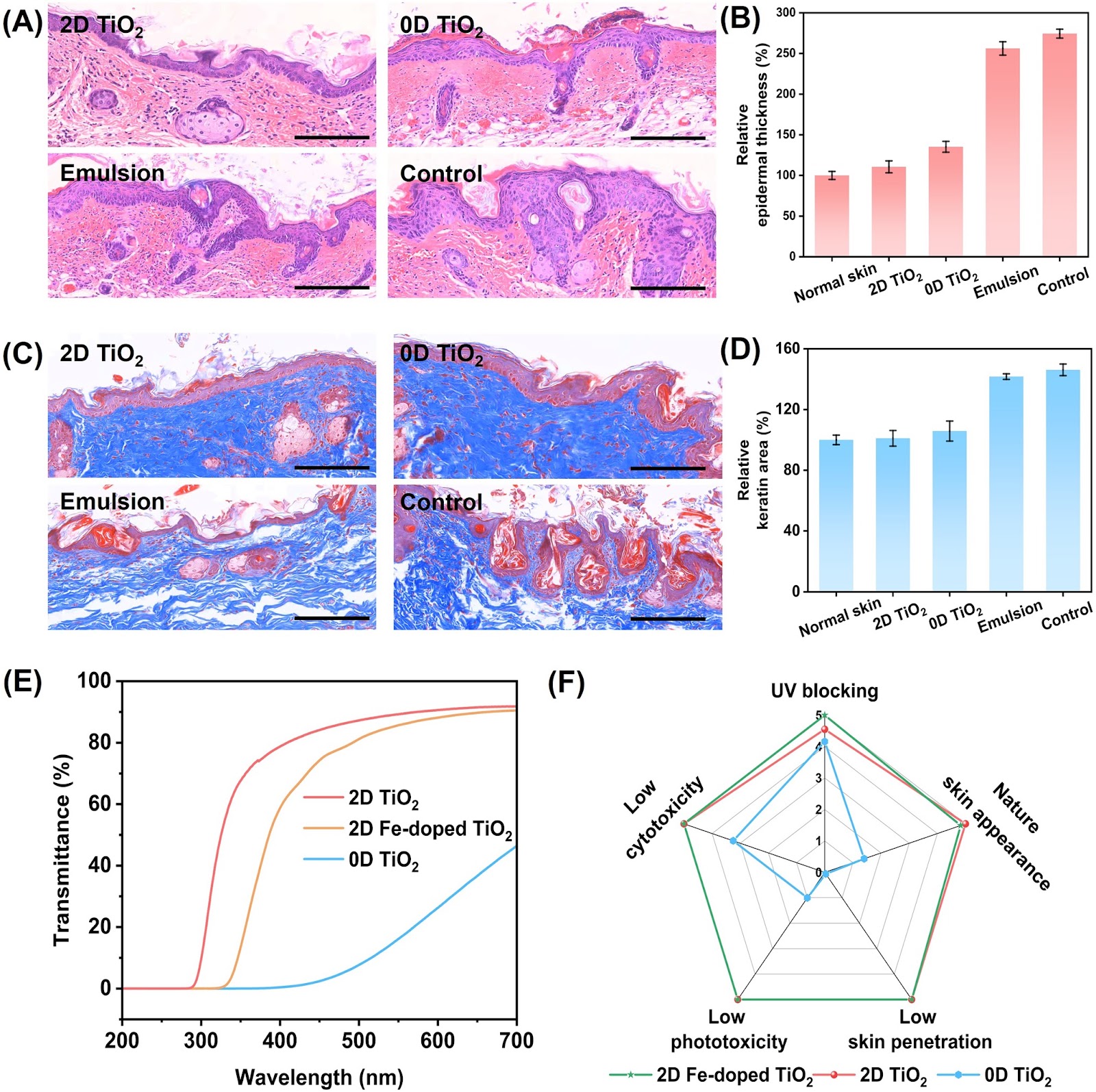
- •• Two-dimensional (2D) TiO2 was developed with >99% visible light transmittance for non-whitening UV protection, outperforming conventional 0D TiO2 in aesthetics while matching UV-blocking efficacy. • 2D TiO2 achieves ultralow skin penetration and 90% reduced reactive oxygen species generation versus 0D TiO2, eliminating photocatalytic toxicity and DNA damage risks. • 2D TiO2 enabled tunable UVA/UVB coverage via metal doping without compromising visible light transmittance, ensuring Scientific Committee on Consumer Safety compliance and biocompatibility. • We integrated high UV protection, natural appearance, and photoinertness into a single material, redefining aesthetic-safe sunscreen design through 2D structural innovation.
Abstract
Titanium dioxide (TiO2) has been an important protective ingredient in mineral-based sunscreens since the 1990s. However, traditional TiO2 nanoparticle formulations have seen little improvement over the past decades and continue to face persistent challenges related to light transmission, biosafety, and visual appearance. Here, we report the discovery of two-dimensional (2D) TiO2, characterized by a micro-sized lateral dimension (~1.6 μm) and atomic-scale thickness, which fundamentally resolves these long-standing issues. The 2D structure enables exceptional light management, achieving 80% visible light transparency—rendering it nearly invisible on the skin—while maintaining UV-blocking performance comparable to unmodified rutile TiO2 nanoparticles. Its larger lateral size results in a two-orders-of-magnitude reduction in skin penetration (0.96 w/w%), significantly enhancing biosafety. Moreover, the unique layered architecture inherently suppresses the generation of reactive oxygen species (ROS) under sunlight exposure, reducing the ROS generation rate by 50-fold compared to traditional TiO2 nanoparticles. Through precise metal element modulation, we further developed the first customizable sunscreen material capable of tuning UV protection ranges and automatically matching diverse skin tones. The 2D TiO2 offers a potentially transformative approach to modern sunscreen formulation, combining superior UV protection, enhanced safety and a natural appearance.
1. Introduction
Skin cancer is a significant threat to human health. As reported in a World Health Organization report in 2020, there are over 1.5 million annual diagnosed cases of skin cancer worldwide, with approximately 8% of patients experiencing a fatal outcome [1]. Excessive exposure to ultraviolet (UV) radiation stands as the foremost cause, contributed to more than 90% of all skin cancer cases [2]. Human efforts to shield against UV radiation date back to ancient times. For instance, ancient Egyptians used natural jasmine oil and rice bran to shield their skin from UV damage [3]. With advances in optics and physiology during the twentieth century, systematic investigations on the effects of UV exposure on human skin were started, leading to rapid progress in the use of active ingredients for UV blocking. One of the significant milestones occurred in 1928 with the introduction of sunscreen containing salicylates and cinnamates as effective components [4]. Until 1969, avobenzone, capable of shielding against ultraviolet radiation A (UVA) in the 320–400 spectral range, was developed [5]. To date, the US Food and Drug Administration and European Commission certified sunscreens use mostly organic compounds, which are considered indispensable [6]. However, these organic UV-blocking additives are prone to degradation and loss of efficacy during photoactivation [7]. For instance, avobenzone can lose 36% of its absorption capacity after one hour of sunlight exposure [8]. Moreover, some organic additives can either penetrate the skin or cause potential skin sensitization in clinical settings [9–11].
Nowadays, inorganic titanium dioxide (TiO2) was gradually proposed to replace organic additives in sunscreen formulations because of its outstanding UV stability and efficient UV shielding ability [12, 13]. This significantly prolonged the UV protection time and facilitated the rise of physical sunscreen ingredients [14, 15]. Consequently, inorganic based sunscreens have gained significant market share in recent years [16]. TiO2 primarily exists in two crystalline phases: rutile and anatase. The anatase phase exhibits stronger phototoxicity due to its significantly distorted octahedra and is commonly utilized as a photocatalytic material [17–21], whereas the rutile phase, with higher symmetry, demonstrates reduced phototoxicity. In accordance with the Scientific Committee on Consumer Safety guidelines [22], current physical sunscreens predominantly utilize rutile-phase TiO2 particles in the nanometer range (>30 nm). Current p
Loading authentic research manuscript (Pages 1–5)...
Ruoning Yang, Jiefu Chen, Xiang Li, Yaxin Zhang, Baofu Ding, Yujiangsheng Xu, Shaoqiang Luo, Shaohua Ma, Xingang Ren, Gang Liu, Ling Qiu, Hui-Ming Cheng (2025). Two-Dimensional TiO2 Ultraviolet Filters for Sunscreens. Nano-Micro Letters. https://doi.org/10.1007/s40820-025-01805-1
Research & Educational Purpose Only:The translations, structured abstracts, analytical annotations, and data reports provided by SinoTechIntel are intended exclusively for academic research, internal corporate R&D, and educational benchmarking. They do not constitute formal engineering, chemical safety, legal, or professional advice.
Copyright & Intellectual Property Notice: Original copyright of the underlying source articles and experimental data remains with the respective authors, institutions, and original publishing journals. SinoTechIntel claims intellectual property only over its proprietary translations, analytical syntheses, and AEO structured enhancements in accordance with international fair use and academic citation principles.
Frequently Asked Questions
What is the main advantage of 2D TiO2 over traditional TiO2 nanoparticles in sunscreens?
2D TiO2 offers significantly higher visible light transparency (80% vs. lower for nanoparticles), reducing the whitening effect on skin, while maintaining comparable UV-blocking efficacy. It also exhibits much lower skin penetration and reduced reactive oxygen species generation, enhancing biosafety.
How does 2D TiO2 improve skin safety?
The larger lateral size of 2D TiO2 reduces skin penetration by two orders of magnitude compared to nanoparticles, and its layered structure suppresses ROS generation by 50-fold, minimizing photocatalytic toxicity and DNA damage risks.
Can 2D TiO2 be customized for different skin tones?
Yes, through precise metal element modulation, 2D TiO2 can be engineered to tune UV protection ranges and automatically match diverse skin tones, offering a customizable sunscreen material.
What is the significance of the 2D structure in UV protection?
The 2D structure enables exceptional light management, achieving high visible light transparency while maintaining UV-blocking performance, and inherently suppresses ROS generation, addressing long-standing issues of traditional TiO2 nanoparticles.
Is 2D TiO2 compliant with safety regulations?
The study indicates that 2D TiO2 can be tuned via metal doping to ensure compliance with Scientific Committee on Consumer Safety guidelines and biocompatibility, making it suitable for sunscreen applications.
Related Technical Papers & Translations
Direct Repair of the Crystal Structure and Coating Surface of Spent LiFePO4 Materials Enables Superfast Li-Ion Migration
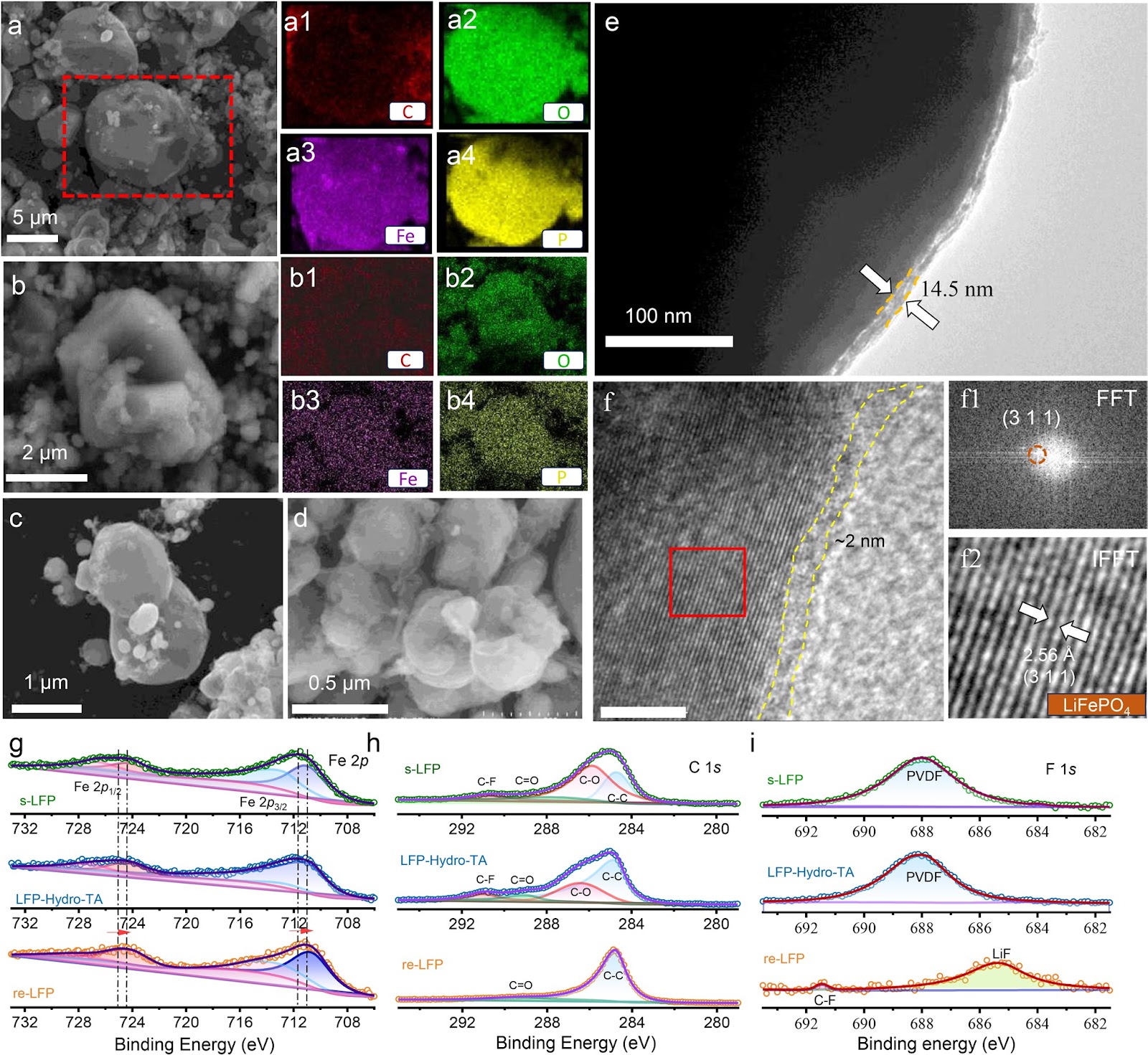
The rapid accumulation of spent LiFePO4 (LFP) cathodes from retired lithium-ion batteries necessitates the development of effective and environmental-friendly recycling strategies. In this context, direct regeneration has emerged as a promising approach for reclaiming LFP cathode materials, offering a streamlined pathway to restore their electrochemical functionality. We report an integrated regeneration protocol that simultaneously repairs the degraded crystal structure and reconstructs the damaged carbon coating in spent LFP. The regenerated cathode material had superfast lithium-ion diffusion kinetics and a stable cathode–electrolyte interface, giving a remarkable rate capability with specific capacities of 122 mAh g−1 at 5C and 106 mAh g−1 at 10C (1C = 170 mA g−1). It also maintained capacities of 110.7 mAh g−1 (5C) and 84.1 mAh g−1 (10C) after 400 cycles. It could be used in harsh environments and could be stably cycled at subzero temperatures (−10 and −20 °C) and in solid-state electrolyte batteries. Life cycle assessment combined with economic evaluation using the EverBatt model reveals that this direct regeneration approach has high economic and environmental benefits.
Oxide Semiconductor for Advanced Memory Architectures: Atomic Layer Deposition, Key Requirement and Challenges
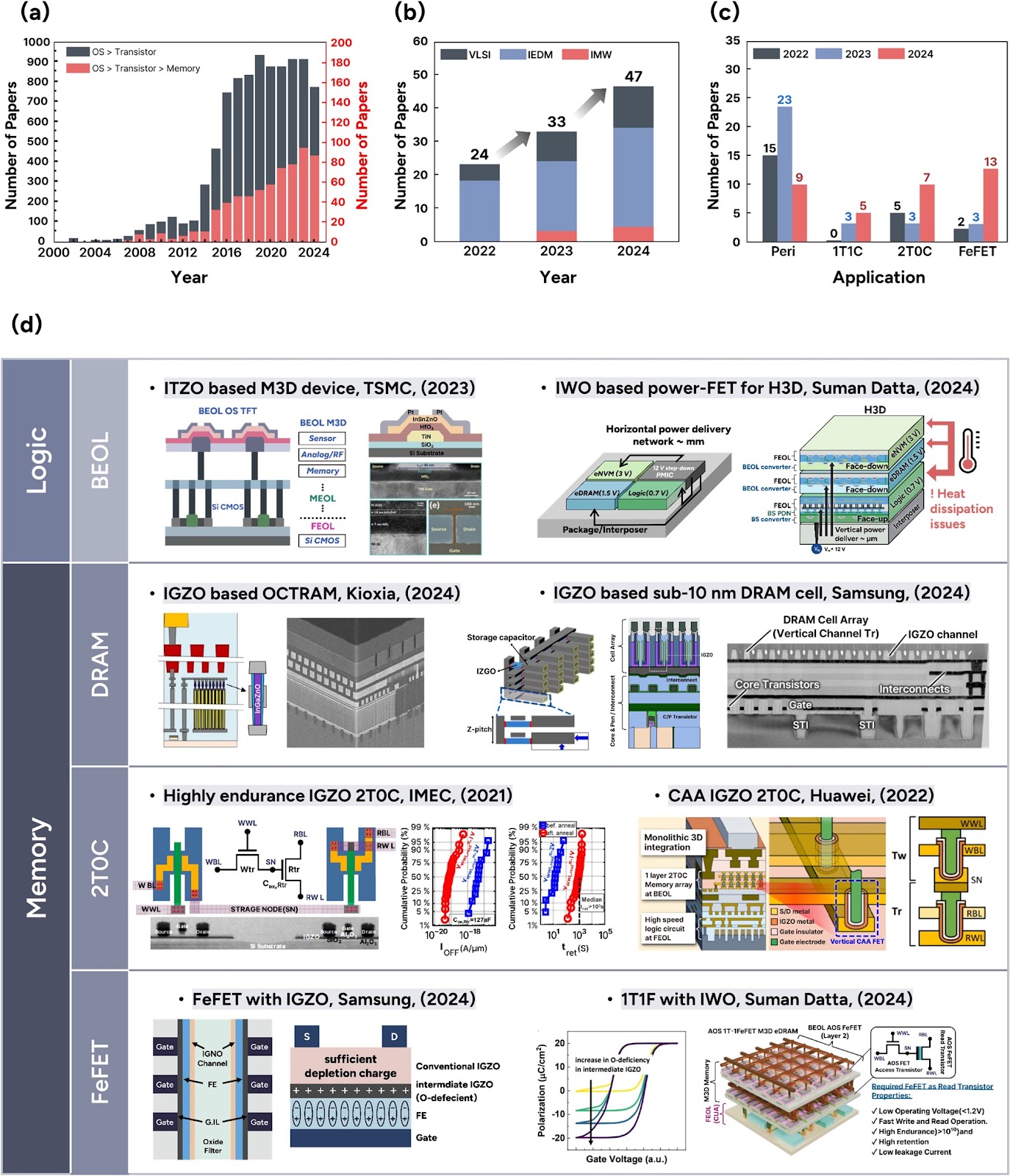
Oxide semiconductors (OSs), introduced by the Hosono group in the early 2000s, have evolved from display backplane materials to promising candidates for advanced memory and logic devices. The exceptionally low leakage current of OSs and compatibility with three-dimensional (3D) architectures have recently sparked renewed interest in their use in semiconductor applications. This review begins by exploring the unique material properties of OSs, which fundamentally originate from their distinct electronic band structure. Subsequently, we focus on atomic layer deposition (ALD), a core technique for growing excellent OS films, covering both basic and advanced processes compatible with 3D scaling. The basic surface reaction mechanisms—adsorption and reaction—and their roles in film growth are introduced. Furthermore, material design strategies, such as cation selection, crystallinity control, anion doping, and heterostructure engineering, are discussed. We also highlight challenges in memory applications, including contact resistance, hydrogen instability, and lack of p-type materials, and discuss the feasibility of ALD-grown OSs as potential solutions. Lastly, we provide an outlook on the role of ALD-grown OSs in memory technologies. This review bridges material fundamentals and device-level requirements, offering a comprehensive perspective on the potential of ALD-driven OSs for next-generation semiconductor memory devices.
Laser powder bed fusion of biodegradable Zn-4Cu alloy: Processing, microstructure and properties
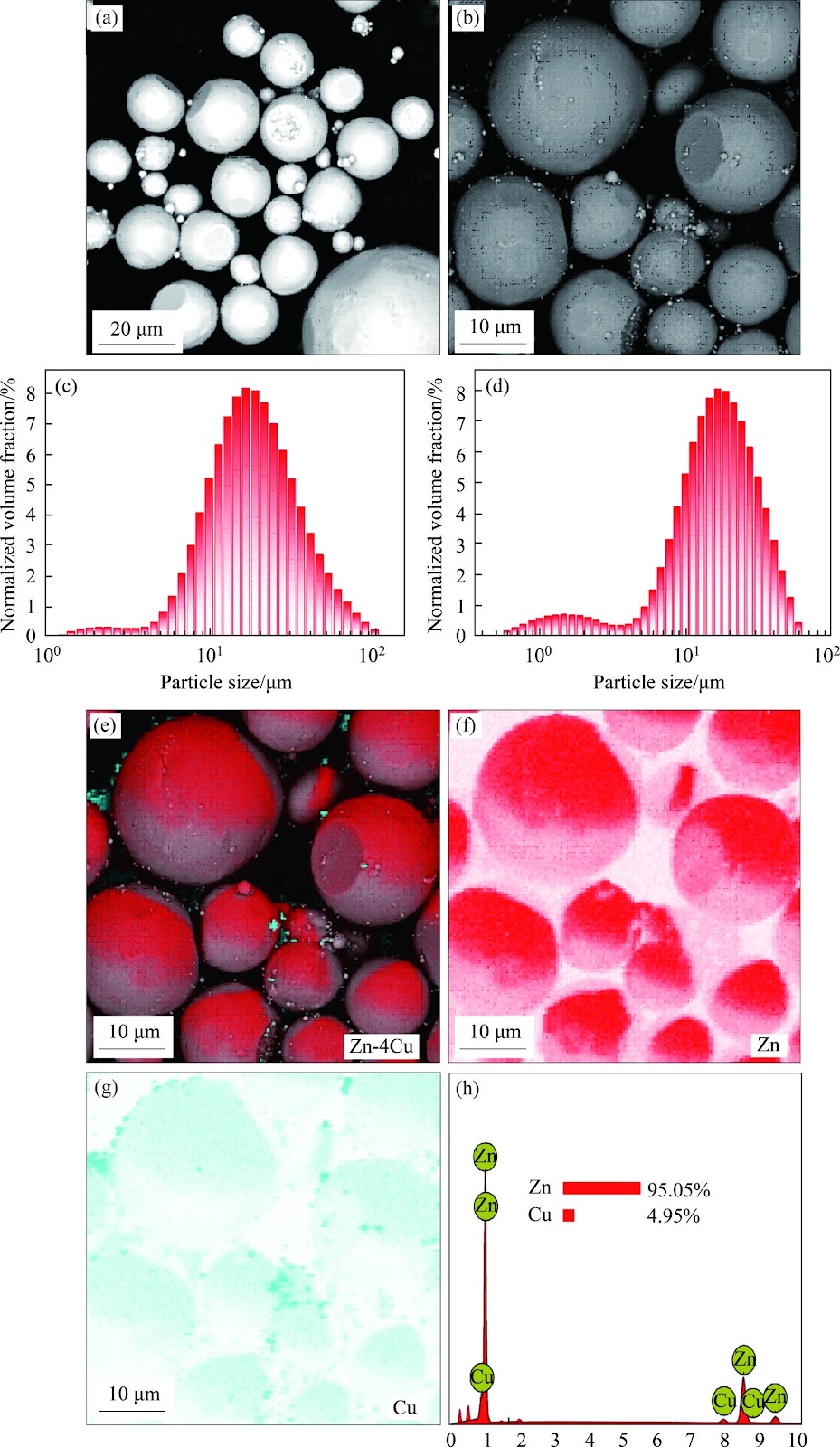
Zn's natural degradability and biocompatibility make it a promising candidate for implants, however, its mechanical properties remain insufficient for bone applications. In this study, the performance of Zn was enhanced by developing Zn-Cu alloys via laser powder bed fusion (LPBF). Optimal LPBF parameters for forming stable tracks were achieved by adjusting laser power and scanning speed. Under optimized conditions of 100 W and 100 mm/s, high-density (99.58%) Zn-Cu alloys with improved hardness (68.2HV) and yield strength (160 MPa) were achieved. These improvements are attributed to solid solution strengthening, segregation strengthening, and grain refinement. The Zn-Cu alloys also demonstrated favorable degradation behavior, with a rate of 0.16 mm/year. This degradation is primarily driven by micro-galvanic corrosion between the CuZn5 phase and Zn matrix, along with refined grains and increased grain boundary density. This work demonstrates a viable strategy for fabricating Zn-based implants with enhanced structural integrity and mechanical performance via LPBF.