Key Takeaways & Executive Findings
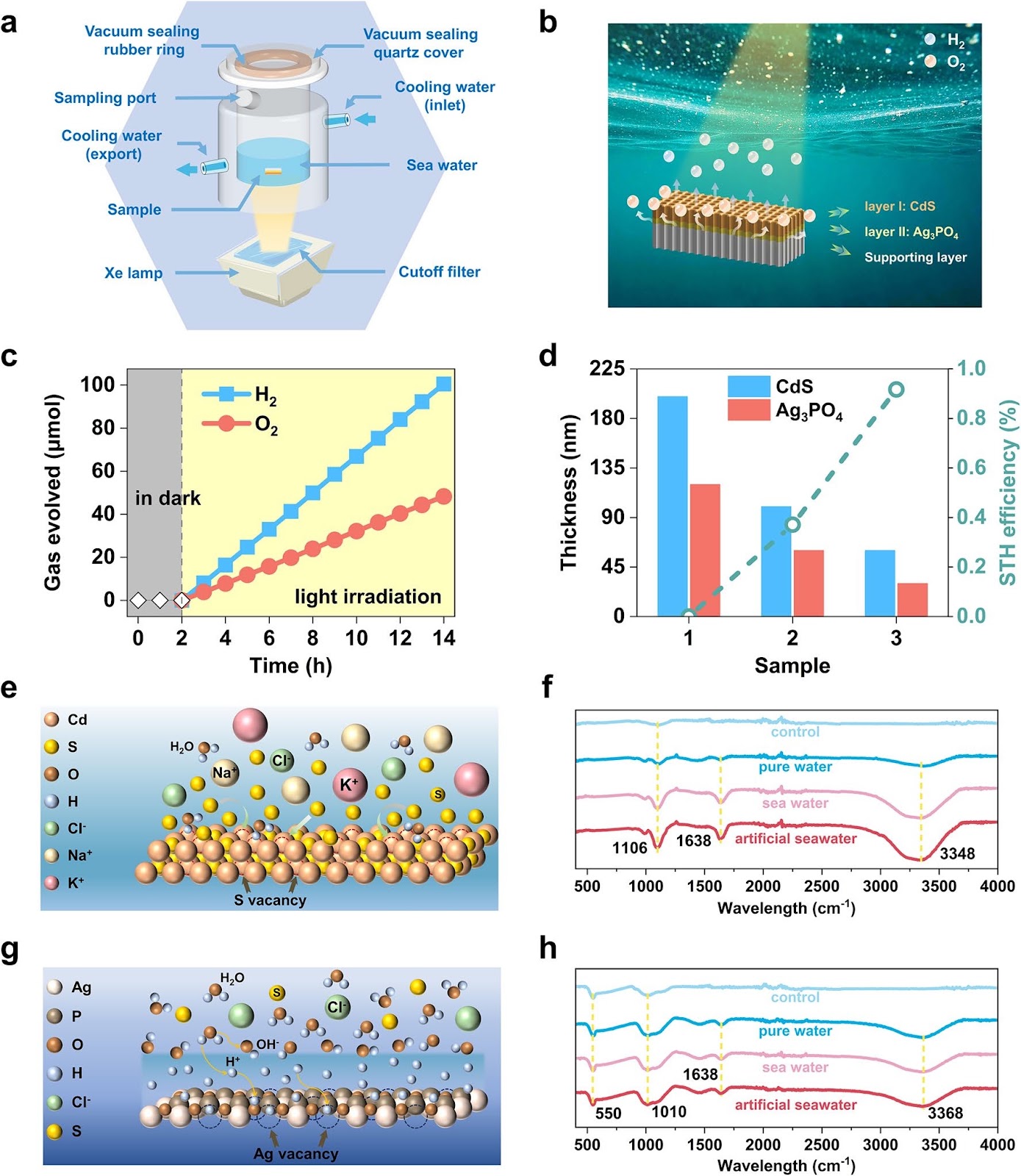
- •• A film-type Ag3PO4/CdS photocatalyst in a porous substrate configuration is designed and prepared to avoid photocorrosion and ensure outstanding firmness. • Both the S and Ag vacancy-rich surface and the heterojunction within the space charge region are found to be the key for high solar-to-hydrogen efficiency and excellent stability in seawater over 300 h. • The first fully solar-driven hydrogen production prototype is constructed to work outdoors, exhibiting a high H2 evolution rate of 68.01 mmol h−1 m−2. • The separation of oxidation and reduction reactions in space inhibits reverse recombination, enabling operation at atmospheric pressure and scalable practical solar H2 production.
Abstract
Photocatalytic seawater splitting is an attractive way for producing green hydrogen. Significant progresses have been made recently in catalytic efficiencies, but the activity of catalysts can only maintain stable for about 10 h. Here, we develop a vacancy-engineered Ag3PO4/CdS porous microreactor chip photocatalyst, operating in seawater with a performance stability exceeding 300 h. This is achieved by the establishment of both catalytic selectivity for impurity ions and tailored interactions between vacancies and sulfur species. Efficient transport of carriers with strong redox ability is ensured by forming a heterojunction within a space charge region, where the visualization of potential distribution confirms the key design concept of our chip. Moreover, the separation of oxidation and reduction reactions in space inhibits the reverse recombination, making the chip capable of working at atmospheric pressure. Consequently, in the presence of Pt co-catalysts, a high solar-to-hydrogen efficiency of 0.81% can be achieved in the whole durability test. When using a fully solar-driven 256 cm2 hydrogen production prototype, a H2 evolution rate of 68.01 mmol h−1 m−2 can be achieved under outdoor insolation. Our findings provide a novel approach to achieve high selectivity, and demonstrate an efficient and scalable prototype suitable for practical solar H2 production.
1. Introduction
Using inexhaustible and widely available renewable energy to provide long-term clean fuel for mankind is an invaluable quest. The Honda-Fujishima effect [1], proposed in early 1970s for water splitting via the photoelectrochemical (PEC) approach [2–6], offers a promising solution for the above-mentioned pursuit. Aiming to readily convert solar energy and water into chemical energy, extensive researches have been carried out, with a focus on bias-free unassisted photocatalytic overall water splitting (OWS) [7–14]. Such a technology can produce H2 and O2 at a molar ratio of 2:1 in one-step solar-to-chemical energy conversion. Photocatalytic OWS has achieved an inspiring solar-to-hydrogen (STH) efficiency exceeding 1% [15], with the major challenges being the rapid recombination of photogenerated carriers during transport and the conflict between the broad visible-light absorption and strong redox ability [16, 17]. Besides, the feedstock for most photocatalytic OWS systems is pure water [18, 19]. Abundant seawater is a promising substitute for increasingly scarce freshwater resources, but the bottleneck issue is to suppress or even avoid the sharp deactivation of photocatalysts induced by the high salinity of seawater.
Limited by the disorder kinetic behavior of photogenerated carriers, the stability of early reported half-reaction systems in seawater was mostly less than or equal to 6 h [18]. Coupling two individual photocatalysts to form a Z-scheme heterojunction [20–22] has recently been proposed to generate both H2 and O2. The Z-scheme configuration is superior in addressing the low photocatalytic activity, but has so far not been possible to achieve a cycle that lasts for tens of hours [23] due to the undesirable competing reactions of Cl species. Very recently, Mi et al. reported a series of work with InGaN/GaN nanowires (NWs) as the major photocatalysts [24, 25]. When assisted with a Rh/Cr2O3/Co3O4 cocatalyst, the STH efficiency was as high as 6.6%, but only tested for 10 h artificial seawater splitting. The efficiency improvement is probably due to both the high reaction temperature at 70 °C and the good lattice-matched structure.
Loading authentic research manuscript (Pages 1–5)...
Desheng Zhu, Zhipeng Dong, Chengmei Zhong, Junhong Zhang, Qi Chen, Ni Yin, Wencheng Jia, Xiong Zheng, Fengzai Lv, Zhong Chen, Zhenchao Dong, Wencai Huang (2025). Porous Microreactor Chip for Photocatalytic Seawater Splitting over 300 Hours at Atmospheric Pressure. Nano-Micro Letters. https://doi.org/10.1007/s40820-025-01703-6
Research & Educational Purpose Only:The translations, structured abstracts, analytical annotations, and data reports provided by SinoTechIntel are intended exclusively for academic research, internal corporate R&D, and educational benchmarking. They do not constitute formal engineering, chemical safety, legal, or professional advice.
Copyright & Intellectual Property Notice: Original copyright of the underlying source articles and experimental data remains with the respective authors, institutions, and original publishing journals. SinoTechIntel claims intellectual property only over its proprietary translations, analytical syntheses, and AEO structured enhancements in accordance with international fair use and academic citation principles.
Frequently Asked Questions
What is the main achievement of this research?
The research developed a porous microreactor chip photocatalyst (Ag3PO4/CdS) that achieves over 300 hours of stable photocatalytic seawater splitting at atmospheric pressure, with a solar-to-hydrogen efficiency of 0.81% and a H2 evolution rate of 68.01 mmol h−1 m−2 in an outdoor prototype.
How does the photocatalyst achieve high stability in seawater?
The stability is achieved through vacancy engineering (S and Ag vacancies) and the formation of a heterojunction within the space charge region, which enhances carrier transport and selectivity for impurity ions, preventing photocorrosion and deactivation.
What is the significance of the porous microreactor chip design?
The porous microreactor chip design separates oxidation and reduction reactions in space, inhibiting reverse recombination and enabling operation at atmospheric pressure, which is crucial for practical scalability.
What are the key performance metrics reported?
The photocatalyst achieved a solar-to-hydrogen efficiency of 0.81% over the durability test, and a fully solar-driven 256 cm2 prototype produced H2 at a rate of 68.01 mmol h−1 m−2 under outdoor insolation.
What is the potential application of this technology?
This technology provides a scalable and efficient approach for practical solar-driven hydrogen production from seawater, addressing the challenge of freshwater scarcity and contributing to green hydrogen economy.
Related Technical Papers & Translations
Direct Repair of the Crystal Structure and Coating Surface of Spent LiFePO4 Materials Enables Superfast Li-Ion Migration
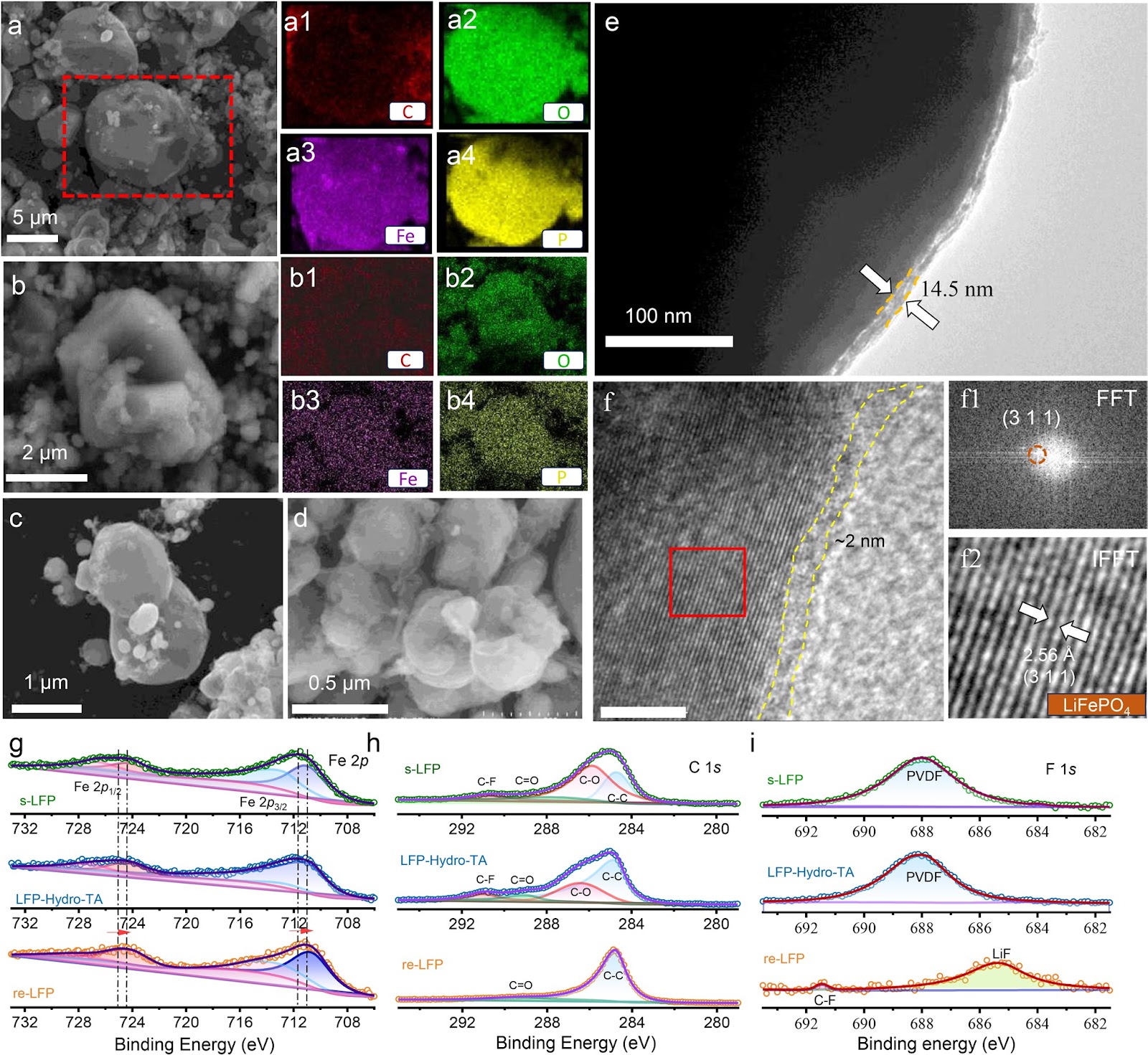
The rapid accumulation of spent LiFePO4 (LFP) cathodes from retired lithium-ion batteries necessitates the development of effective and environmental-friendly recycling strategies. In this context, direct regeneration has emerged as a promising approach for reclaiming LFP cathode materials, offering a streamlined pathway to restore their electrochemical functionality. We report an integrated regeneration protocol that simultaneously repairs the degraded crystal structure and reconstructs the damaged carbon coating in spent LFP. The regenerated cathode material had superfast lithium-ion diffusion kinetics and a stable cathode–electrolyte interface, giving a remarkable rate capability with specific capacities of 122 mAh g−1 at 5C and 106 mAh g−1 at 10C (1C = 170 mA g−1). It also maintained capacities of 110.7 mAh g−1 (5C) and 84.1 mAh g−1 (10C) after 400 cycles. It could be used in harsh environments and could be stably cycled at subzero temperatures (−10 and −20 °C) and in solid-state electrolyte batteries. Life cycle assessment combined with economic evaluation using the EverBatt model reveals that this direct regeneration approach has high economic and environmental benefits.
Oxide Semiconductor for Advanced Memory Architectures: Atomic Layer Deposition, Key Requirement and Challenges
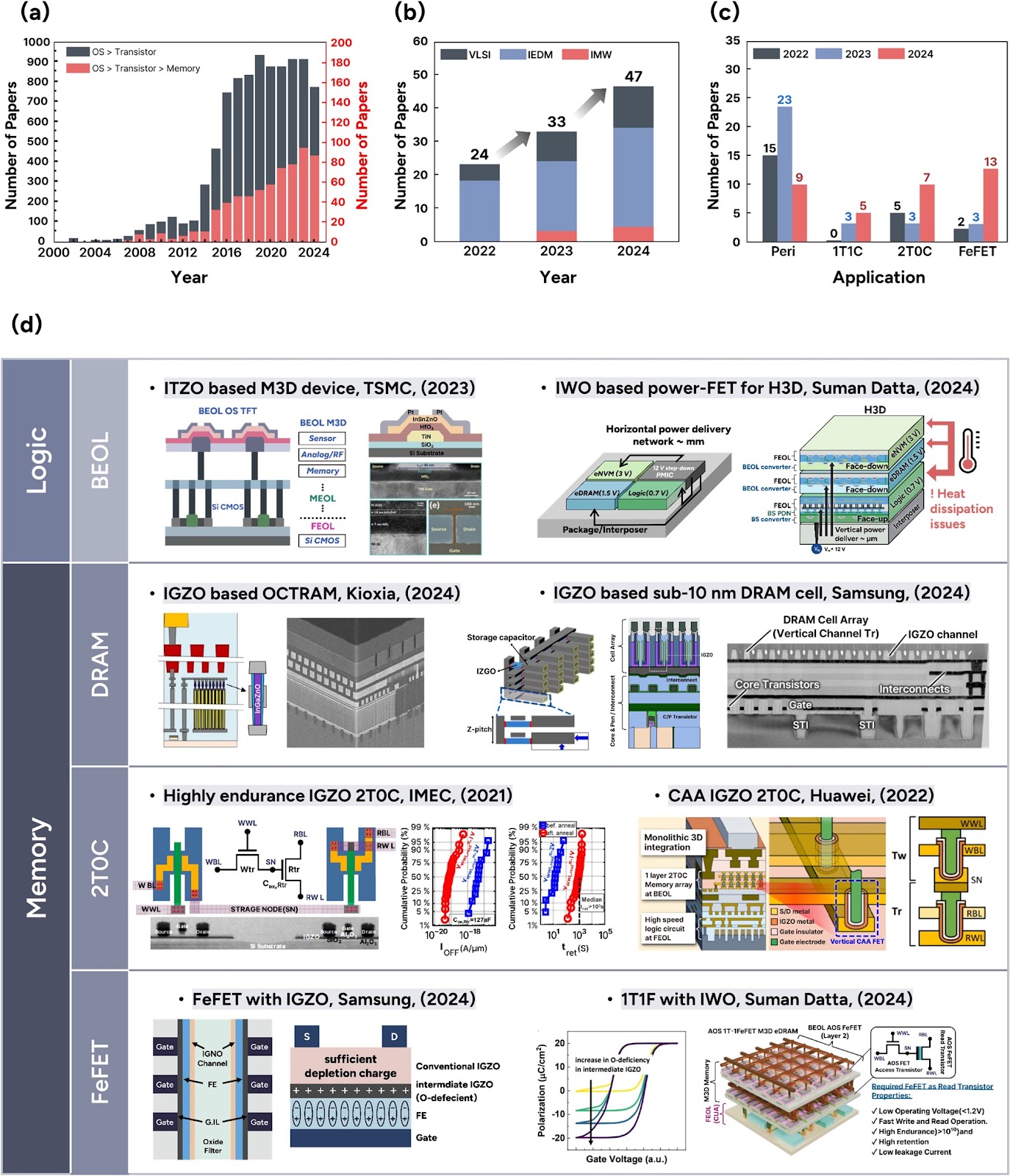
Oxide semiconductors (OSs), introduced by the Hosono group in the early 2000s, have evolved from display backplane materials to promising candidates for advanced memory and logic devices. The exceptionally low leakage current of OSs and compatibility with three-dimensional (3D) architectures have recently sparked renewed interest in their use in semiconductor applications. This review begins by exploring the unique material properties of OSs, which fundamentally originate from their distinct electronic band structure. Subsequently, we focus on atomic layer deposition (ALD), a core technique for growing excellent OS films, covering both basic and advanced processes compatible with 3D scaling. The basic surface reaction mechanisms—adsorption and reaction—and their roles in film growth are introduced. Furthermore, material design strategies, such as cation selection, crystallinity control, anion doping, and heterostructure engineering, are discussed. We also highlight challenges in memory applications, including contact resistance, hydrogen instability, and lack of p-type materials, and discuss the feasibility of ALD-grown OSs as potential solutions. Lastly, we provide an outlook on the role of ALD-grown OSs in memory technologies. This review bridges material fundamentals and device-level requirements, offering a comprehensive perspective on the potential of ALD-driven OSs for next-generation semiconductor memory devices.
Laser powder bed fusion of biodegradable Zn-4Cu alloy: Processing, microstructure and properties
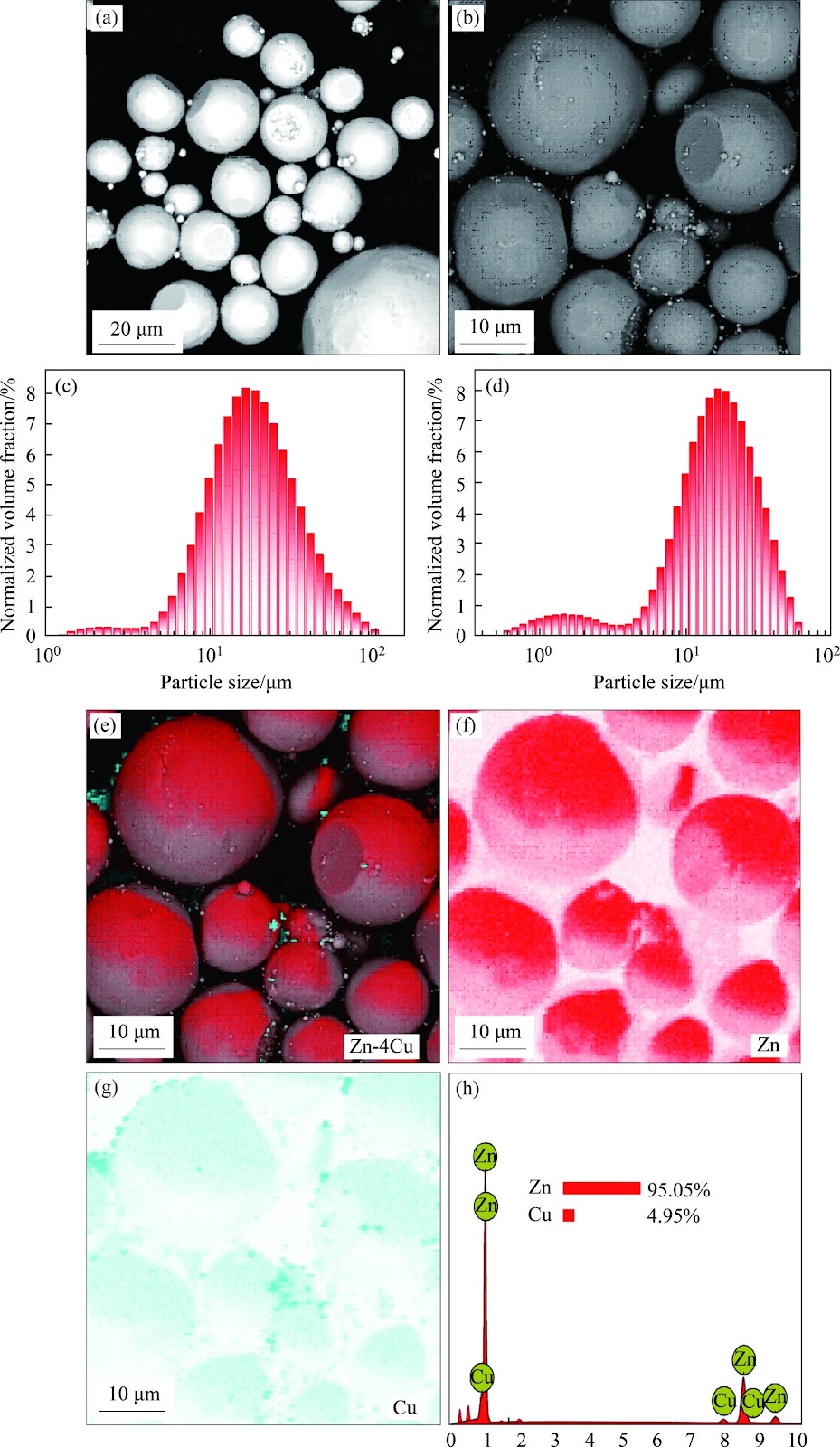
Zn's natural degradability and biocompatibility make it a promising candidate for implants, however, its mechanical properties remain insufficient for bone applications. In this study, the performance of Zn was enhanced by developing Zn-Cu alloys via laser powder bed fusion (LPBF). Optimal LPBF parameters for forming stable tracks were achieved by adjusting laser power and scanning speed. Under optimized conditions of 100 W and 100 mm/s, high-density (99.58%) Zn-Cu alloys with improved hardness (68.2HV) and yield strength (160 MPa) were achieved. These improvements are attributed to solid solution strengthening, segregation strengthening, and grain refinement. The Zn-Cu alloys also demonstrated favorable degradation behavior, with a rate of 0.16 mm/year. This degradation is primarily driven by micro-galvanic corrosion between the CuZn5 phase and Zn matrix, along with refined grains and increased grain boundary density. This work demonstrates a viable strategy for fabricating Zn-based implants with enhanced structural integrity and mechanical performance via LPBF.