Key Takeaways & Executive Findings
- •• Overview of metal–air batteries architecture, reaction mechanisms, and challenges in developing bifunctional air-breathing electrodes. • Comprehensive discussion on engineering the microenvironment chemistry of noble metal-free bifunctional oxygen electrocatalysts. • Insights into future research directions for earth-abundant bifunctional catalysts with enhanced performance and durability. • Emphasis on synthesis strategies, microenvironmental modulations, and stabilized systems for efficient zinc– and lithium–air batteries.
Abstract
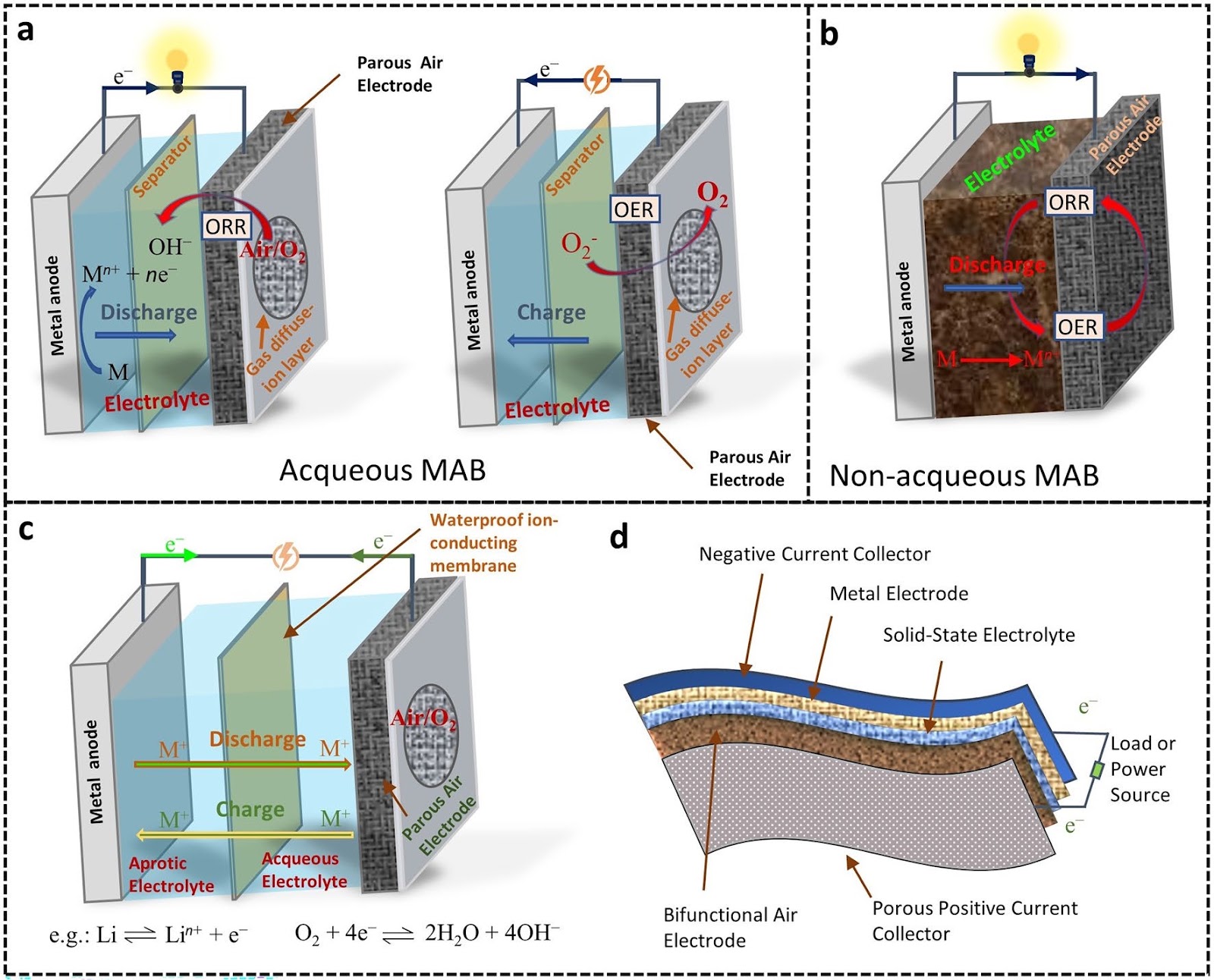
Rechargeable metal–air batteries have gained significant interest due to their high energy density and environmental benignity. However, these batteries face significant challenges, particularly related to the air-breathing electrode, resulting in poor cycle life, low efficiency, and catalyst degradation. Developing a robust bifunctional electrocatalyst remains difficult, as oxygen electrocatalysis involves sluggish kinetics and follows different reaction pathways, often requiring distinct active sites. Consequently, the poorly understood mechanisms and irreversible surface reconstruction in the catalyst’s microenvironment, such as atomic modulation, nano-/microscale, and surface interfaces, lead to accelerated degradation during charge and discharge cycles. Overcoming these barriers requires advancements in the development and understanding of bifunctional electrocatalysts. In this review, the critical components of metal–air batteries, the associated challenges, and the current engineering approaches to address these issues are discussed. Additionally, the mechanisms of oxygen electrocatalysis on the air electrodes are examined, along with insights into how chemical characteristics of materials influence these mechanisms. Furthermore, recent advances in bifunctional electrocatalysts are highlighted, with an emphasis on the synthesis strategies, microenvironmental modulations, and stabilized systems demonstrating efficient performance, particularly zinc– and lithium–air batteries. Finally, perspectives and future research directions are provided for designing efficient and durable bifunctional electrocatalysts for metal–air batteries.
1. Introduction
The increasing global energy demand and the urgency for transition to a decarbonized economy have paved new trends in electrochemical energy storage and conversion devices, including supercapacitors, fuel cells, water electrolyzers, and batteries, to play a key role toward a green, clean, and sustainable energy economy. These clean electrochemical energy technologies can make a bridge between the demand and supply of electricity produced from intermittent renewable energy sources and thus be used in many economic sectors like communication and transportation [1].
The primary pillar for electrochemical energy storage is the battery, which allows the storage of chemical energy and can be used, when necessary, in stationary stations or portable devices, making the battery a very pivotal device in daily needs. Although there has been significant progress in battery development, such as Li–ion batteries (LIBs) powering the electric vehicles (EVs), there is a big challenge to address due to the increasing demand for these devices. The raw materials resources’ long-term availability and geographical distribution of crucial metal elements for LIBs, which rely on scarce and finite resources such as cobalt and lithium, are limiting factors for future utilization of LIBs [2]. Additionally, safety concerns such as uncontrollable flammability in the case of using LIBs at a mass scale, recycling or disposal of materials after LIBs end-of-life pose a significant challenge to satisfy the needs of environmental-friendly technologies and ever-increasing energy storage [3]. To get a socioeconomic credence for the battery technology, we need to showcase high power and energy density coupled with cost-effectiveness. For this, rechargeable metal–air batteries (MABs) are used in a wide range of applications due to their low cost compared to LIBs. The MABs al...
Loading authentic research manuscript (Pages 1–5)...
Jean Marie Vianney Nsanzimana, Lebin Cai, Zhongqing Jiang, Bao Yu Xia, Thandavarayan Maiyalagan (2025). Engineering Bifunctional Catalytic Microenvironments for Durable and High-Energy-Density Metal–Air Batteries. Nano-Micro Letters. https://doi.org/10.1007/s40820-025-01799-w
Research & Educational Purpose Only:The translations, structured abstracts, analytical annotations, and data reports provided by SinoTechIntel are intended exclusively for academic research, internal corporate R&D, and educational benchmarking. They do not constitute formal engineering, chemical safety, legal, or professional advice.
Copyright & Intellectual Property Notice: Original copyright of the underlying source articles and experimental data remains with the respective authors, institutions, and original publishing journals. SinoTechIntel claims intellectual property only over its proprietary translations, analytical syntheses, and AEO structured enhancements in accordance with international fair use and academic citation principles.
Frequently Asked Questions
What are metal–air batteries and why are they important?
Metal–air batteries are electrochemical energy storage devices that use a metal anode and an air-breathing cathode, offering high energy density and environmental benignity. They are considered promising alternatives to lithium-ion batteries due to their low cost and high theoretical energy density, especially for applications like electric vehicles and grid storage.
What are the main challenges in developing bifunctional electrocatalysts for metal–air batteries?
The main challenges include sluggish kinetics of oxygen reduction and evolution reactions, the need for distinct active sites for each reaction, and degradation of catalysts due to irreversible surface reconstruction in the microenvironment. These issues lead to poor cycle life and low efficiency.
How can engineering the catalytic microenvironment improve battery performance?
Engineering the microenvironment involves atomic modulation, nano-/microscale structuring, and surface interface control. These strategies can enhance the activity, stability, and durability of bifunctional catalysts, thereby improving the overall performance and lifespan of metal–air batteries.
What are the future research directions for bifunctional catalysts in metal–air batteries?
Future research should focus on developing earth-abundant, noble metal-free catalysts with enhanced performance and durability. This includes exploring new synthesis strategies, understanding reaction mechanisms, and optimizing the microenvironment to achieve scalable and cost-effective applications.
Which types of metal–air batteries are highlighted in this review?
The review particularly highlights zinc–air and lithium–air batteries, as they are among the most promising metal–air battery systems due to their high energy density and potential for practical applications.
Related Technical Papers & Translations
Direct Repair of the Crystal Structure and Coating Surface of Spent LiFePO4 Materials Enables Superfast Li-Ion Migration
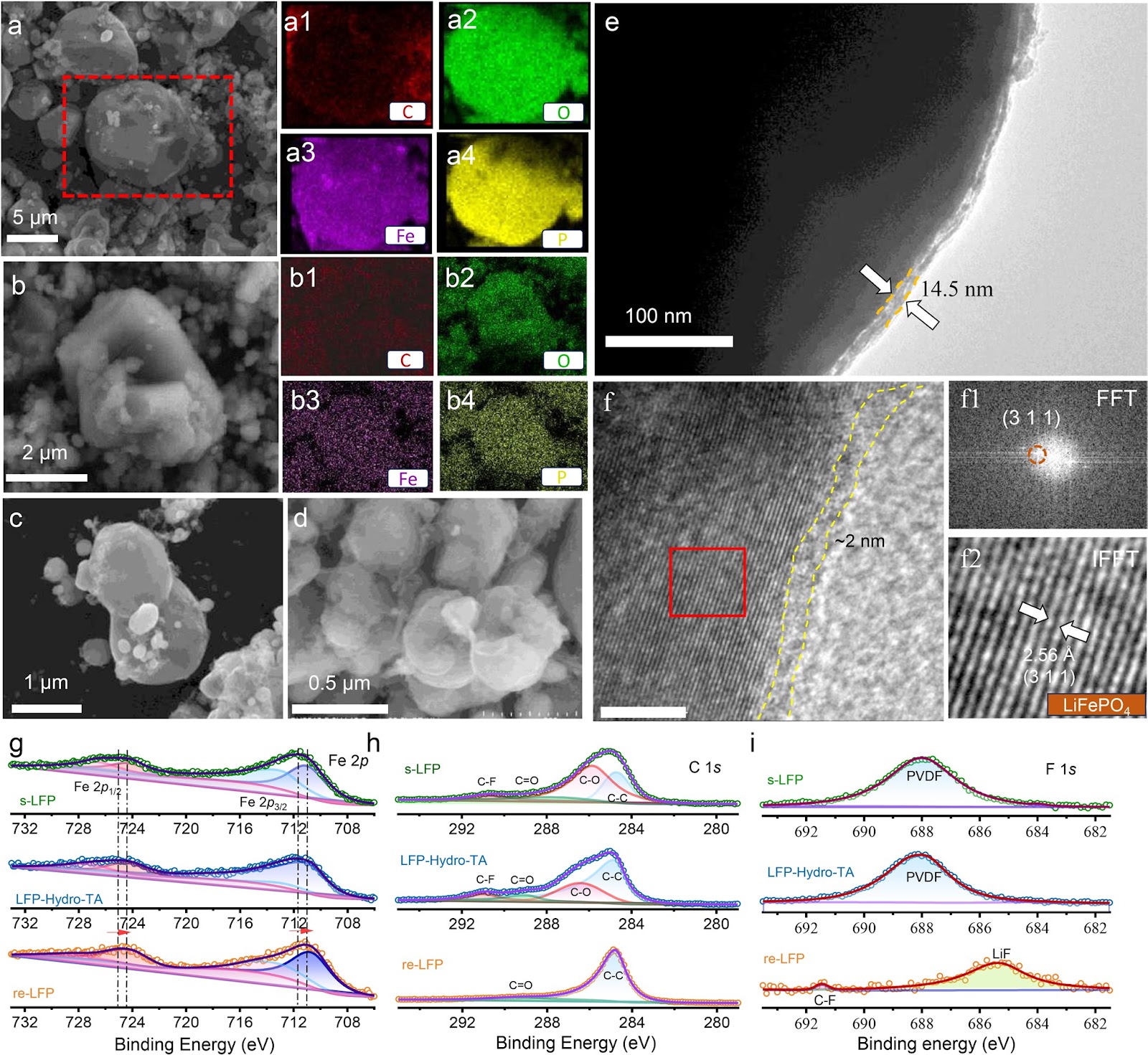
The rapid accumulation of spent LiFePO4 (LFP) cathodes from retired lithium-ion batteries necessitates the development of effective and environmental-friendly recycling strategies. In this context, direct regeneration has emerged as a promising approach for reclaiming LFP cathode materials, offering a streamlined pathway to restore their electrochemical functionality. We report an integrated regeneration protocol that simultaneously repairs the degraded crystal structure and reconstructs the damaged carbon coating in spent LFP. The regenerated cathode material had superfast lithium-ion diffusion kinetics and a stable cathode–electrolyte interface, giving a remarkable rate capability with specific capacities of 122 mAh g−1 at 5C and 106 mAh g−1 at 10C (1C = 170 mA g−1). It also maintained capacities of 110.7 mAh g−1 (5C) and 84.1 mAh g−1 (10C) after 400 cycles. It could be used in harsh environments and could be stably cycled at subzero temperatures (−10 and −20 °C) and in solid-state electrolyte batteries. Life cycle assessment combined with economic evaluation using the EverBatt model reveals that this direct regeneration approach has high economic and environmental benefits.
Oxide Semiconductor for Advanced Memory Architectures: Atomic Layer Deposition, Key Requirement and Challenges
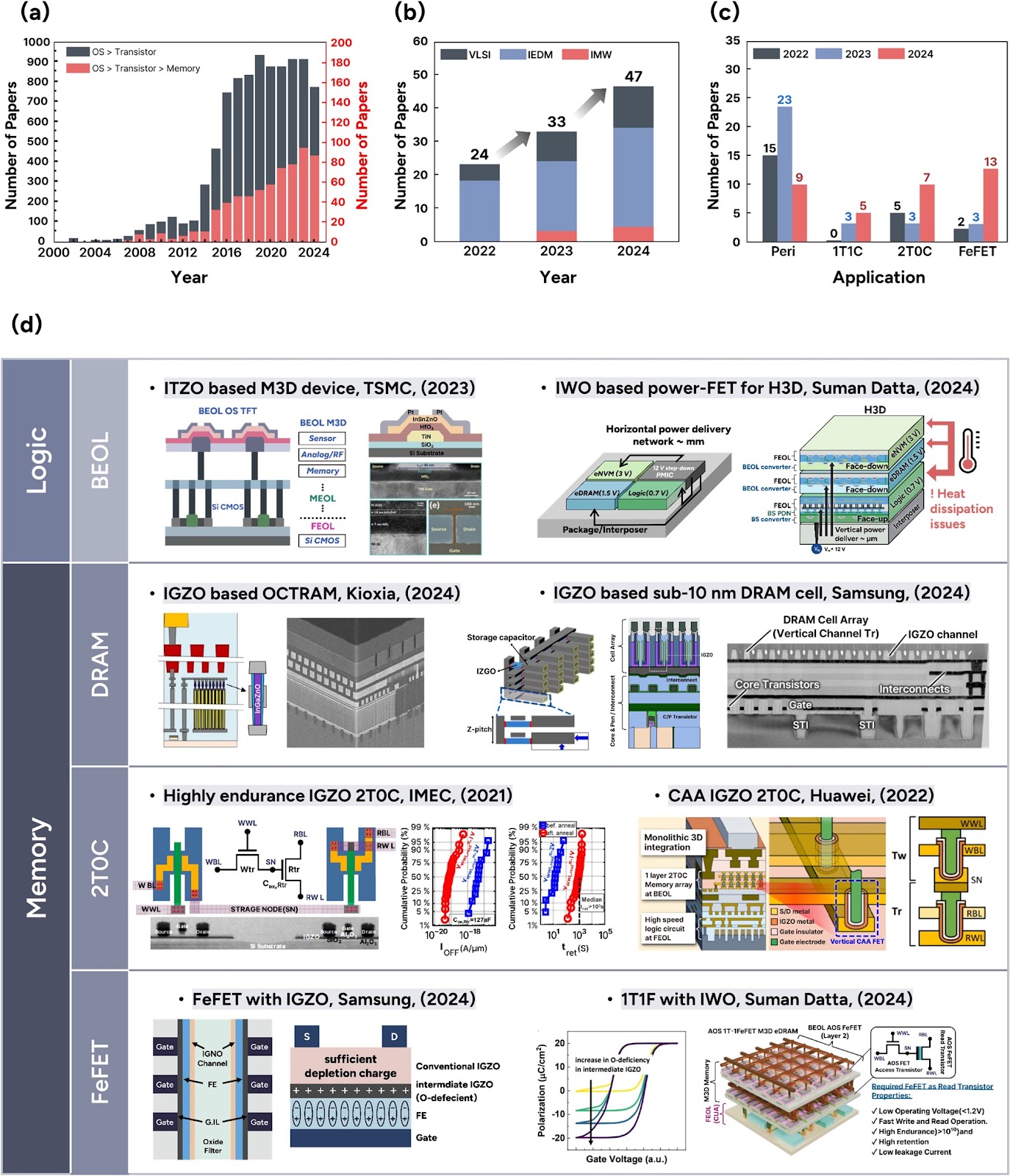
Oxide semiconductors (OSs), introduced by the Hosono group in the early 2000s, have evolved from display backplane materials to promising candidates for advanced memory and logic devices. The exceptionally low leakage current of OSs and compatibility with three-dimensional (3D) architectures have recently sparked renewed interest in their use in semiconductor applications. This review begins by exploring the unique material properties of OSs, which fundamentally originate from their distinct electronic band structure. Subsequently, we focus on atomic layer deposition (ALD), a core technique for growing excellent OS films, covering both basic and advanced processes compatible with 3D scaling. The basic surface reaction mechanisms—adsorption and reaction—and their roles in film growth are introduced. Furthermore, material design strategies, such as cation selection, crystallinity control, anion doping, and heterostructure engineering, are discussed. We also highlight challenges in memory applications, including contact resistance, hydrogen instability, and lack of p-type materials, and discuss the feasibility of ALD-grown OSs as potential solutions. Lastly, we provide an outlook on the role of ALD-grown OSs in memory technologies. This review bridges material fundamentals and device-level requirements, offering a comprehensive perspective on the potential of ALD-driven OSs for next-generation semiconductor memory devices.
Laser powder bed fusion of biodegradable Zn-4Cu alloy: Processing, microstructure and properties
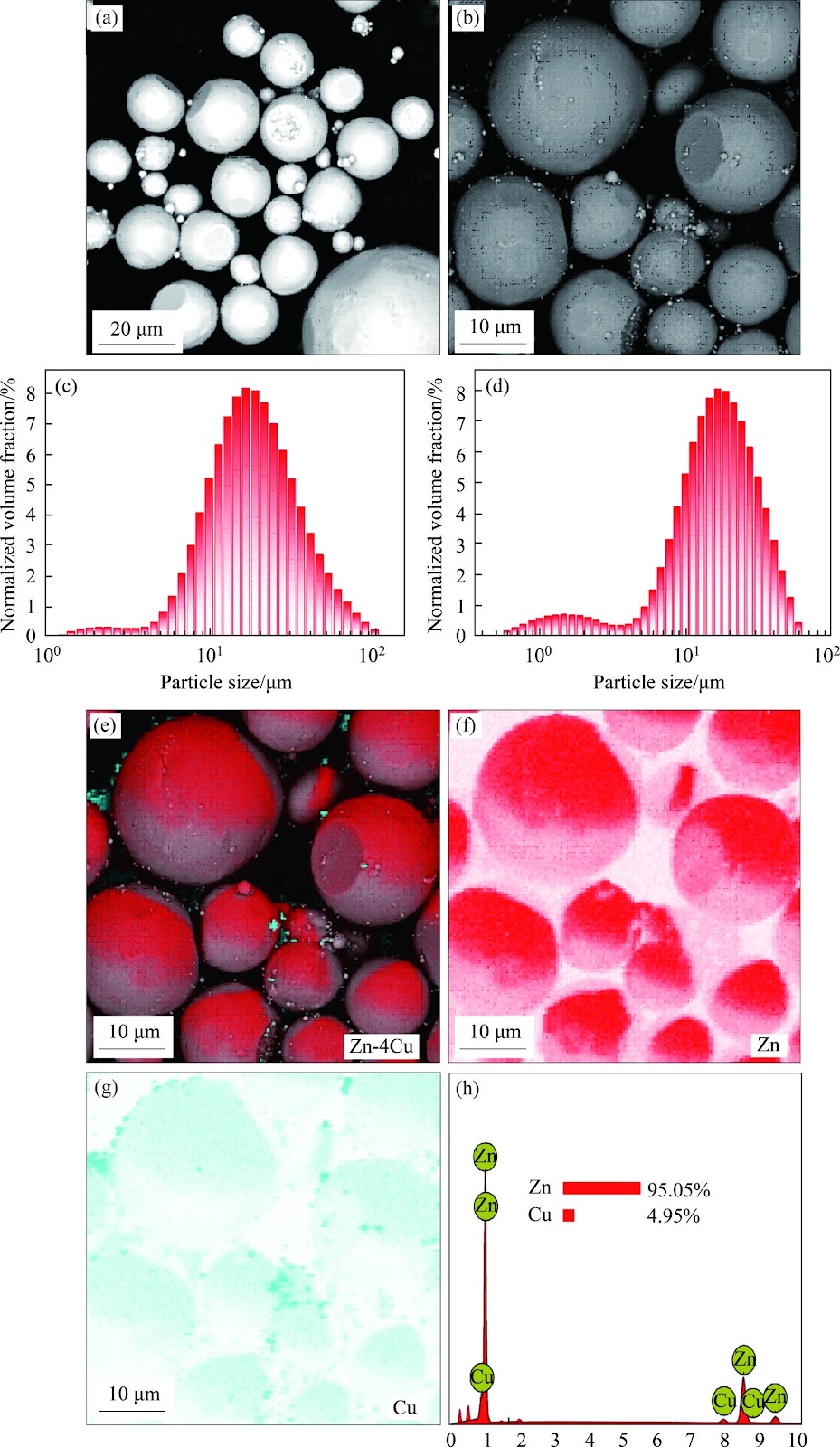
Zn's natural degradability and biocompatibility make it a promising candidate for implants, however, its mechanical properties remain insufficient for bone applications. In this study, the performance of Zn was enhanced by developing Zn-Cu alloys via laser powder bed fusion (LPBF). Optimal LPBF parameters for forming stable tracks were achieved by adjusting laser power and scanning speed. Under optimized conditions of 100 W and 100 mm/s, high-density (99.58%) Zn-Cu alloys with improved hardness (68.2HV) and yield strength (160 MPa) were achieved. These improvements are attributed to solid solution strengthening, segregation strengthening, and grain refinement. The Zn-Cu alloys also demonstrated favorable degradation behavior, with a rate of 0.16 mm/year. This degradation is primarily driven by micro-galvanic corrosion between the CuZn5 phase and Zn matrix, along with refined grains and increased grain boundary density. This work demonstrates a viable strategy for fabricating Zn-based implants with enhanced structural integrity and mechanical performance via LPBF.