Key Takeaways & Executive Findings
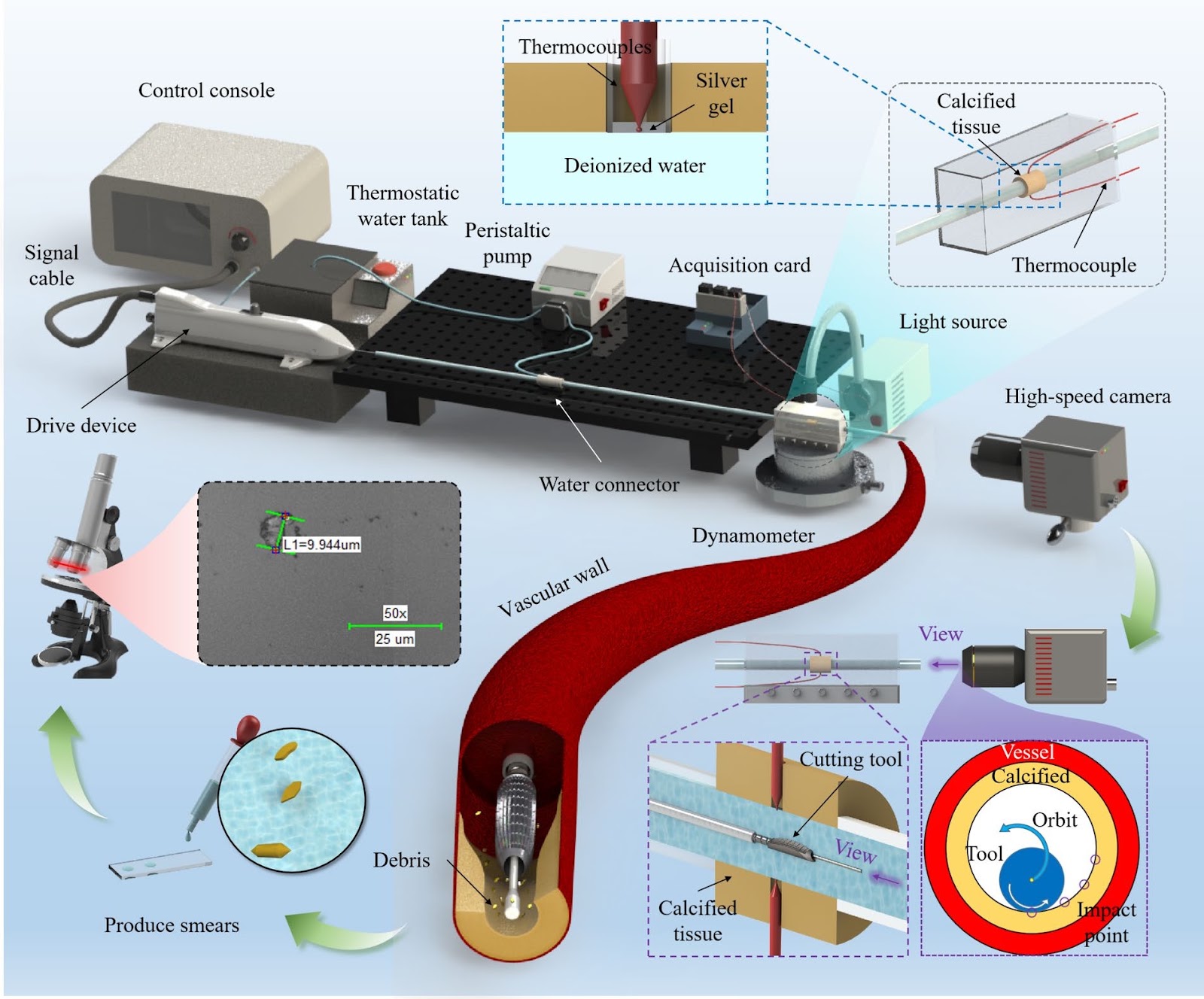
- •• A novel eccentric rotational cutting tool with staggered micro-blades was designed and fabricated for vascular calcification removal, demonstrating superior performance in force, temperature, and debris size control. • At the highest rotational speed, the tool achieved a maximum force of 0.75 N and a temperature rise of only 1.09 °C, meeting clinical safety requirements. • Debris size followed a normal distribution with 90% of particles smaller than 9.12 μm, reducing the risk of embolic complications. • The study provides a new design concept for calcified tissue removal tools, potentially advancing rotational atherectomy technology.
Abstract
Cardiovascular disease is the leading cause of human mortality, and calcified tissue blocking blood vessels is the main cause of major adverse cardiovascular events (MACE). Rotational Atherectomy (RA) is a minimally invasive catheter-based treatment method that involves high-speed cutting of calcified tissue using miniature tools for removal. However, the cutting forces, heat, and debris can induce tissue damage and give rise to serious surgical complications. To enhance the effectiveness and efficiency of RA, a novel eccentric rotational cutting tool, with one side comprising axial and circumferential staggered micro-blades, was designed and fabricated in this study. In addition, a series of experiments were conducted to analyze their performance across five dimensions: tool kinematics, force, temperature, debris, and surface morphology of the specimens. Experimental results show that the force, temperature and debris size of the novel tool were well inhibited at the highest rotational speed. For the tool of standard clinical size (diameter 1.25 mm), the maximum force is 0.75 N, with a maximum temperature rise in the operation area of 1.09 ℃. Debris distribution followed a normal distribution pattern, with 90% of debris measuring smaller than 9.12 μm. All tool metrics met clinical safety requirements, indicating its superior performance. This study provides a new idea for the design of calcified tissue removal tools, and contributes positively to the advancement of RA.
1. Introduction
Atherosclerosis (AS) commonly occurs in individuals with diabetes mellitus, hypertension, hypercholesterolemia, and the elderly, leading to coronary heart disease, stroke, and peripheral vascular disease [1–4]. Calcified tissue formation within vessels causing luminal obstruction is a key feature of AS. It primarily occurs due to the deposition of substances such as fats, calcium carbonate, and necrotic cells along the inner walls of blood vessels. During its formation, it undergoes cellular inflammation and apoptosis, and goes through a long process of gradually thickening and hardening from soft plaques, eventually forming a calcified tissue with a hard texture and a microstructure highly close to bone [5–8]. Typically, the volume of calcified tissue increases with age, leading to vascular narrowing and reduced blood flow, consequently causing angina. However, under conditions of significant physical activity or fluctuations in intravascular pressure, it will become highly unstable and prone to fragmentation. If calcified tissue ruptures, the fragments will flow with the bloodstream and enter various vessels throughout the body, which will cause myocardial infarction, stroke and other diseases [9–11], directly endangering the patient’s life. Therefore, how to effectively and safely treat atherosclerosis has become a common challenge that researchers need to tackle.
Currently, the most effective treatment for AS is Percutaneous Coronary Intervention (PCI) [12, 13]. PCI is a relatively non-invasive treatment method, typically via puncture of the femoral artery or radial artery, to dilate narrowed vessel lumens, restoring normal blood flow perfusion. Common PCI methods include balloon angioplasty, stent implantation, and rotational atherectomy [14–17]. Balloon angioplasty and stent implantation are suitable for the early stages of AS when the calcified tissue is relatively soft [18, 19]. However, when vessels are severely calcified and blocked, the compliance of the vessels decreases, and the balloon and stent cannot be fully opened. In such situations, RA becomes the only effective treatment [20, 21]. RA uses a micro elliptical metallic tool (with a diameter ranging from 1.25 to 2.5 mm and a surface coated with a layer of diamond particles). The tool is inserted into the body through the femoral or radial artery and along the arterial vessel to the vessel stenosis area. Then, it is driven by the transmission shaft and rotates at high speed to remove the calcified tissue. During the operation, the tool size will be changed according to the change.
Loading authentic research manuscript (Pages 1–5)...
Chuhang Gao, Zhaoju Zhu, Ziyu Cui, Bingwei He (2025). Design and Performance Verification of a Novel Eccentric Rotational Cutting Tool for Removal of Vascular Calcification Tissue. Chinese Journal of Mechanical Engineering. https://doi.org/10.1186/s10033-025-01254-2
Research & Educational Purpose Only:The translations, structured abstracts, analytical annotations, and data reports provided by SinoTechIntel are intended exclusively for academic research, internal corporate R&D, and educational benchmarking. They do not constitute formal engineering, chemical safety, legal, or professional advice.
Copyright & Intellectual Property Notice: Original copyright of the underlying source articles and experimental data remains with the respective authors, institutions, and original publishing journals. SinoTechIntel claims intellectual property only over its proprietary translations, analytical syntheses, and AEO structured enhancements in accordance with international fair use and academic citation principles.
Frequently Asked Questions
What is the novel eccentric rotational cutting tool designed for?
The tool is designed for the removal of vascular calcification tissue during rotational atherectomy, a minimally invasive procedure to treat blocked arteries.
How does the novel tool improve upon traditional rotational atherectomy tools?
The novel tool features eccentric rotation with staggered micro-blades, which reduces cutting forces, heat generation, and debris size, thereby minimizing tissue damage and surgical complications.
What were the key performance metrics of the novel tool?
At the highest rotational speed, the tool achieved a maximum force of 0.75 N, a temperature rise of 1.09 °C, and 90% of debris smaller than 9.12 μm, all within clinical safety limits.
What is the significance of the debris size distribution?
The debris size distribution followed a normal pattern with 90% of particles smaller than 9.12 μm, which is crucial to prevent embolic complications during surgery.
What are the potential clinical applications of this research?
This research provides a new design concept for calcified tissue removal tools, potentially improving the safety and efficacy of rotational atherectomy in treating severe coronary artery disease.
Related Technical Papers & Translations
Direct Repair of the Crystal Structure and Coating Surface of Spent LiFePO4 Materials Enables Superfast Li-Ion Migration
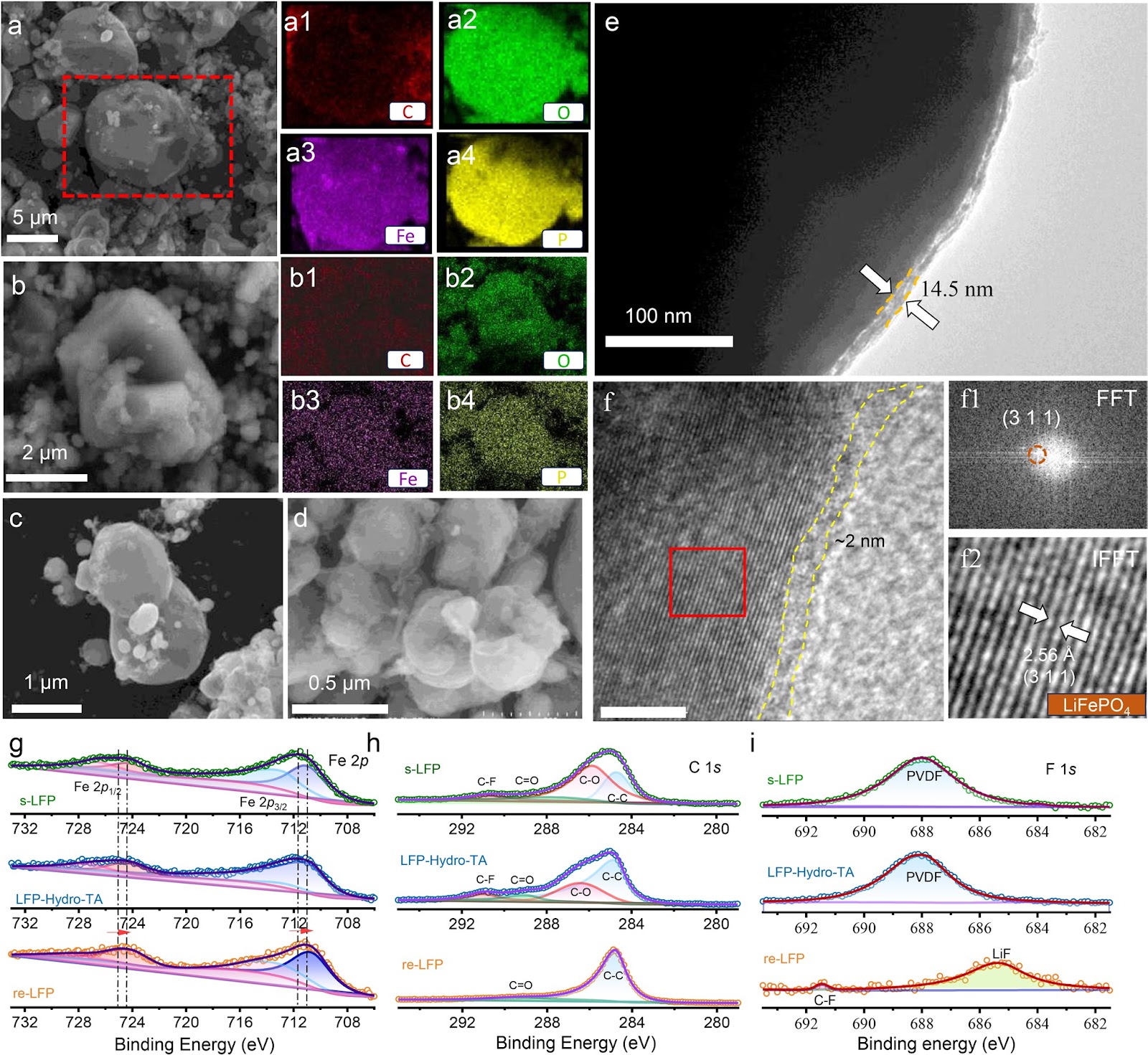
The rapid accumulation of spent LiFePO4 (LFP) cathodes from retired lithium-ion batteries necessitates the development of effective and environmental-friendly recycling strategies. In this context, direct regeneration has emerged as a promising approach for reclaiming LFP cathode materials, offering a streamlined pathway to restore their electrochemical functionality. We report an integrated regeneration protocol that simultaneously repairs the degraded crystal structure and reconstructs the damaged carbon coating in spent LFP. The regenerated cathode material had superfast lithium-ion diffusion kinetics and a stable cathode–electrolyte interface, giving a remarkable rate capability with specific capacities of 122 mAh g−1 at 5C and 106 mAh g−1 at 10C (1C = 170 mA g−1). It also maintained capacities of 110.7 mAh g−1 (5C) and 84.1 mAh g−1 (10C) after 400 cycles. It could be used in harsh environments and could be stably cycled at subzero temperatures (−10 and −20 °C) and in solid-state electrolyte batteries. Life cycle assessment combined with economic evaluation using the EverBatt model reveals that this direct regeneration approach has high economic and environmental benefits.
Oxide Semiconductor for Advanced Memory Architectures: Atomic Layer Deposition, Key Requirement and Challenges
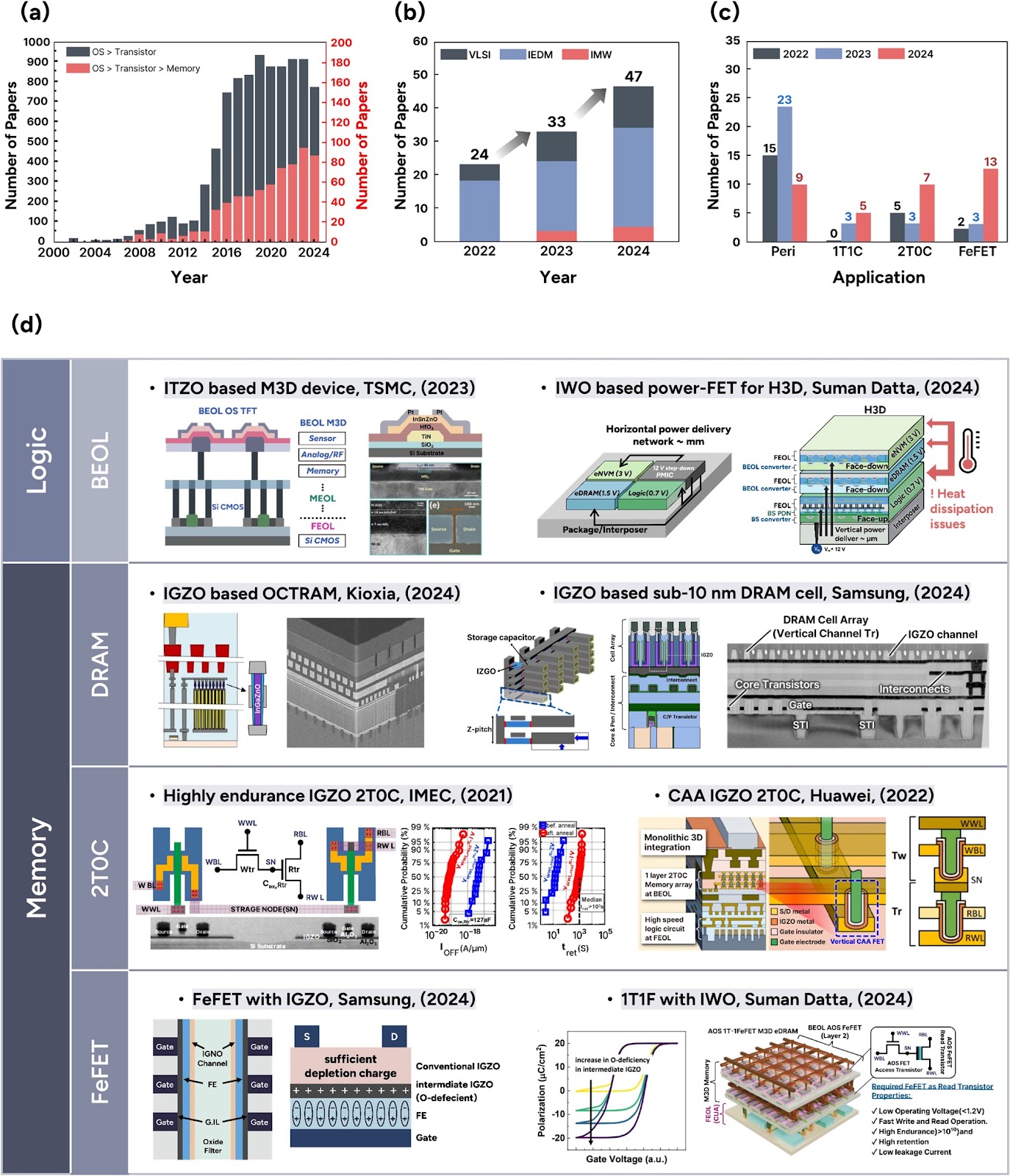
Oxide semiconductors (OSs), introduced by the Hosono group in the early 2000s, have evolved from display backplane materials to promising candidates for advanced memory and logic devices. The exceptionally low leakage current of OSs and compatibility with three-dimensional (3D) architectures have recently sparked renewed interest in their use in semiconductor applications. This review begins by exploring the unique material properties of OSs, which fundamentally originate from their distinct electronic band structure. Subsequently, we focus on atomic layer deposition (ALD), a core technique for growing excellent OS films, covering both basic and advanced processes compatible with 3D scaling. The basic surface reaction mechanisms—adsorption and reaction—and their roles in film growth are introduced. Furthermore, material design strategies, such as cation selection, crystallinity control, anion doping, and heterostructure engineering, are discussed. We also highlight challenges in memory applications, including contact resistance, hydrogen instability, and lack of p-type materials, and discuss the feasibility of ALD-grown OSs as potential solutions. Lastly, we provide an outlook on the role of ALD-grown OSs in memory technologies. This review bridges material fundamentals and device-level requirements, offering a comprehensive perspective on the potential of ALD-driven OSs for next-generation semiconductor memory devices.
Laser powder bed fusion of biodegradable Zn-4Cu alloy: Processing, microstructure and properties
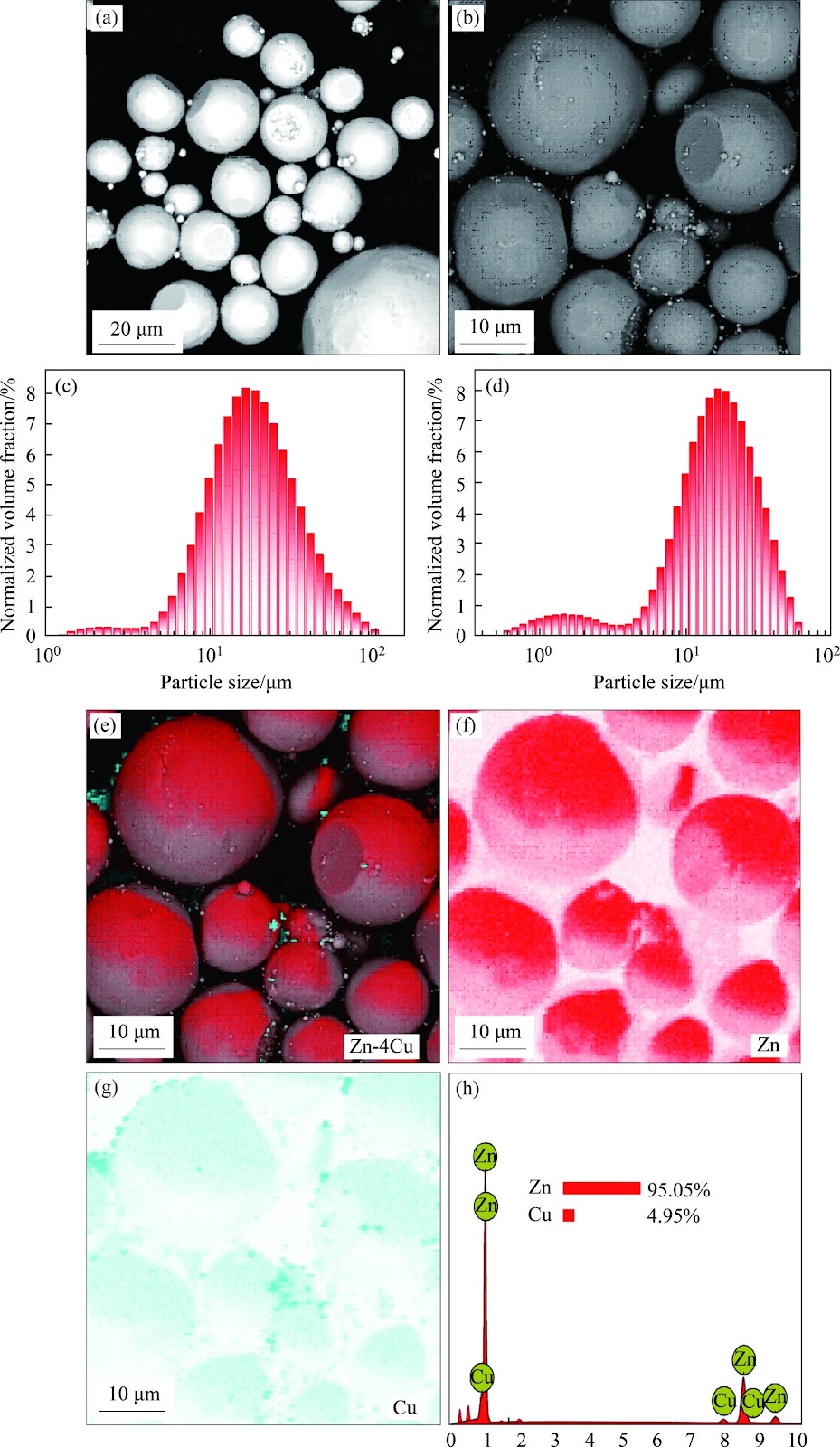
Zn's natural degradability and biocompatibility make it a promising candidate for implants, however, its mechanical properties remain insufficient for bone applications. In this study, the performance of Zn was enhanced by developing Zn-Cu alloys via laser powder bed fusion (LPBF). Optimal LPBF parameters for forming stable tracks were achieved by adjusting laser power and scanning speed. Under optimized conditions of 100 W and 100 mm/s, high-density (99.58%) Zn-Cu alloys with improved hardness (68.2HV) and yield strength (160 MPa) were achieved. These improvements are attributed to solid solution strengthening, segregation strengthening, and grain refinement. The Zn-Cu alloys also demonstrated favorable degradation behavior, with a rate of 0.16 mm/year. This degradation is primarily driven by micro-galvanic corrosion between the CuZn5 phase and Zn matrix, along with refined grains and increased grain boundary density. This work demonstrates a viable strategy for fabricating Zn-based implants with enhanced structural integrity and mechanical performance via LPBF.