SinoTechIntel Academic Portal
🏛️ Indexed Academic JournalImpact Factor: 3.8

Surface Technology (表面技术)

Authoritative peer-reviewed journal in materials science, metallurgy, chemistry and engineering technologies: Surface Technology (表面技术)

Total Research Papers: 25
Access: 100% Free Open Access
Browse by Publication Year & VolumeReset All Filters ✕

Published Research PapersFiltered: Year 2026 • Vol. 32 • 10

Showing 5 of 25 peer-reviewed papers with full Graphical Abstracts.

Original ResearchVol. 32, Issue 10 • pp. 100-112DOI: 10.16490/j.cnki.issn.1001-3660.2026.10.002Jan 15, 2026

Research Progress and Prospects of Corrosion-resistant High-entropy Alloy Coatings

Authors: WANG Haitao, YANG Pan, ZHAO Fan, ZENG Yi, SHAO Feng, XIANG Chao, LAI Jianping, YU Jiaxin

Marine environments impose combined electrochemical, microbiological, and cavitation erosion degradation on metallic infrastructure, shortening service intervals and inflating maintenance expenditure. High-entropy alloy (HEA) coatings mitigate these failure modes through simple solid-solution or amorphous microstructures that suppress galvanic coupling and promote dense passive film formation. This review systematically examines corrosion-resistant HEA coatings from single-factor to multi-factor coupling perspectives, covering classification and compositional design, fabrication routes, and corrosion behavior under complex marine conditions. Key coating systems include FeCoCrNiMn, AlCoCrFeNi, FeCrNiCoAl, and (FeCoCrNi)75B15Si10 amorphous alloys deposited by atmospheric plasma spraying, high-velocity oxy-fuel spraying, and wire arc spraying. Elemental additions of Cr, Al, and Mo enhance passivation; B and Si promote amorphous phase formation. The review identifies core engineering bottlenecks: compositional design, process optimization, and service performance validation. A multi-scale simulation, process-structure optimization, and in-situ characterization framework is proposed to accelerate coating deployment. These findings provide theoretical and technical guidance for next-generation corrosion-resistant coatings in marine equipment.
Research Progress and Prospects of Corrosion-resistant High-entropy Alloy Coatings
Graphical Abstract
Original ResearchVol. 32, Issue 10 • pp. 100-112DOI: 10.16490/j.cnki.issn.1001-3660.2026.10.003Jan 15, 2026

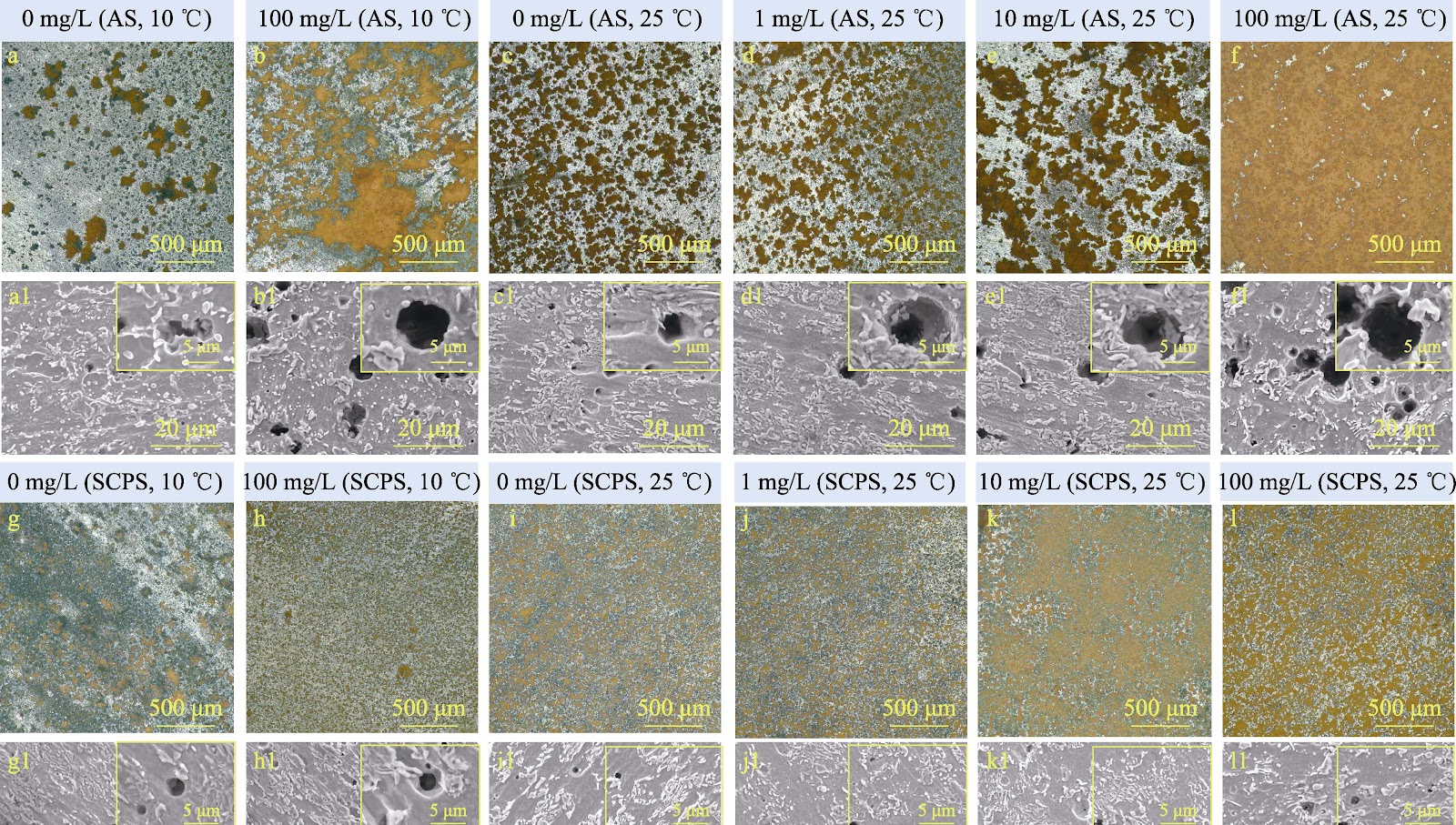
Effect of Sodium Hypochlorite Concentration and Medium Temperature on Corrosion of 45# Steel in Artificial Seawater and Simulated Concrete Pore Solution

Authors: ZHANG Junnan, WEI Donghong, FU Qi, SONG Guangling

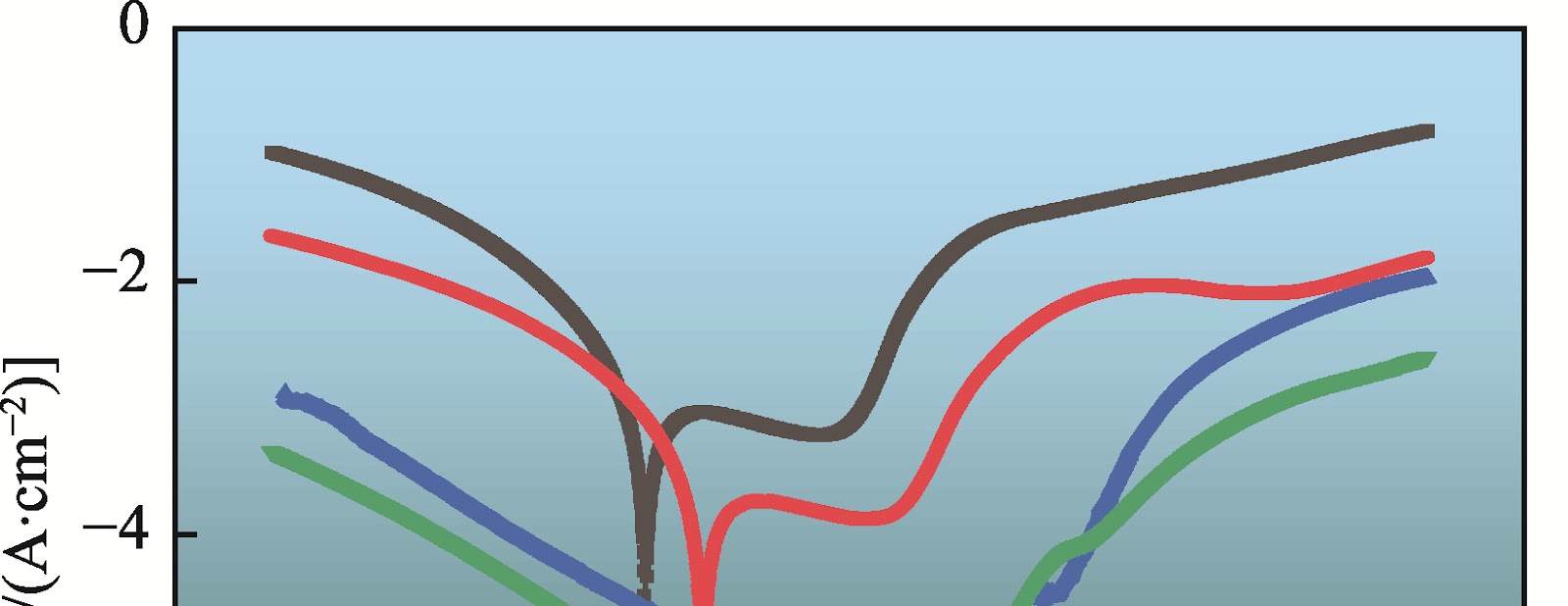
Seawater discharged during LNG regasification carries residual chlorine, predominantly sodium hypochlorite (NaClO), and low temperature, posing a dual corrosion threat to carbon steel components and adjacent reinforced concrete. This study systematically evaluates the corrosion behavior of 45# steel in artificial seawater (AS) and simulated concrete pore solution (SCPS, pH≈10) under NaClO concentrations of 0, 1, 10, and 100 mg/L at 10 °C and 25 °C. Electrochemical impedance spectroscopy, potentiodynamic polarization, weight-loss measurements, and localized corrosion-depth analysis were combined with SEM, EDS, XPS, and XRD to resolve corrosion kinetics, morphology, and product composition. In AS at 25 °C, increasing NaClO from 0 to 100 mg/L decreased charge transfer and film resistance (Rct + Rf) from 2266 to 1207 Ω·cm² and increased corrosion current density (Jcorr) from 11.48 to 18.29 μA/cm². Weight-loss rates remained 0.108 mm/a at 0 and 1 mg/L NaClO, rose slightly to 0.123 mm/a at 10 mg/L (+13%), and sharply to 0.202 mm/a at 100 mg/L (+87%). Corrosion morphology shifted from localized to uniform, with reduced pit depth. In SCPS at 25 °C, the alkaline environment suppressed NaClO-induced acceleration: Rct + Rf decreased from 2922 to 2266 Ω·cm², and weight-loss rates increased only 8% (0.0937 mm/a) at 10 mg/L and 25% (0.108 mm/a) at 100 mg/L relative to the 0.0865 mm/a control. However, 100 mg/L NaClO in SCPS significantly deepened localized pits. At 10 °C, both media exhibited reduced corrosion current density, thinner product layers, and shallower pits. Under standard discharge conditions (residual chlorine ≤0.2 mg/L), the additional corrosion risk from cold discharge water is negligible.

Effect of Sodium Hypochlorite Concentration and Medium Temperature on Corrosion of 45# Steel in Artificial Seawater and Simulated Concrete Pore Solution
Graphical Abstract
Original ResearchVol. 32, Issue 10 • pp. 100-112DOI: 10.16490/j.cnki.issn.1001-3660.2026.10.004Jan 15, 2026

Corrosion Inhibition Mechanism of Typical Inorganic Inhibitors on Stainless Steel in a Simulated Electrolytic Seawater Environment

Authors: LIU Zhirong, LI Shiyu, ZHANG Huiyu, ZHANG Hailong, LIN Bing, TANG Junlei

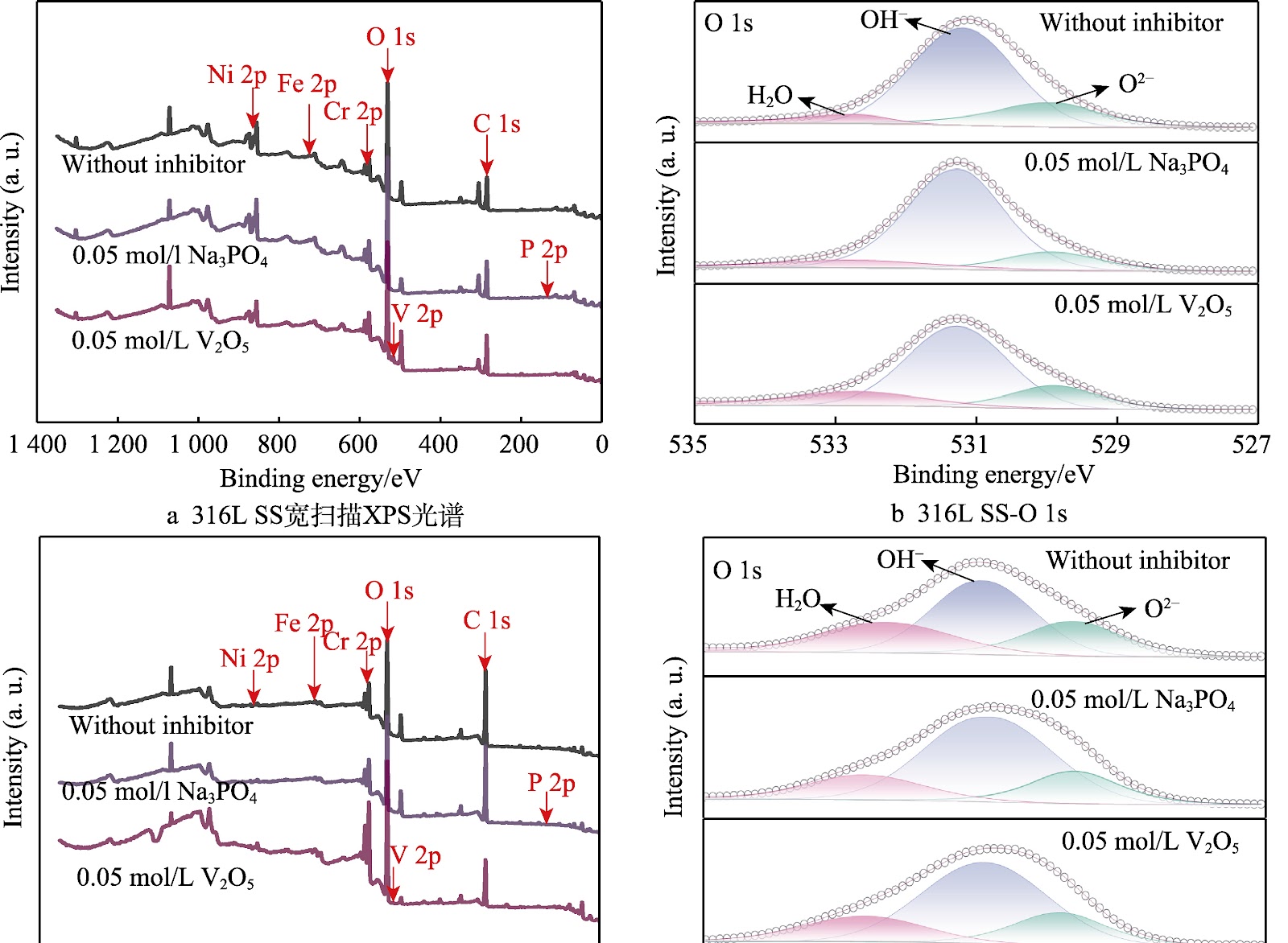
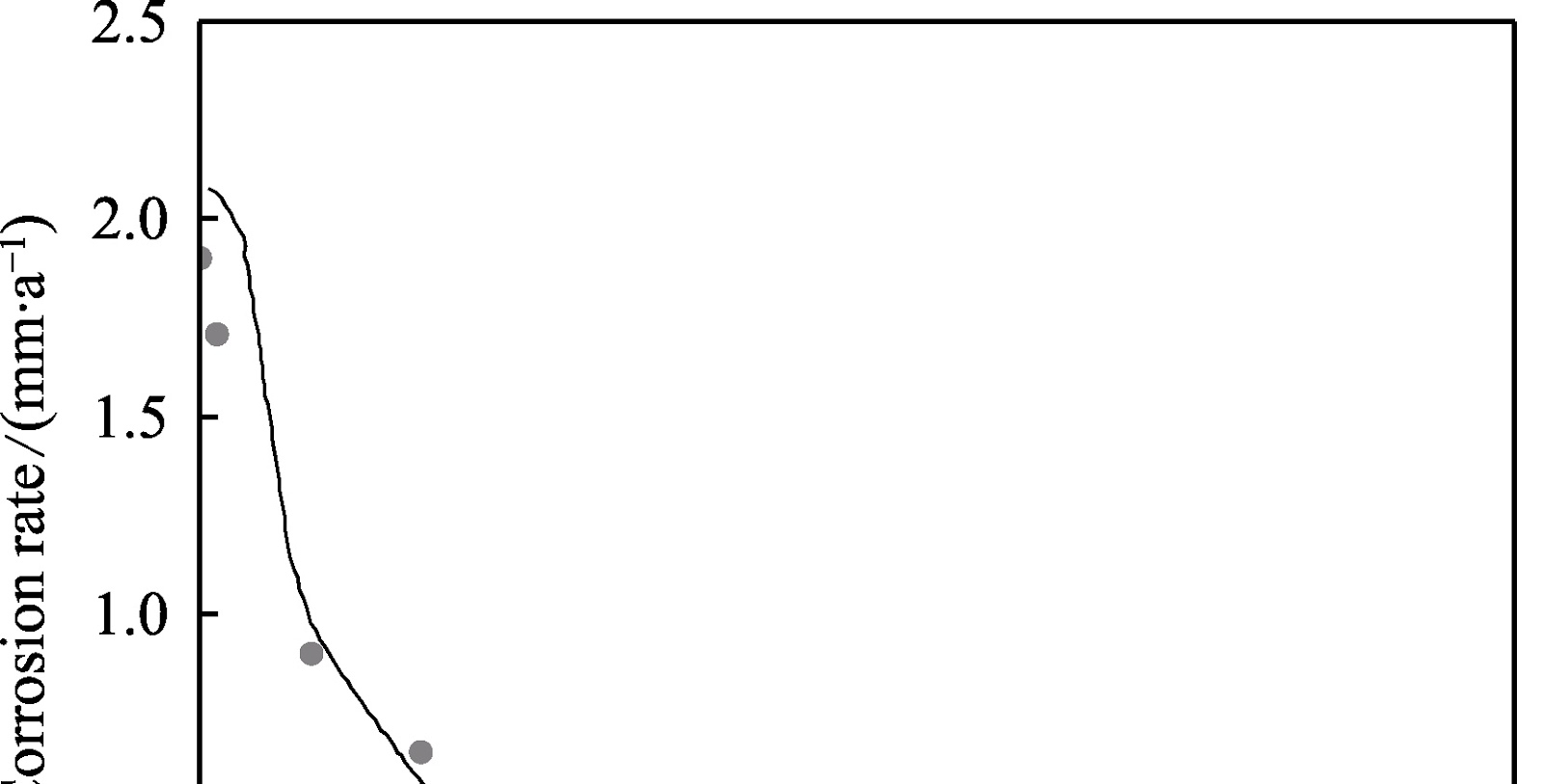
Alkaline seawater electrolysis for hydrogen production imposes severe corrosion on structural stainless steels, particularly in high-temperature, highly alkaline, chloride-rich electrolytes. This study evaluates four inorganic inhibitors—sodium molybdate (Na2MoO4), sodium tungstate (Na2WO4), sodium phosphate (Na3PO4), and vanadium pentoxide (V2O5)—for 316L austenitic stainless steel (316L SS) and 2205 duplex stainless steel (2205 DSS) in a simulated electrolytic seawater environment (6.0 mol/L NaOH, 2.0 mol/L NaCl, 90 °C). Potentiodynamic polarization, electrochemical impedance spectroscopy (EIS), and 14-day immersion tests quantified inhibition efficiency (IE). Surface morphology and film chemistry were characterized by SEM, optical profilometry (OP), and XPS. V2O5 exhibited the highest IE, reaching 79.90% for 316L SS and 89.58% for 2205 DSS at 0.05 mol/L, followed by Na3PO4 (83.33% for 2205 DSS). Na2MoO4 and Na2WO4 were least effective. EIS fitting revealed that V2O5 markedly increased film resistance (Rf) and charge-transfer resistance (Rct) (e.g., Rct = 29,770 Ω·cm², Rf = 923.50 Ω·cm² for 316L SS), indicating suppressed interfacial charge transfer. XPS confirmed the incorporation of V4+/V5+ and PO4³− species into the surface film, forming a dense, barrier-type vanadium/phosphate composite layer that mitigates corrosion. These findings establish V2O5 and Na3PO4 as promising inhibitors for stainless steel in harsh alkaline electrolytic seawater systems.

Corrosion Inhibition Mechanism of Typical Inorganic Inhibitors on Stainless Steel in a Simulated Electrolytic Seawater Environment
Graphical Abstract
Original ResearchVol. 32, Issue 10 • pp. 100-112DOI: 10.16490/j.cnki.issn.1001-3660.2026.10.005Jan 15, 2026

Influence of Temperature on Diffusion Behavior and Infiltration Layer Structure of Sherardizing on Structural Steel

Authors: YU Tianjian, LI Haiyang, ZHANG Shizhao, LIU Shujing, WANG Shuaixing, LIU Xiaohui, DU Nan

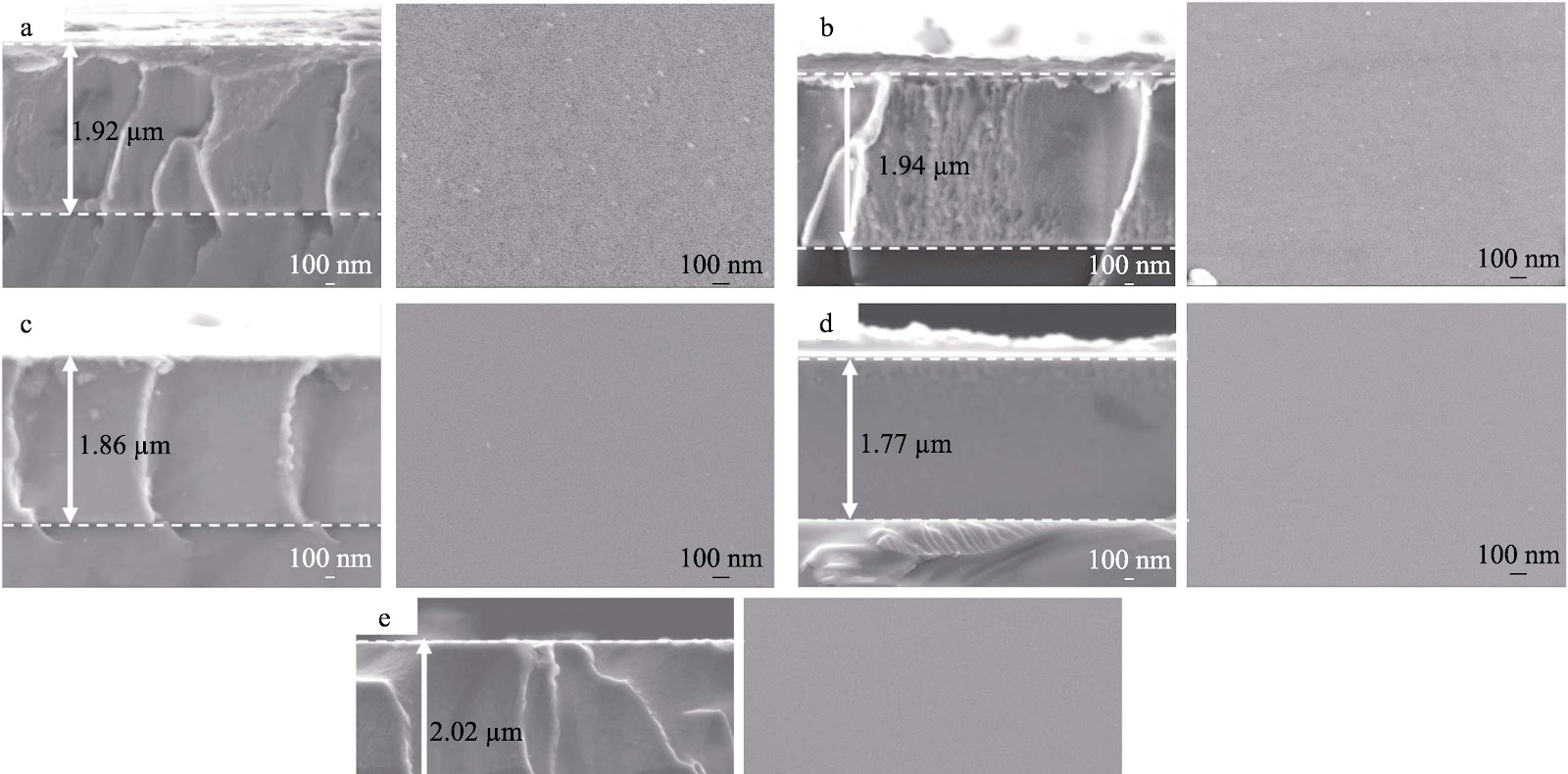
Powder sherardizing on Q235 structural steel was conducted in a 70wt.% Zn–0.8wt.% NH4Cl–29.2wt.% α-Al2O3 activated pack at 340–400 °C for 2–10 h to establish the temperature-dependent growth kinetics, phase evolution, and corrosion performance of Zn–Fe intermetallic layers. Cross-sectional SEM/EDS and XRD show that all layers consist of δ and Γ phases, with Γ concentrated near the substrate; excessive Γ at 340 °C initiates interfacial cracking. Layer thickness increases monotonically with temperature and time, rising from 10.80 μm at 340 °C to 43.90 μm at 400 °C after 6 h, and from 12.10 μm at 2 h to 81.60 μm at 10 h at 380 °C. The Zn/Fe ratio and δ-phase fraction increase with temperature, yielding denser layers and improved corrosion resistance; at 380–400 °C, corrosion current densities fall to 1.16×10⁻⁶–9.78×10⁻⁷ A/cm². The diffusion coefficient at 380 °C is 2.341×10⁻¹³ m²/s. Prolonged holding beyond 6 h produces through-thickness cracks. DSC and microstructural evidence support a three-stage growth mechanism: formation of active Zn atoms via ZnCl2 decomposition, bidirectional Zn/Fe interdiffusion along substrate defects, and continuous inward advancement of the Zn–Fe intermetallic front. The optimal processing window is 380 °C for 6 h, yielding a ~36.1 μm crack-free layer with 84.1% δ phase and superior corrosion resistance.

Influence of Temperature on Diffusion Behavior and Infiltration Layer Structure of Sherardizing on Structural Steel
Graphical Abstract
Original ResearchVol. 32, Issue 10 • pp. 100-112DOI: 10.16490/j.cnki.issn.1001-3660.2026.10.001Jan 15, 2026

Research Progress and Problem Analysis on Corrosion Prediction of Supercritical CO2 Transport Pipelines

Authors: LI Fagen, CAO Yuguang, ZHEN Ying, LI Xuanpeng, HUANG Jufeng

Pipeline transport is the core of large-scale CO2 delivery in CCUS projects, and supercritical pipeline transport is the most economical and feasible method. However, inherent multicomponent impurities and complex aqueous phase precipitation make corrosion control difficult and costly. This review assesses corrosion mechanisms and prediction technologies for supercritical CO2 transport pipelines, focusing on numerical analysis, supporting experiments, and field application within comprehensive mechanistic models. Current understanding has clarified the effects of individual impurities (H2O, H2S, O2, SO2, N2O, N2, H2, CH4) and operating parameters, but synergistic mechanisms of mixed gases remain unresolved, lacking systematic quantitative description. Existing prediction models are limited in applicability to corrosion conditions, morphological matching, and comprehensiveness of factors. Experimental methods suffer from insufficient reliability, particularly in precise metering and replenishment of corrosive media under low water content and multicomponent impurity synergy. Field application faces challenges in rational model use and accurate extraction of field data. Future directions include: deepening research on synergistic effects of impurity gases and quantifying them via theoretical analysis to establish mapping between impurity concentration and corrosion rate; accelerating development of aqueous phase precipitation and distribution models, multicomponent impurity water chemistry models, thermodynamic and kinetic models for multicomponent reactions, and competitive formation/growth models for multiple product films; strengthening experimental techniques for precise metering and replenishment under low water and multicomponent synergy; and improving field application by understanding model parameter physical meanings, applicability boundaries, and ensuring reasonable input parameters and accurate field data extraction.

Research Progress and Problem Analysis on Corrosion Prediction of Supercritical CO2 Transport Pipelines
Graphical Abstract