SinoTechIntel Academic Portal
🏛️ Indexed Academic JournalImpact Factor: 3.8

Opto-Electronic Advances (光电进展)

Authoritative peer-reviewed journal in materials science, metallurgy, chemistry and engineering technologies: Opto-Electronic Advances (光电进展)

Total Research Papers: 148
Access: 100% Free Open Access
Browse by Publication Year & VolumeReset All Filters ✕

Published Research PapersFiltered: Year 2026 • 18

Showing 4 of 148 peer-reviewed papers with full Graphical Abstracts.

Original ResearchVol. 18, Issue 50 • pp. 50DOI: 10.1007/s40820-025-01903-0Jan 15, 2026

Radiative Coupled Evaporation Cooling Hydrogel for Above-Ambient Heat Dissipation and Flame Retardancy

Authors: Qin Ye, Yimou Huang, Baojian Yao, Zhuo Chen, Changming Shi, Brian W. Sheldon, Meijie Chen

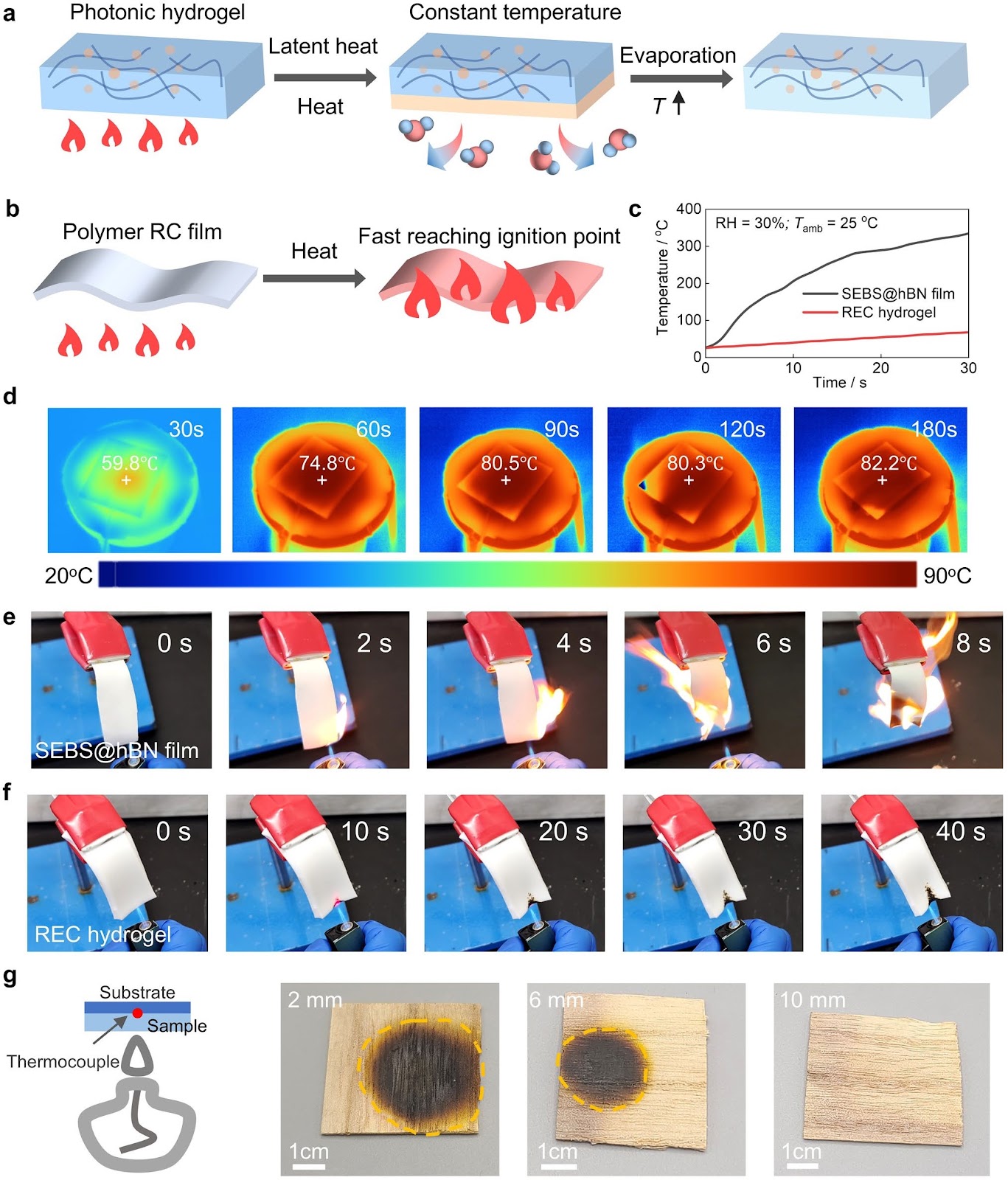
By combining the merits of radiative cooling (RC) and evaporation cooling (EC), radiative coupled evaporative cooling (REC) has attracted considerable attention for sub-ambient cooling purposes. However, for outdoor devices, the interior heating power would increase the working temperature and fire risk, which would suppress their above-ambient heat dissipation capabilities and passive water cycle properties. In this work, we introduced a REC design based on an all-in-one photonic hydrogel for above-ambient heat dissipation and flame retardancy. Unlike conventional design RC film for heat dissipation with limited cooling power and fire risk, REC hydrogel can greatly improve the heat dissipation performance in the daytime with a high workload, indicating a 12.0 °C lower temperature than the RC film under the same conditions in the outdoor experiment. In the nighttime with a low workload, RC-assisted adsorption can improve atmospheric water harvesting to ensure EC in the daytime. In addition, our REC hydrogel significantly enhanced flame retardancy by absorbing heat without a corresponding temperature rise, thus mitigating fire risks. Thus, our design shows a promising solution for the thermal management of outdoor devices, delivering outstanding performance in both heat dissipation and flame retardancy.
Radiative Coupled Evaporation Cooling Hydrogel for Above-Ambient Heat Dissipation and Flame Retardancy
Graphical Abstract
Original ResearchVol. 18, Issue 54 • pp. 1-15DOI: 10.1007/s40820-025-01888-wJan 15, 2026

Ultrathin Gallium Nitride Quantum-Disk-in-Nanowire-Enabled Reconfigurable Bioinspired Sensor for High-Accuracy Human Action Recognition

Authors: Zhixiang Gao, Xin Ju, Huabin Yu, Wei Chen, Xin Liu, Yuanmin Luo, Yang Kang, Dongyang Luo, JiKai Yao, Wengang Gu, Muhammad Hunain Memon, Yong Yan, Haiding Sun

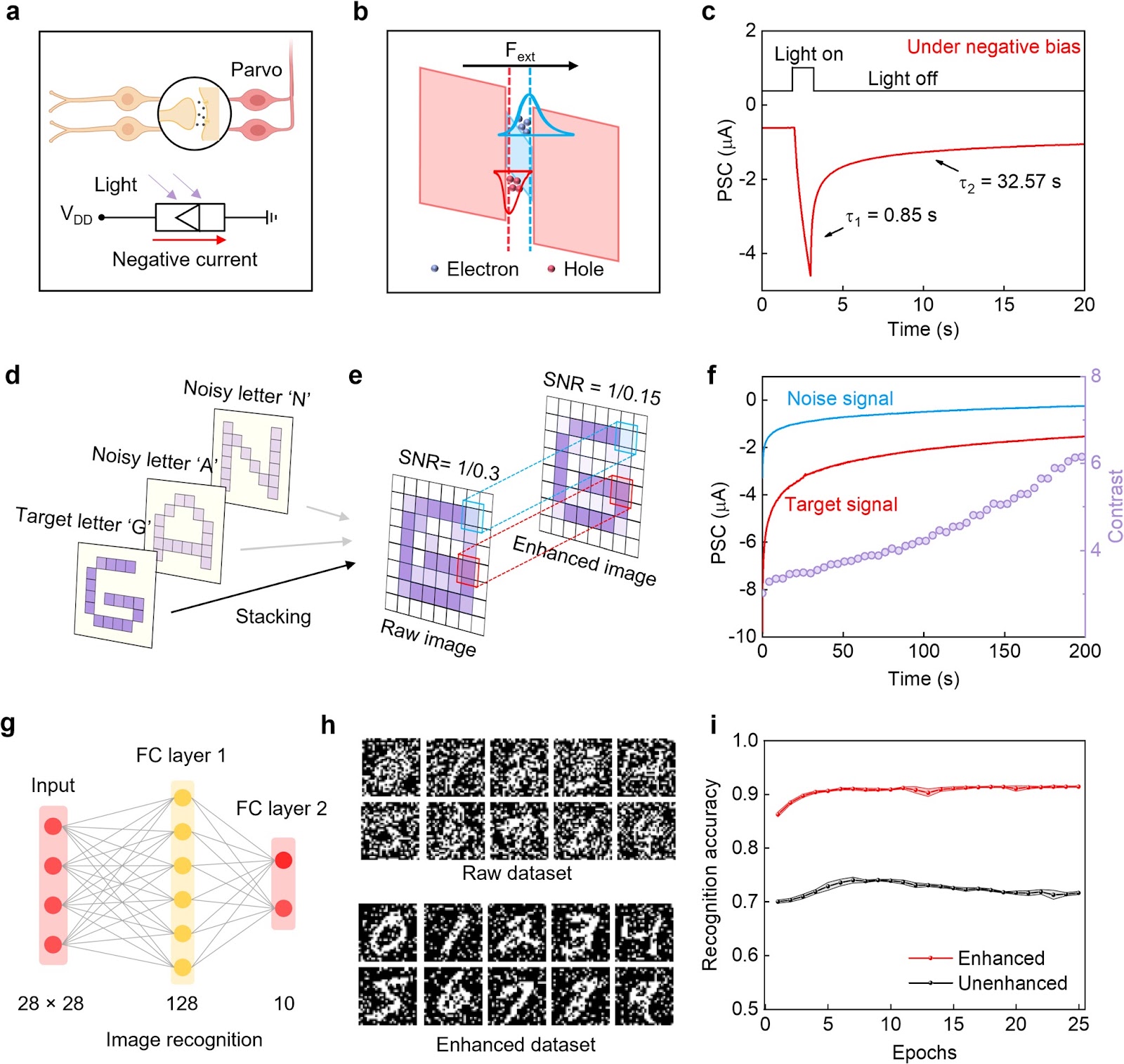
Human action recognition (HAR) is crucial for the development of efficient computer vision, where bioinspired neuromorphic perception visual systems have emerged as a vital solution to address transmission bottlenecks across sensor-processor interfaces. However, the absence of interactions among versatile biomimicking functionalities within a single device, which was developed for specific vision tasks, restricts the computational capacity, practicality, and scalability of in-sensor vision computing. Here, we propose a bioinspired vision sensor composed of a GaN/AlN-based ultrathin quantum-disks-in-nanowires (QD-NWs) array to mimic not only Parvo cells for high-contrast vision and Magno cells for dynamic vision in the human retina but also the synergistic activity between the two cells for in-sensor vision computing. By simply tuning the applied bias voltage on each QD-NW-array-based pixel, we achieve two biosimilar photoresponse characteristics with slow and fast reactions to light stimuli that enhance the in-sensor image quality and HAR efficiency, respectively. Strikingly, the interplay and synergistic interaction of the two photoresponse modes within a single device markedly increased the HAR recognition accuracy from 51.4% to 81.4% owing to the integrated artificial vision system. The demonstration of an intelligent vision sensor offers a promising device platform for the development of highly efficient HAR systems and future smart optoelectronics.

Ultrathin Gallium Nitride Quantum-Disk-in-Nanowire-Enabled Reconfigurable Bioinspired Sensor for High-Accuracy Human Action Recognition
Graphical Abstract
Original ResearchVol. 18, Issue 51 • pp. 1-21DOI: 10.1007/s40820-025-01895-xJan 15, 2026

Constructing Double Heterojunctions on 1T/2H-MoS2@Co3S4 Electrocatalysts for Regulating Li2O2 Formation in Lithium-Oxygen Batteries

Authors: Yichuan Dou, Zhuang Liu, Lanling Zhao, Jian Zhang, Fanpeng Meng, Yao Liu, Zidong Zhang, Xingao Li, Zheng Shang, Lu Wang, Jun Wang

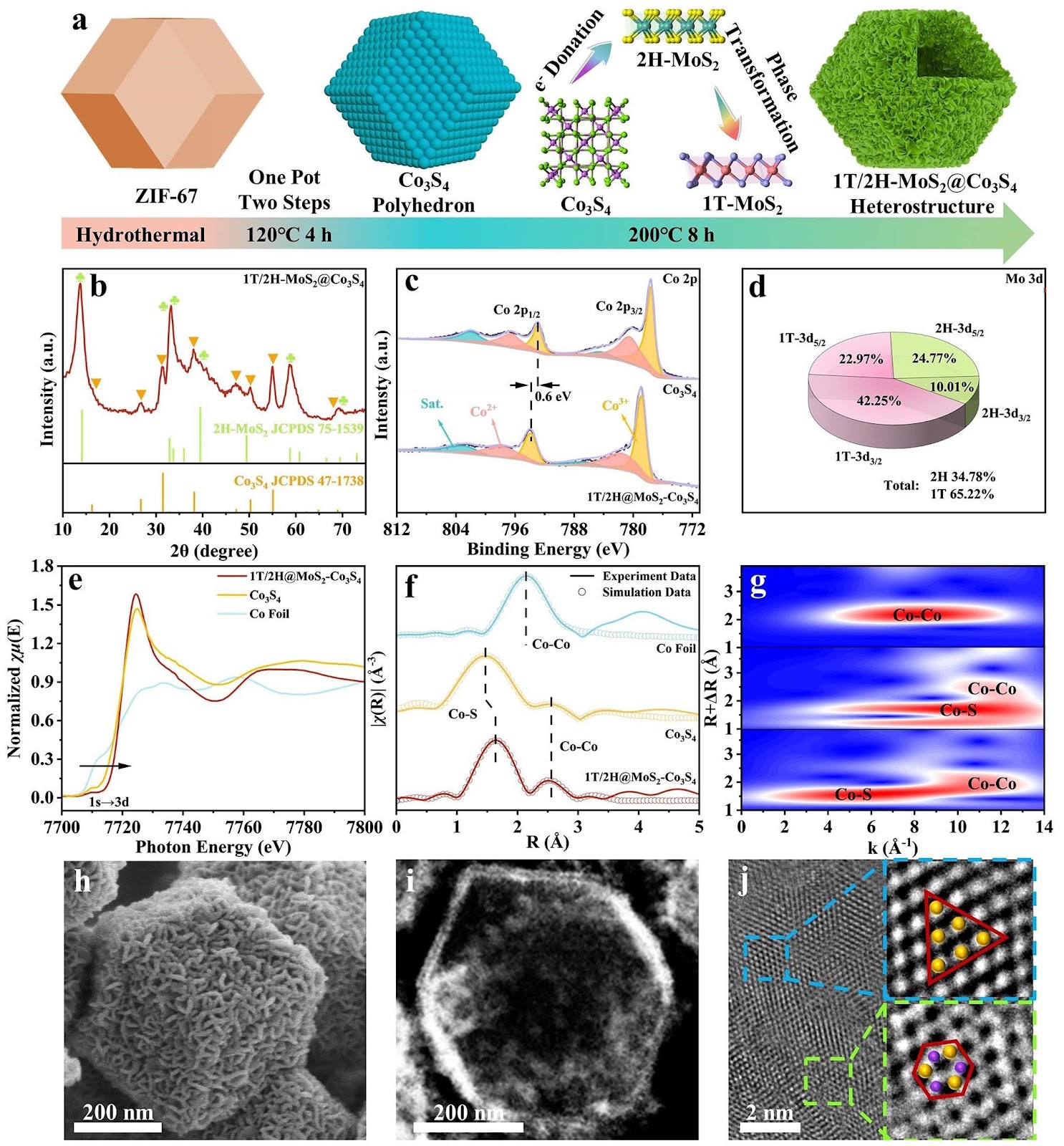
Co3S4 electrocatalysts with mixed valences of Co ions and excellent structural stability possess favorable oxygen evolution reaction (OER) activity, yet challenges remain in fabricating rechargeable lithium-oxygen batteries (LOBs) due to their poor OER performance, resulting from poor electrical conductivity and overly strong intermediate adsorption. In this work, fancy double heterojunctions on 1T/2H-MoS2@Co3S4 (1T/2H-MCS) were constructed derived from the charge donation from Co to Mo ions, thus inducing the phase transformation of MoS2 from 2H to 1T. The unique features of these double heterojunctions endow the 1T/2H-MCS with complementary catalysis during charging and discharging processes. It is worth noting that 1T-MoS2@Co3S4 could provide fast Co–S–Mo electron transport channels to promote ORR/OER kinetics, and 2H-MoS2@Co3S4 contributed to enabling moderate eg orbital occupancy when adsorbed with oxygen-containing intermediates. On the basis, the Li2O2 nucleation route was changed to solution and surface dual pathways, improving reversible deposition and decomposition kinetics. As a result, 1T/2H-MCS cathodes exhibit an improved electrocatalytic performance compared with those of Co3S4 and MoS2 cathodes. This innovative heterostructure design provides a reliable strategy to construct efficient transition metal sulfide catalysts by improving electrical conductivity and modulating adsorption toward oxygenated intermediates for LOBs.

Constructing Double Heterojunctions on 1T/2H-MoS2@Co3S4 Electrocatalysts for Regulating Li2O2 Formation in Lithium-Oxygen Batteries
Graphical Abstract
Original ResearchVol. 18, Issue 48 • pp. 48DOI: 10.1007/s40820-025-01892-0Jan 15, 2026

High-Performance Wide-Temperature Zinc-Ion Batteries with K+/C3N4 Co-Intercalated Ammonium Vanadate Cathodes

Authors: Daming Chen, Jimin Fu, Yang Ming, Wei Cai, Yidi Wang, Xin Hu, Rujun Yu, Ming Yang, Yixin Hu, Benjamin Tawiah, Shuo Shi, Hanbai Wu, Zijian Li, Bin Fei

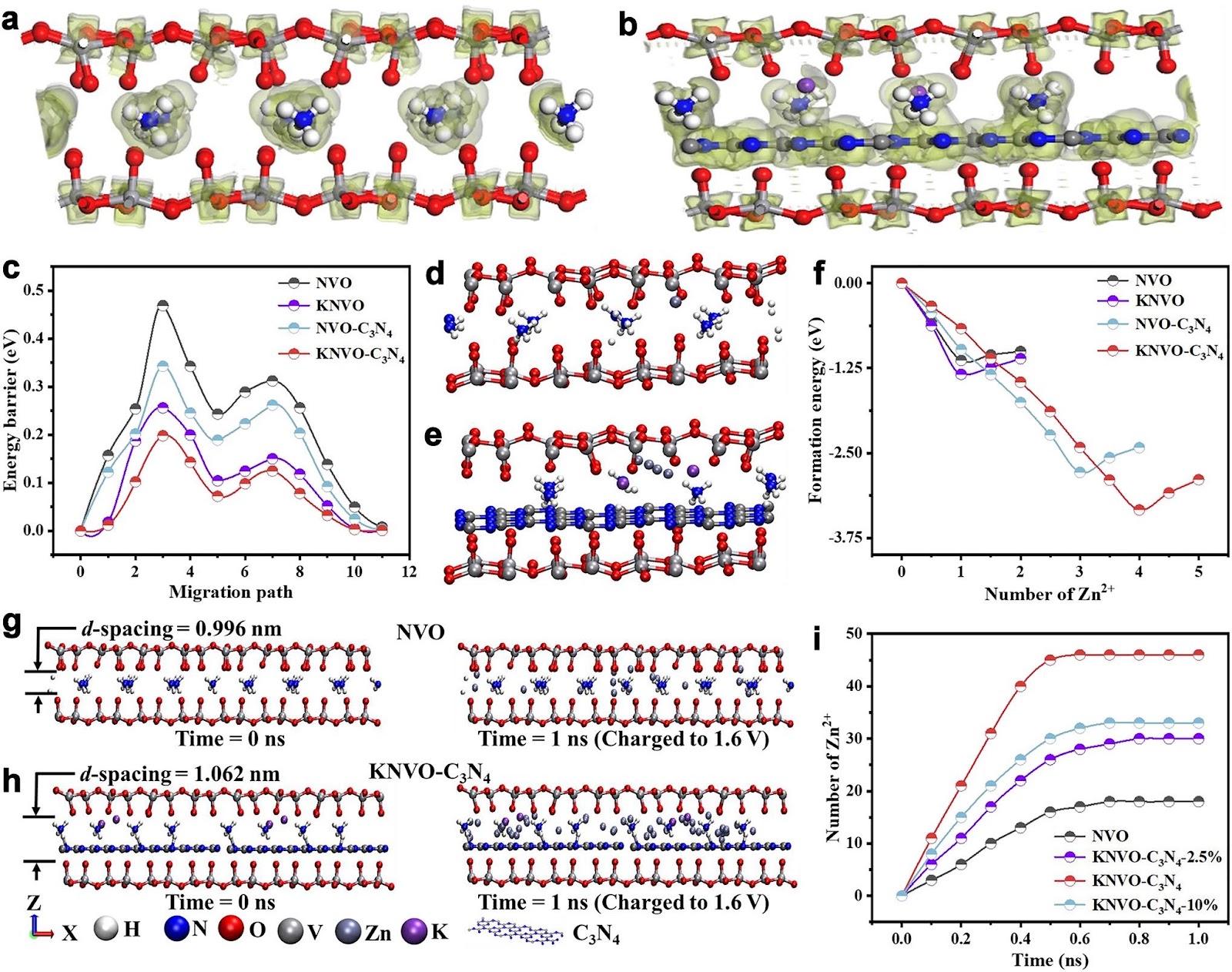
NH4V4O10 (NVO) is considered a promising cathode material for aqueous zinc-ion batteries due to its high theoretical capacity. However, its practical application is limited by irreversible deamination, structural collapse, and sluggish reaction kinetics during cycling. Herein, K+ and C3N4 co-intercalated NVO (KNVO-C3N4) nanosheets with expanded interlayer spacing are synthesized for the first time to achieve high-rate, stable, and wide-temperature cathodes. Molecular dynamics and experimental results confirm that there is an optimal C3N4 content to achieve higher reaction kinetics. The synergistic effect of K+ and C3N4 co-intercalation significantly reduces the electrostatic interaction between Zn2+ and the [VOn] layer, improves the specific capacity and cycling stability. Consequently, the KNVO-C3N4 electrode displays outstanding electrochemical performance at room temperature and under extreme environments. It exhibits excellent rate performance (228.4 mAh g−1 at 20 A g−1), long-term cycling stability (174.2 mAh g−1 after 10,000 cycles at 20 A g−1), and power/energy density (210.0 Wh kg−1 at 14,200 W kg−1) at room temperature. Notably, it shows remarkable storage performance at −20 °C (111.3 mAh g−1 at 20 A g−1) and 60 °C (208.6 mAh g−1 at 20 A g−1). This strategy offers a novel approach to developing high-performance cathodes capable of operating under extreme temperatures.

High-Performance Wide-Temperature Zinc-Ion Batteries with K+/C3N4 Co-Intercalated Ammonium Vanadate Cathodes
Graphical Abstract