Key Takeaways & Executive Findings
- •• A novel GaN/AlN-based ultrathin quantum-disks-in-nanowires sensor was fabricated, demonstrating voltage bias tunable response characteristics to light stimuli. • Image enhancement functionality and a robust reservoir computing system were demonstrated based on the voltage tunable long-term and short-term persistent photocurrent respectively. • A high-performance artificial vision system with the two integrated functions was demonstrated, achieving a remarkable improvement in human action recognition. • The synergistic interaction of two photoresponse modes within a single device increased HAR recognition accuracy from 51.4% to 81.4%.
Abstract
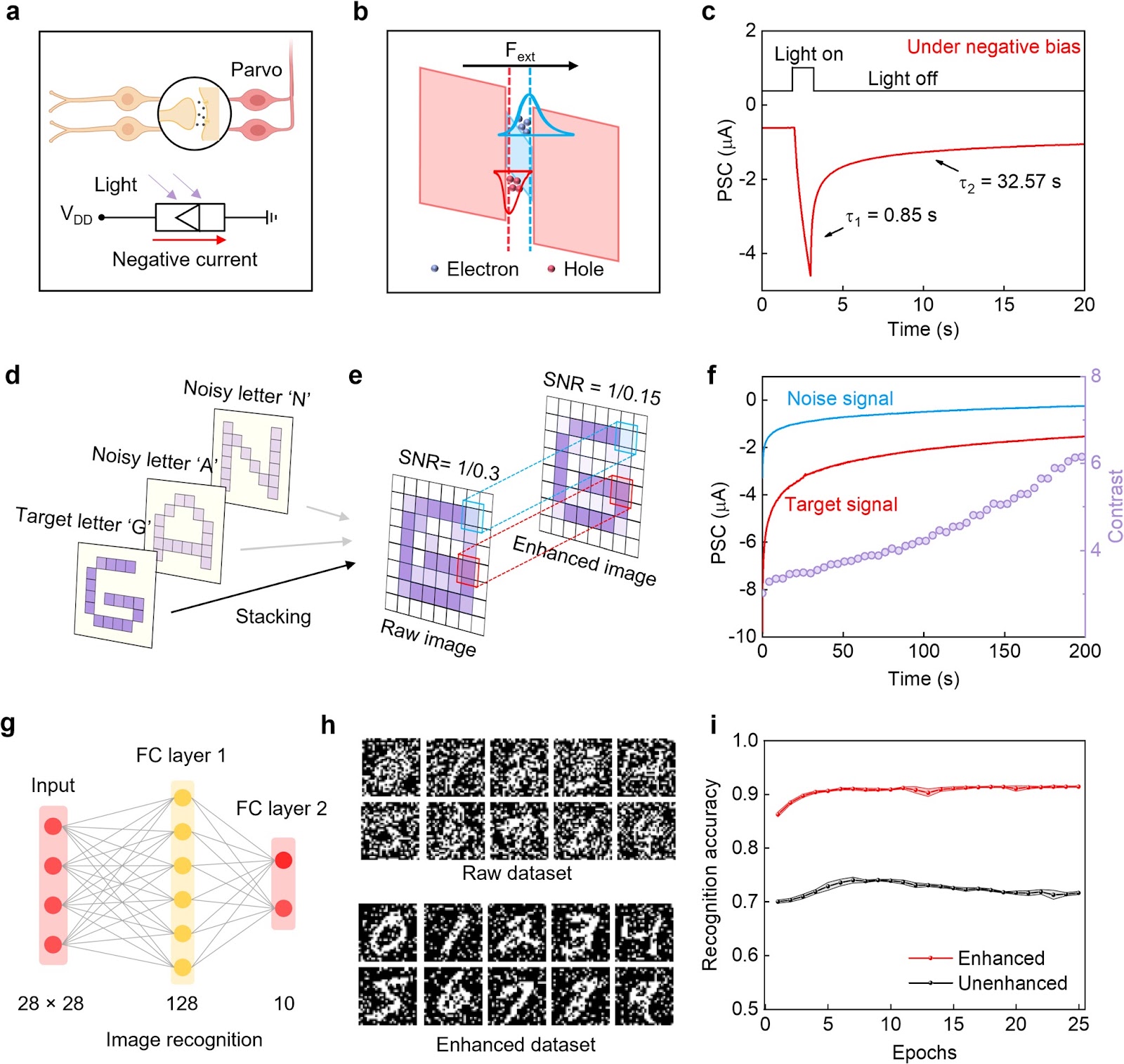
Human action recognition (HAR) is crucial for the development of efficient computer vision, where bioinspired neuromorphic perception visual systems have emerged as a vital solution to address transmission bottlenecks across sensor-processor interfaces. However, the absence of interactions among versatile biomimicking functionalities within a single device, which was developed for specific vision tasks, restricts the computational capacity, practicality, and scalability of in-sensor vision computing. Here, we propose a bioinspired vision sensor composed of a GaN/AlN-based ultrathin quantum-disks-in-nanowires (QD-NWs) array to mimic not only Parvo cells for high-contrast vision and Magno cells for dynamic vision in the human retina but also the synergistic activity between the two cells for in-sensor vision computing. By simply tuning the applied bias voltage on each QD-NW-array-based pixel, we achieve two biosimilar photoresponse characteristics with slow and fast reactions to light stimuli that enhance the in-sensor image quality and HAR efficiency, respectively. Strikingly, the interplay and synergistic interaction of the two photoresponse modes within a single device markedly increased the HAR recognition accuracy from 51.4% to 81.4% owing to the integrated artificial vision system. The demonstration of an intelligent vision sensor offers a promising device platform for the development of highly efficient HAR systems and future smart optoelectronics.
1. Introduction
In the era of technological revolution, human action recognition (HAR) technology, characterized by artificial intelligence, has become increasingly important in various applications, including security surveillance, video retrieval, human–computer interaction, and autonomous navigation [1–7]. However, HAR from video sequences still faces challenges, such as background clutter, partial occlusion, variations in scale or viewpoint, lighting conditions, and appearance changes [8–10]. To date, long short-term memory (LSTM) architectures have been successfully applied to analyze temporal complex human activity data because of the recurrent connections in their hidden layers [11–13]. However, these approaches also have several drawbacks, such as the need for large datasets and the time- and energy-consuming training process [14].
In contrast, biological vision systems can efficiently and autonomously perceive motion-related information, performing image enhancement and classification tasks in real time through the coordinated operation of various retinal cells, including photoreceptors, bipolar cells, and ganglion cells [15–18]. Notably, retinal ganglion cells can be categorized into two types: magnocellular (Magno) and parvocellular (Parvo). Magnocellular cells respond rapidly in motion detection scenarios, corresponding to “short-term” functionality, whereas parvocellular cells exhibit a slower response in low-contrast environments, corresponding to “long-term” functionality [19–21]. Consequently, the human visual system exhibits remarkable adaptability to a wide range of environmental conditions—whether static or dynamic, and from blurred to well-defined stimuli—enabled by biologically inspired long short-term memory (bio-LSTM) architectures. This functional differentiation among retinal cells underpins the efficiency of natural vision and serves as inspiration for the development of dual-functional artificial vision devices.
Herein, we propose a versatile vision sensor composed of GaN/AlN-based ultrathin quantum-disks-in-nanowires (QD-NWs) with reconfigurable photoelectric properties to mimic visual behaviors in biological cells. Notably, the well-designed nanowire consists of an n-GaN layer, GaN/AlN multiple QDs, and an n-GaN cap layer. The n–i–n-type band structure minimizes the separation between electrons and holes, whereas the high barrier height of the AlN quantum barriers confines carriers in the QD-NWs, enabling a dual-modal persistent photocurrent (PPC). Furthermore, each quantum disk comprises several layers of GaN, which enhances ...
Loading authentic research manuscript (Pages 1–5)...
Zhixiang Gao, Xin Ju, Huabin Yu, Wei Chen, Xin Liu, Yuanmin Luo, Yang Kang, Dongyang Luo, JiKai Yao, Wengang Gu, Muhammad Hunain Memon, Yong Yan, Haiding Sun (2026). Ultrathin Gallium Nitride Quantum-Disk-in-Nanowire-Enabled Reconfigurable Bioinspired Sensor for High-Accuracy Human Action Recognition. SinoTechIntel Verified Research. https://doi.org/10.1007/s40820-025-01888-w
Research & Educational Purpose Only:The translations, structured abstracts, analytical annotations, and data reports provided by SinoTechIntel are intended exclusively for academic research, internal corporate R&D, and educational benchmarking. They do not constitute formal engineering, chemical safety, legal, or professional advice.
Copyright & Intellectual Property Notice: Original copyright of the underlying source articles and experimental data remains with the respective authors, institutions, and original publishing journals. SinoTechIntel claims intellectual property only over its proprietary translations, analytical syntheses, and AEO structured enhancements in accordance with international fair use and academic citation principles.
Frequently Asked Questions
What is the main innovation of this sensor?
The sensor uses GaN/AlN quantum-disks-in-nanowires to mimic both Parvo and Magno cells of the human retina, with voltage-tunable photoresponse enabling dual-modal functionality for image enhancement and dynamic vision.
How does the sensor improve human action recognition accuracy?
By integrating two photoresponse modes (slow and fast) within a single device, the sensor leverages synergistic interactions to boost HAR accuracy from 51.4% to 81.4%.
What are the key features of the QD-NW structure?
The nanowire consists of an n-GaN layer, GaN/AlN multiple quantum disks, and an n-GaN cap layer, with an n-i-n band structure that minimizes electron-hole separation and high AlN barriers for carrier confinement.
What applications could this sensor enable?
The sensor is promising for efficient HAR systems, smart optoelectronics, and in-sensor vision computing, potentially impacting security surveillance, human-computer interaction, and autonomous navigation.
How does the sensor achieve voltage-tunable response?
By applying different bias voltages to each pixel, the sensor can switch between slow (long-term) and fast (short-term) photoresponse characteristics, enabling reconfigurable functionality.
Related Technical Papers & Translations
Direct Repair of the Crystal Structure and Coating Surface of Spent LiFePO4 Materials Enables Superfast Li-Ion Migration
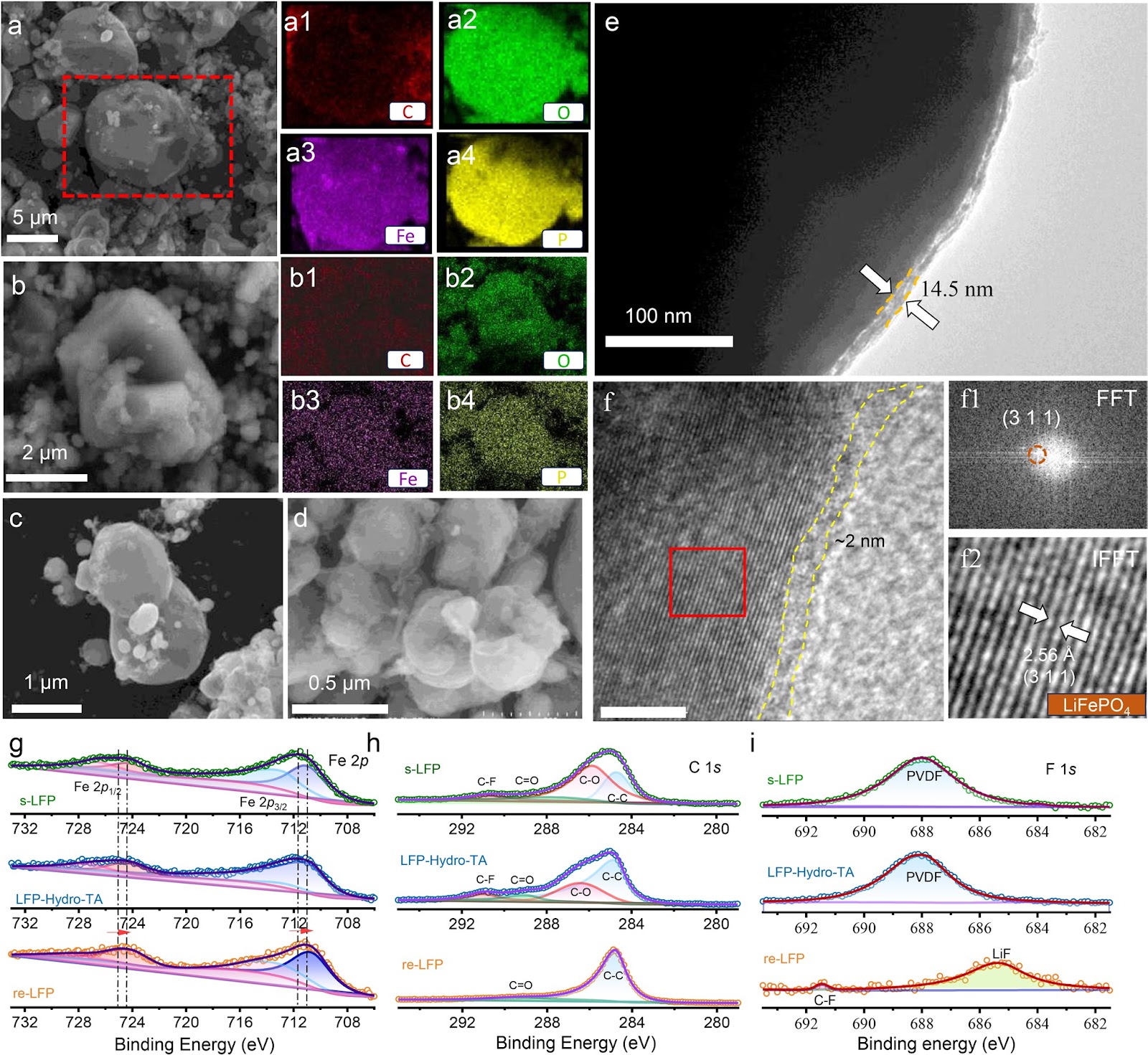
The rapid accumulation of spent LiFePO4 (LFP) cathodes from retired lithium-ion batteries necessitates the development of effective and environmental-friendly recycling strategies. In this context, direct regeneration has emerged as a promising approach for reclaiming LFP cathode materials, offering a streamlined pathway to restore their electrochemical functionality. We report an integrated regeneration protocol that simultaneously repairs the degraded crystal structure and reconstructs the damaged carbon coating in spent LFP. The regenerated cathode material had superfast lithium-ion diffusion kinetics and a stable cathode–electrolyte interface, giving a remarkable rate capability with specific capacities of 122 mAh g−1 at 5C and 106 mAh g−1 at 10C (1C = 170 mA g−1). It also maintained capacities of 110.7 mAh g−1 (5C) and 84.1 mAh g−1 (10C) after 400 cycles. It could be used in harsh environments and could be stably cycled at subzero temperatures (−10 and −20 °C) and in solid-state electrolyte batteries. Life cycle assessment combined with economic evaluation using the EverBatt model reveals that this direct regeneration approach has high economic and environmental benefits.
Oxide Semiconductor for Advanced Memory Architectures: Atomic Layer Deposition, Key Requirement and Challenges
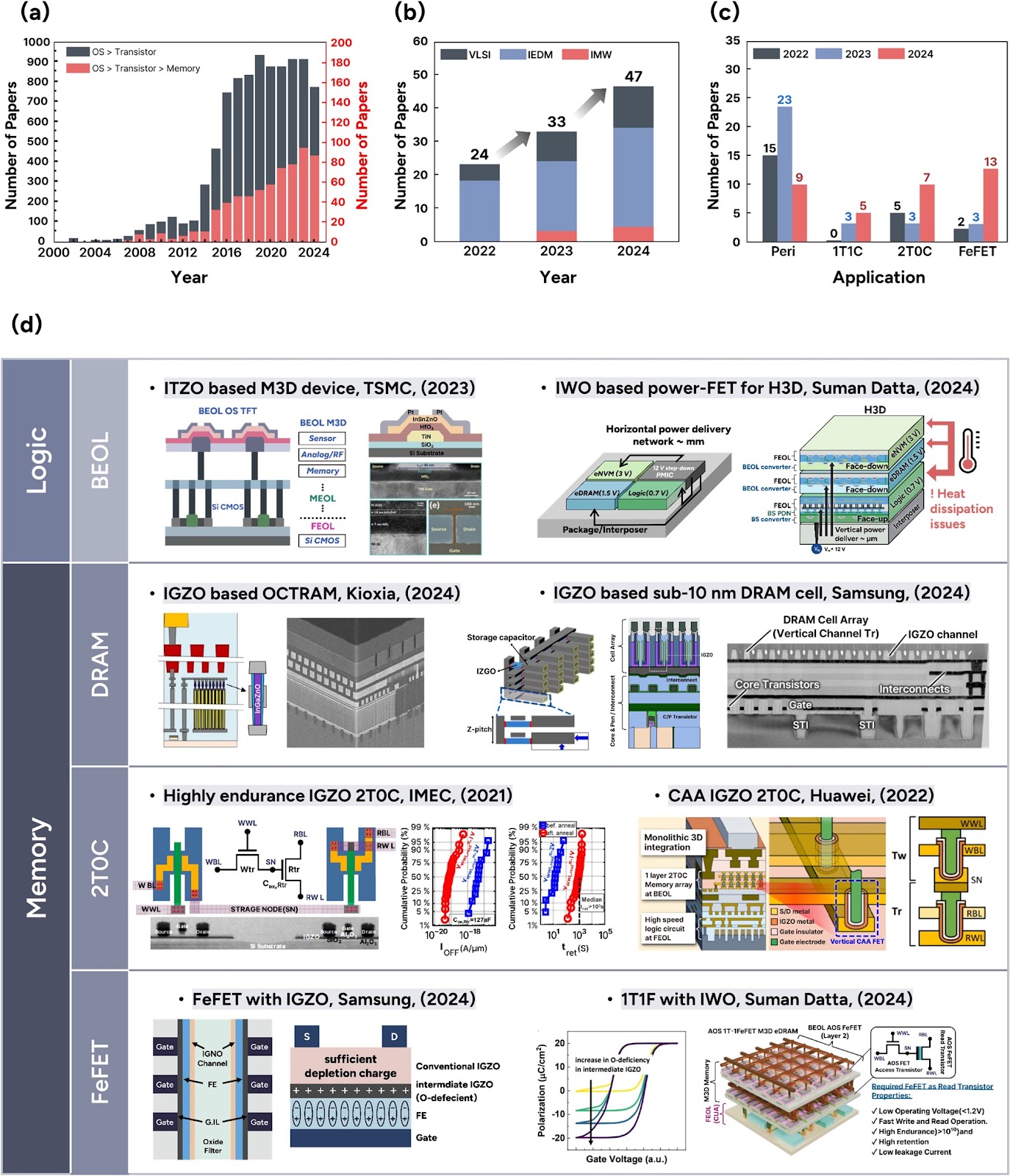
Oxide semiconductors (OSs), introduced by the Hosono group in the early 2000s, have evolved from display backplane materials to promising candidates for advanced memory and logic devices. The exceptionally low leakage current of OSs and compatibility with three-dimensional (3D) architectures have recently sparked renewed interest in their use in semiconductor applications. This review begins by exploring the unique material properties of OSs, which fundamentally originate from their distinct electronic band structure. Subsequently, we focus on atomic layer deposition (ALD), a core technique for growing excellent OS films, covering both basic and advanced processes compatible with 3D scaling. The basic surface reaction mechanisms—adsorption and reaction—and their roles in film growth are introduced. Furthermore, material design strategies, such as cation selection, crystallinity control, anion doping, and heterostructure engineering, are discussed. We also highlight challenges in memory applications, including contact resistance, hydrogen instability, and lack of p-type materials, and discuss the feasibility of ALD-grown OSs as potential solutions. Lastly, we provide an outlook on the role of ALD-grown OSs in memory technologies. This review bridges material fundamentals and device-level requirements, offering a comprehensive perspective on the potential of ALD-driven OSs for next-generation semiconductor memory devices.
Laser powder bed fusion of biodegradable Zn-4Cu alloy: Processing, microstructure and properties
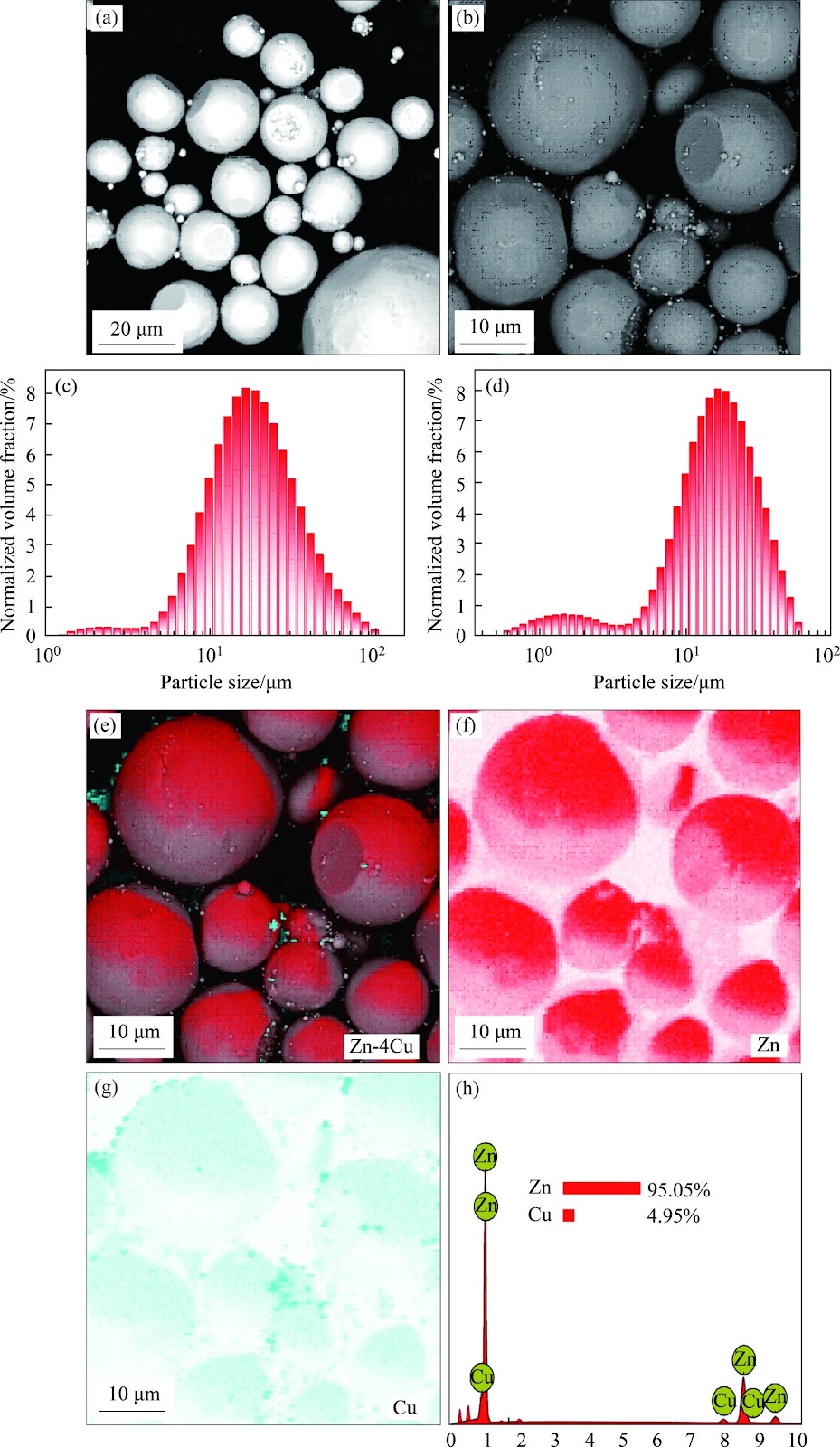
Zn's natural degradability and biocompatibility make it a promising candidate for implants, however, its mechanical properties remain insufficient for bone applications. In this study, the performance of Zn was enhanced by developing Zn-Cu alloys via laser powder bed fusion (LPBF). Optimal LPBF parameters for forming stable tracks were achieved by adjusting laser power and scanning speed. Under optimized conditions of 100 W and 100 mm/s, high-density (99.58%) Zn-Cu alloys with improved hardness (68.2HV) and yield strength (160 MPa) were achieved. These improvements are attributed to solid solution strengthening, segregation strengthening, and grain refinement. The Zn-Cu alloys also demonstrated favorable degradation behavior, with a rate of 0.16 mm/year. This degradation is primarily driven by micro-galvanic corrosion between the CuZn5 phase and Zn matrix, along with refined grains and increased grain boundary density. This work demonstrates a viable strategy for fabricating Zn-based implants with enhanced structural integrity and mechanical performance via LPBF.