Key Takeaways & Executive Findings
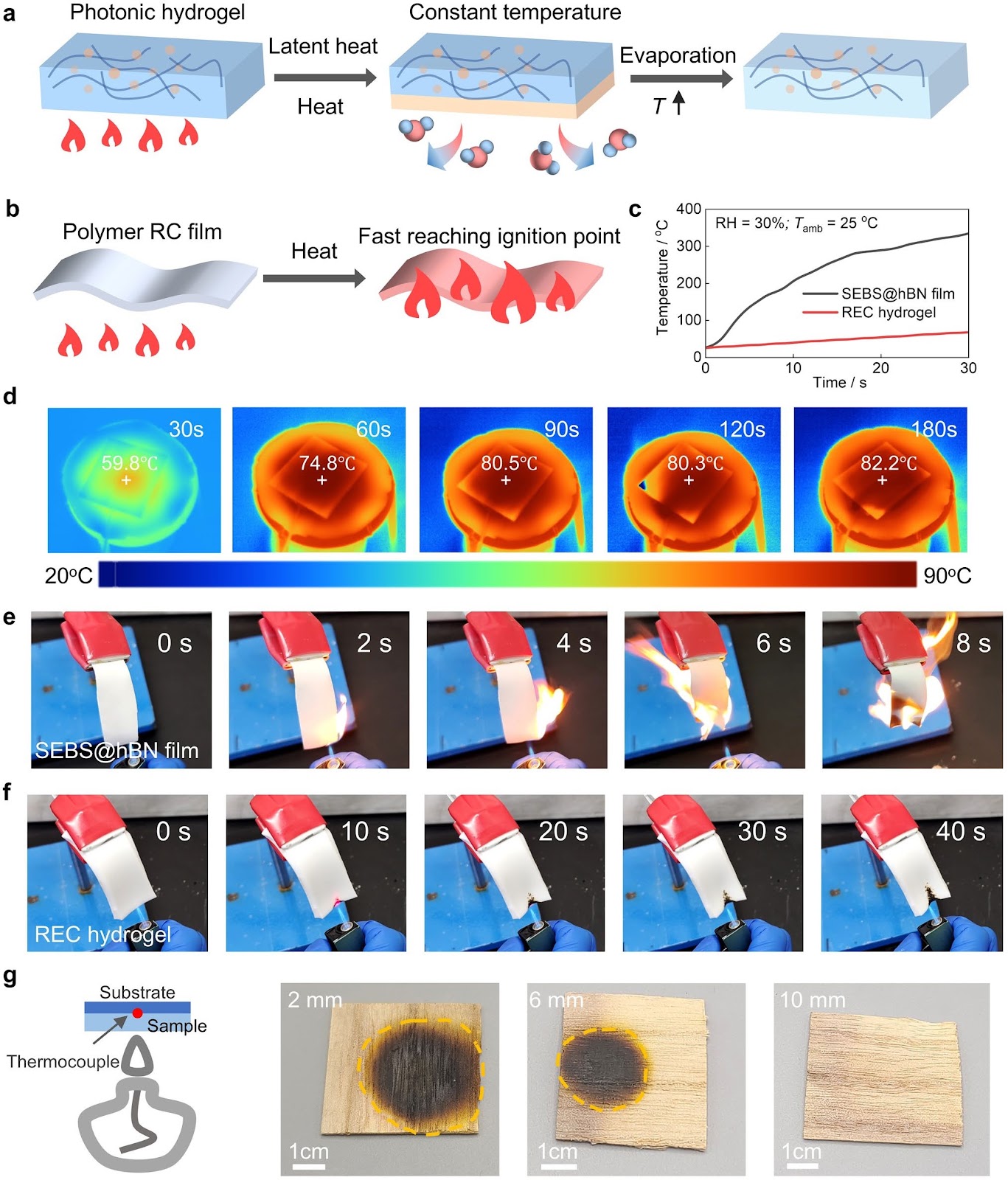
- •• An all-in-one photonic hydrogel integrates radiative and evaporative cooling for above-ambient heat dissipation and flame retardancy. • The REC hydrogel achieves a 12.0 °C lower temperature than a conventional radiative cooling film under identical outdoor daytime conditions. • Radiative cooling-assisted adsorption enables atmospheric water harvesting at night, ensuring sustained evaporative cooling during the day. • The hydrogel exhibits enhanced flame retardancy by absorbing heat without a corresponding temperature rise, mitigating fire risks in outdoor devices.
Abstract
By combining the merits of radiative cooling (RC) and evaporation cooling (EC), radiative coupled evaporative cooling (REC) has attracted considerable attention for sub-ambient cooling purposes. However, for outdoor devices, the interior heating power would increase the working temperature and fire risk, which would suppress their above-ambient heat dissipation capabilities and passive water cycle properties. In this work, we introduced a REC design based on an all-in-one photonic hydrogel for above-ambient heat dissipation and flame retardancy. Unlike conventional design RC film for heat dissipation with limited cooling power and fire risk, REC hydrogel can greatly improve the heat dissipation performance in the daytime with a high workload, indicating a 12.0 °C lower temperature than the RC film under the same conditions in the outdoor experiment. In the nighttime with a low workload, RC-assisted adsorption can improve atmospheric water harvesting to ensure EC in the daytime. In addition, our REC hydrogel significantly enhanced flame retardancy by absorbing heat without a corresponding temperature rise, thus mitigating fire risks. Thus, our design shows a promising solution for the thermal management of outdoor devices, delivering outstanding performance in both heat dissipation and flame retardancy.
1. Introduction
With the increasing power density in electronic devices, efficient heat dissipation has become a critical concern, as operating temperature significantly influences device performance [1, 2], particularly in outdoor equipment exposed to sunlight, such as base stations, transformers, and electronic billboards. Traditional cooling strategies, such as air-conditioners or fans, consume substantial amounts of electricity and cause refrigerant emissions [3, 4]. Additionally, these conventional approaches often result in elevated working temperatures under direct sunlight, especially during peak daylight hours [5, 6]. Consequently, driven by growing awareness of energy efficiency and environmental sustainability, there is an urgent need to develop passive heat dissipation technologies that are both environmentally friendly and energy-efficient [7–9].
Radiative cooling (RC) and evaporation cooling (EC) have been widely explored as energy-saving approaches for heat dissipation [10–12]. RC dissipates heat into outer space (~3 K) via the atmospheric long-wave infrared (LWIR) window, requiring materials with high thermal emittance (εLWIR) and high solar reflectance (Rsolar) [13–15]. Materials such as SiO2 [16, 17], hBN [18], PVDF-HFP [19, 20], and PDMS [21] possess minimal solar absorption but high intrinsic mid-infrared absorption, which, when combined with scattering structures [22, 23] (e.g., porous [17, 24], sphere [25, 26], hollow [27, 28], fiber [29, 30], core–shell [31]), enhance cooling performance. However, RC faces limitations, including thermal stability concerns at elevated temperatures due to polymer degradation [32, 33], and restricted cooling power (typically below 150 W m⁻2 at room temperature), which is further influenced by environmental factors like humidity, cloudiness, and rainfall [34]. EC utilizes the latent heat of water evaporation, providing high cooling power [35–37]. However, in outdoor daytime, water has an unavoidable solar absorption, which makes it difficult to cool down the outdoor device under sunlight. In addition, the passive water supply also limits its practical application since the additional active water replenishment structures will increase the cost and structural complexity [38].
Combining RC and EC, known as radiative evaporative cooling (REC), significantly enhances daytime cooling performance by simultaneously exploiting high solar reflectance, thermal emittance, and latent heat release [39–41]. Recent studies have focused primarily on sub-ambient REC applications [42, 43], which could achieve ~3.3 °C lower than pure RC [44]. While little attention was paid to the above-ambient heat dissipation application, the passive water supply at such a high working temperature is also a challenge. It is urgent to develop REC technology in the above-ambient heat dissipation to improve its stability under high working temperatures.
Loading authentic research manuscript (Pages 1–5)...
Qin Ye, Yimou Huang, Baojian Yao, Zhuo Chen, Changming Shi, Brian W. Sheldon, Meijie Chen (2026). Radiative Coupled Evaporation Cooling Hydrogel for Above-Ambient Heat Dissipation and Flame Retardancy. SinoTechIntel Verified Research. https://doi.org/10.1007/s40820-025-01903-0
Research & Educational Purpose Only:The translations, structured abstracts, analytical annotations, and data reports provided by SinoTechIntel are intended exclusively for academic research, internal corporate R&D, and educational benchmarking. They do not constitute formal engineering, chemical safety, legal, or professional advice.
Copyright & Intellectual Property Notice: Original copyright of the underlying source articles and experimental data remains with the respective authors, institutions, and original publishing journals. SinoTechIntel claims intellectual property only over its proprietary translations, analytical syntheses, and AEO structured enhancements in accordance with international fair use and academic citation principles.
Frequently Asked Questions
What is radiative coupled evaporative cooling (REC)?
REC combines radiative cooling (RC) and evaporation cooling (EC) to enhance heat dissipation. It leverages high solar reflectance and thermal emittance from RC, along with the latent heat of water evaporation from EC, to achieve superior cooling performance, especially for above-ambient applications.
How does the REC hydrogel achieve above-ambient heat dissipation?
The all-in-one photonic hydrogel integrates radiative cooling and evaporative cooling. During daytime, it reflects sunlight and emits infrared radiation while evaporating water, achieving a temperature 12.0 °C lower than a conventional radiative cooling film under the same outdoor conditions.
What role does atmospheric water harvesting play in the REC hydrogel?
At night, the hydrogel uses radiative cooling-assisted adsorption to capture moisture from the air. This stored water is then used for evaporative cooling during the day, ensuring continuous cooling even under periodic workloads and varying meteorological conditions.
How does the REC hydrogel provide flame retardancy?
The hydrogel absorbs heat without a corresponding temperature rise, which mitigates fire risks. This property enhances flame retardancy, making it suitable for outdoor devices that may be exposed to high temperatures and fire hazards.
What are the potential applications of this REC hydrogel?
The REC hydrogel is promising for thermal management of outdoor devices such as base stations, transformers, and electronic billboards. It offers passive, energy-efficient cooling and flame retardancy, addressing both heat dissipation and safety concerns.
Related Technical Papers & Translations
Direct Repair of the Crystal Structure and Coating Surface of Spent LiFePO4 Materials Enables Superfast Li-Ion Migration
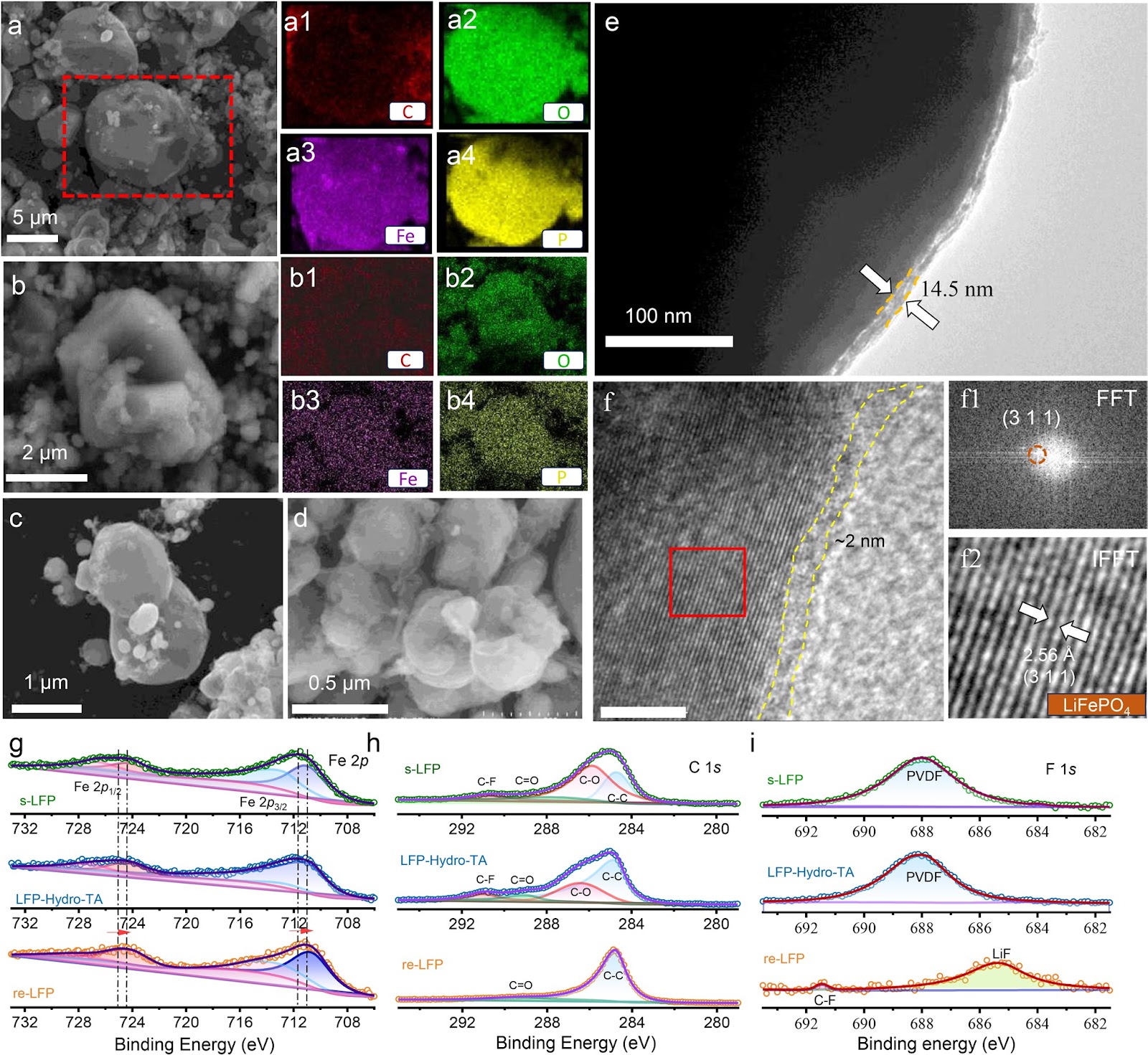
The rapid accumulation of spent LiFePO4 (LFP) cathodes from retired lithium-ion batteries necessitates the development of effective and environmental-friendly recycling strategies. In this context, direct regeneration has emerged as a promising approach for reclaiming LFP cathode materials, offering a streamlined pathway to restore their electrochemical functionality. We report an integrated regeneration protocol that simultaneously repairs the degraded crystal structure and reconstructs the damaged carbon coating in spent LFP. The regenerated cathode material had superfast lithium-ion diffusion kinetics and a stable cathode–electrolyte interface, giving a remarkable rate capability with specific capacities of 122 mAh g−1 at 5C and 106 mAh g−1 at 10C (1C = 170 mA g−1). It also maintained capacities of 110.7 mAh g−1 (5C) and 84.1 mAh g−1 (10C) after 400 cycles. It could be used in harsh environments and could be stably cycled at subzero temperatures (−10 and −20 °C) and in solid-state electrolyte batteries. Life cycle assessment combined with economic evaluation using the EverBatt model reveals that this direct regeneration approach has high economic and environmental benefits.
Oxide Semiconductor for Advanced Memory Architectures: Atomic Layer Deposition, Key Requirement and Challenges
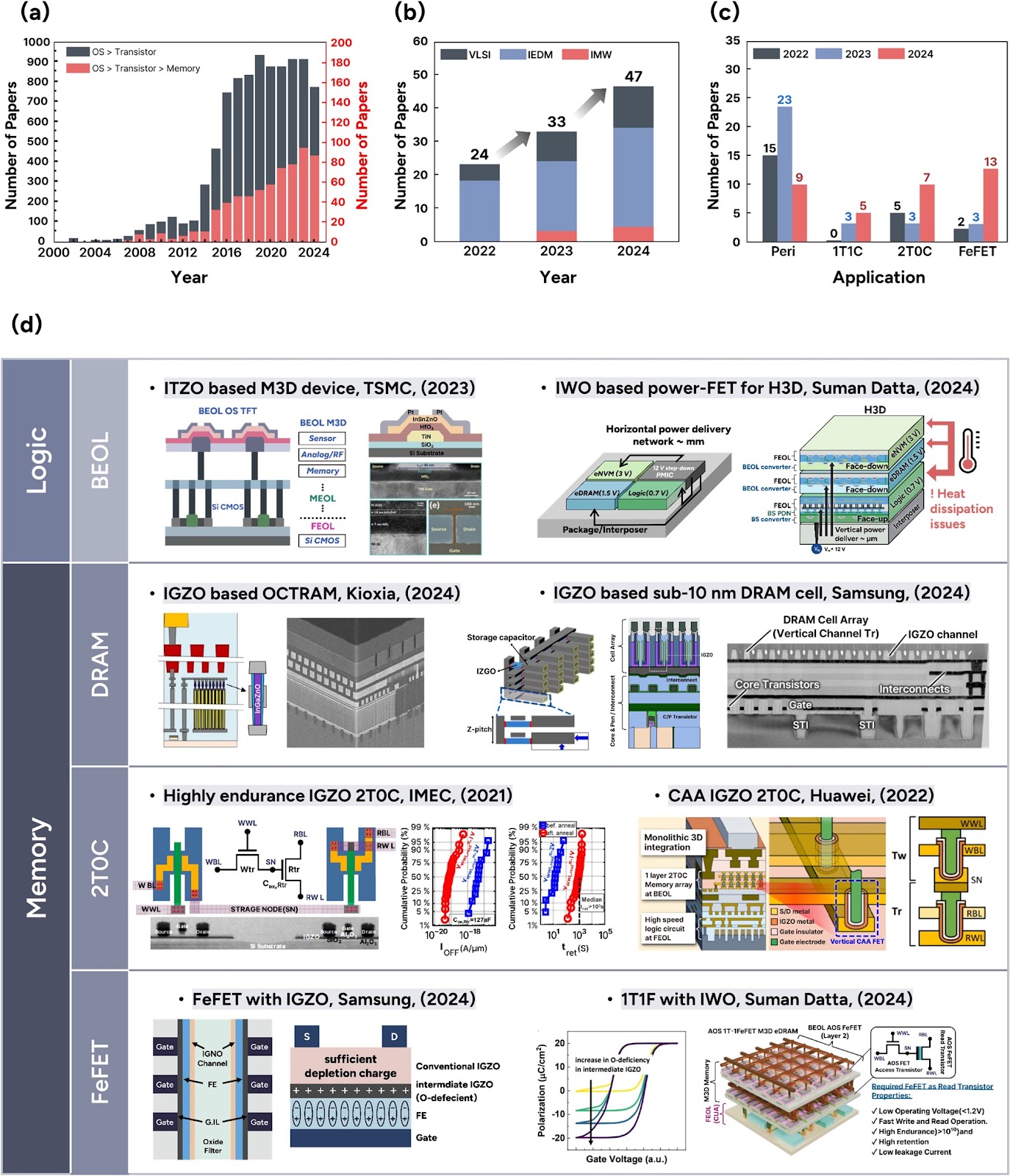
Oxide semiconductors (OSs), introduced by the Hosono group in the early 2000s, have evolved from display backplane materials to promising candidates for advanced memory and logic devices. The exceptionally low leakage current of OSs and compatibility with three-dimensional (3D) architectures have recently sparked renewed interest in their use in semiconductor applications. This review begins by exploring the unique material properties of OSs, which fundamentally originate from their distinct electronic band structure. Subsequently, we focus on atomic layer deposition (ALD), a core technique for growing excellent OS films, covering both basic and advanced processes compatible with 3D scaling. The basic surface reaction mechanisms—adsorption and reaction—and their roles in film growth are introduced. Furthermore, material design strategies, such as cation selection, crystallinity control, anion doping, and heterostructure engineering, are discussed. We also highlight challenges in memory applications, including contact resistance, hydrogen instability, and lack of p-type materials, and discuss the feasibility of ALD-grown OSs as potential solutions. Lastly, we provide an outlook on the role of ALD-grown OSs in memory technologies. This review bridges material fundamentals and device-level requirements, offering a comprehensive perspective on the potential of ALD-driven OSs for next-generation semiconductor memory devices.
Laser powder bed fusion of biodegradable Zn-4Cu alloy: Processing, microstructure and properties
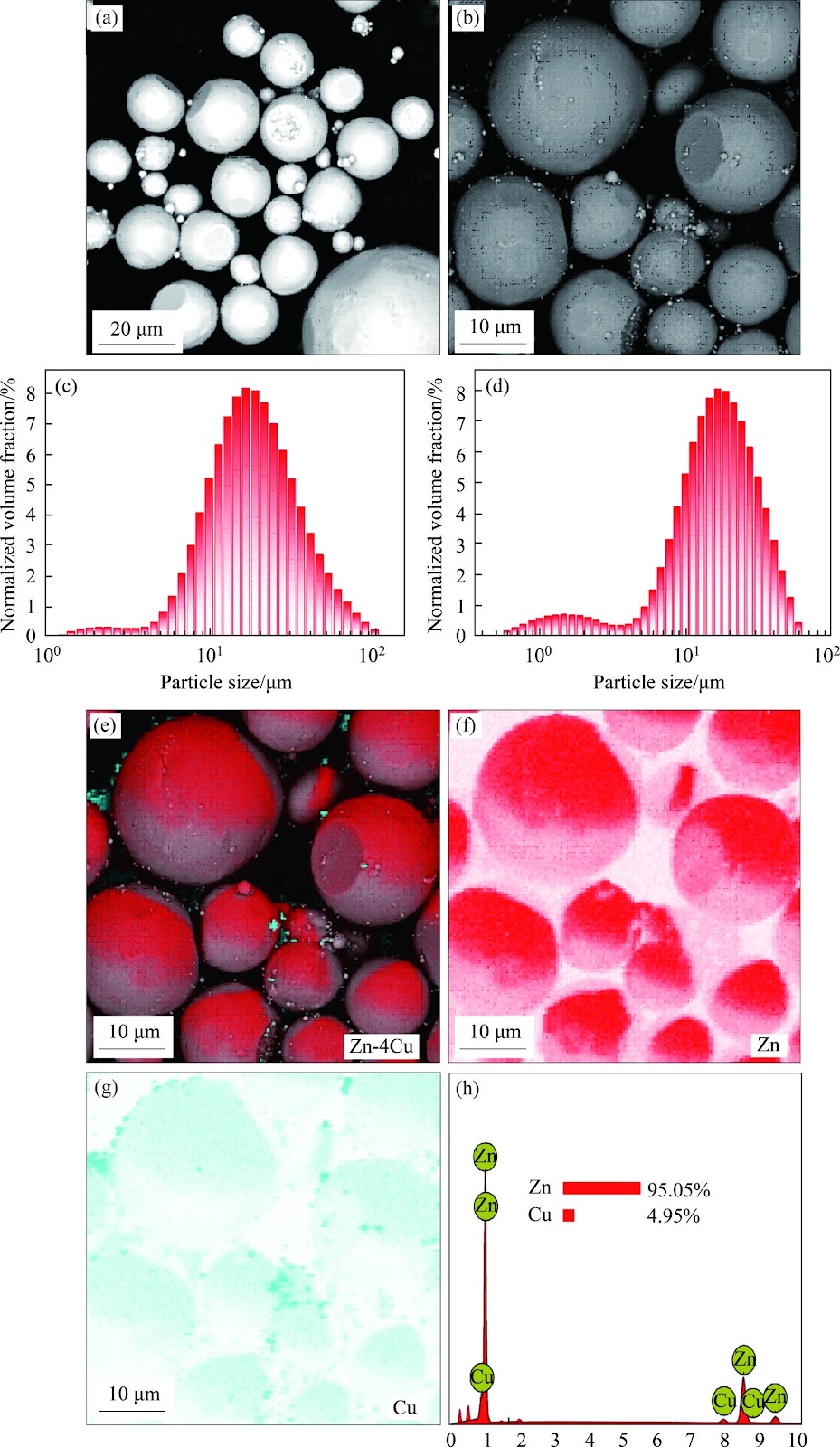
Zn's natural degradability and biocompatibility make it a promising candidate for implants, however, its mechanical properties remain insufficient for bone applications. In this study, the performance of Zn was enhanced by developing Zn-Cu alloys via laser powder bed fusion (LPBF). Optimal LPBF parameters for forming stable tracks were achieved by adjusting laser power and scanning speed. Under optimized conditions of 100 W and 100 mm/s, high-density (99.58%) Zn-Cu alloys with improved hardness (68.2HV) and yield strength (160 MPa) were achieved. These improvements are attributed to solid solution strengthening, segregation strengthening, and grain refinement. The Zn-Cu alloys also demonstrated favorable degradation behavior, with a rate of 0.16 mm/year. This degradation is primarily driven by micro-galvanic corrosion between the CuZn5 phase and Zn matrix, along with refined grains and increased grain boundary density. This work demonstrates a viable strategy for fabricating Zn-based implants with enhanced structural integrity and mechanical performance via LPBF.