SinoTechIntel Academic Portal
πŸ›οΈ Indexed Academic Journal

Journal of Central South University

Access authentic peer-reviewed engineering methodologies, experimental datasets, and scientific literature published in this journal on SinoTechIntel.

Total Research Papers: 152
Access: 100% Free Open Access
Browse by Publication Year & VolumeReset All Filters βœ•

Published Research PapersFiltered: Year 2026 β€’ 33 β€’ 3

Showing 5 of 152 peer-reviewed papers with full Graphical Abstracts.

Original ResearchVol. 33, Issue 3 β€’ pp. 1460-1472DOI: 10.1007/s11771-026-6210-9β€’ Jan 15, 2026

Numerical simulation of wheel-rail rolling contact fatigue considering yaw angle and interfacial conditions

Authors: LI Ding-kang, WU Bing, WANG Zhao-yang, LI Ji-peng, ZUO Jian-yong

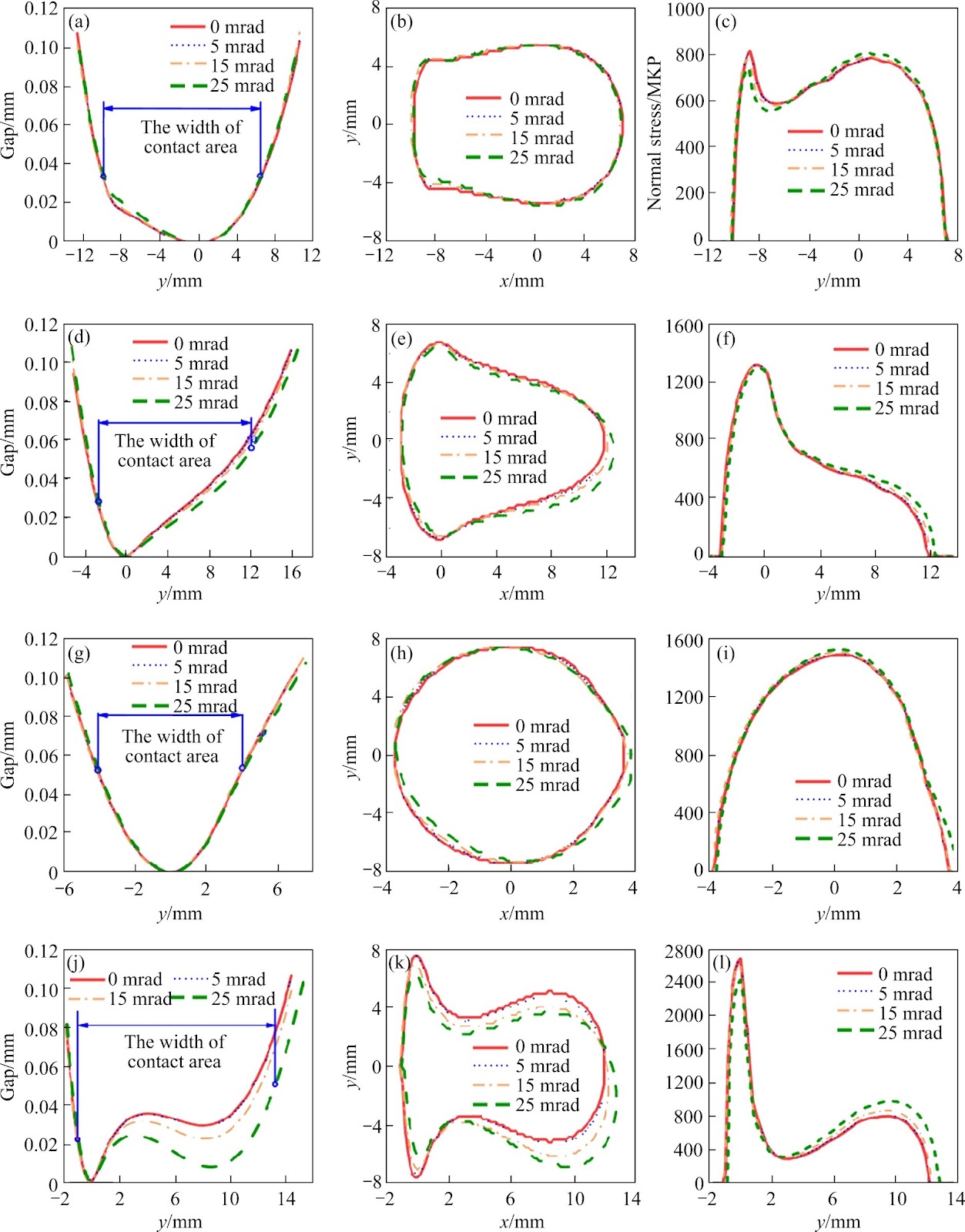
The accuracy of wheel-rail rolling contact force is of great significance for vehicle dynamics simulation. A wheel-rail rolling contact behavior model considering wheelset yaw is proposed. The NORM algorithm is adopted to solve the wheel-rail normal contact problem. The extended creep force model (ECF) is used for the tangential contact problem, which considers different interfacial conditions, temperature in the contact area, and the elastoplastic behavior of the third body. A fatigue life prediction framework based on the critical plane method is introduced to evaluate the contact fatigue damage under the coupled influence of yaw angle and interfacial conditions. The effects of wheel yaw angle on the contact pressure and wheel-rail rolling contact fatigue life under dry and wet conditions are investigated. The results show that under both dry and wet conditions, increasing yaw angle leads to an increase in creepage, expansion of the sliding area, enhancement of creep force, and a simultaneous increase in the contact area temperature, thereby causing an increase in the fatigue parameter (FP). The wheel-rail rolling contact life with yaw angle is shortened compared to that without yaw, and the life decay rate under wet condition is slower than that under dry condition.
Numerical simulation of wheel-rail rolling contact fatigue considering yaw angle and interfacial conditions
Graphical Abstract
Original ResearchVol. 33, Issue 3 β€’ pp. 1403-1418DOI: 10.1007/s11771-026-6162-0β€’ Jan 15, 2026

The influence of microwave irradiation on thermal properties and fracturing mechanism of basalt in rock excavation

Authors: TANG Rui-feng, YANG Ben-gao, XIE Jing, YANG Zhu, YANG Zun-dong, BAI Yan-bo, GAO Ming-zhong

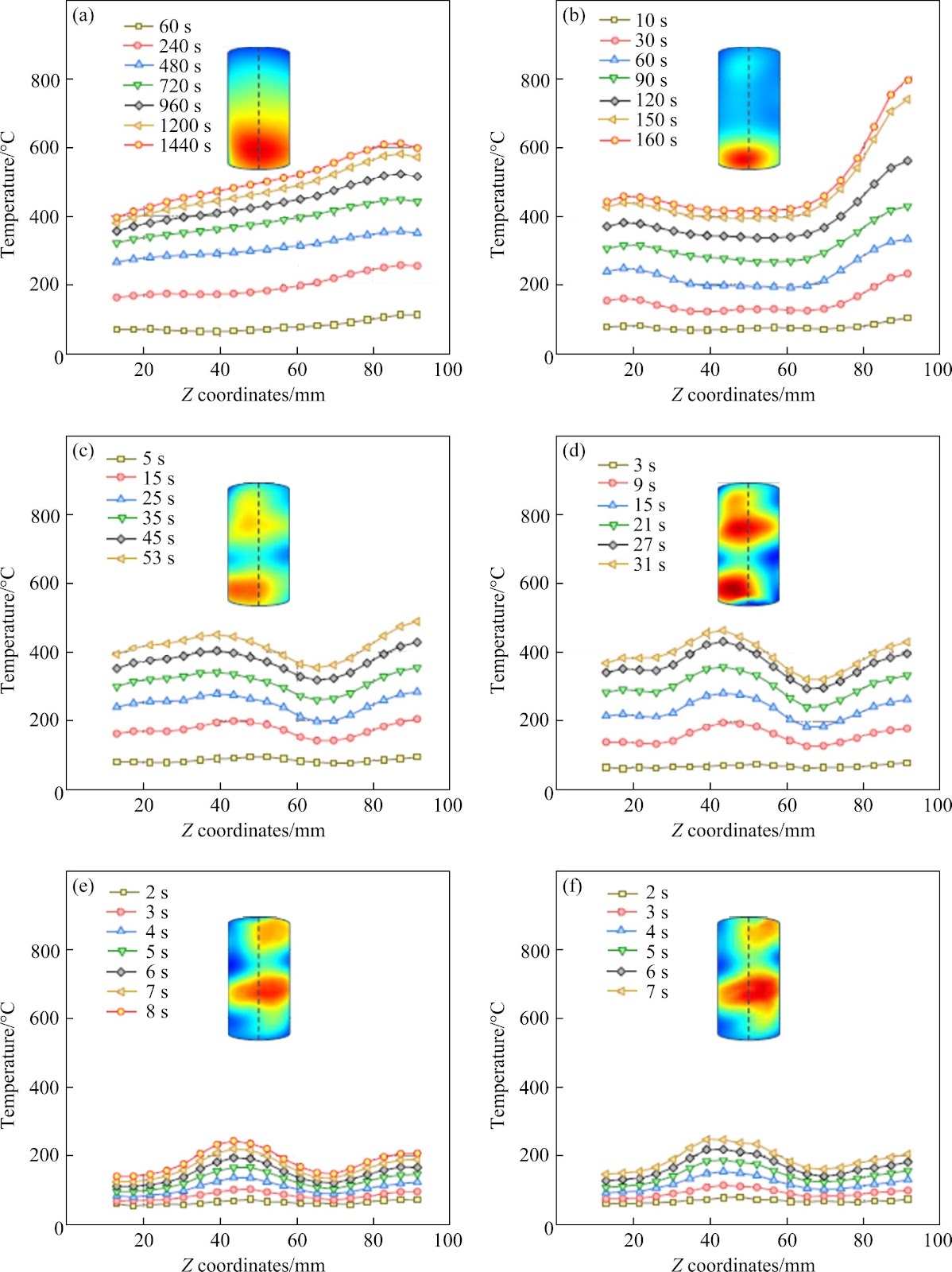
Microwave fracturing is a promising technique for facilitating the efficient exploitation of deep earth resources while reducing energy consumption and cutter wear during mechanical excavation. In this study, the thermal properties of basalt under six power levels are investigated and the mechanism of microwave fracturing is elucidated through real-time monitoring and microstructural analysis. The results show that the failure modes of basalt can be categorized into high-temperature melting failure (>300 ℃) and low-temperature burst failure (<200 ℃). High-power microwave irradiation not only altered the failure mode but also modified the relationship between temperature rise and time. The temperature distribution exhibits a wave pattern, making it more prone to inducing transverse tensile cracks. Dehydration of basalt is triggered when the temperature exceeds 200 ℃, which subsequently promotes the initiation of macroscopic cracks. Microscopically, microwave fracturing is mainly driven by thermal stresses, while steam pressure, especially under high-power conditions, plays a dominant role in the fracturing process. These results are anticipated to provide necessary theoretical and technical support for the efficient exploitation of deep earth resources.

The influence of microwave irradiation on thermal properties and fracturing mechanism of basalt in rock excavation
Graphical Abstract
Original ResearchVol. 33, Issue 3 β€’ pp. 1437-1459DOI: 10.1007/s11771-026-6228-zβ€’ Jan 15, 2026

Heavy metal concentrations in agricultural soil from the Western Dongting Lake area of Hunan province, China, and a tiered ecological risk assessment

Authors: XIA Mei-hua, CUI Li-li, CAO Nai-liang, HU Mai, XU Zhen-yu, FAN Xue-li, YU Ying-hong, LIU Wen-qing, KAN Rui-feng, ZHU Ming-dong

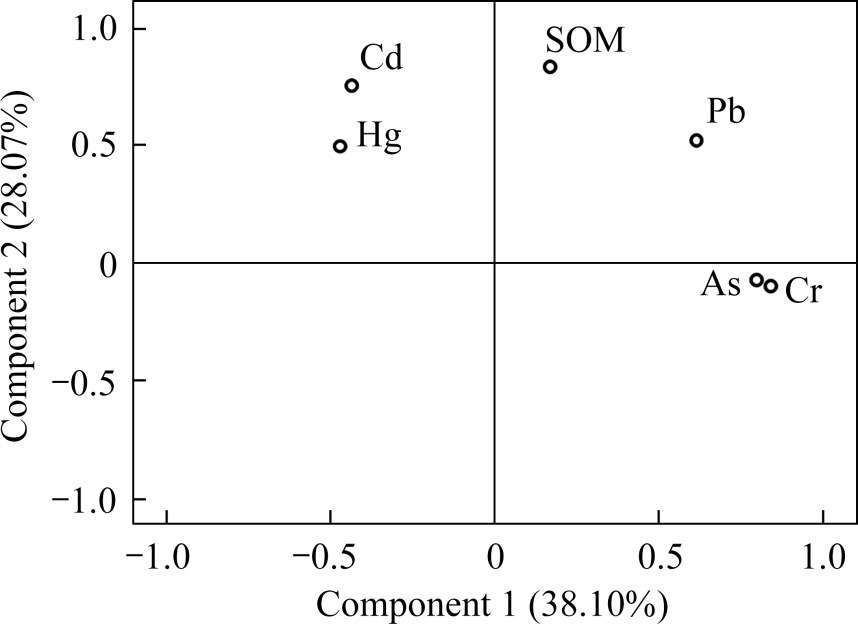
The Western Dongting Lake area, a biodiversity hotspot under traditional farming, has long suffered heavy metal pollution. In this study, the concentrations of As, Cd, Cr, Hg, and Pb in agricultural soils were determined and ecological risks were evaluated using both the hazard quotient(HQ) model and the probabilistic ecological risk assessment(PERA) model. The results showed that HQ suggested slight or negligible risks, whereas PERA indicated consistently high and unacceptable risks. This discrepancy arose because HQ criteria are derived from human health thresholds and provide only deterministic estimates, whereas PERA incorporates species-specific predicted no-effect concentration(PNEC), environmental variability, and uncertainty, thereby providing more precise and site-specific risk assessments and assigning probabilities. By applying a tiered PERA model, our study highlights its novelty and superiority in ecological risk characterization, providing critical guidance for soil management and ecological protection in contaminated farmlands.

Heavy metal concentrations in agricultural soil from the Western Dongting Lake area of Hunan province, China, and a tiered ecological risk assessment
Graphical Abstract
Original ResearchVol. 33, Issue 3 β€’ pp. 1473-1486DOI: 10.1007/s11771-026-6226-1β€’ Jan 15, 2026

Sensorless estimation of surface-mounted permanent magnet synchronous motors based on polar-corrected feedforward quadrature phase-locked loop

Authors: HAN Kun, YU Chen, LI Wei

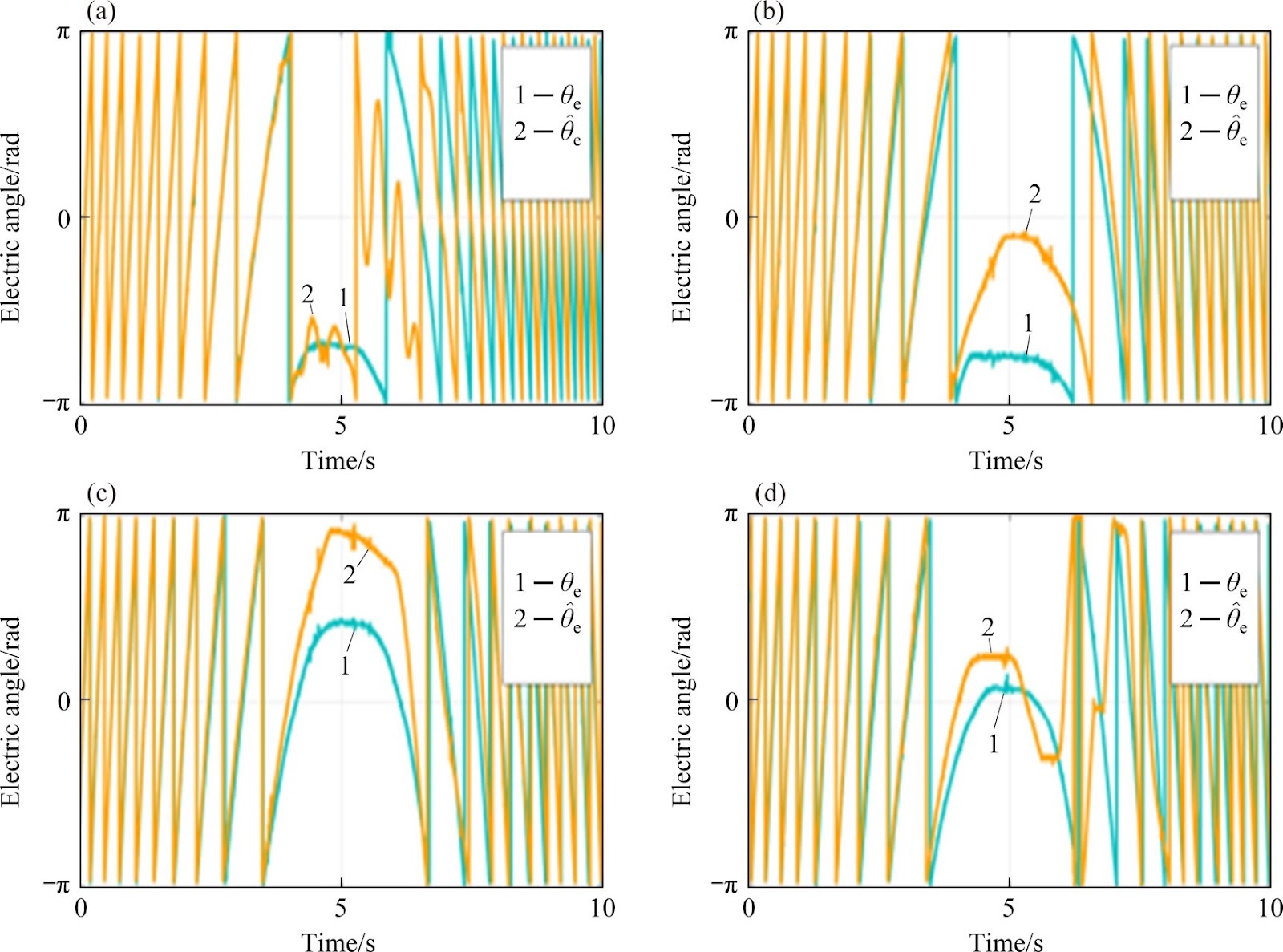
The sensorless control of surface-mounted permanent magnet synchronous motor (SPMSM) usually uses quadrature phase-locked loop (QPLL) to extract the phase information of the back electromotive force to realize the rotor angle estimation. However, the traditional QPLL has a convergence deviation of 180Β° when the motor is reversed, and the angle estimation error is obvious when the motor is accelerated and decelerated. To solve these problems, an enhanced QPLL (EQPLL) with polarity correction and high precision angle feedforward compensation is proposed. Firstly, the traditional phase discriminator is improved based on the two-phase stationary coordinate system, and the polarity correction function is designed by the error component of the improved phase discriminator to realize the non-convergent deviation angle estimation under the forward and reverse switching conditions of the motor. In addition, the error component of the improved phase discriminator is used as the feedforward compensation signal, and the enhanced generalized integrator is used to filter it, so as to realize the angle error compensation with low delay and low noise. Finally, the proposed scheme is verified by experiment on the motor platform, and compared with the existing scheme. The experimental results show that the proposed scheme can realize the polarity correction and angle error elimination, and at the same time, the noise mean square error is reduced by 24.33% compared with the existing angle feedforward compensation scheme.

Sensorless estimation of surface-mounted permanent magnet synchronous motors based on polar-corrected feedforward quadrature phase-locked loop
Graphical Abstract
Original ResearchVol. 33, Issue 3 β€’ pp. 1419-1436DOI: 10.1007/s11771-026-6189-2β€’ Jan 15, 2026

Influence of plant root reinforcement on 3D geosynthetic slopes

Authors: SHAN Jun-tao, YANG Xiao-li, XIA Long, LONG Gui-hua, YANG Bao-yu, REN Li-wei

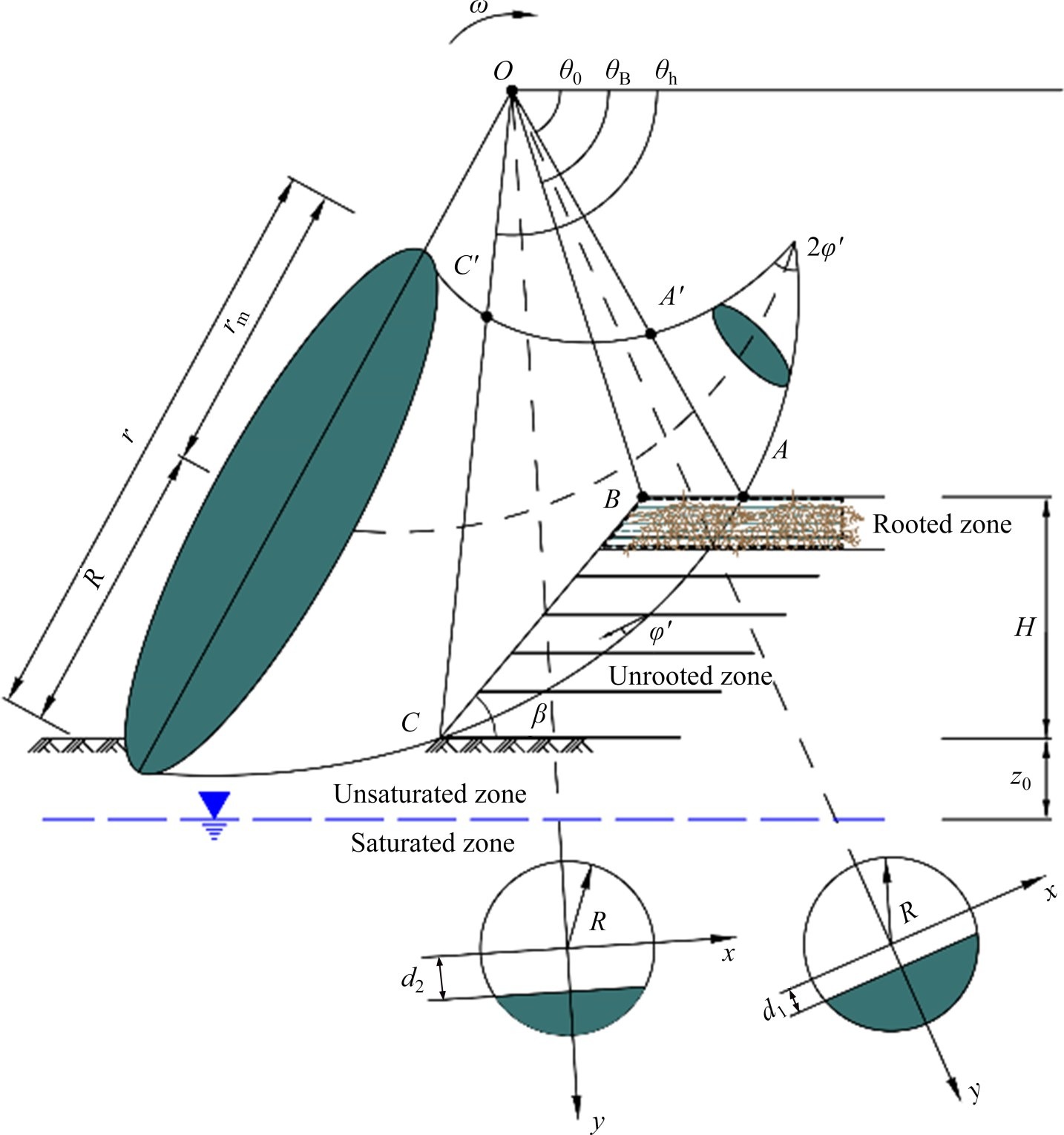
Plant roots serve as a natural reinforcement method with the potential to significantly enhance slope stability. In engineering practice, roots can function synergistically with geosynthetics, reducing the reliance on artificial materials. Based on a three-dimensional (3D) rotational failure mechanism, this study proposes a novel framework to evaluate the influence of plant roots on the stability of geosynthetic-reinforced slopes. By integrating the hydrological effects of transpiration and the mechanical composite action of root–soil interaction, the reinforcing capacity of uniform root systems is comprehensively assessed. The required dimensionless reinforcement strength at the limit failure state is derived using the functional balance equation. The validity of the proposed method is confirmed through comparisons with existing two-dimensional (2D) solutions for vegetated slopes and 3D solutions for non-vegetated reinforced slopes. Furthermore, various parameter plots are provided to facilitate design analysis. The results indicate that accounting for 3D spatial effects and plant root reinforcement significantly reduces the required reinforcement strength, thereby lowering construction costs and enhancing overall slope safety.

Influence of plant root reinforcement on 3D geosynthetic slopes
Graphical Abstract