Key Takeaways & Executive Findings
- •• A novel 3D limit analysis framework integrates root transpiration and root–soil mechanical interaction to evaluate the stability of geosynthetic-reinforced slopes with vegetation. • The required dimensionless reinforcement strength is derived via a functional balance equation, providing a design tool for engineers. • Validation against 2D vegetated and 3D non-vegetated solutions confirms the method's accuracy and reliability. • Incorporating 3D effects and root reinforcement significantly reduces required reinforcement strength, lowering construction costs and improving slope safety.
Abstract
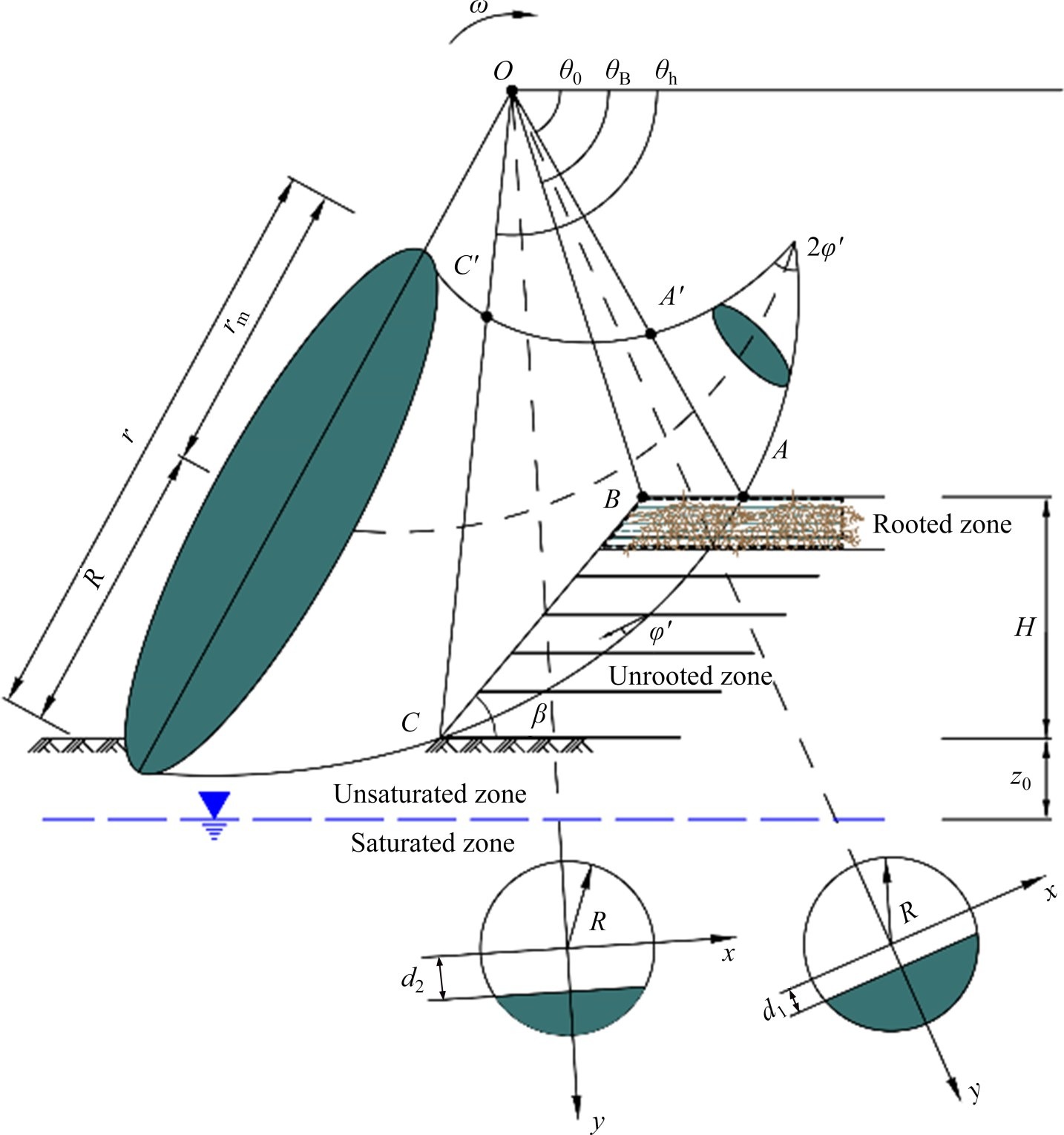
Plant roots serve as a natural reinforcement method with the potential to significantly enhance slope stability. In engineering practice, roots can function synergistically with geosynthetics, reducing the reliance on artificial materials. Based on a three-dimensional (3D) rotational failure mechanism, this study proposes a novel framework to evaluate the influence of plant roots on the stability of geosynthetic-reinforced slopes. By integrating the hydrological effects of transpiration and the mechanical composite action of root–soil interaction, the reinforcing capacity of uniform root systems is comprehensively assessed. The required dimensionless reinforcement strength at the limit failure state is derived using the functional balance equation. The validity of the proposed method is confirmed through comparisons with existing two-dimensional (2D) solutions for vegetated slopes and 3D solutions for non-vegetated reinforced slopes. Furthermore, various parameter plots are provided to facilitate design analysis. The results indicate that accounting for 3D spatial effects and plant root reinforcement significantly reduces the required reinforcement strength, thereby lowering construction costs and enhancing overall slope safety.
1. Introduction
Slope stability is a key concept in geotechnical engineering, referring to the ability of a slope or hillside to resist the downward sliding or collapse of soil and rock materials. For natural slopes with good soil conditions, their stability typically meets design requirements. However, many slopes are at risk of instability due to poor soil conditions or external disturbances. For slopes at risk of instability, the use of geosynthetics is an effective reinforcement measure. Various methods have been developed to assess the reinforcing effects of geosynthetics on slopes [1–4]. With the increasing pursuit of environmental protection and sustainable living, urban greening has been gradually improving, and many reinforced slopes in cities are now covered with abundant plant. Research indicates that plant roots not only effectively reinforce slopes but also create a synergistic effect with geosynthetics [5, 6]. As a natural reinforcement material, plant root and geosynthetics work together to further enhance slope stability and provide more significant reinforcement effects. From an environmental perspective, combining plant roots with geosynthetics for slope reinforcement can reduce negative impacts on the environment, such as damage to soil and ecosystems, while also lowering energy consumption and costs in construction. It can increase the ecological restoration capacity of the slope and has significant sustainable advantages, making this reinforcement method highly promising for practical application.
In recent years, a large number of studies have been devoted to evaluating the stability of slopes under three-dimensional (3D) failure modes. Common methods primarily include limit analysis, limit equilibrium, and numerical analysis. The limit equilibrium method [7–9] is based on the critical equilibrium assumption of the slope and assesses stability by analyzing the force and moment equilibrium along potential slip surfaces. This method is intuitive and relatively simple theoretically, but it requires simplifying assumptions about the stress distribution along the slip surface, and it has certain limitations when dealing with complex terrain. Numerical analysis methods [10–12], such as finite element and discrete element methods, construct mechanical models of the slope and solve stress and displacement fields, allowing for precise simulation of complex slope geometry, nonlinear material properties, and various external conditions. However, numerical analysis methods are computationally expensive, highly sensitive to input parameters, and the initialization of the model and selection of parameters significantly affect the reliability of the results. In contrast, the limit analysis method [13–16] utilizes plastic limit theory, avoiding complex parameter settings and lengthy computations. It does not rely on complex stress distribution assumptions and can efficiently assess slope stability and provide a safety factor. Over the years, the limit analysis method, with its theoretical rigor and computational efficiency, has gradually become an important and powerful tool for 3D slope stability analysis.
In nature, due to factors such as rainfall, human activities, and underground seepage, the soil in actual slope engineering is often unsaturated [17]. In recent years, plant root reinforcement of slopes has received widespread attention be...
Loading authentic research manuscript (Pages 1–5)...
SHAN Jun-tao, YANG Xiao-li, XIA Long, LONG Gui-hua, YANG Bao-yu, REN Li-wei (2026). Influence of plant root reinforcement on 3D geosynthetic slopes. Journal of Central South University. https://doi.org/10.1007/s11771-026-6189-2
Research & Educational Purpose Only:The translations, structured abstracts, analytical annotations, and data reports provided by SinoTechIntel are intended exclusively for academic research, internal corporate R&D, and educational benchmarking. They do not constitute formal engineering, chemical safety, legal, or professional advice.
Copyright & Intellectual Property Notice: Original copyright of the underlying source articles and experimental data remains with the respective authors, institutions, and original publishing journals. SinoTechIntel claims intellectual property only over its proprietary translations, analytical syntheses, and AEO structured enhancements in accordance with international fair use and academic citation principles.
Frequently Asked Questions
What is the main contribution of this study?
The study proposes a novel 3D limit analysis framework that integrates plant root reinforcement (including hydrological and mechanical effects) with geosynthetics to evaluate slope stability, showing that this combination significantly reduces the required reinforcement strength.
How does plant root reinforcement affect slope stability?
Plant roots enhance slope stability through transpiration-induced suction and mechanical root-soil interaction, which together increase soil shear strength and reduce the need for artificial reinforcement.
What method is used in this research?
The research uses a three-dimensional rotational failure mechanism within the limit analysis framework, deriving the required dimensionless reinforcement strength via a functional balance equation.
How is the proposed method validated?
The method is validated by comparing its results with existing 2D solutions for vegetated slopes and 3D solutions for non-vegetated reinforced slopes, showing good agreement.
What are the practical implications of this study?
The findings suggest that incorporating plant roots in geosynthetic-reinforced slope design can lower construction costs and improve safety, promoting sustainable and eco-friendly slope engineering practices.
Related Technical Papers & Translations
Direct Repair of the Crystal Structure and Coating Surface of Spent LiFePO4 Materials Enables Superfast Li-Ion Migration
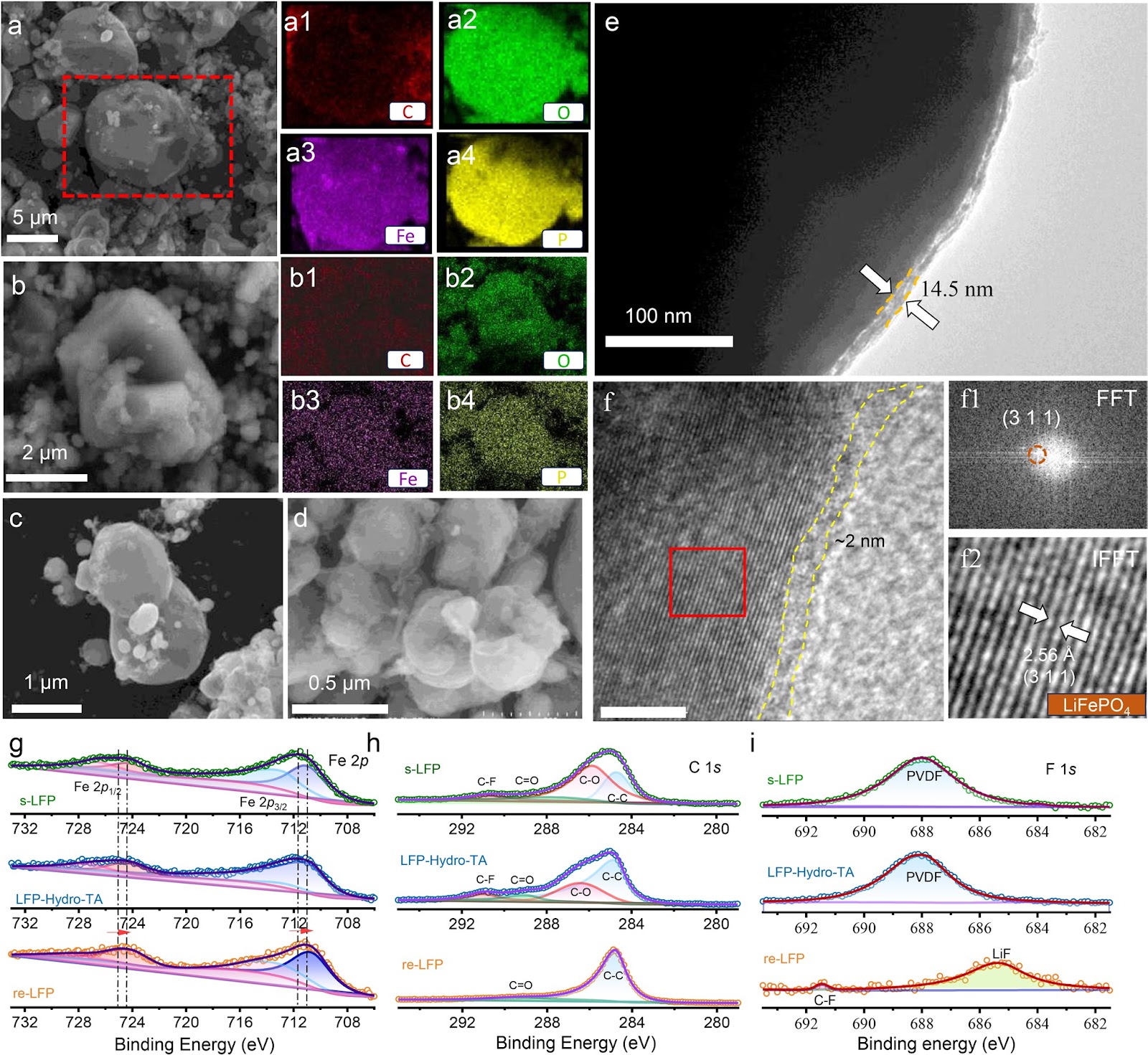
The rapid accumulation of spent LiFePO4 (LFP) cathodes from retired lithium-ion batteries necessitates the development of effective and environmental-friendly recycling strategies. In this context, direct regeneration has emerged as a promising approach for reclaiming LFP cathode materials, offering a streamlined pathway to restore their electrochemical functionality. We report an integrated regeneration protocol that simultaneously repairs the degraded crystal structure and reconstructs the damaged carbon coating in spent LFP. The regenerated cathode material had superfast lithium-ion diffusion kinetics and a stable cathode–electrolyte interface, giving a remarkable rate capability with specific capacities of 122 mAh g−1 at 5C and 106 mAh g−1 at 10C (1C = 170 mA g−1). It also maintained capacities of 110.7 mAh g−1 (5C) and 84.1 mAh g−1 (10C) after 400 cycles. It could be used in harsh environments and could be stably cycled at subzero temperatures (−10 and −20 °C) and in solid-state electrolyte batteries. Life cycle assessment combined with economic evaluation using the EverBatt model reveals that this direct regeneration approach has high economic and environmental benefits.
Oxide Semiconductor for Advanced Memory Architectures: Atomic Layer Deposition, Key Requirement and Challenges
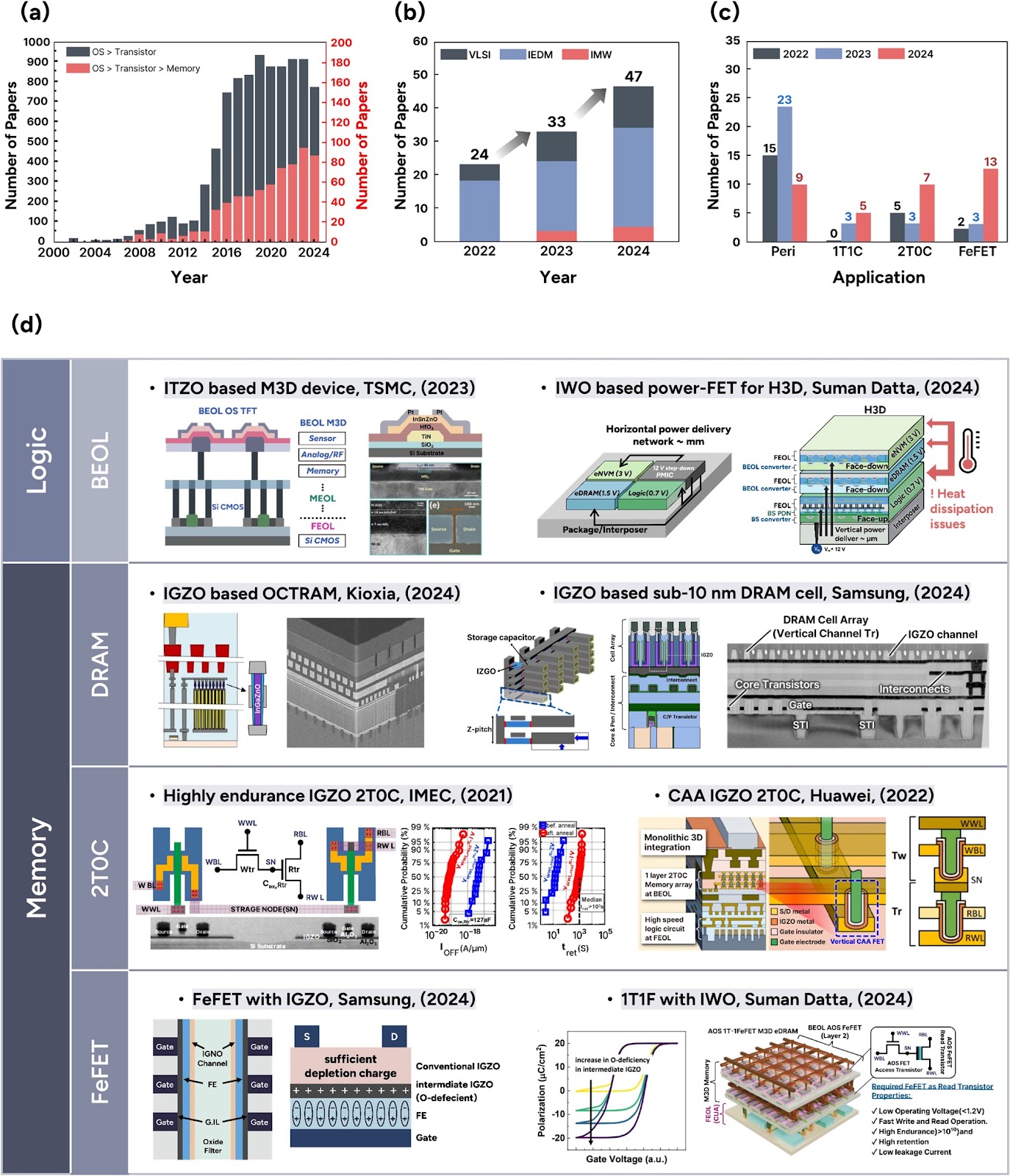
Oxide semiconductors (OSs), introduced by the Hosono group in the early 2000s, have evolved from display backplane materials to promising candidates for advanced memory and logic devices. The exceptionally low leakage current of OSs and compatibility with three-dimensional (3D) architectures have recently sparked renewed interest in their use in semiconductor applications. This review begins by exploring the unique material properties of OSs, which fundamentally originate from their distinct electronic band structure. Subsequently, we focus on atomic layer deposition (ALD), a core technique for growing excellent OS films, covering both basic and advanced processes compatible with 3D scaling. The basic surface reaction mechanisms—adsorption and reaction—and their roles in film growth are introduced. Furthermore, material design strategies, such as cation selection, crystallinity control, anion doping, and heterostructure engineering, are discussed. We also highlight challenges in memory applications, including contact resistance, hydrogen instability, and lack of p-type materials, and discuss the feasibility of ALD-grown OSs as potential solutions. Lastly, we provide an outlook on the role of ALD-grown OSs in memory technologies. This review bridges material fundamentals and device-level requirements, offering a comprehensive perspective on the potential of ALD-driven OSs for next-generation semiconductor memory devices.
Laser powder bed fusion of biodegradable Zn-4Cu alloy: Processing, microstructure and properties
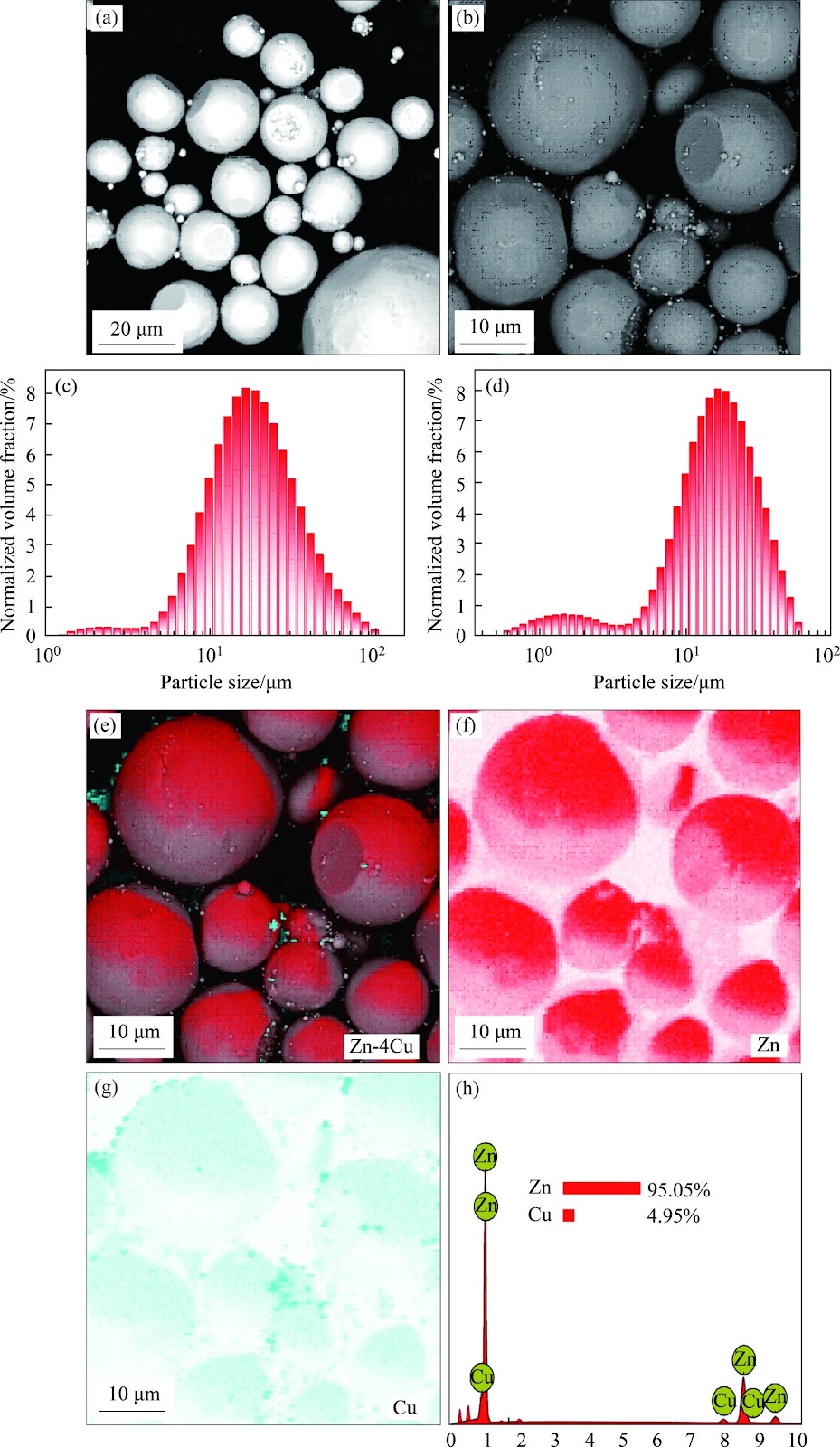
Zn's natural degradability and biocompatibility make it a promising candidate for implants, however, its mechanical properties remain insufficient for bone applications. In this study, the performance of Zn was enhanced by developing Zn-Cu alloys via laser powder bed fusion (LPBF). Optimal LPBF parameters for forming stable tracks were achieved by adjusting laser power and scanning speed. Under optimized conditions of 100 W and 100 mm/s, high-density (99.58%) Zn-Cu alloys with improved hardness (68.2HV) and yield strength (160 MPa) were achieved. These improvements are attributed to solid solution strengthening, segregation strengthening, and grain refinement. The Zn-Cu alloys also demonstrated favorable degradation behavior, with a rate of 0.16 mm/year. This degradation is primarily driven by micro-galvanic corrosion between the CuZn5 phase and Zn matrix, along with refined grains and increased grain boundary density. This work demonstrates a viable strategy for fabricating Zn-based implants with enhanced structural integrity and mechanical performance via LPBF.