SinoTechIntel Academic Portal
🏛️ Indexed Academic Journal

International Journal of Mining Science and Technology

Access authentic peer-reviewed engineering methodologies, experimental datasets, and scientific literature published in this journal on SinoTechIntel.

Total Research Papers: 3
Access: 100% Free Open Access
Browse by Publication Year & VolumeReset All Filters ✕
Select Specific Issue:

Published Research PapersFiltered: Year 2026 • 36 • Issue 1

Showing 3 of 3 peer-reviewed papers with full Graphical Abstracts.

Original ResearchVol. 36, Issue 1 • pp. 1-22DOI: 10.1016/j.ijmst.2025.11.003Dec 1, 2025

Towards sustainable lunar habitats with ISRU in Chang’E mission: Mechanical–energy evolution and damage mechanisms of LPBF-printed lunar regolith simulate

Authors: Sheng Li, Xinyi Li, Yuyue Gao, Bo Zhou, Yan Zhou, Jian Song, Cheng Zhou, Wei Yao, Lieyun Ding

Targeting Chang’E-8 mission’ in-situ resource utilization (ISRU) for sustainable lunar habitats, laser powder bed fusion (LPBF) provides a viable pathway for in-situ additive manufacturing of lunar regolith. To elucidate mission relevant mechanical behavior and failure mechanisms of LPBF fabricated lunar regolith simulants, mare type and highland type simulant specimens were produced. Microstructural characterization, mechanical test coupled with three-dimensional digital image correlation (3D-DIC), and an energy-dissipation framework were employed for comprehensive analysis. The pristine highland specimens achieved 5.79 MPa and a peak strain of 0.13 (50 mm × 50 mm × 30 mm), significantly outperforming their mare counterparts. Wire-cutting to 20 mm × 20 mm × 20 mm lowered strength by ∼ 20% and peak strain to 0.04, indicating cutting-induced defects reduce ductility. All specimens displayed multi-peaked stress–strain curves. 3D-DIC revealed band-type strain localization in pristine highland samples, diffuse strain patterns in cut highland samples, and highly tortuous, network-type bands in mare samples; the anisotropy index was also quantified. Fragmented particles exhibited fractal dimensions ranging from 1.6 to 2.0 (size 1.25–9 mm). Energy evolution progressed through three distinct stages: elastic energy storage, progressive energy dissipation delaying crack propagation, and final unstable collapse. An energy-based damage model was established and validated. The data and methods developed support Chang’E-8 missions’ ISRU demonstrations and establish a transferable framework toward sustainable lunar habitats.
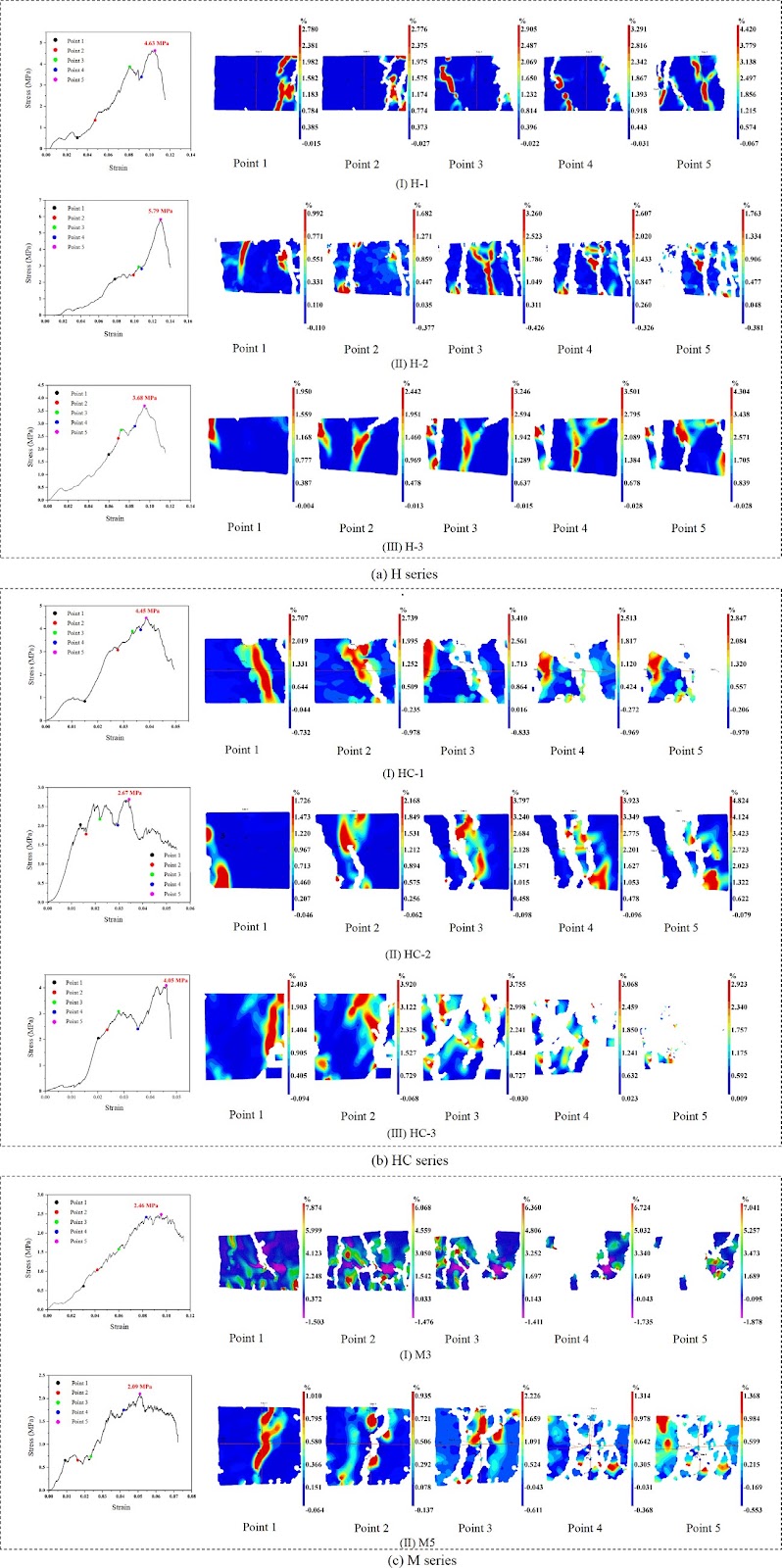
Towards sustainable lunar habitats with ISRU in Chang’E mission: Mechanical–energy evolution and damage mechanisms of LPBF-printed lunar regolith simulate
Graphical Abstract
Original ResearchVol. 36, Issue 1 • pp. 79-93DOI: 10.1016/j.ijmst.2025.10.009Nov 10, 2025

Long-term creep of Beishan granite under uniaxial compression

Authors: Chunping Wang, Xingguang Zhao, Jianfeng Liu, Haiyang Zhang, Liang Chen, Hongsu Ma, Ju Wang

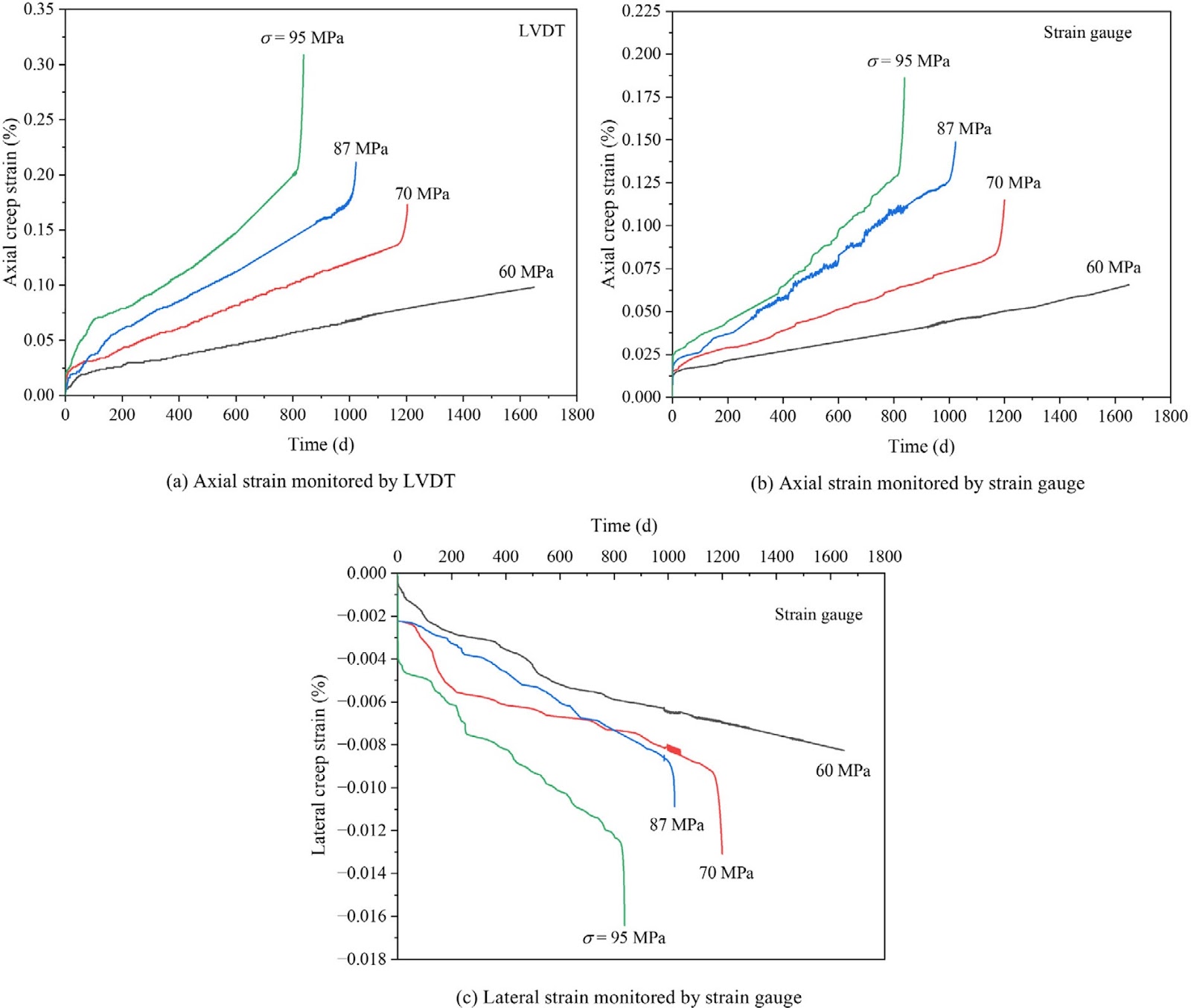
Investigations into the long-term creep behavior of Beishan granite in uniaxial compression were conducted. Four levels of axial stress (60, 70, 87, and 95 MPa) were applied to rock specimens. Contrasting with earlier research, the long-term creep data in this work present a substantial advancement in the time dimension. Except for the sample subjected to 60 MPa axial loading, which did not fail after a loading duration of 1650 d, the specimens under the other three stresses all failed after sustained constant loading durations of 1204, 1023, and 839 d, respectively. A lower envelope of driving stress-ratio for crystalline rocks was obtained, tending towards approximately 0.45 over an infinite time scale. According to the experimental results, as axial stress increases, both the axial strain accumulated in the transient creep process and the strain rate associated with steady-state creep deformation increase exponentially; however, the share of steady-state creep strain remains nearly constant at about 82.53 %. A novel damage-based creep model was put forward. It provides an enhanced depiction of the comprehensive creep process in rocks, notably improving the accuracy in forecasting the accelerated creep phase, which significantly impacts the long-term stability of engineering structures.

Long-term creep of Beishan granite under uniaxial compression
Graphical Abstract
Original ResearchVol. 36, Issue 1 • pp. 57-78DOI: 10.1016/j.ijmst.2025.10.004Nov 4, 2025

Characteristics and genomic mechanism of Absidia spinosa in inhibiting coal spontaneous combustion

Authors: Xuanmeng Dong, Botao Qin, Fusheng Wang, Xiangming Hu, Liwen Guo, Tiesheng Han

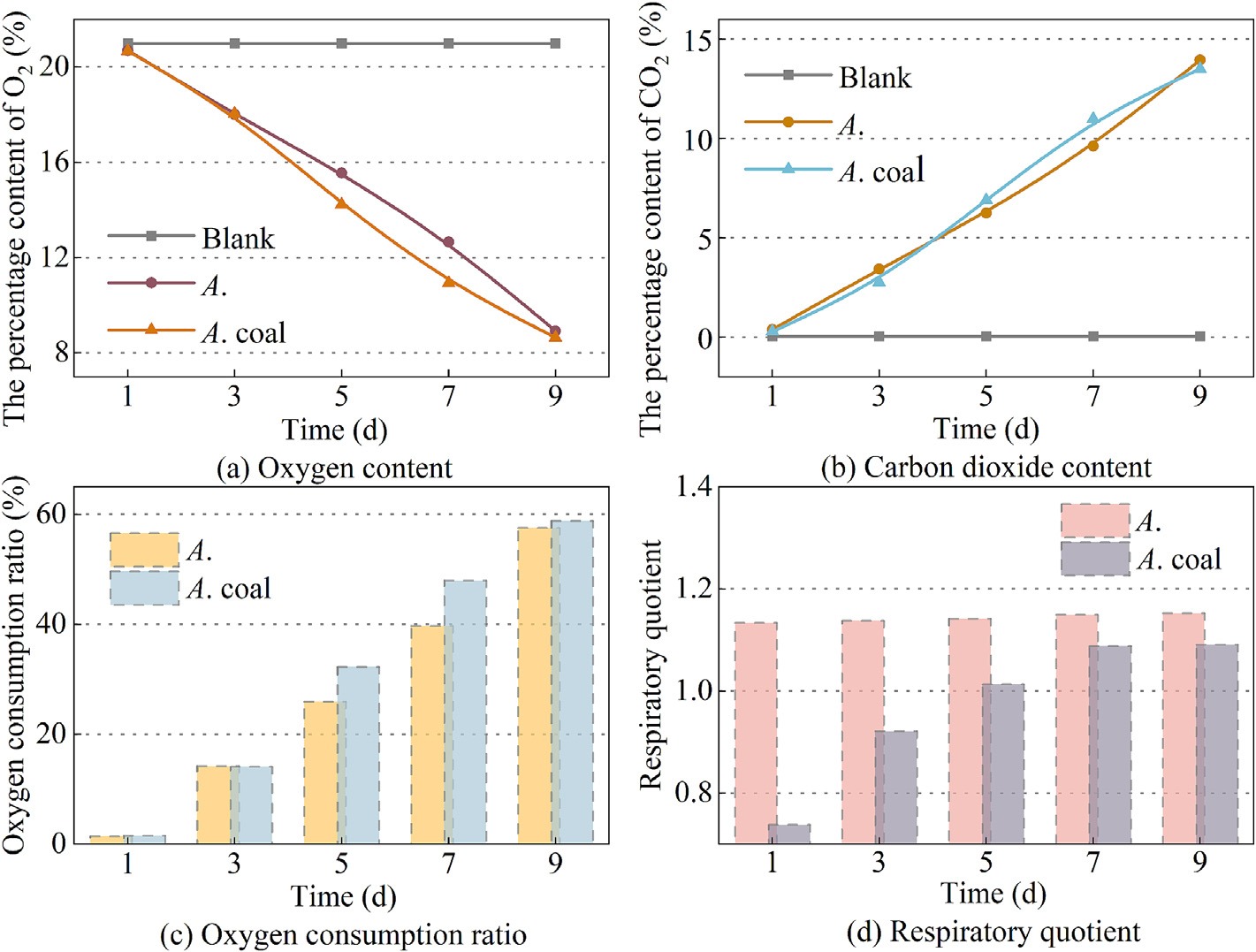
Early prevention and control of coal spontaneous combustion have emerged as a critical research area in coal mine safety. Due to their sustainability and environmental friendliness, microorganisms have gained attention. A filamentous fungus was collected in the coal mine and identified as Absidia spinosa. Results indicated that the mycelium effectively covered and repaired many coal pores. The oxygen consumption ratio of A. spinosa was higher in coal-containing environments than in coal-free conditions. The fungus significantly impacted aliphatic functional groups, disrupting bridging bonds and side chains connected to aromatic structures and reducing the relative content of CAO bonds. Additionally, A. spinosa increases the ignition temperature by 25.34 °C. The total heat release was decreased by approximately 32.58 %, and the activation energies were increased. The genome of Absidia spinosa revealed genes related to oxygen consumption, small molecule degradation, and secretion of metabolic products, such as those annotated under GO ID: 0140657, etc. The pathways involved in the degradation of small organic molecules (e.g., ko00626, etc.), carbon fixation, and nitrogen cycling, all linked to coal decomposition. Through oxygen consumption and the alteration of coal-active structures, A. spinosa effectively inhibits CSC, providing an experimental basis for exploring eco-friendly biological control methods in the goaf.

Characteristics and genomic mechanism of Absidia spinosa in inhibiting coal spontaneous combustion
Graphical Abstract