SinoTechIntel Academic Portal
🏛️ Indexed Academic JournalImpact Factor: 3.8

Int. Journal of Mining Science and Technology (采矿与安全工程)

Authoritative peer-reviewed journal in materials science, metallurgy, chemistry and engineering technologies: Int. Journal of Mining Science and Technology (采矿与安全工程)

Total Research Papers: 147
Access: 100% Free Open Access
Browse by Publication Year & VolumeReset All Filters ✕

Published Research PapersFiltered: Year 2025 • Vol. 32 • 3

Showing 7 of 147 peer-reviewed papers with full Graphical Abstracts.

Original ResearchVol. 32, Issue 3 • pp. 100-112DOI: 10.1016/j.ijmst.2025.03.009Jan 15, 2025

The failure process of high stress rock with through-water disturbance based on acoustic emission

Authors: LI Jiaming, TANG Shibin, ZHANG Shuguang, TANG Beichang, HUANG Xiang, LIU Wenbo

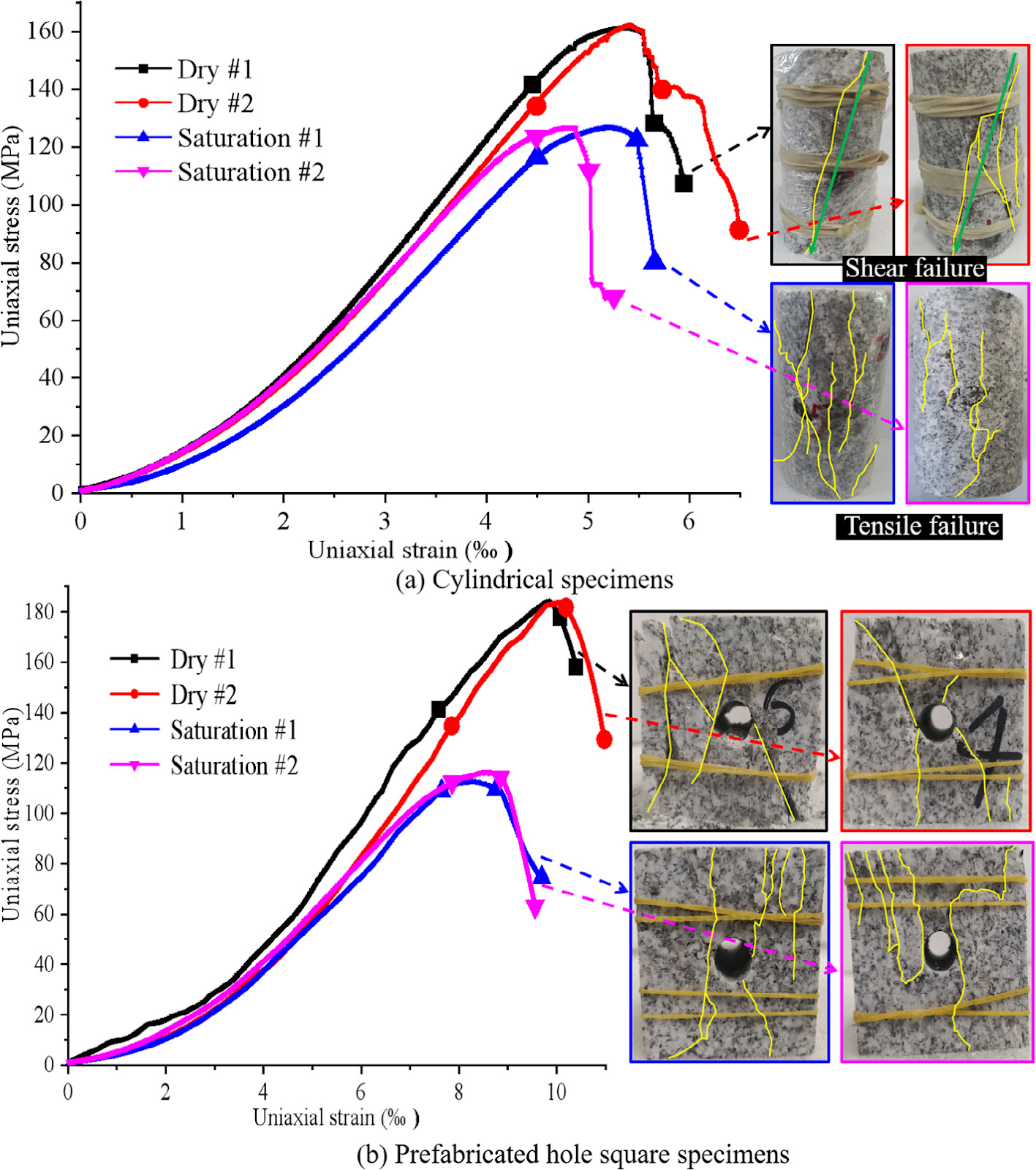
In the process of deep engineering excavation, the mechanical properties of rock are significantly influenced by the coupled effects of water and high stress, which greatly increase construction difficulty. To more accurately investigate the impact of water disturbance on the failure process of dry rock under high stress and the failure mechanisms of saturated rock in underwater environments, a water environment test chamber and a prefabricated borehole specimen through-water device were designed. A series of experiments were conducted, including uniaxial tests, water-disturbed granite cylinder tests, and through-water disturbance tests on prefabricated hole square specimens. The results showed that the acoustic emission (AE) hits and accumulated energy after the through-water disturbance at the same time were 8.77 and 12.08 times higher than before the disturbance, respectively. And water disturbance increased the proportion of tensile failure and reduced the proportion of shear failure. A key observation was that AE events were mainly generated in the permeation areas near the borehole. The main reason was that under high stress, the weakening effect of water led to the failure of the local mineral structure of the rock, promoting crack extension and triggering overall instability. Notably, failure of the saturated specimens underwater was only observed when the applied load approached the saturation strength of the prefabricated hole square specimens. The study results provide an important theoretical basis for understanding the damage mechanism of water-disturbed rocks in deep engineering, and have significant implications for the design and construction of engineering.
The failure process of high stress rock with through-water disturbance based on acoustic emission
Graphical Abstract
Original ResearchVol. 32, Issue 3 • pp. 100-112DOI: 10.1016/j.ijmst.2025.03.008Jan 15, 2025

Coal pitch-based nanosheets enhance the electronic and ionic transport of flow electrode capacitive deionization

Authors: Jincai Ran, Zhaoyang Song, Qiongqiong He, Zhenyong Miao

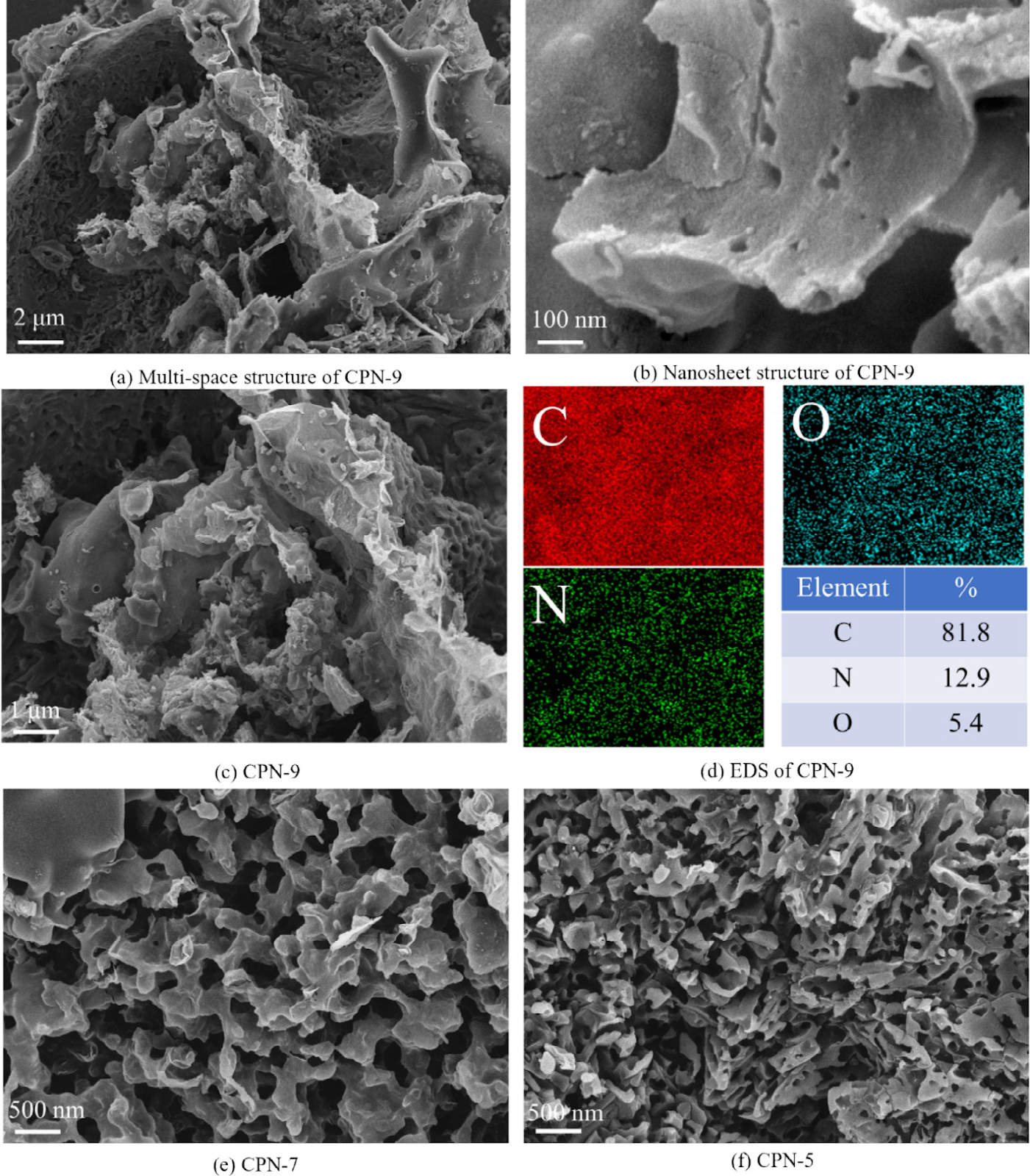
High-salinity wastewater treatment has always been a challenging issue. In this study, coal tar pitch was used as the carbon source and melamine as the nitrogen source to prepare coal tar pitch-based nanosheets (CPN-9) using a salt-template method. The desalination performance of CPN-9 was evaluated using flow-electrode capacitive deionization technology. The results showed that CPN-9 has a high specific surface area (466.34 m2/g), a rich pore structure (micro-/meso-pore volume was 0.28), excellent rheological properties, and hydrophilicity (contact angle of 20.44°), thereby accelerating ion transport. Electrochemical results indicated that CPN-9 exhibits a significant double-layer ion storage mechanism, with a specific capacitance of 176.66 F/g at a current density of 0.5 A/g. CPN-9 has a very low charge transfer resistance. The synergistic effect of aromatic carbon and nitrogen doping (the content of pyrrole and pyridine nitrogen was 36.40% and 35.83%, respectively) in coal tar pitch accelerates electron transfer in CPN-9. The good ion diffusion performance and low impedance of CPN-9 accelerate the ion exchange rate, resulting in outstanding desalination performance. At 1.2 V and 3% mass loading, with a CPN-9 to conductive carbon black ratio of 4:1, the average desalination rate, charge efficiency, and energy consumption reached 0.039 mg/(cm2 min), 48.47%, and 0.012 kWh/mol, respectively. In summary, this study optimized the structure of CPN-9 from the perspective of electronic and ionic transport, enhancing its desalination performance and providing theoretical support for the deionization of high-salinity wastewater.

Coal pitch-based nanosheets enhance the electronic and ionic transport of flow electrode capacitive deionization
Graphical Abstract
Original ResearchVol. 32, Issue 3 • pp. 100-112DOI: 10.1016/j.ijmst.2025.03.004Jan 15, 2025

Key techniques for precise measuring gas content in deep coal mine: In-situ pressure- and gas-preserved coring

Authors: LI Ju, LI Jianan, WANG Tianyu, LIU Guikang, HE Zhiqiang, LI Cong, XIE Heping

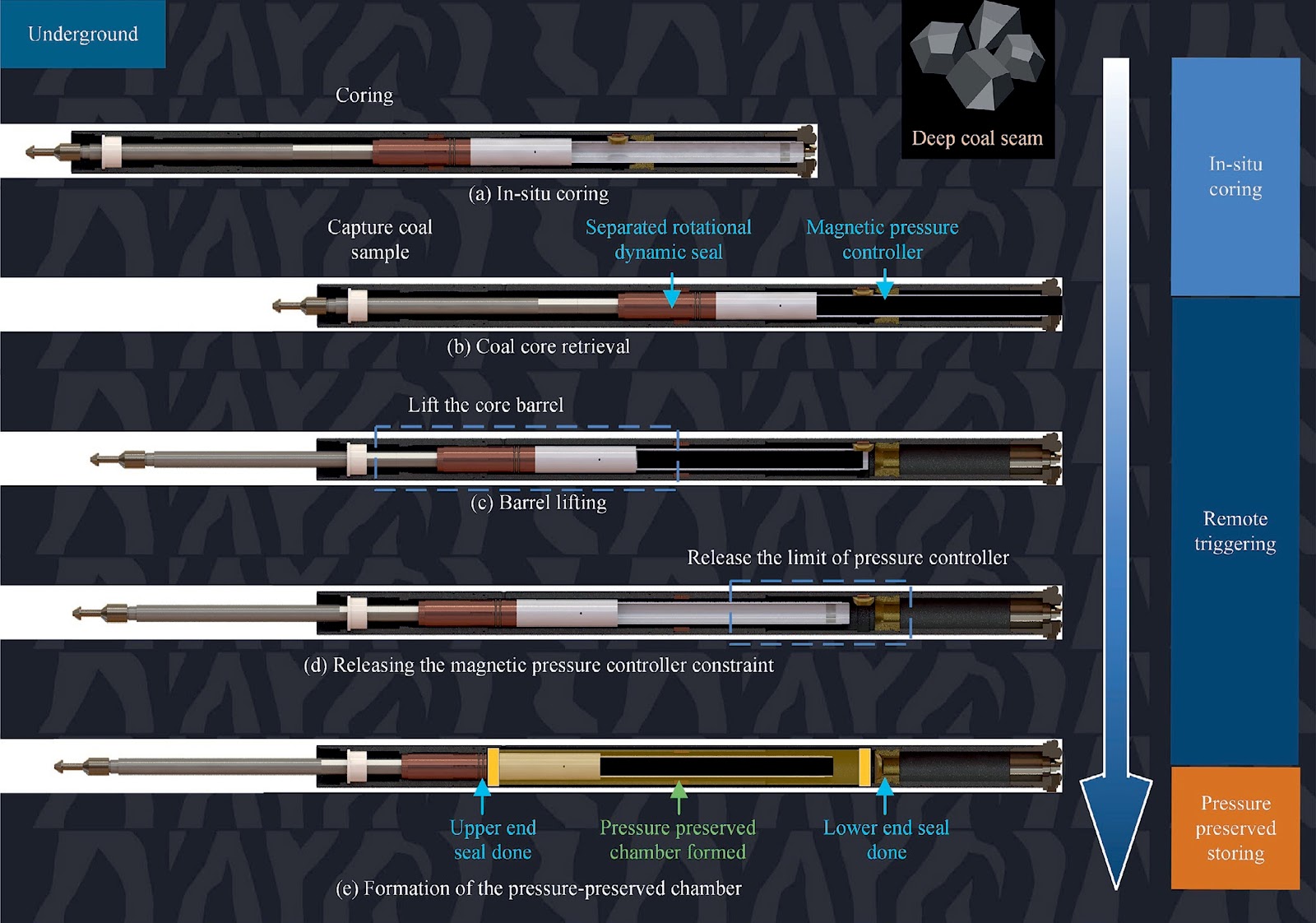
Gas content serves as a critical indicator for assessing the resource potential of deep coal mines and forecasting coal mine gas outburst risks. However, existing sampling technologies face challenges in maintaining the integrity of gas content within samples and are often constrained by estimation errors inherent in empirical formulas, which results in inaccurate gas content measurements. This study introduces a lightweight, in-situ pressure- and gas-preserved corer designed to collect coal samples under the pressure conditions at the sampling point, effectively preventing gas loss during transfer and significantly improving measurement accuracy. Additionally, a gas migration model for deep coal mines was developed to elucidate gas migration characteristics under pressure-preserved coring conditions. The model offers valuable insights for optimizing coring parameters, demonstrating that both minimizing the coring hole diameter and reducing the pressure difference between the coring-point pressure and the original pore pressure can effectively improve the precision of gas content measurements. Coring tests conducted at an experimental base validated the performance of the corer and its effectiveness in sample collection. Furthermore, successful horizontal coring tests conducted in an underground coal mine roadway demonstrated that the measured gas content using pressure-preserved coring was 34% higher than that obtained through open sampling methods.

Key techniques for precise measuring gas content in deep coal mine: In-situ pressure- and gas-preserved coring
Graphical Abstract
Original ResearchVol. 32, Issue 3 • pp. 100-112DOI: 10.1016/j.ijmst.2025.03.010Jan 15, 2025

Energy regulation mechanism and medium-filling effect of energy-focusing blast

Authors: GUO Pengfei, ZHANG Xingyu, YE Kengkeng, WANG Xu, HUANG Man, HU Jinzhu, HE Manchao

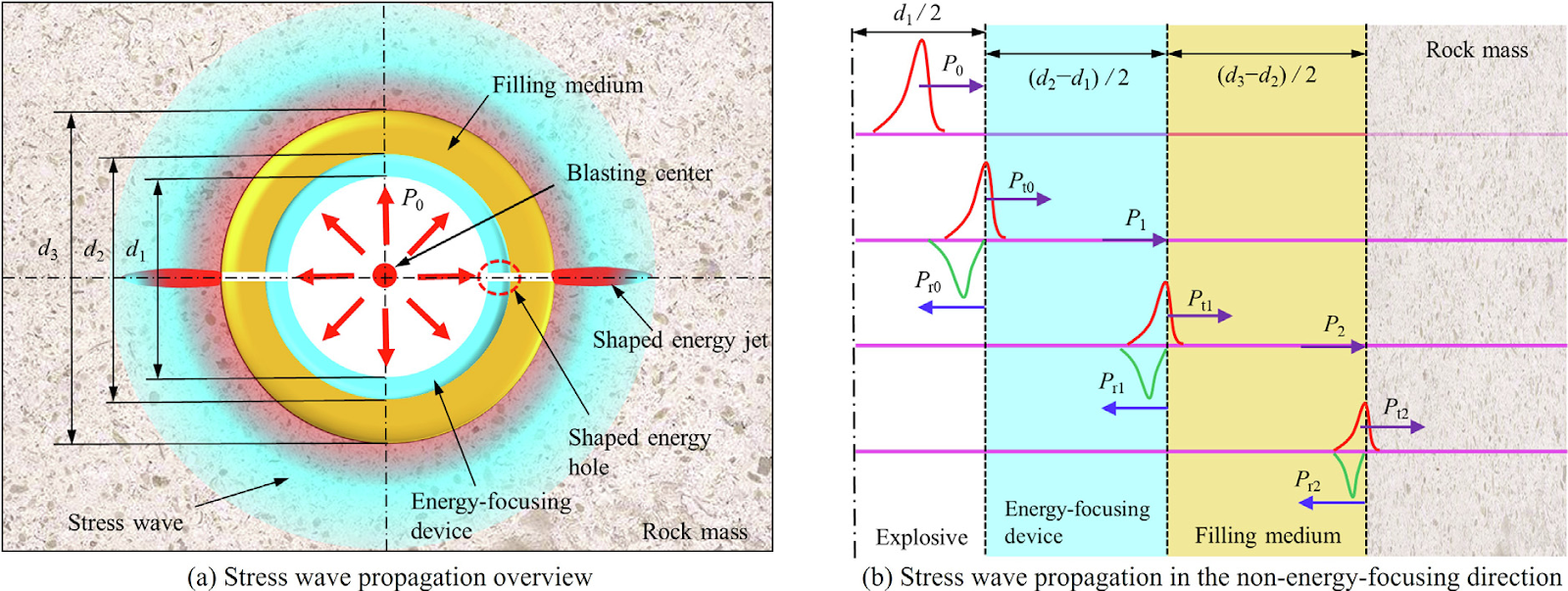
The energy-focusing blast is an innovative and ingenious method to achieve directional fracturing. Understanding its energy regulation mechanism is critical to enhancing its practical effectiveness. This study investigates the energy regulation mechanism and explores the medium-filling effects within the energy-focusing blast by employing theoretical analysis, numerical simulations, and model tests. The findings by theoretical and numerical analysis first reveal that two stages of the fracturing and tensile stage govern the directionally crack propagation, in which the explosion energy in the non-energy-focusing direction is suppressed, compressing the borehole wall, while redirected energy produces tensile stress in the energy-focusing direction, driving the formation of directional cracks. The choice of filling medium significantly affects directional cracking due to its impact on energy distribution and regulation, and key properties such as wave impedance and compressibility of the filling medium are critical. Experimental comparisons using air, sand, and water as filling media further disclose the distinct effects of the medium on energy regulation and directional crack growth of the energy-focusing blast. The maximum shaped-energy coefficients for air, sand, and water are 1.30, 4.41, and 6.12 in the energy-focusing direction, respectively. Meanwhile, the stress attenuation rate of air, sand, and water increases in that order. The higher wave impedance and lower compressibility of water support efficient and uniform energy propagation, which subtly enhances the tensile actions in the focusing direction and intensifies the overall stress impact of the energy-focusing blast. In addition, the stresses in the non-energy-focusing directions decrease as the angle from the energy-focusing direction increases, while the stresses are relatively uniform for both air and water but noticeably uneven for sand; meanwhile, the fractal dimensions of blasting cracks in the case of air, water, and sand are 1.076, 1.068, and 1.112, respectively. Sand as a filling medium leads to increased crack irregularities due to its granularity and heterogeneity. The water medium strikes an optimal balance by promoting the blasting energy transition and optimizing the energy distribution, maintaining the least flatness of the directional crack during energy-focusing blasts.

Energy regulation mechanism and medium-filling effect of energy-focusing blast
Graphical Abstract
Original ResearchVol. 32, Issue 3 • pp. 100-112DOI: 10.1016/j.ijmst.2025.03.007Jan 15, 2025

Fatigue behaviour characteristics and life prediction of rock under low-cycle loading

Authors: Zehan Liu, Jin Yu, Chonghong Ren, Khalid Elbaz, Defu Zhu, Yanyan Cai

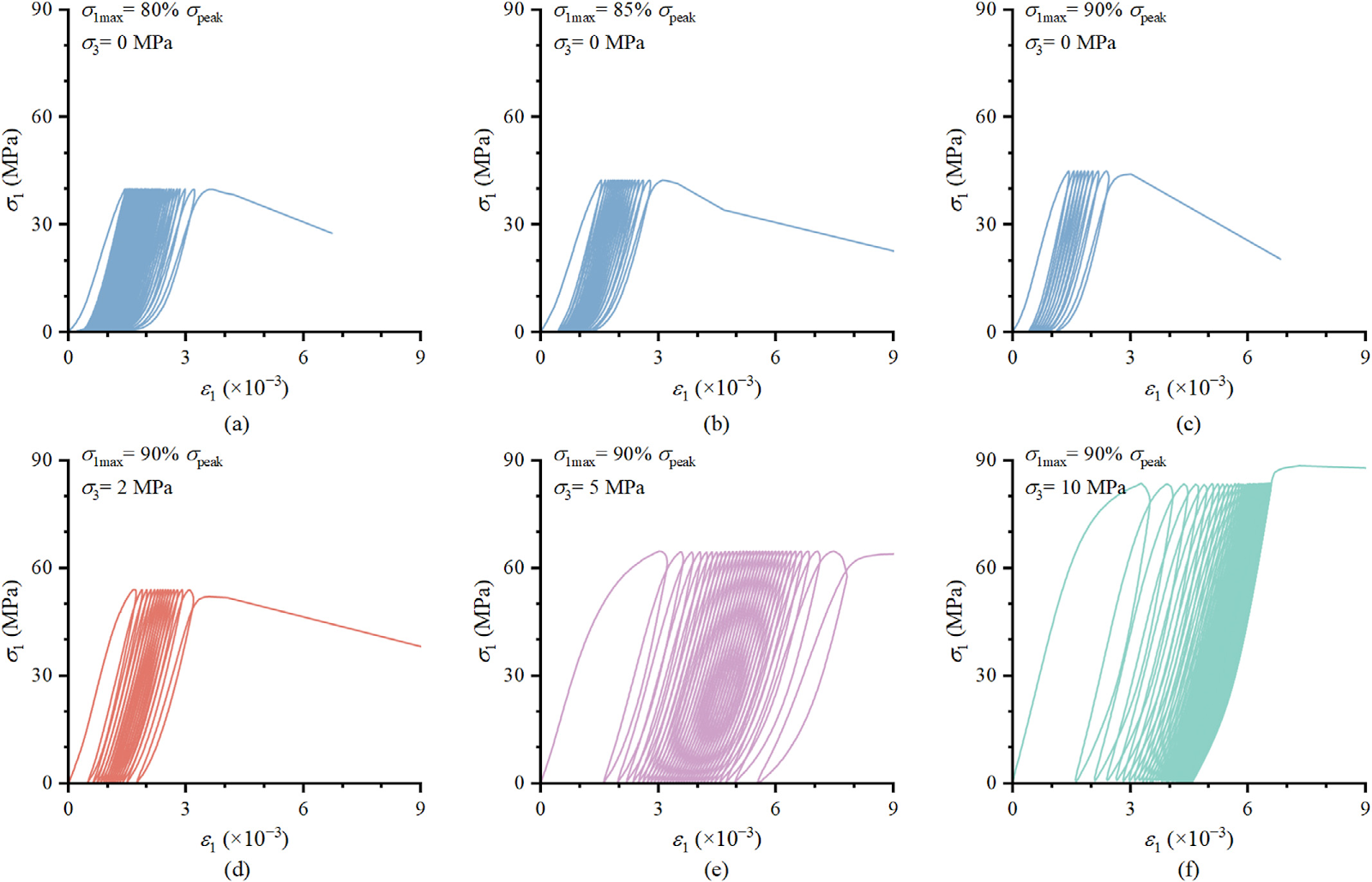
The fatigue characteristics of rock materials significantly impact the economy and safety of underground structures during construction. Hence, it is essential to conduct further investigation into the progressive damage processes of rocks under cyclic loading conditions. This research utilised both laboratory experiments and discrete element simulations to investigate how confining pressure and fatigue upper limit stress influence the mechanical behaviour and crack development of marble under low-cycle fatigue conditions. By introducing synthetic displacement and reasonable assumptions, the classical damage evolution law was updated, resulting in a fatigue life prediction formula applicable to various rock materials and loading conditions. The results indicate that lower fatigue upper limit stress can delay the accumulation of damage and extend the fatigue life of the rock, but it results in more severe ultimate failure. The damage variable’s correlation with the relative number of loading cycles for different fatigue load upper limits under the same confining pressure can be approximated by the same functional relationship. The modified damage evolution model provides an effective characterisation of this trend. The proposed fatigue life prediction method comprehensively accounts for different rock materials, confining pressures, loading frequencies, and initial damage, showing a close match with actual results.

Fatigue behaviour characteristics and life prediction of rock under low-cycle loading
Graphical Abstract
Original ResearchVol. 32, Issue 3 • pp. 100-112DOI: 10.1016/j.ijmst.2025.03.006Jan 15, 2025

Calculation model for kinetic energy and rock burst risk evaluation method during roadway excavation

Authors: TAN Yunliang, TAN Yan, GUO Weiyao, LI Bo, HE Shudong, ZHANG Lei, ZHANG Qiuyuan

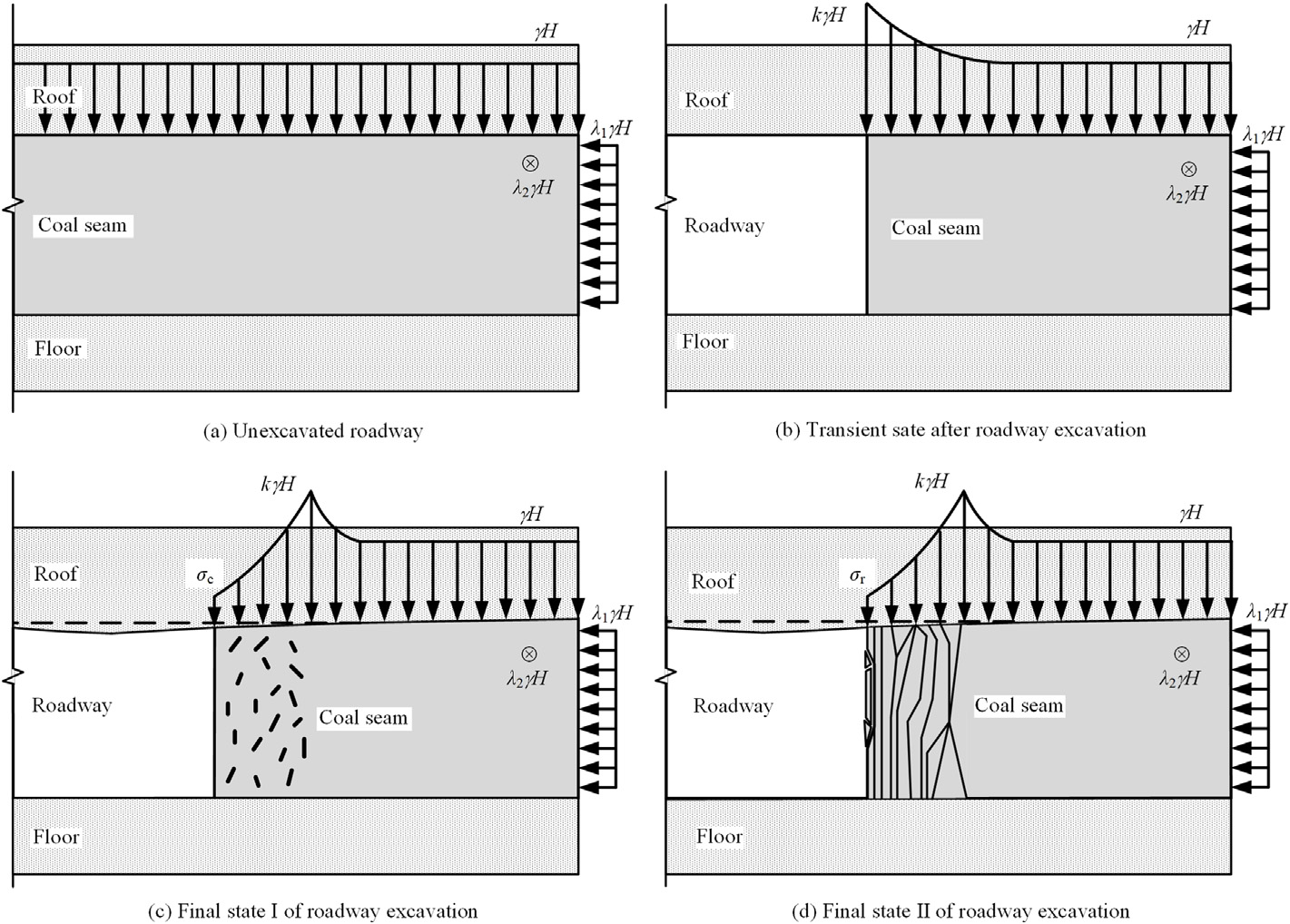
The accumulation and release of deformation energy within the rock mass of a roadway are primary contributors to the occurrence of rock bursts. This study introduces a calculation model for the kinetic energy generated during roadway excavation, which is based on the fracture and energy states of the rock mass. The relationships among the mining depth, width of the plastic zone, rebound range of the roof and floor, stress concentration factor, and the induced kinetic energy are systematically explored. Furthermore, a rock burst risk evaluation method is proposed. The findings indicate that the energy evolution of the rock mass can be categorized into four stages: energy accumulation due to in-situ stress, energy accumulation resulting from coal compression, energy dissipation through coal plastic deformation, and energy consumption due to coal failure. The energy release from the rock mass is influenced by several factors, including mining depth, stress concentration factor, the width of the plastic zone, and the rebound range of the roof and floor. Within the plastic zone of coal, the energy released per unit volume of coal and the induced kinetic energy exhibit a nonlinear increase with mining depth and stress concentration factor, while they decrease linearly as the width of the plastic zone increases. Similarly, the driving energy per unit volume of the roof and floor shows a nonlinear increase with mining depth and stress concentration factor, a linear increase with the rebound range of the roof and floor, and a linear decrease with the width of the plastic zone. A rock burst risk evaluation method is developed based on the kinetic energy model. Field observations demonstrate that this method aligns with the drilling cuttings rock burst risk assessment method, thereby confirming its validity.

Calculation model for kinetic energy and rock burst risk evaluation method during roadway excavation
Graphical Abstract
Original ResearchVol. 32, Issue 3 • pp. 100-112DOI: 10.1016/j.ijmst.2025.03.005Jan 15, 2025

Dynamic impact simulation tests of deep roadways affected by high stress and fault slip

Authors: Qi Wang, Yuncai Wang, Zhenhua Jiang, Hongpu Kang, Chong Zhang, Bei Jiang

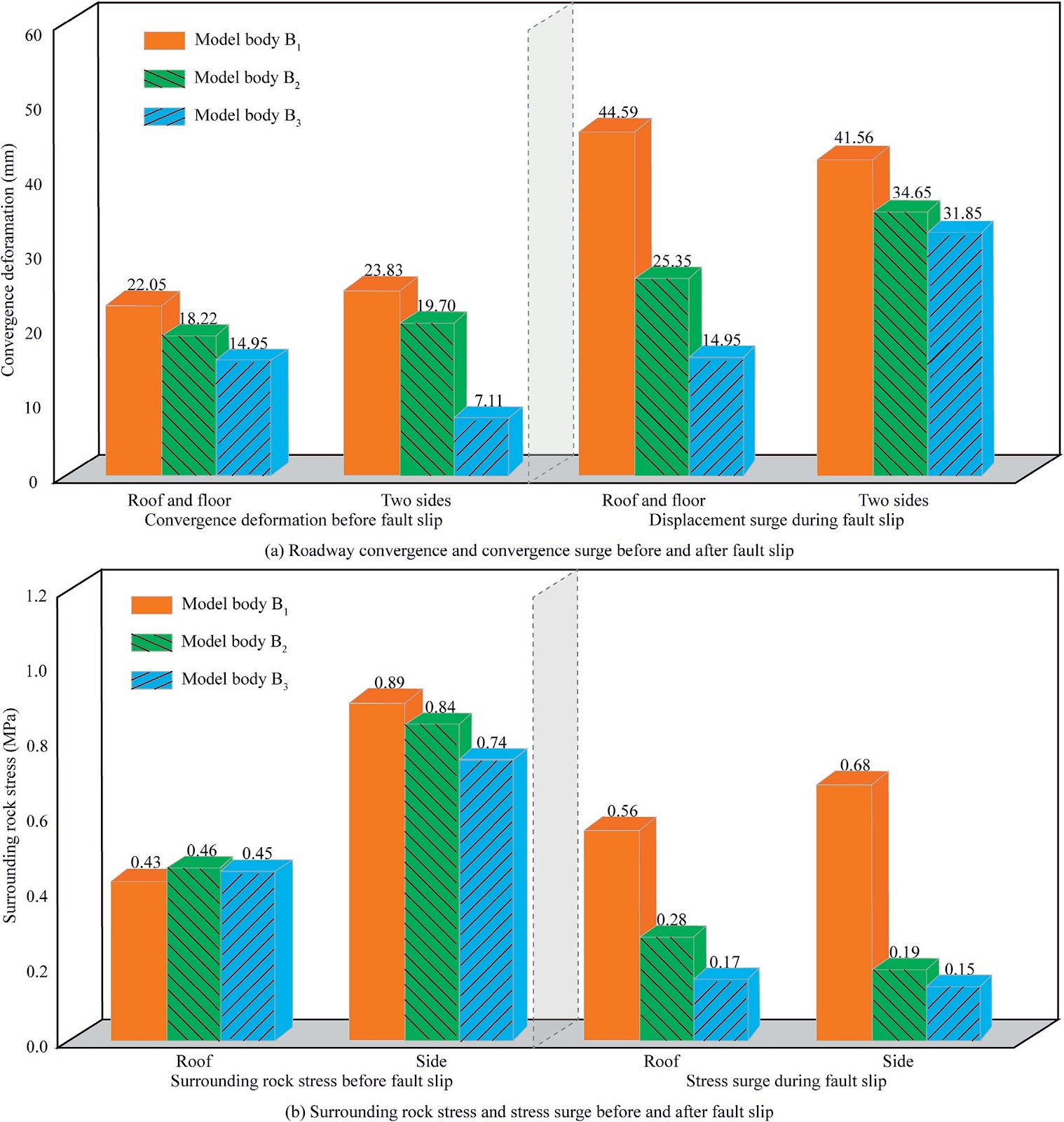
As coal mining depth increases, the combined effects of high stress, mining stress, and fault structures make dynamic impact hazards more frequent. The reproduction of dynamic impact phenomena is basis for studying their occurrence patterns and control mechanisms. Physical simulation test represents an efficacious methodology. However, there is currently a lack of simulation devices that can effectively simulate two types of dynamic impact phenomena, including high stress and fault slip dynamic impact. To solve aforementioned issues, the physical simulation test system for dynamic impact in deep roadways developed by authors is employed to carry out comparative tests of high stress and fault slip dynamic impact. The phenomena of high stress and fault slip dynamic impact are reproduced successfully. A comparative analysis is conducted on dynamic phenomena, stress evolution, roadway deformation, and support force. The high stress dynamic impact roadway instability mode, which is characterized by the release of high energy accompanied by symmetric damage, and the fault slip dynamic impact roadway instability mode, which is characterized by the propagation of unilateral stress waves accompanied by asymmetric damage, are clarified. On the basis, the differentiated control concepts for different types of dynamic impact in deep roadways are proposed.

Dynamic impact simulation tests of deep roadways affected by high stress and fault slip
Graphical Abstract