SinoTechIntel Academic Portal
🏛️ Indexed Academic JournalImpact Factor: 3.8 (Q1 - Elsevier)Original: 中国化学工程学报 (英文版)

Chinese Journal of Chemical Engineering

Access authentic peer-reviewed engineering methodologies, experimental datasets, and scientific literature published in this journal on SinoTechIntel.

Total Research Papers: 98
Access: 100% Free Open Access
Browse by Publication Year & VolumeReset All Filters ✕

Published Research PapersFiltered: Year 2025 • 88 • Issue 1

Showing 2 of 98 peer-reviewed papers with full Graphical Abstracts.

Original ResearchVol. 88, Issue 1 • pp. 1-12DOI: 10.1016/j_cjche_1496Oct 9, 2025

Humification of organic matter and passivation of heavy metals during the hydrothermal carbonization of swine manure

Authors: Jiangbo Xiong, Chunfei Zhou, Qingwen Zhang, Huiwen Gu, Yujuan Huang, Pin Zhang, Min Jiang, Faying Lai, Xiaoping Liu, Huajun Huang

Hydrothermal carbonization (HTC) is a promising technology for the coversion of swine manure (SM) for hydrochars (HCs). Currently, information on the humifica cation of organic matter is limited during the HTC of SM, and its potential correlation with the passivation of heavy metals (HMs) remains unclear, which is crucial referece for the land application of SM-derived HCs. This study systematically inves-tigated the humifica cation of organic matter and the passivation of HMs during the HTC of SM and then explored their intrinsic connection. The HTC treatment can enhance the humifica cation of organic matter, and the HCs obtained at 240 ◦C had the best humifica cation effect, with the highest content of humus (83.84 mg·g−1 versus 41.97 mg·g−1 in SM) and humifica cation rate (28.89% versus 15.73% in SM). Dissolved organic carbons (DOC) and readily oxidized organic carbons (ROC) were more easily degraded in the HTC of SM, and part was further converted into inactive organic carbon. HMs (Cu, Zn, Pb, and Cr) were enriched in HCs, but all HMs were largely passivated. The ecological risk of multi-HMs was reduced from moderate risk in SM to low risk in HCs. The percentages of HMs in exchangeable/acid-soluble forms were positively correlated with the contents of DOC and negatively correlated with the ratio of humic acids to fulvic acids (P < 0.05). It was inferred that the humifica cation of organic matter promoted the passivation of HMs in the HTC of SM. This study provided deeper insights into the humifica cation of organic matter and it's intrinsic correlation with HMs-passivation during the HTC of SM.
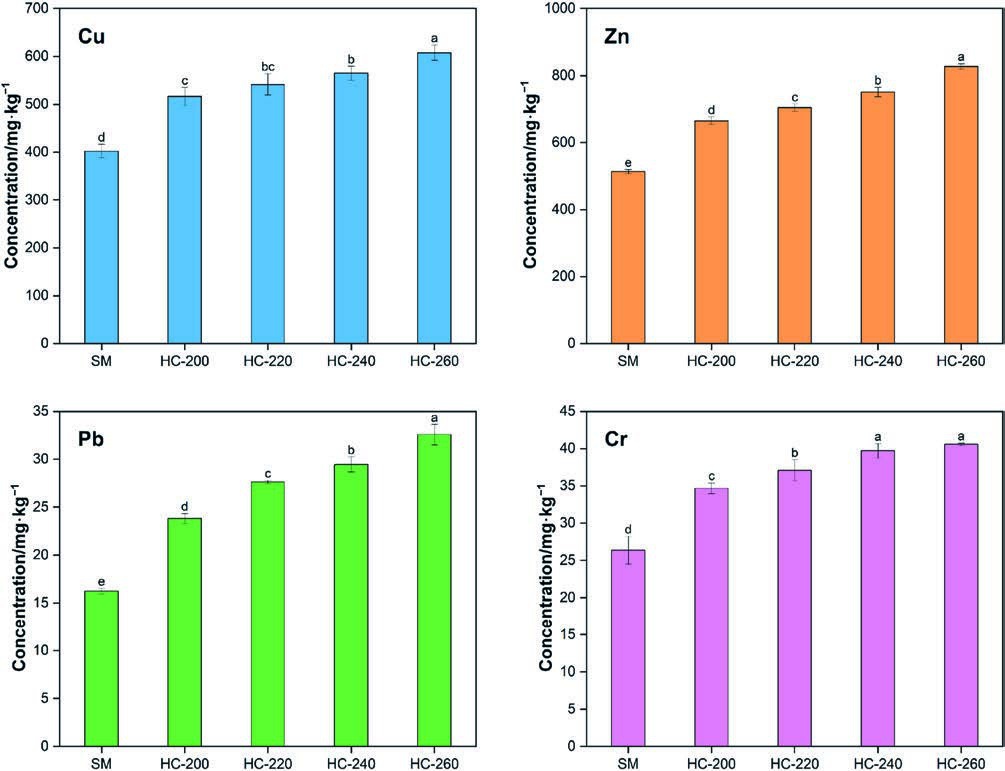
Humification of organic matter and passivation of heavy metals during the hydrothermal carbonization of swine manure
Graphical Abstract
Original ResearchVol. 88, Issue 1 • pp. 13-20DOI: 10.1016/j_cjche_1496Aug 7, 2025

Effect of geometry ratios on droplet breakup in a T-junction microchannel: A theoretical predictive model

Authors: Thanh Tung Nguyen, Van Thanh Hoang

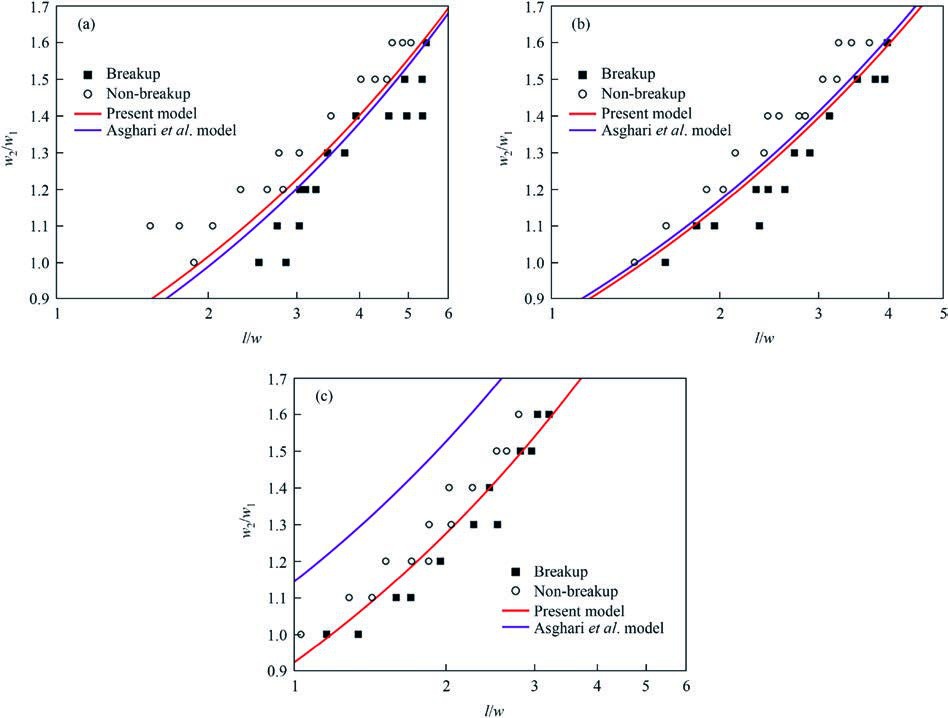
Understanding and predicting droplet breakup is essential in droplet-based microfluidic systems, as it enables precise control over droplet manipulation for various applications. In this study, droplet breakup behavior in a T-junction microchannel is investigated under the influence of microchannel geometry using three-dimensional numerical simulations. A theoretical model is developed based on the balance between surface tension and viscous drag forces acting on the droplet, incorporating the effects of geometric parameters on droplet length. This model predicts the critical Capillary number required for breakup to occur. The theoretical predictions are validated using both previous research data and the present numerical simulations. The results show that the model accurately predicts the transition between breakup and non-breakup regimes. Specifically, an increase in sidearm length ratio inhibits droplet breakup and leads to an asymmetric breakup regime. Furthermore, increasing the outlet-to-inlet width ratio also reduces the likelihood of droplet breakup. These findings provide a predictive framework for understanding and controlling droplet dynamics in microfluidic T-junctions, with potential applications in lab-on-a-chip technologies.

Effect of geometry ratios on droplet breakup in a T-junction microchannel: A theoretical predictive model
Graphical Abstract
Chinese Journal of Chemical Engineering | SinoTechIntel Research Archive | SinoTechIntel