SinoTechIntel Academic Portal
πŸ›οΈ Indexed Academic JournalImpact Factor: 3.8 (Q1 - Elsevier)Original: δΈ­ε›½εŒ–ε­¦ε·₯程学ζŠ₯ (θ‹±ζ–‡η‰ˆ)

Chinese Journal of Chemical Engineering

Access authentic peer-reviewed engineering methodologies, experimental datasets, and scientific literature published in this journal on SinoTechIntel.

Total Research Papers: 98
Access: 100% Free Open Access
Browse by Publication Year & VolumeReset All Filters βœ•

Published Research PapersFiltered: Year 2023 β€’ Vol. 32 β€’ Issue 9

Showing 3 of 98 peer-reviewed papers with full Graphical Abstracts.

Original ResearchVol. 32, Issue 9 β€’ pp. 380-392DOI: 10.1016/j_cjche_144875065β€’ Sep 21, 2023

Green synthesis of ZSM-5 using silica fume and catalytic co-cracking of lignin and plastics for production of monocyclic aromatics

Authors: Hongbing Fu, Yufei Gu, Tianhua Gao, Fuwei Li, Hengshuo Gu, Hucheng Ge, Yuke Liu, Zhixia Li, Hongfei Lin, Jiangfei Cao

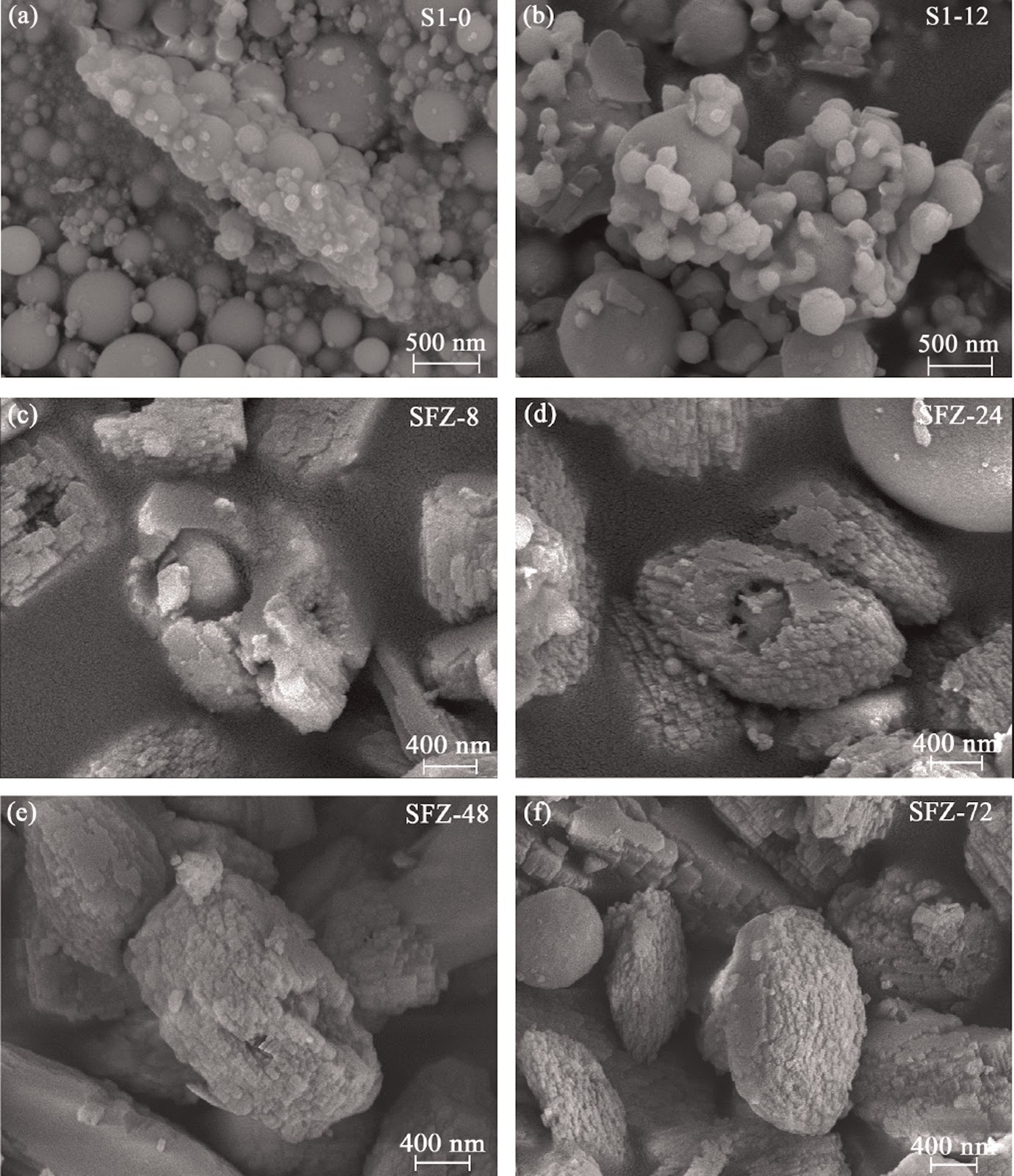
ZSM-5 with hierarchical pore structure was synthesized by a simple two-step hydrothermal crystallization from silica fume without using any organic ammonium templates. The synthesized ZSM-5 were oval shaped particles with a particle size about 2.0 lm and weak acid-dominated with proper BrΓΈnsted (B) and Lewis (L) acid sites. The ZSM-5 was used for catalytic co-cracking of n-octane and guaiacol, low-density polyethylene (LDPE) and alkali lignin (AL) to enhance the production of benzene, toluene, ethylbenzene and xylene (BTEX). The most significant synergistic effect occurred at n-octane/guaiacol at 1:1 and LDPE/AL at 1:3, under the condition, the achieved BTEX selectivity were 24% and 33% (mass) higher than the calculated values (weighted average). The highest BTEX selectivity reached 88.5%, which was 3.7% and 54.2% higher than those from individual cracking LDPE and AL. The synthesized ZSM-5 exhibited superior catalytic performance compared to the commercial ZSM-5, indicating potential application prospect.
Green synthesis of ZSM-5 using silica fume and catalytic co-cracking of lignin and plastics for production of monocyclic aromatics
Graphical Abstract
Original ResearchVol. 32, Issue 9 β€’ pp. 788-800DOI: 10.1016/j_cjche_144878273β€’ Sep 18, 2023

Effect of mesopore spatial distribution of HZSM-5 catalyst on zinc state and product distribution in 1-hexene aromatization

Authors: Chenhao Wei, Di Gao, Guohao Zhang, Liang Zhao, Jinsen Gao, Chunming Xu

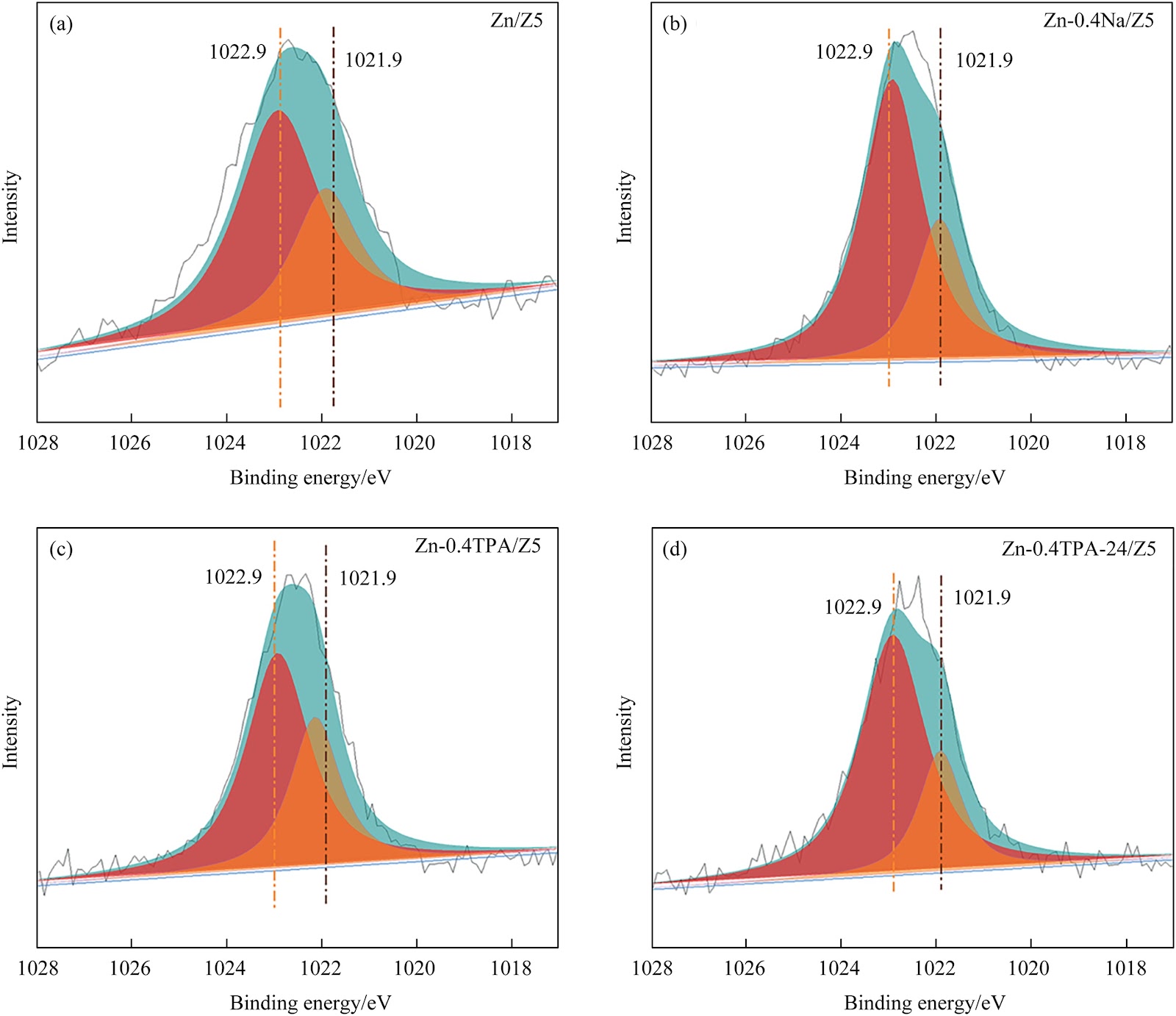
1-hexene aromatization is a promising technology to convert excess olefin in fluid catalytic cracking (FCC) gasoline to high-value benzene (B), toluene (T), and xylene. Besides, the increasing market demand of xylene has put forward higher requirements for new generation of catalyst. For increasing xylene yield in 1-hexene aromatization, the effect of mesopore structure and spatial distribution on product distribution and Zn loading was studied. Catalysts with different mesopore spatial distribution were prepared by post-treatment of parent HZSM-5 zeolite, including NaOH treatment, tetra-propylammonium hydroxide (TPAOH) treatment, and recrystallization. It was found the evenly distributed mesopore mainly prolongs the catalyst lifetime by enhancing diffusion properties but reduces the aromatics selectivity, as a result of damage of micropores close to the catalyst surface. While the selectivity of high-value xylene can be highly promoted when the mesopore is mainly distributed interior the catalyst. Besides, the state of loaded Zn was also affected by mesopores spatial distribution. On the optimized catalyst, the xylene selectivity was enhanced by 12.4% compared with conventional Zn-loaded parent HZSM-5 catalyst at conversion over 99%. It was attributed to the synergy effect of mesopores spatial distribution and optimized acid properties. This work reveals the role of mesopores in different spatial positions of 1-hexene aromatization catalysts in the reaction process and the influence on metal distribution, as well as their synergistic effect two on the improvement of xylene selectivity, which can improve our understanding of catalyst pore structure and be helpful for the rational design of high-efficient catalyst.

Effect of mesopore spatial distribution of HZSM-5 catalyst on zinc state and product distribution in 1-hexene aromatization
Graphical Abstract
Original ResearchVol. 32, Issue 9 β€’ pp. 584-596DOI: 10.1016/j_cjche_144877764β€’ Sep 7, 2023

Preparation of PrFexCo1exO3/Mt catalyst and study on degradation of 2-hydroxybenzoic acid wastewater by catalytic wet peroxide oxidation

Authors: Binxia Zhao, Yijia Gao, Tiancheng Hun, Xiaoxiao Fan, Nan Shao, Xiaoqian Chen

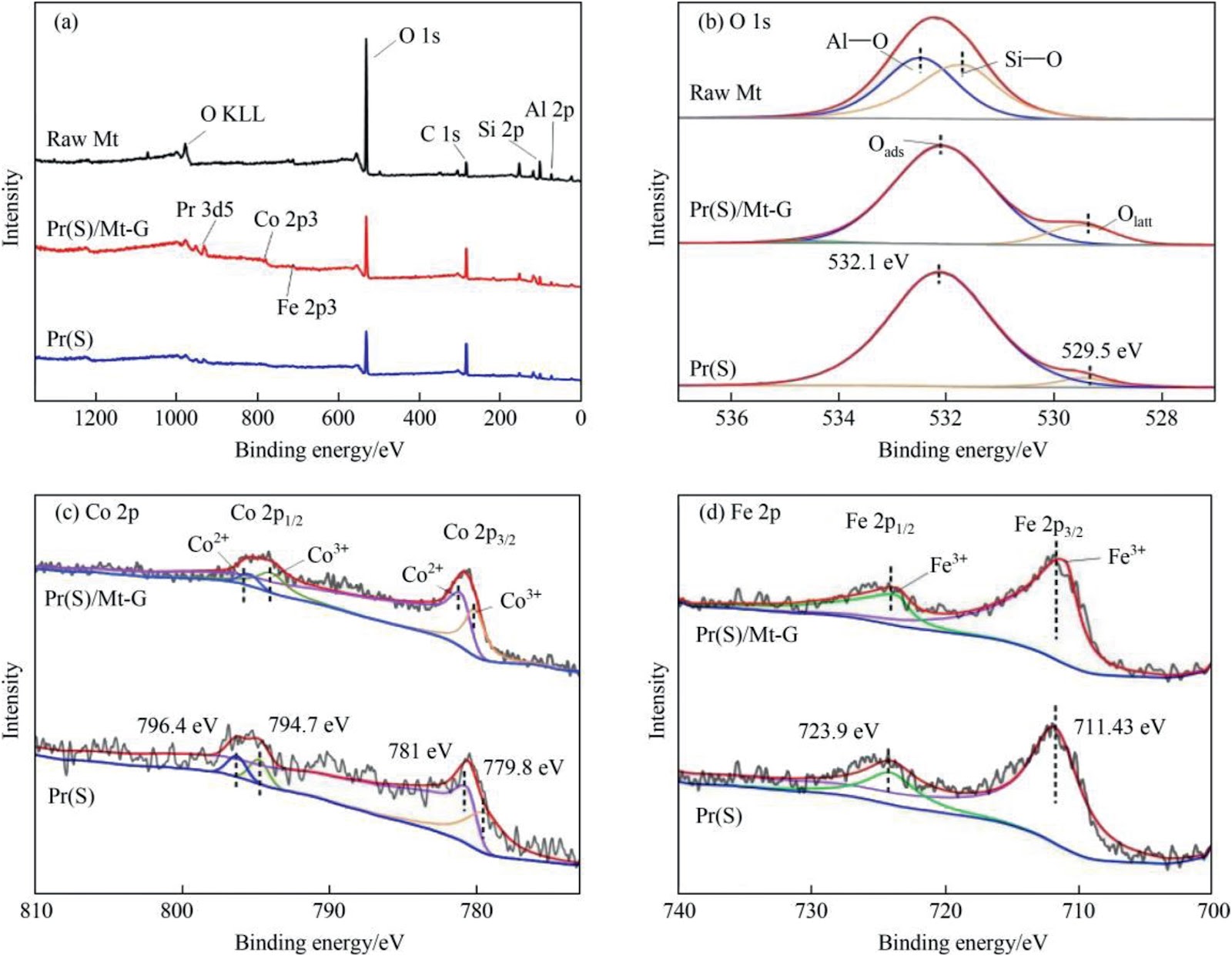
In this study, the perovskite nanocomposite PrFexCo1exO3(Pr(S)) was successfully synthesized by the sol-gel method; PrFexCo1exO3/Al-pillared montmorillonite (Pr(S)/Mt) catalysts were prepared by impregnation (D) method and solid-melting (G) method, respectively, with Pr(S) as the active component and Al-pillared montmorillonite as the carrier. The catalysts were applied to treat the 2-hydroxybenzoic acid (2-HA)-simulated wastewater by catalytic wet peroxide oxidation (CWPO) technique, and the chemical oxygen demand (COD) removal rate and the 2-HA degradation rate were used as indicators to evaluate the catalytic performance. The results of the experiment indicated that the solid-melting method was more conducive to preparing the catalyst when the Co/Fe molar ratio of 7:3 and the optimal structural properties of the catalysts were achieved. The influence of operating parameters, including reaction temperature, catalyst dosage, H2O2 dosage, pH, and initial 2-HA concentration, were optimized for the degradation of 2-HA by CWPO. The results showed that 97.64% of 2-HA degradation and 75.23% of COD removal rate were achieved under more suitable experimental conditions. In addition, after the catalyst was used five times, the degradation rate of 2-HA could still reach 76.93%, which implied the high stability and reusability of the catalyst. The high catalytic activity of the catalyst was due to the doping of Co into PrFeO3, which could promote the generation of HOβ€’, and the high stability could be attributed to the loading of Pr(S) onto Al-Mt, which reduced the leaching of reactive metals. The study of reaction mechanism and kinetics showed that the whole degradation process conformed to the pseudo-first-order kinetic equation, and the Langmuir-Hinshelwood method was applied to demonstrate that catalysis was dominant in the degradation process.

Preparation of PrFexCo1exO3/Mt catalyst and study on degradation of 2-hydroxybenzoic acid wastewater by catalytic wet peroxide oxidation
Graphical Abstract