Key Takeaways & Executive Findings
- •• A novel PrFexCo1exO3/Al-pillared montmorillonite catalyst was synthesized via solid-melting method, achieving 97.64% degradation of 2-hydroxybenzoic acid and 75.23% COD removal in CWPO. • The optimal Co/Fe molar ratio of 7:3 and solid-melting preparation method yielded superior catalytic performance and structural properties. • The catalyst exhibited high stability and reusability, maintaining 76.93% degradation after five cycles, attributed to reduced metal leaching. • The degradation followed pseudo-first-order kinetics, with Langmuir-Hinshelwood analysis confirming catalysis dominance, highlighting the potential for pharmaceutical wastewater treatment.
Abstract
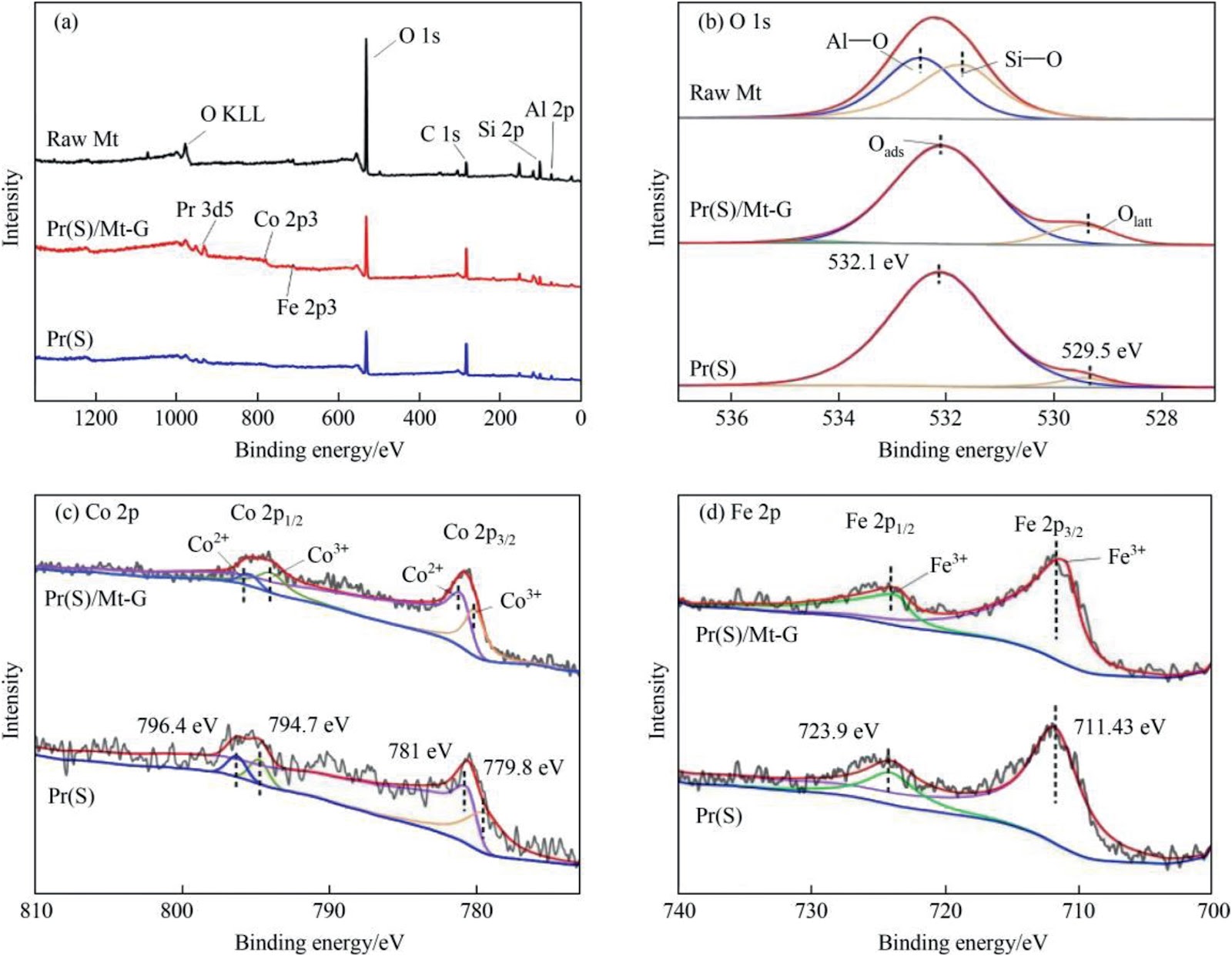
In this study, the perovskite nanocomposite PrFexCo1exO3(Pr(S)) was successfully synthesized by the sol-gel method; PrFexCo1exO3/Al-pillared montmorillonite (Pr(S)/Mt) catalysts were prepared by impregnation (D) method and solid-melting (G) method, respectively, with Pr(S) as the active component and Al-pillared montmorillonite as the carrier. The catalysts were applied to treat the 2-hydroxybenzoic acid (2-HA)-simulated wastewater by catalytic wet peroxide oxidation (CWPO) technique, and the chemical oxygen demand (COD) removal rate and the 2-HA degradation rate were used as indicators to evaluate the catalytic performance. The results of the experiment indicated that the solid-melting method was more conducive to preparing the catalyst when the Co/Fe molar ratio of 7:3 and the optimal structural properties of the catalysts were achieved. The influence of operating parameters, including reaction temperature, catalyst dosage, H2O2 dosage, pH, and initial 2-HA concentration, were optimized for the degradation of 2-HA by CWPO. The results showed that 97.64% of 2-HA degradation and 75.23% of COD removal rate were achieved under more suitable experimental conditions. In addition, after the catalyst was used five times, the degradation rate of 2-HA could still reach 76.93%, which implied the high stability and reusability of the catalyst. The high catalytic activity of the catalyst was due to the doping of Co into PrFeO3, which could promote the generation of HO•, and the high stability could be attributed to the loading of Pr(S) onto Al-Mt, which reduced the leaching of reactive metals. The study of reaction mechanism and kinetics showed that the whole degradation process conformed to the pseudo-first-order kinetic equation, and the Langmuir-Hinshelwood method was applied to demonstrate that catalysis was dominant in the degradation process.
1. Introduction
In recent decades, the rapid development of the pharmaceutical industry has produced a large amount of pharmaceutical wastewater; they contain large amounts of antibiotics and pharmaceutical intermediates, which have the characteristics of complicated components, hard degradation, and strong toxicity [1]. If not treated properly, it will cause serious threats to human beings and the environment [2]. Due to the harm of pharmaceutical wastewater, the treatment of pharmaceutical wastewater has received strong attention from many countries.
At present, the common wastewater treatment technologies include adsorption, photocatalysis, microwave catalysis, ozone oxidation, etc. The adsorption method generally uses porous materials such as montmorillonite and kaolin as adsorbents, and the method mainly uses intermolecular forces between the adsorbent and the pollutant to adsorb the pollutant in the wastewater. The technology has low secondary environmental pollution and low equipment requirements [3], but the high cost of adsorbent regeneration has limited its further application. Nowadays, advanced oxidation processes (AOPs) are considered effective methods to treat pharmaceutical wastewater. In the process of AOPs, the generated hydroxyl radicals (HO•) mineralize pollutants in wastewater, which have strong oxidation activity and non-selectivity [4,5]. Photocatalysis is a kind of AOP that uses light to irradiate semiconductors to generate electrons and holes, which in turn mineralizes pollutants [6]. It has advantages such as high catalytic activity and environmental friendliness [7], but the use of visible light by semiconductors is limited and is not applicable to the degradation of actual wastewater. Microwave catalysis is also an effective technology for the degradation of pollutants. The thermal and excitation effects of microwaves produce large amounts of reactive oxygen species (ROSs) in the composite material, allowing for efficient and rapid degradation of pollutants [8,9], but the process is more energy intensive. Ozone has a strong oxidation ability and can produce a large amount of HO• in a short period to achieve complete degradation of pollutants, which is an environmentally friendly AOP, but the application cost is high and may also produce toxic by-products [10]. However, the catalytic wet peroxide oxidation (CWPO) technology with strong oxidation ability can overcome these disadvantages.
Loading authentic research manuscript (Pages 1–5)...
Binxia Zhao, Yijia Gao, Tiancheng Hun, Xiaoxiao Fan, Nan Shao, Xiaoqian Chen (2023). Preparation of PrFexCo1exO3/Mt catalyst and study on degradation of 2-hydroxybenzoic acid wastewater by catalytic wet peroxide oxidation. Chinese Journal of Chemical Engineering. https://doi.org/10.1016/j_cjche_144877764
Research & Educational Purpose Only:The translations, structured abstracts, analytical annotations, and data reports provided by SinoTechIntel are intended exclusively for academic research, internal corporate R&D, and educational benchmarking. They do not constitute formal engineering, chemical safety, legal, or professional advice.
Copyright & Intellectual Property Notice: Original copyright of the underlying source articles and experimental data remains with the respective authors, institutions, and original publishing journals. SinoTechIntel claims intellectual property only over its proprietary translations, analytical syntheses, and AEO structured enhancements in accordance with international fair use and academic citation principles.
Frequently Asked Questions
What is the main objective of this study?
The study aims to prepare a novel PrFexCo1exO3/Al-pillared montmorillonite catalyst and evaluate its performance in degrading 2-hydroxybenzoic acid from wastewater via catalytic wet peroxide oxidation (CWPO).
What are the optimal conditions for 2-HA degradation?
The optimal conditions include a Co/Fe molar ratio of 7:3, solid-melting preparation method, and specific operating parameters (reaction temperature, catalyst dosage, H2O2 dosage, pH, and initial concentration) that achieved 97.64% degradation and 75.23% COD removal.
How does the catalyst achieve high stability and reusability?
The catalyst shows high stability due to the loading of Pr(S) onto Al-pillared montmorillonite, which reduces the leaching of reactive metals. It maintained 76.93% degradation after five cycles.
What is the reaction mechanism and kinetics of the degradation process?
The degradation follows pseudo-first-order kinetics, and the Langmuir-Hinshelwood method confirmed that catalysis is dominant. Co doping promotes the generation of hydroxyl radicals (HO•), enhancing catalytic activity.
What is the significance of this research for wastewater treatment?
This research provides an efficient and stable catalyst for CWPO, offering a promising solution for treating pharmaceutical wastewater containing refractory organic pollutants like 2-hydroxybenzoic acid.
Related Technical Papers & Translations
Design and optimization of a high-efficiency distillation process for cellulosic fuel ethanol integrated with thermal coupling and molecular sieve adsorption
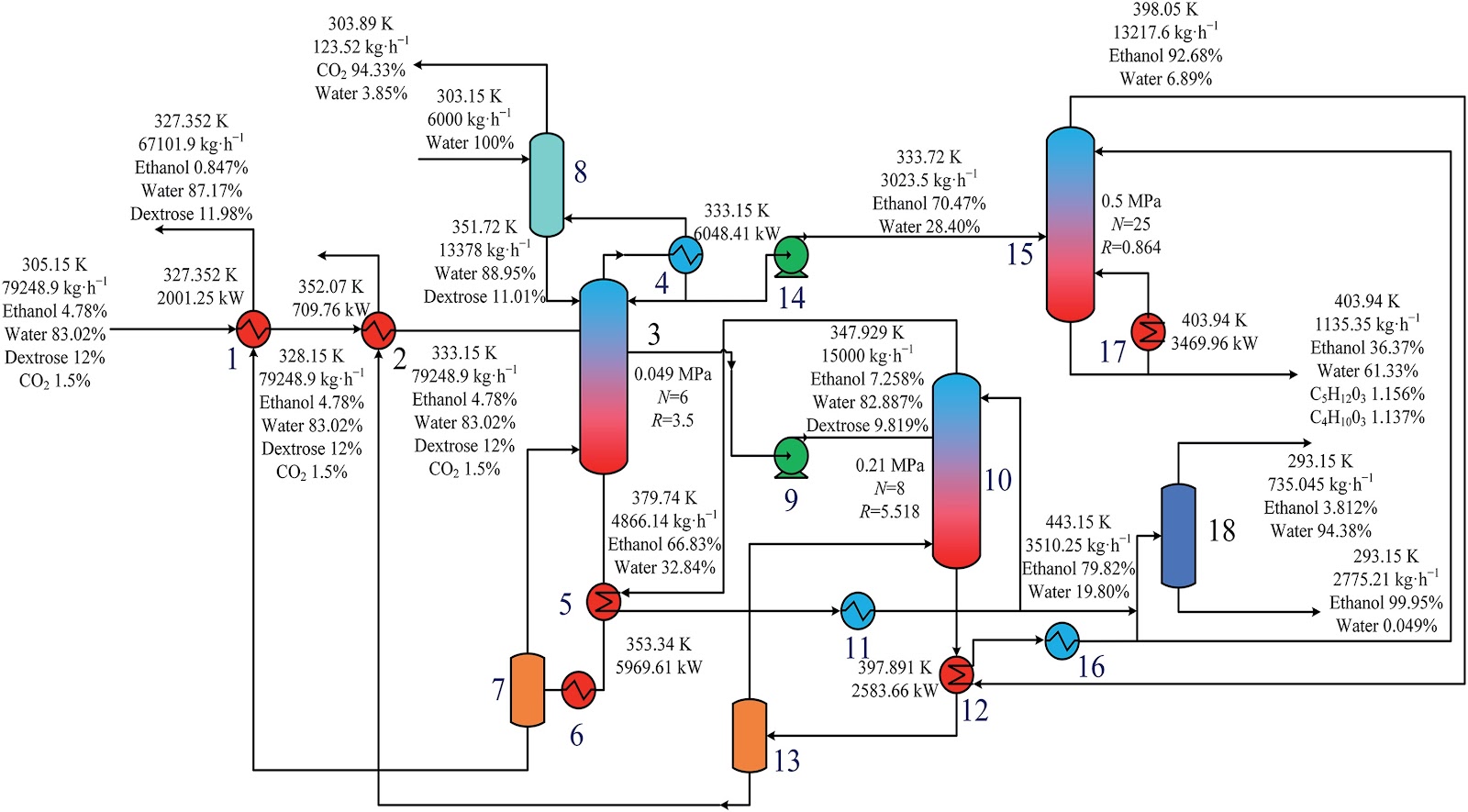
To address the challenges of high energy consumption and prominent costs in the traditional three-columns distillation process for cellulosic fuel ethanol, a distillation—molecular sieve coupling separation process is proposed. This process integrates a three-column (crude distillation column, first distillation column, second distillation column) system with a 3A molecular sieve adsorption deep dehydration unit. A thermal coupling network is constructed via differential pressure design (steam from medium/high-pressure columns as mutual heat sources, reboiler liquid waste heat for feed preheating), and molecular sieve adsorption conditions are optimized. The study first performs a thermodynamic consistency test on the ethanol—water system, determines optimal non-random two-liquid (NRTL) model binary interaction parameters via experimental data regression for Aspen Plus simulation. Aiming at minimum total annual cost (TAC), Aspen Plus is used to optimize process parameters (theoretical tray number, feed location, reflux ratio, side-draw position, etc.). Economic analysis shows this process reduces CO2 emission costs by 27.56%, TAC by 15.58% (to 5.123 × 10⁶ USD·a-1), and increases ethanol purity to >99.6%, providing an effective solution for green, efficient separation.
A cohesion loss model for determining residual strength of deep bedded sandstone
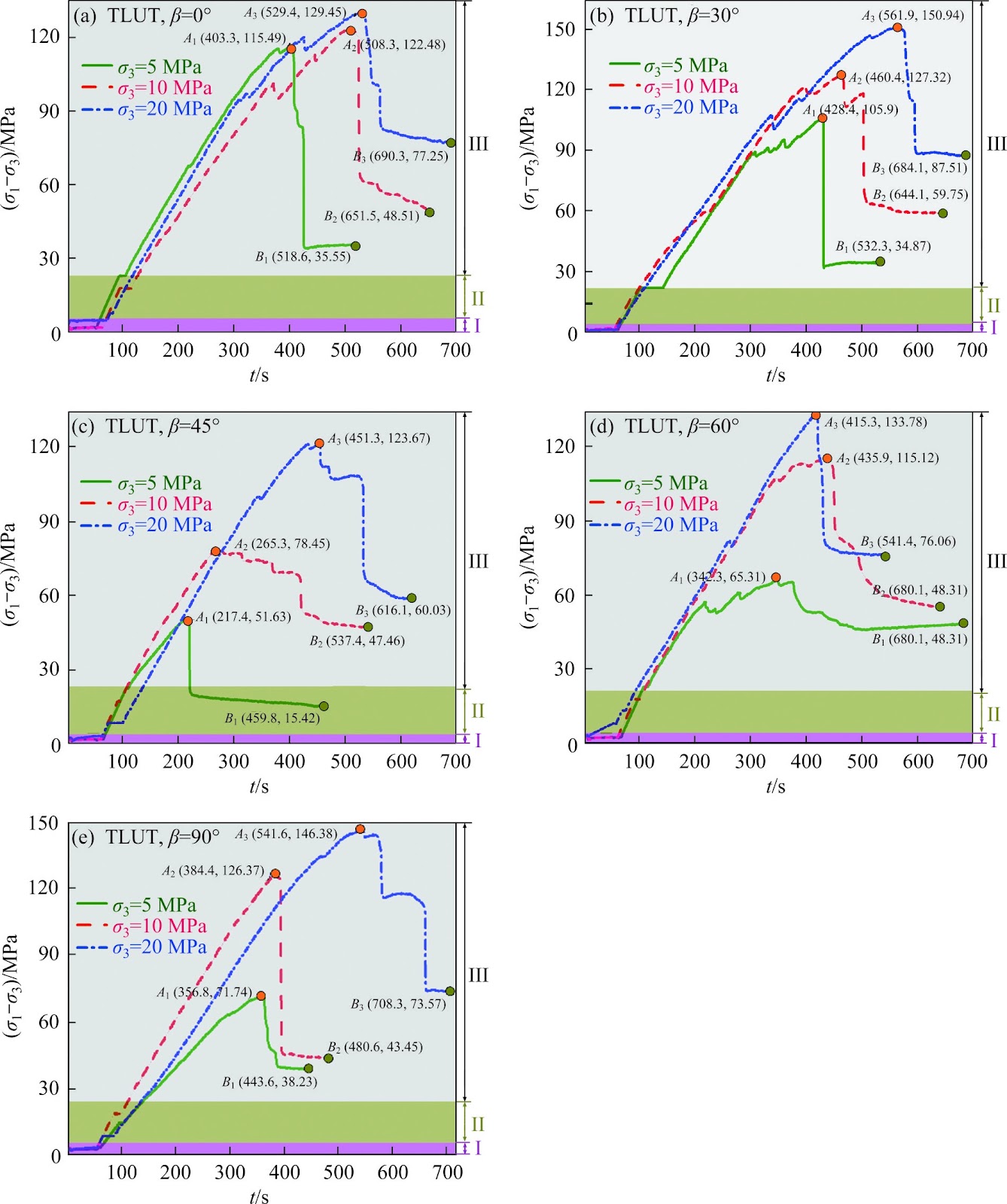
Rock residual strength, as an important input parameter, plays an indispensable role in proposing the reasonable and scientific scheme about stope design, underground tunnel excavation and stability evaluation of deep chambers. Therefore, previous residual strength models of rocks established were reviewed. And corresponding related problems were stated. Subsequently, starting from the effects of bedding and whole life-cycle evolution process, series of triaxial mechanical tests of deep bedded s
Federated model with contrastive learning and adaptive control variates for human activity recognition
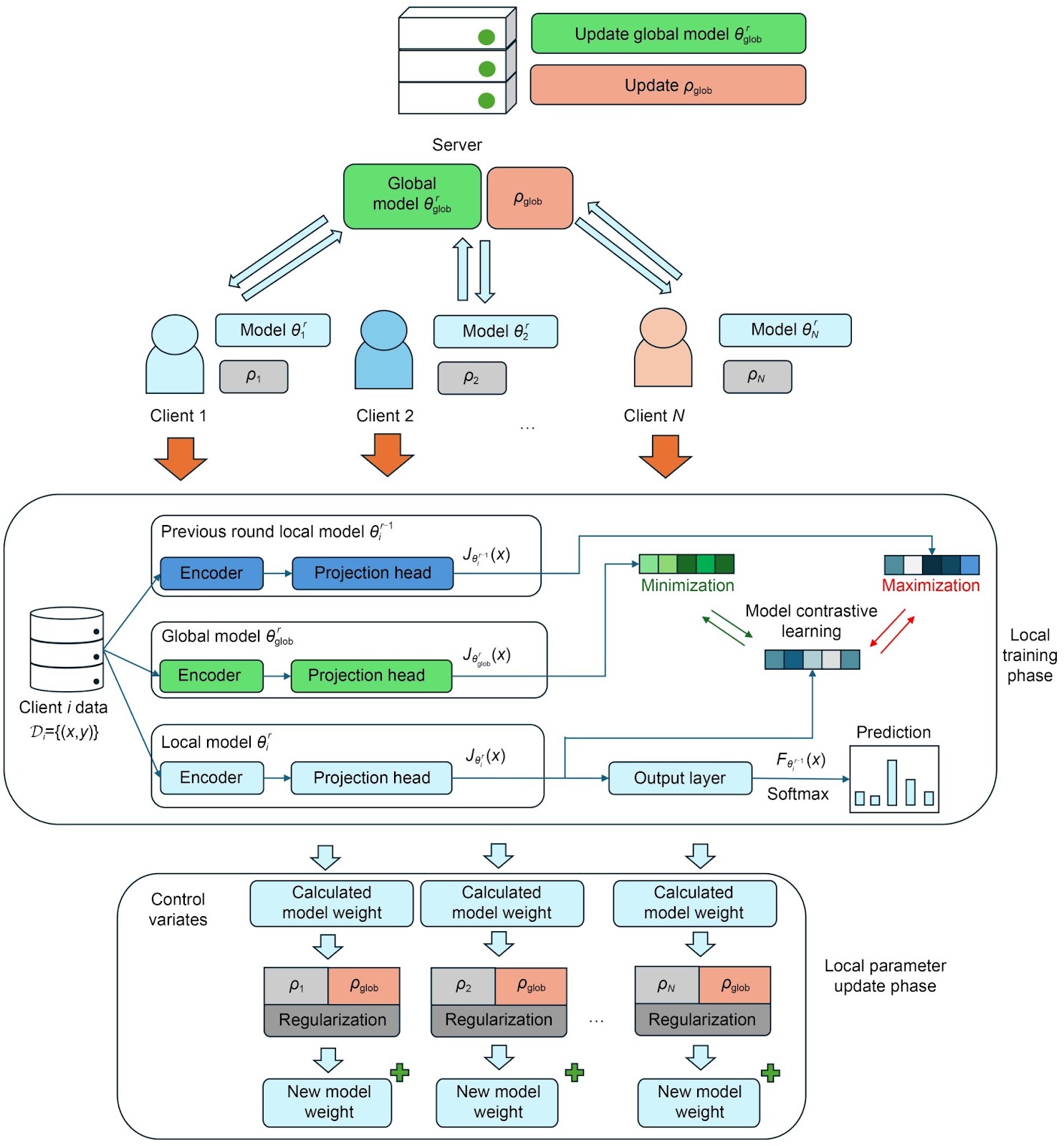
Recent attention to privacy issues demands a communication-safe method for training human activity recognition (HAR) models on client activity data. Federated learning (FL) has become a compelling technique to facilitate model training between the server and clients while preserving data privacy. However, classical FL methods often assume independent and identically distributed (IID) data among clients. This assumption does not hold true in practical scenarios. Human activity in real-world scena