SinoTechIntel Academic Portal
πŸ›οΈ Indexed Academic JournalImpact Factor: 3.8 (Q1 - Elsevier)Original: δΈ­ε›½εŒ–ε­¦ε·₯程学ζŠ₯ (θ‹±ζ–‡η‰ˆ)

Chinese Journal of Chemical Engineering

Access authentic peer-reviewed engineering methodologies, experimental datasets, and scientific literature published in this journal on SinoTechIntel.

Total Research Papers: 98
Access: 100% Free Open Access
Browse by Publication Year & VolumeReset All Filters βœ•

Published Research PapersFiltered: Year 2023 β€’ Vol. 32 β€’ Issue 1

Showing 3 of 98 peer-reviewed papers with full Graphical Abstracts.

Original ResearchVol. 32, Issue 1 β€’ pp. 652-664DOI: 10.1016/j_cjche_144878052β€’ Jan 19, 2023

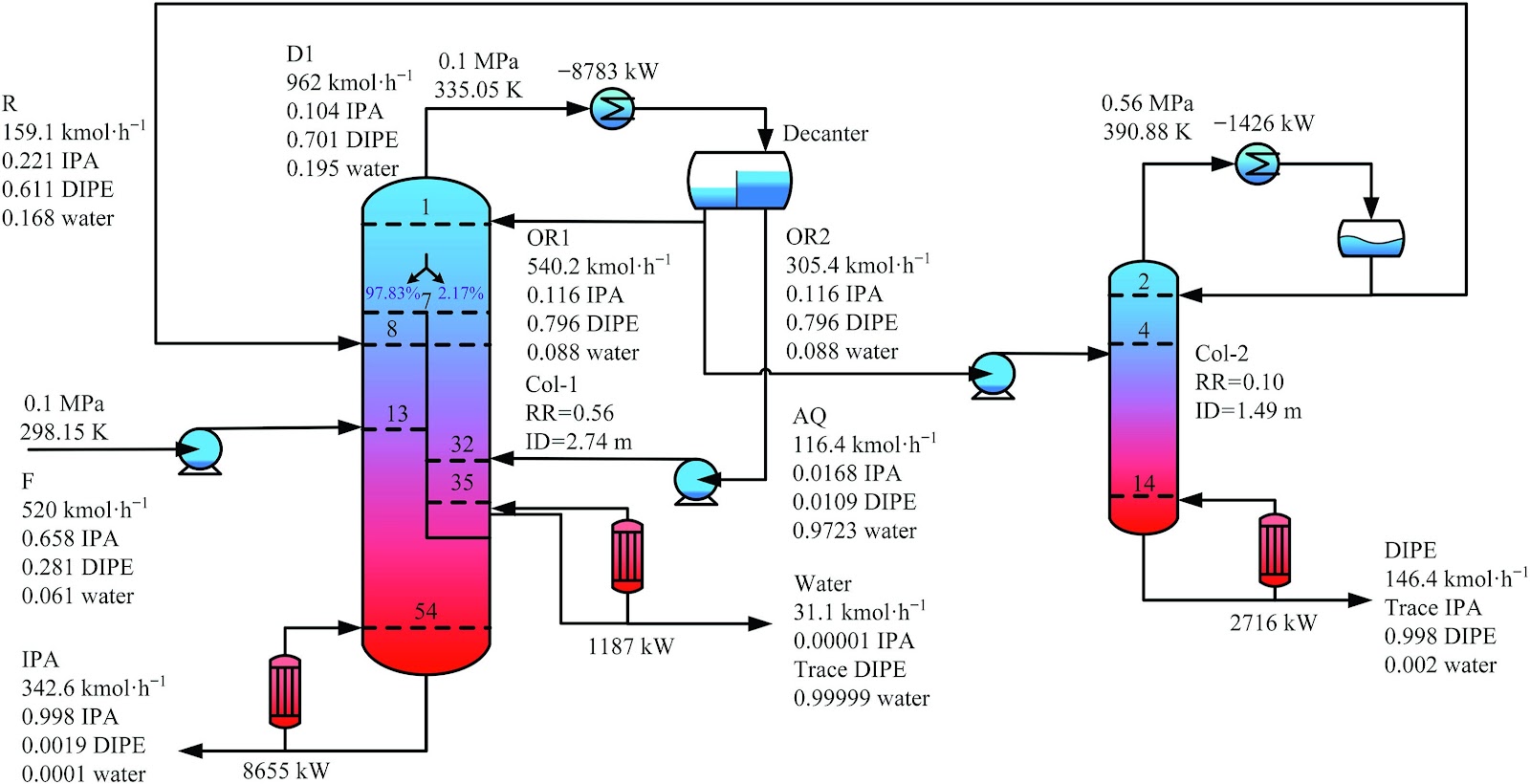
Energy-saving design and optimization of pressure-swing-assisted ternary heterogenous azeotropic distillations

Authors: Lianjie Wu, Kun Lu, Qirui Li, Lianghua Xu, Yiqing Luo, Xigang Yuan

A huge amount of energy is always consumed to separate the ternary azeotropic mixtures by distillations. The heterogeneous azeotropic distillation and the pressure-swing distillation are two kinds of effective technologies to separate heterogeneous azeotropes without entrainer addition. To give better play to the synergistic energy-saving effect of these two processes, a novel pressure-swing-assisted ternary heterogeneous azeotropic distillation (THAD) process is proposed firstly. In this process, the ternary heterogeneous azeotrope is decanted into two liquid phases before being refluxed into the azeotropic distillation column to avoid the aqueous phase remixing, and three columns' pressures are modified to decrease the flowrates of the recycle streams. Then the dividing wall column and heat integration technologies are introduced to further reduce its energy consumption, and the pressure-swing-assisted ternary heterogeneous azeotropic dividing-wall column and its heat integration structure are achieved. A genetic algorithm procedure is used to optimize the proposed processes. The design results show that the proposed processes have higher energy efficiencies and lower CO2 emissions than the published THAD process.
Energy-saving design and optimization of pressure-swing-assisted ternary heterogenous azeotropic distillations
Graphical Abstract
Original ResearchVol. 32, Issue 1 β€’ pp. 448-460DOI: 10.1016/j_cjche_144876270β€’ Jan 8, 2023

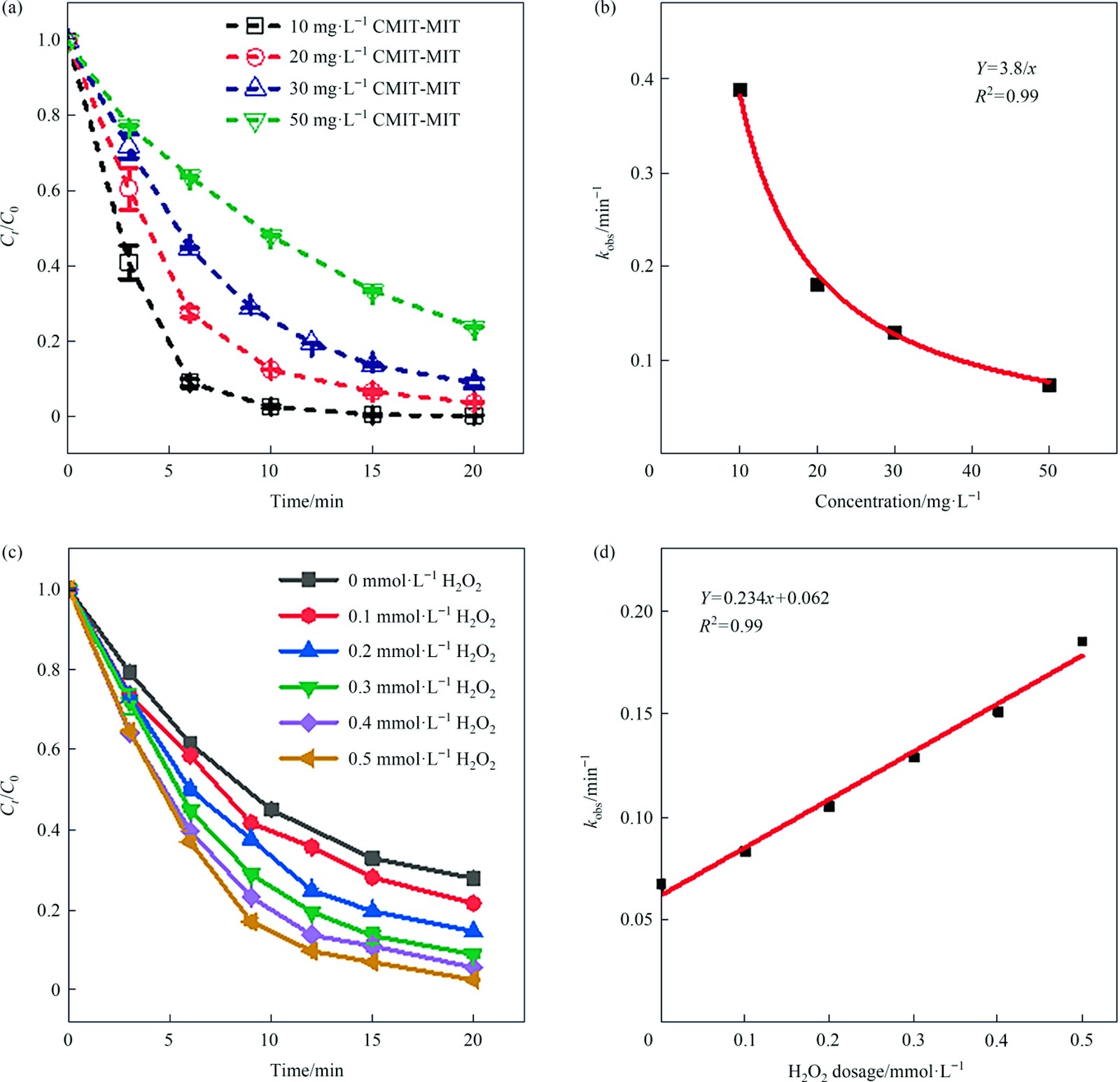
Removal of kathon by UV-C activated hydrogen peroxide: Kinetics, mechanisms, and enhanced biodegradability assessment

Authors: Jinzhi Cui, Guiqiao Wang, Xing Rong, Wensu Gao, Yaxin Lu, Yawen Luo, Lichao Zhang, Zhongfa Cheng, Canzhu Gao

Kathon (CMI-MI), a mixture of 5-chloro-2-methyl-4-isothiazolin-3-one (CMI) and 2-methyl-4-isothiazolin-3-one (MI), was extensively used in industry as a nonoxidizing biocide or disinfectant. However, it would show adverse effects on aquatic life when it is discharged into surface water. In this study, the removal performance, parameter influence, degradation products and enhancement of subsequent biodegradation of CMI-MI in UV/H2O2 system were systematically investigated. The degradation rate of CMI-MI could reach 90% under UV irradiation for 20 min when the dosage of H2O2 was 0.3 mmolΒ·L–1. The DOC (dissolved organic carbon) mineralization rate of CMI-MI could reach 35% under certain conditions ([H2O2] = 0.3 mmolΒ·L–1, UV irradiation for 40 min). kobs was inversely proportional to the concentration of CMI-MI and proportional to the concentration of H2O2. The degradation rate of CMI-MI was almost unchanged in the pH range from 4 to 10. Except the presence of CO3^2- inhibited the removal rate of CMI-MI, SO4^2-, Cl-, NO3-, and NH4+ did not interfere with the degradation of CMI-MI in the system. It was found that UV/H2O2 system had lower energy consumption and more economic advantage compared with UV/PS system by comparing the EEO (electric energy per order) values under the same conditions. Two main organic products were identified, namely HCOOH and CH3NH2. There's also the formation of Cl- and SO4^2-. After UV and UV/H2O2 photolysis, the biochemical properties of CMI-MI solution were obviously improved, especially the UV/H2O2 treatment effect was better, indicating that UV/H2O2 technology is expected to combine with biotechnology to remove CMI-MI effectively and environmentally friendly from wastewater.

Removal of kathon by UV-C activated hydrogen peroxide: Kinetics, mechanisms, and enhanced biodegradability assessment
Graphical Abstract
Original ResearchVol. 32, Issue 1 β€’ pp. 856-868DOI: 10.1016/j_cjche_144878520β€’ Jan 5, 2023

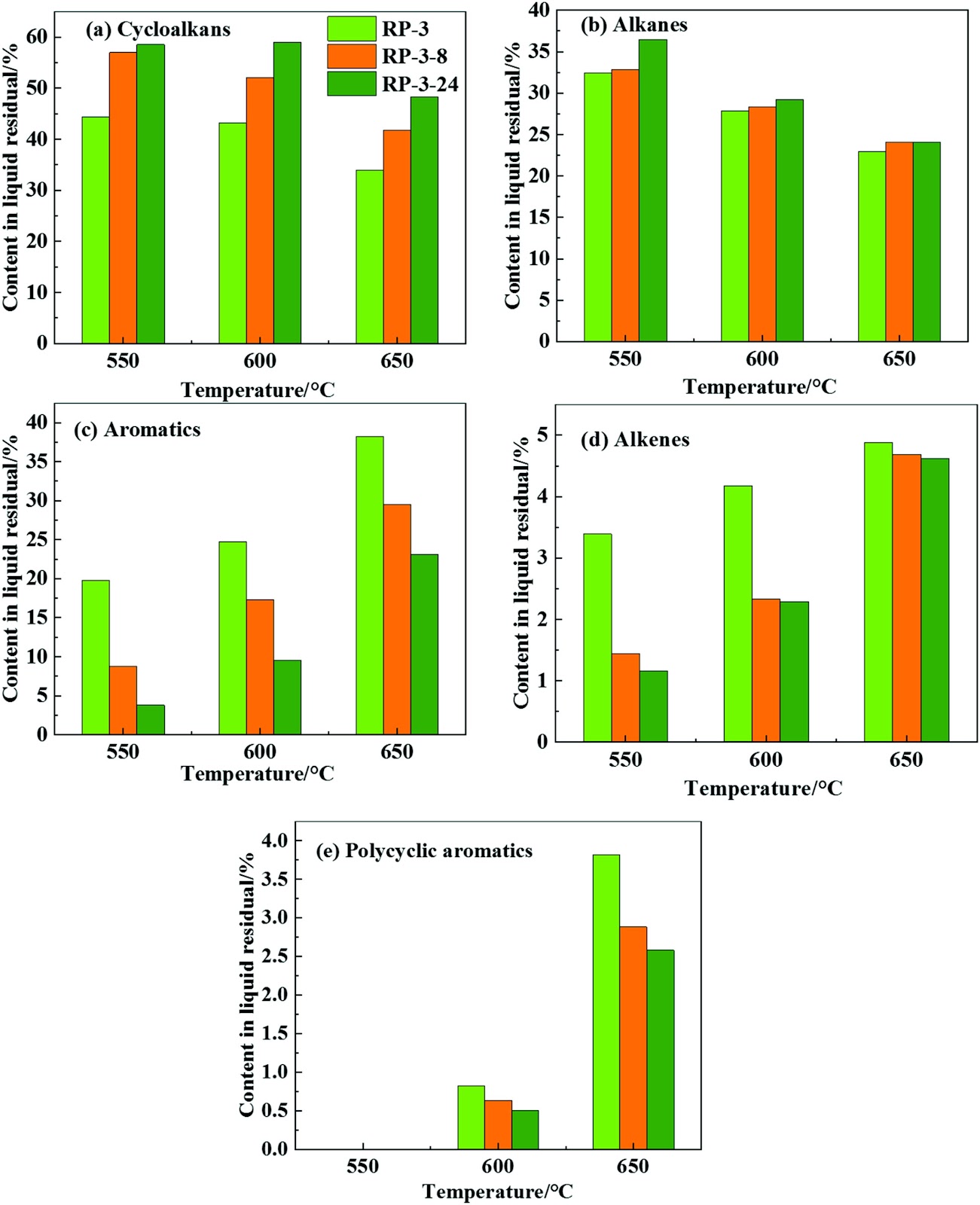
Relationship between hydrogenation degree and pyrolysis performance of jet fuel

Authors: Qing Liu, Tinghao Jia, Lun Pan, Jijun Zou, Xiangwen Zhang

Understanding the relationship between the chemical composition and pyrolysis performance of endothermic hydrocarbon fuel (EHF) is of great significance for the design and optimization of advanced EHFs. In this work, the effect of deep hydrogenation on the pyrolysis of commercial RP-3 is investigated. Fuels with different hydrogenation degrees were obtained by the partially and completely catalytic hydrogenation and their pyrolysis performances were investigated using an apparatus equipped with an electrically heated tubular reactor. The results show that with the increase of hydrogenation degree, fuel conversion almost remains constant during the pyrolysis process (500e650 Β°C, 4 MPa); however, the heat sink increases slightly, and the anti-coking performance significantly improves, which are highly related to their H/C ratios. Detailed characterisations reveal that the difference of the pyrolysis performance can be ascribed to the content of aromatics and cycloalkanes: the former are prone to initiate secondary reactions to form coking precursors, while the latter could act as the hydrogen donor and release hydrogen, which will terminate the radical propagation reactions and suppress the coke deposition. This work should provide the guidance for upgrading EHFs by modulating the composition of EHFs.

Relationship between hydrogenation degree and pyrolysis performance of jet fuel
Graphical Abstract