SinoTechIntel Academic Portal
🏛️ Indexed Academic Journal

China Foundry

Access authentic peer-reviewed engineering methodologies, experimental datasets, and scientific literature published in this journal on SinoTechIntel.

Total Research Papers: 75
Access: 100% Free Open Access
Browse by Publication Year & VolumeReset All Filters ✕

Published Research PapersFiltered: Year 2025 • Vol. 22 • No. 2

Showing 2 of 75 peer-reviewed papers with full Graphical Abstracts.

Original ResearchVol. 22, No. 2 • pp. 231-238DOI: 10.1007/s41230-024-3173-zJan 15, 2025

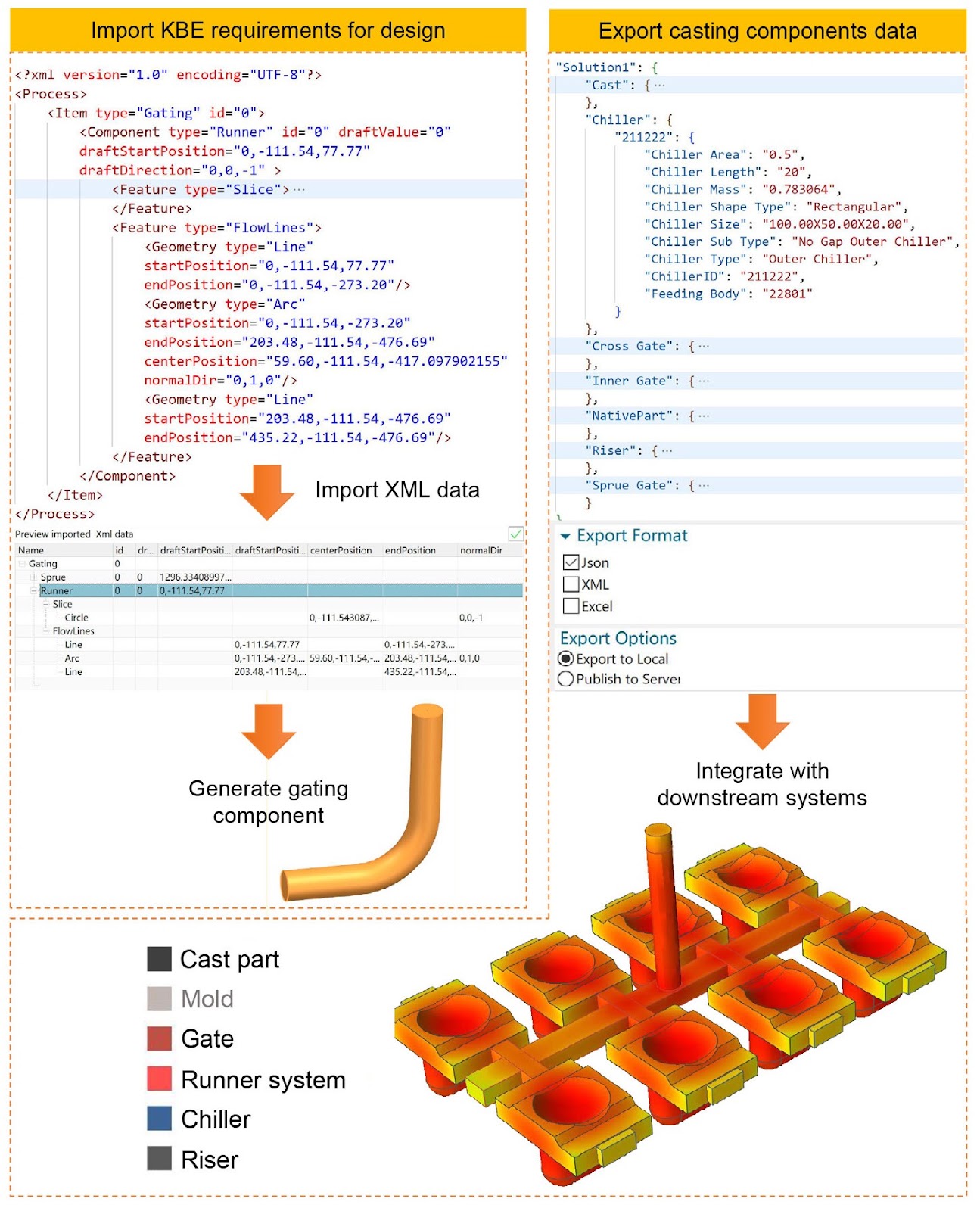
Contextual design and real-time verification for agile casting design

Authors: Dong Xiang, Chu-hao Zhou, Xuan-pu Dong, Shu-ren Guo, Yan-song Ding, Hua-tang Cao

In the foundry industries, process design has traditionally relied on manuals and complex theoretical calculations. With the advent of 3D design in casting, computer-aided design (CAD) has been applied to integrate the features of casting process, thereby expanding the scope of design options. These technologies use parametric model design techniques for rapid component creation and use databases to access standard process parameters and design specifications. However, 3D models are currently still created through inputting or calling parameters, which requires numerous verifications through calculations to ensure the design rationality. This process may be significantly slowed down due to repetitive modifications and extended design time. As a result, there are increasingly urgent demands for a real-time verification mechanism to address this issue. Therefore, this study proposed a novel closed-loop model and software development method that integrated contextual design with real-time verification, dynamically verifying relevant rules for designing 3D casting components. Additionally, the study analyzed three typical closed-loop scenarios of agile design in an independent developed intelligent casting process system. It is believed that foundry industries can potentially benefit from favorably reduced design cycles to yield an enhanced competitive product market.
Contextual design and real-time verification for agile casting design
Graphical Abstract
Original ResearchVol. 22, No. 2 • pp. 222-230DOI: 10.1007/s41230-025-3135-0Jan 15, 2025

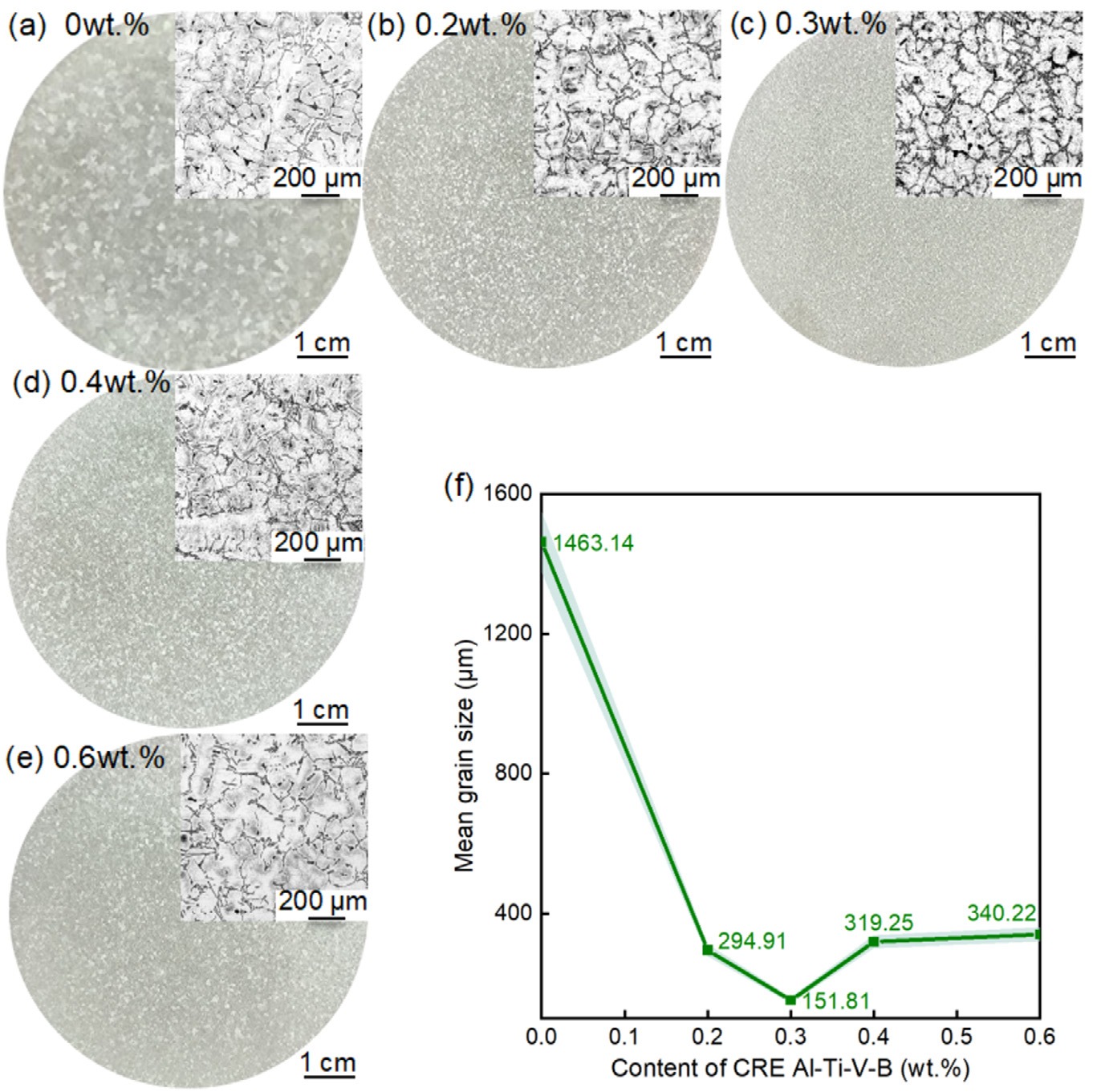
Refinement of A356 alloy using continuous rheological extrusion Al-Ti-V-B master alloy

Authors: Hong-fei Jia, Guang-zong Zhang, Shuo Zhang, Da Teng, Qing He, Jun-wen Li, Ren-guo Guan

Based on thermodynamic calculations and continuous rheological extrusion (CRE) technology, Al-Ti-V-B master alloys were designed and prepared. The morphology and the distribution of the refined phases in the master alloys were analyzed by XRD, SEM, and TEM. The effects of master alloy addition and holding time on the microstructure and mechanical properties of A356 alloy were investigated. Under the optimum refiner addition of 0.3wt.% and the holding time of 20 min, the average grain size of the refined A356 alloy is 151.8±9.11 μm, 89.62% lower than that of original A356 alloy. The tensile strength and elongation of as-cast A356 refined alloy are 196.11 MPa and 5.75%, respectively. After T6 treatment, the tensile strength and elongation of A356 refined alloy are 290.1 MPa and 3.09%, respectively. The fracture morphology is characterized by a predominance of along-crystal fracture with a small amount of through-crystal fracture, attributed to the refined grains. Finer grains promote crack path deflection and localized plastic deformation, enhancing energy dissipation and reducing the tendency for brittle fracture. This study provides a novel approach to improving the mechanical properties of A356 alloy through grain refinement using CRE Al-Ti-V-B master alloy.

Refinement of A356 alloy using continuous rheological extrusion Al-Ti-V-B master alloy
Graphical Abstract