SinoTechIntel Academic Portal
🏛️ Indexed Academic JournalImpact Factor: 3.8 (Q1 - Elsevier)Original: 中国化学工程学报 (英文版)

Chinese Journal of Chemical Engineering

Access authentic peer-reviewed engineering methodologies, experimental datasets, and scientific literature published in this journal on SinoTechIntel.

Total Research Papers: 98
Access: 100% Free Open Access
Browse by Publication Year & VolumeReset All Filters ✕

Published Research PapersFiltered: Year 2023 • Vol. 32 • Issue 11

Showing 3 of 98 peer-reviewed papers with full Graphical Abstracts.

Original ResearchVol. 32, Issue 11 • pp. 822-834DOI: 10.1016/j_cjche_144878408Nov 24, 2023

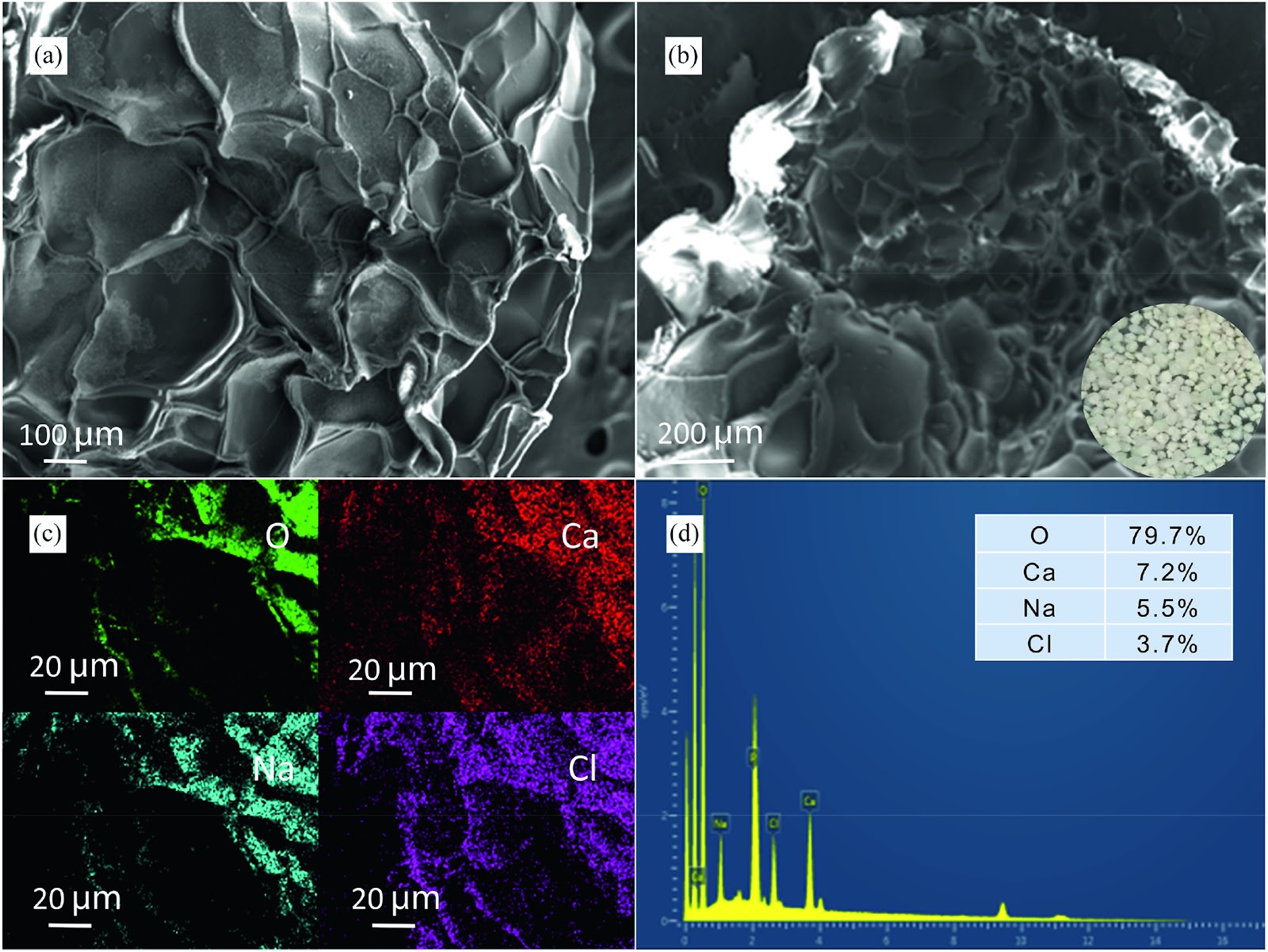
Selective adsorption of tetracycline by b-CD-immobilized sodium alginate aerogel coupled with ultrafiltration for reclaimed water

Authors: Xi Quan, Jun Zhang, Linlin Yin, Wei Zuo, Yu Tian

In this work, a novel composite material based on b-cyclodextrin-immobilized sodium alginate aerogel (b-CD/NaAlg) was developed utilizing cross-linker of epichlorohydrin and applied as an adsorbent to remove tetracycline antibiotics from reclaimed wastewater. A series of characterizations were utilized to confirm the successful synthesis of the adsorbent and this b-CD/NaAlg presented a three-dimensional network at the nanoscale or microscale. Under optimal conditions (pH ¼ 4, t ¼ 8 h, b-CD: NaAlg ¼ 9, adsorbent dosage ¼ 1.5 g$L-1), the maximum removal rate of b-CD/NaAlg to tetracycline was 70%. The adsorption behavior of tetracycline on b-CD/NaAlg conformed to the Freundlich isotherm model (R2 ¼ 0.9977) and the pseudo-second-order kinetic model (R2 ¼ 0.9993). Moreover, the adsorbent still removed 55.3% of tetracycline after five cycles. Specially, the adsorbent was integrated with ultrafiltration to adsorb tetracycline antibiotics from simulated reclaimed wastewater, and the removal rate of tetracycline reached 78.9% within 2 h. The existence of Cr (VI) had a negligible impact on tetracycline removal, while the presence of humic acid exhibited a promoting effect. The possible adsorption mechanisms were also elucidated through X-ray photoelectron spectroscopy and density functional theory analysis. In summary, b-CD/NaAlg represents an environmentally friendly, efficient, and sustainable adsorbent for removing tetracycline antibiotics from reclaimed water.
Selective adsorption of tetracycline by b-CD-immobilized sodium alginate aerogel coupled with ultrafiltration for reclaimed water
Graphical Abstract
Original ResearchVol. 32, Issue 11 • pp. 618-630DOI: 10.1016/j_cjche_144878042Nov 13, 2023

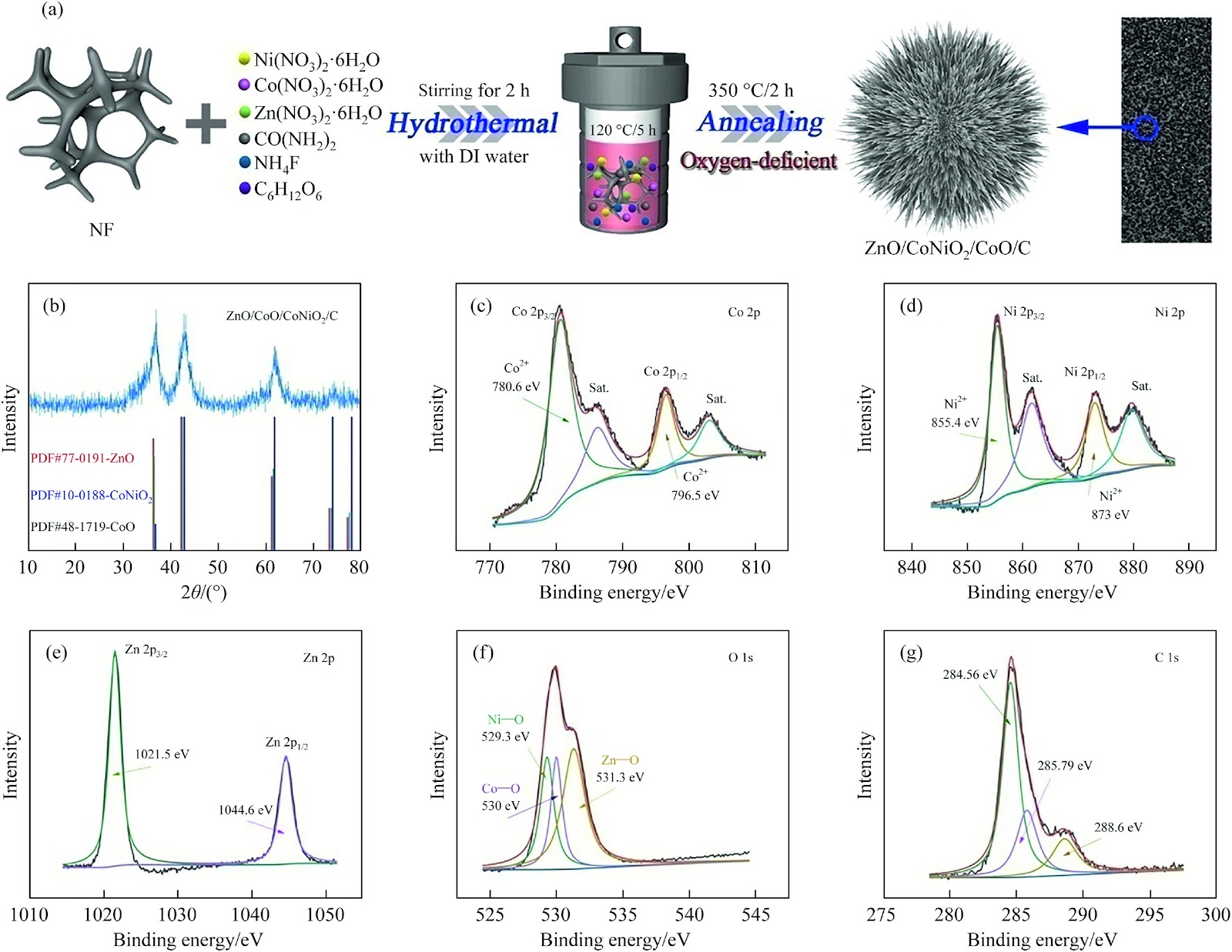
An effective strategy of constructing multi-metallic oxides of ZnO/CoNiO2/CoO/C microflowers for improved supercapacitive performance

Authors: Wei Guo, Yan Zhang, Xiaxin Lei, Shuang Wang

In this work, a new ZnO/CoNiO2/CoO/C metal oxides composite is prepared by cost-effective hydrothermal method coupled with annealing process under N2 atmosphere. Notably, the oxidation-defect annealing environment is conducive to both morphology and component of the composite, which flower-like ZnO/CoNiO2/CoO/C is obtained. Benefited from good chemical stability of ZnO, high energy capacity of CoNiO2 and CoO and good conductivity of C, the as-prepared sample shows promising electrochemical behavior, including the specific capacity of 1435 C·g−1 at 1 A·g−1, capacity retention of 87.3% at 20 A·g−1, and cycling stability of 90.5% for 3000 cycles at 5 A·g−1, respectively. Furthermore, the prepared ZnO/CoNiO2/CoO/C/NF//AC aqueous hybrid supercapacitors device delivers the best specific energy of 55.9 W·h·kg−1 at 850 W·kg−1. The results reflect that the as-prepared ZnO/CoNiO2/CoO/C microflowers are considered as high performance electrode materials for supercapacitor, and the strategy mentioned in this paper is benefit to prepare mixed metal oxides composite for energy conversion and storage.

An effective strategy of constructing multi-metallic oxides of ZnO/CoNiO2/CoO/C microflowers for improved supercapacitive performance
Graphical Abstract
Original ResearchVol. 32, Issue 11 • pp. 414-426DOI: 10.1016/j_cjche_144875803Nov 2, 2023

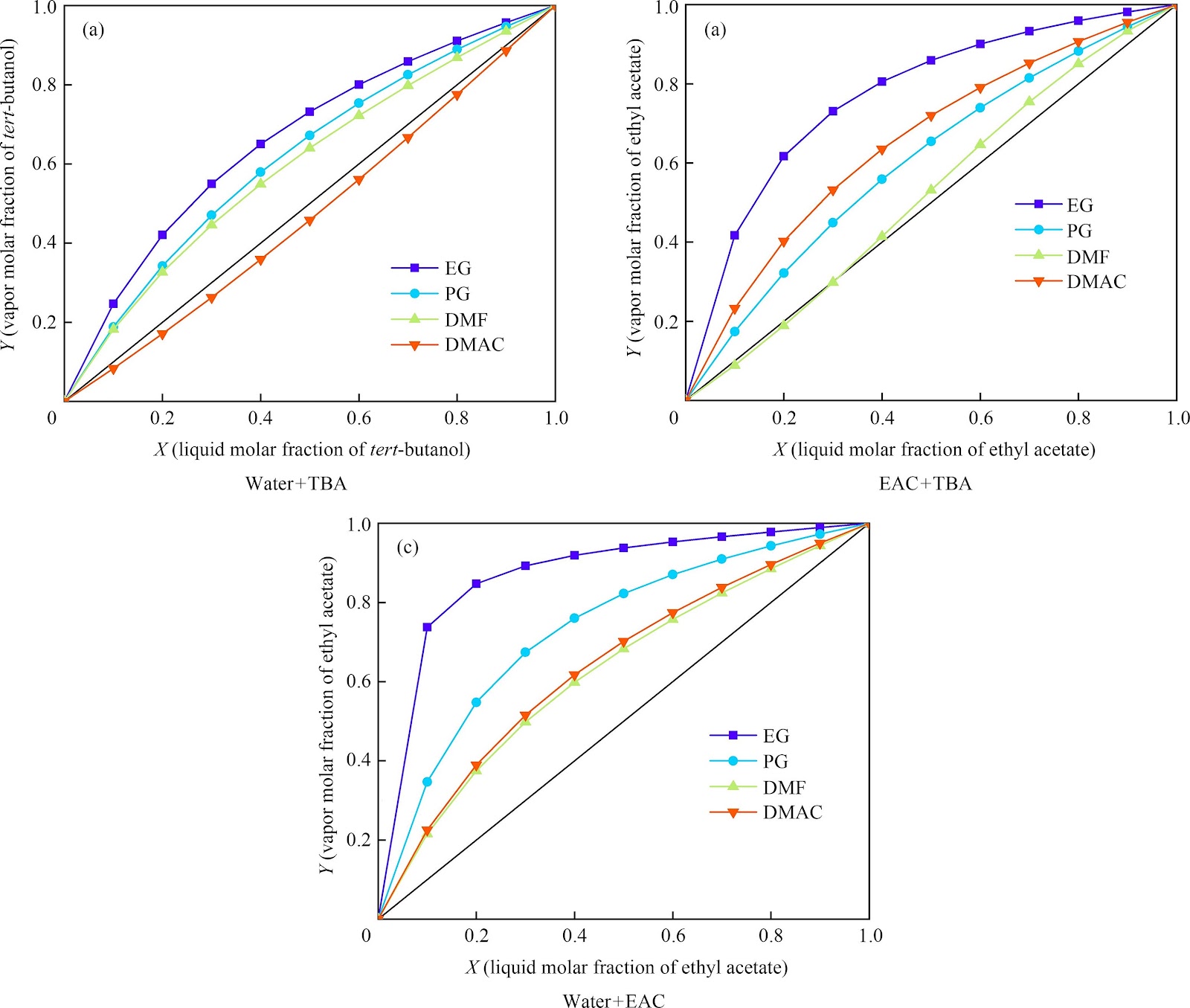
Environmental, economic and exergy analysis of separation of ternary azeotrope by variable pressure extractive distillation based on multi-objective optimization

Authors: Peizhe Cui, Jiafu Xing, Chen Li, Mengjin Zhou, Jifu Zhang, Yasen Dai, Limei Zhong, Yinglong Wang

In this work, the ternary azeotrope of tert-butyl alcohol/ethyl acetate/water is separated by extractive distillation (ED) to recover the available constituents and protect the environment. Based on the conductor like shielding model and relative volatility method, ethylene glycol was selected as the extractant in the separation process. In addition, in view of the characteristic that the relative volatility between components changes with pressure, the multi-objective optimization method based on nondominated sorting genetic algorithm II optimizes the pressure and the amount of solvent cooperatively to avoid falling into the optimal local solution. Based on the optimal process parameters, the proposed heat-integrated process can reduce the gas emissions by 29.30%. The heat-integrated ED, further coupled with the pervaporation process, can reduce gas emission by 42.36% and has the highest exergy efficiency of 47.56%. In addition, based on the heat-integrated process, the proposed two heat pump assisted heat-integrated ED processes show good economic and environmental performance. The double heat pump assisted heat-integrated ED can reduce the total annual cost by 28.78% and the gas emissions by 55.83% compared with the basis process, which has a good application prospect. This work provides a feasible approach for the separation of ternary azeotropes.

Environmental, economic and exergy analysis of separation of ternary azeotrope by variable pressure extractive distillation based on multi-objective optimization
Graphical Abstract
Chinese Journal of Chemical Engineering | SinoTechIntel Research Archive | SinoTechIntel