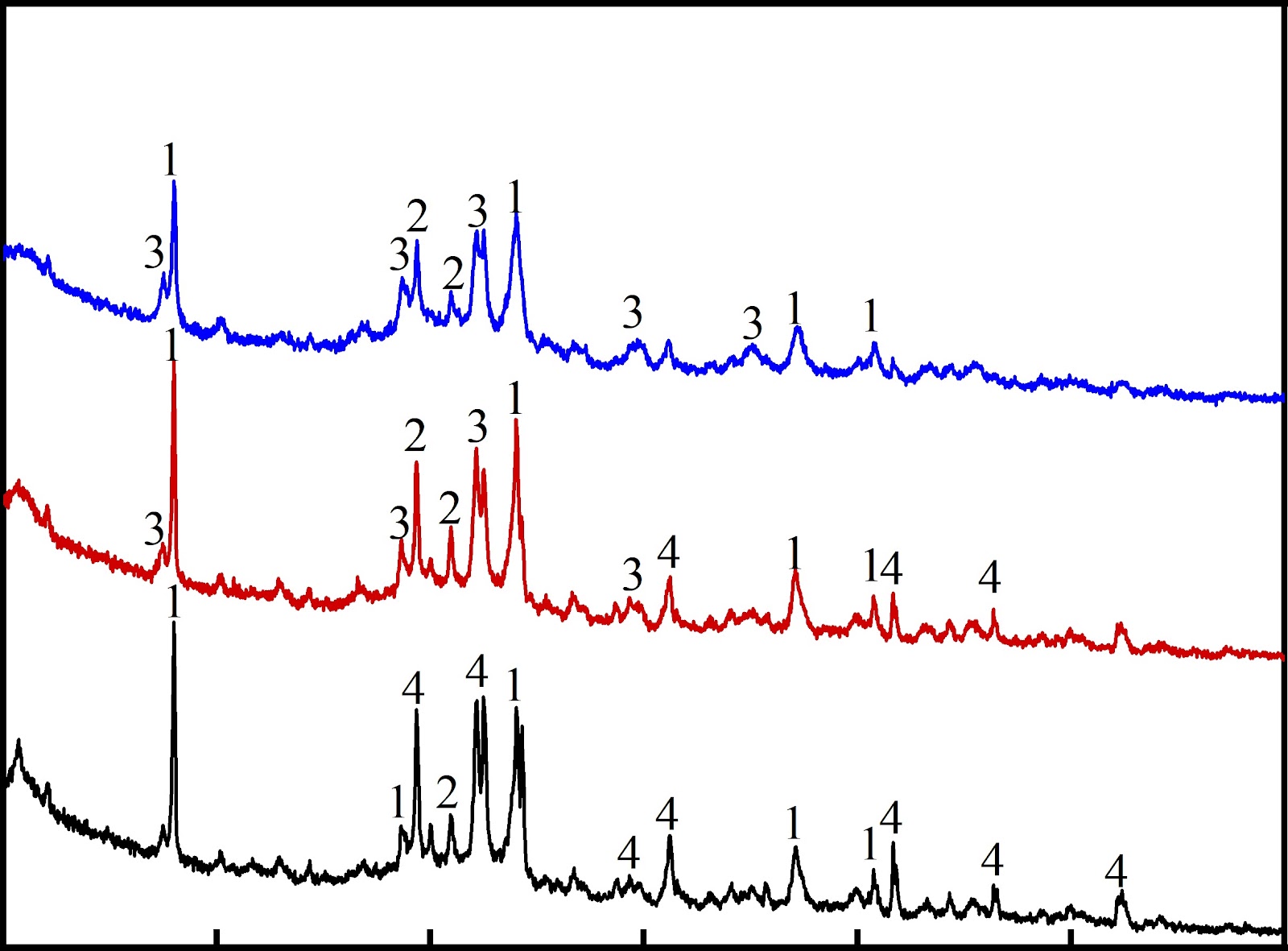
Key Takeaways & Executive Findings
- •• AOD slag can be effectively vitrified with 15wt% bauxite as an alumina source, resulting in a stable glass phase. • The vitrified product exhibits excellent cementitious properties, including 88.7 MPa compressive strength and soundness below 0.05 mm. • The robust matrix immobilizes Cr ions, reducing total chromium leaching to 0.09 mg/L, well below the 0.15 mg/L regulatory limit. • Carbonation reactions inhibit Cr3+ to Cr6+ conversion, enhancing environmental safety and sustainability.
Abstract
The utilization of bauxite-vitrified argon–oxygen decarburization (AOD) slag as a supplementary cementitious material is explored as an alternative approach for recycling unmanageable AOD slag and reducing the CO2 emission levels. The results demonstrate that AOD slag can be effectively vitrified by incorporating 15wt% bauxite as the alumina source, facilitating the formation of a stable glass phase. The resulting vitrified product exhibits excellent properties, such as initial and final setting times of 337 and 437 min, respectively, good soundness (<0.05 mm), and a compressive strength of 88.7 MPa. In particular, the robust cementitious matrix effectively encapsulates and immobilizes the Cr ions, thus reducing the total chromium leaching concentration to 0.09 mg/L, which is significantly below the regulatory limit (0.15 mg/L) specified by the HJ/T 301—2007 industrial standard. The leached Cr3+ ions can be easily oxidized in a liquid environment with a pH > 11 at a positive oxidation–reduction potential. The carbonation reaction inhibits the conversion from trivalent chromium to hexavalent chromium, thereby lowering its concentration. These findings suggest that vitrifying AOD slag using Al2O3-rich solid waste as a supplementary cementitious material is a promising and environmentally sustainable method.
1. Introduction
Concrete is one of the most prevalent building materials worldwide, whose annual global consumption is projected to exceed 20 billion tons [1]. However, its widespread use entails significant environmental costs as it leads to high CO2 emission levels. The manufacturing of Portland cement, a key binder in concrete, is the primary source of CO2 emissions associated with concrete production. Cement production is energy-intensive and chemically emissive: Approximately 0.8–0.9 t of CO2 is released per ton of produced cement. Decreasing CO2 emission levels is vital for meeting China’s carbon peak and neutrality goals.
Supplementary cementitious materials (SCMs) are predominantly sourced from abundant industrial solid waste resources [2–4]. The incorporation of SCMs presents a promising approach for reducing CO2 emission levels [5–7] and addressing the issue of industrial solid waste management [8]. The analysis of ground-granulated blast-furnace slag (GGBFS) and carbonated steel slag in concrete manufacturing has gained significant acceptance [9–13]. Majhi et al. [14] found that a combination of 40wt% GGBFS and 50wt% recycled aggregate concrete (RAC) yields a dense, compact cement microstructure with exceptional physical characteristics. Moreover, researchers [15–16] have demonstrated that the inclusion of an appropriate quantity of CaO in RAC leads to enhanced durability and physical properties. Additionally, Cuesta [17–18] successfully formulated self-compacting concrete (SCC) blends using GGBFS. To avoid failures caused by the transverse plastic strain, it is advisable to determine the RCA content based on the serviceability conditions [19]. Furthermore, a regression model was developed to estimate the SCC performance [20]. This model is especially useful for sustainable concrete mix designs in which high proportions of recycled materials are used.
Argon–oxygen decarburization (AOD) slag is a byproduct of the stainless steel refining process, whose annual generation is approximately 10 million tons in China [21]. This slag is generally considered unusable because of its high chromium content and poor physical properties. Mechanical milling is considered a promising method for increasing the specific surface area of the AOD slag and enhancing its reactivity [22]. However, the process often results in high energy consumption and dust generation, in turn necessitating appropriate dust control systems and leading to increased operational costs. Chemical modification involves the addition of stabilizing agents to inhibit undesirable mineral-phase transformations, thereby improving the volume stability and hydration activity of the slag [23–24]. In carbonation treatment, the emitted CO2 is reacted with free CaO and other reactive components in the slag to form stable carbonates. However, the carbonation efficiency is often limited by the slow reaction kinetics and low CO2 diffusion rates, necessitating the optimization of process parameters such as temperature and pressure [25–26].
Loading authentic research manuscript (Pages 1–5)...
Shaowen Wu, Yanling Zhang, Shuai Zhang, Wei Ren, Zhi Sun (2025). Technical feasibility of bauxite-enhanced vitrification for utilizing AOD slag as a supplementary cementitious material. Journal of Mineral Metallurgy and Materials Science. https://doi.org/10.1007/s12613-025-3209-4
Research & Educational Purpose Only:The translations, structured abstracts, analytical annotations, and data reports provided by SinoTechIntel are intended exclusively for academic research, internal corporate R&D, and educational benchmarking. They do not constitute formal engineering, chemical safety, legal, or professional advice.
Copyright & Intellectual Property Notice: Original copyright of the underlying source articles and experimental data remains with the respective authors, institutions, and original publishing journals. SinoTechIntel claims intellectual property only over its proprietary translations, analytical syntheses, and AEO structured enhancements in accordance with international fair use and academic citation principles.
Frequently Asked Questions
What is AOD slag and why is it difficult to recycle?
AOD slag is a byproduct of stainless steel refining, generated in large quantities (about 10 million tons annually in China). It is difficult to recycle due to its high chromium content and poor physical properties, which limit its direct use in construction materials.
How does bauxite enhance the vitrification of AOD slag?
Adding 15wt% bauxite as an alumina source facilitates the formation of a stable glass phase during vitrification, improving the slag's reactivity and making it suitable as a supplementary cementitious material.
What are the key properties of the vitrified AOD slag cementitious material?
The vitrified product exhibits excellent properties, including initial and final setting times of 337 and 437 minutes, soundness below 0.05 mm, and a compressive strength of 88.7 MPa, making it comparable to high-performance concrete components.
How does the process immobilize chromium and reduce leaching?
The robust cementitious matrix encapsulates and immobilizes chromium ions, reducing total chromium leaching to 0.09 mg/L, which is below the regulatory limit of 0.15 mg/L. Carbonation reactions further inhibit the conversion of Cr3+ to Cr6+, enhancing environmental safety.
What are the environmental benefits of this method?
This approach not only provides a sustainable method for recycling unmanageable AOD slag but also reduces CO2 emissions by substituting Portland cement with a supplementary cementitious material, contributing to lower carbon footprint in concrete production.
Related Technical Papers & Translations
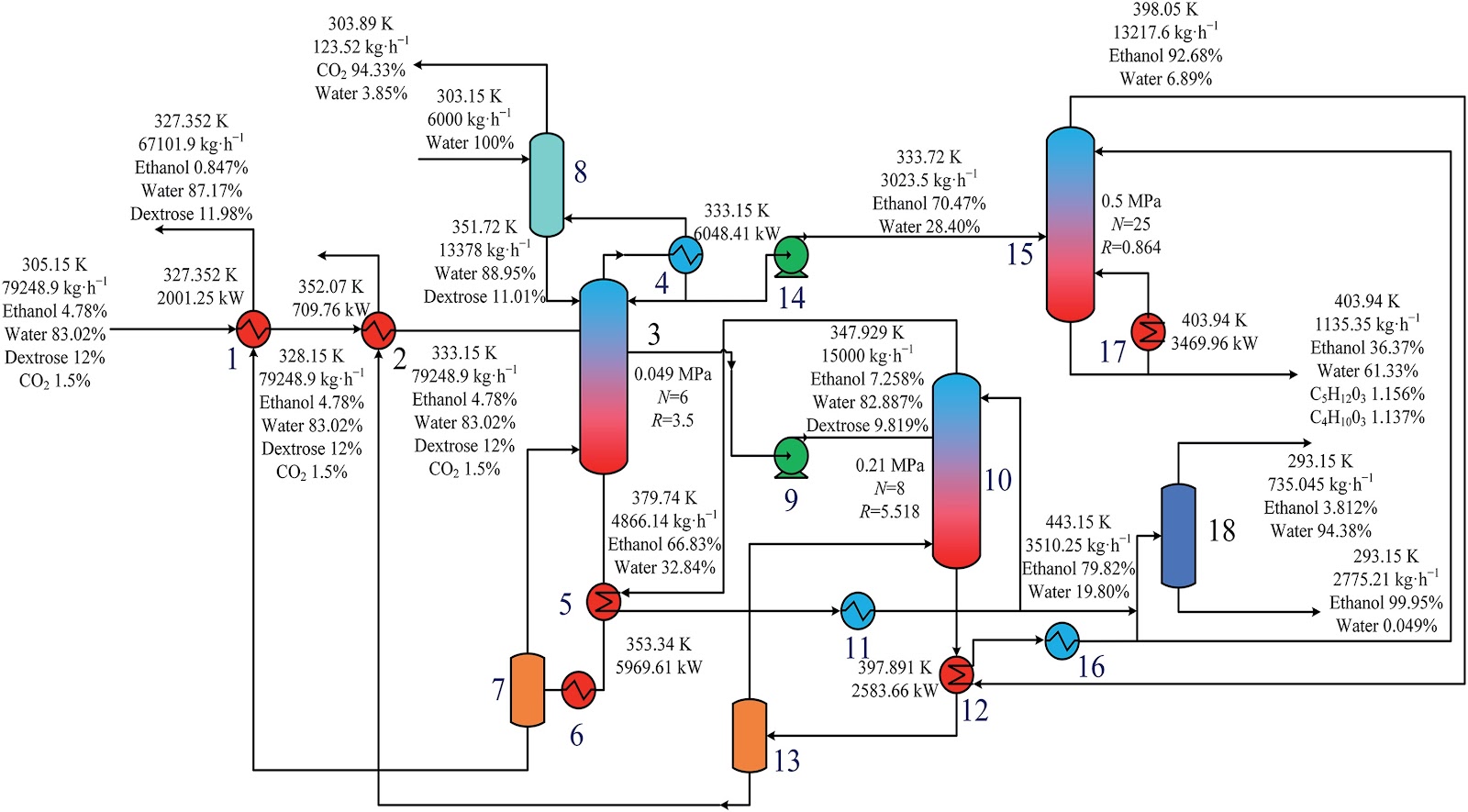
Design and optimization of a high-efficiency distillation process for cellulosic fuel ethanol integrated with thermal coupling and molecular sieve adsorption
To address the challenges of high energy consumption and prominent costs in the traditional three-columns distillation process for cellulosic fuel ethanol, a distillation—molecular sieve coupling separation process is proposed. This process integrates a three-column (crude distillation column, first distillation column, second distillation column) system with a 3A molecular sieve adsorption deep dehydration unit. A thermal coupling network is constructed via differential pressure design (steam from medium/high-pressure columns as mutual heat sources, reboiler liquid waste heat for feed preheating), and molecular sieve adsorption conditions are optimized. The study first performs a thermodynamic consistency test on the ethanol—water system, determines optimal non-random two-liquid (NRTL) model binary interaction parameters via experimental data regression for Aspen Plus simulation. Aiming at minimum total annual cost (TAC), Aspen Plus is used to optimize process parameters (theoretical tray number, feed location, reflux ratio, side-draw position, etc.). Economic analysis shows this process reduces CO2 emission costs by 27.56%, TAC by 15.58% (to 5.123 × 10⁶ USD·a-1), and increases ethanol purity to >99.6%, providing an effective solution for green, efficient separation.
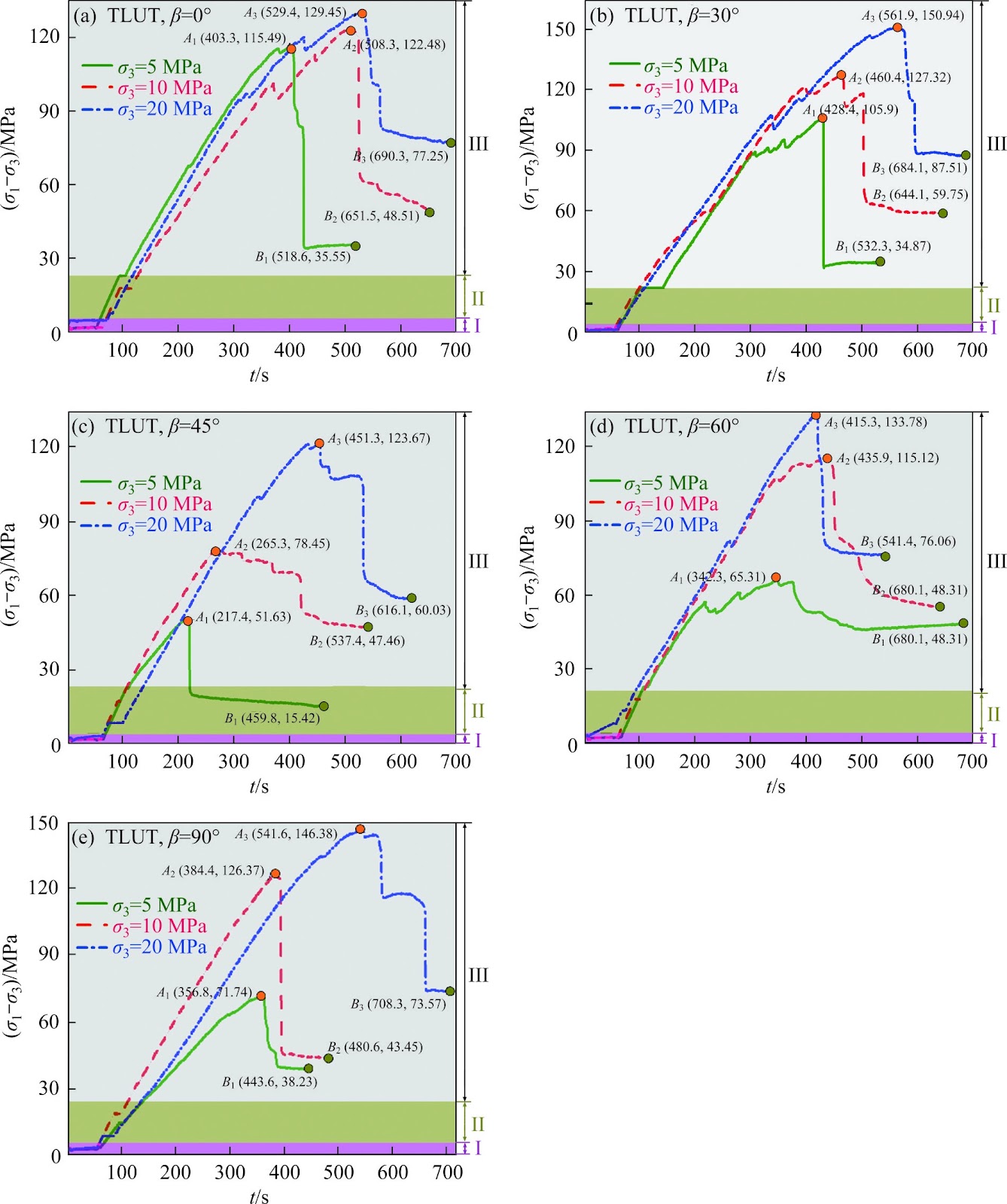
A cohesion loss model for determining residual strength of deep bedded sandstone
Rock residual strength, as an important input parameter, plays an indispensable role in proposing the reasonable and scientific scheme about stope design, underground tunnel excavation and stability evaluation of deep chambers. Therefore, previous residual strength models of rocks established were reviewed. And corresponding related problems were stated. Subsequently, starting from the effects of bedding and whole life-cycle evolution process, series of triaxial mechanical tests of deep bedded s
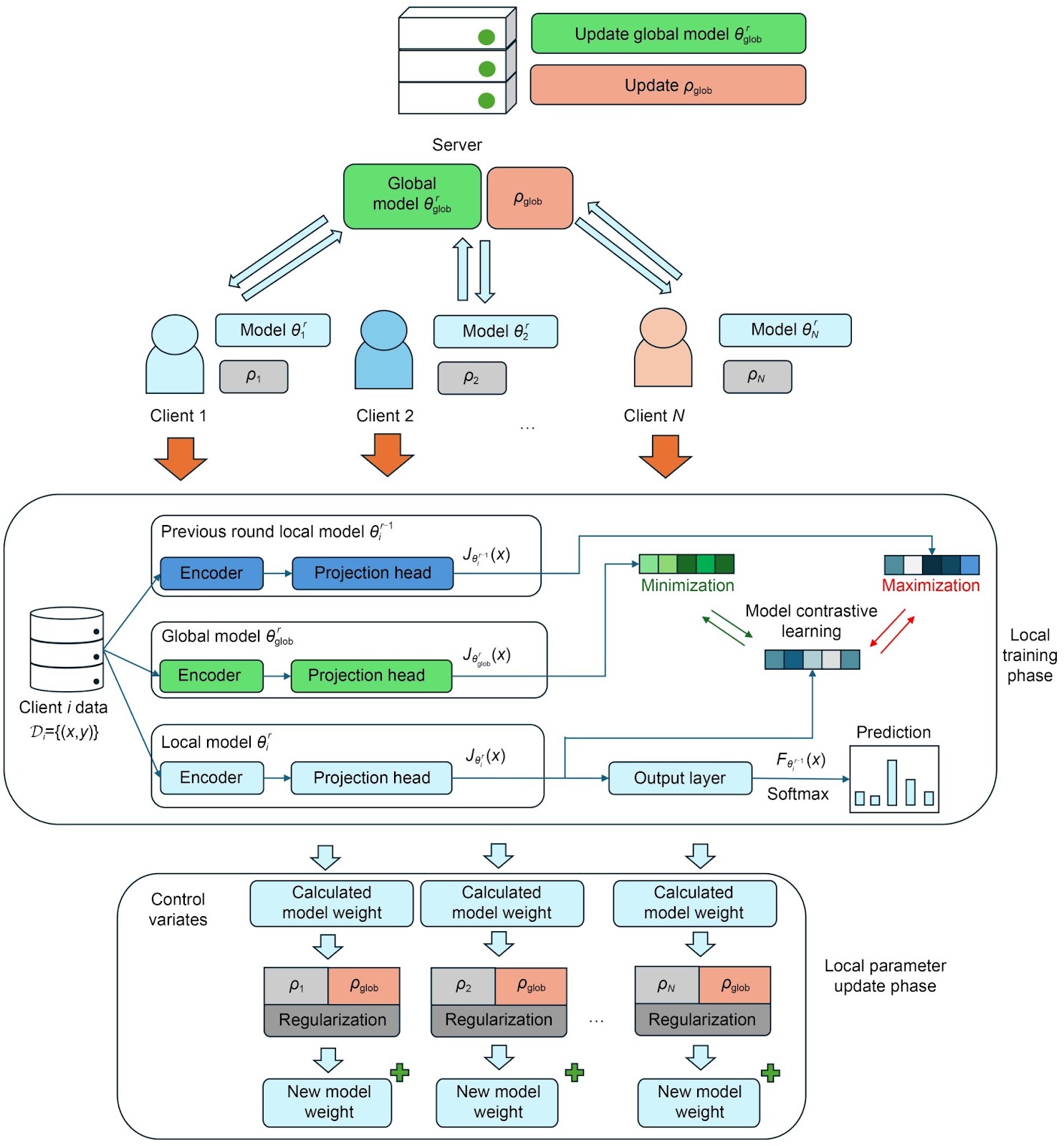
Federated model with contrastive learning and adaptive control variates for human activity recognition
Recent attention to privacy issues demands a communication-safe method for training human activity recognition (HAR) models on client activity data. Federated learning (FL) has become a compelling technique to facilitate model training between the server and clients while preserving data privacy. However, classical FL methods often assume independent and identically distributed (IID) data among clients. This assumption does not hold true in practical scenarios. Human activity in real-world scena