Key Takeaways & Executive Findings
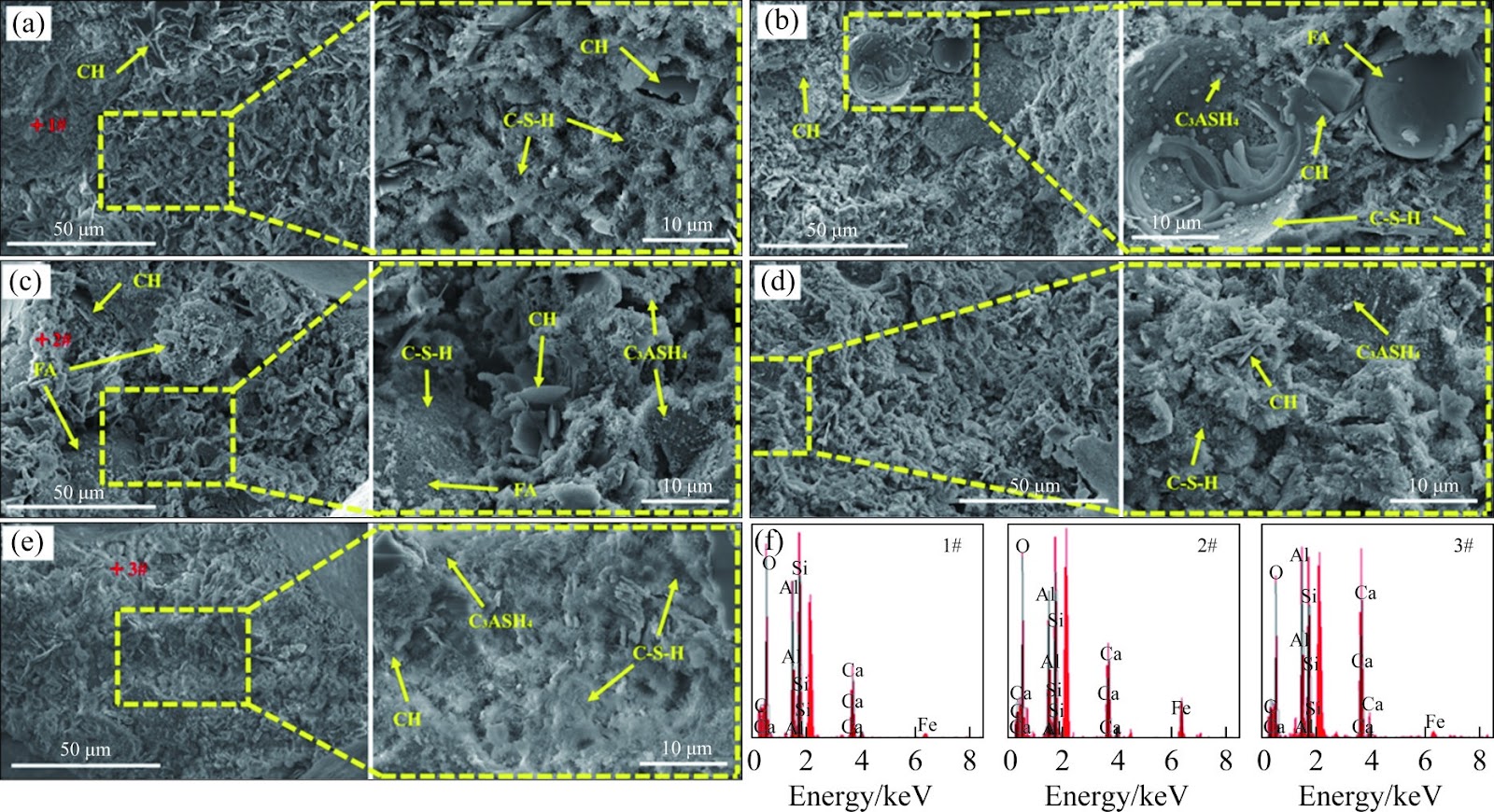
- •• A regression equation linking actual water content and mud-water separation rate enables efficient characterization of bauxite tailing slurry for downstream utilization. • Fly ash reduces workability and compressive strength of foam lightweight soil, while slag powder markedly enhances compressive strength (up to 58.54%) and improves long-term water stability and carbonation resistance. • Microstructural analyses (XRD, SEM-EDS, TG-DSC) reveal that fly ash decreases hydration degree, whereas slag powder optimizes pore structure and densifies the skeleton of the lightweight soil. • This approach offers a sustainable route for recycling bauxite tailings and industrial byproducts into construction materials, yielding socio-economic and environmental benefits.
Abstract
Bauxite tailing (BT) slurry has been generated and accumulated in large quantities, posing a threat to the green and sustainable development of the alumina industry. The regression equation between the actual water content and mud-water separation rate was established to achieve efficient resource utilization, and the feasibility of foam lightweight soil (FLS) prepared from BT was investigated. The effects of industrial waste residues (fly ash and slag powder) on the properties of FLS were studied. Meanwhile, the micro-mechanisms were revealed by XRD, SEM-EDS, and TG-DSC. The results revealed that fly ash reduced the workability and compressive strength of FLS. Slag powder can significantly enhance the compressive strength of FLS, which increased by 18.60%−23.26%, 17.07%−58.54% and 12.12%−52.12%, respectively. Besides, slag powder can improve the long-term water stability performance and enhance carbonation resistance. XRD and thermal analyses showed that adding fly ash decreased the hydration degree of FLS, leading to a decrease in the hydration products. Slag powder improved the pore structure and compacted the skeleton structure of FLS. This study would provide an effective way to realize the resource utilization of BT, fly ash, and slag powder, with certain socio-economic and environmental benefits.
1. Introduction
The expansion of the mining industry has brought many tailings [1, 2]. Bauxite tailing (BT) slurry is a sludge formed by the Bayer method of flotation of alumina [3]. Since BT are in a long-term rheoplastic state with no bearing capacity, they can only be stockpiled in tailings ponds, which means that many land resources will be wasted [4, 5], and treatment costs will be added. In addition, the tailing impoundment faces the risk of leakage and dam failure [6, 7], which may seriously threaten the safety of local life and the ecological environment. Therefore, the efficient resource utilization of BT is a problem that the alumina industry faces and needs to be solved urgently for sustainable development.
BT is non-toxic and harmless, free of heavy metals, and high in aluminum and silica content [8]. ZHANG et al [9] extracted metallic aluminum from BT. LEI et al [10] prepared zeolites capable of adsorbing Cr3+ using BT. REN et al [11] utilized BT to fabricate a high-performance ceramic. YE et al [12] used calcined BT and slag to prepare geopolymers. Although some results have been achieved in the research of resource utilization of BT, many products still need to be processed by high-temperature calcination [13], chemical reagent activation [14], and mechanical milling [15], which is neither conducive to efficient resource utilization of BT nor environmentally friendly or energy-saving.
Foam lightweight soil (FLS), characterized by lightweight, controllable strength and density, has been widely applied in road base and construction applications [16, 17]. However, concerns persist regarding the economic and environmental benefits of the widespread use of conventional FLS because cement production increases CO2 emissions [18, 19]. Hence, finding an economical and environmentally friendly alternative material to reduce costs has become crucial.
Loading authentic research manuscript (Pages 1–5)...
OU Xiao-duo, CHEN Fu-gui, LYU Zheng-fan, JIANG Jie, LIAO Bang, YE Geng-chang (2025). Synthesis of backfill foam lightweight soil from bauxite tailings slurry and industrial byproducts. Journal of Central South University. https://doi.org/10.1007/s11771-025-6023-2
Research & Educational Purpose Only:The translations, structured abstracts, analytical annotations, and data reports provided by SinoTechIntel are intended exclusively for academic research, internal corporate R&D, and educational benchmarking. They do not constitute formal engineering, chemical safety, legal, or professional advice.
Copyright & Intellectual Property Notice: Original copyright of the underlying source articles and experimental data remains with the respective authors, institutions, and original publishing journals. SinoTechIntel claims intellectual property only over its proprietary translations, analytical syntheses, and AEO structured enhancements in accordance with international fair use and academic citation principles.
Frequently Asked Questions
What is foam lightweight soil (FLS) made from bauxite tailings?
Foam lightweight soil is a construction material prepared by mixing bauxite tailing slurry with cement, foam, and industrial byproducts such as fly ash and slag powder. It offers lightweight and controllable strength properties, making it suitable for backfill and road base applications while enabling resource utilization of tailings.
How does fly ash affect the properties of foam lightweight soil?
The study found that adding fly ash reduces the workability and compressive strength of foam lightweight soil. Microstructural analyses (XRD, thermal analysis) indicated that fly ash decreases the degree of hydration and the amount of hydration products, leading to a weaker skeleton structure.
What role does slag powder play in enhancing compressive strength?
Slag powder significantly enhances the compressive strength of foam lightweight soil, with increases ranging from 18.60% to 58.54% depending on curing conditions. It improves the pore structure, compacts the skeleton, and also enhances long-term water stability and carbonation resistance.
What microstructural mechanisms explain the performance of FLS?
XRD, SEM-EDS, and TG-DSC analyses revealed that fly ash reduces hydration products and compromises the microstructure, whereas slag powder promotes a denser, more compact skeleton and optimizes porosity, thus improving mechanical and durability performance.
What are the environmental benefits of using bauxite tailings and industrial byproducts in FLS?
This approach reduces the accumulation of bauxite tailings and industrial waste residues (fly ash, slag powder), mitigates land occupation and pollution risks, and lowers the carbon footprint associated with conventional cement-based FLS by partially replacing cement, thereby contributing to sustainable development.
Related Technical Papers & Translations
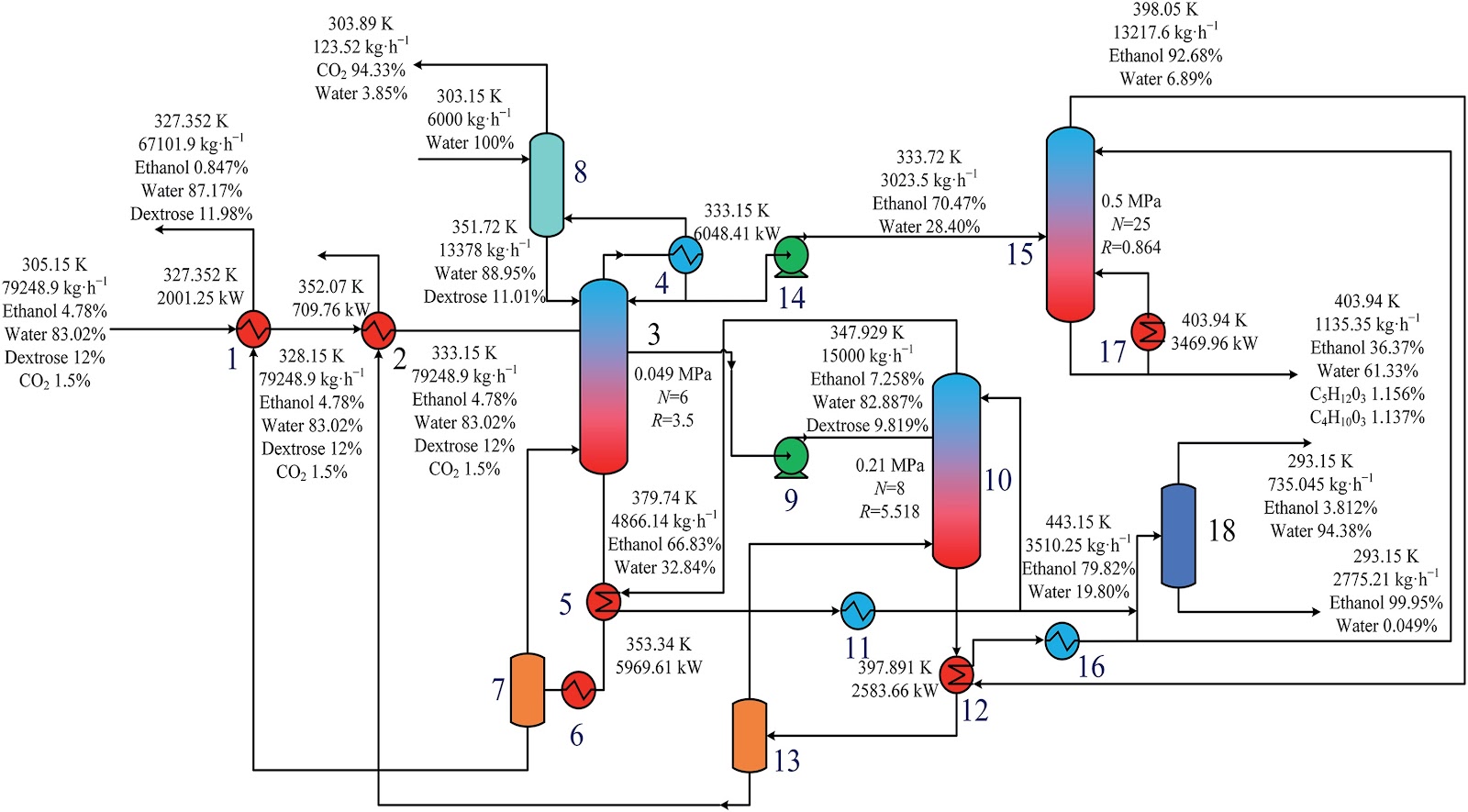
Design and optimization of a high-efficiency distillation process for cellulosic fuel ethanol integrated with thermal coupling and molecular sieve adsorption
To address the challenges of high energy consumption and prominent costs in the traditional three-columns distillation process for cellulosic fuel ethanol, a distillation—molecular sieve coupling separation process is proposed. This process integrates a three-column (crude distillation column, first distillation column, second distillation column) system with a 3A molecular sieve adsorption deep dehydration unit. A thermal coupling network is constructed via differential pressure design (steam from medium/high-pressure columns as mutual heat sources, reboiler liquid waste heat for feed preheating), and molecular sieve adsorption conditions are optimized. The study first performs a thermodynamic consistency test on the ethanol—water system, determines optimal non-random two-liquid (NRTL) model binary interaction parameters via experimental data regression for Aspen Plus simulation. Aiming at minimum total annual cost (TAC), Aspen Plus is used to optimize process parameters (theoretical tray number, feed location, reflux ratio, side-draw position, etc.). Economic analysis shows this process reduces CO2 emission costs by 27.56%, TAC by 15.58% (to 5.123 × 10⁶ USD·a-1), and increases ethanol purity to >99.6%, providing an effective solution for green, efficient separation.
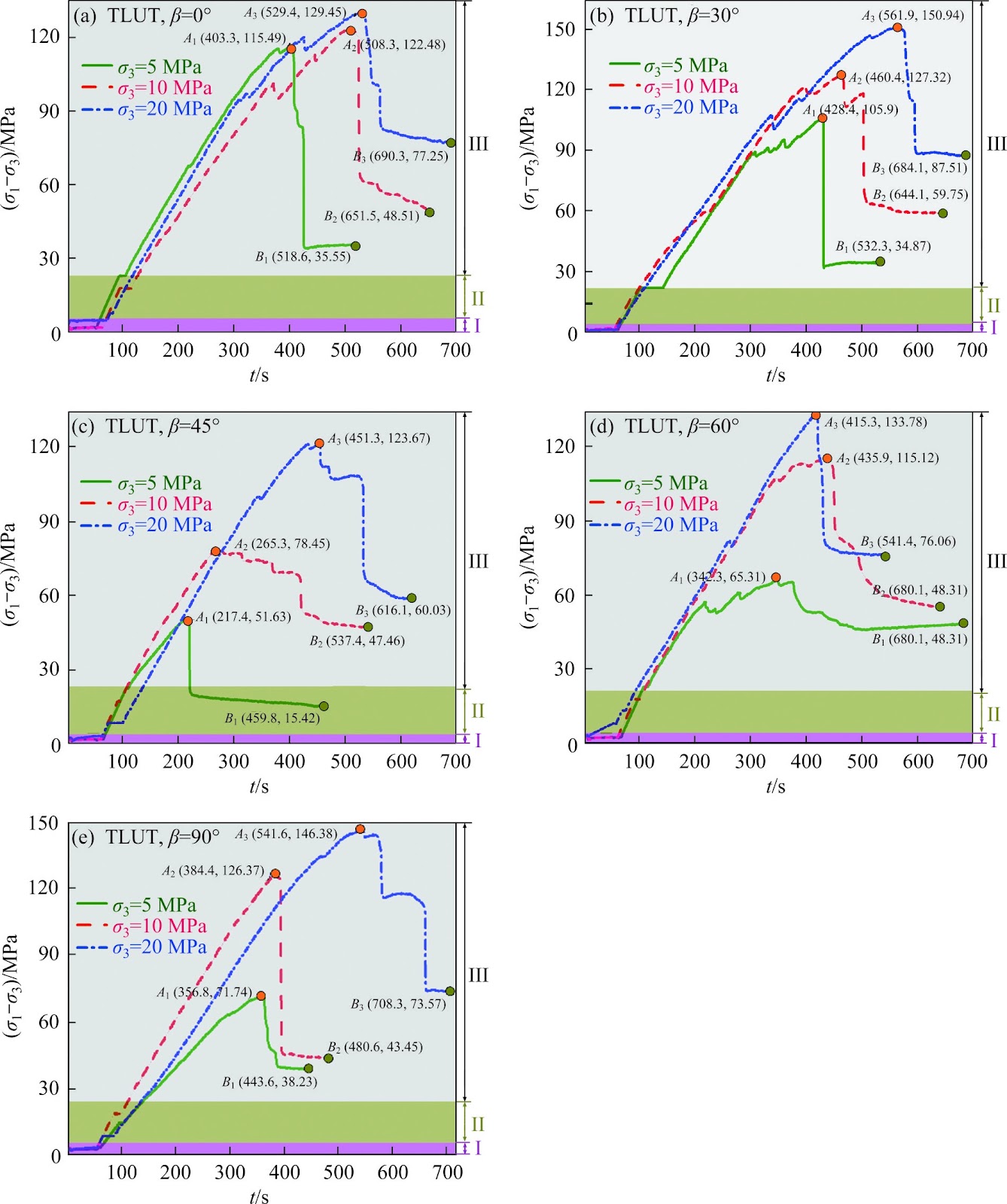
A cohesion loss model for determining residual strength of deep bedded sandstone
Rock residual strength, as an important input parameter, plays an indispensable role in proposing the reasonable and scientific scheme about stope design, underground tunnel excavation and stability evaluation of deep chambers. Therefore, previous residual strength models of rocks established were reviewed. And corresponding related problems were stated. Subsequently, starting from the effects of bedding and whole life-cycle evolution process, series of triaxial mechanical tests of deep bedded s
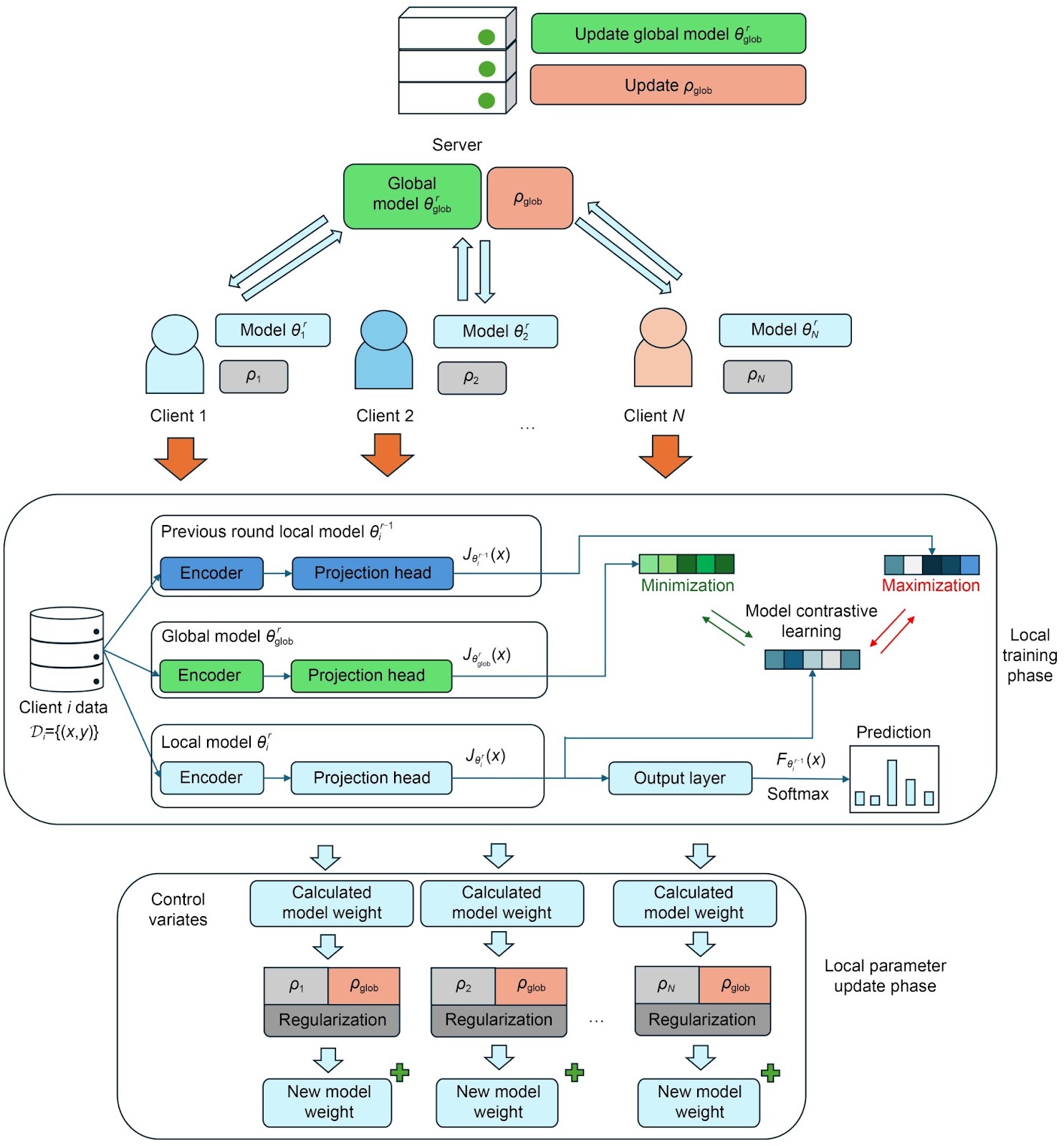
Federated model with contrastive learning and adaptive control variates for human activity recognition
Recent attention to privacy issues demands a communication-safe method for training human activity recognition (HAR) models on client activity data. Federated learning (FL) has become a compelling technique to facilitate model training between the server and clients while preserving data privacy. However, classical FL methods often assume independent and identically distributed (IID) data among clients. This assumption does not hold true in practical scenarios. Human activity in real-world scena